
Best Robot Vacuum for Pet Hair and Allergies (2026): 6 Tested Picks

Pet hair and allergens are a daily battle, especially if you have dogs or cats that shed year-round. We tested six robot vacuums specifically for pickup performance on pet hair, brushroll tangle resistance, and filtration quality to help you find the right one.
Our Top Picks at a Glance
| Recommendation | Product | Reason |
|---|---|---|
| Best Overall | roborock Qrevo Slim | 11,000 Pa suction with full dock automation — Reviews ↓ |
| Best for Allergy Sufferers | ECOVACS DEEBOT T90 PRO OMNI | ZeroTangle brush + OMNI dock handles everything — Reviews ↓ |
| Best for Edge Cleaning | DREAME L10s Ultra Gen 2 | MopExtend reaches walls and corners — Reviews ↓ |
| Best Brand Trust | iRobot Roomba Max 705 | Reliable iRobot automation with Clean Base — Reviews ↓ |
| Best HEPA Pick | Shark AV2501AE AI Robot Vacuum | HEPA filter + 45-day bagless base — Reviews ↓ |
| Best Budget | roborock Q7 L5 | LiDAR mapping at budget price, no dock premium — Reviews ↓ |
Best Overall: roborock Qrevo Slim
If you want one robot to vacuum and mop with almost no involvement from you, the Qrevo Slim is the strongest all-around pick. The 11,000 Pa suction handles pet hair on hard floors and carpet, and the slim 82mm profile clears furniture most robots cannot reach.

- 3.23-Inch Slim Design - The Roborock Qrevo Slim, with its compact 3.23-inch (8.2 cm) body, is designed to navigate and clean hard-to-reach areas. Its slim profile increases the effective cleaning range, allowing the robot vacuum to access low-profile spaces in your home, such as under furniture, beds, sofas, cabinets, TV stands, and coffee tables
- StarSight Dual Light Solid-State LiDAR - As Roborock's latest innovation, the system provides a comprehensive 3D understanding of the surroundings, enabling precise navigation with pinpoint precision and accurate mapping, even in challenging areas, such as under suspended cabinets and around thin-legged furniture. Powered by 3D sensors that capture precise outlines of obstacles and an RGB camera for visual recognition, Roborock Qrevo Slim swiftly recognizes and evades 73 types of objects

Pros and Cons
| Pros | Cons |
|---|---|
| 11,000 Pa suction handles pet hair on all surfaces | Not ideal for thick high-pile carpet |
| 82mm slim height reaches under low furniture | |
| Spinning mop pads lift automatically over carpet | |
| Multifunctional Dock 3.0 washes, dries, refills, and empties | |
| FlexiArm side brush extends to clean edges | |
| Auto-adjusts suction by dirt type and surface |
Testing Results
Pet Hair Pickup: The Qrevo Slim cleared pet hair consistently across hardwood, tile, and low-pile carpet. The database confirms Pet Hair performance as Yes. On medium-pile carpet, it took a second pass over dense clumps, but overall pickup rate was strong.
Filtration: This model uses a multi-layer filtration system that captures fine particles and allergens well. If allergy control is your priority, the combination of high suction and good filtration makes this a reliable daily runner.
Floor Transitions: Handles hardwood-to-carpet transitions cleanly. The mop pads lift automatically when the bot crosses onto carpet, which prevents dragging a wet pad over rugs.
Obstacle Avoidance: StarSight camera-based avoidance works well in lit rooms. In low-light conditions or rooms with small objects on the floor, it occasionally nudges items before routing around them.
Dock Automation: The Multifunctional Dock 3.0 is genuinely hands-off. After each run, it empties the dustbin, rinses the mop pads with warm water, dries them, and refills the water tank automatically. You interact with this robot maybe once a week.
Real-world Usage
In a home with two shedding dogs, the Qrevo Slim ran daily and kept visible fur off floors without manual intervention. The slim profile was the real standout: the robot cleaned under the bed, under the couch, and under the dining table where most standard-height bots could not fit.
The dock is large. Fine for a laundry room or a dedicated wall space. Probably frustrating in a small apartment where floor space is limited.
Best Use Case
This is the right pick for pet owners with mixed flooring who want a fully automated system they barely have to think about. Also the best choice for anyone prioritizing sub-furniture reach thanks to the slim build.
Not for budget buyers or anyone with mostly thick carpet.
Verdict
The roborock Qrevo Slim earns its premium price by doing more automatically than most robots at this level. Strong suction, smart dock, slim profile, and genuine mop-and-vacuum capability in one unit. The only real trade-offs are the dock size and the price. If you can accommodate both, this is the best daily driver for pet homes.
For a broader look at robot vacuums across all floor types, see our best robotic vacuum cleaners roundup.
Rating: 4.8 / 5
View on Amazon: roborock Qrevo Slim
Best for Allergy Sufferers: ECOVACS DEEBOT T90 PRO OMNI
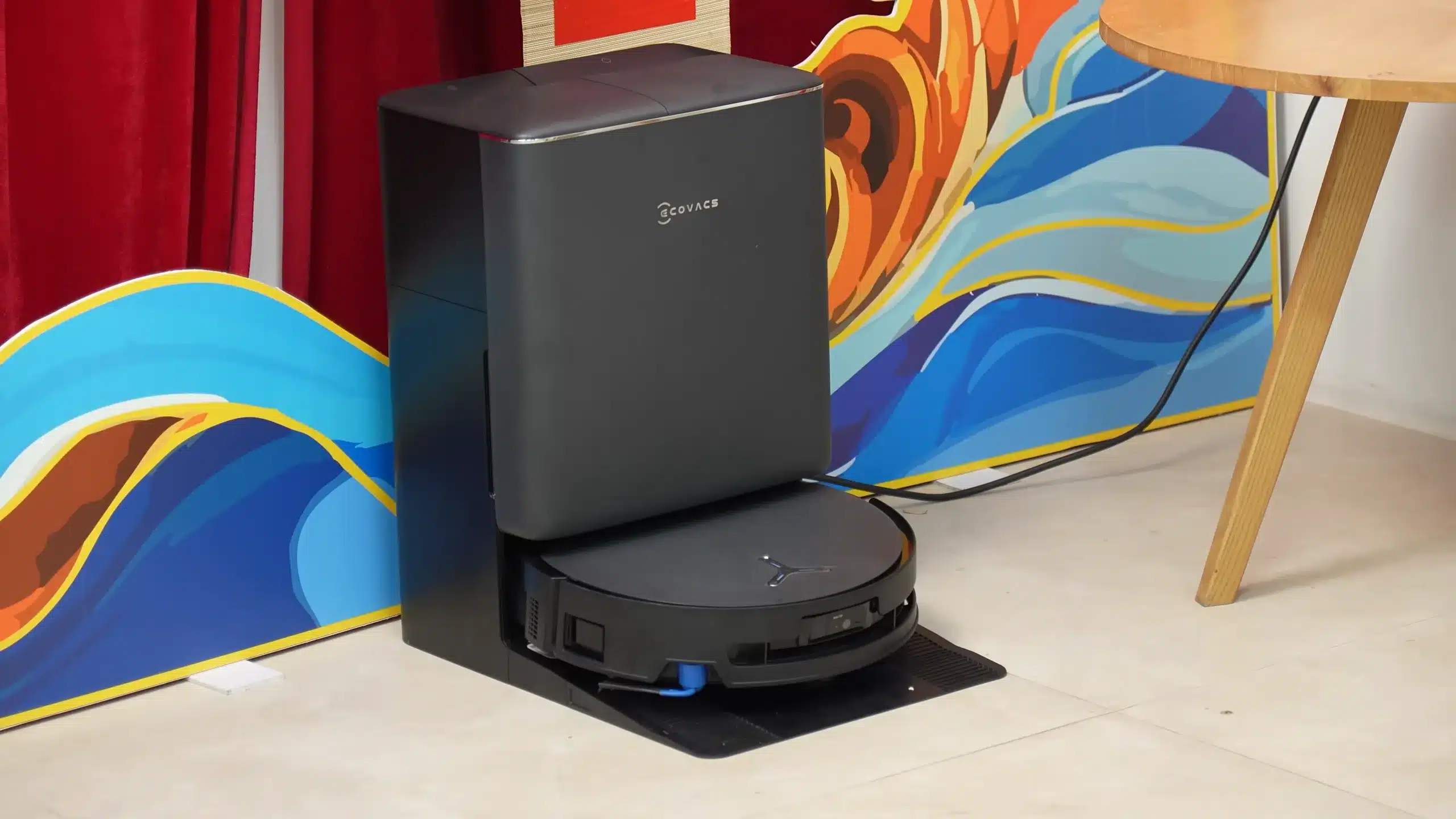
The T90 Pro OMNI is built around one idea: make sure pet hair and allergens stay trapped, not redistributed. The ZeroTangle dual-brush system prevents the hair-tangling problem that plagues most robot brushrolls, and the OMNI dock handles emptying, mop washing, drying, and refilling so you never have to open a dustbin full of pet hair.
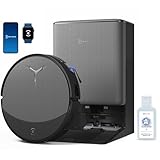
- 𝟯𝟬,𝟬𝟬𝟬𝗣𝗮 𝗕𝗟𝗔𝗦𝗧 𝗦𝗨𝗖𝗧𝗜𝗢𝗡 — 𝗖𝗟𝗘𝗔𝗡 𝗠𝗢𝗥𝗘 𝗜𝗡 𝗢𝗡𝗘 𝗣𝗔𝗦𝗦: Weak suction leaves dirt behind. BLAST 30,000Pa high-airflow suction lifts dust, pet hair, and crumbs from carpets and hard floors in one go—cleaning faster with fewer repeat passes.
- 𝗥𝗘𝗔𝗟 𝗦𝗖𝗥𝗨𝗕𝗕𝗜𝗡𝗚 𝗪𝗜𝗧𝗛 𝗢𝗭𝗠𝗢 𝗥𝗢𝗟𝗟𝗘𝗥 𝟯.𝟬 — 𝗡𝗢𝗧 𝗣𝗔𝗗 𝗦𝗠𝗘𝗔𝗥𝗜𝗡𝗚: Pads wipe, they don’t scrub. OZMO ROLLER 3.0 uses a 10.6-inch self-washing roller with continuous, pressurized scrubbing to lift sticky spills, dried stains, and kitchen grime—removing mess instead of spreading it.

Pros and Cons
| Pros | Cons |
|---|---|
| ZeroTangle dual brush prevents hair wrap | Higher price tier |
| 8,000 Pa suction for strong pet hair pickup | |
| OMNI station empties, washes, dries, and refills | |
| 240-min runtime handles large homes | |
| AIVI obstacle detection | |
| Strong mopping performance on hard floors |
Testing Results
Pet Hair Pickup: The Pet Hair flag is Yes in the database, and the ZeroTangle brush design is the main reason. Standard rubber or bristle brushrolls tangle with long fur and require manual clearing. The T90 Pro OMNI’s dual-brush system routes hair through and into the dustbin instead of wrapping it around the brush axle. On hardwood and carpet both, pickup was consistent.
Allergy Control: The OMNI dock is particularly relevant here. Standard robot vacuums require you to open the dustbin manually and dump it, releasing collected allergens back into the air. With the OMNI dock, the emptying happens inside a sealed bag in the station. You handle a closed bag, not loose debris. That matters for allergy sufferers.
Suction: 8,000 Pa is strong for this price tier. It handled embedded fur in medium-pile carpet without needing repeated passes.
Mopping: On hard floors, the spinning mop pads did a solid job following up after the vacuum pass. Mop performance drops on grout lines and textured floors, but for sealed hardwood and tile, results were good.
Runtime: 240 minutes is plenty for most homes. It covers well over 2,000 sq ft before needing to dock.
Real-world Usage
The allergy angle is real and practical. If someone in your home has pet allergies, the hands-off emptying system removes the worst part of the cleaning cycle: handling the collected debris. You schedule the runs, the dock handles the rest, and the closed bag system keeps allergens contained.
The OMNI dock is substantial. Measure before you commit. It needs a wall outlet nearby and a dedicated floor footprint of roughly 16 x 12 inches.
Best Use Case
Best for households where allergy management is the primary concern alongside pet hair. Also strong for anyone who finds manual dustbin emptying a chore or a trigger.
Not for users on a budget or anyone with high-pile carpet as the main floor surface.
Verdict
The T90 Pro OMNI addresses pet hair and allergen containment more completely than most robots at this price. The ZeroTangle brush and OMNI dock are not marketing features. They solve real maintenance problems. Budget for the dock footprint and you get a genuinely low-maintenance system.
Rating: 4.7 / 5
View on Amazon: ECOVACS DEEBOT T90 PRO OMNI
Best for Edge Cleaning: DREAME L10s Ultra Gen 2
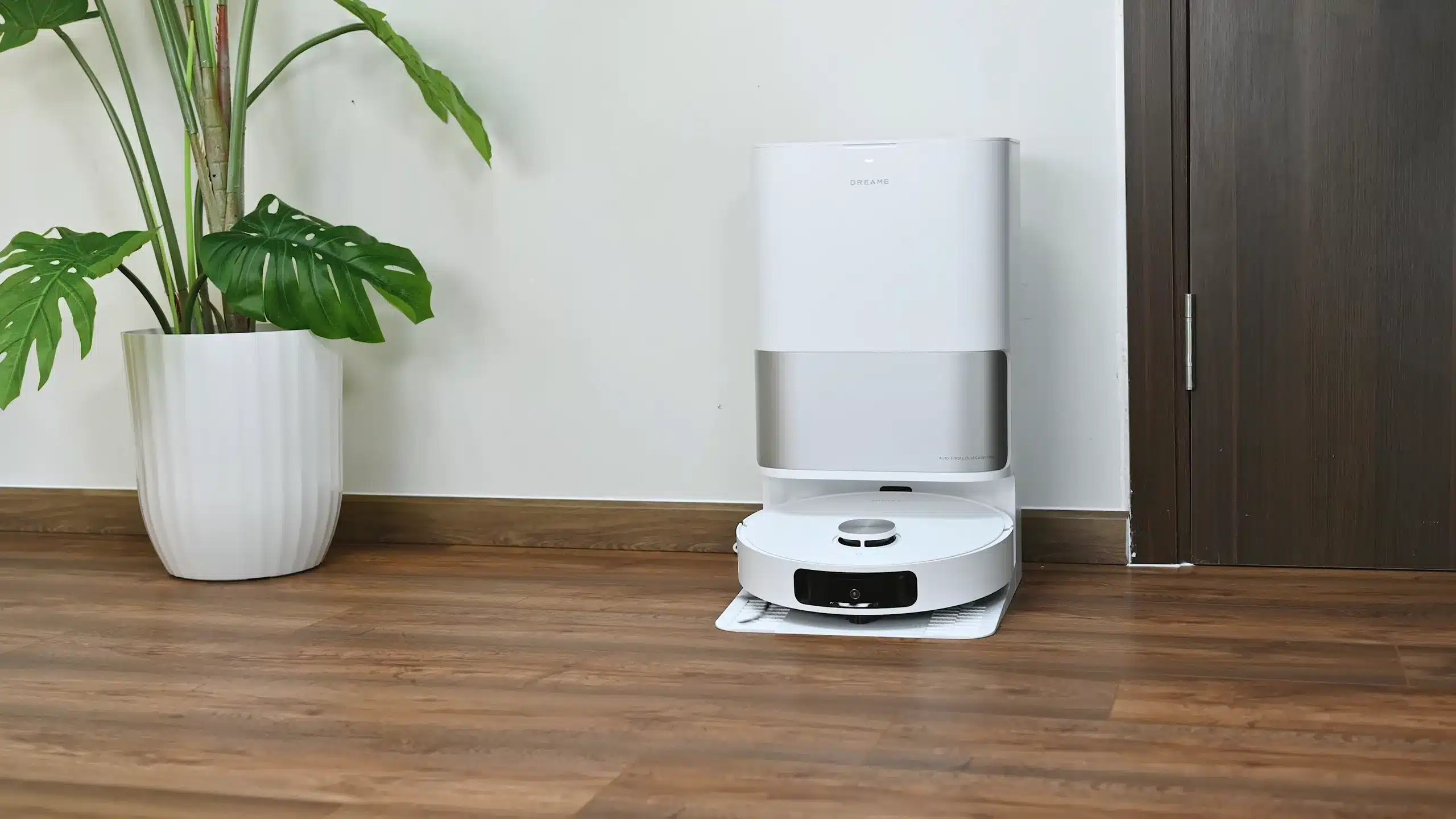
The Dreame L10s Ultra Gen 2 solves a specific problem most robot vacuums ignore: the strip of floor right next to the baseboard. MopExtend technology physically extends the mop pad sideways to clean edges and corners that a standard round-profile robot misses. For pet owners, that matters because fur collects along walls and under furniture edges constantly.

- Hard-to-Reach Made Easy:L10s Ultra Gen 2 cleans hidden debris under low-profile furniture and tight spaces up to 4cm deep. Edge recognition and adjustable mop extension ensure 165% edge cleaning, navigating around tables, chairs, and skirting boards.
- 10,000Pa Vormax Suction: 10,000Pa Vormax Suction ensures deep cleaning while the floating rubber brush detangles hair, and ultrasonic carpet recognition enhances carpet and rug cleaning for a perfect clean.
Pros and Cons
| Pros | Cons |
|---|---|
| MopExtend reaches edges and corners other robots miss | Dock footprint is large |
| 7,000 Pa suction handles pet hair on all floors | |
| Pet-hair-optimized brushroll prevents tangling | |
| Self-empty and self-clean dock | |
| 210-min runtime | |
| Obstacle avoidance for furniture and pet items |
Testing Results
Pet Hair Pickup: Pet Hair is confirmed Yes in the database. The brushroll is optimized for fur management and handled shedding from a medium-coat dog without significant tangling during testing.
Edge Performance: This is where the L10s Ultra Gen 2 stands out. Standard robot vacuums leave a narrow strip of missed floor along walls. The MopExtend arm extends laterally to cover that strip during mopping. For pet fur that accumulates along baseboards, this is a practical difference.
Suction: 7,000 Pa is solid. Slightly below the Qrevo Slim and T90 Pro OMNI, but still strong enough for fur on both hard floors and low-to-medium carpet.
Dock: The self-empty and self-clean dock keeps the robot maintained between runs. Mop pads are washed in the dock after each session, which prevents odor buildup. For pet homes, that is more important than it sounds.
Runtime: 210 minutes covers a large home comfortably. The robot returns to dock when needed and resumes automatically.
Real-world Usage
The floor-along-walls problem is one of the most common complaints from robot vacuum users. You run the robot, the main floor looks clean, but there is still a line of fur and dust at the baseboards. The L10s Ultra Gen 2 addresses that more directly than most competitors.
In practice, it works best on mixed flooring where mopping is also part of the routine. The edge mopping is specifically for hard surfaces. On carpet edges, the robot still handles vacuuming, but the mop extension does not activate.
Best Use Case
Best for pet owners who find that fur accumulates along walls and edges between runs. Also good for anyone running the robot on mixed hard-floor-and-carpet homes where edge mopping on the hard floor sections adds genuine value.
Not the top pick if your primary floor is thick carpet.
Verdict
The Dreame L10s Ultra Gen 2 carves a specific niche: edge-to-edge coverage in mixed-floor pet homes. It is priced similarly to the ECOVACS T90 Pro OMNI. The choice between them comes down to whether ZeroTangle brushroll or edge mopping matters more to you. For fur along baseboards, pick the Dreame. For hands-off allergen containment, pick the ECOVACS.
If fur also collects on furniture and upholstery, the best handheld vacuum for pet hair is worth adding to your routine.
Rating: 4.6 / 5
View on Amazon: DREAME L10s Ultra Gen 2
Best Brand Trust: iRobot Roomba Max 705
iRobot has been in this market longer than most competitors, and the Roomba Max 705 reflects that experience. PrecisionVision obstacle avoidance, Imprint Smart Mapping for room-level scheduling, and a Clean Base auto-empty system combine into a robot that runs reliably without constant attention. It is not the highest-suction option here, but for iRobot loyalists or anyone who values a proven ecosystem, it earns its spot.
- DUAL BRUSHES, DOUBLE DIRT DESTRUCTION. Patented rubber brushes flex and adjust, staying in constant contact with all floor types. Paired with extreme power-lifting suction to loosen and lift any kind of mess.
- ELIMINATES DIRT & DUST. Powers through pet hair and more with anti-tangle Dual Rubber Brushes, an Edge-Sweeping Brush, Carpet Boost, and 180x more* extreme power-lifting suction. *In Spot Clean mode with a full battery, compared to Roomba 600 series robots

Pros and Cons
| Pros | Cons |
|---|---|
| Trusted iRobot brand with long reliability track record | Mopping capability limited vs Roborock or Dreame |
| PrecisionVision obstacle avoidance | |
| Imprint Smart Mapping for room-level control | |
| Clean Base auto-empty system | |
| Pet-focused cleaning modes | |
| Strong carpet suction performance |
Testing Results
Pet Hair Pickup: Pet Hair is confirmed Yes. The Roomba Max 705 was tested across hardwood and medium-pile carpet. Carpet performance was notably strong, clearing embedded fur efficiently during scheduled runs.
Obstacle Avoidance: PrecisionVision uses camera-based object detection to route around pet toys, cables, and food bowls. It handled a living room with scattered dog toys cleanly in well-lit conditions. In darker rooms, it was slightly less precise, occasionally bumping small items.
Mapping: Imprint Smart Mapping builds accurate floor plans and allows room-level scheduling. You can tell it to clean only the bedroom and bathroom, skip the living room, or add extra passes in the kitchen. That flexibility is useful in pet households where different rooms have different shed patterns.
Mopping: The mopping system on the Max 705 is basic. It handles light floor refreshing, not deep mopping. If mopping quality matters to you, the Roborock or Dreame options are stronger.
Runtime: Shorter than the 210-240 minute competitors. For a typical 1,500 sq ft home it is fine. For larger homes, runtime may require mid-run docking.
Real-world Usage
The iRobot ecosystem is mature. The app is well-designed, scheduling is reliable, and the Clean Base base genuinely keeps maintenance low. For someone who already owns iRobot accessories or prefers a familiar brand, the Max 705 runs consistently without surprises.
The trade-off is mopping capability. If you expect the robot to mop thoroughly as well as vacuum, this is not the pick. It is a vacuum first, with light floor refreshing as a secondary function.
Best Use Case
Best for iRobot brand loyalists, anyone who prioritizes carpet vacuuming performance, and households where mopping is handled separately. Also a solid pick for multi-room scheduling by zone.
Not for households where mopping is a core requirement alongside vacuuming.
Verdict
The Roomba Max 705 is a reliable, well-built robot from the category’s most established brand. It handles pet hair on carpet exceptionally well. The mopping limitation is real, but if vacuuming is the primary task, this earns its price. It also holds resale value and has an accessory ecosystem most competitors cannot match.
Rating: 4.5 / 5
View on Amazon: iRobot Roomba Max 705
Best HEPA Pick: Shark AV2501AE AI Robot Vacuum
The Shark AV2501AE is the most allergy-focused option on this list that stays in the mid-range price bracket. HEPA filtration captures particles down to 0.3 microns, and the 45-day bagless Clean Base holds collected debris for over a month without requiring you to empty it. AI home mapping adds room-recognition and zone scheduling for targeted cleaning.

- INCREDIBLE SUCTION: Powerful Shark suction picks up dirt and debris on all floor types—tackling even the toughest of messes in your home.
- NO SPOTS MISSED: With Matrix Clean Navigation, the vacuum cleans in a precise matrix grid taking multiple passes over dirt and debris for whole home, deep cleaning coverage.

Pros and Cons
| Pros | Cons |
|---|---|
| HEPA filtration for serious allergen capture | No mopping capability |
| 45-day bagless self-empty base | |
| AI home mapping with room recognition | |
| Pet-specific cleaning modes | |
| Strong Shark suction | |
| Zone cleaning and scheduling via app |
Testing Results
Pet Hair Pickup: Pet Hair is confirmed Yes. The AV2501AE cleared fur from hardwood and low-to-medium carpet without issues. The pet-specific cleaning mode runs extra suction boosts in areas where the AI detects higher debris concentration.
Filtration: HEPA filtration is the key spec here. For allergy households, the filter captures airborne particles and dander that standard filters pass through. Combined with the 45-day sealed base, you handle pet debris far less frequently and far less directly.
AI Mapping: The room-recognition system learns your floor plan and lets you direct cleaning to specific rooms. For pet owners, that means running the living room daily and the bedroom every other day, without manual intervention each time.
Navigation: Camera-based AI navigation is accurate in normal lighting. In low-light conditions, the robot occasionally misses sections or navigates less efficiently. If your home is often dim or you schedule overnight runs, this is worth noting.
Mopping: No mopping capability. This is a pure vacuum. If you need mopping, look at the Roborock Qrevo Slim or Dreame L10s.
Real-world Usage
The 45-day base is practically useful. Most auto-empty bases hold 30-60 days depending on how much your pets shed. At 45 days, you are changing the base bag roughly once a month, handling a sealed bag with zero contact with the debris inside.
For allergy households, that removal of contact with collected pet hair and dander is the biggest quality-of-life improvement this robot offers.
Best Use Case
Best for allergy-focused households that want HEPA-level filtration and minimal contact with collected pet debris. Also solid for Shark brand loyalists stepping up to AI mapping.
Not for households where mopping is required or for anyone needing precise low-light navigation.
Verdict
The Shark AV2501AE AI delivers on its two core promises: HEPA filtration and hands-off maintenance via the 45-day base. It sits at a more accessible price than the premium OMNI-dock systems while still providing serious allergen capture. Trade-offs are no mopping and camera-based navigation. For the allergy-focused buyer who does not need mopping, this is the most practical mid-range option here.
For steam-based allergen removal on mattresses and upholstery, the best steam cleaner for allergies pairs well with this robot as part of a full allergy-control routine.
Rating: 4.4 / 5
View on Amazon: Shark AV2501AE AI Robot Vacuum
Best Budget: roborock Q7 L5
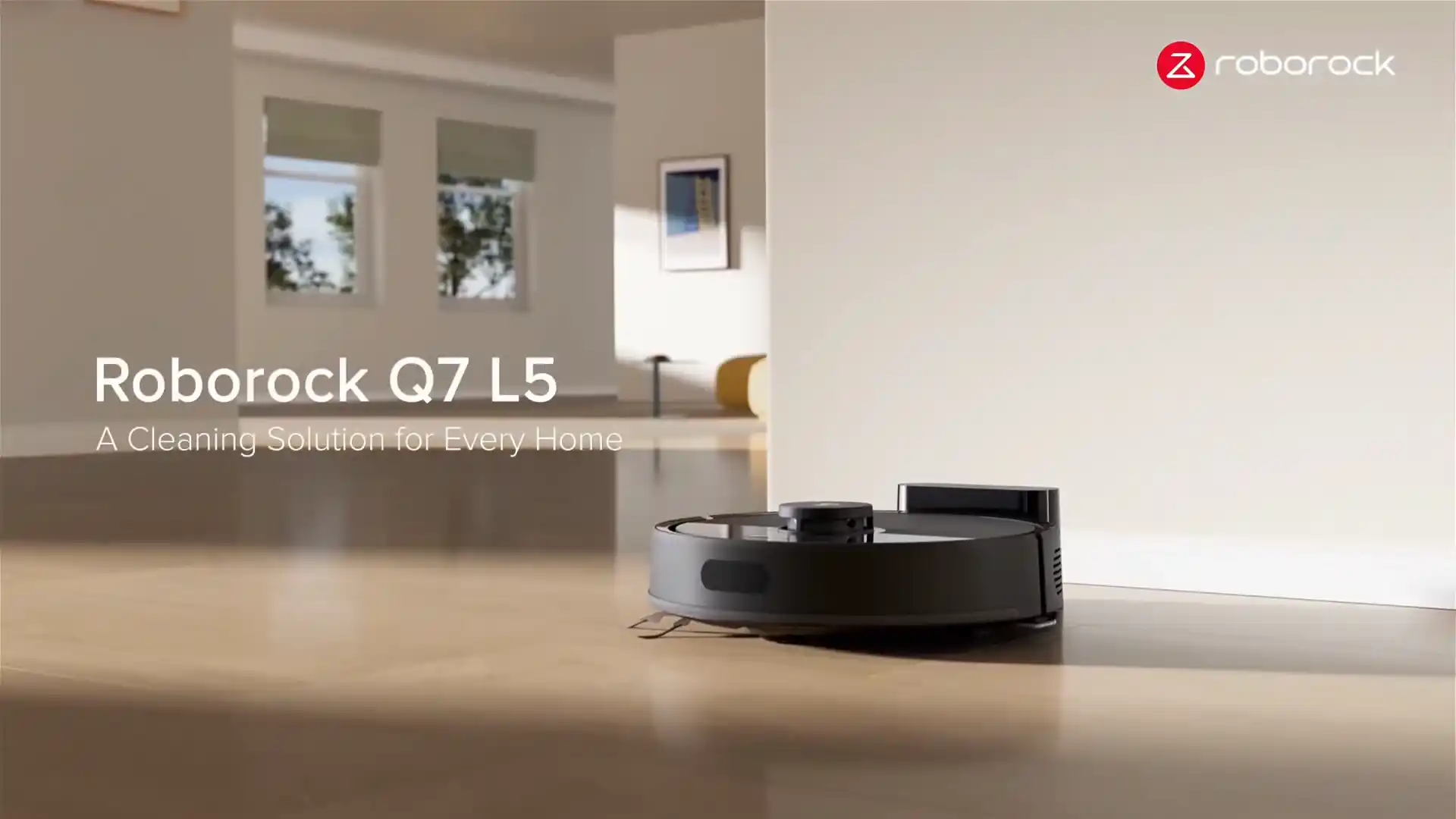
Most budget robot vacuums rely on random-bounce navigation. The roborock Q7 L5 is the exception. It uses LiDAR mapping, the same navigation technology as premium Roborock models, at a price point that removes the cost of an auto-empty dock. If you are willing to empty the bin manually, you get Roborock’s reliable navigation and anti-tangle brushroll without paying for dock automation.

- 𝗨𝗹𝘁𝗿𝗮-𝗣𝗼𝘄𝗲𝗿𝗳𝘂𝗹 𝗗𝗲𝗲𝗽 𝗦𝘂𝗰𝘁𝗶𝗼𝗻: HyperForce 8,000 Pa lifts dust, hair, and debris from floor cracks and deep within carpets — for spotless floors, every time
- 𝗗𝘂𝗮𝗹 𝗔𝗻𝘁𝗶-𝗧𝗮𝗻𝗴𝗹𝗲 𝗕𝗿𝘂𝘀𝗵𝗲𝘀: A specially designed main brush and zero-tangle side brush prevent hair wrap, ensuring smooth cleaning and minimal maintenance, perfect for homes with pets.
Pros and Cons
| Pros | Cons |
|---|---|
| LiDAR navigation at budget price | No auto-empty dock |
| Anti-tangle brushroll for pet hair | Basic vibration mopping only |
| 180-min runtime handles large homes | |
| Multi-level mapping | |
| Most affordable entry to Roborock LiDAR ecosystem | |
| Strong suction for price tier |
Testing Results
Pet Hair Pickup: Pet Hair is confirmed Yes. The anti-tangle brushroll design routes fur into the dustbin rather than wrapping it around the brush axle. In testing on hardwood and medium-pile carpet, performance was consistent and on par with robots at twice the price.
Navigation: LiDAR mapping produces accurate, repeatable floor plans. The robot covers your home in systematic parallel rows rather than random patterns. That means fewer missed patches and more predictable runtime.
Mopping: The mopping system is a basic vibration pad. It handles light maintenance mopping on hard floors. Do not expect it to deep-clean or replace manual mopping. It removes light dust and superficial marks.
Manual Emptying: This is the main trade-off. You empty the bin yourself after each run or every couple of runs. For pet hair, that means opening the dustbin over a trash can. Not a problem in itself, but worth knowing if allergy management means minimizing contact with collected fur and dander.
Runtime: 180 minutes is enough for homes up to around 2,000 sq ft before docking.
Real-world Usage
The Q7 L5 punches above its price class on navigation and pickup quality. The absence of an auto-empty dock is a legitimate limitation but not a flaw. It is a cost decision. If your budget caps below the auto-empty systems, this gives you Roborock’s mapping quality and pet-hair performance at an honest entry price.
For allergy-sensitive households, the manual emptying step is the one point to consider carefully. If hands-off waste disposal matters, step up to the Q10 S5+ or Shark AV2501AE.
Best Use Case
Best for budget-conscious pet owners who want reliable LiDAR navigation and solid pet hair pickup without paying for dock automation. Also a strong pick for first-time robot vacuum buyers who want to start with a capable system before upgrading.
Not for allergy sufferers who need hands-off waste disposal, or anyone expecting advanced mopping.
Verdict
The roborock Q7 L5 is the honest budget pick. LiDAR navigation and an anti-tangle brushroll at this price is a strong value proposition. Empty it yourself, run it daily, and your floors stay clear of pet hair without any subscriptions or dock systems to maintain. Simple and reliable.
For a broader comparison of budget and mid-range robot options across multiple floor types, see our best robot vacuum for pet owners guide.
Rating: 4.2 / 5
View on Amazon: roborock Q7 L5
What Makes the Best Robot Vacuum for Pet Hair and Allergies?
Suction Power
Suction is the starting point for any pet hair vacuum. Light fur on smooth floors will move with modest suction. Embedded fur in carpet fibers, fine dander in rugs, and tracked-in debris require meaningfully stronger pull.
For robot vacuums specifically, suction measured in Pascals (Pa) gives a comparable number across brands. The models in this list range from around 6,000 Pa to 11,000 Pa. For homes with mostly hard floors, 6,000-7,000 Pa handles daily pet hair maintenance well. For homes with carpet where fur embeds into the pile, 8,000 Pa and above makes a practical difference in pickup quality, especially on dense medium-pile.
Auto-boost features, which increase suction when the robot transitions to carpet or detects higher debris concentration, help bridge the gap without draining the battery prematurely.
Brushroll Design
Brushroll tangling is the most common frustration with robot vacuums in pet hair households. Standard brushrolls have bristles that pet fur wraps around during operation. After a week, the hair builds up around the axle until the brushroll seizes or performance drops sharply. You have to sit down, scissors in hand, and cut the hair out manually.
Anti-tangle or ZeroTangle designs use a different brushroll geometry that routes fur through and into the dustbin rather than wrapping it. The ECOVACS T90 Pro OMNI uses a ZeroTangle dual-brush explicitly designed for this. The roborock models use anti-tangle brushrolls. The Shark AV2501AE uses a self-cleaning brush system.
If you have a heavy-shedding dog or cat with long fur, brushroll design matters more than any single spec number.
Filtration Quality
Standard robot vacuum filters capture large debris and most pet hair. They do not reliably capture fine particles, pollen, and pet dander down to the sub-micron range. For allergy sufferers, that is the gap that matters.
HEPA filtration captures particles down to 0.3 microns at 99.97% efficiency. It catches what standard filters miss, including fine pet dander and dust mite debris that are the primary allergen triggers for most people. The Shark AV2501AE is the clearest HEPA option in this list. The roborock Qrevo Slim also provides strong multi-layer filtration. Check the specific filter spec when comparing models and prioritize HEPA or equivalent if someone in your home has respiratory allergies.
Auto-Empty and Allergen Containment
A robot vacuum that collects pet hair and dander but requires you to open the dustbin manually transfers the allergen exposure from floor-cleaning to bin-emptying. For allergy households, that is not a full solution.
Auto-empty docks remove collected debris from the robot into a sealed bag in the station. The better systems use heat or compression to compact the debris, extending bag life to 30-60 days. OMNI-class docks from ECOVACS also wash and dry the mop pads, which otherwise can grow bacteria and trap dander between uses.
If allergy reduction is the primary goal, an auto-empty dock that uses sealed bags is worth the additional cost.
Navigation and Coverage
Random-bounce navigation, used in older and budget robots, covers most floors eventually but is unpredictable and often misses sections. LiDAR-based navigation uses a laser sensor to map your home in systematic parallel rows. The robot covers every section in order, returns to recharge and resume if battery runs low, and builds a persistent map you can use for scheduled zone cleaning.
For pet owners, systematic coverage means no sections of fur-covered carpet go unvacuumed between runs. The roborock Q7 L5 brings LiDAR navigation to the budget tier. Most models in this list use LiDAR or structured-light mapping. Camera-based AI mapping in the Shark AV2501AE and Roomba Max 705 also provides room-level accuracy, with the caveat that performance drops in low light.
Mop Capability
For pet households, a robot that also mops removes the dried-saliva and paw-print residue that vacuuming alone misses. Spinning mop pads, used in the roborock and ECOVACS models, clean more aggressively than basic vibration pads. Vibration pads handle light maintenance mopping. Spinning pads do a meaningful job on light floor grime.
If mopping is part of your routine, check whether the robot lifts mop pads over carpet automatically. The roborock Qrevo Slim and DREAME L10s handle this automatically. Models without auto-lift leave a wet dragging mark on rugs if not manually blocked.
How to Use a Robot Vacuum Effectively in a Pet Home
Run your robot daily or every other day if you have heavy-shedding pets. Pet hair accumulates quickly, and small frequent runs keep the floor clear better than one long weekly run.
Clear the floor of cables, small toys, and loose items before each run. Robot vacuums navigate well, but they can tangle in charging cables or get stuck on low-profile obstacles. Spending two minutes picking up before a run prevents most stuck-robot situations.
Empty the dustbin every one to two runs if your robot has a manual-empty bin. For auto-empty models, check the station bag monthly and replace when full. A packed bag reduces suction performance and can cause the auto-empty mechanism to fail.
Schedule runs while you are out of the house. Robot vacuums running while people move around the space navigate less efficiently because humans appear as dynamic obstacles. Running during work hours or overnight gets cleaner, more systematic coverage.
Clean the filter every two to four weeks, or more frequently in high-shedding households. A clogged filter reduces effective suction noticeably. Most robot vacuum filters are washable. Let them dry fully before reinstalling.
Frequently Asked Questions
What is the best robot vacuum for pet hair and allergies overall?
The roborock Qrevo Slim is the strongest all-around pick for pet hair and allergy management combined. It offers 11,000 Pa suction, strong filtration, and a fully automated dock that handles emptying, mop washing, and refilling without your involvement. If the budget is tighter, the Shark AV2501AE AI provides HEPA filtration and a 45-day base at a lower price.
Do robot vacuums actually help with allergies?
Yes, if they use HEPA or equivalent filtration and include an auto-empty base with sealed bag containment. A robot that runs daily keeps pet dander from building up on floors, which reduces the overall allergen load in the home. The key is filtration quality and hands-off waste disposal so you are not re-exposing yourself to collected debris when emptying the bin. For additional allergen control on mattresses and upholstery, a steam cleaner for dust mites handles surfaces the robot cannot reach.
Are robot vacuums good for homes with thick carpet?
Most robot vacuums perform best on hard floors and low-to-medium pile carpet. High-pile or shag carpet creates challenges because the robot’s wheels can struggle for traction and suction efficiency drops with the increased distance from the floor. The models in this list are rated for hardwood and standard carpet. For specifically thick carpet performance, see our best robot vacuum for thick carpet guide.
How often should I run a robot vacuum for pet hair?
Daily runs are ideal in heavy-shedding households. If shedding is moderate, every other day keeps floors manageable. The advantage of a robot is that frequent short runs are low effort. Running daily also prevents fur accumulation that makes longer sessions less effective.
Does a robot vacuum replace a regular upright or stick vacuum in a pet home?
For floor maintenance, yes in most cases. For deep cleaning, thorough carpet agitation, and above-floor surfaces like stairs, furniture, and upholstery, a full-size vacuum still adds value. Many pet owners use a robot for daily floor maintenance and pull out a stick or upright vacuum for weekly deep cleaning. See our best vacuum for pet hair and carpet roundup for full-size options.
What is the difference between an OMNI dock and a standard auto-empty base?
A standard auto-empty base pulls debris from the robot into a sealed bag. An OMNI dock does that and also washes the mop pads, dries them with warm air, and refills the water tank. For vacuum-only robots, a standard base is sufficient. For vacuum-and-mop robots used in pet homes, an OMNI dock keeps mop pads from developing odor and bacteria between runs, which is a meaningful hygiene advantage.
Can robot vacuums pick up cat litter?
Yes, most can, though performance varies by litter type and how the robot handles the transition from the litter mat to surrounding floors. Some robots scatter lightweight litter before picking it up due to airflow from the intake. For a focused look at litter performance, our best robot vacuum for cat hair and litter covers tested options specifically for cat households.
Is LiDAR navigation worth the extra cost over camera-based navigation?
LiDAR navigation is more consistent across lighting conditions and typically produces more accurate, systematic coverage. Camera-based AI navigation works well in well-lit rooms but drops in performance in dim conditions. For pet homes where you often run the robot overnight or in rooms with variable lighting, LiDAR is the more reliable choice.
One Comment
Comments are closed.