How to Clean a Vacuum Filter (By Filter Type and Brand)
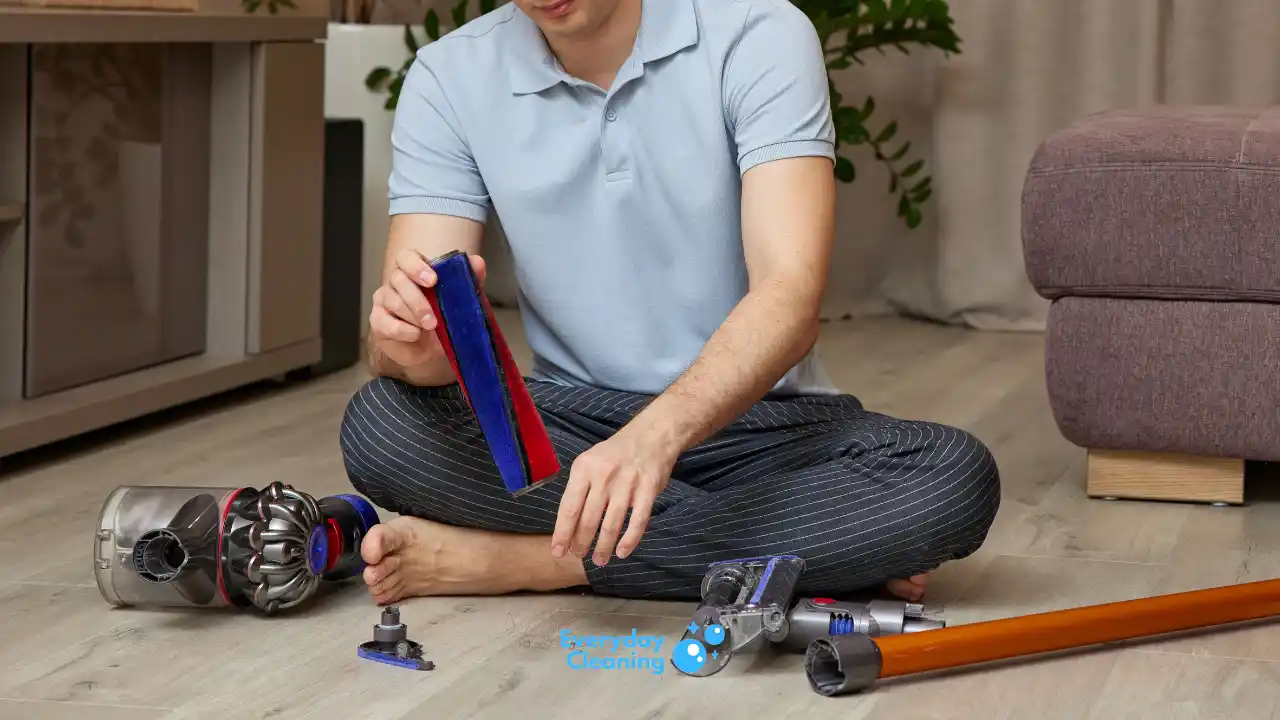
A vacuum that feels weaker than it used to is usually not a motor problem. It’s a filter problem. Cleaning the filter is the single highest-impact maintenance task you can do, and most people either skip it or do it wrong.
Table of Contents
Why a Dirty Filter Kills Suction
Your vacuum pulls air through a filter to trap dust and debris before it reaches the motor. When that filter gets clogged, airflow is restricted. The motor is still working at full power, but less air is moving through the system, so suction at the floor head drops.
A heavily clogged filter can cut effective suction by 30 to 50 percent. The vacuum sounds normal and feels like it’s working, but it’s leaving debris behind with every pass.
Step 1: Find Your Filter and Identify the Type
Before you clean anything, you need to know what type of filter you have. The cleaning method is completely different depending on the type, and using the wrong method can damage the filter permanently.
Check your vacuum manual or look up your model online. Most filters fall into one of four categories:
- Washable foam or sponge filter. Soft, porous, usually bright blue, red, or gray. Found in many budget and mid-range uprights and cordless vacuums. Can be rinsed under water.
- Washable pleated or mesh filter. Has accordion-style folds or fine mesh material. Often white or gray. Found in Dyson, many Shark models, and most modern cordless vacuums. Can be rinsed, but requires more care than foam.
- HEPA paper cartridge. Stiff, usually cone or cylinder-shaped, made of dense pleated paper. Found in allergy-focused vacuums and many Miele, Hoover, and some Shark models. Cannot be washed. Water destroys the paper media.
- Felt or fabric filter. Soft fabric, typically used as a pre-motor filter or bag collar. Found in older bagged vacuums and some shop vac models. Cannot be washed effectively. Clean by tapping and brushing only.
Many vacuums have two filters — one before the motor and one after (exhaust filter). Check both locations in your manual. Cleaning only one and missing the other is a common reason maintenance doesn’t seem to help.
How to Clean a Washable Foam Filter
- Remove the filter from the vacuum. Most foam filters pull straight out or unclip from the dustbin.
- Tap it gently over a trash can to knock off loose surface dust before wetting it.
- Hold it under cold running water and squeeze gently until the water runs clear. Do not use hot water. Do not use dish soap or detergent unless your manufacturer specifically says it’s safe.
- Squeeze out excess water. Do not wring or twist the foam.
- Set it on a clean surface and let it air dry completely. This takes at least 24 hours. Do not rush this with a hair dryer or place it near a heat source.
- Reinstall only when fully dry. A damp filter back in the machine is worse than a dirty one.
How to Clean a Washable Pleated or Mesh Filter
Pleated filters need gentler handling than foam. The folds trap dust deeply and are easy to damage if you rush.
- Remove the filter and tap it lightly over a trash can to dislodge loose dust from between the pleats. Do this outside if possible.
- Rinse under cold running water. Hold the filter so water flows through the pleats from the clean side outward. Do not rub, scrub, or squeeze the pleated material.
- Continue rinsing until water runs clear from all sections.
- Shake off excess water gently and set upright to air dry.
- Allow at least 24 hours of drying time. Pleated filters hold moisture in the folds and take longer than foam to dry fully.
- Check that every section of the pleats is dry before reinstalling.
How to Clean a HEPA Paper Cartridge Filter
Do not wash this filter. Water collapses the paper fibers and destroys filtration efficiency permanently. A wet HEPA paper filter looks intact but is no longer filtering properly.
What you can do:
- Remove the filter and take it outside or hold it over a trash can.
- Tap the filter casing gently against the side of the trash can to knock loose surface dust off the pleats.
- Use a soft dry brush — a clean paintbrush works well — to brush dust from between the pleats. Work from the top down.
- Do not blow into it forcefully. This pushes fine particles deeper into the paper media.
- Reinstall the filter.
HEPA paper cartridges have a lifespan regardless of how well you maintain them. Plan to replace them every six to twelve months depending on usage. If the filter looks gray or brown even after brushing, or if suction doesn’t improve after cleaning, replace it. For households with allergies or pets, keeping a spare on hand is worth it. If HEPA filtration is a priority for you, see the best vacuum cleaners with HEPA filters for models with properly sealed filtration systems.
How to Clean a Felt or Fabric Filter
- Remove the filter and take it outside.
- Tap it firmly against a hard surface to knock loose as much dust as possible.
- Use a soft brush to brush away remaining surface dust. Work in one direction.
- Do not rinse with water. Felt and fabric filters do not dry quickly and mold easily if moisture gets trapped inside.
- Reinstall once fully cleaned.
Felt filters typically need replacing more often than foam or pleated filters. If yours looks consistently dark or releases dust back into the air when you tap it, it’s time for a new one.
How to Clean Filters by Brand
Dyson
Most Dyson cordless and upright vacuums use a washable pleated filter, usually located at the top of the cyclone assembly or inside the handle section. Dyson recommends monthly cleaning.
Remove the filter by twisting counterclockwise on most models. Rinse under cold water only. Dyson specifically advises against soap. Squeeze gently, shake off excess water, and allow to dry for at least 24 hours before reinserting. Running a Dyson with a damp filter can trigger the machine to cut out.
Some Dyson models have a secondary post-motor filter near the base or rear of the machine. Check your specific model. Both filters need cleaning.
Shark
Shark vacuums commonly have two filters: a foam pre-motor filter and a felt pre-motor filter that work together, plus sometimes a post-motor HEPA filter.
Remove both pre-motor filters together. Both are washable. Rinse under cold water until clear, then tap to remove excess water and air dry for 24 hours. The post-motor HEPA filter on Shark models is typically not washable. Tap clean and replace on schedule. Shark recommends cleaning pre-motor filters monthly and replacing the HEPA filter every two years under normal use.
If you’re evaluating Shark models with better filtration, the best Shark vacuum for pets and allergies covers the current lineup.
Bissell
Bissell uprights and crosswaves use a mix of foam and pleated washable filters depending on the model. Most are located in the lower dirt cup assembly.
Rinse washable Bissell filters under warm water — Bissell is one of the few brands that allows warm rather than cold only. Allow 24 hours to dry. Bissell also makes a line of vacuums with sealed filtration for allergy households, which use non-washable HEPA media that needs scheduled replacement.
Roomba and iRobot Robot Vacuums
Roomba filters are high-efficiency filters that look like small pleated rectangles. They are not washable. iRobot does not recommend rinsing them with water.
To clean: remove the filter from the dustbin, tap it firmly against the inside of a trash can to dislodge debris, and reinstall. iRobot recommends cleaning the filter after every use in pet hair households and replacing it every two months. Running a Roomba with a clogged filter is a common reason robot vacuums leave visible debris on the floor despite completing a cleaning cycle.
For households with pets or allergies, the best robot vacuum for pet hair and allergies covers models with better filtration than standard Roomba units.
Common Mistakes to Avoid
Putting a damp filter back in the machine. This is the most damaging mistake. A wet filter restricts airflow more than a dirty one, and moisture near the motor can cause electrical damage. Always wait the full 24 hours.
Washing a HEPA paper cartridge. It looks like it survived, but the paper fibers are compromised. The filter will pass particles it should be trapping. Replace it instead.
Only cleaning one filter when the vacuum has two. Most people clean the obvious filter and miss the secondary one. Suction barely improves. Check your manual for all filter locations.
Using hot water. Hot water can warp foam filters and damage pleated media. Cold water only for all washable filter types unless the manufacturer specifies otherwise.
Cleaning the filter and ignoring the dustbin seal. The gasket around the dustbin that creates an airtight seal degrades over time. If the seal is cracked or missing, air leaks around the filter entirely. Clean the seal with a damp cloth each time you clean the filter and replace it if it looks worn.
How Often Should You Clean Your Vacuum Filter?
| Household type | Recommended cleaning frequency |
|---|---|
| Single person, no pets, hard floors | Every 2-3 months |
| Family, mixed flooring | Monthly |
| Pets in the home | Every 2-4 weeks |
| Allergies or asthma | Every 2 weeks |
| Heavy shedding breeds | Weekly during shedding season |
These are baselines. If your vacuum feels weaker than usual between scheduled cleanings, check the filter first before investigating anything else. Suction drop is almost always the filter before it’s anything else.
For allergy households specifically, a sealed HEPA system matters more than cleaning frequency. An unsealed vacuum can bypass the filter entirely under load. The best vacuums for allergies covers models with proper sealed filtration worth considering.
When to Replace Instead of Clean
Washable filters don’t last forever. Plan to replace them even if you clean them regularly.
Replace your filter when:
- It no longer returns to near-white or near-original color after washing
- The foam or pleated material shows visible deterioration, tears, or compressed sections that won’t open back up
- Suction doesn’t improve after a thorough clean and full dry time
- There’s a persistent smell coming from the vacuum even after cleaning
- It’s been more than 12 months since the last replacement (for foam and pleated types)
- It’s been more than 6 months for HEPA paper cartridges in pet or allergy households
Replacement filters are inexpensive relative to the performance difference they make. A fresh filter on a vacuum that’s been running a degraded one often feels like a completely different machine.
Frequently Asked Questions
Can I use soap to clean my vacuum filter?
For most filters, no. Soap leaves residue in the filter media that attracts dust faster and can reduce airflow. Dyson and most other brands specifically advise against soap. Plain cold water is enough. The exception is some Bissell models where the manual explicitly permits a small amount of mild dish soap — always check your brand’s guidance before using any cleaning agent.
How long does a vacuum filter take to dry?
At minimum 24 hours at room temperature. Foam filters on the thicker side can take up to 48 hours in a humid environment. Do not rush drying with a hair dryer or by placing near a heater. Heat can warp foam and damage the pleated structure of mesh filters. If you’re not sure it’s dry, wait another few hours. A damp filter causes more problems than a dirty one.
What happens if I run my vacuum with a dirty filter?
Suction drops, sometimes significantly. The motor works harder to pull air through the restriction, which generates more heat and accelerates motor wear over time. In cordless vacuums, a clogged filter also drains the battery faster since the motor is working at higher load. None of this causes immediate damage, but running on a clogged filter consistently shortens the vacuum’s lifespan.
My vacuum still smells after cleaning the filter. What’s wrong?
A few possibilities. The dustbin itself may have odor-causing residue that needs a wipe-down with a damp cloth. The brush roll may have hair or debris wound tightly around it that’s burning slightly against the motor. Or the filter has absorbed odors over time and needs replacing rather than cleaning. Pet odors in particular embed in foam filter material and don’t fully wash out after extended use.
How do I know if my vacuum has two filters?
Check the manual or search your model number with “filter locations.” Most modern vacuums list filter positions in the maintenance section. A common configuration is a pre-motor filter near the dustbin and a post-motor exhaust filter near the rear or bottom of the machine. The exhaust filter is the one most people miss.