How to Clean a Dyson Vacuum Filter (Step-by-Step Guide)
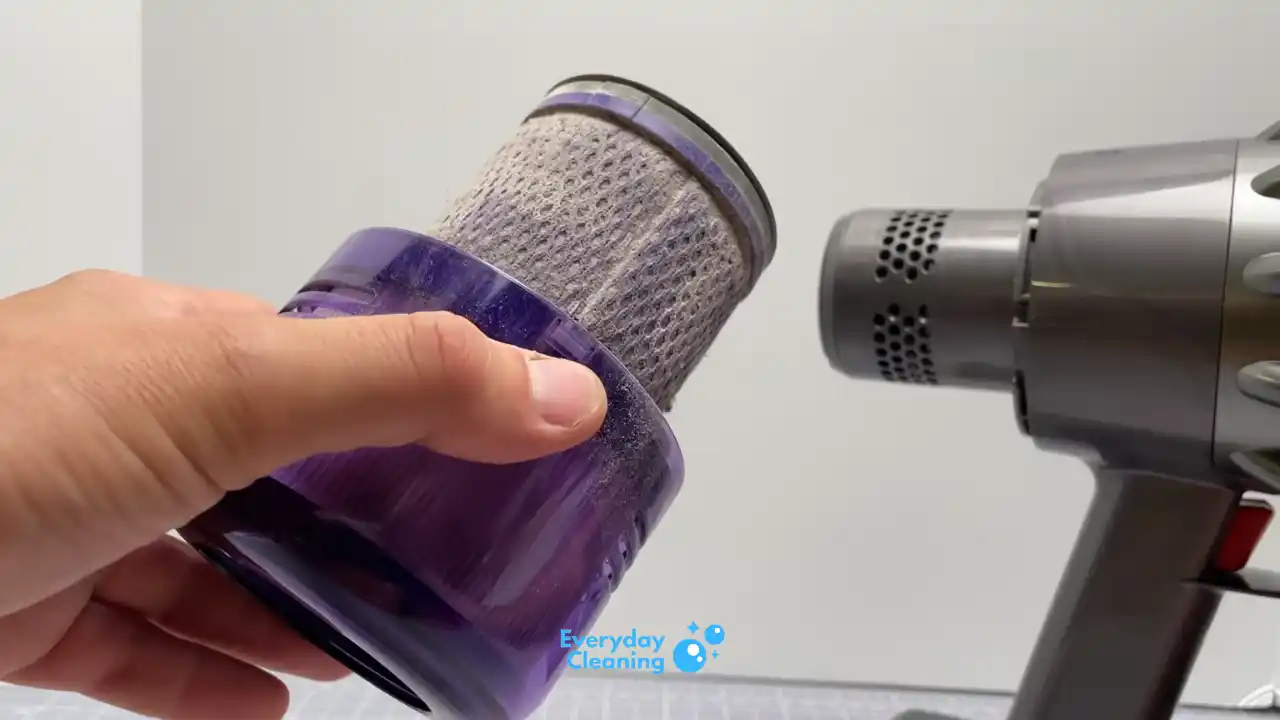
Table of Contents
If your Dyson vacuum has lost suction or the filter light is flashing, a dirty filter is almost certainly the cause. Cleaning it takes under 10 minutes and the fix is usually immediate once everything dries.
What You’ll Need
- Access to a sink with cold running water
- A dry cloth or paper towels (optional)
- 24 hours for drying time
No soap. No cleaning solution. Just water.
Understanding Dyson Filters
Before you clean anything, it helps to know what kind of filter your Dyson uses.
Most Dyson cordless vacuums (V7, V8, V10, V11, V12, V15) have a single washable filter. It looks like a small purple or blue cylinder and sits at the top of the main body, just above the cyclone unit. One filter, easy to find.
Older Dyson uprights and canister models (DC14, DC25, DC33, Ball series) usually have two filters: a pre-motor filter near the cyclone, and a post-motor HEPA filter at the back or bottom of the machine. Both need regular cleaning, but on different schedules.
Dyson filters are all washable, which is one thing that makes the brand different from many others. You do not need to buy replacement filters as often as you would with some other vacuums. That said, Dyson recommends replacing filters every 12 months even with regular washing, since the filter material degrades over time and stops capturing fine particles as effectively.
How to Clean a Dyson Vacuum Filter: Step-by-Step
Step 1: Switch Off and Unplug the Vacuum
Turn off your Dyson completely. For cordless V-series models, press the power button off and set the machine down. For corded uprights, unplug it from the wall before touching any parts.
Step 2: Remove the Filter
For V-series cordless models (V7 through V15): The filter is at the top of the main body. Twist it counterclockwise and pull it straight up. It should come out easily with one turn.
For Dyson upright models (Ball, DC series): The pre-motor filter is typically located near the cyclone housing at the top of the bin. Pull the bin clear first, then look for the cylindrical filter. The post-motor HEPA filter is usually at the back of the machine behind a cover. Check your manual if you’re unsure.
For Dyson Cinetic models: These models do not have a washable filter at all. The cyclone system handles fine particles without a filter. If you own a Cinetic, skip this guide entirely.
Step 3: Tap Out Loose Dust
Before rinsing, hold the filter over a trash can and tap it firmly a few times to knock out loose debris. This step takes 15 seconds and makes rinsing much faster.
Step 4: Rinse Under Cold Water
Hold the filter under a cold tap. Squeeze or flex the filter gently as the water runs through it. Keep rinsing until the water coming out runs completely clear.
This usually takes 1 to 2 minutes. If the filter is very dirty, it may take a little longer.
Do not use hot water. Do not use soap, dish soap, or any cleaning product. Dyson specifically warns against this. Soap residue clogs the filter material and affects suction. It can also leave behind a chemical smell when the vacuum runs.
Step 5: Shake Out the Water
Once the water runs clear, shake the filter firmly several times to remove as much water as possible. Tap the open end against your palm. Get out as much water as you can before setting it out to dry.
The more water you remove at this stage, the faster it dries.
Step 6: Air Dry for 24 Hours
Set the filter in a warm, well-ventilated space to dry completely. Dyson recommends at least 24 hours before reinstalling.
This is non-negotiable. Putting a damp filter back into a Dyson can cause serious motor damage and will likely void your warranty. It can also create mold inside the vacuum body.
Do not use a hair dryer, tumble dryer, microwave, or direct heat source to speed up drying. Heat warps the filter material and can permanently change the shape of the seal, which means the filter won’t fit correctly and air will bypass it entirely.
A warm room with decent airflow is all you need. If you vacuum daily and cannot go 24 hours without it, consider buying a spare filter to rotate.
Step 7: Reinstall the Filter
Once fully dry, slide or twist the filter back into place. For V-series models, push the filter down into the opening and twist clockwise until it locks. It should feel secure with no gaps around the edge.
For upright models, push the pre-motor filter back into its housing until it seats firmly. If your model has a HEPA post-motor filter, reinstall that as well.
Run the vacuum briefly to confirm suction is restored.
How to Clean Dyson Filter by Model Series
The steps above cover the basics, but filter location and access varies across Dyson’s lineup. Here’s a quick reference by series.
Dyson V7 and V8
One filter only. Purple cylindrical filter at the top of the main body. Twist counterclockwise to remove. These models are straightforward. The filter is one of the easiest in Dyson’s range to find and clean.
Dyson V10 and V11
Same single-filter setup as the V7/V8, but the filter is slightly larger and may feel tighter to remove. Twist counterclockwise, pull straight up. These models often display a filter warning light when cleaning is overdue.
Dyson V12 and V15 Detect
Same filter access as the V10/V11. Dyson added LED suction displays and sensor alerts on these models that will notify you more precisely when performance is being affected by a dirty filter. Still one filter, same cleaning process.
Dyson Ball and DC Upright Series (DC14, DC25, DC33, DC40, DC50)
Two filters in most models. The pre-motor filter is inside the cyclone bin area. Remove the bin, and the filter is visible just inside the housing. The post-motor HEPA filter is at the back, usually accessible through a cover panel. Clean both every month.
Dyson Outsize and Outsize Absolute
These cordless uprights have the same single-filter design as the V-series, just in a larger housing. Filter access is at the top rear of the main body.
Dyson Omni-glide and Micro
Compact cordless models with small cylindrical filters. Same removal method as other V-series, but the filter is shorter. Easy to miss when checking.
If you’re considering an upgrade and want a model with simpler filter maintenance, our guide to the best cordless stick vacuums covers options across different price points.
How Often to Clean Your Dyson Filter
Dyson recommends cleaning the filter once a month under regular household use.
If you have pets, vacuum every day, or live in a dusty environment, clean it every two to three weeks. The filter collects debris faster when there’s more of it.
For allergy sufferers, this is especially worth keeping up with. A clogged filter means fine particles including dust mites, pollen, and pet dander are getting pushed back into the air instead of being trapped. If allergies are a concern in your home, staying on top of filter maintenance is one of the most effective things you can do. Our roundup of the best vacuums for allergies also covers which HEPA-certified models hold up best over time.
Dyson also recommends replacing the filter entirely every 12 months, regardless of how often you clean it. The filter material loses its effectiveness with repeated washing and heavy use. Replacement filters typically cost $10 to $20 depending on the model.
Signs Your Dyson Filter Needs Cleaning Right Now
- Suction feels weaker than usual even with the bin empty
- The filter indicator light or app alert is active
- The vacuum smells musty, dusty, or like burning when running
- You can visibly see gray or brown buildup on the filter surface
- The vacuum cuts out faster than normal on Max mode
Any one of these is reason enough to pull the filter and rinse it today rather than waiting for the monthly schedule.
Common Mistakes to Avoid
Reinstalling a wet filter. This is the single most common mistake Dyson owners make. The motor pulls air through the filter. A wet filter means the motor is fighting moisture and can overheat. Always wait the full 24 hours.
Using soap or detergent. Dyson is clear on this. Water only. Soap leaves residue inside the filter fibers that restricts airflow and creates a smell.
Using hot water. Cold water only. Hot water can shrink the filter seal. A warped seal means air bypasses the filter, and your vacuum stops trapping fine particles properly even if suction seems fine.
Ignoring the post-motor HEPA filter on uprights. Most Dyson upright owners clean the pre-motor filter but forget the HEPA filter at the back. Both need monthly cleaning. Skipping the HEPA filter means the vacuum isn’t actually trapping the fine particles it’s supposed to.
Over-squeezing the filter. Gentle is enough. Aggressive wringing or twisting can tear the inner filter material, leaving gaps that allow fine dust to pass straight through.
Not checking the bin first. If the vacuum has weak suction but the filter looks clean, check the bin. An overfull dustbin is also a common cause of reduced airflow. Empty it and test before assuming the filter is the problem.
When to Replace Your Dyson Filter Instead of Cleaning It
Washing can only do so much. Replace your filter if:
- It has visible tears, holes, or structural damage
- It holds a permanent smell after washing and drying
- The filter material looks permanently discolored or compressed
- It has been in use for more than 12 months
Genuine Dyson replacement filters are sold on Amazon and Dyson’s website. Third-party filters are cheaper but vary in quality. If you have allergies or use the vacuum to manage pet dander, stick with the genuine part. The filter spec matters more in those situations.
If you’re regularly replacing filters and still finding performance drops off quickly, it may also be worth checking the brushroll and internal hose for blockages. A partial clog anywhere in the airflow path puts extra strain on the filter and makes dirt build up faster. For pet owners dealing with hair clogs specifically, our guide on the best cordless vacuums for pet hair highlights models with anti-tangle brushrolls that are much easier to keep clean overall.
Frequently Asked Questions
How do I know if my Dyson filter needs cleaning?
The most common sign is reduced suction. On newer V10, V11, V12, and V15 models, a filter warning light on the machine or an alert in the MyDyson app tells you directly. On older models, you’ll notice the vacuum feeling weaker than usual, or a musty smell when it runs.
Can I use my Dyson while the filter is drying?
No. Running a Dyson without the filter in place allows fine dust to enter the motor directly, which can cause permanent damage. You need to wait until the filter is fully dry. If this is a problem, buy a second filter and rotate them.
How long does a Dyson filter take to dry?
Dyson recommends a minimum of 24 hours at room temperature. In a humid environment or during winter, it can take up to 48 hours. If you’re not sure, leave it longer. A slightly longer drying time is always safer than a slightly shorter one.
Is the Dyson HEPA filter washable?
Most Dyson HEPA filters are washable. This is one of the things that sets Dyson apart from many other vacuum brands. However, Dyson still recommends replacing the filter every 12 months because the filter material gradually loses its ability to capture fine particles even after washing. If you want a vacuum that captures fine dust effectively for allergy control, our guide to the best HEPA vacuums for allergies covers what to look for and which models perform consistently over time.
Why does my Dyson still smell after cleaning the filter?
If the smell persists after cleaning and fully drying the filter, check the dustbin and cyclone housing for trapped debris. On cordless models, hair and pet dander sometimes get trapped inside the cyclone chamber itself. Wipe the inside of the bin with a dry cloth. If the smell is more like burning, stop using the vacuum and contact Dyson support.
My Dyson filter light came back on right after cleaning. What’s wrong?
The filter indicator is triggered by airflow restriction. If the light comes back on shortly after reinstalling a clean filter, the filter may not have been fully dry when you put it back in. Remove it, let it dry for another 12 to 24 hours, and reinstall. If the light stays on after that, there may be a blockage elsewhere in the machine.
Do all Dyson vacuums have washable filters?
Almost all do, except Dyson Cinetic models. Cinetic vacuums use a multi-cyclone system that captures fine particles without a filter, so there is nothing to wash or replace. All other current Dyson models include at least one washable filter.