Best Robot Vacuum and Mop for Tile Floors: 6 Top Picks Tested
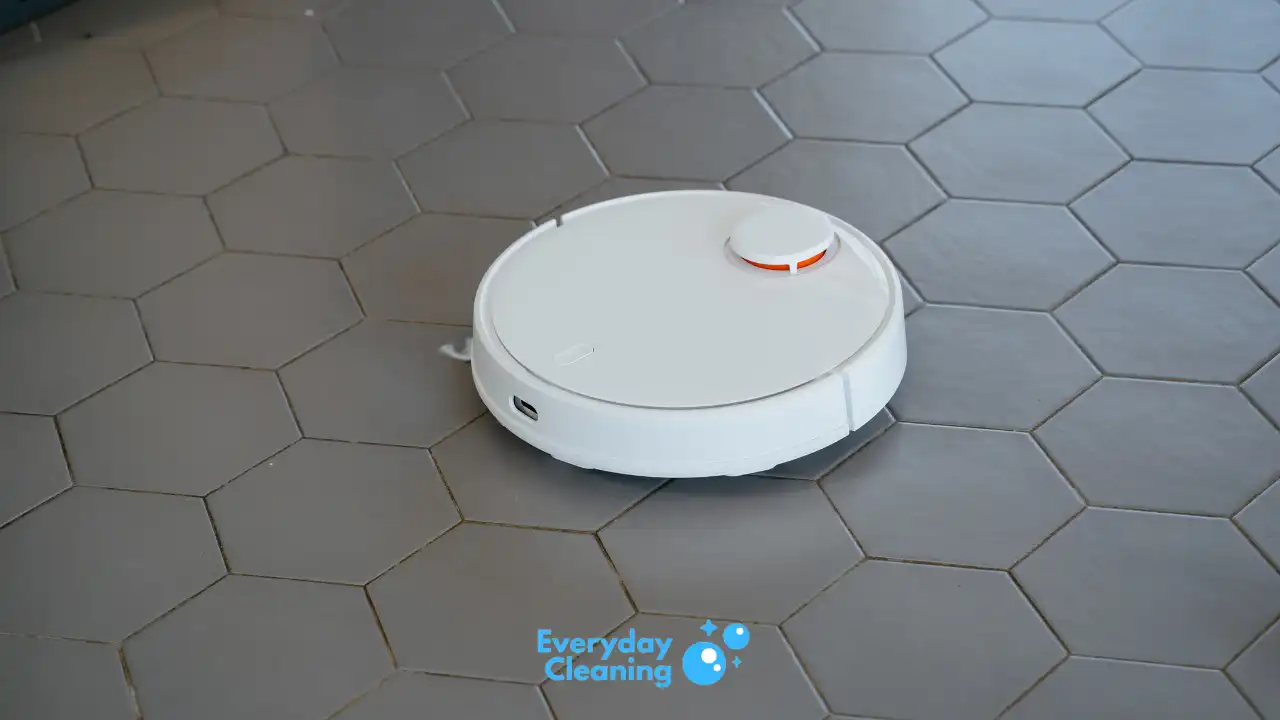
Tile floors show every crumb, hair, and smear. A robot that only vacuums leaves residue in grout lines and a dull film across the surface. These are the best robot vacuum and mop combos for tile floors, tested for how well they actually clean tile rather than just roll over it.
Our Top Picks
| Recommendation | Product | Reason |
|---|---|---|
| Best Overall | roborock Qrevo Slim | Dual spinning mops apply real scrubbing pressure on tile and grout — Reviews ↓ |
| Best for Pet Hair | DREAME L10s Ultra Gen 2 | MopExtend reaches grout near baseboards + 210-min runtime — Reviews ↓ |
| Best OMNI Dock | ECOVACS DEEBOT T90 PRO OMNI | 8,000 Pa + ZeroTangle brush + full OMNI wash-dry-refill station — Reviews ↓ |
| Best Value | ECOVACS DEEBOT T80 OMNI | Same OMNI dock quality at a lower price — Reviews ↓ |
| Best Mid-Range | Eufy Robot Vacuum E25 | HydroJet pressurized mopping + quietest pick at 60 dB — Reviews ↓ |
| Best for Obstacle Avoidance | Mova P10 Pro Ultra | 360° obstacle avoidance + 8,000 Pa suction at mid-range price — Reviews ↓ |
Best Overall: roborock Qrevo Slim
Tile floors reward spinning mop pads more than any other floor type. The Qrevo Slim runs dual spinning mops against the tile surface with consistent downward pressure, which is what you need to lift residue from the flat tile face and break loose the grime that collects along grout lines. Add an ultra-slim 82mm body and a fully automated dock, and this is the most complete tile floor package available.

- 3.23-Inch Slim Design - The Roborock Qrevo Slim, with its compact 3.23-inch (8.2 cm) body, is designed to navigate and clean hard-to-reach areas. Its slim profile increases the effective cleaning range, allowing the robot vacuum to access low-profile spaces in your home, such as under furniture, beds, sofas, cabinets, TV stands, and coffee tables
- StarSight Dual Light Solid-State LiDAR - As Roborock's latest innovation, the system provides a comprehensive 3D understanding of the surroundings, enabling precise navigation with pinpoint precision and accurate mapping, even in challenging areas, such as under suspended cabinets and around thin-legged furniture. Powered by 3D sensors that capture precise outlines of obstacles and an RGB camera for visual recognition, Roborock Qrevo Slim swiftly recognizes and evades 73 types of objects

Pros and Cons
| Pros | Cons |
|---|---|
| Dual spinning mop pads apply consistent scrubbing pressure on tile | Premium price |
| Mop pads lift automatically on carpet so tile-to-rug transitions stay dry | |
| Multifunctional Dock 3.0 washes, dries, refills, and empties after every run | |
| Ultra-slim 82mm body reaches under low furniture near tile floors | |
| 11,000 Pa suction handles tile debris and embedded carpet dirt | |
| FlexiArm side brush cleans grout along walls and edges |
Testing Results
Suction and Tile Performance: 11,000 Pa is more suction than tile needs for loose debris, but it handles the fine particulates that settle into grout lines without scattering them first. Auto-detect drops suction to an appropriate level on bare tile, which reduces noise without sacrificing pickup.
Mopping Performance on Tile: This is where the Qrevo Slim separates itself on tile specifically. The dual spinning pads rotate against the tile surface rather than passively dragging. On kitchen tile with dried food splatter, and bathroom tile with soap scum residue, the rotational pressure lifts marks that a damp vibration pad leaves behind. The dock washes and warm-air dries the pads after every run, so each session starts with a clean mop and clean water.
Grout Line Cleaning: Grout is the hardest part of tile maintenance for robot mops. The FlexiArm side brush pushes debris out of grout along walls and edges before the mop passes. The spinning pads agitate the surface enough to loosen surface-level grime in grout channels. For deep-stained grout, no robot mop replaces a manual scrub brush, but for daily maintenance this keeps grout looking noticeably cleaner over time.
Carpet Handling: Mop pads lift fully over carpet. Tile-to-carpet transitions work cleanly with no wet residue on rugs. Thick high-pile carpet is not this robot’s target, but low and medium pile handle fine.
Mapping and Navigation: StarSight uses structured light navigation. Accurate across standard floor plans. Handles multi-room layouts and builds reliable maps within a few runs.
Noise Level: 65 dB. Fine for daytime cleaning in kitchens and bathrooms.
Real-world Usage
Kitchen and bathroom tile are the primary beneficiaries of this robot. Kitchen tile picks up grease splatter, food crumbs, and foot traffic grime daily. The spinning mops address the grease better than passive systems. Bathroom tile with soap and water residue also comes up cleanly on a daily schedule.
The slim body means it gets under bathroom vanities and kitchen toe-kicks where tile floors extend below cabinetry. These are exactly the spots where manual cleaning gets missed most often.
Best Use Case
Best for tile-primary homes or homes where the kitchen and bathroom floors are the main cleaning priority. Equally effective on hardwood and LVP in mixed-floor homes. If your grout lines are a persistent issue and you want daily automated help, this is the pick.
Verdict
The Qrevo Slim earns the top spot on tile because spinning dual mop pads matter more on this surface than any other. The grease and residue that tile accumulates requires contact pressure to lift, and this delivers it automatically. The dock automation means you don’t handle dirty mop pads between sessions. If tile floors are the main reason you want a robot mop, this is the strongest option. For a broader look at robot vacuums on tile, our guide on the best robot vacuum for tile floors and pet hair covers vacuum-only options alongside combos.
Rating: 4.8 / 5
View on Amazon: roborock Qrevo Slim
Best for Pet Hair: DREAME L10s Ultra Gen 2
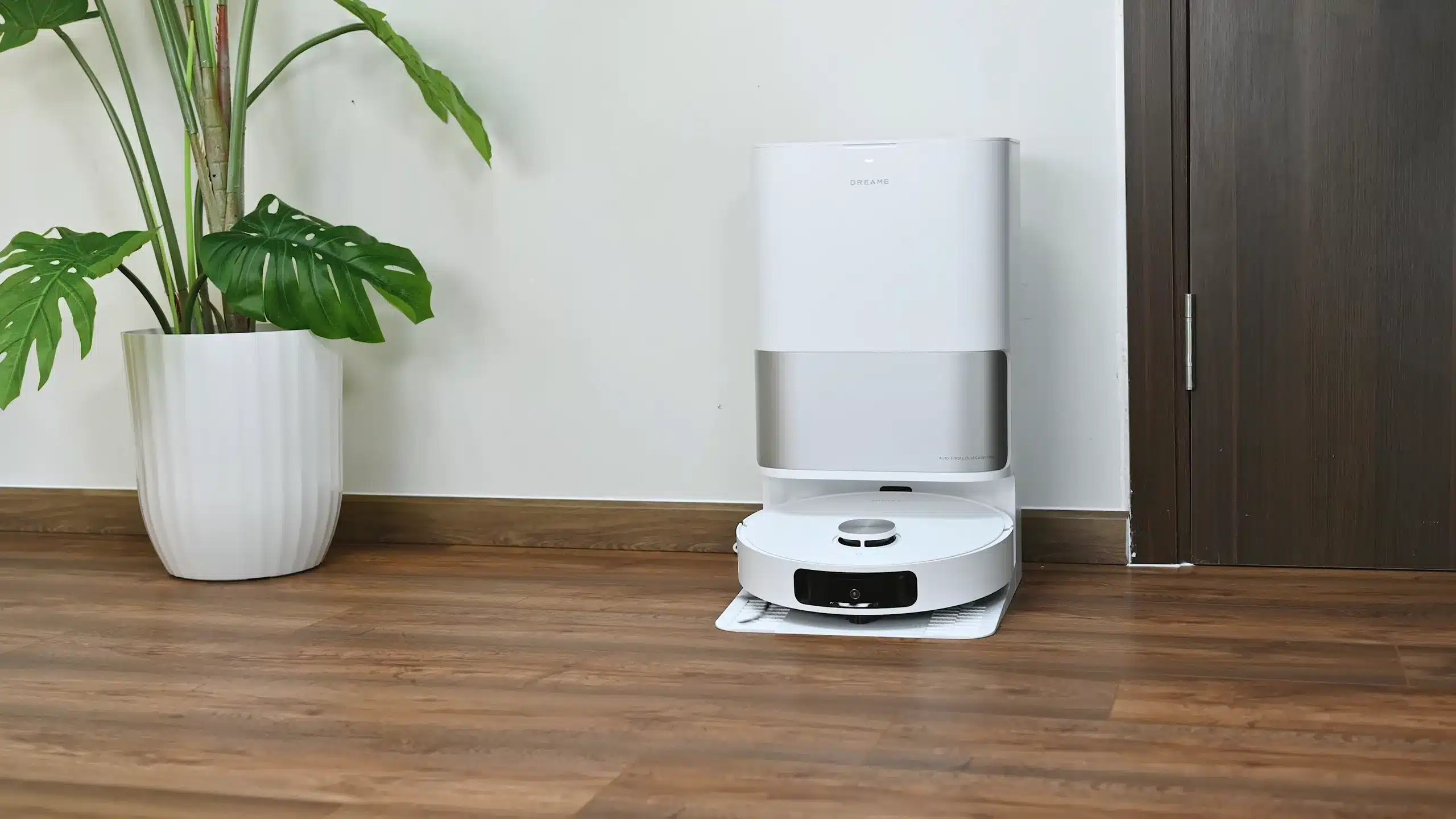
Tile floors in pet households collect fur along grout lines and baseboards faster than any other surface. The Dreame L10s Ultra Gen 2 addresses both problems: MopExtend technology pushes the mop pad outward to clean along walls and baseboards, and the brushroll is optimized for long pet fur on hard surfaces.

- Hard-to-Reach Made Easy:L10s Ultra Gen 2 cleans hidden debris under low-profile furniture and tight spaces up to 4cm deep. Edge recognition and adjustable mop extension ensure 165% edge cleaning, navigating around tables, chairs, and skirting boards.
- 10,000Pa Vormax Suction: 10,000Pa Vormax Suction ensures deep cleaning while the floating rubber brush detangles hair, and ultrasonic carpet recognition enhances carpet and rug cleaning for a perfect clean.
Pros and Cons
| Pros | Cons |
|---|---|
| MopExtend reaches along baseboards where pet hair accumulates on tile | Large dock footprint |
| 210-min runtime covers large tile floor areas in a single pass | Upper-mid price category |
| Pet-hair-optimized brushroll minimizes tangles from long fur | |
| 7,000 Pa suction handles tile and medium carpet | |
| Self-empty and self-clean dock | |
| Strong obstacle avoidance |
Testing Results
Suction and Tile Performance: 7,000 Pa is well above what’s needed for tile floor debris. Pet hair, dust, and fine particles clear in one pass. The auto-adjust drops to an appropriate level on bare tile to keep noise down.
Mopping Performance on Tile: Consistent mop pad pressure on tile delivers clean results. The MopExtend feature is the main differentiator here: the mop pad extends outward during edge passes and cleans the tile strip along baseboards that standard robot mops miss entirely. On tile floors where pet hair collects against walls, this is a meaningful real-world difference.
Grout Line Cleaning: The edge mopping catches grout along walls and baseboards. Center-floor grout gets standard spinning-pad treatment. For homes where baseboards meet tile grout, the coverage is noticeably more complete than robots without edge mop extension.
Pet Hair Pickup: The pet-hair-optimized brushroll handles long fur on tile without stopping mid-run to clear tangles. Tile floors with pets require daily pickup to keep hair from building up in grout channels, and the 210-minute runtime means the robot can handle large kitchen and bathroom floor areas in one session.
Auto-Empty and Dock: Self-empty and self-clean dock handles the core maintenance tasks. Mop washing included. Warm-air drying is not as advanced as the Qrevo Slim’s dock at this tier, but the pads come out cleaner than manual rinsing for most users.
Noise Level: 64 dB. Consistent with the category. Runs quietly in the background.
Real-world Usage
Pet owners with large tile floor areas in kitchens, mudrooms, and bathrooms will feel the runtime advantage most. The 210-minute single-session coverage means the robot doesn’t stop and recharge mid-clean on a large open-plan tile floor. The MopExtend feature earns its keep in rooms where fur collects against every wall.
For households where tile and hardwood alternate in adjacent rooms, this handles both surfaces well in the same run.
Best Use Case
Best for pet owners with significant tile floor coverage in large homes. Also a strong pick where edge cleaning along baseboards matters. For more on how robot combos handle pet hair across multiple surface types, see our guide on the best robot vacuums for pet owners.
Verdict
The Dreame L10s Ultra Gen 2 is the pet-hair-on-tile pick. The MopExtend edge cleaning solves the baseboard fur problem that most robot mops ignore, and the 210-minute runtime means large tile floor homes don’t get a mid-session recharge interruption. The upper-mid price is justified for pet households where tile is the dominant floor type.
Rating: 4.6 / 5
View on Amazon: DREAME L10s Ultra Gen 2
Best OMNI Dock: ECOVACS DEEBOT T90 PRO OMNI
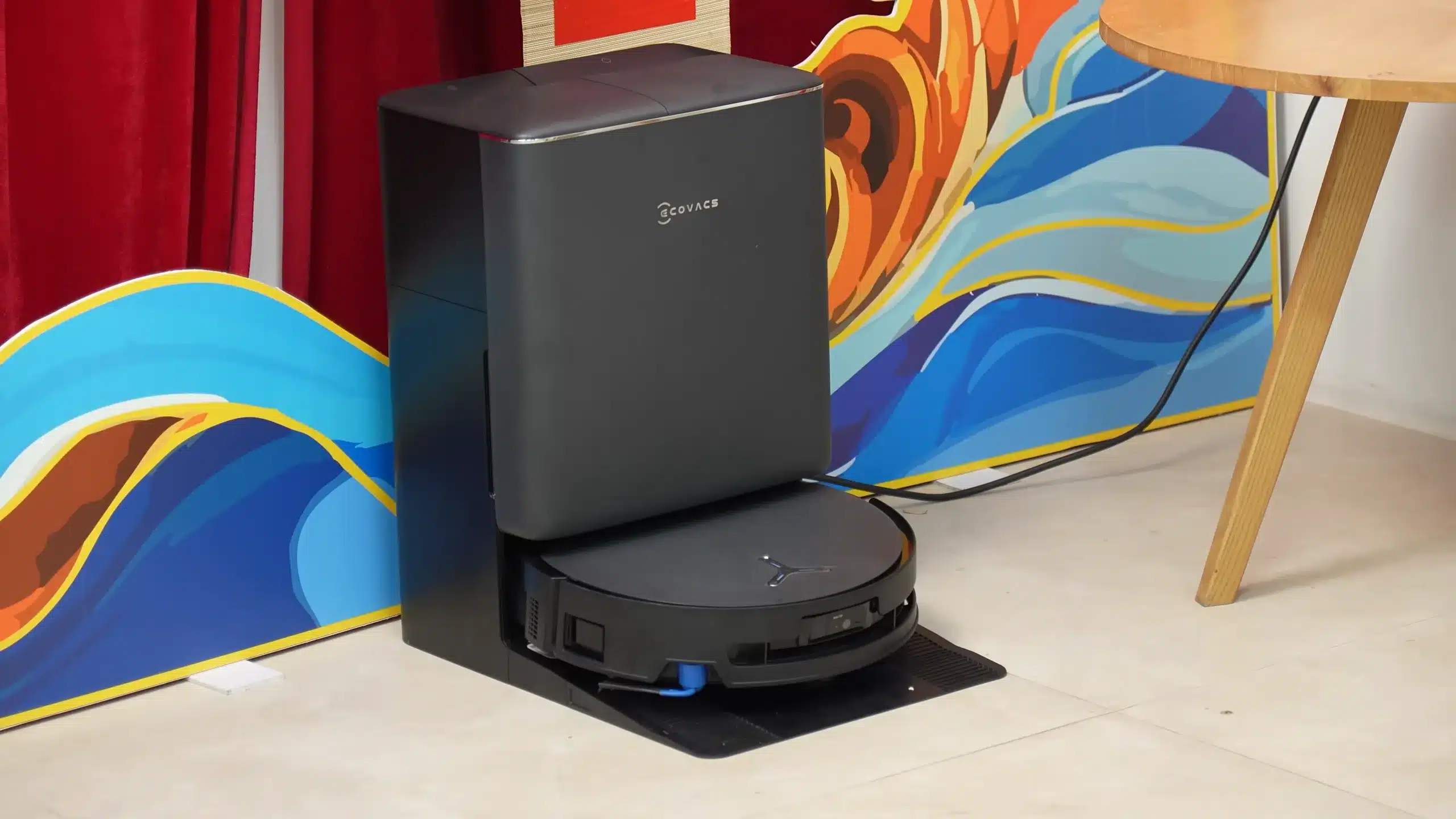
The DEEBOT T90 PRO OMNI pairs 8,000 Pa suction and a ZeroTangle dual brushroll with the most comprehensive self-maintenance station at this price tier. The OMNI base empties the bin, washes mop pads, dries them with warm air, and refills the water tank. On tile floors where you want consistently clean mop pads for every session, the dock automation is the main argument.
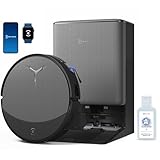
- 30,000Pa BLAST Suction — Clean More in One Pass: Weak suction leaves dirt behind. BLAST 30,000Pa high-airflow suction lifts dust, pet hair, and crumbs from carpets and hard floors in one go—cleaning faster with fewer repeat passes.
- Real Scrubbing with OZMO Roller 3.0 — Not Pad Smearing: Pads wipe, they don’t scrub. OZMO ROLLER 3.0 uses a 10.6-inch self-washing roller with continuous, pressurized scrubbing to lift sticky spills, dried stains, and kitchen grime—removing mess instead of spreading it.

Pros and Cons
| Pros | Cons |
|---|---|
| OMNI station washes mop pads, warm-air dries, empties bin, and refills water automatically | Upper-mid price range |
| ZeroTangle dual brushroll handles pet hair without mid-run maintenance | Thick high-pile carpet not its strength |
| 8,000 Pa suction pulls tile grout debris and hard-floor particles cleanly | |
| 200-min runtime covers large floor plans | |
| AIVI obstacle detection avoids furniture legs and objects | |
| Strong mopping performance on tile and hard floors |
Testing Results
Suction and Tile Performance: 8,000 Pa handles everything tile floors produce. Fine dust, grit tracked in from outside, crumbs, and pet hair all clear in one pass. Suction auto-adjusts at surface transitions for efficiency.
Mopping Performance on Tile: Spinning mop pads with consistent pressure perform well on tile. The OMNI dock’s warm-air drying is particularly relevant here: tile floors mopped with a pad that wasn’t properly dried between sessions will leave a faint odor or smear. Starting every session with a clean, dry mop pad that gets rewetted with clean water each run is the right approach on tile, and the OMNI station delivers this automatically.
Grout Line Cleaning: Strong performance on flat tile surfaces. The rotating pads agitate grout channels adequately for daily maintenance. Kitchen grease and bathroom soap residue both come up with consistent mop pad contact.
Pet Hair Pickup: ZeroTangle brush handles long and mixed fur types on tile without tangling. Tile floors accumulate pet hair faster than carpet because there’s nothing for it to grip; a robot that doesn’t tangle handles tile pet hair cleanup better over consecutive daily runs.
Auto-Empty and Dock: The OMNI station is the headline feature. Fully automated maintenance across all four functions means you interact with the system only to refill clean water and occasionally replace the dust bag. For tile-heavy kitchens and bathrooms, this is practical hands-off maintenance.
Noise Level: 65 dB. Consistent with other upper-mid models. Comfortable for daytime kitchen operation.
Real-world Usage
Kitchen tile is where this robot earns its keep most clearly. Cooking grease, food prep debris, and tracked-in grit accumulate on kitchen tile daily. Running the T90 PRO on a daily kitchen schedule keeps the floor consistently clean without the mop pad issue that plagues less automated systems.
Bathroom tile with the OMNI dock is similarly effective. The automatic pad washing between sessions means soap scum and bathroom residue don’t transfer from one run to the next.
Best Use Case
Best for kitchen and bathroom tile-primary homes where consistent mop cleanliness between sessions matters. Strong pick for pet owners who want ZeroTangle reliability on daily tile runs. Also good for buyers who want the most hands-off maintenance system at this price tier. For homes with tile and other hard surface types, our overview of the best robotic vacuum cleaners covers a wider range of surface applications.
Verdict
The T90 PRO OMNI is the right pick when you want every session to start with a clean mop pad and fresh water. On tile floors specifically, this matters more than on carpet: a dirty mop on tile just spreads residue around rather than cleaning. The OMNI dock solves this completely. The ZeroTangle brush and 8,000 Pa suction back it up with real performance.
Rating: 4.5 / 5
View on Amazon: ECOVACS DEEBOT T90 PRO OMNI
Best Value: ECOVACS DEEBOT T80 OMNI
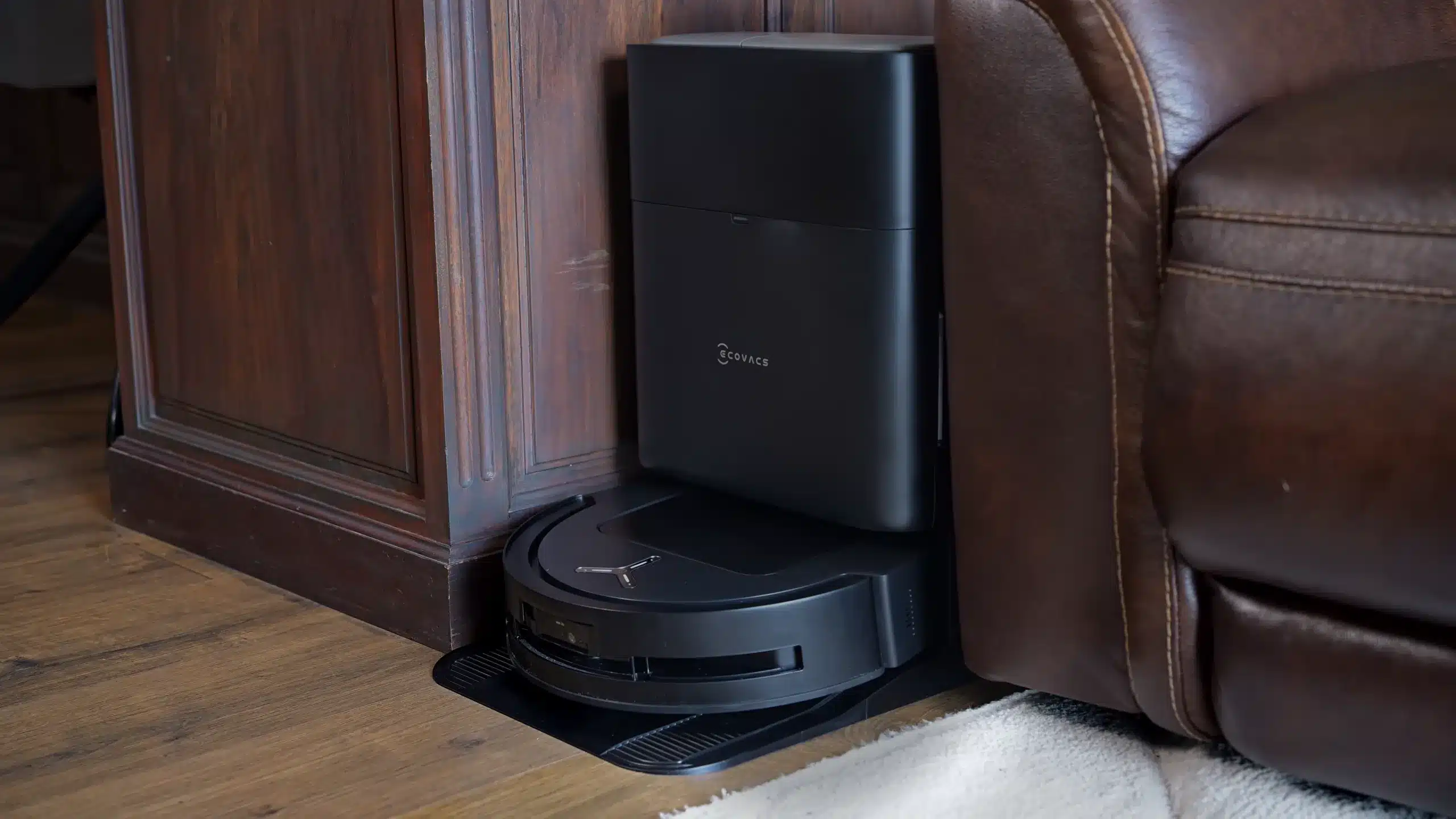
The DEEBOT T80 OMNI delivers the same core experience as the T90 PRO at a lower price. Same OMNI dock, same 8,000 Pa suction, same ZeroTangle brush. The step-down is in obstacle avoidance sophistication, which matters in cluttered rooms and less so on open tile floors.

- Instant Self-Cleaning OZMO Roller Mop:OZMO Roller Mop washes itself in real time at 220 RPM, removing dirty water as it cleans for streak-free floors with less cross-contamination than traditional robot mops.
- 18,000Pa Ultra Suction for Deep Cleaning: 18,000Pa suction removes embedded dirt, dust, crumbs, and pet hair from carpets and hard floors in one pass, delivering deep cleaning for busy homes and pet owners.
Pros and Cons
| Pros | Cons |
|---|---|
| Same OMNI dock as T90 PRO (washes, dries, empties, refills) | Large OMNI dock still requires dedicated space |
| 8,000 Pa suction matches the T90 PRO | |
| ZeroTangle brushroll handles pet hair on tile | |
| 200-min runtime covers large tile floor homes | |
| Strong spinning mop performance on tile | |
| Better price-to-feature ratio for most tile floor buyers |
Testing Results
Suction and Tile Performance: Identical to the T90 PRO on tile. 8,000 Pa handles all standard tile floor debris types without issue. Auto-adjustment at carpet transitions works correctly.
Mopping Performance on Tile: Spinning mop pads deliver the same tile cleaning result as the T90 PRO. The OMNI dock washes and warm-air dries pads identically. On tile, the mopping output is indistinguishable between the two models in daily use.
Grout Line Cleaning: Same rotating pad agitation as the T90 PRO on grout channels. Side brush pushes edge debris ahead of the mop pass. Consistent daily results on kitchen and bathroom grout.
Pet Hair Pickup: ZeroTangle brush performs the same way as on the T90 PRO. Pet hair on tile comes up cleanly across consecutive runs without tangling interruptions.
Auto-Empty and Dock: The OMNI station is identical to the T90 PRO version. All four automated functions (empty, wash, dry, refill) work at the same level. The dock is the primary reason to buy either ECOVACS model, and you get the same dock here for less.
Noise Level: 65 dB. Matches the T90 PRO throughout.
Real-world Usage
Open kitchen and bathroom tile floors are where the T80 OMNI performs the same as its pricier sibling. The obstacle avoidance step-down becomes apparent in rooms with chair legs, pet bowls, and floor items. On a clear kitchen or bathroom floor, the robot navigates without issue.
For buyers who keep tile floors reasonably clear before each run, the T80 OMNI is a smarter spend than the T90 PRO. You get the OMNI dock and the 8,000 Pa suction for less money.
Best Use Case
Best for tile floor buyers who want the full OMNI dock experience and are willing to do a quick pre-run tidy on cluttered areas. Strong value compared to the T90 PRO for homes where tile floors are relatively open. If your kitchen has a lot of chairs, pet furniture, and floor clutter at all times, step up to the T90 PRO for the obstacle avoidance upgrade.
Verdict
The T80 OMNI is the practical tile floor pick at this price range. The OMNI dock and 8,000 Pa suction are the features that justify the purchase, and you get both here at a lower cost than the T90 PRO. The obstacle avoidance trade-off is manageable for most tile floor homes. Strong value for buyers who prioritize dock automation over navigation sophistication.
Rating: 4.3 / 5
View on Amazon: ECOVACS DEEBOT T80 OMNI
Best Mid-Range: Eufy Robot Vacuum E25
The Eufy E25 uses HydroJet pressurized mopping rather than a passive gravity-fed wet cloth. On tile floors where consistent moisture distribution matters for cleaning dried residue, the pressure-fed system delivers more even coverage throughout the run. It’s the quietest pick here at 60 dB and comes in at a lower price than the ECOVACS or Dreame options.

- 【𝐀𝐥𝐰𝐚𝐲𝐬-𝐂𝐥𝐞𝐚𝐧 𝐌𝐨𝐩𝐩𝐢𝐧𝐠 𝐰𝐢𝐭𝐡 𝐇𝐲𝐝𝐫𝐨𝐉𝐞𝐭 𝐒𝐲𝐬𝐭𝐞𝐦】Refreshes the roller mop 2 times per second with clean water, ensuring every pass is spotless and preventing cross-contamination. Removes tough stains like coffee and sauce. True deep-cleaning for whole-home hygiene.
- 【𝐇𝐚𝐧𝐝𝐬-𝐅𝐫𝐞𝐞 𝐰𝐢𝐭𝐡 𝐀𝐥𝐥-𝐢𝐧-𝐎𝐧𝐞 𝐒𝐭𝐚𝐭𝐢𝐨𝐧】Auto-empties dust into a 3L bag (lasts ~75 days), self-washes roller mops, hot air dries at 50°C, and auto-refills water. Complete hands-free convenience for large homes with up to 5 floor plans.

Pros and Cons
| Pros | Cons |
|---|---|
| HydroJet pressurized mopping keeps moisture consistent on tile throughout the run | Auto-empty dock adds significant cost |
| Quietest pick at 60 dB | No warm-air mop drying in dock |
| Zero-tangle dual brushroll handles pet hair on tile | |
| 6,000 Pa suction is sufficient for tile floor cleaning | |
| Good value at mid-range pricing | |
| Obstacle avoidance included |
Testing Results
Suction and Tile Performance: 6,000 Pa clears tile floors well. Fine dust, crumbs, and pet hair come up cleanly in a single pass. Tile doesn’t need extreme suction, and the E25’s power level is appropriate for the surface without unnecessary noise.
Mopping Performance on Tile: The HydroJet system is the main story on tile. A gravity-fed wet cloth starts with a saturated pad and gradually dries as the robot moves, which means the second half of the kitchen often gets less moisture than the first half. HydroJet pumps water actively to the pad throughout the run, delivering consistent coverage from start to finish. On kitchen tile with dried cooking splatter, this translates to more even cleaning across the whole floor.
Grout Line Cleaning: Consistent mop moisture throughout the run helps with grout maintenance. Grout in the middle of a large kitchen floor gets the same moisture as grout near the starting point, which isn’t the case with passive wet-cloth systems.
Pet Hair Pickup: Zero-tangle dual brush handles standard pet hair volumes on tile. Not as aggressive as the Dreame’s brushroll for heavy shedders, but solid for moderate pet hair on hard surfaces.
Auto-Empty and Dock: The auto-empty dock is available separately and adds cost. At the base price, bin emptying is manual. If you’re buying without the dock, factor in the manual emptying as part of the routine.
Noise Level: 60 dB is the quietest on this list. Meaningful if you run the robot in bathrooms near bedrooms, or in kitchens while working from home. The difference between 60 dB and 65 dB is perceptible in a quiet room.
Real-world Usage
The E25 is the pick for buyers who want better tile mopping than a passive wet cloth delivers, without committing to upper-mid pricing. The HydroJet consistency shows most on large kitchen tile floors where the coverage difference between an active and passive system becomes visible by the end of the run.
Quiet operation at 60 dB makes it practical in spaces where noise matters, like apartments with shared walls or homes where the robot runs during evening hours.
Best Use Case
Best for mid-range buyers with tile-primary floors who want pressurized mopping without the premium price. Good for quieter households, apartments, and tile floors in kitchens and bathrooms where consistent moisture matters. For how vacuum mop combos handle different types of hard floors, our guide on the best vacuum mop combo for vinyl plank flooring covers related surface comparisons.
Verdict
The Eufy E25 earns its mid-range spot with the HydroJet system and quiet operation. On tile specifically, the consistent moisture delivery is a genuine advantage over passive wet cloth systems. The runtime is shorter than the ECOVACS options, but for most standard-size kitchen and bathroom floors, 120 minutes is sufficient for a full run.
Rating: 4.2 / 5
View on Amazon: Eufy Robot Vacuum E25
Best for Obstacle Avoidance: Mova P10 Pro Ultra
The Mova P10 Pro Ultra brings 360-degree obstacle avoidance to mid-range pricing. Kitchen and bathroom tile floors are typically obstacle-dense: chair legs, trash cans, pet bowls, and cabinet bases all compete for floor space. A robot that navigates around these cleanly without getting stuck covers more tile per run.

- Powerful 13,000Pa Suction for a Deeper Clean- 13000pa strong suction power, can easily suck away the hard floor or carpet dust, pet hair, cat litter, snacks crumbs and so on.
- All-in-one Docking Station- The upgraded base station simplifies your cleaning routine. Auto mop self-cleaning with 149℉ hot water and auto mop drying with hot air ensure a fresh smell.3.2L dust bag auto-empty function allows you to go 75 days without cleaning the dust bag.4.5L clean water and 4L used water tank cover a vast mopping area of up to 4300 sqft.

Pros and Cons
| Pros | Cons |
|---|---|
| 360° obstacle avoidance navigates around chair legs, pet bowls, and kitchen clutter | Newer brand with fewer long-term reviews in the US market |
| 8,000 Pa suction matches the ECOVACS models | |
| Spinning mop pads clean tile effectively | |
| Auto-empty dock included | |
| AI-powered navigation with strong overall coverage | |
| Competitive price for the feature set |
Testing Results
Suction and Tile Performance: 8,000 Pa pulls tile debris cleanly. Same suction tier as the ECOVACS picks. Performance on bare tile is consistent and thorough in a single pass.
Mopping Performance on Tile: Spinning mop pads deliver solid tile cleaning results. Performance is comparable to the ECOVACS models at this suction level. Kitchen grease and bathroom soap residue come up with consistent pad contact.
Grout Line Cleaning: Standard spinning pad performance on grout channels. Adequate for daily maintenance on flat tile. No edge mop extension like the Dreame, but center-floor grout is handled well.
Pet Hair Pickup: Handles pet hair on tile without significant tangling. The 360-degree obstacle avoidance is particularly useful in pet households where food bowls, beds, and toys scatter across the kitchen or laundry room floor.
Auto-Empty and Dock: Auto-empty dock is included. The dock handles bin emptying reliably. Mop pad washing is basic compared to the OMNI stations.
Noise Level: 64 dB. Comfortable for kitchen and bathroom operation during the day.
Real-world Usage
Kitchen tile is an obstacle course for most robots: cabinet toe-kicks, island legs, bar stools, trash can, pet bowls, and appliance feet all compete on a typical kitchen floor. The 360-degree obstacle avoidance means the P10 Pro routes around these cleanly in most cases without getting stuck in corners or repeatedly bumping the same chair leg.
The main reservation is brand familiarity. Mova is a newer entrant in the US market. Current performance data is strong but long-term durability history is thinner than for Roborock or ECOVACS.
Best Use Case
Best for buyers in kitchen and bathroom tile floors with a lot of floor-level obstacles where a stuck robot mid-run is a recurring frustration. Good mid-range option for buyers who want strong suction and mop performance with better navigation than basic models offer. For tile and pet hair together, our guide on the best vacuum for tile floors and pet hair provides useful context.
Verdict
The Mova P10 Pro Ultra makes the most sense for obstacle-dense tile floors where other robots get stuck. 8,000 Pa suction and spinning mops handle the tile cleaning. The 360-degree obstacle avoidance handles the navigation problem that kitchen layouts create. The brand is newer, and that’s the trade-off. For buyers willing to look past the brand recognition gap, the hardware case is strong.
Rating: 4.1 / 5
View on Amazon: Mova P10 Pro Ultra
What Makes the Best Robot Vacuum and Mop for Tile Floors?
Mopping System: Spinning Pads vs Vibration vs Pressurized
Tile is the surface where mopping system type makes the most visible difference. Vibration pads drag a damp cloth across the floor with minimal pressure. They handle light dust and fresh spills but don’t generate enough contact force to lift dried kitchen grease, soap scum on bathroom tile, or residue baked into the tile surface over time.
Spinning mop pads rotate against the floor with active downward pressure. This mechanical scrubbing action lifts dried-on residue that passive systems leave behind. On kitchen tile where cooking grease accumulates and bathroom tile where soap and mineral deposits build up, the difference is real and visible after a few runs.
Pressurized systems like HydroJet actively pump water to the mop pad throughout the run. The advantage is consistency: a passive wet cloth starts with too much moisture and ends too dry. A pressurized system delivers the same moisture level from the first square foot to the last. On large kitchen or mudroom tile floors, this matters.
For tile floors, spinning mop pads or pressurized systems are the minimum worth buying. Basic vibration pads are a step above no mopping at all, but they underperform on the surfaces where tile owners most need cleaning.
Grout Line Maintenance
Grout is the hardest part of tile cleaning for any robot. The channels between tiles collect dirt, hair, and residue at a lower level than the tile surface, and most mop pads don’t have the geometry to reach down into them. What robot mops can do is prevent buildup from deepening. Daily or every-other-day runs that clean the tile surface and agitate grout edges prevent the gradual darkening that comes from months of untreated accumulation.
Models with edge mop extension features, like the Dreame L10s Ultra Gen 2’s MopExtend, improve grout coverage along baseboards and walls. Standard models cover center-floor grout adequately with consistent runs.
Mop Pad Cleanliness Between Sessions
On tile, a dirty mop pad is worse than no mop at all. A pad contaminated with kitchen grease, bathroom residue, or pet hair from the previous session will redistribute that material across the floor on the next run. This is visible on tile in a way it isn’t on carpet.
Docks that wash and warm-air dry mop pads after every session solve this completely. The ECOVACS OMNI stations and the Qrevo Slim’s Multifunctional Dock 3.0 both do this. Mid-range options without dock washing require manual pad rinsing, which most users do inconsistently. If tile floor cleanliness is the primary goal, the dock cleaning feature is worth the price step-up.
Navigation and Coverage on Tile Layouts
Kitchens and bathrooms typically have the most furniture legs, cabinet bases, and floor-level obstacles of any room in a home. A robot with weak obstacle avoidance gets stuck repeatedly against chair legs, trapped behind trash cans, or wedged under toe-kicks. Better obstacle avoidance means more complete tile coverage per run without manual intervention to unstick the robot.
All models here include obstacle avoidance at varying capability levels. Camera-based AIVI systems and 360-degree sensor arrays handle cluttered tile layouts better than basic bump-and-redirect navigation.
Suction Power for Tile and Adjacent Surfaces
Tile floors don’t require extreme suction for loose debris. However, most tile-floor homes have at least some carpet or area rugs in adjacent rooms. A robot that transitions between tile and low-pile carpet needs enough suction to handle both. Models at 6,000 Pa cover tile well and handle low to medium carpet adequately. At 8,000 Pa and above, the carpet performance improves and the robot handles surface transitions more reliably.
For tile-only homes with no carpet, 6,000 Pa is more than sufficient and saves money. For mixed-surface homes, the 7,000 to 8,000 Pa range earns the extra cost.
Frequently Asked Questions
What is the best robot vacuum and mop for tile floors?
The roborock Qrevo Slim is the top pick for tile floors. Dual spinning mop pads apply real scrubbing pressure on tile surfaces, the FlexiArm side brush cleans grout along edges, and the Multifunctional Dock 3.0 automatically washes and dries the pads after every run. For pet hair on tile specifically, the Dreame L10s Ultra Gen 2 adds edge mop extension for baseboard coverage.
Can robot mops clean tile grout?
Robot mops help maintain grout but don’t deep-clean it. Spinning mop pads agitate the surface of grout channels enough to prevent gradual buildup during daily maintenance runs. For stained or deeply discolored grout, a manual scrub brush and grout cleaner is still necessary. What robot mops do well is prevent grout from reaching that point through regular automated upkeep.
How often should a robot vacuum and mop run on tile floors?
Daily is ideal for kitchens and pet households. Tile shows every footprint, hair, and splatter, and daily runs prevent accumulation in grout lines. Bathroom tile can run every other day for most households. All models here support scheduled runs via app, so the easiest approach is a daily kitchen schedule and every-other-day bathroom schedule.
Is it safe to use a robot mop on tile floors?
Yes. Tile is the most durable surface for robot mops. Unlike hardwood or engineered wood, tile isn’t sensitive to moisture, so the water level setting matters less than it does on wood floors. The main precaution is mop pad cleanliness: a dirty pad spreads residue on tile, which is visible in a way it isn’t on other surfaces. Docks that wash pads after every session prevent this.
Do these robots handle both tile and carpet?
All six models here transition between tile and carpet automatically. The mop pad lifts off when carpet is detected, suction adjusts, and the robot continues cleaning both surfaces in one session. Thin and low-pile carpet handles fine. Thick high-pile carpet is where all models here show limits. Our guide on the best robot vacuums for busy families covers multi-surface households in more detail.
Is a robot vacuum and mop combo worth it for tile floors?
Yes, more so than for any other surface type. Tile requires both dry debris removal and wet cleaning to stay visibly clean. A vacuum-only robot leaves residue and film that accumulates over time. A combo robot addresses both in one automated session. The key is buying a model with a spinning or pressurized mop system rather than a basic vibration pad, which doesn’t generate enough contact pressure to clean tile properly.
What’s the difference between robot mops with and without self-cleaning docks?
A self-cleaning dock washes the mop pad after every run so each session starts with a clean pad and fresh water. Without it, you need to manually rinse the pad, which most users do infrequently. On tile, this matters: a pad that went through the kitchen, picked up grease and debris, and wasn’t cleaned before the next run will redistribute that residue across the floor. For tile floor maintenance, a dock that washes and dries the mop is the most impactful single feature after the mopping system type itself. Our guide to the best vacuum cleaners for tile floors covers manual and robot options for tile maintenance together.