Best Pressure Washer for Cars in 2026
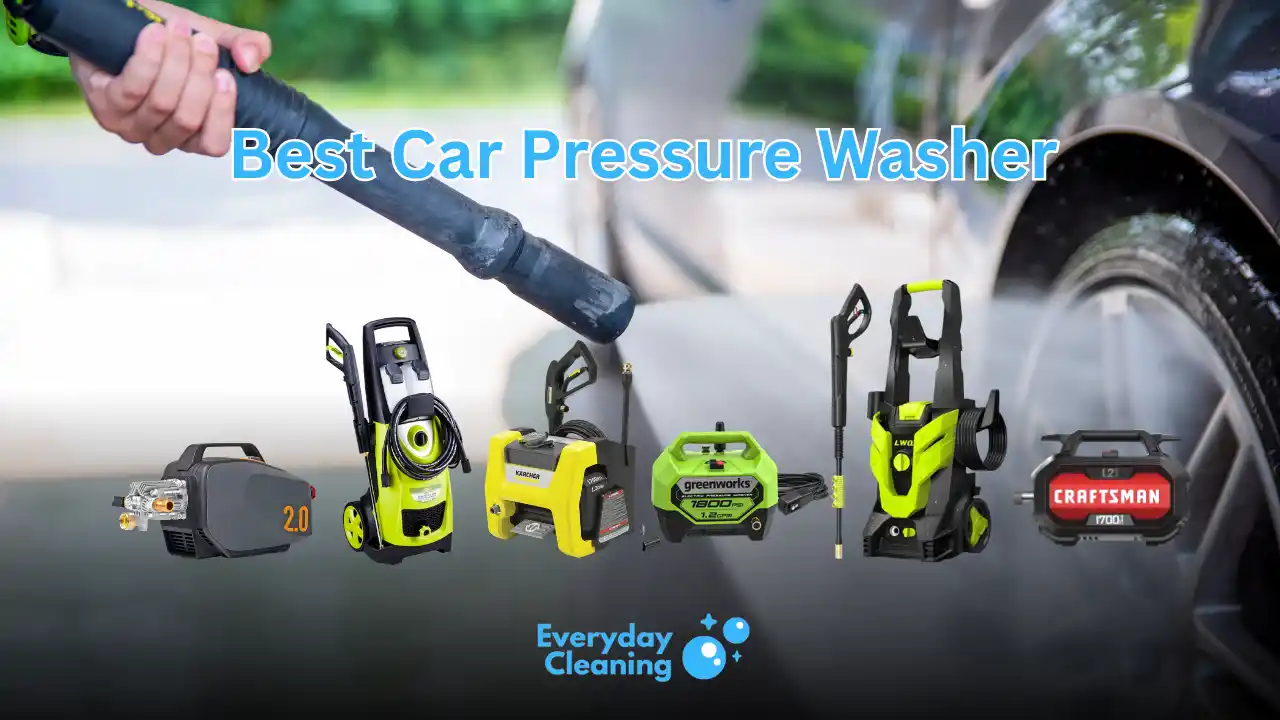
A regular garden hose doesn’t cut through road grime, brake dust, or winter salt the way a pressure washer does. We tested six models across corded electric, cordless, and detailing-focused builds to find the best pressure washer for cars that cleans effectively without wrecking your paint.
Our Top Picks
| Recommendation | Product | Reason |
|---|---|---|
| Best Overall | Active 2.0 Pressure Washer | Detailing-grade 2.0 GPM flow keeps paint safe. Reviews ↓ |
| Best Budget Pick | Karcher K1700 | CETA-certified with 25 ft hose and detergent tank. Reviews ↓ |
| Best Foam Cannon Combo | LWQ S5 | Highest GPM at budget price with foam cannon included. Reviews ↓ |
| Best Cordless | WORX WG647 Hydroshot | True cordless freedom from bucket or tap. Reviews ↓ |
| Best Lightweight Budget | RYOBI RY141802 | 16 lbs with onboard detergent tank. Reviews ↓ |
| Best Entry-Level Corded | Craftsman CMEPW1700 | Lowest price from a trusted brand. Reviews ↓ |
Best Overall for Car Washing: Active 2.0 Pressure Washer
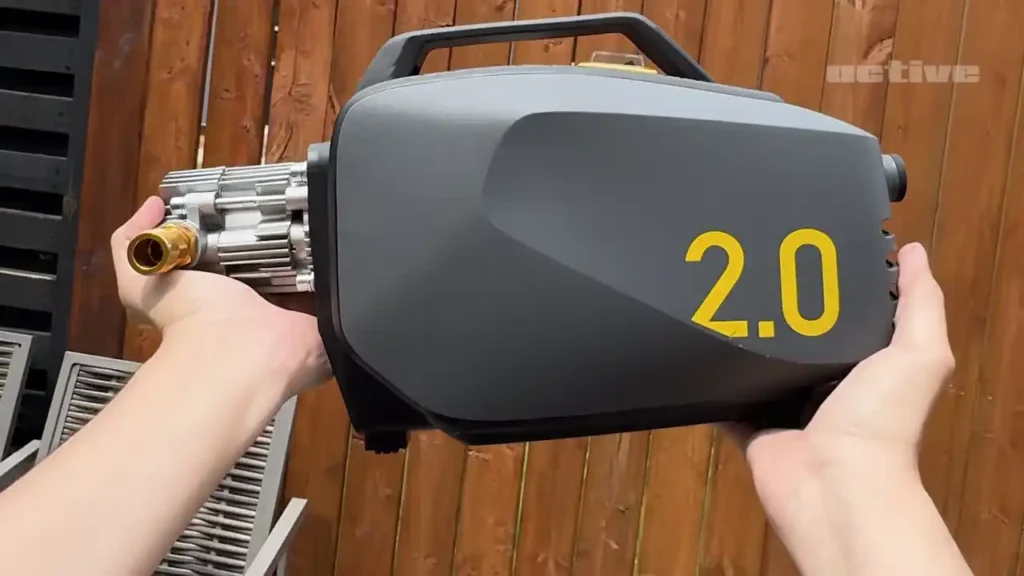
The Active 2.0 is the cult favorite among home car detailers for one reason: it prioritizes flow rate over raw PSI, which is exactly what paint-safe washing requires. At 1100 PSI operating pressure and 2.0 GPM, it lifts dirt fast without the risk of blasting clear coat or stripping wax.

- COMPLETE KIT READY FOR IMMEDIATE USE: The 2.0 GPM 1800 Peak PSI unit arrives with all included hoses, nozzles, and accessories needed for fast, deep cleaning transformations on cars, patios, and detailing work without any additional purchases – all the while preventing paint damage
- UPGRADE-READY CONNECTIONS: Universal threading supports garden hose 3/4" GHA and pressure side M22-14mm for broad accessory fit. This interface lets you integrate aftermarket tools, hoses, and add-ons as your system evolves
Pros and Cons
| Pros | Cons |
|---|---|
| Industry-leading 2.0 GPM for foam cannon performance | No wheels; harder to move around a large garage |
| 5-piston pump rated 250 hours — built to last | Foam cannon sold separately unless you buy the full kit |
| Safe working pressure won’t damage clear coat | |
| Ultra-compact body, smaller than a 3-gallon jug | |
| Strong reputation on r/AutoDetailing over multiple years |
Testing Results
PSI and Cleaning Power: At 1100 PSI rated, the Active 2.0 sits below every other corded pick on this list in terms of raw pressure. That is intentional. Car paint, clear coat, and vinyl wraps respond poorly to high-pressure blasting. The Active 2.0 cleans through volume, not force.
GPM Flow Rate: 2.0 GPM is the highest among the car-wash-focused electric picks tested. More water moving at lower pressure means soap and grime lift off the surface faster. Foam cannons work better with high GPM machines, and this one is built for it.
Car Wash Performance: This is where the Active 2.0 earns its reputation. Foam application is thick and even. Rinse is complete without streaking. The paint feels genuinely clean without any micro-scratching risk from high-pressure direct contact.
Pump Durability: The 5-piston professional pump is rated 250 hours of use. Most axial cam pumps in this price range run 200 hours. It also runs quieter than universal motor competitors.
Portability: No wheels. At 24 lbs, it’s manageable but not effortless. The compact body fits in a trunk easily.
Real-world Usage
The Active 2.0 is built for people who wash their own car regularly and care about doing it right. It works beautifully with a foam cannon: apply soap, let it dwell, rinse with the higher-flow output. You get a touchless or near-touchless wash that’s gentler than a mitt scrub.
It’s not the machine to borrow for cleaning the driveway or blasting the deck. Keep it dedicated to car washing and it’ll last years.
Best Use Case
Best for car enthusiasts, daily drivers, and anyone who washes their own vehicle at least a few times per month. Especially strong if you use or plan to use a foam cannon. Not ideal if you also want one machine to handle concrete cleaning or heavy outdoor grime.
Verdict
The Active 2.0 is the most honest car-washing pressure washer on this list. It doesn’t pretend to be a 3000 PSI contractor machine. It’s built for one thing, done properly. The detailing community has tested this over multiple years and the consensus is consistent: high GPM, low pressure, long pump life.
If car washing is your main use case, this is the pick. If you also want to clean patios and driveways, look at the LWQ S5 instead for more versatility.
Rating: 4.7 / 5
View on Amazon: Active 2.0 Pressure Washer
Best Budget Pick: Karcher K1700
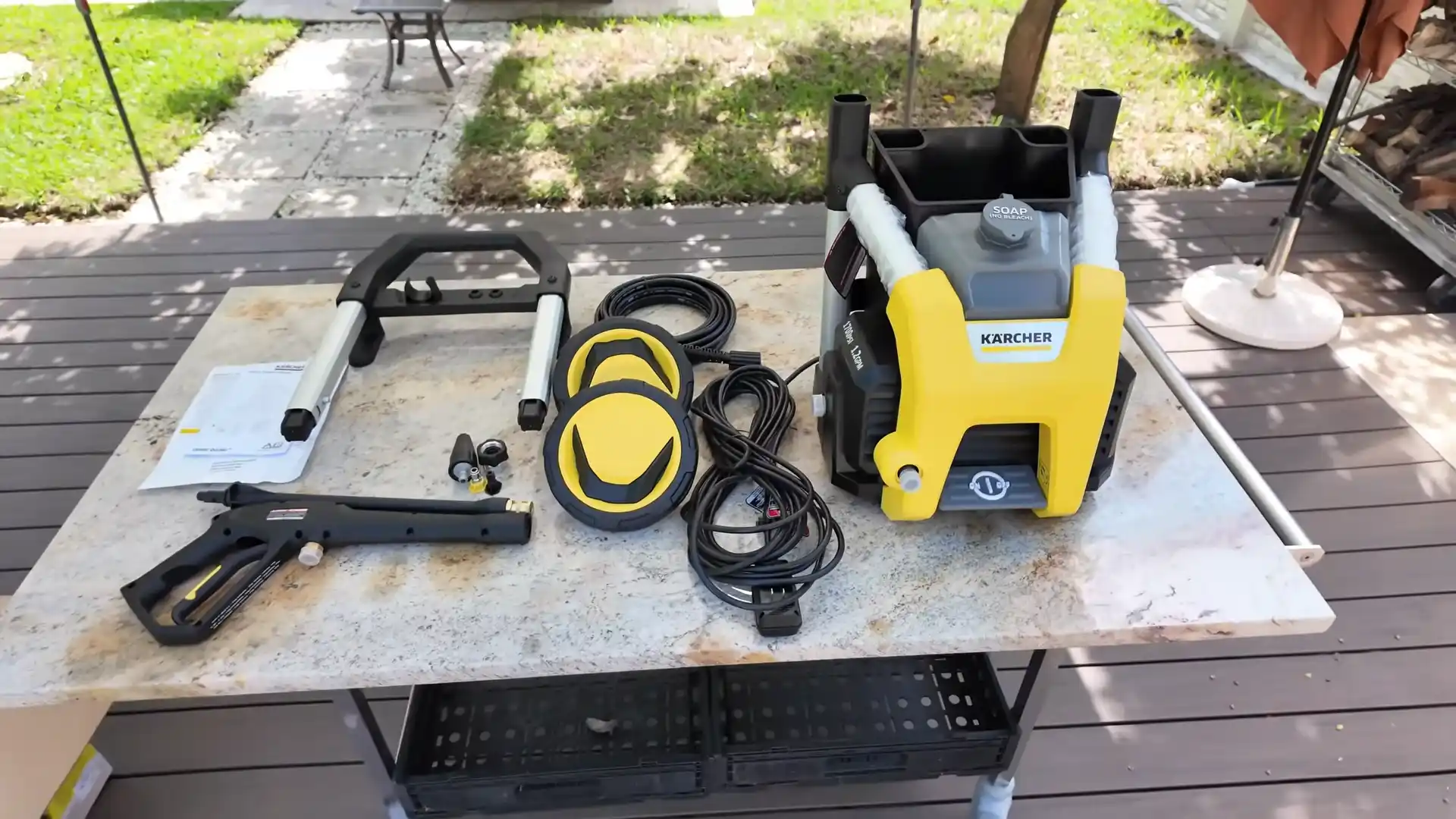
The Karcher K1700 is the most car-wash-thoughtful budget option here. It’s CETA certified, meaning the specs are independently verified, and it ships with a 25 ft hose that gives you more reach around a sedan or SUV than the standard 20 ft competitors.

- POWERFUL & CETA CERTIFIED: 1700 PSI TruPressure and 1.2 GPM for effective cleaning of various surfaces. Independently tested and CETA certified for proven performance you can trust.
- VERSATILE CLEANING OPTIONS: Equipped with three different nozzles (15°, turbo, and 65°), the K1700 allows you to tackle a wide range of cleaning jobs with precision

Pros and Cons
| Pros | Cons |
|---|---|
| CETA certified — honest, verified specs | Older design compared to newer compact models |
| 25 ft hose for better reach around vehicles | |
| Removable detergent tank for easy soap loading | |
| Foot on/off switch — no bending to stop the pump | |
| Never-flat wheels for easy transport | |
| Trusted Karcher brand reliability |
Testing Results
PSI and GPM: 1700 PSI rated with 1.2 GPM. CETA certification confirms these numbers are real, not inflated. At budget price, that matters because uncertified brands routinely advertise 2500+ PSI that the machine can’t actually sustain.
Car Wash Performance: The vario spray wand adjusts pressure from high to low in a twist, which is genuinely useful for rinsing different areas of a car. The soap nozzle applies detergent at low pressure. The turbo nozzle adds cleaning power for wheel wells and lower panels.
Hose Length: 25 ft is 5 ft longer than most budget competitors. On a full-size truck or SUV, that extra reach makes a real difference when working from one side.
Durability: Karcher has been making pressure washers for decades. The K1700 builds on a long lineage of reliable residential machines. The pump and motor hold up better than comparably priced no-name alternatives.
Real-world Usage
The K1700 handles a typical car wash smoothly. Spray the car with soap using the detergent nozzle, switch to the vario wand for the rinse, hit the wheel wells with the turbo nozzle. It’s a complete workflow in one machine at a fair price.
The foot-activated on/off switch means you’re not constantly squeezing the trigger and loading the pump. Small thing, but it makes longer washes more comfortable.
Best Use Case
Best for budget-conscious buyers who want a certified, reliable machine from a trusted brand. Strong choice for someone washing one or two cars regularly and occasionally cleaning patio furniture or garden tools. Not the pick if you need heavy-duty driveway cleaning.
Verdict
The Karcher K1700 earns its spot through credibility. At budget price, CETA certification and a 25 ft hose set it apart from cheaper alternatives. It won’t wow you with power, but it does the job consistently and reliably.
For more coverage on car-washing detergent that works well with machines like this, check our best car wash soap for pressure washer guide.
Rating: 4.3 / 5
View on Amazon: Karcher K1700
Best Foam Cannon Combo: LWQ S5
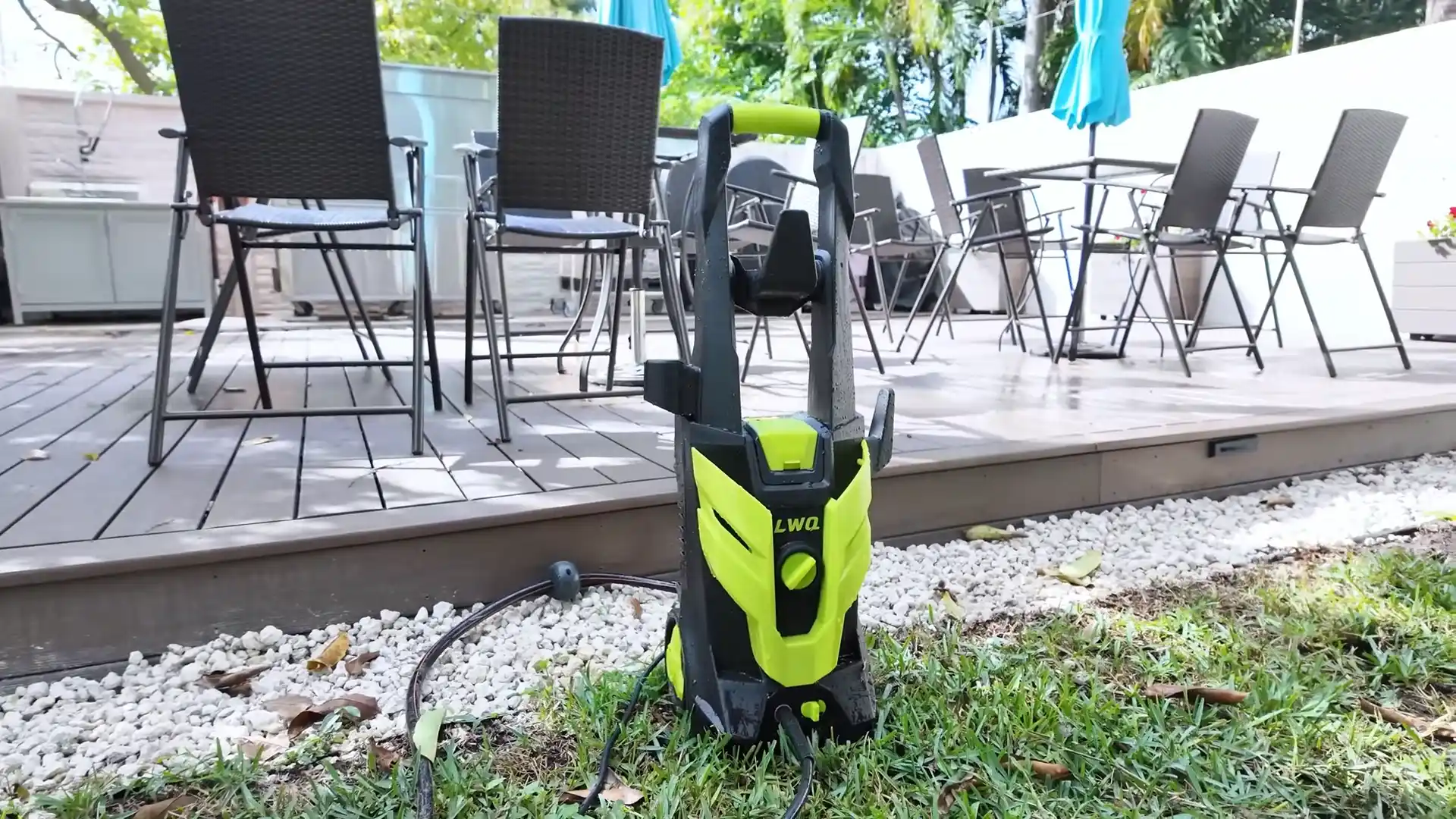
The LWQ S5 ships with a foam cannon included and delivers 2.5 GPM, the highest flow rate among the budget picks tested. That combination makes it the strongest option if foam washing is part of your routine.

- Powerful Pressure Washer: LWQ pressure washer with deep cleaning high pressure up to 2.5 GPM of water flow. The strong pressure for less time and water, more efficient cleaning
- Multi-Purpose Power Washer: LWQ power washer with 4 quick-connect spray nozzles (water-pressure strength: 0°›15°› 25°› 40°) and 1 foam cannon, it's easy to clean objects with complex shapes and structures, such as driveways, patio furniture, machine, and wheels
Pros and Cons
| Pros | Cons |
|---|---|
| Highest GPM at budget price (2.5 GPM) | Short 16 ft power cord is a real limitation |
| Foam cannon included in the box | Lesser-known brand |
| 4 metal quick-connect nozzles (0, 15, 25, 40 degree) | |
| Lightweight at 16.6 lbs | |
| Anti-tipping design | |
| Can draw from bucket or tap water |
Testing Results
PSI and GPM: Rated 2030 PSI and 2.5 GPM. The PSI figure should be taken with some caution given inconsistencies across listings, but the GPM output is measurably high. In practice, the machine cleans well.
Foam Cannon Performance: The included foam cannon produces dense, clinging foam on a car panel. Not as thick as purpose-built detailing cannons, but genuinely functional for the price. Soap dwell time is adequate for light to moderate road grime.
Car Wash Performance: With the 40-degree nozzle for general rinsing and the foam cannon for pre-soak, the LWQ S5 handles a complete car wash well. The 25-degree nozzle works on wheel wells. The 0-degree tip should not be used near paint.
Cord Length: The 16 ft power cord is a problem on large driveways. You will likely need an extension cord. Use a heavy-gauge (12 AWG or thicker) outdoor extension to avoid voltage drop and motor strain.
Portability: 16.6 lbs with an anti-tipping base design. Compact and easy to move around a vehicle.
Real-world Usage
The LWQ S5 fits well in a routine where you foam, dwell, and rinse. Pre-soak the car with the cannon, let it sit two to three minutes, rinse top to bottom with the 40-degree nozzle. The high GPM speeds up the rinse phase noticeably versus lower-flow machines.
The cord length is the practical constraint. Plan your setup before you start so you’re not moving an extension cord mid-wash.
Best Use Case
Best for buyers who want a foam cannon setup without buying the cannon separately. Strong pick for apartment dwellers or anyone with a shorter driveway where the 16 ft cord is less of a problem. Also good for occasional patio furniture cleaning between car washes.
Verdict
The LWQ S5 overdelivers on foam cannon performance at this price. The cord situation is annoying but workable. If foam washing matters to you and the Karcher’s older design doesn’t appeal, this is a strong alternative.
For foam cannon options to upgrade beyond the included unit, our best foam cannon for pressure washer guide covers aftermarket picks.
Rating: 4.1 / 5
View on Amazon: LWQ S5
Best Cordless: WORX WG647 (40V Hydroshot)
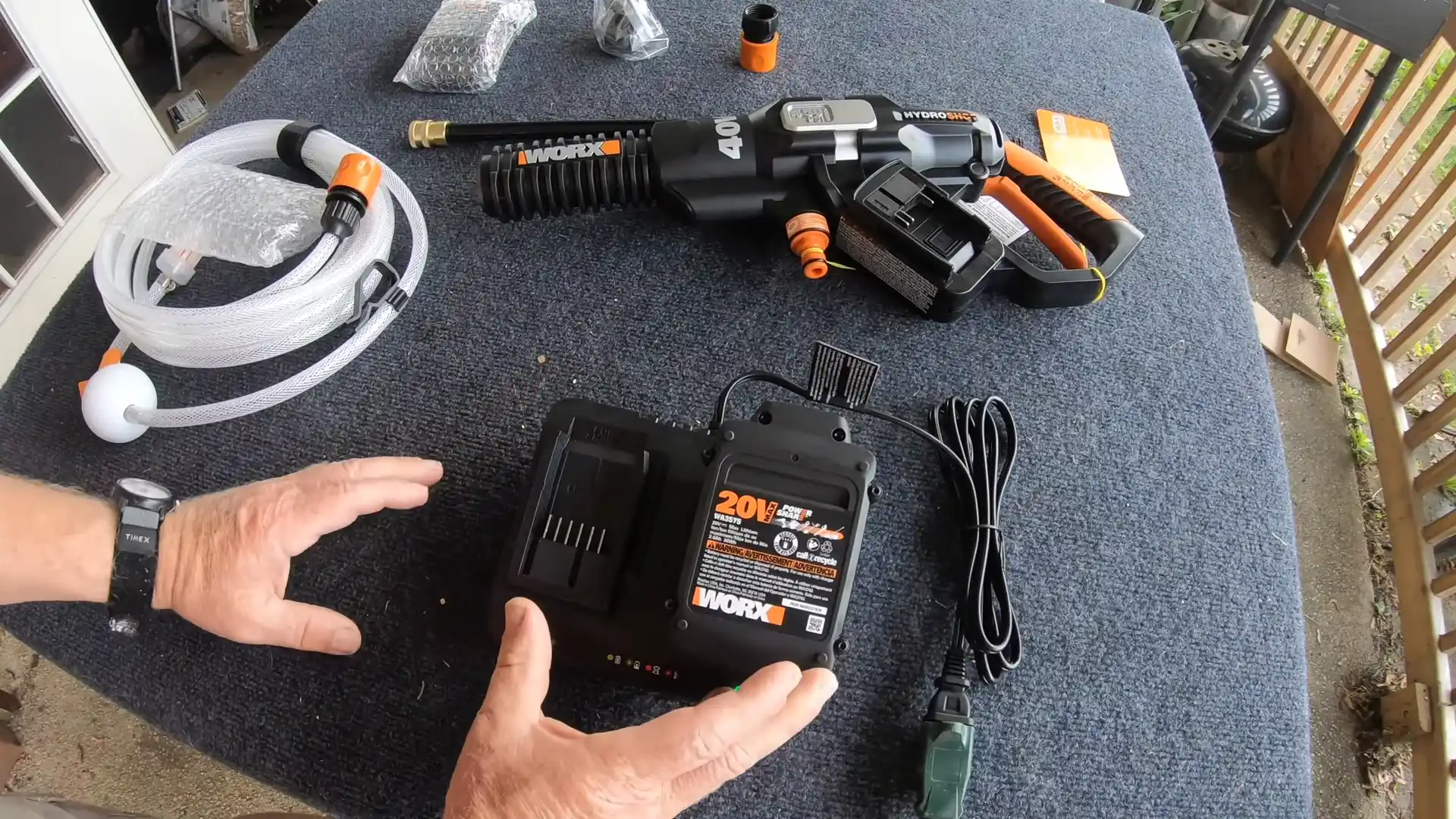
The WORX WG647 Hydroshot is the only true cordless option on this list. No outlet needed, no hose connection required. It draws water from a bucket, lake, or rain barrel and runs on 40V batteries from the WORX PowerShare platform.

- Powerful Cleaning Performance: 800 PSI with 1.0 GPM for maximum efficiency in removing grime and debris
- Advanced Motor Technology: Efficient Brushless Motor 2.0 for longer runtime and enhanced durability
Pros and Cons
| Pros | Cons |
|---|---|
| True cordless freedom, no outlet or hose needed | 800 PSI is low, will not remove tough grime or stains |
| Draws from bucket, lake, or rain barrel | Best suited for rinsing, not deep cleaning |
| 5-in-1 nozzle attachment in one piece | |
| Compatible with all 40V WORX PowerShare batteries | |
| 2-speed ECO and full power trigger | |
| Very lightweight at 5.8 lbs |
Testing Results
PSI and Cleaning Power: 800 PSI is on the low end for any pressure washer. It will not strip caked-on mud, cut through road salt build-up, or clean concrete effectively. That is a real limitation worth being clear about upfront.
Car Wash Performance: For a light rinse after a touchless wash, spot cleaning bird droppings, or freshening up a car that isn’t heavily soiled, the WG647 does the job. It removes loose surface dust and light grime well.
Portability: At 5.8 lbs, it’s the lightest machine on this list by a wide margin. No setup involved. Fill a bucket, insert the intake hose, squeeze the trigger.
Battery and Runtime: Paired with the included 2x 2.0Ah batteries, runtime is enough for a light rinse pass on most vehicles. For a full wash, you’ll likely need to swap or recharge.
Water Source Flexibility: Drawing from a bucket is the standout feature. This is genuinely useful at campsites, boat launches, or anywhere a hose connection isn’t available.
Real-world Usage
The Hydroshot works best as a rinsing tool or a convenience accessory. It’s not going to replace a corded machine for a proper car wash. But for a quick rinse between washes, camp cleanup, or lightly soiled vehicles, the cordless freedom is hard to beat.
If you already own other WORX 40V tools, the PowerShare compatibility is real value since you can share batteries across your lineup.
Best Use Case
Best for campers, RV owners, boat users, or anyone who needs a portable rinse solution away from an outdoor spigot. Also good as a secondary tool alongside a full-size pressure washer. Not suitable as your only pressure washer if you want to do a proper full car wash.
Verdict
The WG647 doesn’t compete with corded machines on cleaning power. It competes on convenience. For what it does, it does it well. Just go in with realistic expectations: this is a rinse tool, not a deep-cleaning machine.
Rating: 4.0 / 5
View on Amazon: WORX WG647 Hydroshot
Best Lightweight Budget: RYOBI RY141802
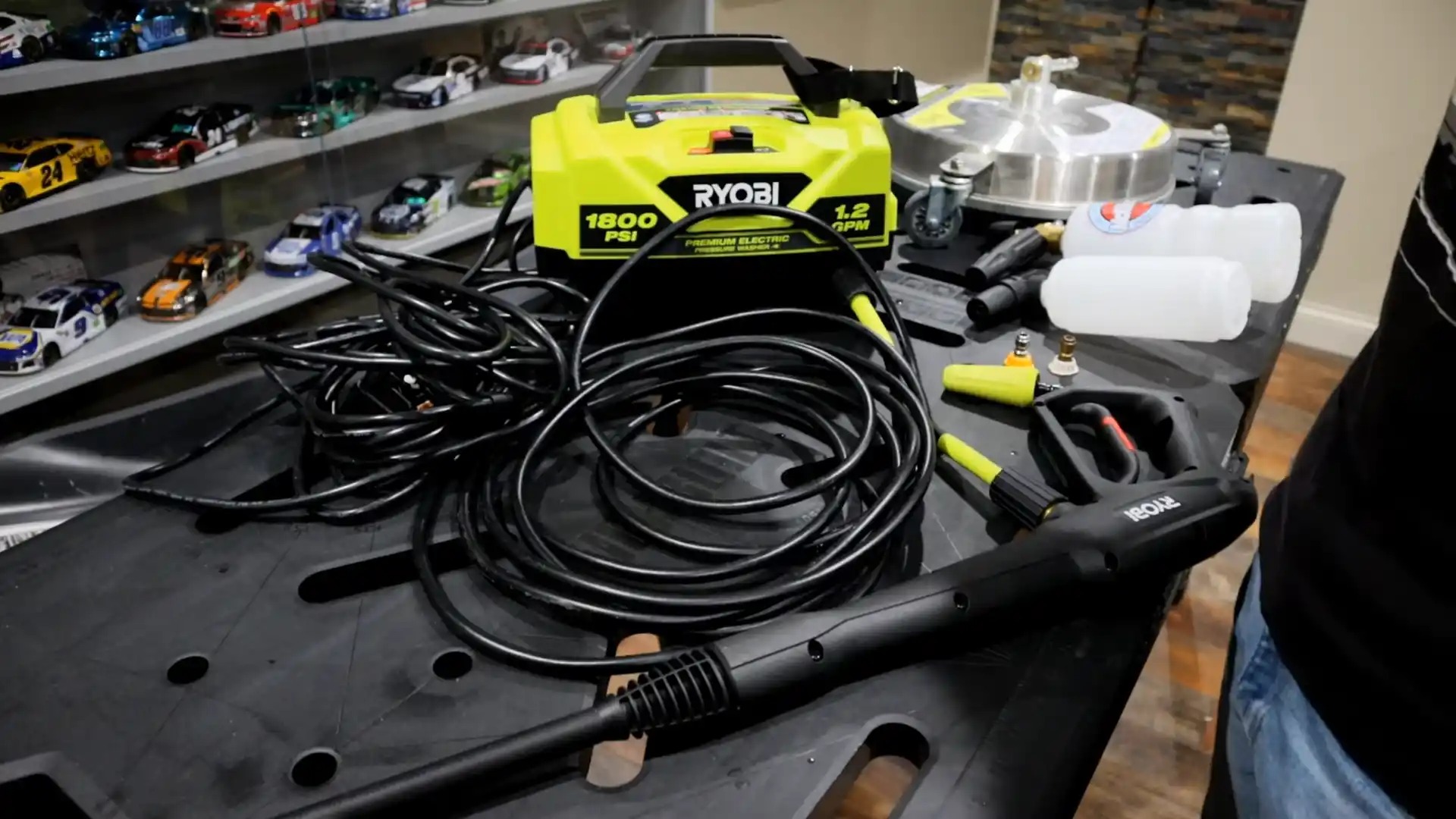
At 16 lbs, the RYOBI RY141802 is the lightest corded machine on this list. It comes with an onboard detergent tank and a turbo nozzle, backed by RYOBI’s 3-year warranty.

Pros and Cons
| Pros | Cons |
|---|---|
| Lightest corded pick at 16 lbs | Only 3 nozzles (no 0 or 40 degree) |
| 3-year RYOBI warranty | |
| Onboard detergent tank | |
| Turbo nozzle included | |
| Compact roll-cage design for protection |
Testing Results
PSI and GPM: 1800 PSI rated with 1.2 GPM. No PWMA/CETA certification, so treat the specs as manufacturer-claimed. In practice, the cleaning output is in line with comparable 1800 PSI machines.
Car Wash Performance: The soap nozzle applies detergent at low pressure, though the dilution ratio can be inconsistent. The 15-degree nozzle is effective for panel rinsing. Avoid the turbo nozzle close to paint.
Weight and Maneuverability: 16 lbs means you can carry this with one hand while positioning the wand with the other. It doesn’t have wheels, but the weight makes it easy enough to move around a vehicle manually.
Warranty: RYOBI’s 3-year warranty is the longest among the budget picks on this list. That adds meaningful peace of mind for a machine in regular use.
Real-world Usage
The RY141802 is a practical car wash companion for budget buyers who want the lightest possible corded setup. It’s not flashy, but 1800 PSI is enough to rinse off dirt, clean wheel wells, and pre-soak with soap.
The weight advantage over machines like the Greenworks makes a real difference if you’re carrying it in and out of storage regularly.
Best Use Case
Best for buyers who want the lightest corded option available with decent warranty coverage. Also a strong pick if you’re new to pressure washing and want a forgiving, manageable machine to learn on. Skip it if foam cannon washing is a priority, since the soap system is not consistent enough for a proper pre-soak.
Verdict
The RYOBI RY141802 is a solid, uncomplicated car wash machine for casual users. The soap system has limitations, but the weight, warranty, and onboard storage make it one of the more pleasant budget machines to use day to day.
Rating: 4.0 / 5
View on Amazon: RYOBI RY141802
Best Entry-Level Corded: Craftsman CMEPW1700
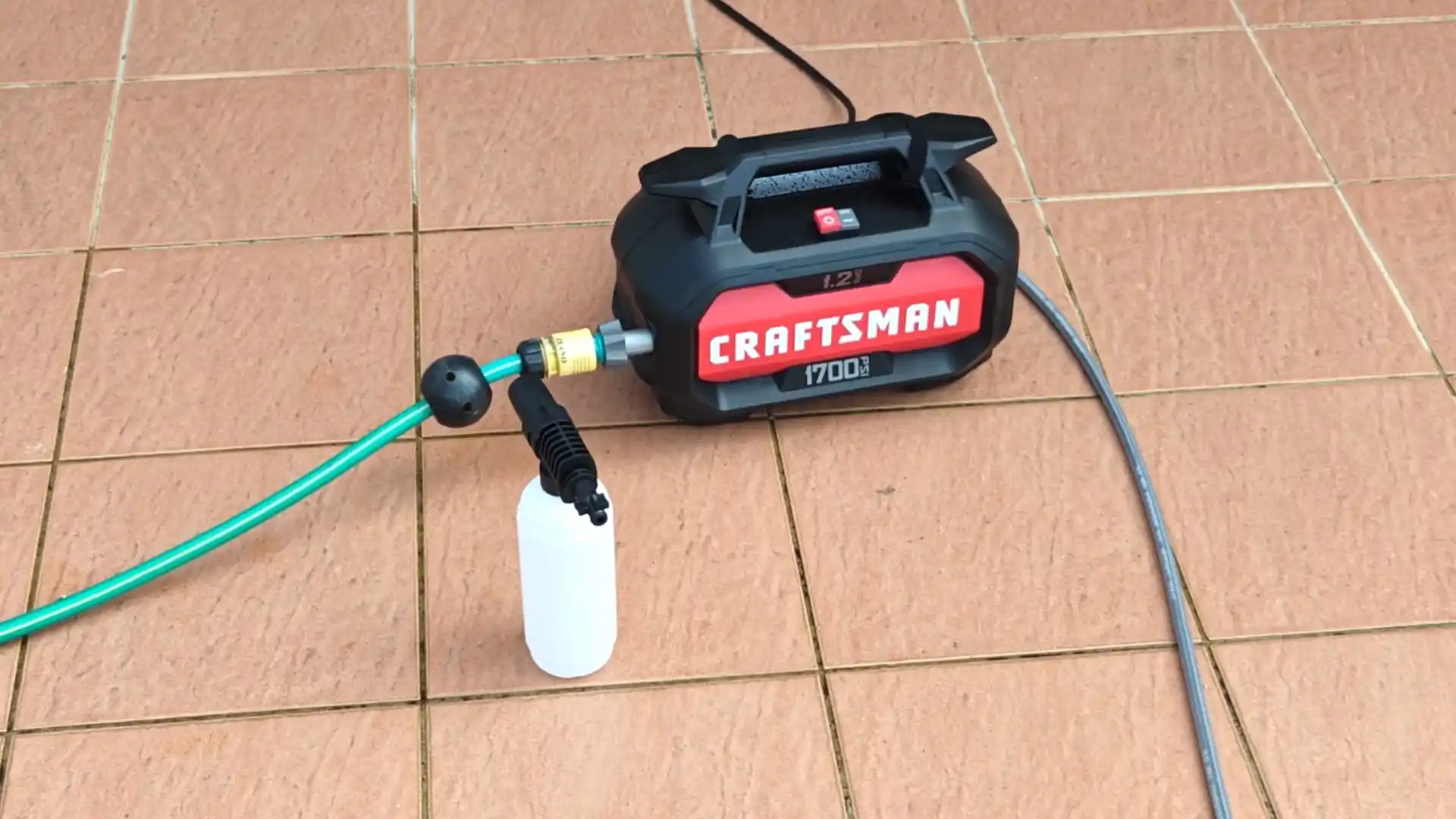
The Craftsman CMEPW1700 is the cheapest name-brand machine on this list. It does the basics at 1700 PSI, ships with onboard storage, and carries the CRAFTSMAN brand trust behind it.

- Powerful cleaning: Electric power washer with1700 max psi* and 1. 2 gpm**
- Added benefit: soap applicator bottle for cleaning with soap
Pros and Cons
| Pros | Cons |
|---|---|
| Lowest price among name-brand picks | Only 2 nozzles (turbo and 40 degree, no 15 degree) |
| Lightweight at 17.6 lbs | No TSS pump protection |
| Onboard storage for hose, cord, and nozzles | |
| Trusted CRAFTSMAN brand | |
| Comfort grip wand |
Testing Results
PSI and GPM: 1700 PSI with 1.2 GPM. No third-party certification, but Craftsman brand consistency makes this a reasonable buy at the entry price point.
Car Wash Performance: The 40-degree nozzle handles general car rinsing well. The turbo nozzle is effective on wheel arches and lower panels. The soap applicator bottle is basic but functional. It’s not going to deliver a precision foam pre-soak, but it cleans a lightly to moderately dirty car without problems.
Nozzle Selection: Only two nozzles is a real gap compared to competitors. No 15-degree tip means less flexibility for targeted cleaning. The turbo nozzle compensates somewhat, but only use it away from paint surfaces.
Portability: Onboard hose, cord, and nozzle storage is a practical design feature. Everything packs onto the machine itself, so you’re not hunting for attachments between uses.
Real-world Usage
The CMEPW1700 is the right pick when the budget is tight and the brand name matters. It handles a basic car rinse competently. For more advanced washing routines with foam or multiple nozzle angles, you’ll want to step up.
Best Use Case
Best for first-time pressure washer buyers who want the lowest entry cost from a trusted brand. Fine for light car rinsing, patio furniture, and garden cleanup. Not the pick if you’re doing regular full washes or want foam cannon capability.
Verdict
The Craftsman CMEPW1700 earns its spot as the honest budget entry. You get a real brand, functional specs, and a usable machine at the lowest price on this list. Expectations need to be calibrated to the price: this is light-duty, and that’s fine.
Rating: 3.8 / 5
View on Amazon: Craftsman CMEPW1700
What Makes the Best Pressure Washer for Cars?
PSI: Lower Than You’d Think
Most car washing requires 1200 to 1900 PSI. That range is enough to strip road grime, brake dust, and mud off painted surfaces without damaging clear coat. Machines rated at 2500 PSI or above can strip wax, lift paint edges around chips, or even damage soft trim if used too close.
The sweet spot for car washing is 1000 to 1900 PSI. The Active 2.0 runs at 1100 PSI rated pressure and is specifically built for this. The Karcher K1700 and RYOBI both sit at 1700 to 1800 PSI, which is adequate when you maintain the right nozzle distance from paint (typically 12 to 18 inches with a 40-degree tip).
GPM Matters More Than Most People Realize
GPM (gallons per minute) is how much water moves through the machine at one time. Higher GPM means faster soap removal, better foam cannon performance, and quicker rinse cycles. For car washing, GPM is arguably more important than PSI once you’re above 1000 PSI.
The LWQ S5 at 2.5 GPM and the Active 2.0 at 2.0 GPM lead the field here. Budget machines typically land between 1.1 and 1.2 GPM, which works but takes longer to rinse and doesn’t perform as well with foam cannons.
Nozzle Angles and Paint Safety
The nozzle angle controls how concentrated the water stream is. Narrow angles (0 and 15 degree) concentrate pressure into a tight jet. They’re effective on concrete, wheel arches, and undercarriages, but should never be used directly on painted panels.
For car panels, use 25 or 40 degree nozzles at 12 to 18 inches distance. For wheel wells and lower rocker panels, a turbo nozzle from 12 inches is usually safe. If your machine only came with a turbo nozzle and a 40-degree tip, like the Craftsman, use the turbo with care and keep it moving.
Machines with more nozzle variety, like the LWQ S5 with four tips, give you more control across different areas of the vehicle.
Foam Cannon Compatibility
Foam cannons connect to the pressure washer’s quick-connect fitting and mix soap with water to produce a thick, clinging foam that coats the car before you touch it. Foam pre-soaks loosen grime without scrubbing, reducing the chance of swirl marks from mitt contact.
Not all machines perform equally with foam cannons. High GPM machines produce denser foam. The Active 2.0 and LWQ S5 are both strong foam cannon performers. Lower GPM machines like the RYOBI and Craftsman produce thinner foam but still work for basic soap application.
For a dedicated guide on cannon selection, see our best foam cannon for pressure washer roundup.
Certification: PWMA and CETA
PWMA (Pressure Washer Manufacturers’ Association) and CETA (Cleaning Equipment Trade Association) are independent bodies that verify the PSI and GPM claims on pressure washers. Many budget brands inflate their specs significantly.
Among the picks on this list, the Greenworks 1800 PSI is PWMA certified and the Karcher K1700 is CETA certified. Both mean you can trust the stated numbers. For machines without certification, treat the specs as approximate and read user reviews for real-world performance data.
Hose Length and Reach
A 20 ft hose is the standard for budget machines. It’s workable but limiting on larger vehicles like SUVs and pickup trucks. The Karcher K1700 ships with a 25 ft hose, which is a genuine advantage when you’re moving around a full-size vehicle.
If you go with a shorter hose, buy a quality pressure washer hose extension rather than using a garden hose splitter, which can reduce water pressure at the machine inlet.
How to Use a Pressure Washer on a Car Safely
Start Far Back, Then Move Closer
Begin with the nozzle at least 2 to 3 feet from the panel, then gradually move closer until the cleaning action is effective. This helps you calibrate the pressure for each section without accidentally blasting paint at point-blank range. Areas like door handles, mirrors, and antenna bases need more distance than flat panels.
Rinse Top to Bottom
Dirt flows down. Start at the roof, then work down to the hood, trunk, and door panels. Rinse the lower panels and rocker panels last. This prevents dirty rinse water from contaminating surfaces you’ve already cleaned.
Use the Correct Nozzle for Each Area
Switch to a 40-degree tip for general painted panels. Use a 25-degree tip for glass and trim. Reserve the turbo nozzle for wheel wells, lower sills, and undercarriage spray. Never use a 0 or 15 degree tip directly on painted surfaces.
Pre-soak Before Scrubbing
If you’re using a mitt, always pre-soak the vehicle first. Apply foam or soap, let it dwell 2 to 3 minutes, then rinse. This lifts the majority of loose grit off the surface before your mitt ever touches the paint, which significantly reduces swirl mark risk.
For soap selection that works well with pressure washers, our best car wash soap for pressure washer guide covers the right formulas to use.
Frequently Asked Questions
What PSI is safe for washing a car with a pressure washer?
For most passenger cars and daily drivers, 1000 to 1900 PSI is the safe range. Stay toward the lower end of that range for vehicles with single-stage paint, older clear coat, or recent paint corrections. Keep the nozzle at least 12 inches from painted panels and always use a 25 or 40 degree tip. Anything above 2000 PSI should only be used on wheel arches and undercarriages, not painted body panels.
Do I need a foam cannon to wash my car with a pressure washer?
No, but it helps. A foam cannon pre-soaks the car with thick soap that loosens road grime before you rinse or make physical contact with the paint. It’s especially useful if you want to do a touchless or near-touchless wash. If foam performance matters, look at the Active 2.0 or the LWQ S5. Our best foam cannon for pressure washer roundup goes deeper on accessory options.
Can I use a gas pressure washer on my car?
Gas pressure washers typically start at 2500 PSI and go up from there. They’re generally too powerful for regular paint washing and increase the risk of stripping wax or damaging clear coat if you’re not experienced. Electric corded machines in the 1200 to 1900 PSI range are better suited and easier to control for car washing.
Is a cordless pressure washer good enough to wash a car?
It depends on the use case. The WORX WG647 at 800 PSI is suitable for a light rinse on a lightly soiled car or for spot cleaning. It’s not a substitute for a full corded wash when the car is actually dirty. If you’re often away from a power outlet or want to rinse a car at a campsite, the cordless option is a practical tool to have. As a primary home car washer, it’s not enough.
How far should I hold the pressure washer from the car?
A minimum of 12 inches for 40-degree nozzles on painted panels. Move to 18 inches or more for narrow-angle tips and turbo nozzles near any painted surface. For glass, mirrors, and rubber trim, stay at 18 inches and use a wide-angle nozzle. The closer you hold it, the higher the effective pressure at the surface, regardless of the machine’s rated PSI.
Do I need to use pressure washer-specific soap?
Yes. Standard dish soap or household cleaners can strip wax and harm paint sealants. Use a dedicated car wash soap, ideally one formulated for foam cannons if you’re using one. pH-neutral formulas are the safest for regular washes. For a deeper look at which soaps work best, check our best car wash soap for pressure washer guide.