Best Concrete Cleaner for Pressure Washer: 6 Tested Picks for Driveways & Patios
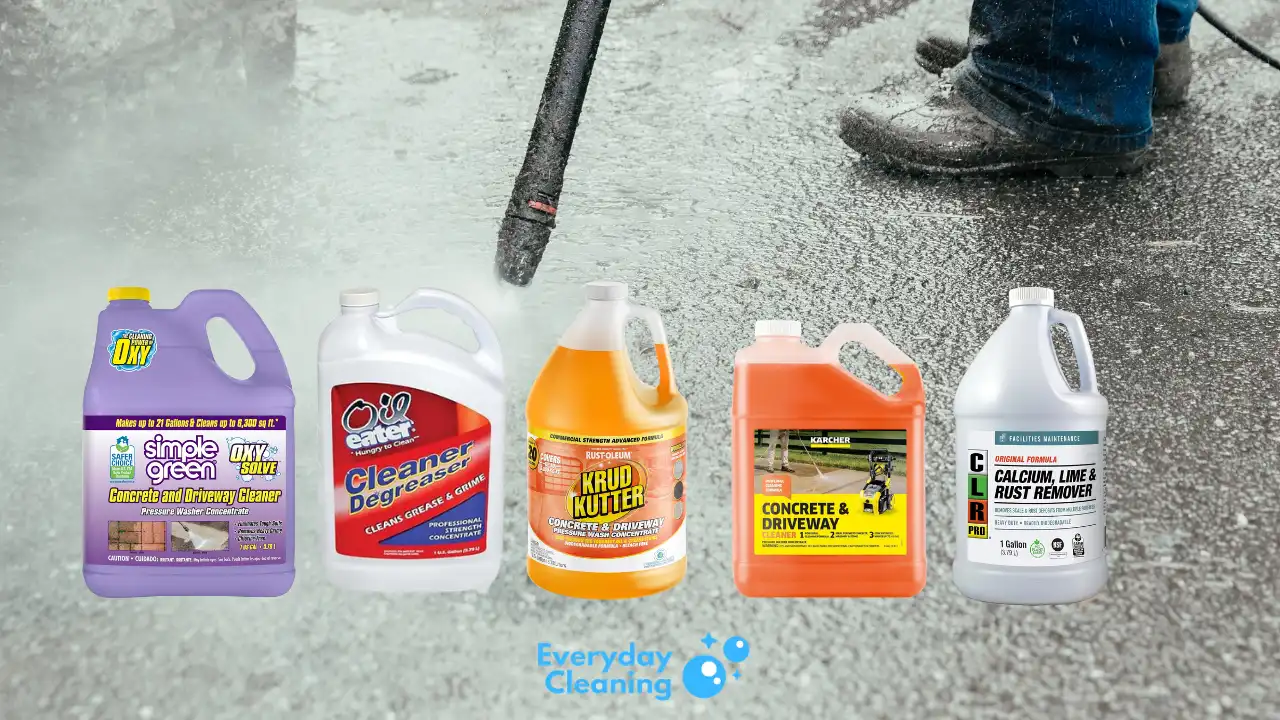
Dirty concrete is stubborn: grease stains, tire marks, and black algae don’t just rinse off with water alone. The right cleaner does most of the heavy lifting before your pressure washer even touches the surface.
Our Top Picks
| Recommendation | Product | Reason |
|---|---|---|
| Best Overall | Simple Green Oxy | EPA Safer Choice, peroxide-powered, no bleach – Reviews ↓ |
| Best Value | Oil Eater Original | 1 gallon makes up to 30 gallons, serious degreasing power – Reviews ↓ |
| Premium Choice | KÄRCHER Concrete & Driveway Cleaner | Purpose-built for pressure washers, Karcher-optimized formula – Reviews ↓ |
| No Pressure Washer Needed | Wet & Forget Outdoor Cleaner | Spray and walk away, works with rain and wind over time – Reviews ↓ |
| Best Budget | Krud Kutter Concrete & Driveway | Bleach-free, makes 20 gallons, solid everyday cleaner – Reviews ↓ |
| Best for Calcium, Lime & Rust | CLR Pro | Dissolves mineral deposits nothing else touches – Reviews ↓ |
Best Overall: Simple Green Oxy
If you want one cleaner that handles oil stains, grease, tire marks, and exhaust buildup without bleach or harsh chemicals, Simple Green Oxy Solve is the pick. The peroxide-powered formula is EPA Safer Choice certified and approved for direct release into waterways, which is important if your driveway drains to the street.

- Cleans driveways, walkways, patios and masonry
- Eliminates tough oil stains, rust stains, grease, automotive fluids, tire marks, exhaust buildup and more
Pros and Cons
| Pros | Cons |
|---|---|
| EPA Safer Choice certified, no bleach | Less effective on heavy calcium |
| Peroxide-based foam lifts stains without scrubbing | |
| Cleans up to 6,300 sq. ft. per gallon | |
| Safe for driveways, patios, walkways, and masonry | |
| Non-toxic, approved near oceans and waterways |
Testing Results
Oil and Grease Stains: The peroxide-activated foam penetrates quickly. Apply, let it dwell 5-10 minutes, and the pressure washer rinses clean. Works well on fresh-to-moderate grease stains.
Tire Marks: Handles rubber transfer marks reliably. Heavier marks may need a second pass.
Mold and Algae: Solid performance on surface biological growth, though Wet & Forget is a better dedicated pick for stubborn black algae.
Coverage and Concentration: One gallon covers up to 6,300 sq. ft. at standard dilution, making it genuinely cost-effective per square foot despite the upfront price.
Compatibility: Works with any pressure washer soap tank. No issues with brass fittings or standard hoses.
Real-world Usage
This is the cleaner you reach for on driveway day: oil drips under the car, grimy tire marks, dusty walkways after winter. The foam clings to vertical surfaces too, so it works on retaining walls and masonry steps. Because it’s bleach-free, you don’t have to worry about overspray killing grass or staining painted trim.
Best Use Case
Best for homeowners who want a reliable all-rounder that handles most concrete staining scenarios. Also great if you have pets, kids, or landscaping close to the work area. Not the right pick for heavy calcium deposits or rust. For those cases, look at CLR Pro for those.
Verdict
Simple Green Oxy Solve earns the top spot because it genuinely does what it claims on the most common concrete stains without harsh chemicals. The EPA certification and environmental safety record make it a confident pick for regular use. If you only buy one concrete cleaner this year, this is it.
Rating: 4.6 / 5
Best Value: Oil Eater Original Cleaner Degreaser
Oil Eater is a USDA-authorized industrial-strength degreaser that costs around $13 per gallon and makes up to 30 gallons of working solution. That’s an absurd amount of cleaning power for the money. Originally formulated for commercial and automotive use, it works just as well on concrete driveways, garage floors, and asphalt.
- Powerful Cleaning: Dissolves Grease, Oil And Dirt From Any Washable Surface
- Usda Approved: For Use At Food Service Facilities (A1, A4, A8)

Pros and Cons
| Pros | Cons |
|---|---|
| Outstanding price-to-coverage ratio | Scent is strong when used at full concentration |
| USDA authorized for non-food areas | |
| Biodegradable, non-flammable, water-based | |
| Works on asphalt, concrete, tools, engines | |
| No acids, abrasives, or petroleum solvents |
Testing Results
Degreasing Power: At full concentration, it strips oil and grease effectively. Dilute 3:1 or 4:1 for general concrete cleaning, stronger for garage floor oil spots.
Concrete Compatibility: Safe for standard concrete and asphalt. Does not etch or bleach surfaces.
Pressure Washer Use: Best applied via a separate pump or garden sprayer, let it dwell 5 minutes, then hit it with the pressure washer. Works in foam cannon setups at appropriate dilution.
Tire and Exhaust Marks: Moderate performance: better for oil and grease than rubber marks.
Real-world Usage
This is the go-to for anyone with a garage floor full of old oil drips. Mechanics, car enthusiasts, and homeowners with heavy equipment all reach for Oil Eater because it tackles what ordinary driveway cleaners miss. The huge dilution ratio means one gallon of concentrate can last an entire season.
Best Use Case
Best for garage floors, workshop concrete, and driveways with serious grease accumulation. Also a smart buy if you want one product that crosses over to cleaning engines, tools, and floor mats. Not ideal as a first choice for mold, algae, or mineral deposits.
Verdict
Oil Eater is the undisputed value pick on this list. The price per gallon of working solution is hard to beat, and the degreasing performance is legitimately strong. If grease and oil are your main problem, skip the specialty products and start here. You can learn more about effective driveway cleaning techniques on our site.
Rating: 4.5 / 5
Premium Choice: KÄRCHER Concrete & Driveway Cleaner
Kärcher designed this detergent specifically for pressure washer use, not as a multipurpose cleaner that happens to work with one. The formula is dialed in for concrete, brick, and stone, and it’s built to run cleanly through pressure washer soap tanks without gunking up valves or nozzles.

- Highly concentrated detergent for cleaning concrete, brick, masonry, and stone surfaces
- Effectively removes oils, dirt, and grime
Pros and Cons
| Pros | Cons |
|---|---|
| Purpose-built for pressure washer compatibility | Higher price point than general degreasers |
| Works on concrete, brick, and stone | |
| Concentrated formula (1 gallon makes up to 20 gallons) | |
| Biodegradable, phosphate-free | |
| Made in the USA |
Testing Results
Pressure Washer Compatibility: Runs cleanly through onboard soap tanks on both electric and gas machines. No residue or foaming issues in the lines.
Concrete Cleaning: Strong performance on dirt, grime, mold, and general surface staining. The dedicated formula does a better job lifting surface discoloration than all-purpose alternatives.
Brick and Stone: Works well on porous materials without bleaching or etching. Good choice for natural stone patios and brick driveways.
Dilution and Coverage: One gallon makes 20 gallons of working solution at standard dilution, solid coverage per dollar at the premium price.
Real-world Usage
This is what you want if you own a Kärcher pressure washer and want a seamless, brand-matched cleaning experience. The chemistry is tuned for how their machines deliver soap, so you get consistent foam and coverage without adjusting settings or guessing at dilution. It also works perfectly fine on other brands.
Best Use Case
Best for homeowners who want a premium, pressure-washer-native cleaning experience without the trial and error of general degreasers. Ideal for mixed concrete-and-stone outdoor areas like driveways with brick borders or natural stone patios.
Verdict
The Kärcher cleaner costs more than Oil Eater or Krud Kutter, but you’re paying for a formula that’s genuinely engineered for the application. No compatibility guesswork, no adjustments. Just attach and clean. If you already own a quality pressure washer and want matching chemistry, it’s worth the premium.
Rating: 4.5 / 5
No Pressure Washer Needed: Wet & Forget Outdoor Cleaner
Wet & Forget is the outlier on this list: it doesn’t need a pressure washer at all. You dilute it, spray it on, and then walk away. Rain and wind do the rest over the following days and weeks. It won’t remove an oil stain, but for moss, mold, mildew, and algae on concrete and outdoor surfaces, nothing is more effortless.

- Wet & Forget Concentrate Outdoor Cleaner removes green and black stains caused by moss, mold, mildew, and algae, no scrubbing, no rinsing, no pressure washing, just wet it and forget
- Surfaces including driveway, patio, roof, siding, deck, vinyl, wood, concrete, canvas, aluminum, and upholstery
Pros and Cons
| Pros | Cons |
|---|---|
| Zero scrubbing, rinsing, or pressure washing required | Results take days to weeks, not a same-day fix |
| Bleach-free, non-acidic, biodegradable | Per-square-foot cost is higher than pressure washer concentrates |
| Safe around plants and landscaping | |
| Surfaces stay clean for 1+ years in most cases | |
| Unlimited shelf life |
Testing Results
Mold and Mildew: Excellent results within 1-2 weeks on green stains. The formula slowly breaks down organic growth so it washes away with rain.
Black Algae: Takes significantly longer: 2-6 months for heavy black staining on porous concrete. Works, but patience is required.
Moss: Effective, though application may need to be repeated annually in wet climates.
Oil Stains: Not effective. This is the wrong product for grease or tire marks.
Coverage: One gallon of concentrate makes 6 gallons of working solution. Coverage varies 60-180 sq. ft. per bottle depending on surface porosity.
Real-world Usage
Wet & Forget shines on surfaces that would be a pain to pressure wash: garden paths hemmed in by plants, patio pavers you don’t want to disturb, or concrete steps where setup time isn’t worth it. Apply it once before rainy season and let nature handle cleanup. It’s genuinely set-it-and-forget-it for organic staining.
Best Use Case
Best for walkways, steps, and patios with moss, mold, or algae staining where you want a hands-off approach. Also great for areas where pressure washing would damage plants or disturb the surface. Not a substitute for a real concrete cleaner if oil or grease is the problem.
Verdict
This is a specialty tool, not a replacement for a proper pressure washer cleaner. But for organic staining on hard-to-reach surfaces, it’s the most effortless solution on the market. The patience requirement is real. If you need it clean this weekend, look elsewhere. If you’re fine waiting a week or two, it delivers.
Rating: 4.3 / 5
Best Budget: Krud Kutter Concrete & Driveway Pressure Washer Concentrate
Krud Kutter keeps the price low and the specs respectable: one gallon makes 20 gallons, cleans up to 5,800 sq. ft., and handles oil, grease, and grime without bleach. It’s a no-frills pick from a brand that’s been in the cleaning products space for decades.

- COMMERCIAL STRENGTH ADVANCED FORMULA: Cuts through the toughest oil & grease stains
- WIDE SURFACE COMPATIBILITY: Ideal for concrete, brick, masonry, asphalt, driveways, patios, sidewalks, garage floors, and basement floors
Pros and Cons
| Pros | Cons |
|---|---|
| Budget-friendly price | Formula not as aggressive as Oil Eater on heavy grease |
| 1 gallon makes 20 gallons of solution | Light scent but some find it noticeable |
| Bleach-free and biodegradable | |
| Cleans up to 5,800 sq. ft. | |
| Cuts through oil and grease stains |
Testing Results
General Concrete Cleaning: Handles everyday dirt, dust, and surface grime efficiently. Good for routine maintenance cleaning of driveways and patios.
Oil and Grease: Adequate for light-to-moderate oil stains. Heavier deposits may need a soak time of 10+ minutes or a second application.
Pressure Washer Compatibility: Works in soap tanks and foam cannons. No clogging issues at recommended dilution.
Surface Coverage: 5,800 sq. ft. per gallon is competitive for the price: you can clean a standard two-car driveway multiple times per bottle.
Real-world Usage
This is the practical pick for homeowners who want to do a seasonal driveway clean without spending a lot. Mix it up, fill the pressure washer soap tank, and run through the driveway. For light-to-moderate concrete staining, it gets the job done without overthinking the process.
Best Use Case
Best for regular maintenance cleaning of residential driveways, patios, and walkways. Ideal if your main staining is environmental dirt, surface grime, and light oil rather than serious grease buildup. Skip this for garage floors with deep oil saturation. Oil Eater is the better call there.
Verdict
Krud Kutter delivers honest performance at an honest price. It won’t outperform Oil Eater on heavy grease or Simple Green Oxy on sensitive surfaces, but it covers the basics well. For the budget-conscious homeowner doing routine concrete maintenance, it’s a practical first choice.
Rating: 4.2 / 5
Best for Calcium, Lime & Rust: CLR Pro Calcium, Lime & Rust Remover
CLR Pro is in a different category than every other product on this list. Where the others handle organic stains, grease, and grime, CLR Pro dissolves mineral deposits: the white crusty buildup from hard water, calcium streaks, rust stains from metal furniture, and lime scale on concrete. Nothing else here comes close for that specific problem.

- Industrial Strength: CLR PRO Calcium, Lime and Rust Remover is a non-toxic, multipurpose cleaner designed for bathrooms or bathroom related surfaces. It breaks down calcium, lime and soap scum to leave behind a streak-free shine
- Fast Acting: Quickly removes calcium, lime and hard water deposits, soap scum, discoloration and dirt. Cleans and shines stainless steel, countertops, tubs, showers, tile, fixtures and sinks
Pros and Cons
| Pros | Cons |
|---|---|
| Unmatched on calcium, lime, and rust stains | Stronger acid-based formula requires careful handling |
| EPA Safer Choice certified | |
| Works on concrete, stucco, porcelain, and masonry | |
| Non-toxic, septic-safe, phosphate-free | |
| Fast-acting, streak-free formula |
Testing Results
Calcium and Hard Water Deposits: Dissolves white mineral buildup on concrete and masonry quickly. Highly effective on problem areas like near irrigation heads or downspout runoff zones.
Rust Stains: Removes surface rust staining from metal furniture, tools, and fixtures that have sat on concrete. Dramatic results on orange rust marks.
Lime Scale: Cuts lime deposits on patios, retaining walls, and pool surrounds where standard cleaners leave white film.
Surface Safety: Safe on concrete, brick, stucco, and tile. Not safe on natural stone (marble, travertine, limestone): the acid will etch. Always spot test.
Real-world Usage
CLR Pro is the answer when you notice white crusty streaks on the driveway near your irrigation system, orange rust rings under a metal planter, or calcium buildup at the base of a concrete retaining wall. You can pair it with a pressure washer: spray it on, let it dwell 2-5 minutes, then rinse with the pressure washer, or simply apply and hose off.
Best Use Case
Best for concrete with mineral staining (calcium, lime, or rust) that other cleaners won’t touch. Also useful on patios near hard-water sprinklers and pool surrounds. Not the right pick for oil, grease, mold, or general dirt. Think of it as the specialist on the shelf, not the everyday cleaner.
Verdict
CLR Pro does one thing and does it exceptionally well. If mineral deposits are your problem, no other product on this list will give you the same results. Buy it alongside one of the general cleaners and use it specifically for calcium and rust spots. It’s the kind of product you never knew you needed until you try it.
Rating: 4.6 / 5
What Makes the Best Concrete Cleaner for Pressure Washer?
Cleaning Formula Type
The formula determines what the cleaner actually solves. Alkaline degreasers like Oil Eater and Simple Green Oxy work by breaking down oil and grease molecules. Peroxide-based formulas like Simple Green Oxy also tackle organic staining from mold and algae. Acid-based cleaners like CLR Pro dissolve mineral deposits that alkaline cleaners can’t touch. Picking the wrong type means the cleaner sits on the stain and does nothing. Identify your stain type first, then pick the formula.
Pressure Washer Compatibility
Not every cleaner is designed to run through a pressure washer soap tank. Some thicken in the tank, others foam too aggressively and cause blockages, and others need to be pre-diluted before going in. Products like the Kärcher cleaner are engineered specifically for pressure washer delivery, which makes setup foolproof. General degreasers like Oil Eater work best applied separately with a pump sprayer or garden hose, then rinsed off with the pressure washer. Check the label before pouring anything into your soap tank.
Concentration and Coverage
Concentrate products offer significantly more cleaning power per dollar than ready-to-use formulas. A $13 gallon of Oil Eater making 30 gallons of working solution is dramatically cheaper than a ready-to-spray product at the same volume. Always compare price against the dilution ratio and actual coverage area. The cheapest bottle is rarely the cheapest solution when you account for how far it goes.
Environmental and Safety Considerations
Pressure washing driveways typically sends runoff into stormwater systems, which means what’s in your cleaner eventually reaches local waterways. EPA Safer Choice-certified products like Simple Green Oxy Solve have been independently reviewed for environmental safety. Bleach-free and phosphate-free products are preferable if you’re cleaning near a storm drain, a garden, or a pet area. Check the label for any restrictions near waterways before use.
Surface Compatibility
Concrete is durable, but some cleaners can damage surrounding materials. Acid-based products like CLR Pro will etch natural stone and can discolor painted surfaces nearby. Strong alkaline formulas may affect certain finishes on adjacent siding or fencing. Most of the products on this list are safe for standard concrete and asphalt, but always test in an inconspicuous area before treating the full driveway, especially if you’re cleaning near decorative stone or stained concrete.
How to Use Concrete Cleaner with a Pressure Washer Effectively
Apply the cleaner before you start the pressure washer. Most concrete cleaners work best when given time to dwell on the surface: 5 to 15 minutes depending on the product and severity of the stain. Let the chemistry do the work first, then use the pressure washer to rinse and agitate.
Use the right nozzle. For concrete cleaning, a 25-degree or turbo nozzle provides enough force to lift loosened stains without etching the surface. Keep a consistent distance of around 6 to 12 inches, and work in overlapping passes to avoid leaving streaks or pressure marks.
Rinse thoroughly. Cleaner residue left on concrete can attract dirt faster and may create slip hazards if it contains surfactants. After the main cleaning pass, do a clean-water rinse over the entire surface to clear leftover soap.
Work in sections. Don’t let the cleaner dry on the surface before you rinse it, especially on hot days. Work 10 to 15 sq. ft. sections at a time on larger driveways, applying and rinsing progressively rather than treating the whole surface and then going back.
Frequently Asked Questions
What is the best concrete cleaner for pressure washer use on a driveway?
Simple Green Oxy Solve is the top all-around choice for most driveways. It handles oil, grease, tire marks, and mold without bleach, runs well through pressure washer soap tanks, and covers 6,300 sq. ft. per gallon. For heavy grease specifically, Oil Eater is the stronger degreaser at a lower price point.
Can I use any cleaner in my pressure washer soap tank?
No. Not all cleaners are formulated for pressure washer delivery. Some thicken, foam excessively, or leave residue that can clog valves or nozzles. Always use cleaners labeled as pressure washer concentrates or compatible with power washer equipment. Products like Kärcher’s cleaner are purpose-built for this. If using a general degreaser like Oil Eater, apply it separately with a sprayer and use the pressure washer for rinsing.
How do I remove rust stains from concrete?
CLR Pro is the right tool for rust stains. Standard degreasers and concrete cleaners don’t dissolve iron oxide: they may spread it or lighten it temporarily, but they won’t remove it. Apply CLR Pro, let it dwell for a few minutes, then rinse with a pressure washer. For large areas with widespread rust staining, you may need multiple applications.
Is bleach safe to use on concrete with a pressure washer?
Bleach is effective on mold and mildew but comes with significant trade-offs: it can discolor decorative concrete, kill surrounding plants if overspray reaches landscaping, and creates environmental concerns when it enters storm drains. Most of the cleaners on this list are bleach-free and handle the same stains more safely. Wet & Forget and Simple Green Oxy Solve are the strongest bleach-free options for organic staining on concrete.