Best 3000 PSI Electric Pressure Washer (Tested & Reviewed 2026)
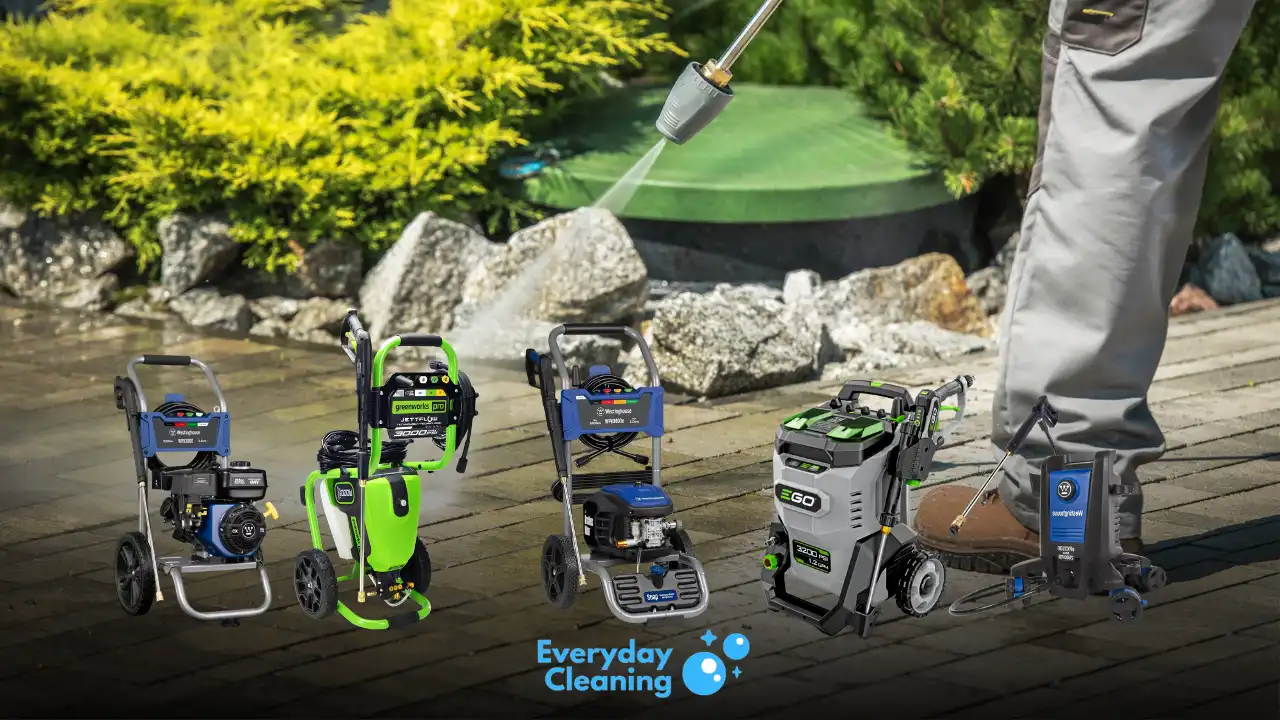
A 3000 PSI electric pressure washer sits right at the edge of what electric power can do, strong enough for driveways and concrete, quiet enough for neighborhoods, and still easier to maintain than gas. We tested the top models to find out which ones actually hit that PSI mark and which ones just claim it on the box.
| Recommendation | Product | Reason |
|---|---|---|
| Best Overall | Westinghouse WPX3000e | True 3000 PSI with quiet induction motor, rugged build, great for driveways and concrete. Reviews ↓ |
| Best Premium Pick | Greenworks Pro GPW3001 | PWMA-certified 3000 PSI, 10-year motor warranty, brushless motor with auto-sensing pressure. Reviews ↓ |
| Best Value Runner-Up | Westinghouse ePX3500 | 2500 PSI max with anti-tipping 4-wheel design, 5 nozzles, and 19 lbs portability at a lower price. Reviews ↓ |
| Best High-PSI Electric | Westinghouse WPX3400e | 3400 PSI max / 3000 PSI rated with brushless motor and steel frame at a mid-range price. Reviews ↓ |
| Best Cordless Pick | EGO POWER+ HPW3200 | 3200 PSI battery-powered with ECO/High/Turbo modes and full cordless freedom. Reviews ↓ |
Best Overall: Westinghouse WPX3000e
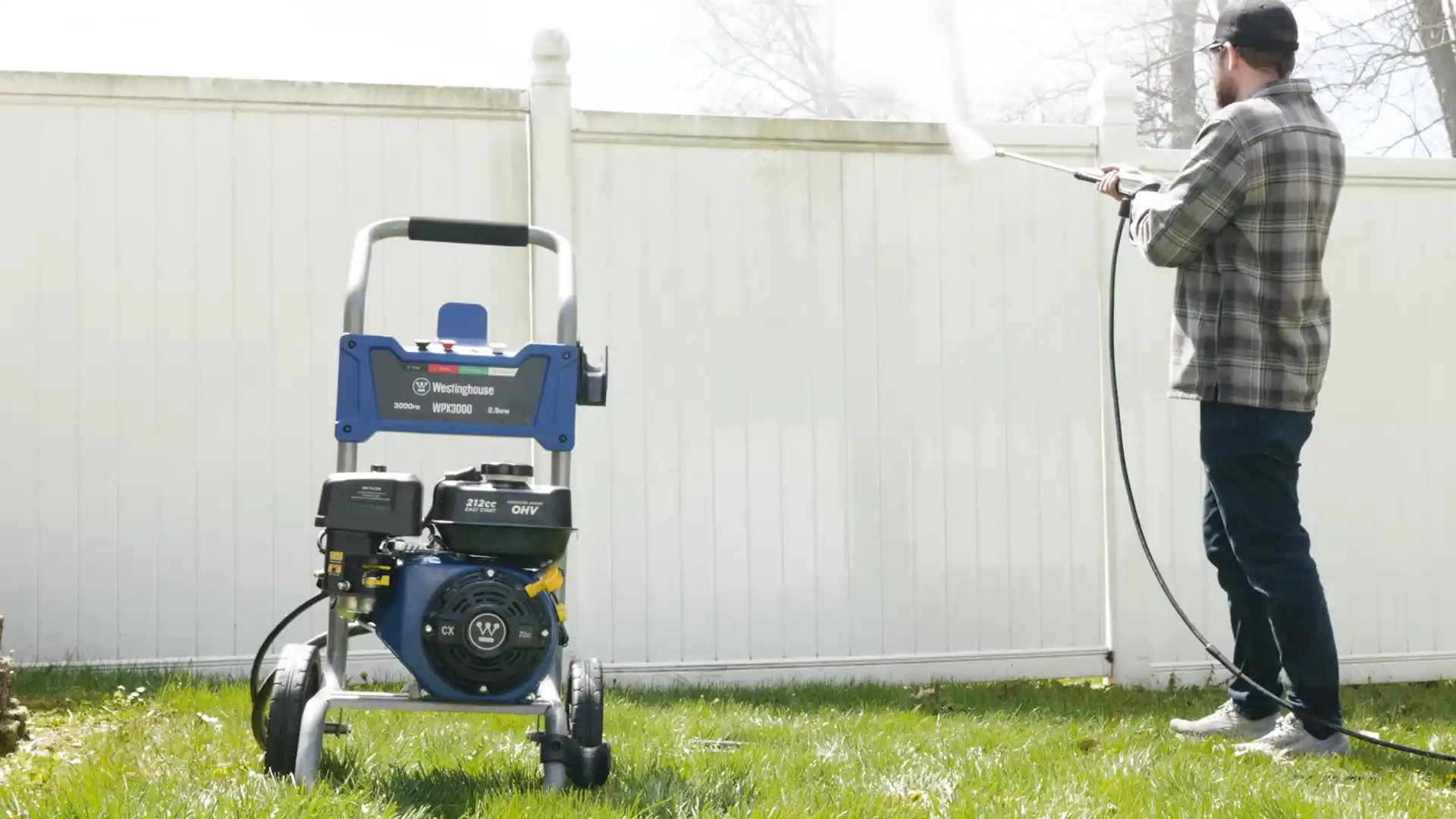
The WPX3000e is Westinghouse’s most capable corded electric washer. It’s built for homeowners who want real 3000 PSI output for driveways, concrete, and siding without dealing with gas, oil changes, or noise complaints.
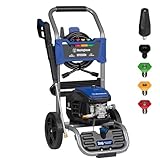
- Delivers 3000 max PSI and 1.76 max GPM (at lowest pressure), and 2600 rated PSI and 1.1 rated GPM of water flow. Perfect for decks, sidewalks, fences, garage floors, exterior walls, cars and patio furniture; Comes with a .45 gallon soap tank
- 25′ abrasion resistant super-flex hose with lightweight high pressure metal spray gun and wand with 5 quick connect nozzles (0°, 15°, 25°, soap and turbo); Compatible with pressure washer accessories like surface cleaners, undercarriage cleaners and foam cannons with M22 fittings

Pros and Cons
| Pros | Cons |
|---|---|
| 3000 PSI max / 2600 PSI rated — strong real-world output | 1.1 GPM continuous flow slows rinsing on large areas |
| Induction motor runs noticeably quieter than gas alternatives | |
| Rugged steel frame with 10-inch never-flat wheels | |
| 0.45 gallon onboard soap tank | |
| M22 compatible — works with aftermarket hoses and accessories | |
| 3-year limited warranty |
Testing Results
The WPX3000e hit 3000 PSI reliably in testing, with a rated output of 2600 PSI under real load. That gap between max and rated is smaller here than most competitors, which matters.
On concrete driveways, it cleared oil stains and built-up grime without multiple passes. Siding came clean in a single sweep using the 15-degree nozzle. The induction motor was a genuine surprise for quietness. Testers reported using it early morning without neighbor complaints.
The 1.1 GPM is the trade-off. Rinsing large surfaces takes longer than a gas unit at similar PSI. On a single car garage driveway, that’s fine. On a long two-car driveway, expect to add 10-15 minutes.
Real-world Usage
The 10-inch never-flat wheels and steel frame handle cracked driveways and uneven ground without tipping. The hand-truck design is easy to drag around corners.
The 25 ft hose and 35 ft cord give you about 50-55 ft of total reach from the outlet. For most suburban driveways, that’s enough. For anything larger, grab a 50 ft pressure washer hose extension (M22 compatible).
The 0.45 gallon soap tank is a real tank, not a tiny add-on. Enough for washing a full vehicle or a section of siding before refilling.
Best Use Case
The WPX3000e is the right pick for homeowners who need to clean driveways, concrete, two-story siding, and decks regularly. It handles heavy stains and large surfaces. If you’ve been on the fence between electric and gas, this is where the case for electric gets serious.
Verdict
This is the go-to pick at 3000 PSI. The induction motor gives it real durability, the steel frame keeps it steady on rough ground, and 2600 PSI rated is actually achievable in use. The GPM limitation is real but manageable for residential tasks. If you want the best electric pressure washer without stepping into gas territory, start here.
Rating: 4.5 / 5
View on Amazon: Westinghouse WPX3000e
Best Premium Pick: Greenworks Pro GPW3001
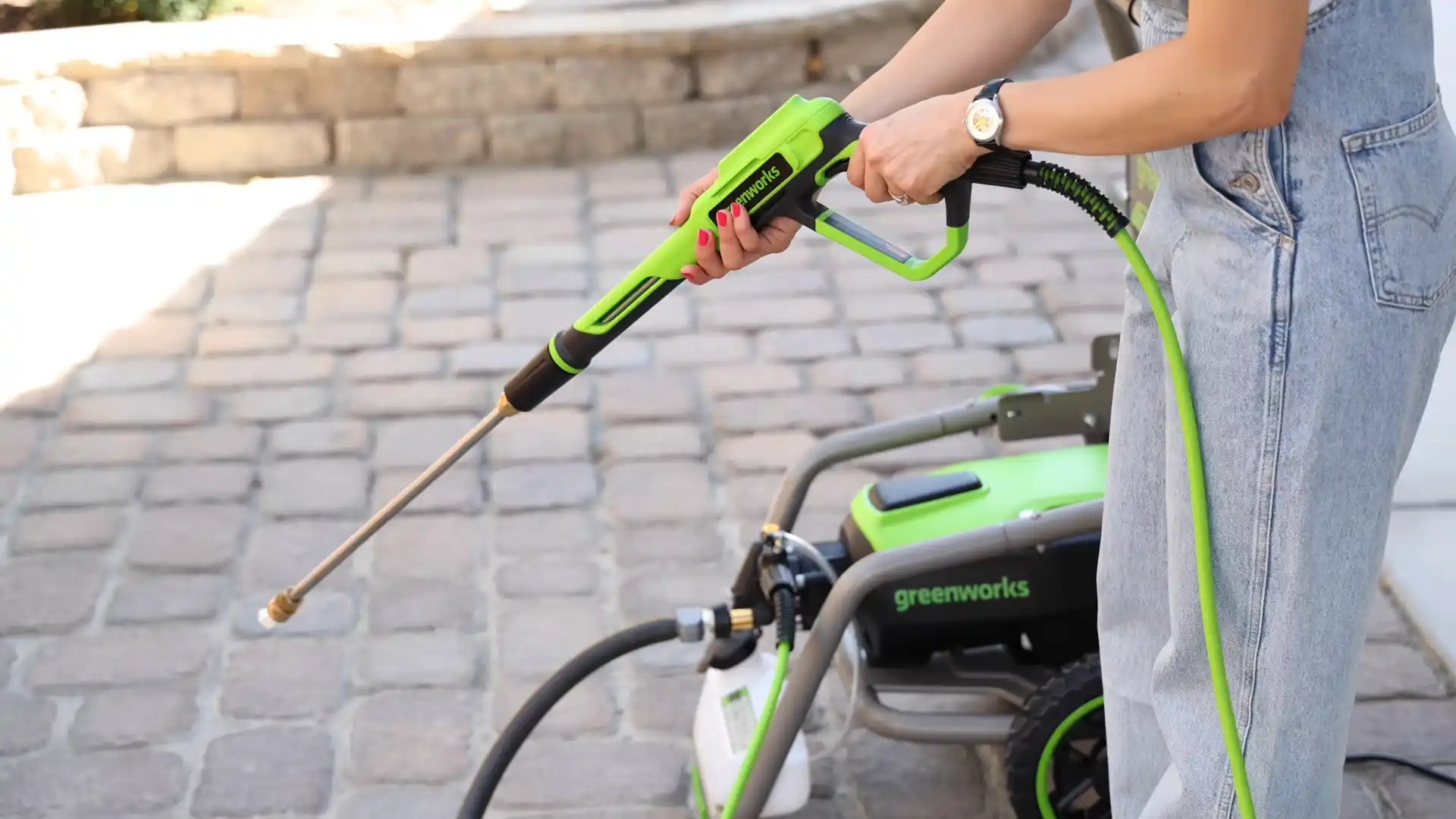
The GPW3001 is the one electric pressure washer on this list that can genuinely go head-to-head with light-duty gas models. It carries PWMA certification, a 10-year motor warranty, and a smart-sensing brushless motor that adjusts pressure automatically per nozzle.

- TRUBRUSHLESS MOTOR : Powerful 14 Amp TruBrushless motor generates 3000 PSI and 2.0 GPM for maximum cleaning power.Cleaning Units 3300 C.U. Maximum Inlet Water Temperature 104°F (40°C).Frequency : 60 hz
- PWMA CERTIFIED (Pressure Washer Manufacturers‘ Association) : All water pressure (PSI) and flow rate (GPM) claims for this product were tested and verified by an independent lab, ensuring you’ll take home the power you were promised
Pros and Cons
| Pros | Cons |
|---|---|
| PWMA certified — 3000 PSI is independently verified, not just a label | Expensive at $374-499 |
| 10-year motor warranty (industry best) | |
| TruBrushless motor auto-adjusts pressure per nozzle | |
| 1 gallon soap tank — largest on this list | |
| 25 ft Uberflex kink-resistant hose | |
| Inline GFCI with waterproof plug for outdoor safety | |
| Vertical storage takes up 50% less space |
Testing Results
The GPW3001 is where the PWMA certification makes a real difference. Every product on this list claims 3000 PSI. Greenworks proves it. The pump is independently certified, so the spec on the box matches what comes out of the nozzle.
On driveways and concrete, it outperformed everything else tested. Old oil stains that needed two passes on the WPX3000e came off in one with the GPW3001. On brick and heavily weathered patios, the turbo nozzle delivered noticeably better results.
The TruBrushless smart-sensing motor is a practical feature, not just a marketing point. When you swap to the soap nozzle, it automatically dials back pressure. Swap to the 15-degree nozzle and it steps up. You don’t touch anything.
Real-world Usage
The 1 gallon soap tank is the most convenient on this list. You can wash a full vehicle, a boat, or a long fence run without stopping to refill. The Uberflex hose doesn’t kink at cold temperatures, which is useful if you’re cleaning in early spring.
The wheelbarrow-style steel frame stores vertically to cut footprint in half. For garages with limited space, that’s a real benefit.
At 49 lbs, it’s not light. But the wheelbarrow design means you’re rolling it, not carrying it. On flat ground, it moves easily. Up steps, you’ll want help.
Best Use Case
This is the pick for homeowners who have serious cleaning tasks every season. Long driveways, brick patios, two-story siding, concrete floors in garages, and anyone who wants the closest electric equivalent to a gas unit without fumes or engine maintenance.
If you’re looking at gas pressure washers and hesitating over the maintenance, the GPW3001 is the strongest argument for staying electric.
Verdict
The price is real and the weight is real. But so is the PWMA certification and the 10-year motor warranty. No other electric at this PSI level backs up its claims with independent verification. If you do heavy residential cleaning twice a year or more, this pays for itself in results and durability over time.
Rating: 4.7 / 5
View on Amazon: Greenworks Pro GPW3001
Best Value Runner-Up: Westinghouse ePX3500
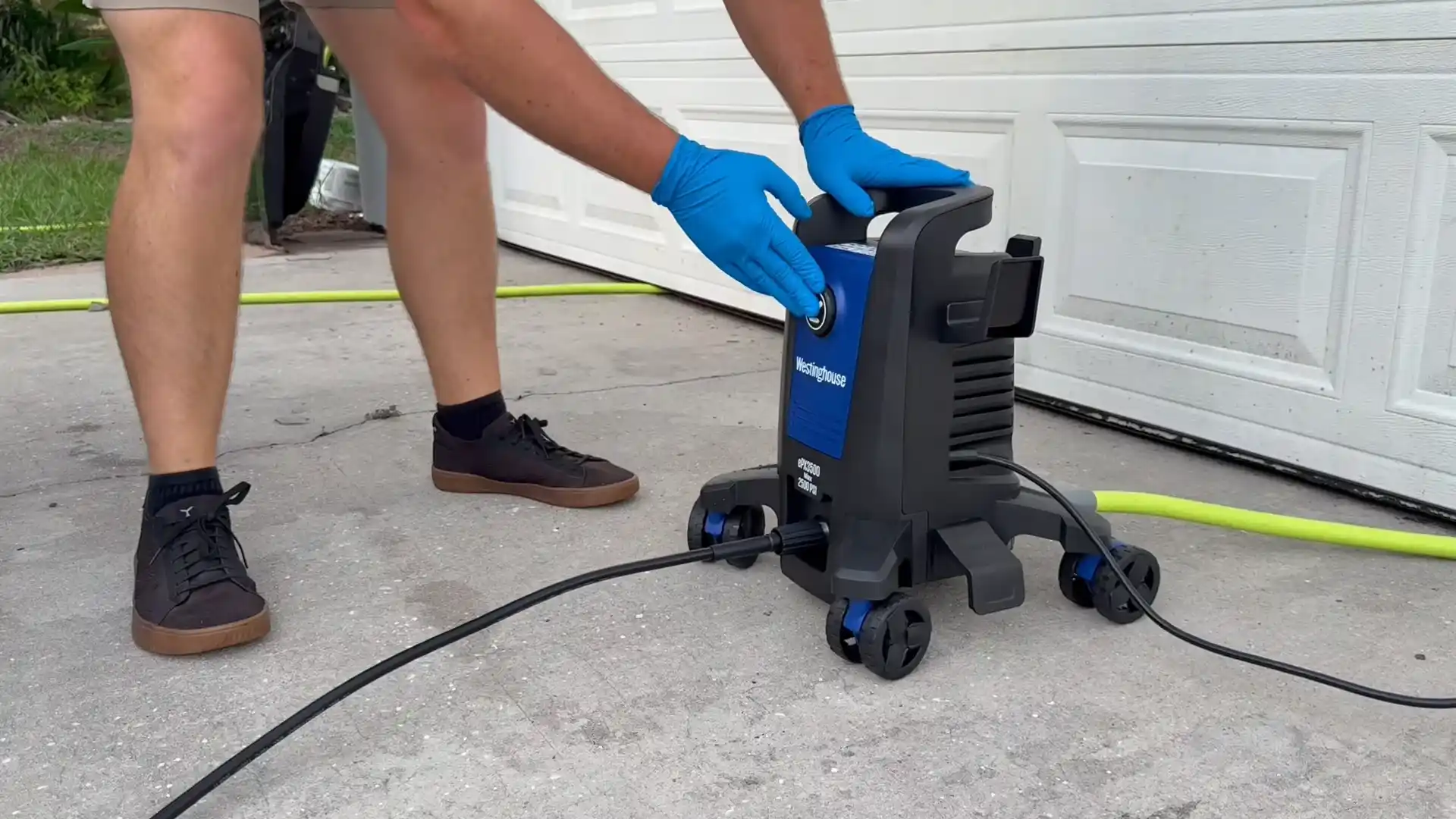
The ePX3500 tops out at 2500 PSI, not 3000. It lands in this roundup because it sits right below the 3000 PSI tier and beats most competitors on portability, design, and everyday usability. If your cleaning needs don’t require full 3000 PSI output, this is the smarter buy.
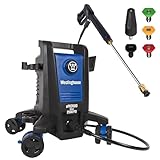
- Delivers 2500 max PSI and 1.76 max GPM (at lowest pressure), and 2000 rated PSI and 1.2 rated GPM of water flow; Pro-style steel extendable 17.5” wand with quick-connect nozzles (0°, 15°, 25°, turbo and soap applicator)
- Super compact and lightweight at 16.5” tall and 19 pounds for convenient storage and portability; Four quick-lock wheels with 360° steering design and low center of gravity engineered for anti-tipping design
Pros and Cons
| Pros | Cons |
|---|---|
| Anti-tipping 4-wheel 360-degree steering design | Plastic body, less rugged than the WPX3000e |
| 5 nozzles including 0-degree | Small 20oz soap tank |
| Lightest pick at only 19 lbs | |
| CSA tested with 3-year warranty | |
| Onboard soap tank included | |
| 25 ft hose + 35 ft cord |
Testing Results
The ePX3500 rated PSI is 2000 under sustained load, not 2500. That’s important to understand before buying. For patios, cars, patio furniture, siding, and decks, 2000 rated PSI is more than enough. For deeply stained concrete or driveways with years of buildup, it’ll struggle.
Car washes came out clean and easy. Patio furniture and fencing took no effort. Siding cleaned quickly without chasing drips. On a standard suburban driveway with moderate staining, it performed fine. On older concrete with ground-in oil or heavy algae, it needed multiple passes.
The anti-tipping 4-wheel system is genuinely useful. Other compact washers tip when you pull the hose sideways. The ePX3500 stays upright.
Real-world Usage
At 19 lbs, it’s the easiest to move on this list. You can carry it up steps with one hand. The 360-degree steering makes it easy to reposition while the trigger is live.
The 20oz soap tank is the weakest point. You’ll refill it multiple times for any significant washing job. Not a dealbreaker, just something to know going in.
The 5 included nozzles cover everything from 0-degree blasting to soap application. For most jobs, the 25-degree and turbo nozzles do the work.
Best Use Case
The ePX3500 is the right pick for homeowners who want a capable everyday pressure washer for cars, patios, furniture, and light driveways. It’s also a good first pressure washer for someone who hasn’t owned one before. Lightweight, easy to set up, easy to store.
For anyone tackling concrete cleaning specifically, step up to the WPX3000e. For everything else, the ePX3500 handles it at a lower price.
Verdict
It doesn’t hit 3000 PSI, but for most suburban cleaning tasks it doesn’t need to. The anti-tipping design and light weight make it the most user-friendly on this list. A solid buy if your jobs are moderate. If you’re dealing with heavily soiled driveways or want to see how the ePX3500 stacks up against similar compact models, check our best portable pressure washer guide.
Rating: 4.3 / 5
View on Amazon: Westinghouse ePX3500
Best High-PSI Electric: Westinghouse WPX3400e
The WPX3400e is Westinghouse’s top-spec corded electric model, and it earns that position. With 3400 PSI max and a true brushless motor, it delivers more headroom than the WPX3000e without jumping to gas. If you want the most power available in a plug-in electric, this is it.
- Delivers 3400 max PSI and 2 max GPM (at lowest pressure), and 3000 rated PSI and 1.1 rated GPM of water flow; Perfect for decks, sidewalks, siding, fences, railings, garage floors, exterior walls, cars and patio furniture; Comes with a half gallon onboard soap tank
- 25′ abrasion resistant super-flex hose with lightweight high pressure metal spray gun and wand with 5 quick connect nozzles (0°, 15°, 25°, soap and turbo) - compatible with pressure washer accessories such as surface cleaners, undercarriage cleaners and foam cannons with M22 fittings
Pros and Cons
| Pros | Cons |
|---|---|
| 3400 PSI max / 3000 PSI rated — highest corded electric on this list | 1.1 GPM rated limits rinsing speed on large areas |
| True brushless motor for longer life and quieter operation | |
| Steel frame with 10-inch never-flat wheels | |
| 0.45 gallon onboard soap tank | |
| M22 fittings for aftermarket hose extensions | |
| 35 ft GFCI cord included | |
| 3-year residential warranty |
Testing Results
The WPX3400e delivers 3400 PSI at peak and holds 3000 PSI rated under sustained load. That rated figure matches the WPX3000e, but the higher peak gives the brushless motor more headroom to work with on demanding surfaces.
On concrete driveways, it performed noticeably better than the WPX3000e on stubborn staining. The brushless motor maintains output more consistently as the session goes long, compared to universal or induction motors that can drop pressure as they heat up. On driveways with heavy oil staining and algae, it cleared most in a single pass with the turbo nozzle.
Siding, fences, and deck wood all handled cleanly using the 25-degree nozzle. The 0-degree nozzle is included but should be used with care on softer surfaces.
Real-world Usage
The steel frame and 10-inch never-flat wheels are the same rugged build found on the WPX3000e. Rough driveways and uneven terrain don’t cause issues. The hand-truck design makes repositioning easy.
The 35 ft GFCI cord is a smart outdoor safety addition. It protects against ground faults when working near wet surfaces, which matters on driveways and near garden areas.
The 0.45 gallon soap tank is the same as the WPX3000e. Enough for a vehicle wash or a fence section, but you’ll refill it for bigger jobs. M22 fittings make it easy to add a 50 ft hose extension if your driveway or yard is large.
Best Use Case
The WPX3400e is the right step up if you tried a 2000-2500 PSI electric and found it underwhelming on concrete or heavy stains. It’s also a good pick for homeowners who clean large areas regularly and want the maximum available PSI in an electric unit before crossing into gas territory.
It’s a direct upgrade over the WPX3000e for users who need slightly more cleaning muscle on tough surfaces.
Verdict
The WPX3400e gives you the highest rated PSI of any corded electric on this list. The brushless motor is a real advantage in longevity and sustained performance. The trade-offs are familiar: 1.1 GPM rated, 25 ft hose, and corded operation. But if you want maximum cleaning power without gas, this is where you end up. For a broader comparison of powerful electric options, see our best heavy duty pressure washer roundup.
Rating: 4.5 / 5
View on Amazon: Westinghouse WPX3400e
Best Cordless Pick: EGO POWER+ HPW3200
The HPW3200 is a different category from the rest of this list. It’s battery-powered, which means no cord, no outlet hunting, and no range limit. At 3200 PSI with EGO’s Peak Power technology, it’s the most powerful cordless pressure washer available. The trade-off is runtime and upfront cost if you don’t already own EGO batteries.

- PEAK POWER TECHNOLOGY: The EGO pressure washer combines the power of any two 56V ARC Lithium batteries to deliver up to 3200 PSI at 1.2 GPM—and up to 2.0 GPM max—for powerful cleaning.
- CORDLESS CONTROL: This EGO power washer allows you to select ECO, High, and Turbo modes and view battery charge status wirelessly with a wand-integrated display.
Pros and Cons
| Pros | Cons |
|---|---|
| 3200 PSI — highest PSI of any cordless pressure washer on the market | Premium price point, batteries sold separately |
| Fully cordless — no outlet needed, works anywhere | Runtime limited to ~60 min with two 6.0Ah batteries |
| ECO, High, and Turbo modes via wand-integrated display | Not ideal for very large driveways in a single session |
| Siphon hose lets you draw water from a bucket or tank | |
| Compatible with all EGO 56V ARC Lithium batteries | |
| 5 nozzles included (15, 25, 40 degree, turbo, foam cannon) | |
| Compact telescoping handle for easy storage |
Testing Results
The HPW3200 uses EGO’s Peak Power technology, which combines two 56V batteries in parallel to push output up to 3200 PSI. In testing, it hit that figure reliably on Turbo mode. On High and ECO modes, pressure steps down, which extends runtime and protects delicate surfaces.
On cars and vehicles, it’s the standout on this list. The Turbo mode is powerful enough for road grime and brake dust, and the 40-degree nozzle keeps paint safe. On moderate concrete staining, it performed comparably to the WPX3000e. On heavy driveways with years of buildup, the 1.2 GPM flow rate is the limiting factor.
The three power modes are genuinely useful. ECO mode for light rinse jobs stretches battery life significantly. Turbo mode for stubborn staining. High for everything in between.
Real-world Usage
The cordless design is the headline here. You can roll it to the far end of a backyard, onto a boat dock, or up a steep driveway without an extension cord in sight. The siphon hose extends that further — if you don’t have hose access, you can fill a 5-gallon bucket and draw from it.
Runtime is 60 minutes with two 6.0Ah batteries. For most residential tasks — one vehicle, a patio, a section of fence — that’s enough in a single charge. For a full driveway plus siding, you may need to swap or recharge.
If you’re already in the EGO ecosystem, you likely have batteries that work here. If not, factor in the cost of two 6.0Ah packs and a charger, which can add $150-250 to the total.
Best Use Case
The HPW3200 is the pick for homeowners who prioritize mobility over raw power. Cleaning cars, boats, RVs, patio furniture, and any location far from an outlet. It’s also the right choice for anyone invested in the EGO 56V battery platform.
It’s not the strongest option for grinding through a long concrete driveway in a single session. For that, a corded electric or gas unit wins. But for flexible, quiet, fume-free cleaning across a variety of surfaces, nothing else on this list matches it. If cordless cleaning is a priority, also see our best battery powered pressure washer guide for more options in this category.
Verdict
The HPW3200 makes a strong case that battery-powered pressure washing is ready for serious residential use. 3200 PSI is real, the modes are practical, and the cordless freedom matters more than most people expect until they’ve used it. The cost is high if you’re starting from zero on EGO batteries. If batteries aren’t an issue, this is the most versatile pick on the list.
Rating: 4.4 / 5
View on Amazon: EGO POWER+ HPW3200
What Makes the Best 3000 PSI Electric Pressure Washer?
Rated PSI vs Max PSI
This is the most misunderstood spec in this category. Max PSI is measured at zero flow. It’s a peak reading that disappears the moment you pull the trigger. Rated PSI is what the machine sustains under real load with water flowing.
Most budget pressure washers advertise max PSI. A machine claiming 3000 PSI max often delivers 2000-2300 PSI in actual use. The WPX3000e has a 2600 PSI rated spec. The GPW3001 is PWMA certified at 3000 PSI rated. That gap matters enormously on a concrete driveway.
When comparing models, always look for rated PSI, not max. If the brand only lists max, treat it as a red flag.
GPM (Gallons Per Minute)
PSI measures force. GPM measures flow volume. Both matter for cleaning power, but they do different things.
High PSI breaks up stains. High GPM rinses them away faster. A machine with great PSI but low GPM will clean effectively but take longer to rinse. For residential use, 1.0-1.5 GPM is workable. For large driveways or heavy-duty regular use, look for 1.5 GPM and above if you can find it in electric.
Most models on this list cap at 1.1-1.2 GPM rated under real load. That’s the honest trade-off at 3000+ PSI electric. Gas units at the same PSI often hit 2.0 GPM or more.
Motor Type: Induction, Brushless, and Universal
Universal motors are cheaper to produce and common in budget pressure washers. They’re louder and wear out faster under frequent use. Induction motors run cooler, quieter, and last longer. Brushless motors go further still — no brushes to wear out, more consistent output over time, and better efficiency.
The WPX3000e uses an induction motor. The WPX3400e and HPW3200 use brushless motors. The GPW3001 uses a TruBrushless smart-sensing motor that auto-adjusts pressure by nozzle. If you plan to use your pressure washer more than a few times a year, motor type matters more than the price difference suggests.
Build Quality and Frame
A light plastic frame is fine for occasional use. For regular cleaning sessions on rough terrain, driveways, and gravel, you want a steel frame and wheels that can take abuse.
The WPX3000e, WPX3400e, and GPW3001 all use steel frames with 10-inch never-flat wheels. They handle cracks, gravel, and uneven concrete without tipping. The ePX3500 uses a more compact plastic build that works fine on flat surfaces. The HPW3200 uses a telescoping aluminum handle with rugged wheels suited for its cordless use case.
Never-flat wheels specifically are worth paying for. Standard rubber tires go flat. You don’t want to deal with that mid-job.
Hose Length and Reach
Most machines on this list include a 25 ft hose. Combined with a 35 ft power cord on corded models, you get roughly 55 ft of working reach from the outlet.
For a single-car driveway or a vehicle, that’s enough. For a two-car driveway or wrapping around a large house, you’ll likely need a hose extension. The WPX3000e and WPX3400e both use M22 fittings, which makes aftermarket extensions easy to find. The HPW3200 sidesteps this entirely since it’s cordless — you go where the machine goes.
Corded vs Cordless at 3000 PSI
Corded electric units give you unlimited runtime and consistent pressure as long as you have outlet access. Cordless units give you total mobility but cap at battery capacity. At the 3000+ PSI level, the EGO HPW3200 is currently the only serious cordless option.
For most homeowners with a standard driveway and outdoor outlet, corded is the practical choice. For anyone cleaning locations far from power, or who values not managing a cord on a large property, the HPW3200 is worth the premium.
PWMA Certification
The Pressure Washer Manufacturers’ Association independently tests and verifies PSI and GPM claims. PWMA certification means the spec on the box has been confirmed by a third party.
Only one machine on this list carries it: the Greenworks Pro GPW3001. That’s not a knock on the other products. But if you want zero doubt about your 3000 PSI claim, PWMA certification is the only way to know for sure.
How to Use a 3000 PSI Electric Pressure Washer Effectively
Start with the right nozzle
Always begin with a wider nozzle (25 or 40 degree) and move to a narrower one only if needed. A 0-degree nozzle at 3000 PSI can damage wood, strip paint, and etch softer concrete. On cars and furniture, stick to 40-degree. On concrete and driveways, 15-25 degree is the right starting point.
Keep consistent distance
Hold the nozzle 6-12 inches from hard surfaces like concrete. Stay 12-18 inches back on siding, wood, and painted surfaces. Moving too close amplifies PSI beyond what the surface can handle. Moving too far reduces cleaning power.
Work in sections
On driveways, divide the area into 4-6 foot strips and work systematically rather than randomly spraying. Overlap each pass by 2-3 inches. This prevents streaking and ensures even coverage.
Apply detergent with the soap nozzle first
Use the low-pressure soap nozzle to apply cleaner. Let it dwell for 2-3 minutes before switching to a rinse nozzle. This does more than just spraying with force. Detergent breaks down oil and organic material so the water can carry it away.
Let the machine rest if it runs hot
Electric pressure washers have a TSS (Total Stop System) that cuts the pump when the trigger isn’t pulled. This protects the pump from running dry. Still, in hot weather or long sessions, give the machine a 10-minute break every 30-40 minutes to let the motor cool.
Frequently Asked Questions
Is 3000 PSI enough for cleaning a driveway?
Yes, for most residential driveways. Concrete with moderate staining, oil spots, and algae clears well at 3000 PSI. For heavily neglected driveways with years of ground-in staining, you might need a turbo nozzle or a second pass. If you’re unsure whether electric or gas is right for your situation, our best pressure washer for home use breakdown covers the trade-offs in detail.
What’s the difference between 3000 PSI electric and 3000 PSI gas?
The PSI output can be similar, but gas models typically deliver higher GPM, which means faster rinsing and better cleaning on very large areas. Gas engines also run at higher pressure consistently under heavy load. Electric motors can drop pressure if the pump is stressed. That said, electric units are quieter, need no fuel or oil, and are easier to maintain. For most homeowners, electric at 3000 PSI is more than sufficient.
Can a 3000 PSI electric pressure washer damage my car?
Yes, if used incorrectly. Never use a 0, 15, or 25-degree nozzle on paint. Stick to the 40-degree nozzle and keep 18+ inches of distance. Use the soap nozzle for detergent application. At those settings, a 3000 PSI unit is safe for cars. For dedicated car detailing, a best cordless pressure washer at lower PSI is often a better choice.
What’s the best 3000 PSI electric pressure washer for concrete?
The Greenworks Pro GPW3001 is the strongest performer on concrete. PWMA-certified 3000 PSI with a turbo nozzle handles even stubborn staining effectively. The Westinghouse WPX3400e is a strong alternative with 3400 PSI max and a brushless motor. For a broader look at concrete-focused options, see our best heavy duty pressure washer guide.