How to Make a Steam Mop Cleaning Solution
Most steam mop manuals say the same thing: water only. So the real question is not what to pour in the tank, but what to use around it. I’ve been making my own floor cleaners for years, and a homemade steam mop cleaning solution is simpler than most people think.
This guide covers what is safe in the tank, a pre-treatment spray for stuck on dirt, and how to add scent without clogging your machine.
What Goes in the Tank (and What Doesn’t)
Distilled water only. Steam heat does the cleaning, and tap water can leave mineral scale inside the machine. Vinegar, soap, and essential oils can damage seals and clog the nozzle, which is why most manuals say no. Our guide on whether you can put cleaner in a steam mop explains more.
So where does homemade solution go? Use this simple rule:
- In the tank: distilled water only, unless your manual says otherwise
- On the floor: a light mist of pre-treatment spray for stuck on spots, applied before you steam
- On the pad: two or three drops of essential oil if you want scent
What You’ll Need
This makes one 16 ounce glass spray bottle. Glass is the better pick because essential oils can break down some plastics over time.
- 1 cup distilled water
- 1/2 cup white vinegar
- 1/2 teaspoon pure castile soap
- 10 drops lemon essential oil (optional)
- 16 oz glass spray bottle
Nothing fancy. Most of it is already in your pantry or under the sink.
How to Make a Steam Mop Cleaning Solution (Pre-Treatment Spray)
The whole recipe takes five steps and about five minutes. Keep it light, because steam does not rinse the floor the way a wet mop does.
Step 1: Add the Distilled Water
Pour 1 cup of distilled water into your spray bottle. A funnel helps here.
Distilled water keeps minerals off your floors. That means fewer streaks and spots after the steam dries.
Step 2: Add the White Vinegar
Add 1/2 cup of white vinegar. It helps cut through everyday grime and sticky spots.
Vinegar is useful all over the house. Our guide to DIY vinegar cleaning solutions has more ways to use it.
Step 3: Add a Little Castile Soap
Add just 1/2 teaspoon of pure castile soap. Yes, that small.
Too much soap leaves a film, and steam will not rinse it away. A tiny amount is enough to lift footprints and light grease.
Step 4: Add the Essential Oil (Optional)
Add 10 drops of lemon essential oil if you want a fresh scent. Skip it if you have pets or sensitive noses in the house.
More oil does not mean a cleaner floor. It just means a stronger smell and a greater chance of residue.
Step 5: Shake Gently and Label the Bottle
Put the spray top on and give the bottle a gentle swirl. Label it so nobody mistakes it for something else.
Vinegar and soap can separate a bit as the bottle sits. Shake it gently before every use.
How to Use It With Your Steam Mop
Here is the routine from start to finish. It takes a little longer than a plain steam, but the sticky spots disappear.
- Sweep or vacuum first so you are not steaming loose dirt into the floor.
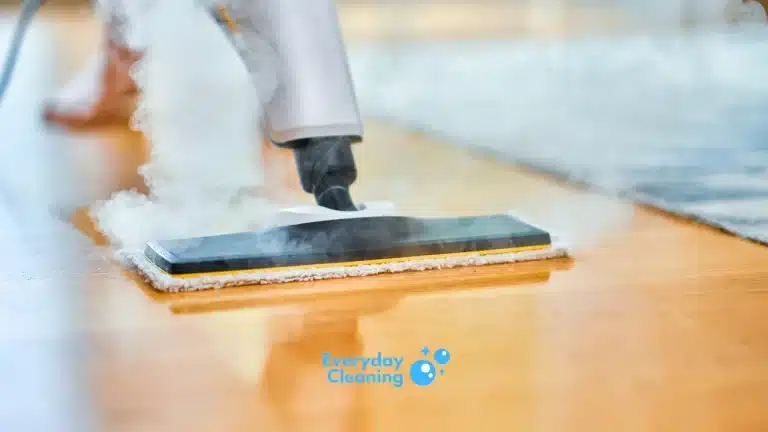
- Fill the steam mop tank with distilled water and let it heat up.
- Lightly mist dirty spots with your pre-treatment spray. Do not soak the floor.
- Let the spray sit for one to two minutes.
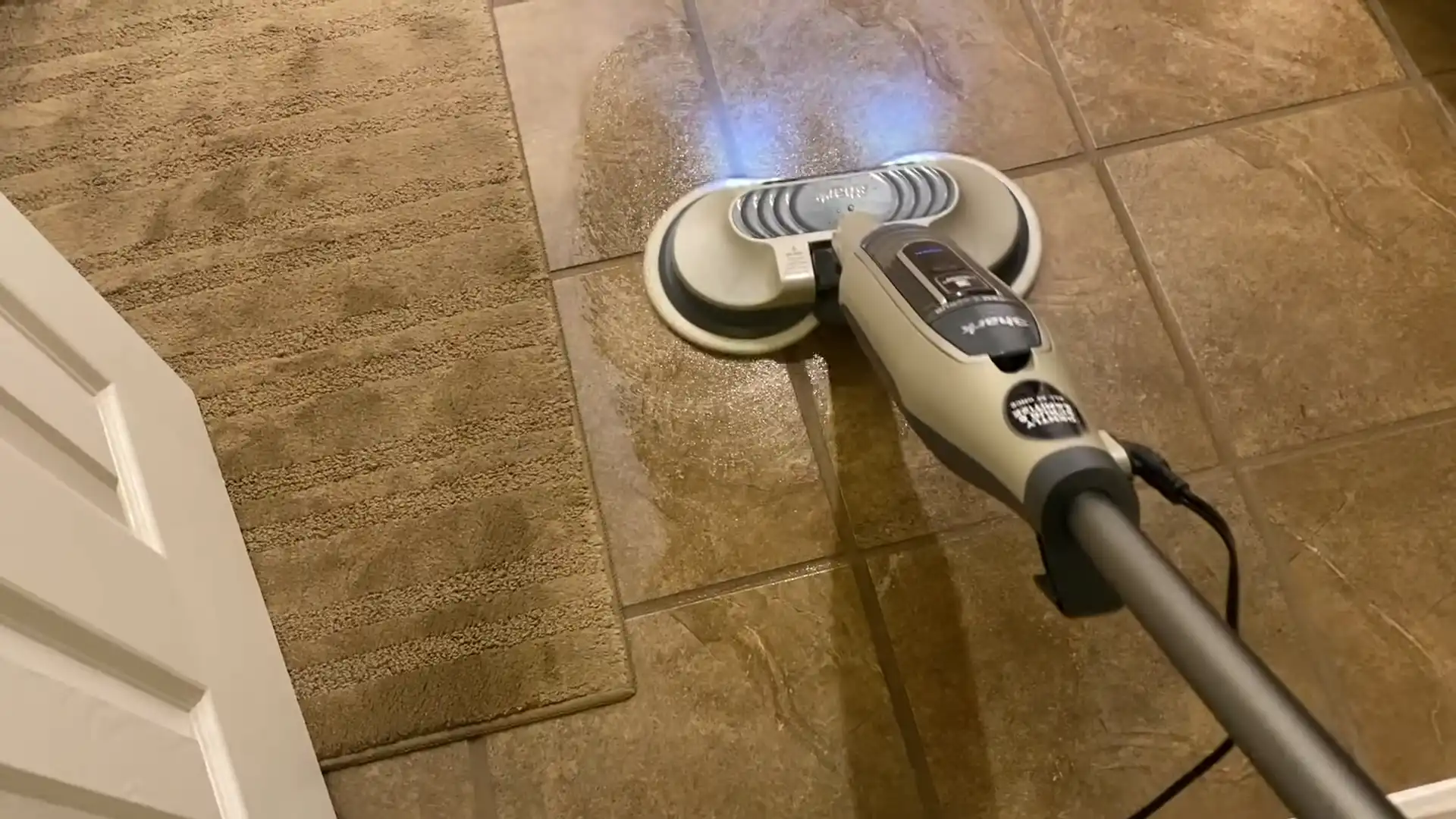
- Glide the steam mop over the area with a clean microfiber pad, working in small sections.
- Keep the mop moving. Never park it on one spot.
- Let the floor air dry before walking on it.
When you finish, pull the pad off and wash it. A dirty pad just spreads grime on your next round, so cleaning your mop head after each use matters more than most people think.
How to Care for Your Steam Mop Afterward
A little care keeps the steam strong. It only takes a couple of minutes after each use.
Unplug the mop and let it cool completely. Empty any water left in the tank, then wash the pad and let it air dry. Check the manual for descaling steps, since each brand has its own rules and some do not allow vinegar for that job.
Wipe down the base and look at the steam holes. If you see white crust, that is mineral buildup from the water.
How to Add Scent Without Clogging Your Steam Mop
If you miss that clean smell, skip the tank and use the pad. Put two or three drops of essential oil on a dry pad before you start mopping.
Steam carries scent into the air quickly, so go easy. Two drops is often plenty.
Keep the pet warning in mind. Tea tree and citrus oils can be harmful to cats and dogs, so keep animals out of the room until the floor is dry. If you have a cat, ask your vet first or leave the oils out.
Which Floors Can You Use It On?
Not every floor likes steam, and not every floor likes vinegar. Always check your floor maker’s care instructions and test a small hidden spot first.
- Good for: sealed ceramic and porcelain tile, and sealed vinyl if the manufacturer allows steam
- Skip it on: unsealed or waxed wood, and natural stone like marble, granite, or travertine
Laminate is tricky because steam can seep into the seams and swell the boards. Read our answer on using a steam mop on laminate floors before you try it.
Hardwood needs even more care. Our breakdown on using a steam mop on hardwood floors explains the risks and what finish to look for.
Tips for Better Results
A few small habits make a big difference with any steam mop.
- Use distilled water every single time.
- Swap to a fresh pad when the first one gets dirty.
- Vacuum before you steam. Hair and grit clog pads fast.
- Follow the manual for descaling and cleaning the tank.
- Store the mop with the tank empty.
Signs Something Went Wrong
Already put something in the tank by mistake? Watch for these warning signs.
- Weak or sputtering steam
- A sour or soapy smell coming from the mop
- White crust or residue around the steam holes
- Streaky, sticky, or cloudy floors after mopping
If you notice any of these, stop using the mop. Empty the tank, rinse it with distilled water, and check the manual for next steps. If the problem sticks around, contact the manufacturer.
Common Mistakes to Avoid
These slips cause most steam mop problems.
- Pouring vinegar or soap in the tank. It can clog the nozzle and damage seals.
- Spraying too much. Extra liquid plus steam can soak into seams.
- Staying in one spot. Heat can damage some finishes.
- Adding extra oil. Stick to the drop counts. Extra oil leaves a slick film.
- Skipping the spot test. Every floor reacts a little differently.
Frequently Asked Questions
Can I put vinegar in a steam mop?
Most manufacturers say no. Vinegar can wear down seals over time and may void your warranty. Use it as a spray on the floor instead.
Can I use tap water in my steam mop?
Some models allow it, but minerals can build up inside and weaken the steam. Distilled water is the safer choice, especially if you have hard water.
Do I even need a cleaning solution with a steam mop?
Often not. Steam alone handles everyday dirt on sealed floors. If you wonder how it compares to a regular mop, our steam mop vs regular mop guide breaks it down.
Can I put essential oils in my steam mop tank?
No. Oils can clog the steam path and leave residue. Put two or three drops on the pad instead.
How often should I use the pre-treatment spray?
Only when you need it. Use it on sticky spots, footprints, and dried messes, not on the whole floor every time. Plain steam is enough for routine cleaning.
Which steam mop should I buy?
Look for a model with a removable tank and washable pads. Our list of the best steam mops for home use shows what we tested.