Can You Put Cleaner in a Steam Mop? Read This Before You Try

If you’ve ever looked at your grimy kitchen floor and thought, “What if I just add a little dish soap to my steam mop?”. It sounds like a logical idea. Steam plus soap equals cleaner floors, right?
Not quite.
The short answer to “can you put cleaner in a steam mop” is: no, you should not add regular cleaning products to your steam mop’s water tank. But there’s more to it than a simple yes or no, and understanding why actually helps you get better cleaning results anyway.
Let’s break it all down.
Table of Contents
Why Most Manufacturers Say No (And They Mean It)
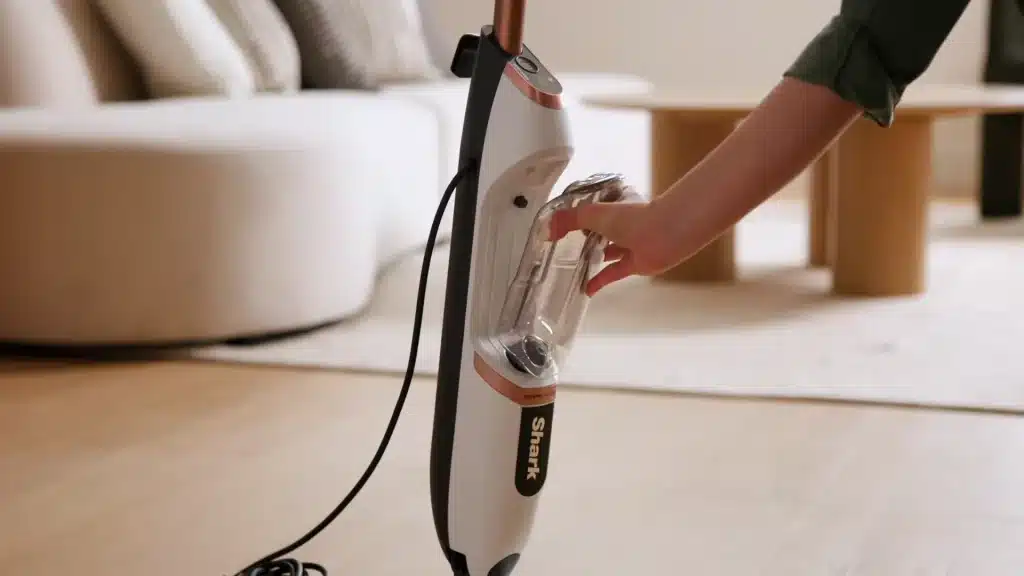
Almost every major steam mop brand, including Bissell, Shark, Kärcher, and Hoover, explicitly states in their user manuals that you should only use clean, plain water in the water tank. This isn’t just a legal disclaimer. There are real reasons behind it.
Steam mops work by heating water to a very high temperature, turning it into steam, and pushing that steam through a mop head or pad. The heat alone does the heavy lifting. Bacteria, dirt, and grime are loosened and killed by the high-temperature steam, not by chemical cleaners.
When you introduce a liquid cleaner into that system, you’re adding something the machine was never designed to handle. The internal components — the boiler, the pump, the steam nozzle — are built for water. That’s it.
Think of it like putting juice in a coffee maker instead of water. Sure, it might work for one cycle. But you’ll probably regret it.
What Happens When You Add Detergent to the Tank
This is where it gets interesting, and a little alarming.
Residue Buildup Inside the Machine
Soap and cleaning products leave behind residue. In a steam mop, that residue builds up inside the boiler and steam lines over time. Eventually, it clogs the nozzle, reduces steam output, and shortens the lifespan of the machine significantly. You might not notice it after one use, but after several uses, your steam mop starts underperforming and may stop working altogether.
Soap Gets Pushed Onto Your Floors
Here’s the thing people don’t think about: whatever you put in the tank gets pushed out as steam or liquid mist onto your floors. So if you add a foaming cleaner, you’re essentially spraying a soapy film onto your floors with every pass.
That film doesn’t get rinsed off. It dries into a sticky residue that actually attracts more dirt over time. Your floors end up looking dull and streaky, and you find yourself mopping more often, not less.
It Can Void Your Warranty
Most steam mop warranties are voided the moment you use anything other than water in the tank. So if your machine breaks down after adding cleaner to it, the manufacturer has every right to deny your warranty claim. Given that a decent steam mop is an investment, that’s a risk not worth taking.
Potential Safety Hazards
Certain cleaning chemicals, when heated to the temperatures inside a steam mop boiler, can release fumes. Some multi-surface sprays and disinfectants contain chemicals that are perfectly safe at room temperature but become irritants when vaporized. If you’re using your steam mop in a small room, that’s a real concern.
Can You Put Cleaner in a Steam Mop? The Only Real Exception
There is one exception, and it’s an important one.
Some manufacturers make cleaning solutions that are specifically formulated and approved for use in their steam mops. Bissell, for example, sells a “Demineralized Water + Cleaning Formula” that is designed to be used in certain Bissell steam mop models. Kärcher also has approved cleaning concentrates for their machines.
These products are engineered to work at high temperatures without damaging the internal components, clogging the boiler, or leaving residue on your floors.
The key word here is “approved.” If the manufacturer of your specific steam mop model says a product is safe to use in the tank, and sells it as an accessory or recommended product, then you’re fine. Otherwise, stick to water.
Before adding anything to your tank, check your user manual or the manufacturer’s website for a list of approved products. When in doubt, don’t.
Safe Alternatives: Pre-Cleaning Your Floors Before Steaming
If you feel like plain steam just isn’t cutting through tough stains or grease, the solution isn’t to add cleaner to the tank. It’s to pre-clean your floors before steaming.
This two-step approach is actually more effective anyway:
- Sweep or vacuum first. Remove loose dirt, crumbs, and debris before steaming. Steam mops aren’t designed to pick up dry debris, and dragging it around just spreads it.
- Pre-treat stubborn spots. If you have greasy spots, sticky residue, or tough stains, spray a little floor cleaner or diluted dish soap directly onto those areas. Let it sit for a minute or two.
Wipe or mop the pre-treated spots. Use a damp cloth or a regular mop to wipe up the cleaner from those specific areas.
Follow up with your steam mop. Now run your steam mop over the whole floor. The steam will sanitize, lift remaining grime, and leave your floors looking clean without the streaks.
This method gives you the best of both worlds: the cleaning power of your favorite floor cleaner where you need it, and the deep sanitizing power of steam for the whole floor. It’s especially useful on tile and grout, where grime really gets embedded. If your floors need that extra attention, our guide on the best steam mop for tile floors and grout covers what to look for in a model that really handles those tough jobs well.
Vinegar in a Steam Mop: Is It Safe?
This one comes up a lot, and it’s a bit of a gray area.
White distilled vinegar is a popular natural cleaner, and a lot of people assume that because it’s “natural,” it must be safe to put in their steam mop. The reality is more complicated.
What Vinegar Does to the Machine
Vinegar is acidic. Over time, that acidity can corrode the internal components of your steam mop, particularly the boiler, seals, and any rubber parts. Most manufacturers specifically warn against using vinegar in the tank for this reason.
Some people use a very diluted vinegar-water solution (like one tablespoon per tank) without noticing immediate damage. But the cumulative effect over months of use can degrade your machine faster than plain water would.
What Vinegar Does to Your Floors
Vinegar is also a concern when it comes to certain floor types. Hardwood floors, for example, can be damaged by repeated vinegar exposure. The acidity breaks down the finish over time. If you’re using a steam mop on hardwood, you’re already in territory where you need to be careful. Adding vinegar to the mix is asking for trouble. If hardwood is what you’re working with, this breakdown of steam mops suited for hardwood is worth reading before you make any decisions.
The Safer Vinegar Method
If you want to use vinegar as part of your floor cleaning routine, do it the same way we talked about for other cleaners: apply it directly to the floor surface, not through the machine. Mix equal parts white vinegar and water in a spray bottle, spritz it on the floor, let it sit briefly, then follow up with your steam mop (water only in the tank).
You get the deodorizing and mild disinfecting benefits of vinegar without risking damage to your machine or your floors.
Cleaning Recommendations by Brand
Different brands have different rules, and it’s worth knowing what your specific machine’s manufacturer says. Here’s a quick overview of the major brands and their policies:
| Brand | Approved Additives | Vinegar? | Regular Detergent? |
|---|---|---|---|
| Bissell | Bissell-approved demineralized water + formula for select models | Not recommended | No |
| Shark | Water only | Not recommended | No |
| Kärcher | Kärcher-approved cleaning concentrate for select models | Not recommended | No |
| Hoover | Water only | Not recommended | No |
| Dupray | Water only (distilled recommended) | Not recommended | No |
| McCulloch | Water only | Not recommended | No |
| Light ‘n’ Easy | Water only | Not recommended | No |
The pattern is clear: across the board, manufacturers recommend plain water. A small number allow brand-specific approved solutions, but none recommend regular household cleaners or vinegar.
What About Distilled vs. Tap Water?
While we’re on the topic, it’s worth mentioning water quality. Many manufacturers recommend using distilled water in your steam mop rather than tap water. Tap water contains minerals that leave scale deposits inside the boiler over time, reducing efficiency and eventually clogging the machine.
If your tap water is hard (high mineral content), distilled water is a smart investment. It’s inexpensive, easy to find at any grocery store, and it extends the life of your steam mop noticeably. Some models, like those from Dupray, actually specify distilled water to protect the warranty.
What to Do If You’ve Already Added Cleaner to Your Steam Mop
If you’ve already put some dish soap, floor cleaner, or vinegar in your steam mop’s tank, don’t panic. Here’s what to do:
Empty the tank completely. Pour out whatever’s left in there.
- Rinse the tank with clean water. Fill it with plain water, swirl it around, and empty it again. Repeat two or three times.
- Run the steam mop until the tank is empty. Fill the tank with plain water and let the machine steam through a full tank. This flushes the boiler and steam lines. Do this outside or in a well-ventilated area in case there’s any soapy residue being pushed through.
- Repeat if needed. If you see soapy bubbles coming from the steam head, run another full tank of plain water through the machine.
- Check the steam output. If your machine is steaming normally after this process, you’re likely fine. If steam output seems reduced or inconsistent, there may already be some buildup inside. In that case, check your manual for descaling instructions.
The sooner you catch it and flush it out, the better your chances of preventing any lasting damage.
Getting the Most Out of Your Steam Mop Without Additives
Here’s the honest truth: a good steam mop doesn’t need help from cleaners to do its job well. The high-temperature steam is genuinely effective at killing bacteria, loosening grime, and leaving floors cleaner than a traditional wet mop.
The trick is using the right steam mop for your floor type, using the right pad, and following the pre-cleaning steps we covered earlier.
If you’re not getting the results you expected, it might be worth looking at whether your current model is the right fit for your flooring. For example, laminate floors need lower steam settings and a dry microfiber pad to avoid moisture damage. If you’re working with laminate throughout your home, our roundup of the best steam mops for laminate floors walks through exactly what to look for.
And if you’re shopping around and budget is a consideration, you don’t have to spend a fortune to get a reliable machine. There are some genuinely solid options at lower price points, and we put together a guide to help you find the right one without overspending, starting with our picks for the best budget steam mop.
Tips for Better Steam Cleaning Results
A few habits that make a real difference:
- Use the right pad for the job. Microfiber pads are great for everyday cleaning. Scrubby pads are better for stubborn spots on tile
- Move slowly. Rushing means the steam doesn’t have time to work. A slow, steady pass is more effective than a quick back-and-forth.
- Change pads when they get dirty. A saturated pad just pushes dirty water around instead of lifting it.
- Let the floor dry before walking on it. Steam leaves very little moisture, but giving it a minute or two to dry fully prevents footprints and streaking.
- Descale regularly. If you’re using tap water, descale your steam mop every one to three months depending on your water hardness. Most machines have a descaling cycle or you can follow the manual’s instructions.
These small things add up to floors that actually look clean after steaming, without any need for chemical additives in your tank.
When Steam Mops Aren’t the Right Tool
One more thing worth knowing: steam mops aren’t ideal for every cleaning job. They work beautifully on sealed tile, sealed hardwood, vinyl, and laminate (with the right settings). But they’re not great for very porous surfaces, unsealed wood, or floors with deep cracks and gaps where moisture can seep in.
If your floors fall into a trickier category, it might be worth exploring other steam cleaning options that give you more control over steam pressure and temperature. For a broader look at what’s out there, this overview of the best steam cleaners for home use covers a wider range of machine types that might suit your situation better.