5 Best Pressure Washers for Boats
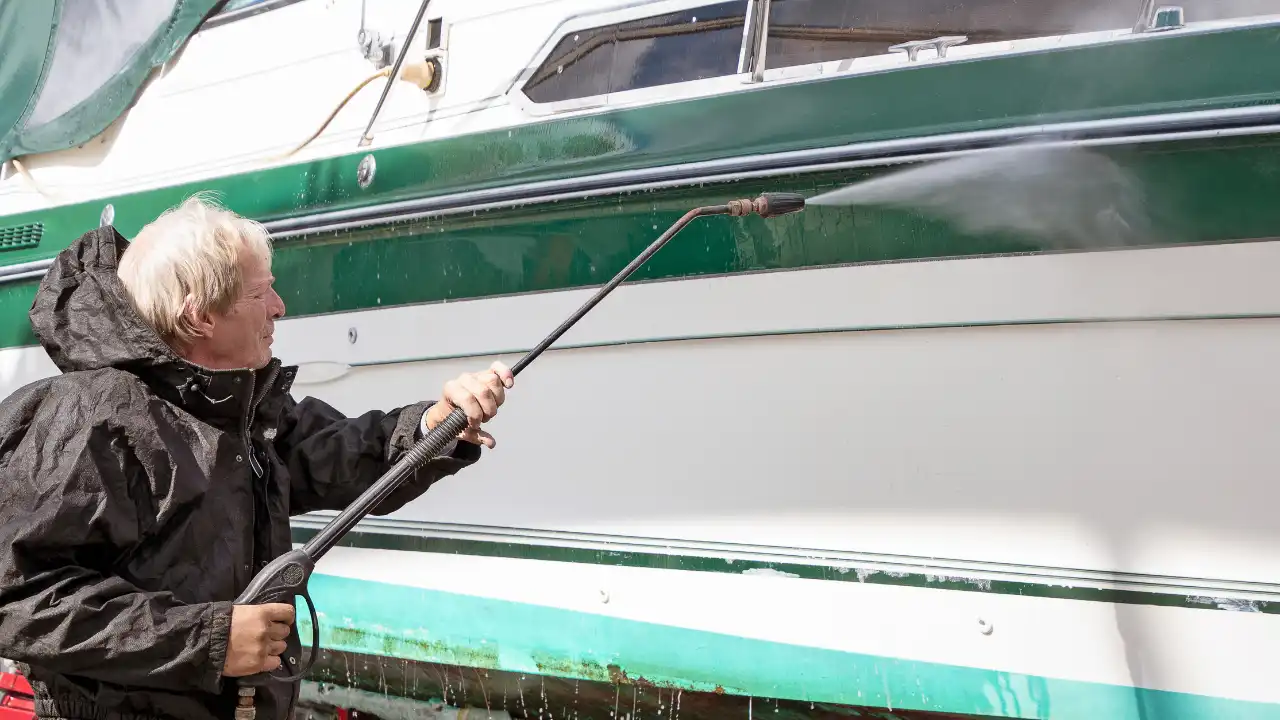
Boats collect salt, algae, bird droppings, and waterline stains fast. A pressure washer built for boat cleaning gets through all of it without damaging gel coat, vinyl upholstery, or painted surfaces.
| Recommendation | Product | Reason |
|---|---|---|
| Best Overall | Karcher K1700 | CETA certified, foot switch, gentle 1700 PSI for gel coat. Reviews ↓ |
| Best Cordless | WORX WG647 Hydroshot | Draws from a bucket or lake, 5.8 lbs, no outlet needed at the dock. Reviews ↓ |
| Best for Detailing | Active 2.0 Pressure Washer | 2.0 GPM, 1100 PSI working pressure, safe for gel coat and clear coat. Reviews ↓ |
| Best Foam Cannon | LWQ S5 | 2.5 GPM with foam cannon included — best soap performance at this price. Reviews ↓ |
| Best Budget | Craftsman CMEPW1700 | Lightest corded option at 17.6 lbs, lowest price, trusted CRAFTSMAN brand. Reviews ↓ |
Best Overall: Karcher K1700
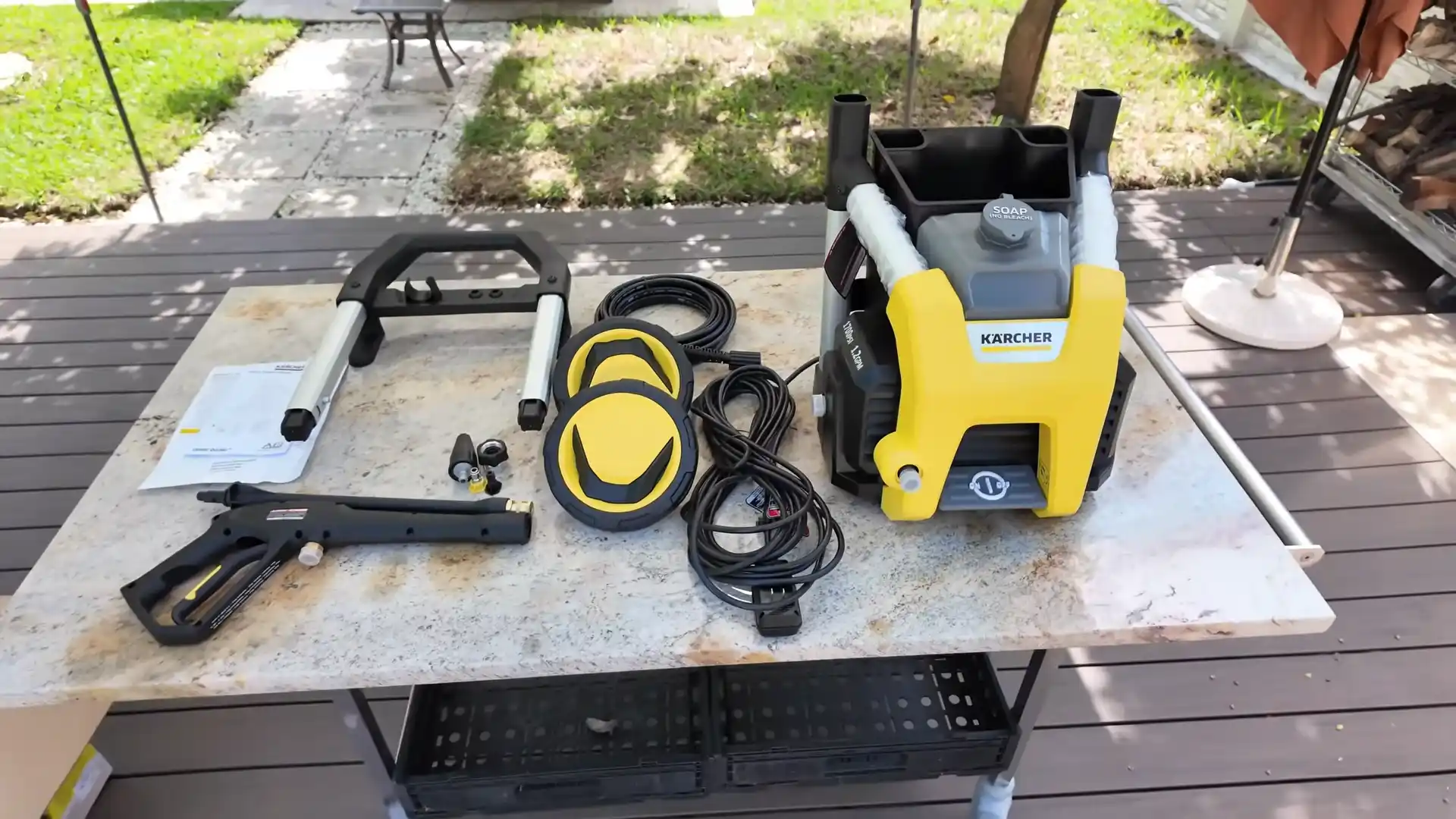
The K1700 is the most boat-friendly corded pressure washer on this list. The foot-activated on/off switch means you don’t have to bend down to cut the pump every time you move around the hull, and 1700 PSI is high enough to blast off salt residue and algae but safe enough for gel coat when you keep the nozzle moving.

- POWERFUL & CETA CERTIFIED: 1700 PSI TruPressure and 1.2 GPM for effective cleaning of various surfaces. Independently tested and CETA certified for proven performance you can trust.
- VERSATILE CLEANING OPTIONS: Equipped with three different nozzles (15°, turbo, and 65°), the K1700 allows you to tackle a wide range of cleaning jobs with precision

Pros and Cons
| Pros | Cons |
|---|---|
| CETA certified (specs are accurate) | Pricier than Craftsman/RYOBI at similar PSI |
| Foot on/off switch for easy flow control | |
| Removable detergent tank, easy to use | |
| 25 ft hose, longer than most budget picks | |
| Karcher brand reliability, Rapid Exchange warranty |
Testing Results
The CETA certification is the real selling point here. Karcher’s stated 1700 PSI and 1.2 GPM are independently verified numbers, not marketing claims. For boat cleaning, that accuracy matters. You know exactly what pressure you’re working with before pointing a wand at gel coat or vinyl graphics.
The Vario spray wand adjusts pressure without swapping nozzles. On a boat, that’s practical. You can dial down for vinyl upholstery, step it up for the waterline. The DirtBlaster turbo nozzle adds real punch for tougher barnacle buildup or stained non-skid decking.
Car Wash surface performance is rated Yes. Deck and Fence is Yes. That translates directly to boat hull and teak decking. The 25 ft hose covers most trailered boats without moving the unit mid-wash.
Real-World Usage
The foot switch genuinely changes how you work. On a boat, you’re constantly repositioning. Leaning down to click the wand trigger every time you move is annoying. This unit sits on the dock and you just step on the switch. Small thing. Makes a real difference over a long wash session.
The removable detergent tank keeps soap organized. Fill it with a marine-safe boat soap, apply with the soap nozzle, let it dwell, then rinse. The tank holds enough for a full wash on a 20-22 ft boat without refilling.
Best Use Case
Boat owners who want a reliable, gentle workhorse with certified specs and practical features for regular weekly washes. Best for trailered boats washed at home or a ramp with a nearby outlet.
Verdict
The K1700 earns the top spot because it’s built around car and boat cleaning. The foot switch, CETA-verified pressure, removable soap tank, and Karcher reliability make it the most complete package for gel coat-safe washing at this price. If you need more PSI for hull stains, pair it with a hull cleaner chemical first. Don’t bump the PSI up to compensate.
Rating: 4.5/5
View on Amazon: Karcher K1700
Best Cordless: WORX WG647 Hydroshot
The Hydroshot is the only pressure washer on this list that genuinely frees you from a dock outlet. It draws water directly from a bucket, lake, or rain barrel. For boat owners who wash at a ramp, on a lift, or anywhere far from an outlet, that changes everything.

- Powerful Cleaning Performance: 800 PSI with 1.0 GPM for maximum efficiency in removing grime and debris
- Advanced Motor Technology: Efficient Brushless Motor 2.0 for longer runtime and enhanced durability
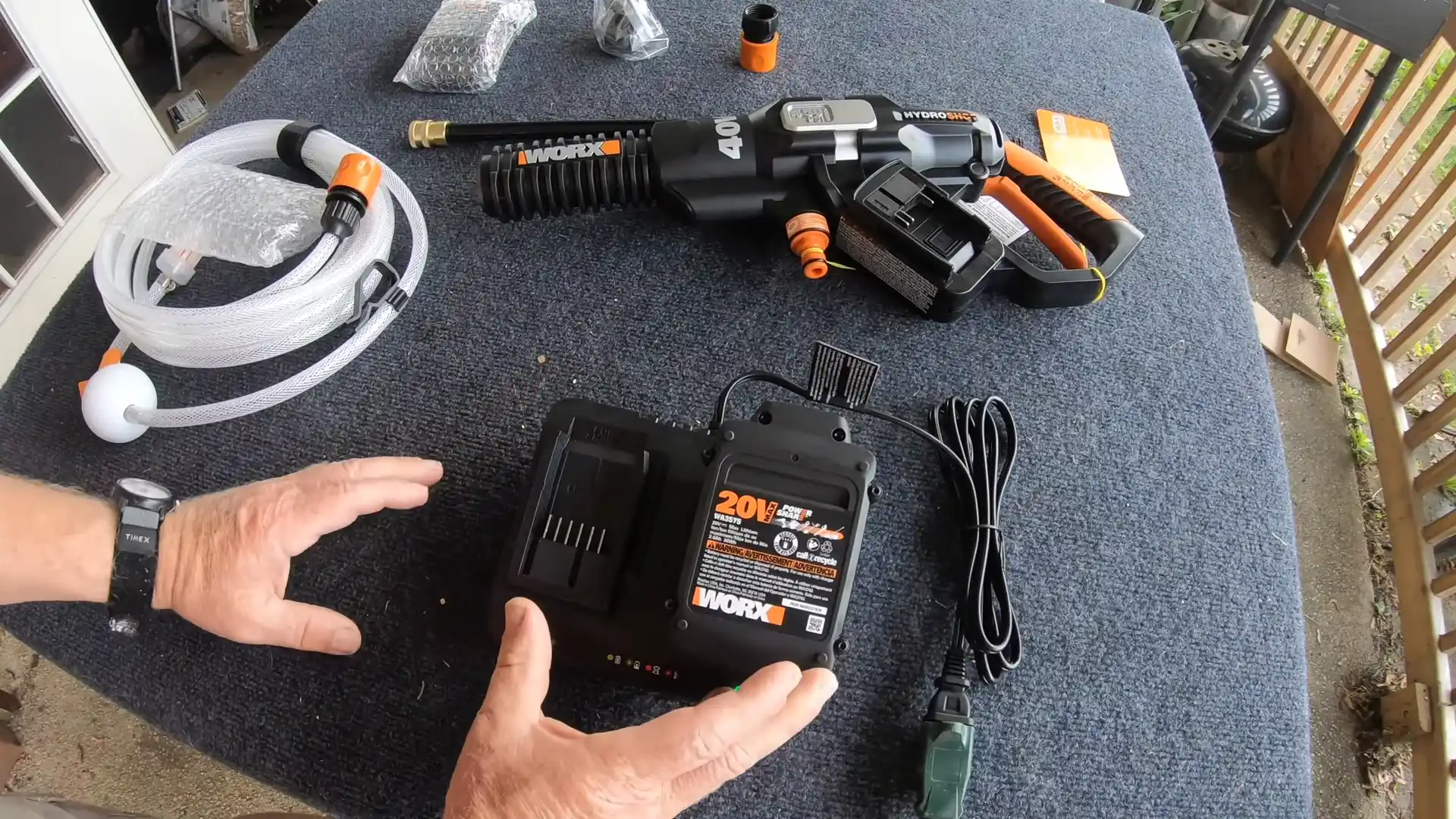
Pros and Cons
| Pros | Cons |
|---|---|
| True cordless, no outlet needed | 800 PSI only; not for serious stain removal |
| Draws from bucket, lake, or rain barrel | Best for rinsing, not deep cleaning |
| 5.8 lbs, lightest pick by far | |
| 5-in-1 nozzle, two-speed trigger | |
| Compatible with all WORX 40V PowerShare batteries |
Testing Results
The car wash surface performance is rated Yes (rinse only). That’s honest positioning for what this unit actually does well. At 800 PSI, you’re rinsing salt and light dirt, not scrubbing stubborn waterline stains. The two-speed ECO/full trigger gives you control over water use and battery life.
The 5-in-1 nozzle covers everything from a narrow 0-degree jet to a wide fan and even a watering setting. For a boat rinse, the 25-40 degree settings are the ones you’ll actually use.
Deck and Fence surface performance is rated as Light Rinse Only. That matches what you’d use it for on teak or composite decking. Wet the surface, apply boat soap manually, scrub, then rinse. It’s a two-step process. But at 5.8 lbs with no cords and the ability to draw from a lake, that trade-off is worth it for certain situations.
Real-World Usage
The best scenario for this unit is rinsing off after a day on the water. Salt accumulates fast, and you want to flush it off before it dries and etches into gel coat. The Hydroshot is quick to grab, quick to set up, and quick to run. No unrolling a hose, no finding an outlet. Just fill a 5-gallon bucket, dip the hose, and rinse the whole boat in 10-15 minutes.
It’s also compatible with over 140 WORX tools on the 40V PowerShare platform. If you already have WORX batteries from a trimmer or blower, the bare tool version saves money.
Best Use Case
Boat owners who wash at the ramp, on a lift, or at a marina without easy outlet access. Also a solid secondary rinse unit to keep in the truck or boat compartment. Not a replacement for a full pressure washer if you have heavy staining or barnacle removal needs.
Verdict
800 PSI is a real ceiling. This won’t strip barnacles or clean a green hull. What it does is rinse salt and light grime from anywhere, with no cords and no water hookup needed. For that specific job, nothing else on this list compares. Check out our best cordless pressure washer guide if you want more cordless options with higher PSI.
Rating: 4.2/5
View on Amazon: WORX WG647 Hydroshot
Best for Detailing: Active 2.0
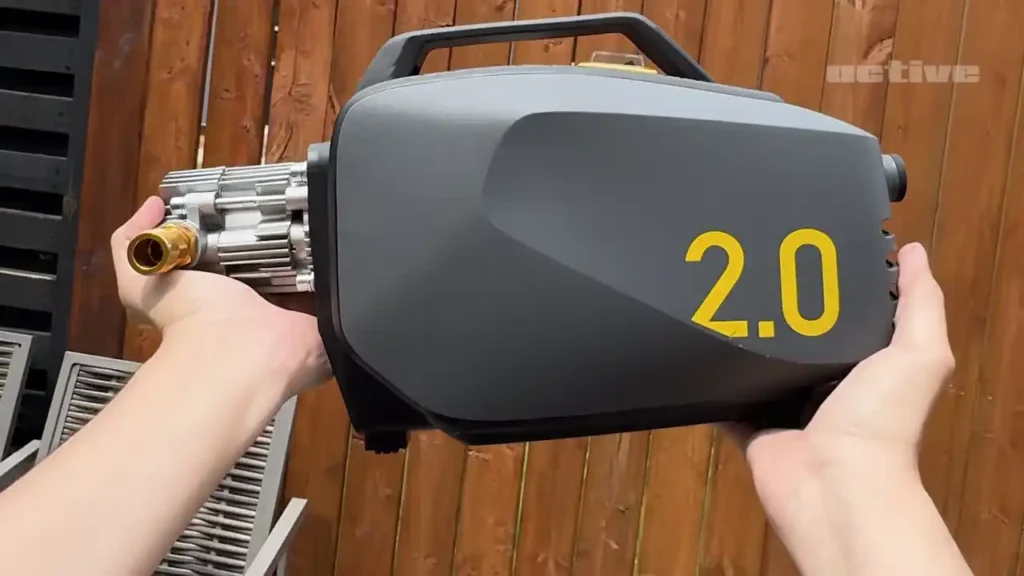
The Active 2.0 has a cult following in the auto detailing world for a reason. Its 5-piston pump delivers 2.0 GPM at a working pressure of 1100 PSI. That low working pressure is the feature, not a limitation. Gel coat and clear coat are safe at that level. The high GPM rinses soap away fast.

- Fast and deep cleaning - The Active 2.0 set industry benchmark 2.0 GPM cleaning power to blast away dirt and grime in less time, perfect for everything from cars to patios.
- Easy to move and store - The Active 2.0 is light, compact, allowing for versatile applications and ease of storing once done with your wash
Pros and Cons
| Pros | Cons |
|---|---|
| 1100 PSI working pressure, safe for gel coat | No wheels; compact box form only |
| 2.0 GPM; fast rinsing, great foam cannon performance | More expensive for the PSI rating |
| 5-piston pump rated 250 hours lifespan | |
| Ultra-compact, smaller than a 3-gallon jug | |
| Strong detailing community track record |
Testing Results
Car Wash surface performance is rated as Yes, best in class. That carries directly over to boat washing. The 2.0 GPM flow rate is the highest of any electric model at this price range, and it’s what makes foam cannon performance excellent. Soap goes on thick and dwells properly. Then the high flow rinses cleanly.
The 5-piston pump is rated at 250 hours of use. That’s significant compared to axial cam pumps in budget models that might last 100-150 hours of heavy use. For a boat owner who washes weekly during a 6-month season, that longevity matters.
Deck and Fence surface performance is Yes (gentle), which confirms it’s safe for teak and composite boat decking at normal working distance.
Real-World Usage
The r/AutoDetailing community has used this unit extensively. The consistent feedback: it’s the best electric for foam cannon washing because the 2.0 GPM keeps the cannon producing thick foam consistently. For boat hull washing, that translates to better soap coverage on vertical surfaces.
The compact form factor is a real storage advantage. Boats have limited dock storage. This unit fits in a milk crate.
Best Use Case
Boat owners who prioritize gel coat and vinyl protection over raw cleaning power. Also ideal for fiberglass topsides, cockpit cushions, and canvas. If you’re dealing with heavy waterline stains or hull growth, you’ll still need a hull cleaner chemical. The Active 2.0 won’t blast that off with pressure alone.
Verdict
The lowest working PSI on the list combined with the highest GPM makes this the safest pick for surfaces you can’t afford to damage. Gel coat, vinyl graphics, canvas, and clear coat are all safe at 1100 PSI. The detailing community’s track record backs it up. A bit pricey for the output, but the pump lifespan justifies it over time.
Rating: 4.4/5
View on Amazon: Active 2.0 Pressure Washer
Best Foam Cannon Setup: LWQ S5
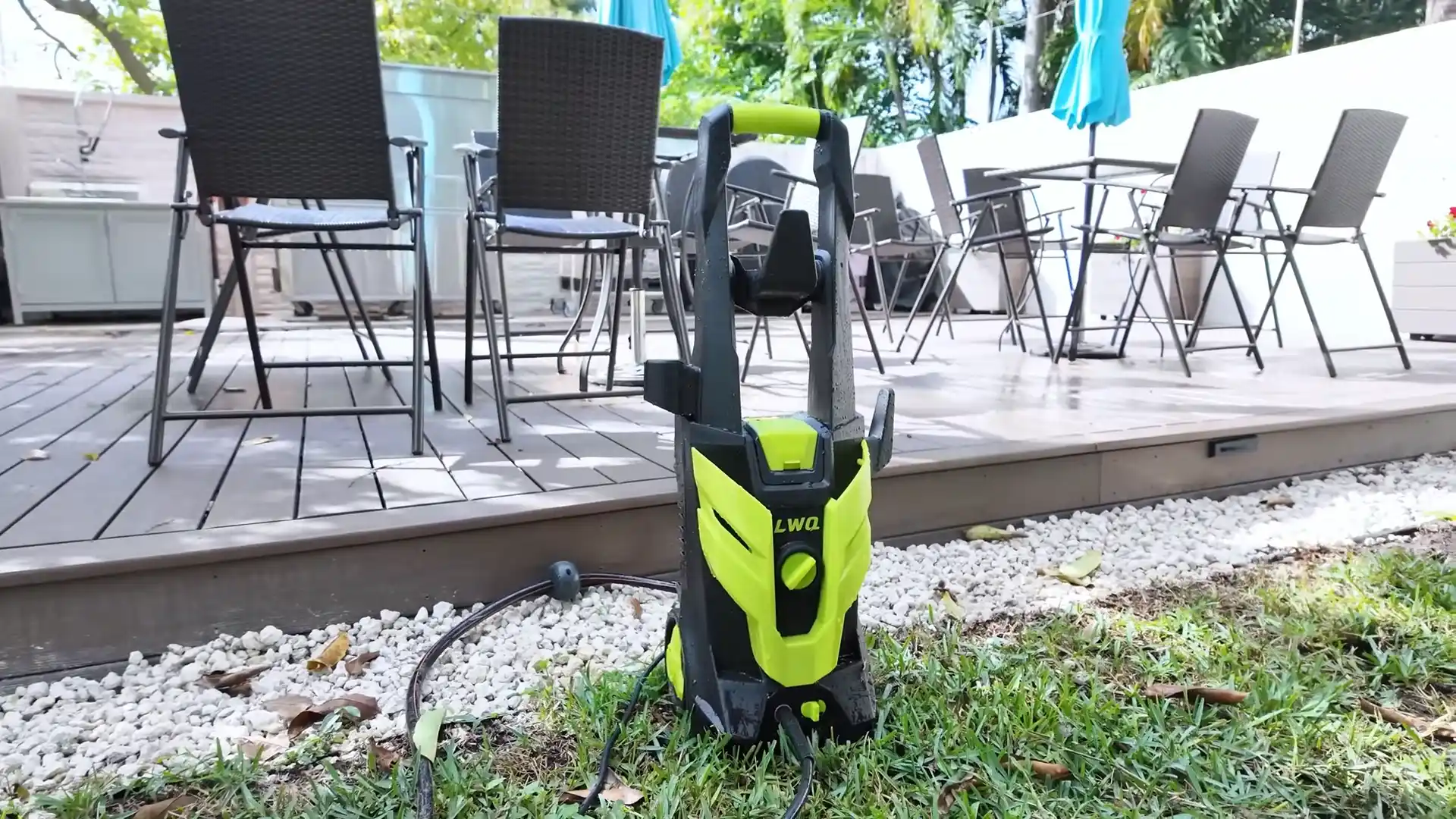
The LWQ S5 delivers the highest GPM at any budget price at 2.5 GPM, and comes with a foam cannon included in the box. For boat owners who want a proper foam wash on hull sides and topsides, this is the most complete package under $130.

- Powerful Pressure Washer: LWQ pressure washer with deep cleaning high pressure up to 2.5 GPM of water flow. The strong pressure for less time and water, more efficient cleaning
- Multi-Purpose Power Washer: LWQ power washer with 4 quick-connect spray nozzles (water-pressure strength: 0°›15°› 25°› 40°) and 1 foam cannon, it's easy to clean objects with complex shapes and structures, such as driveways, patio furniture, machine, and wheels
Pros and Cons
| Pros | Cons |
|---|---|
| 2.5 GPM, highest flow rate at this price | Short 16 ft power cord is a real limitation |
| Foam cannon included in the box | Lesser-known brand with thin warranty coverage |
| 4 metal quick-connect nozzles | |
| Anti-tipping design, lightweight at 16.6 lbs | |
| Can draw from bucket or tap |
Testing Results
Car Wash and Patio Furniture surface performance are both rated Yes. Siding is Yes. Deck/Fence is Yes. The high GPM means the foam cannon actually produces thick, clingy foam instead of watery coverage. That matters on a boat hull where you want soap to dwell on vertical surfaces without running off immediately.
The 4 metal quick-connect nozzles (0, 15, 25, 40 degree) are a step up from the plastic tips on budget competitors. Metal nozzles hold up better to repeated use and don’t wear out at the spray orifice.
At 16.6 lbs, it’s light enough to carry around the boat without dragging on wheels. The anti-tipping design keeps it stable on a dock without a wide base requirement.
Real-World Usage
The 16 ft power cord is the main issue. At a dock or home driveway, a 16 ft cord means your extension cord needs to be longer than usual. Budget for a good outdoor 50 ft extension cord if you plan to use this away from a close outlet.
The bucket water source flexibility is a genuine feature for boat owners without a hose hookup at the dock. Fill a 5-gallon bucket with fresh water, connect the intake hose, and wash.
If you want to learn more about soap options for your wash setup, our best car wash soap for pressure washer roundup covers marine-compatible options too.
Best Use Case
Boat owners who want foam cannon washing without paying premium prices. Good for hull sides, topsides, and deck surfaces where soap coverage matters more than raw PSI.
Verdict
The highest GPM and included foam cannon make this the best value for soap-based boat washing. The short power cord is annoying but manageable with an extension. The brand is newer without a long review track record. Treat the warranty as a backup rather than a guarantee.
Rating: 4.0/5
View on Amazon: LWQ S5
Best Budget: Craftsman CMEPW1700
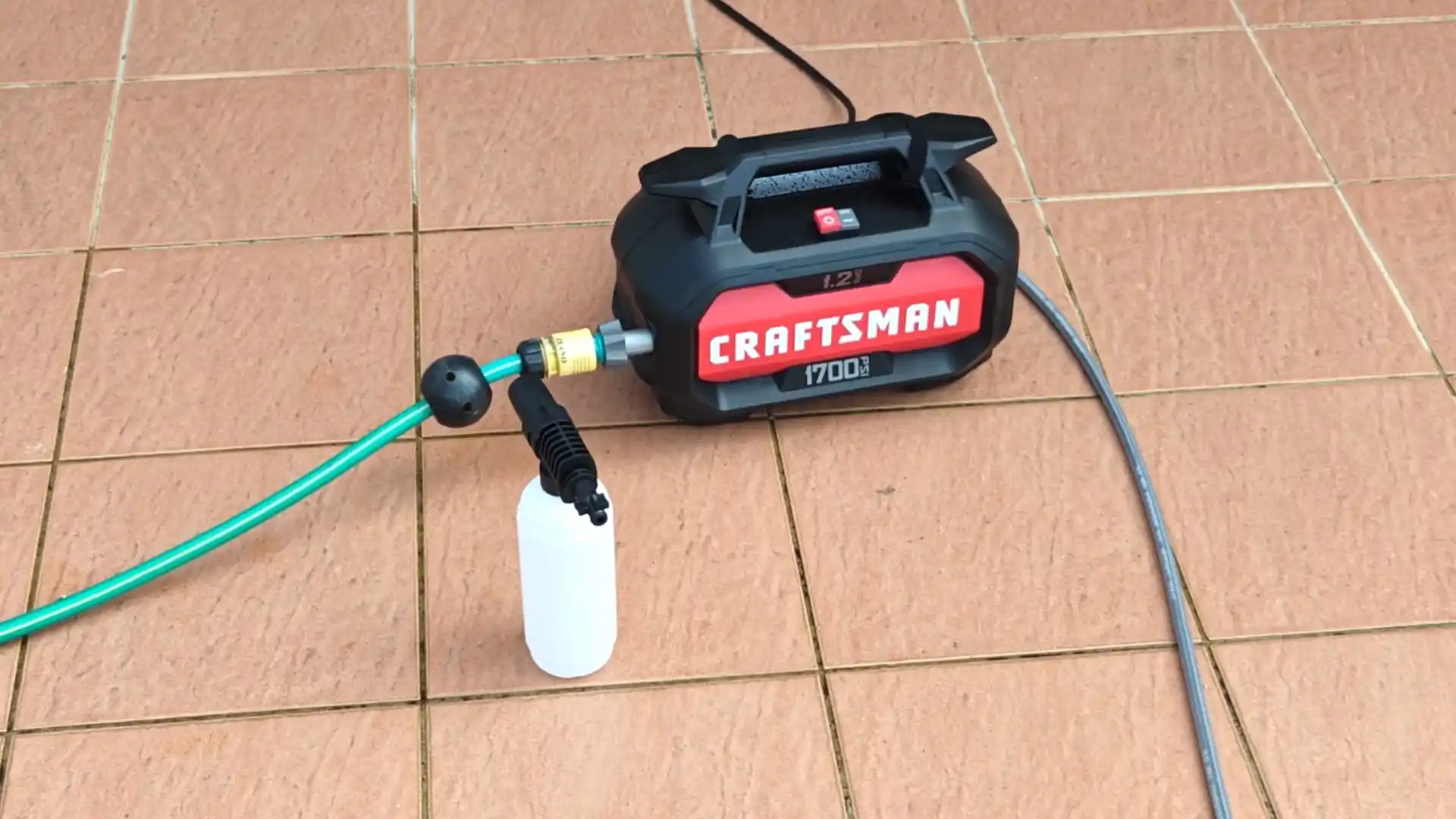
The CMEPW1700 is the cheapest name-brand pressure washer on this list. At 17.6 lbs with onboard storage for the hose, cord, and nozzles, it’s easy to load and carry. If your boat is small and your stains are light, this covers the basics without paying for features you don’t need.

- Powerful cleaning: Electric power washer with1700 max psi* and 1. 2 gpm**
- Added benefit: soap applicator bottle for cleaning with soap
Pros and Cons
| Pros | Cons |
|---|---|
| Lowest price on the list | Only 2 nozzles (no 0 or 15 degree) |
| Lightweight at 17.6 lbs, easy to carry | |
| Onboard hose, cord, and nozzle storage | |
| Trusted CRAFTSMAN brand | |
| Comfort grip wand |
Testing Results
Car Wash surface performance is Yes. Siding and Deck/Fence are also Yes. The two nozzles included are a turbo and a 40-degree tip. The turbo adds concentrated cleaning power for stubborn salt deposits on the hull waterline. The 40-degree wide fan is what you’ll use for rinsing hull sides.
At 1700 PSI, this won’t remove barnacles or heavy marine growth. But for a regular freshwater rinse after saltwater use and a soap wash on the hull and topsides, it does the job at the lowest entry price.
The 3-year CRAFTSMAN warranty is the longest on this list for the budget category. That matters with entry-level pressure washers that sometimes develop pump issues after a season or two.
Real-World Usage
The 20 ft hose is the tightest constraint. On a trailered boat in the driveway, 20 ft is usually enough from one side. Moving the unit for the other side of the hull adds a step but isn’t a major issue.
Onboard storage means nothing falls off or gets left behind. Load the whole unit into the truck bed in one trip.
For budget boat owners with a small vessel (under 20 ft) who want a no-fuss rinse tool, the Craftsman delivers without overcomplicating things. More pressure washer options for general outdoor use are covered in our best pressure washer for home use roundup.
Best Use Case
Small boat owners on a budget. Pontoons, jon boats, and smaller fiberglass vessels getting regular freshwater rinses and light soap washes.
Verdict
The cheapest entry point with a real brand name behind it. No frills. No TSS pump protection. But 1700 PSI with a turbo nozzle handles salt rinses and soap washes on small boats without drama. The 3-year warranty adds peace of mind at this price.
Rating: 3.8/5
View on Amazon: Craftsman CMEPW1700
What Makes the Best Pressure Washer for Boats?
PSI Range: Lower Is Safer for Gel Coat
Boats are built with gel coat, vinyl graphics, canvas, and soft deck materials. These surfaces don’t need the same PSI you’d use on a concrete driveway. Anything between 1000 and 2000 PSI is the safe range for boat washing. At that level, you can blast off salt, bird droppings, and algae without etching gel coat or lifting vinyl graphics.
Gas pressure washers rated at 3000+ PSI are too aggressive for regular boat cleaning without serious distance management. Keep your picks in the 1000-2000 PSI range for hull and topside work. If you’re dealing with barnacles below the waterline, a hull cleaning chemical does more than extra pressure anyway.
GPM: Flow Rate Matters More on a Boat Than on a Driveway
GPM (gallons per minute) determines how fast you rinse soap and debris off the surface. Higher GPM means less time standing at the hose, less water wasted, and better foam cannon performance. On a boat, where you’re often washing vertical surfaces and trying to keep soap from running off before it dwells, 1.5-2.5 GPM makes a visible difference.
Budget models typically run 1.0-1.2 GPM. That’s enough for a simple rinse. If foam cannon washing is part of your routine, prioritize GPM as much as PSI. Our best high GPM pressure washer guide covers this in more detail.
Portability and Power Source
Where you wash your boat determines which power source works. At home in the driveway with a hose bib and outlet nearby, corded electric models are fine. At the marina or ramp, an outlet may not be accessible. The WORX WG647 and similar cordless handhelds solve that problem at the cost of PSI.
For most boat owners, a lightweight corded electric under 20 lbs is the practical choice. Easy to carry, store in a locker, and move around the hull without tripping over wheels and hoses.
Nozzle Selection for Marine Use
The 40-degree wide fan nozzle is the primary nozzle for boat washing. It spreads pressure over a larger area and reduces the risk of damaging gel coat from too-concentrated spray. The turbo nozzle concentrates pressure in a rotating pattern for stubborn deposits on the waterline or non-skid areas.
Avoid using the 0-degree or 15-degree nozzles on gel coat, vinyl, or canvas. Those are for concrete and hard surfaces only. Every pressure washer on this list comes with a 40-degree and turbo nozzle at minimum. Pair it with a foam cannon for pressure washers for a full boat wash setup.
Salt Resistance and Pump Quality
Salt water is corrosive. After each use, run fresh water through the pump and wand for 30-60 seconds to flush salt from internal components. This applies to every electric pressure washer on this list. None of them are rated for saltwater immersion, but all are fine for saltwater use as long as you flush after.
Pump quality separates budget units from mid-range ones. CETA-certified or PWMA-certified machines have independently verified flow rates. Budget brands without certification often overstate their numbers. For gel coat washing where consistent, predictable pressure matters, certified specs give you confidence.
Frequently Asked Questions
What PSI is safe for washing a boat?
1000-2000 PSI is the safe range for most boat surfaces including gel coat, vinyl graphics, and canvas. Stay at the lower end of that range and keep the nozzle moving. High-traffic areas like non-skid decking can handle up to 2000 PSI. Never use a 0-degree nozzle directly on gel coat at any pressure.
Can I use a regular pressure washer on a fiberglass boat?
Yes, as long as you use the right nozzle and stay in the 1000-2000 PSI range. The 40-degree wide fan nozzle is standard for fiberglass hull washing. Keep the wand moving and maintain at least 12-18 inches of distance. A turbo nozzle is fine for the waterline and non-skid surfaces. Avoid 0 and 15-degree tips on gel coat.
What is the best soap to use when pressure washing a boat?
Use a marine-specific biodegradable boat wash soap. Standard car wash soaps work on fiberglass above the waterline but aren’t rated for use near water. Marine soaps like Star Brite or 3M Boat Soap are designed for the job. Apply with a foam cannon or soft brush, let it dwell 2-3 minutes, then rinse. Our best car wash soap for pressure washer roundup includes options safe for marine use.
Can a cordless pressure washer clean a boat?
A cordless handheld like the WORX WG647 works well for rinsing salt off after a day on the water. At 800 PSI, it won’t remove heavy stains or barnacle growth. If you need portability at the dock or ramp with no outlet, cordless is the right call for maintenance rinsing. For a full boat wash with soap and scrubbing, a corded electric gives you more consistent power.
How often should I pressure wash my boat?
Saltwater boats benefit from a freshwater rinse after every use and a full pressure wash with soap every 1-2 weeks during the season. Freshwater boats can get by with a monthly full wash during peak use. Regular washing prevents salt, algae, and waterline stains from setting into the gel coat, which makes each wash faster and reduces the need for oxidation removal later.