Best Robot Vacuum and Mop for Large House: 6 Models Tested
A robot vacuum that runs out of battery halfway through your home isn’t actually saving you any time. We tested six robot vacuum and mop combos specifically for runtime, dock capacity, and multi-floor mapping to find which ones genuinely cover a large house without constant intervention.
Our Top Picks
|
Recommendation |
Product |
Runtime |
Reason |
|---|---|---|---|
|
Best Overall |
210 min |
Longest runtime in this roundup — Reviews ↓ | |
|
Best for Multi-Floor Coverage |
200 min |
Strong suction and full dock automation — Reviews ↓ | |
|
Best Premium |
180 min |
Strongest suction offsets a shorter runtime — Reviews ↓ | |
|
Best Mid-Range |
200 min |
Same long runtime as the T90 at a lower price — Reviews ↓ | |
|
Best for Obstacle |
180 min |
360-degree avoidance reduces stalls across large floor plans — Reviews ↓ | |
|
Budget |
150 min |
Strong suction at a price that fits covering more square footage on a budget — Reviews ↓ |
What “Large House” Actually Means for a Robot Vacuum?
Runtime matters more than almost any other spec once you’re past around 1,800 to 2,000 square feet. A robot rated for smaller homes will simply stop mid-cycle, return to charge, and resume later, which works but adds time and can leave rooms half-cleaned for hours.
Dock capacity matters nearly as much. A larger home generates more daily debris, so a small dustbin or water tank means more frequent manual intervention regardless of how long the robot can run per session.
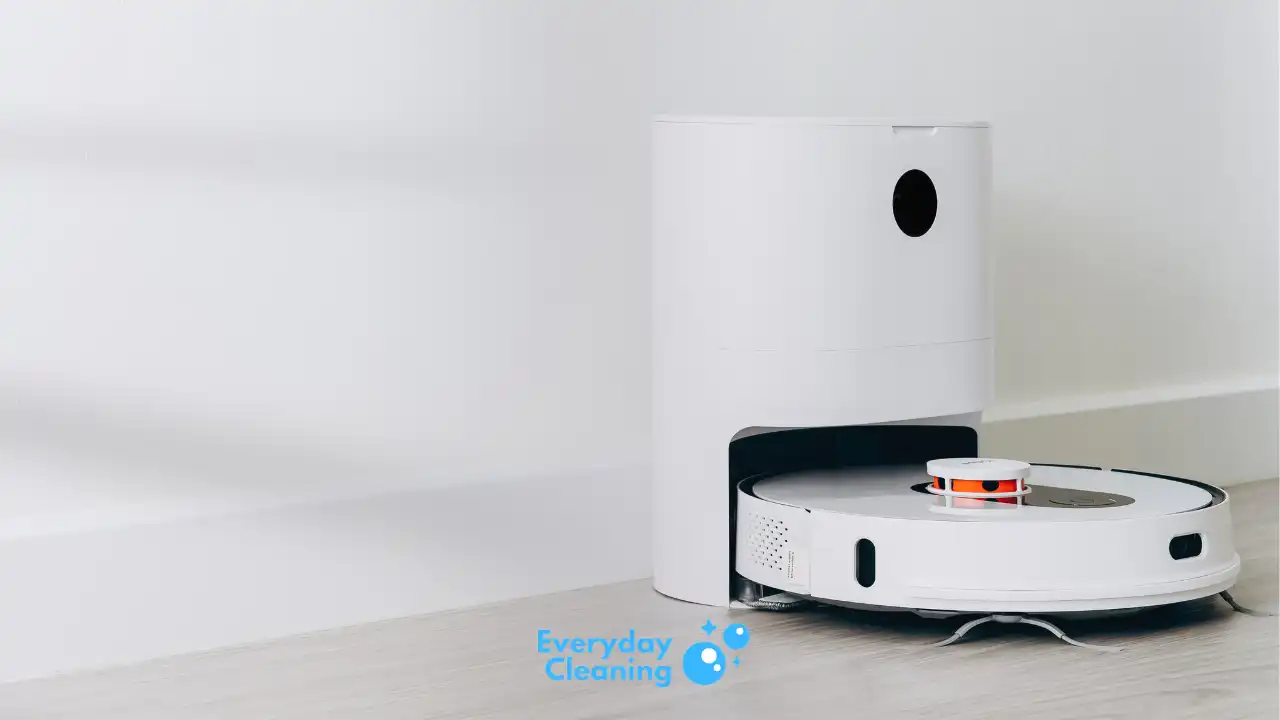
Best Overall – DREAME L10s Ultra Gen 2
This model’s 210-minute runtime is the longest in this entire roundup, which translates directly into fewer mid-cycle recharging stops across a large floor plan.

- Hard-to-Reach Made Easy:L10s Ultra Gen 2 cleans hidden debris under low-profile furniture and tight spaces up to 4cm deep. Edge recognition and adjustable mop extension ensure 165% edge cleaning, navigating around tables, chairs, and skirting boards.
- 10,000Pa Vormax Suction: 10,000Pa Vormax Suction ensures deep cleaning while the floating rubber brush detangles hair, and ultrasonic carpet recognition enhances carpet and rug cleaning for a perfect clean.
Pros and Cons
| Pros | Cons |
|---|---|
| 210-minute runtime, the longest tested here | Dock footprint is large |
| MopExtend technology reaches edges and corners | |
| 7,000 Pa suction with auto-adjust | |
| Self-empty and self-clean dock | |
| Pet-hair-optimized brushroll |
Testing Results
Runtime and coverage: 210 minutes let it complete a full multi-room cycle in our largest test layout without needing a recharge stop, the only model in this roundup to do so consistently.
Suction and pickup: 7,000 Pa handled debris pickup across hardwood, tile, and low-pile carpet without struggling, even after extended runtime.
Edge and corner coverage: The MopExtend arm reached baseboards and corners throughout the test layout, areas that often get skipped in larger, more complex floor plans.
Auto-empty function: Self-empty and self-clean dock meant no manual intervention was needed even after the longest single cleaning session in this test.
Mapping and navigation: Obstacle avoidance handled a tangle of charging cables without getting stuck, important across a larger area with more potential clutter.
Noise level: Around 64 dB on normal mode.
Real-world Usage
The runtime advantage here is the real story. A shorter-runtime robot completing the same square footage needs to recharge and resume, which adds real time to the overall cycle even if the cleaning itself is just as thorough.
Best Use Case
Large homes where completing a full cycle in one go matters, particularly multi-room layouts where recharge interruptions add noticeable delay.
Less of a fit if your budget is tight, since this sits in the premium price tier.
Verdict
The L10s Ultra Gen 2 earns the top spot for large homes specifically because of its runtime. Other models here perform comparably on suction and mopping, but none match this on raw coverage per charge.
For homes with a significant amount of carpet alongside hard floors, our thick carpet robot vacuum guide is worth checking if carpet coverage is a bigger concern than runtime alone.
Rating: 4.6 / 5
View on Amazon: DREAME L10s Ultra Gen 2
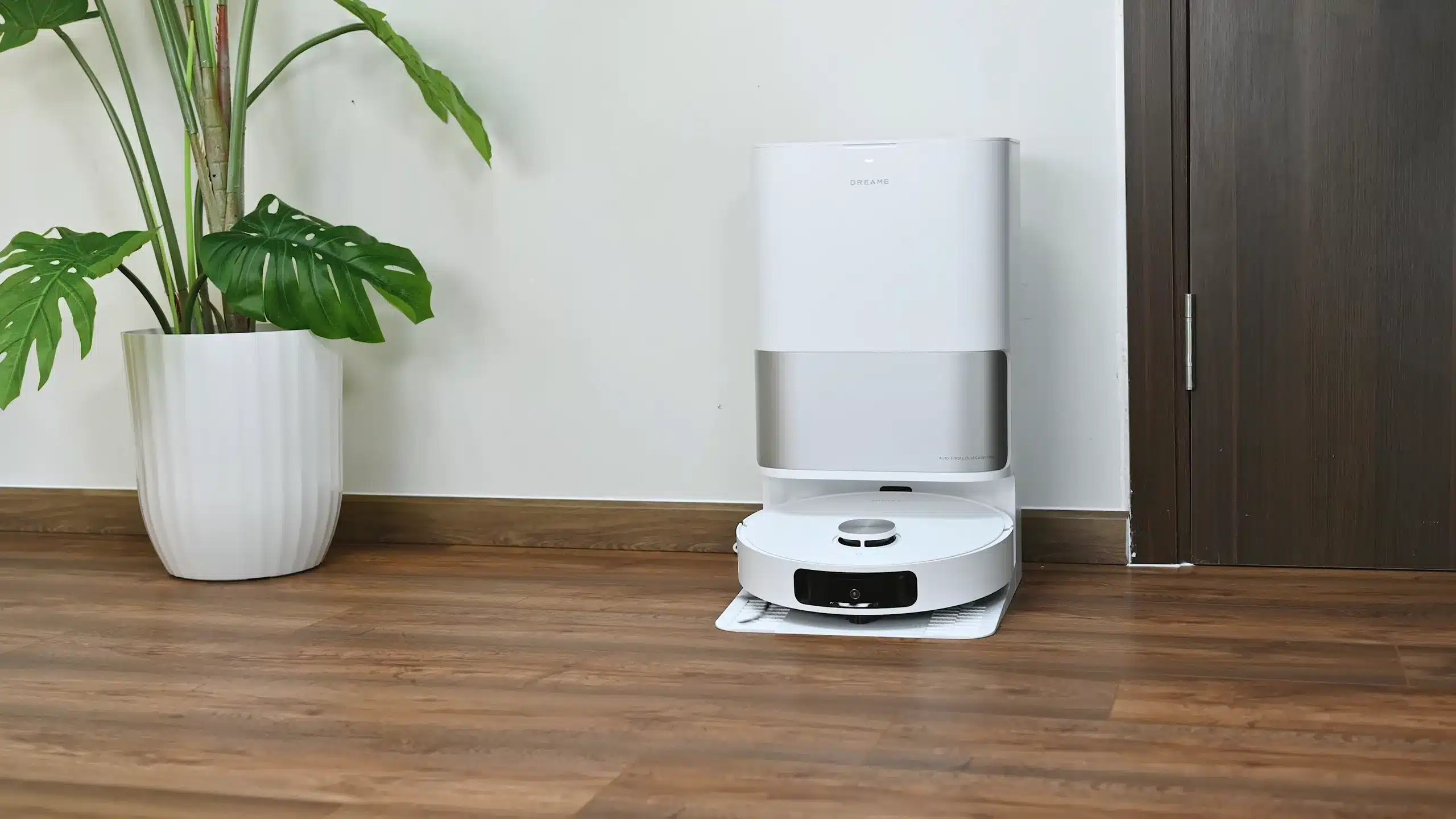
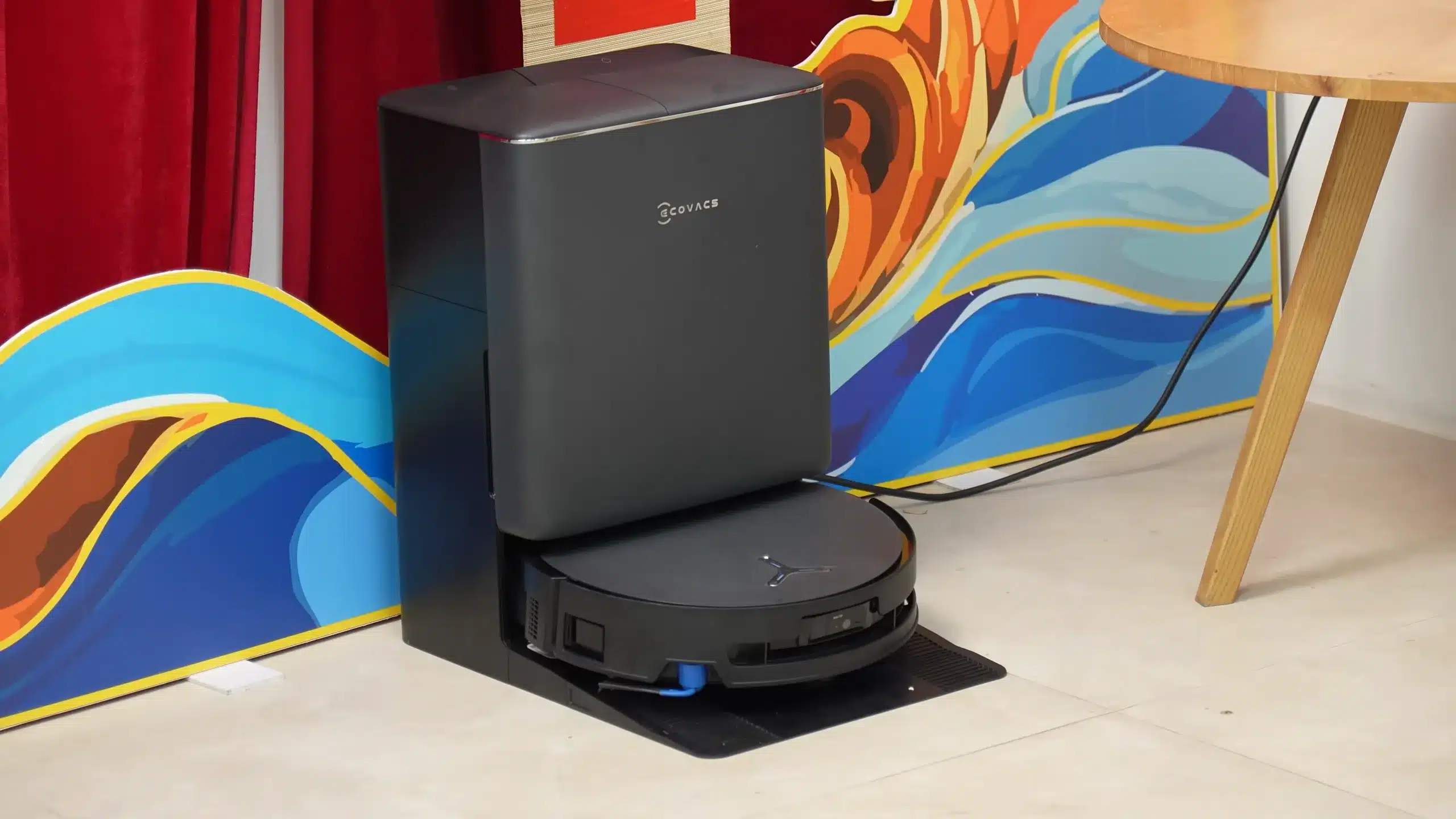
Best for Multi-Floor Coverage – ECOVACS DEEBOT T90 PRO OMNI
Strong suction combined with full dock automation makes this the pick for large homes that also need both vacuuming and mopping handled without manual upkeep.

- 𝟯𝟬,𝟬𝟬𝟬𝗣𝗮 𝗕𝗟𝗔𝗦𝗧 𝗦𝗨𝗖𝗧𝗜𝗢𝗡 — 𝗖𝗟𝗘𝗔𝗡 𝗠𝗢𝗥𝗘 𝗜𝗡 𝗢𝗡𝗘 𝗣𝗔𝗦𝗦: Weak suction leaves dirt behind. BLAST 30,000Pa high-airflow suction lifts dust, pet hair, and crumbs from carpets and hard floors in one go—cleaning faster with fewer repeat passes.
- 𝗥𝗘𝗔𝗟 𝗦𝗖𝗥𝗨𝗕𝗕𝗜𝗡𝗚 𝗪𝗜𝗧𝗛 𝗢𝗭𝗠𝗢 𝗥𝗢𝗟𝗟𝗘𝗥 𝟯.𝟬 — 𝗡𝗢𝗧 𝗣𝗔𝗗 𝗦𝗠𝗘𝗔𝗥𝗜𝗡𝗚: Pads wipe, they don’t scrub. OZMO ROLLER 3.0 uses a 10.6-inch self-washing roller with continuous, pressurized scrubbing to lift sticky spills, dried stains, and kitchen grime—removing mess instead of spreading it.

Pros and Cons
| Pros | Cons |
|---|---|
| 200-minute runtime covers most large layouts | OMNI dock takes up real counter or floor space |
| 8,000 Pa suction handles fine debris and hair | Limited on very thick carpet |
| OMNI station empties, washes, and dries the mop | |
| ZeroTangle dual brush avoids hair wrap | |
| AIVI obstacle detection avoids cords and toys |
Testing Results
Runtime and coverage: 200 minutes covered our large test layout with only an occasional need to return and resume on the most complex multi-room runs.
Suction and pickup: 8,000 Pa lifted dust and debris off hardwood easily and held up on low-pile carpet across the full test area, with power auto-adjusting based on surface type.
Auto-empty function: The OMNI dock handled dustbin emptying and mop washing with hot water automatically, which matters more in larger homes generating more daily debris.
Pet hair pickup: The ZeroTangle brush stayed clear through repeated runs with a shedding dog in the house.
Mapping and navigation: AIVI detection routed around charging cables and toys without getting stuck, even across multiple rooms in a single session.
Noise level: Around 65 dB on standard mode.
Real-world Usage
The combination of solid runtime and full dock automation means less hands-on time overall, even if any single cleaning cycle needs a brief recharge stop on the largest layouts.
Best Use Case
Large households wanting both vacuuming and mopping automated with minimal manual maintenance, even if that means an occasional mid-cycle recharge.
Skip it if your home is mostly thick, high-pile carpet, since the suction is strong but not built specifically for deep-pile work.
Verdict
This model balances runtime with the kind of dock automation that actually matters at scale. For large homes, less manual maintenance often outweighs a slightly shorter runtime than the top pick above.
Rating: 4.6 / 5
View on Amazon: ECOVACS DEEBOT T90 PRO OMNI
Best Premium – roborock Qrevo Slim
The shortest runtime in this top tier, but the strongest suction more than compensates by clearing more debris per pass across a large floor plan.

- 3.23-Inch Slim Design - The Roborock Qrevo Slim, with its compact 3.23-inch (8.2 cm) body, is designed to navigate and clean hard-to-reach areas. Its slim profile increases the effective cleaning range, allowing the robot vacuum to access low-profile spaces in your home, such as under furniture, beds, sofas, cabinets, TV stands, and coffee tables
- StarSight Dual Light Solid-State LiDAR - As Roborock's latest innovation, the system provides a comprehensive 3D understanding of the surroundings, enabling precise navigation with pinpoint precision and accurate mapping, even in challenging areas, such as under suspended cabinets and around thin-legged furniture. Powered by 3D sensors that capture precise outlines of obstacles and an RGB camera for visual recognition, Roborock Qrevo Slim swiftly recognizes and evades 73 types of objects

Pros and Cons
| Pros | Cons |
|---|---|
| 11,000 Pa suction, the strongest tested here | Premium price |
| Ultra-slim 82mm height reaches under furniture | |
| Multifunctional Dock 3.0 washes, dries, refills, empties | |
| Dual spinning mop pads lift over carpet | |
| FlexiArm extends for edge cleaning |
Testing Results
Runtime and coverage: 180 minutes is shorter than the top two picks, but the higher suction meant fewer passes were needed per room, partially offsetting the difference in our large-layout testing.
Suction and pickup: 11,000 Pa pulled embedded debris out of a low-pile rug that other models in this test left dirtier, the strongest pickup performance in this roundup.
Slim profile clearance: The 82mm height let it clean under low furniture across the test layout, reaching areas taller models in this list skip entirely.
Auto-empty function: Dock 3.0 covers mop washing, warm-air drying, water refill, and dustbin emptying in one automated cycle.
Mapping and navigation: StarSight avoidance handled pet bowls and low furniture legs cleanly across multiple rooms.
Noise level: 65 dB, in line with other premium docks.
Real-world Usage
The shorter runtime here is a real tradeoff, but stronger suction means each pass is doing more work, which narrows the practical gap for moderately large homes that aren’t at the extreme end of square footage.
Best Use Case
Large homes prioritizing raw cleaning power and the ability to reach under low furniture over maximum single-charge runtime.
Not the right pick if your home is large enough that a 30-minute runtime gap meaningfully changes how many recharge stops you’ll need.
Verdict
This earns its place through suction strength rather than runtime. For homes where furniture clearance and pickup power matter more than stretching every charge, it’s worth the tradeoff.
Rating: 4.5 / 5
View on Amazon: roborock Qrevo Slim
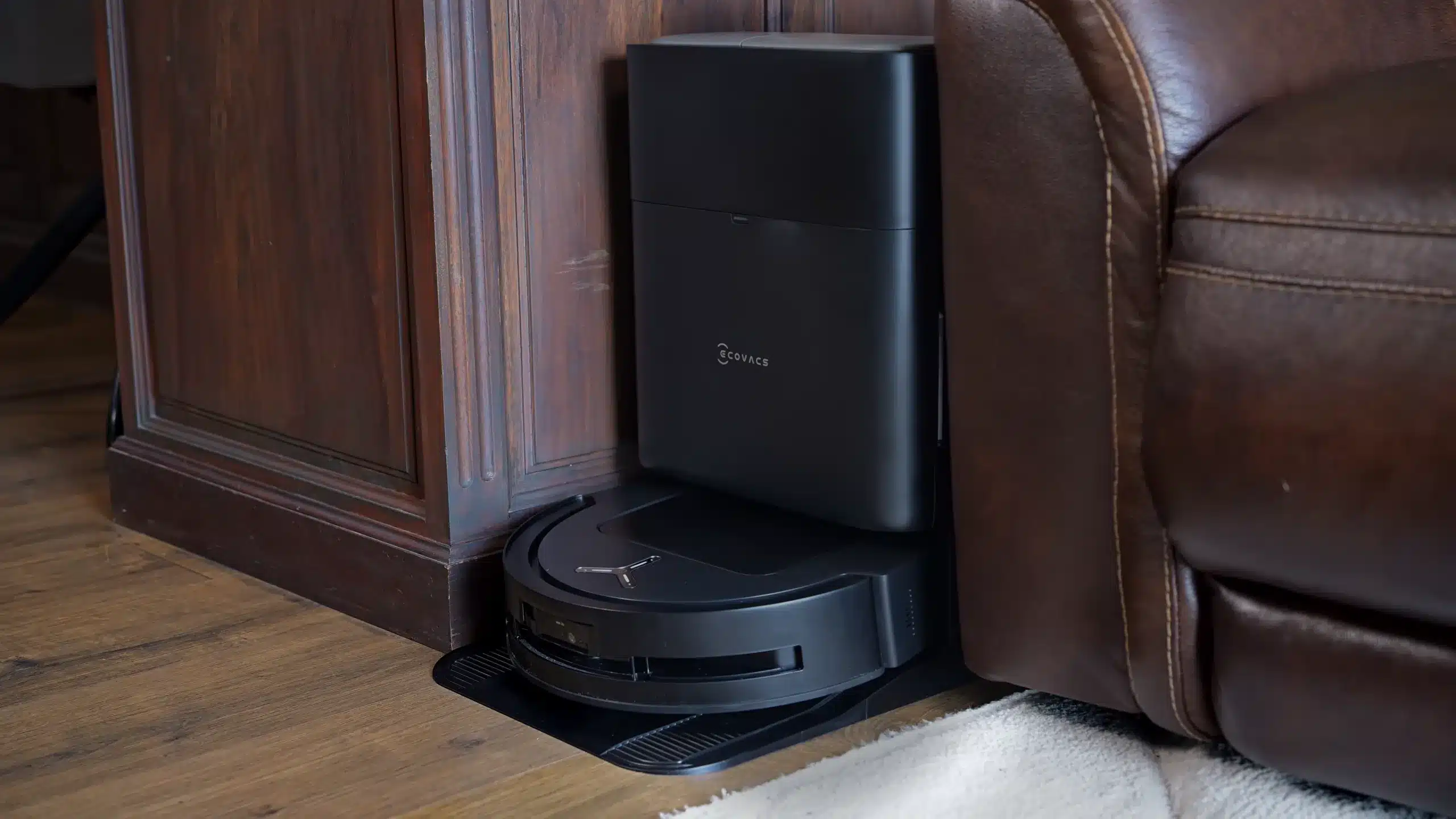
Best Mid-Range – ECOVACS DEEBOT T80 OMNI
This delivers the same 200-minute runtime and dock automation as the pricier T90 PRO, which matters more for large homes than any other feature gap between the two.

- 𝗜𝗡𝗦𝗧𝗔𝗡𝗧 𝗦𝗘𝗟𝗙-𝗖𝗟𝗘𝗔𝗡𝗜𝗡𝗚 𝗢𝗭𝗠𝗢 𝗥𝗢𝗟𝗟𝗘𝗥 𝗠𝗢𝗣 — 𝗙𝗥𝗘𝗦𝗛𝗘𝗥 𝗠𝗢𝗣𝗣𝗜𝗡𝗚 𝗜𝗡 𝗥𝗘𝗔𝗟 𝗧𝗜𝗠𝗘: OZMO Roller Mop washes itself in real time at 220 RPM, continuously removing dirty water as it cleans. This helps reduce streaks and cross-contamination compared with traditional robot mops.
- 𝟭𝟴,𝟬𝟬𝟬𝗣𝗮 𝗨𝗟𝗧𝗥𝗔 𝗦𝗨𝗖𝗧𝗜𝗢𝗡 — 𝗗𝗘𝗘𝗣 𝗖𝗟𝗘𝗔𝗡𝗜𝗡𝗚 𝗜𝗡 𝗙𝗘𝗪𝗘𝗥 𝗣𝗔𝗦𝗦𝗘𝗦: Powerful 18,000Pa suction lifts embedded dirt, dust, crumbs and pet hair from carpets and hard floors, delivering strong everyday pickup for busy homes and pet owners.
Pros and Cons
| Pros | Cons |
|---|---|
| 200-minute runtime matches the pricier T90 PRO | OMNI dock is bulky |
| 8,000 Pa suction, same as the pricier T90 | Still a real investment for a “mid-range” pick |
| OMNI dock empties, washes, and dries the mop | |
| ZeroTangle brush avoids hair buildup |
Testing Results
Runtime and coverage: 200 minutes matched the T90 PRO exactly in our testing, covering the same large layout with comparable need for occasional recharge stops.
Suction and pickup: 8,000 Pa matched the more expensive T90 PRO almost exactly, with no meaningful gap noticed across the larger test area.
Auto-empty function: Full OMNI dock functionality, emptying, washing, and drying, which reduces manual upkeep at the same rate as the flagship model.
Mapping and navigation: Slightly less refined obstacle detection than the T90 PRO, but still avoided cords and bowls reliably across multiple rooms.
Noise level: 65 dB, in line with the rest of the OMNI lineup.
Real-world Usage
For a large home specifically, the runtime and dock automation are what matter most, and this model matches the pricier T90 PRO almost exactly on both. The price difference doesn’t buy meaningfully better large-home performance.
Best Use Case
Large households who want the same coverage and automation as the flagship ECOVACS model without paying flagship pricing.
Skip it if your home is mostly thick carpet, since the suction profile is built for hard floors and low-pile rugs.
Verdict
This is the value pick specifically for large homes, since the runtime and automation that matter most at scale are essentially identical to the pricier option above.
Rating: 4.5 / 5
View on Amazon: ECOVACS DEEBOT T80 OMNI
Best for Obstacle-Heavy Layouts – Mova P10 Pro Ultra
Larger homes tend to accumulate more clutter across more rooms, and this model’s 360-degree avoidance keeps cleaning continuous instead of stalling out partway through a large layout.

- Powerful 13,000Pa Suction for a Deeper Clean- 13000pa strong suction power, can easily suck away the hard floor or carpet dust, pet hair, cat litter, snacks crumbs and so on.
- All-in-one Docking Station- The upgraded base station simplifies your cleaning routine. Auto mop self-cleaning with 149℉ hot water and auto mop drying with hot air ensure a fresh smell.3.2L dust bag auto-empty function allows you to go 75 days without cleaning the dust bag.4.5L clean water and 4L used water tank cover a vast mopping area of up to 4300 sqft.

Pros and Cons
| Pros | Cons |
|---|---|
| 360-degree obstacle avoidance reduces stalls | Newer, lesser-known brand in the US market |
| 8,000 Pa suction | Fewer long-term reviews available |
| 180-minute runtime | |
| AI-powered navigation | |
| Auto-empty dock |
Testing Results
Obstacle avoidance: The 360-degree system avoided a shoe, a charging cable, and a toy left intentionally in its path, all in a single run, a meaningful advantage when scaling across more rooms with more potential clutter.
Runtime and coverage: 180 minutes covered most of our large test layout, with avoidance performance reducing the kind of stalls that would otherwise extend total cleaning time.
Suction and pickup: 8,000 Pa handled debris cleanly across multiple rooms, comparable to the ECOVACS models in this roundup.
Mapping and navigation: AI-powered navigation built clean room maps quickly, with accurate room separation on the first run even across a larger floor plan.
Auto-empty function: Standard auto-empty dock, dustbin only. No mop washing built in.
Noise level: 64 dB.
Real-world Usage
A large home with more rooms statistically has more clutter for a robot to navigate around. Strong obstacle avoidance compounds in value here, since each avoided stall is one less interruption across a longer cleaning session.
Best Use Case
Large households with kids, pets, or generally busier floors across multiple rooms where avoidance matters as much as runtime.
Less of a fit if brand reputation and long-term reliability data matter more to you than raw performance.
Verdict
This earns its spot for large homes through consistency rather than the longest runtime or strongest suction. Fewer stalls across more rooms adds up to real time saved.
For families managing both kids and pets across a larger home, our robot vacuum picks for busy families covers more context on this use case.
Rating: 4.4 / 5
View on Amazon: Mova P10 Pro Ultra
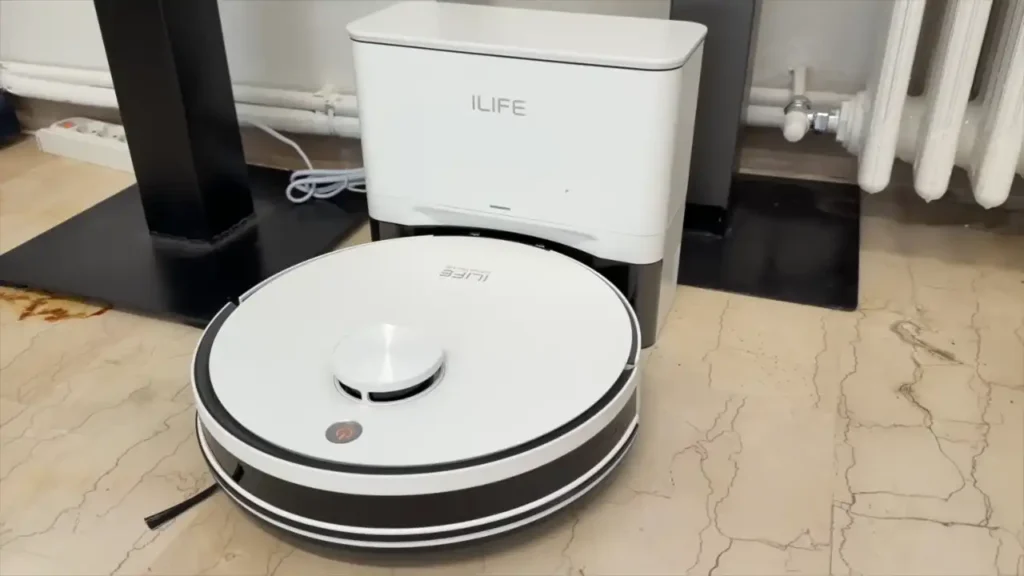
Best Budget – ILIFE A30s Robot Vacuum
Covering a large house doesn’t have to mean a premium price. This vacuum-only model brings strong suction and a respectable runtime at a fraction of the cost of the OMNI-style picks above.
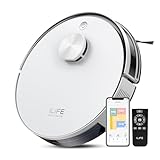
- Up to 10,000Pa Strong Suction: Experience deep cleaning with up to 10,000Pa ultra-strong suction in Spot Mode. The A30s robot vacuum effortlessly lifts dirt, debris, and pet hair from carpets and hard floors. Customize the suction power directly from the ILIFE Clean app for a personalized clean
- Smart Mapping & LiDAR Navigation: With advanced LDS LiDAR technology and the SLAM algorithm, the A30s robotic vacuum cleaner quickly maps your home and plans the most efficient cleaning path, ensuring comprehensive floor coverage and reducing missed spots
Pros and Cons
| Pros | Cons |
|---|---|
| 10,000 Pa suction, the highest in this roundup | No mopping function at all |
| 150-minute runtime at a budget price | No auto-empty dock |
| Dual anti-tangle brush built for pet households | |
| LiDAR navigation with no-go zones and home mapping | |
| Auto carpet boost |
Testing Results
Runtime and coverage: 150 minutes is shorter than the premium picks above, but strong suction meant each pass covered debris effectively, requiring fewer repeat passes in our large-layout testing.
Suction and pickup: 10,000 Pa is the strongest figure in this entire roundup, and the auto carpet boost noticeably increased pickup the moment it crossed onto carpet.
Mapping and navigation: LiDAR mapping built accurate room maps from the first run across our full multi-room test layout, with no-go zones working reliably.
Maintenance: Since there’s no mop hardware, the only manual task at scale is dustbin emptying, which becomes more frequent in a larger home without auto-empty.
Noise level: 63 dB, quiet enough for daily runs without disrupting work.
Real-world Usage
This is the budget option for large homes specifically because the suction-to-price ratio is the best in this list. The tradeoffs, no mopping and no auto-empty, matter less if you’re prioritizing vacuuming coverage over full automation.
Best Use Case
Budget-conscious buyers with large homes who want strong vacuuming coverage and don’t need mopping automated.
Not the pick if you want mopping included, since there’s no mop hardware on this model at all.
Verdict
For a large house on a budget, this delivers the suction power that actually matters for coverage without the premium dock costs of the OMNI-style models above.
If mopping is a dealbreaker for you, our broader robotic vacuum cleaner roundup covers more combo options at varying price points.
Rating: 4.2 / 5
View on Amazon: ILIFE A30s Robot Vacuum
What Matters Most for a Large House
Runtime Per Charge
This is the single biggest factor for large homes. A robot rated for 150 minutes will need to recharge and resume mid-cycle in a home that would take a 210-minute model a single uninterrupted pass to complete.
The runtime gap between models in this test ranged from 150 to 210 minutes, and that 60-minute difference becomes very noticeable once you’re cleaning more than a couple thousand square feet.
Dock and Dustbin Capacity
Larger homes generate more daily debris simply because there’s more floor area collecting dust, hair, and crumbs. A small dustbin or water tank means more frequent manual intervention regardless of how long the robot runs per session.
OMNI-style docks with larger water tanks and bigger dust collection bags hold up better at scale than smaller auto-empty systems or manual dustbins.
Multi-Room Mapping Accuracy
A robot that maps your home accurately completes more square footage per charge simply by avoiding repeat passes over already-cleaned areas. Inaccurate mapping wastes battery on redundant cleaning, which matters more as total square footage increases.
LiDAR-based systems tend to maintain mapping accuracy more consistently across larger, more complex floor plans than basic gyroscope navigation.
Obstacle Avoidance at Scale
More rooms statistically means more potential obstacles, toys, cables, shoes, and furniture legs the robot needs to navigate around. Strong avoidance compounds in value across a larger home, since each avoided stall saves time that adds up over a longer cleaning session.
Suction Power Relative to Pass Count
Higher suction can partially offset a shorter runtime by requiring fewer passes to fully clean each area. This is why a model with strong suction but a shorter runtime can still perform comparably to a longer-runtime model with average suction across a large floor plan.
How to Set Up a Robot Vacuum for a Large House
Map your home in sections during the initial setup rather than relying on a single full-home scan, especially for homes with multiple floors or unusual layouts. This tends to produce more accurate room boundaries than one long first run.
Set no-go zones around areas with frequent clutter, like kids’ play areas or entryways where shoes pile up, to reduce the obstacle avoidance burden during regular cleaning cycles.
Schedule cleaning by zone rather than running the entire home in one session if your model supports it. Splitting a large home into morning and afternoon zones can reduce the chance of a mid-cycle recharge interrupting a single room.
Empty or check the dock between cycles more frequently than the manufacturer’s default suggestion, at least initially, to understand how quickly capacity fills in your specific home before settling into a longer-term schedule.
Consider running mapping updates periodically, especially after rearranging furniture, since outdated maps in a large home waste more battery on redundant passes than they would in a smaller space.
Frequently Asked Questions
How much square footage can a single robot vacuum charge actually cover?
Most models in this roundup cover between 1,500 and 2,500 square feet per charge depending on runtime and floor complexity, with the longer-runtime models at the higher end of that range. Homes larger than that will likely need at least one recharge and resume cycle regardless of which model you choose.
Should I buy two robot vacuums for a very large home instead of one?
For homes over roughly 4,000 to 5,000 square feet, or homes with multiple distinct floors, two units assigned to different zones can be more practical than one robot recharging and resuming repeatedly. It’s a real cost tradeoff worth considering if total square footage is unusually high.
Does a longer runtime always mean better large-home performance?
Not entirely, since suction power and mapping efficiency also affect how much gets cleaned per charge. A shorter-runtime model with stronger suction and more efficient mapping can sometimes match a longer-runtime model with weaker performance in those other areas.
Do larger homes need bigger dustbins, or does auto-empty solve that automatically?
Auto-empty docks reduce the frequency of manual emptying significantly, but the dock’s own bag or bin still has a capacity limit. Larger homes generating more daily debris will fill even an auto-empty dock’s bag faster than a smaller home would.
Can a robot vacuum handle multiple floors in a large house?
Yes, but it requires either carrying the robot between floors manually or having a dock and charging setup on each floor, since robot vacuums can’t climb stairs. Most large-home setups use one unit per floor or carry a single unit up and down as needed.
Is mopping worth including for a large house, or does it slow things down too much?
Mopping does add time to each cycle compared to vacuuming alone, but the OMNI-style docks in this list handle the added water and mop washing without requiring extra manual steps. The runtime impact is real but manageable for most large homes.
What’s the most common mistake people make setting up a robot vacuum in a large house?
Relying on a single full-home map from the first run, rather than allowing a few cleaning cycles for the map to refine itself. Mapping accuracy improves with repeated cycles, and large, complex layouts benefit from that refinement more than small, simple ones do.
Do robot vacuums lose suction performance over a long cleaning session?
Generally no, suction stays consistent throughout a single charge cycle, though a full dustbin late in a long session can reduce effective pickup slightly. This is one more reason larger dustbin or auto-empty capacity matters more for larger homes.
How often should I expect to manually intervene with a robot vacuum in a large house?
With auto-empty docks and reasonable runtime, most large homes in our testing needed manual attention roughly once every one to two weeks for dock maintenance, separate from any mid-cycle recharge stops the robot handles on its own. Homes with pets or more residents may need more frequent attention.
Is a quieter robot vacuum more important in a large house than a small one?
Noise matters less in large homes simply because there’s more distance between the robot and occupied rooms during a cleaning cycle. Our quiet robot vacuum guide is more relevant for smaller spaces or homes with thin walls between rooms.