6 Best Vacuums for Kitchen Floors in 2026
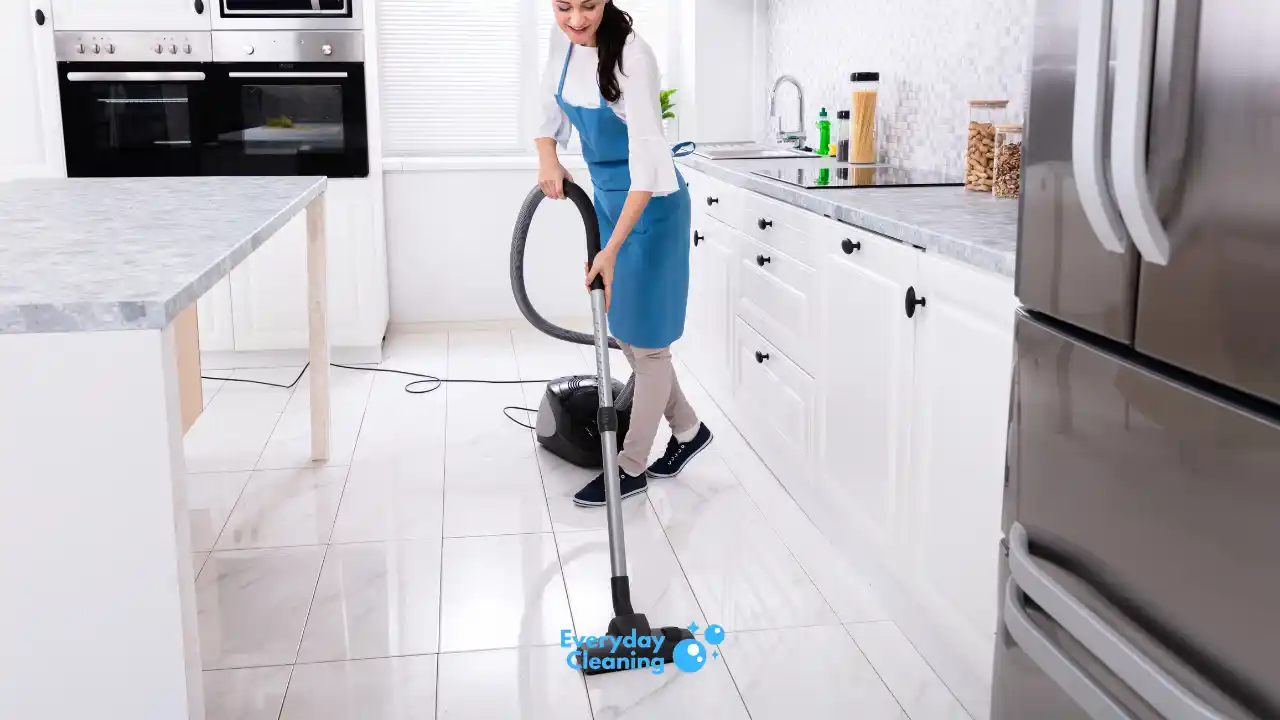
Kitchen floors take more abuse than any other surface in the house. Crumbs, spilled flour, pet hair near the food bowl, and sticky grit tracked in from outside all collect in the same tight space. We tested six vacuums on tile, hardwood, and textured grout lines to find out which ones are actually worth using in the kitchen.
Our Top Picks
| Recommendation | Product | Reason |
|---|---|---|
| Best Overall | Dyson V15 Detect | Laser reveals hidden crumbs; best suction on this list — Reviews ↓ |
| Best Budget Cordless | LEVOIT LVAC-200 | Anti-tangle rubber brush; great hard floor pickup at a low price — Reviews ↓ |
| Best Upright | Shark Stratos Upright AZ3002 | Auto-adjusting suction; DuoClean PowerFins glide over tile and grout — Reviews ↓ |
| Best Premium Canister | Miele Complete C3 | Ultra-quiet; best filtration for kitchen allergens and fine dust — Reviews ↓ |
| Best Robot | roborock Qrevo Slim | Handles daily kitchen crumbs on autopilot; mops too — Reviews ↓ |
| Best Budget Canister | Eureka 3670M Mighty Mite | Compact, lightweight, excellent on bare floors — Reviews ↓ |
Best Overall: Dyson V15 Detect
The Dyson V15 is the most capable cordless vacuum on this list. If your kitchen has a mix of tile, hardwood, and area rugs nearby, this is the one pick that handles all of it without switching tools.

- 2 Advanced cleaner heads and 4 attachments to clean up high, down low, and everywhere in between. Plus wall dock and charger.
- The Fluffy Optic cleaner head reveals invisible dust on hard floors. Gentle on hard floors but tough on dirt. The Digital Motorbar cleaner head deep cleans all floor types and de-tangles long hair and pet hair as you clean.

Pros and Cons
| Pros | Cons |
|---|---|
| 240 AW suction catches fine kitchen dust and flour | Trigger-style button fatigues hand on long sessions |
| Laser head reveals invisible crumbs and debris on hard floors | |
| HEPA filtration traps cooking particles and allergens | |
| De-tangling Motorbar head handles pet hair near food bowls | |
| LCD screen shows real-time particle count | |
| Swappable battery extends runtime |
Testing Results
Hard floor pickup: Outstanding. The green laser on the Fluffy head lights up fine particles you can not see without it. Flour, cornstarch, and fine coffee grounds all came up cleanly on tile and sealed hardwood.
Grout lines: The slim head profile does not bridge over grout gaps the way some uprights do. Suction pulls debris out of textured grout effectively.
Pet hair near kitchen areas: The Motorbar head de-tangles on contact. No stopping to pull fur off the brushroll mid-clean.
Maneuverability: At 6.83 lbs it is heavier than average for a cordless. Most people do not notice it during a quick kitchen sweep, but extended whole-home sessions can feel tiring.
Runtime: Up to 60 minutes in standard mode. More than enough for daily kitchen cleaning. The battery is swappable if you want to extend it.
Noise level: Noticeably loud on Max mode. Standard mode is acceptable for a kitchen environment.
Real-world Usage
The V15 earns its place in the kitchen primarily because of the laser. Most vacuums clean what you point them at. The V15 shows you where to point it. That laser reveals the thin film of flour, the pale crumbs on a white tile, and the debris trail near the trash can that you genuinely miss with a normal vacuum.
For households with pets that hang around the kitchen, the self-cleaning brushroll means you are not stopping every few minutes to unwrap fur. Pick it up, sweep the kitchen floor, put it back. That is the full routine.
Best Use Case
Best for anyone with a large kitchen or open-plan kitchen-dining area who wants one vacuum for the whole ground floor. Also ideal for allergy households where cooking fine particles (flour, spice dust) are a concern.
Not the right call if you just want a cheap dedicated kitchen vacuum. There are better options at a lower price for kitchen-only use.
Verdict
The Dyson V15 is genuinely the best vacuum on this list for kitchen floors. The laser, the suction, and the filtration all make a real difference in a cooking environment. The price is high, but it earns every dollar for whole-home use.
If you also deal with pet hair throughout the house, take a look at our best vacuum for tile floors and pet hair roundup for more context on how the V15 compares in that specific scenario.
Rating: 4.8 / 5
View on Amazon: Dyson V15 Detect
Best Budget Cordless: LEVOIT LVAC-200
The LEVOIT LVAC-200 is the best value pick for kitchen floors. Hard floor performance is the headline feature, and the anti-tangle rubber brush makes it genuinely low-maintenance for daily crumb cleanups.

- READY TO GO WHENEVER YOU ARE: Get up to 50 minutes of power with the Crevice or Pet Tool in Eco mode, 30 minutes with the vacuum head, and 12 minutes in Turbo mode. Note: Runtimes are based on testing at room temperature
- TACKLE URGENT MESSES FAST: Powerful suction handles unexpected cleaning tasks with ease, so you stay stress-free. Note: This vacuum is designed for dry messes only and should not be used to clean up wet spills or liquids


Pros and Cons
| Pros | Cons |
|---|---|
| Excellent hard floor pickup for the price | Smaller 8-inch cleaning path |
| Anti-tangle rubber brush handles pet hair without wrapping | |
| 5-stage HEPA filtration catches cooking fine dust | |
| Lays flat 180 degrees for under-cabinet and toe-kick cleaning | |
| Removable battery | |
| Self-standing; wall mount included |
Testing Results
Hard floor pickup: Very good. The rubber brush head does not scatter debris the way a bristle brush can on bare floors. Crumbs and fine dust get picked up in one pass on tile and hardwood.
Under-cabinet reach: The 180-degree flat mode is genuinely useful in a kitchen. Most uprights and canisters can not get flush against the base of lower cabinets. The LVAC-200 reaches areas that most vacuums miss.
Pet hair: The rubber brushroll handles pet hair near food and water bowls cleanly. No tangling, no mid-session maintenance.
Runtime: Max mode gives 12-14 minutes. That is enough for a kitchen-only sweep but not a whole-home session. Standard mode stretches to around 40 minutes.
Weight: Light and easy to use with one hand. Good for quick sweeps between meals.
Real-world Usage
The LVAC-200 is the kind of vacuum that stays charged on the wall mount and gets grabbed multiple times a day. Quick sweep after cooking, knock down the crumbs after breakfast, pull debris out from under the toe-kick before guests arrive. It fits that use case well.
The 8-inch cleaning path is narrower than premium picks. In a large open kitchen you are making more passes. In a galley kitchen or small cooking area it makes no difference.
Best Use Case
Best for small to medium kitchens where quick daily cleanups are the priority. Also works well in apartments where a full-size vacuum is overkill.
Not ideal for whole-home cleaning or thick carpet areas adjacent to the kitchen.
Verdict
For the price, the LVAC-200 is hard to beat on hard floors. The rubber brush and 180-degree reach solve two real kitchen cleaning problems. Runtime is the main limitation. If your cleaning sessions stay under 30 minutes on standard mode, you will not hit it.
Rating: 4.3 / 5
View on Amazon: LEVOIT LVAC-200
Best Upright: Shark Stratos Upright AZ3002
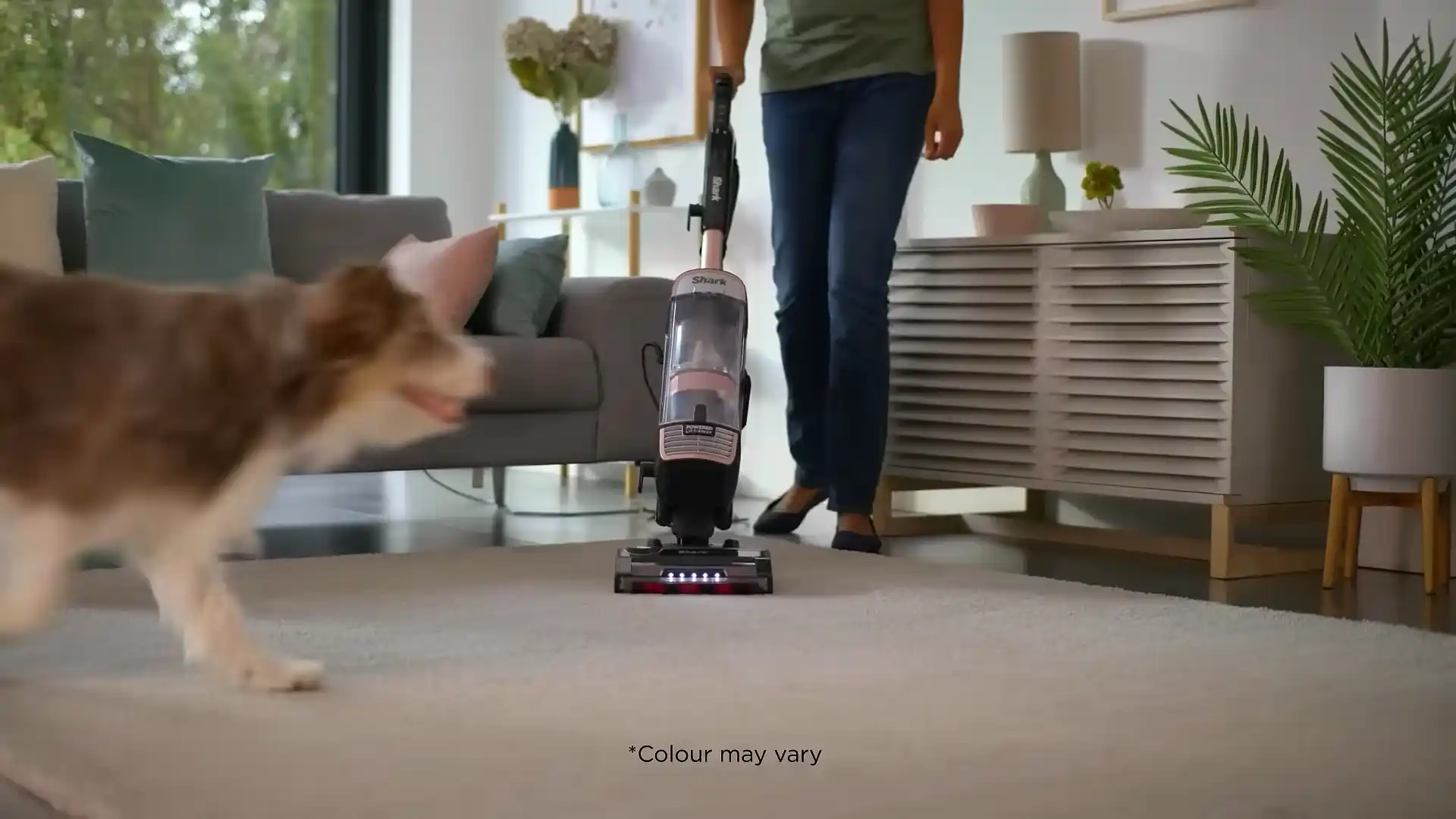
The Shark Stratos is the best corded upright on this list for kitchen use. The DuoClean PowerFins head transitions between tile and hardwood without adjustment, and the self-cleaning brushroll handles pet hair without stalling.

- ULTRA-POWERFUL SUCTION: Ultra-powerful suction and best hair pickup of any Shark vacuum.
- DUOCLEAN POWERFINS HAIRPRO: A two brushroll system digs deep into carpets, directly engages hard floors, and picks up dirt, debris, and hair in every pass.
Pros and Cons
| Pros | Cons |
|---|---|
| DuoClean PowerFins handles all floor types in the kitchen | Heavy corded upright; limited mobility near the kitchen |
| Clean Sense IQ auto-adjusts suction level automatically | |
| Self-cleaning brushroll; never stops to unwrap hair | |
| Odor neutralizer useful in a cooking environment | |
| HEPA filtration catches cooking particles | |
| Swivel steering for tight kitchen corners |
Testing Results
Hard floor performance: Strong. The PowerFins front roller picks up large debris and the rear brush catches fine particles. One pass on tile and hardwood leaves the floor clean.
Grout lines: DuoClean performs better than single-roller heads on textured grout. The front roller presses into the gap rather than gliding over it.
Auto-suction adjustment: Clean Sense IQ reads the floor and adjusts automatically. No manual dial changes when moving from tile to a kitchen rug or back.
Pet hair: The self-cleaning brushroll is the standout feature for kitchens with pets. Fur wrapping is a non-issue. Tested with long pet hair and fine dog fur both.
Noise: Louder than the Miele canister. Fine for daytime cleaning. Would wake someone sleeping nearby.
Real-world Usage
The Stratos works best as the primary vacuum for a kitchen-heavy cleaning routine. The auto-suction adjustment means you can run from the kitchen tile through a rug and back without interrupting the pass. The self-cleaning brushroll is a real quality-of-life feature for pet households.
The cord is the main trade-off. In a large open-plan kitchen-living area, you may need to switch outlets. It is not a quick-grab vacuum like a cordless. But for a thorough once-over two or three times a week, it delivers consistently clean results.
Best Use Case
Right pick for pet owners with large kitchens or kitchen-dining combos. Also a good choice for anyone who prefers corded reliability over battery management.
Not for people who want a grab-and-go kitchen vacuum. The cord setup takes more time than a quick cordless sweep.
Verdict
The Shark Stratos is a workhorse for kitchen floor cleaning. The DuoClean head and auto-suction do most of the decision-making for you. Self-cleaning brushroll means one less maintenance task. If you are doing thorough cleaning sessions rather than quick daily sweeps, this is a strong choice.
For a comparison with similar upright models, our best suction vacuum cleaners guide has more context on how the Stratos compares in raw pickup power.
Rating: 4.5 / 5
View on Amazon: Shark Stratos Upright AZ3002
Best Premium Canister: Miele Complete C3
The Miele Complete C3 is the quietest and most refined vacuum on this list. For kitchen floors specifically, the combination of a dedicated parquet floorhead, ultra-low noise, and lifetime HEPA filtration makes it the best long-term investment.

- POWERFUL AND QUIET: Bagged canister vacuum optimal for smooth floors and low-medium pile carpet with a Turbobrush for carpets and Parquet floorhead for smooth flooring
- MAXIMUM FILTRATION: Reach maximum air hygiene with the HEPA Lifetime Filter - up to 99.999% of even the smallest particles such as fine dust and allergens are retained

Pros and Cons
| Pros | Cons |
|---|---|
| HEPA lifetime filter rated to 99.999% of fine particles | Premium price |
| Ultra-quiet operation; barely audible at normal suction level | |
| Parquet floorhead included; no scratching on hardwood or tile | |
| 36-foot operating radius; fewer outlet switches | |
| 6 suction levels via foot pedal; no bending required | |
| Built to last 20 years |
Testing Results
Hard floor performance: The parquet floorhead glides on tile and hardwood without scattering debris. Fine flour, crumbs, and cooking dust all picked up cleanly. No debris kickback at the front of the head.
Noise level: The quietest vacuum on this list. You can run it while someone is on a phone call in the next room. The low noise level makes it easy to use at any time of day.
HEPA filtration in cooking environments: Cooking produces fine airborne particles including flour dust, spice particles, and grease residue. The sealed filtration system means those particles go into the bag and stay there, not back into the kitchen air.
Suction control: The foot pedal suction selector is useful in the kitchen. Dial down for delicate hardwood, dial up for grout or textured tile, without touching the handle.
Maneuverability: The canister body rolls on smooth wheels and tracks well on tile. The long hose and 36-foot radius means you can clean the whole kitchen from one outlet.
Real-world Usage
The C3 is the right vacuum for households where the kitchen is the primary concern and air quality matters. Allergy sufferers and anyone dealing with cooking-related dust will notice the difference in filtration immediately.
The bagged system is a real advantage in a cooking environment. Emptying a bagless canister after collecting flour dust means a dust cloud. Swapping a sealed Miele bag is clean and takes ten seconds.
The premium price point is easier to justify if you think of it as a 20-year purchase. The per-year cost of ownership on the Miele ends up lower than replacing budget vacuums every few years.
Best Use Case
Best for allergy households, open-plan kitchens where cooking particles spread, and anyone who wants a premium quiet vacuum for daily use. The parquet head makes it especially suited to sealed hardwood and high-end tile.
Not the right pick for anyone who wants quick cordless convenience or is cleaning primarily carpet.
Verdict
The Miele C3 is in a different class for kitchen floor cleaning. The filtration, the quiet operation, and the parquet head are all purpose-built for hard floors. If budget is not the primary concern, this is the one to own.
For more canister options across price points, see our full best canister vacuum cleaners roundup.
Rating: 4.7 / 5
View on Amazon: Miele Complete C3
Best Robot: roborock Qrevo Slim
The roborock Qrevo Slim handles kitchen floors on autopilot. It vacuums and mops in the same pass, and the Multifunctional Dock handles mop washing, drying, and emptying the dustbin without your involvement.

- 3.23-Inch Slim Design - The Roborock Qrevo Slim, with its compact 3.23-inch (8.2 cm) body, is designed to navigate and clean hard-to-reach areas. Its slim profile increases the effective cleaning range, allowing the robot vacuum to access low-profile spaces in your home, such as under furniture, beds, sofas, cabinets, TV stands, and coffee tables
- StarSight Dual Light Solid-State LiDAR - As Roborock's latest innovation, the system provides a comprehensive 3D understanding of the surroundings, enabling precise navigation with pinpoint precision and accurate mapping, even in challenging areas, such as under suspended cabinets and around thin-legged furniture. Powered by 3D sensors that capture precise outlines of obstacles and an RGB camera for visual recognition, Roborock Qrevo Slim swiftly recognizes and evades 73 types of objects

Pros and Cons
| Pros | Cons |
|---|---|
| 11,000 Pa suction picks up kitchen crumbs and grit effectively | Dock is large; needs a dedicated corner |
| Mops the kitchen floor in the same run | |
| Multifunctional Dock auto-empties, washes mops, and dries them | |
| Ultra-slim 82mm height reaches under lower cabinets | |
| FlexiArm side brush cleans kitchen baseboards and corners | |
| StarSight obstacle avoidance handles kitchen chair legs and pet bowls |
Testing Results
Hard floor suction: 11,000 Pa suction is strong at the robot vacuum category level. Kitchen crumbs, fine debris near the stove, and pet food scatter all cleared in one pass on tile and hardwood.
Mopping: The dual spinning mop pads make a noticeable difference on light kitchen floor grime. Post-cooking residue on sealed tile came up without pre-wiping. This is not a replacement for a deep mop session, but for daily maintenance it keeps kitchen floors looking clean.
Under-cabinet reach: The 82mm height gets under most standard lower cabinets and toe-kick areas. Debris that accumulates under the fridge perimeter and near the dishwasher gets cleared on scheduled runs.
Obstacle avoidance: StarSight handled kitchen chair legs, pet food bowls, and cords without getting stuck. Reliability on obstacle detection is high compared to budget robot vacuums.
Dock footprint: The dock is large. It needs a wall corner or dedicated laundry area. It is not something you tuck in a small kitchen cabinet.
Real-world Usage
The Qrevo Slim earns its place in the kitchen with the combined vacuum-and-mop pass. Set a schedule after cooking hours and come back to a clean floor every morning. The dock manages itself: the mops wash, the dustbin empties, the pads dry. Most of the time you are not interacting with it at all.
The FlexiArm extension brush reaches into corners and along baseboards better than fixed side brushes. In a kitchen where crumbs collect at the junction of floor and cabinet, that matters.
Best Use Case
Best for households that want daily kitchen floor maintenance without manual effort. The vacuum-and-mop combo is the key reason to choose this over a standard robot vacuum.
Not a replacement for a handheld or cordless for immediate cleanup after a cooking spill. It is a scheduled maintenance tool, not a reactive one.
Verdict
For daily kitchen floor maintenance, the Qrevo Slim removes almost all the manual effort. The mopping capability is the feature that separates it from vacuum-only robot options. If your kitchen floors need both pickup and light mopping on a daily basis, this is the right tool.
If you are comparing robot vacuum options on tile specifically, our best robot vacuum for tile floors and pet hair guide covers the Qrevo Slim alongside several alternatives.
Rating: 4.6 / 5
View on Amazon: roborock Qrevo Slim
Best Budget Canister: Eureka 3670M Mighty Mite
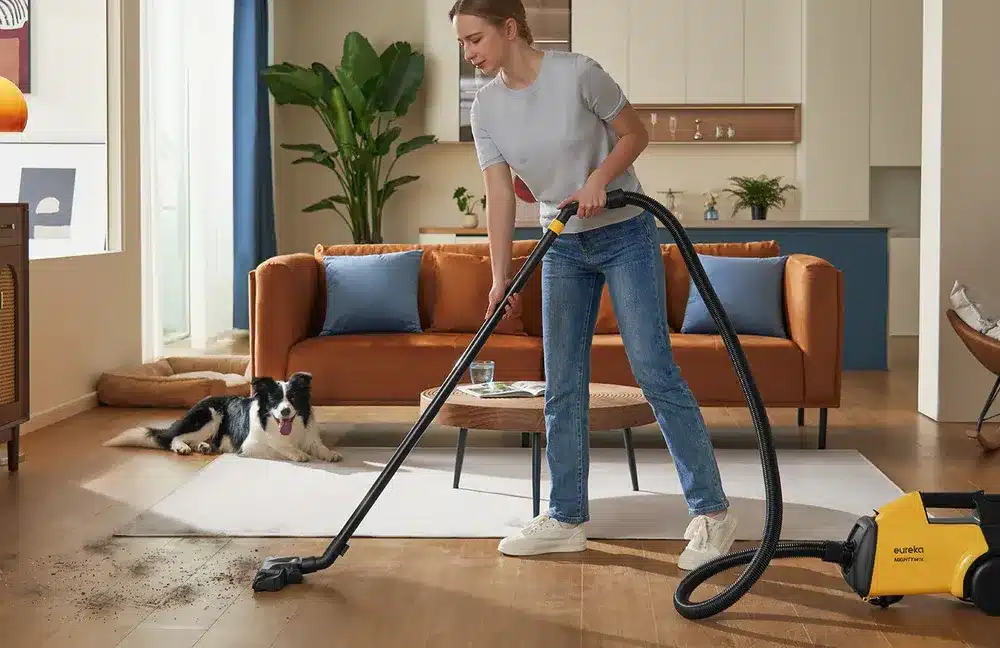
The Eureka Mighty Mite is a compact bagged canister built for hard floors. It is lightweight, affordable, and gets the job done on tile and hardwood without any of the features you do not need.

- Dust bag capacity is up to 2.5 liters. Lightweight & Lifetable Conveniently: The lightweight vacuum cleaner weights 8.6lbs. Allows you to carry it around the whole house.1200 watts. Specific uses: Carpet, Stair, Upholstery, Car, Floor
- Whole Home Cleaning: The lightweight vacuum cleaner weights 8.6 lbs allows you to carry it around the entire house.
Pros and Cons
| Pros | Cons |
|---|---|
| Compact and lightweight; easy to store in a small kitchen | Standard filtration; not HEPA |
| Hard floor tool included; works well on tile and sealed wood | |
| Bagged system keeps emptying clean | |
| Simple to use with no learning curve | |
| Affordable price |
Testing Results
Hard floor performance: Good for the price. The hard floor tool glides on tile and hardwood without scattering debris. Standard crumbs, dry food particles, and light dust all picked up cleanly.
Carpet performance: The database flags this as No for carpet. That matches real-world results. The Mighty Mite is a hard floor tool. Do not expect carpet cleaning from it.
Pet hair: Not rated for pet hair. Fur on hard floors picks up reasonably well but the brushroll and filtration are not optimized for it.
Emptying: The bagged system keeps kitchen dust contained. No cloud of flour or fine debris when emptying, which is a real advantage over bagless options in a cooking space.
Storage: The compact body stores in a lower cabinet or pantry without taking up much space. A genuine advantage in a small kitchen.
Real-world Usage
The Mighty Mite is the dedicated kitchen vacuum that lives in the pantry and gets pulled out after cooking. It does not handle your whole home. It handles tile and hardwood floors in the kitchen, quickly and cleanly. The bagged system means swapping the bag out once a month rather than tipping fine dust into the trash.
It is also a reasonable second vacuum for households that already own a primary vacuum for carpets and whole-home use. Having a small dedicated canister for hard floors makes daily kitchen maintenance faster.
Best Use Case
Best for small kitchens, apartments, or anyone wanting a low-cost dedicated hard floor vacuum. Works well as a secondary vacuum in homes that already have a full-size primary vacuum.
Not the right pick for pet households, carpet cleaning, or anyone wanting one vacuum to do everything.
Verdict
The Eureka Mighty Mite is exactly what it looks like: a simple, compact canister that cleans hard floors well and costs almost nothing. No frills, no complexity. If your kitchen is tile or hardwood and you want a dedicated, affordable vacuum that stores easily, this is a practical buy.
Rating: 4.0 / 5
View on Amazon: Eureka 3670M Mighty Mite
What Makes the Best Vacuum for Kitchen Floors?
Hard Floor Performance
Kitchen floors are almost always hard surfaces: tile, sealed hardwood, vinyl, or laminate. A vacuum that works well on carpet may scatter debris on a hard floor if the brushroll speed is too high or the head design is wrong. Look for rubber brushrolls or PowerFins-style heads that press debris toward the suction port rather than batting it forward. The Dyson Fluffy head and LEVOIT rubber brush are both good examples of heads built for this surface type.
Grout lines are a secondary hard floor challenge. A vacuum head that bridges over recessed grout will leave debris behind on textured tile. Suction-based pickup without an aggressive brush, or a head with a front roller that contacts the grout surface directly, handles this better.
Filtration for Cooking Environments
Kitchens generate airborne particles that other rooms do not: flour dust, spice particles, grease residue, and coffee grounds. A vacuum with standard filtration will pick these up from the floor but blow fine particles back into the air. HEPA filtration traps particles down to 0.1-0.3 microns and keeps them in the dustbin or bag.
For allergy households or anyone sensitive to airborne cooking particles, the filtration level matters more in a kitchen vacuum than in a vacuum used primarily for carpet. The Miele C3 and Dyson V15 both offer sealed HEPA systems that make a measurable difference in kitchen air quality.
Maneuverability Around Kitchen Obstacles
Kitchen floors have more obstacles than most rooms: chair legs, cabinet toe-kicks, appliance bases, pet food bowls, and trash cans all require a vacuum that steers well in tight spaces. Cordless stick vacuums with swivel heads generally navigate these best. Canister vacuums with long hose reach cover more of the kitchen from a single standing position. Uprights with swivel steering work but require more repositioning.
Robot vacuums handle ongoing daily obstacles well once mapped, but reactive cleanup after cooking spills still requires a manual vacuum nearby.
Ease of Emptying
Kitchens collect dry, fine debris. Emptying a bagless dustbin full of flour, coffee grounds, or fine crumbs releases a visible cloud. Bagged vacuums seal debris inside a bag for clean disposal. If you are emptying your vacuum in or near the kitchen regularly, the bag-versus-bagless decision matters more here than in other rooms.
The Miele C3 and Eureka Mighty Mite both use bags for this reason. The Dyson V15 and LEVOIT are bagless but have point-and-eject systems that minimize contact with the debris on emptying.
Weight and Storage
Kitchen vacuums get used frequently, often for short sessions. A heavy or bulky vacuum that is difficult to grab and put back discourages regular use. Lightweight cordless vacuums like the LEVOIT, or compact canisters like the Eureka Mighty Mite, are easy to store near the kitchen and grab without effort. The Miele and Shark Stratos are heavier and better suited as primary whole-home vacuums that include kitchen floor coverage rather than dedicated kitchen tools.
How to Vacuum Kitchen Floors Effectively
Kitchen floor vacuuming has a few practical steps that make a real difference in results.
Start at the perimeter. Debris near the base of cabinets, the toe-kick strip, and the junction between the floor and wall accumulates heavily in kitchens. Pull this debris toward the center with the first pass before doing full floor coverage.
Move appliances occasionally. The area under the refrigerator, dishwasher, and stove collects debris that no regular vacuum pass reaches. Pulling these appliances out for a thorough clean every month or two prevents buildup that becomes harder to remove over time.
For grout lines on tile, run the vacuum head perpendicular to the grout direction on one pass, then parallel on the next. The directional change improves debris extraction from recessed grout channels.
After mopping or wet cleaning, wait until the floor is fully dry before vacuuming. Wet fine particles clog brush heads and stick to dustbin walls.
Frequently Asked Questions
What is the best vacuum for kitchen floors with tile and grout?
Tile and grout need suction-focused pickup and a head that contacts the grout surface rather than bridging over it. The Dyson V15 with the Fluffy head is the top pick for this. The Shark Stratos DuoClean PowerFins also performs well on textured tile. For a budget option, the LEVOIT LVAC-200 rubber brush handles tile grout better than most bristle brushrolls at the same price. If you want a full comparison across tile-specific models, our best vacuum cleaners for tile floors guide is a useful next read.
Can I use a robot vacuum in the kitchen?
Yes. Robot vacuums work well for daily kitchen maintenance. The roborock Qrevo Slim is specifically worth considering because it vacuums and mops in the same pass, which suits kitchen floors better than vacuum-only robots. The limitation is reactive cleanup: a robot vacuum on a schedule handles ongoing maintenance, but for immediate post-cooking cleanup you still need a manual vacuum nearby.
Is a canister or stick vacuum better for kitchen floors?
Both work well on kitchen hard floors. Stick vacuums are faster to grab and easier to maneuver around kitchen obstacles. Canister vacuums offer better filtration options and more consistent suction, which matters more in a cooking environment. For daily quick cleanups, a stick vacuum is the easier choice. For thorough weekly cleaning with HEPA filtration, a canister like the Miele C3 delivers better results.
How often should I vacuum kitchen floors?
Daily if you cook frequently. Kitchen floors collect crumbs, fine particles, and tracked-in debris faster than most rooms. A quick 2-3 minute pass with a stick vacuum after cooking keeps the floor consistently clean. A thorough pass once or twice a week with a more powerful vacuum handles what the daily sweeps miss.
Do I need a special vacuum for pet hair in the kitchen?
If your pet eats near the kitchen or spends time on the kitchen floor, pet hair pickup matters. The Dyson V15, Shark Stratos, and LEVOIT LVAC-200 all handle kitchen pet hair well. The Eureka Mighty Mite does not. For households where pet hair is a major kitchen issue, the rubber brushroll models are the better choice. For more options, our guide to the best vacuum for cat litter on hard floors covers models that handle granular debris common in pet-adjacent kitchen areas.
Are bagged or bagless vacuums better for kitchen use?
Bagged vacuums are more practical in a cooking environment. Fine kitchen debris like flour, spice dust, and coffee grounds releases back into the air when emptying a bagless dustbin. A sealed bag keeps that debris contained. If filtration and clean emptying matter to you, bagged options like the Miele C3 and Eureka Mighty Mite are the better fit for kitchen use.
What vacuum is best for laminate kitchen floors?
Laminate needs a gentle approach. Hard bristle brushrolls can scratch the surface and scatter debris. A rubber brush head or a bare-floor nozzle without a spinning brush is the safest choice. The LEVOIT LVAC-200 rubber brushroll and the Miele C3 parquet head are both designed for exactly this surface type. For a broader look at laminate options, our best vacuum cleaners for laminate floors roundup covers more models.