How to Clean Dog Pee From Couch Without Vinegar (4 Methods That Work)

Vinegar is the first thing most people grab when a dog pees on the couch. It’s also why the smell often comes back a day or two later. The good news is there are four vinegar-free ways to clean dog pee from a couch, and each one is safer for your fabric.
Why You Should Say No to Vinegar When Cleaning Dog Pee?
Dog urine isn’t just water. It contains urea and uric acid, and uric acid is the part that causes trouble. It forms crystals that don’t dissolve in water and stay in the fabric and cushion foam long after the stain looks gone.
Vinegar doesn’t break those crystals down. It can cut the sharp ammonia smell for a little while because it’s acidic. That’s covering the odor, not removing the cause.
Then the two smells mix. You get a sour, sharp odor that’s often worse than the original. A humid day or a warm room can wake the crystals up, and the pee smell comes right back.
Vinegar can also hurt the couch itself. Acid can fade dyed fabric and leave water rings on delicate upholstery like rayon or silk blends.
I learned this the hard way with my dog Kiki. She had an accident on our couch, and I wiped it down with a vinegar and water mix like every blog tells you to.
The room smelled like a pickle jar for a day. Two days later, a humid afternoon brought the dog pee smell right back.
That’s when I switched to methods that actually break the stain down. These are the four I’d use again, ranked from most to least effective on deep or old stains.
How to Clean Dog Pee From Couch Without Vinegar
These two go after the uric acid itself. They cost more than a box of baking soda. They’re also the ones most likely to stop the smell from returning.
Use a Portable Carpet Cleaner Machine
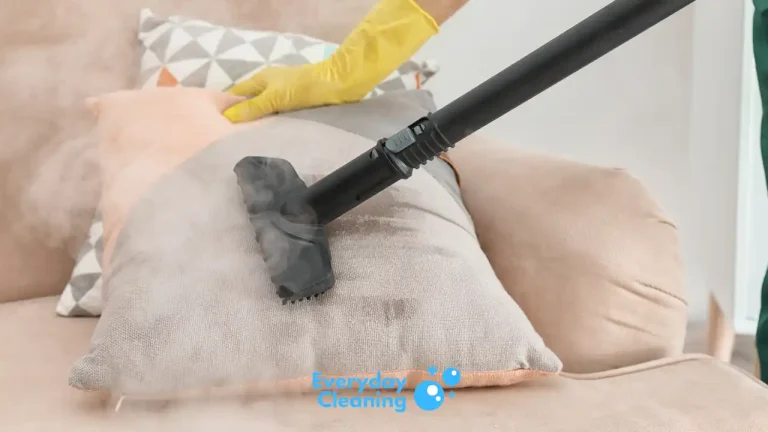
A portable carpet cleaner with an upholstery tool is the best option for a deep, soaked-in stain. It sprays solution into the cushion and pulls the dirty liquid back out. That removes the urine itself, not just what’s sitting on the surface.
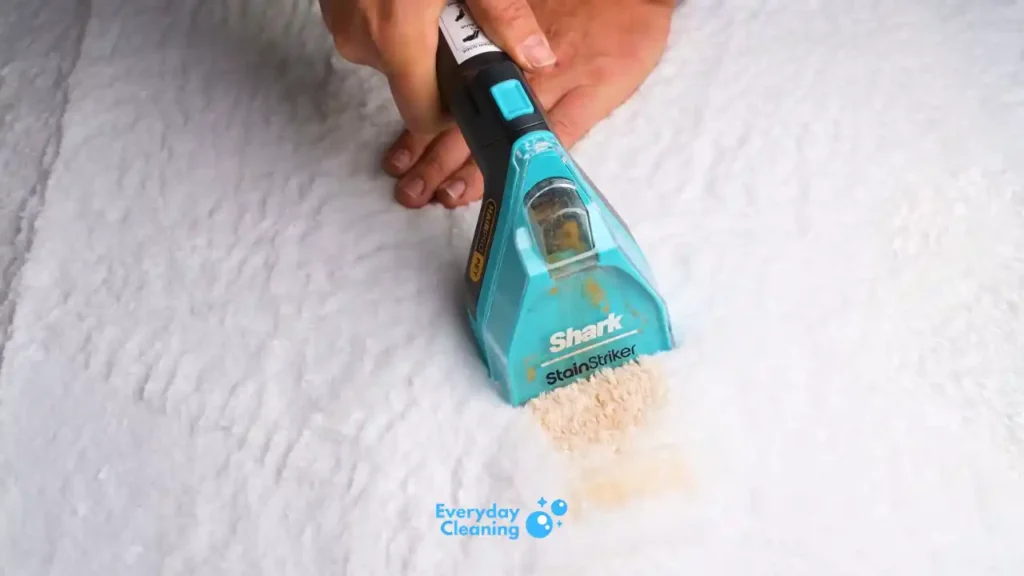
Check your couch tag first. Machines use water, so the tag should say W or WS. Skip this method if it says S or X.
- Blot up any fresh pee with paper towels. Press down. Don’t rub.
- Vacuum the area to pick up loose hair and debris.
- Fill the clean tank with lukewarm water and a pet urine formula or enzyme solution.
- Spray the spot and scrub lightly with the upholstery tool. Work in small sections.
- Extract slowly, pulling the tool toward you. Repeat until the liquid coming out looks clear.
- Aim a fan at the cushion and let it dry completely.
Don’t oversaturate. Foam holds onto water, and a soaked cushion can take a full day to dry. If the cover comes off, check the care label and treat it separately.
If you don’t own a machine yet, a compact one is enough for a single couch. Our guide to the best carpet and upholstery cleaner machine shows which ones handle pet accidents well.
Only dealing with one small spot? A handheld unit is cheaper and easier to store. See our picks for the best spot carpet cleaner for pet stains.
A machine also pays off over time. Accidents happen again, and you can use it on rugs, car seats, and stairs too.
Use an Enzymatic Cleaner
Enzymatic cleaners use enzymes to digest the organic material in urine. That includes the uric acid crystals vinegar can’t touch. This is the closest thing to a true fix for the odor at the source.

Many are labeled safe for upholstery. Read the label first, because some fabrics need a different product.
Look for the word “enzymatic” on the front of the bottle. Plain deodorizing sprays and fragrance products only cover the smell. You want one that says it breaks down pet urine.
- Blot up as much urine as you can.
- Test the cleaner on a hidden spot. Wait a few minutes and check for color change.
- Apply enough cleaner to reach everywhere the urine went. Surface spritzing won’t do it.
- Let it sit as long as the label says. Enzymes need time and moisture to work.
- Blot the area and let it air dry. Use a fan, not heat.
- Repeat if the smell lingers. Old stains often need two rounds.
Don’t layer other chemicals on top. Bleach and strong cleaners can kill the enzymes. Use the enzyme cleaner by itself.
This is the method that finally kept Kiki from sniffing the same spot again. Dogs go back to places that still smell like urine. For product picks, see our roundup of the best enzyme carpet cleaner for dog urine.
Household Solutions Without Vinegar
No special products on hand? These two use things you may already own, and they work best on fresh accidents. They’re less reliable on old stains.
Act fast with these. The sooner you treat the spot, the less time the urine has to soak into the foam.
Baking Soda and Hydrogen Peroxide
Baking soda soaks up moisture and odor. Hydrogen peroxide helps break down the stain and bacteria. A few drops of dish soap help lift it out of the fabric.
Here’s the mix: 1 cup of 3% hydrogen peroxide, 1 tablespoon of baking soda, and a few drops of dish soap. Mix it right before you use it. Don’t store it in a sealed container.
Peroxide can lighten dyed fabric. Test a hidden spot first. Skip this method on dark or brightly colored couches.
For a light, leftover smell, baking soda alone can do the job. Cover the spot, leave it overnight, and vacuum it up in the morning. It’s slow, but it’s gentle on almost any fabric.
- Blot the pee, then cover the spot with dry baking soda. Let it sit for 15 minutes to absorb moisture.
- Vacuum the baking soda off. Our guide on how to vacuum a couch covers the right way to do it without pushing residue deeper.
- Lightly spray or dab the peroxide mix onto the stain. Don’t soak it.
- Let it sit for 10 to 15 minutes.
- Blot with a clean damp cloth, then press with a dry towel.
- Sprinkle a thin layer of fresh baking soda. Leave it until the couch is dry, then vacuum.
Want more recipes to try? Our list of the best homemade carpet cleaner for pet urine has several. Test any of them on a hidden spot before you use them on your couch.
Rubbing Alcohol
Rubbing alcohol dissolves some residue and dries fast. That makes it handy for small, fresh stains on couches with an S tag, which can’t take water.
It’s the weakest of the four on old urine. It won’t break down uric acid. Treat it as a quick fix, then follow up with an enzyme cleaner when you can.
- Blot up the excess urine.
- Test a hidden spot. Alcohol can strip dye from some fabrics. Skip it on leather and faux leather.
- Dampen a white cloth with 70% isopropyl alcohol. Don’t pour it on the couch.
- Dab from the outer edge toward the center so the stain doesn’t spread.
- Blot with a clean dry cloth and let the spot air dry. Open a window for ventilation.
- Brush the fabric lightly with a soft brush once it’s dry to restore the texture.
Alcohol is flammable. Keep it away from flames, candles, and heat sources while you work.
A Few Things to Keep in Mind
- Blot, never rub. Rubbing pushes urine deeper into the cushion.
- Check your couch tag. W means water-based cleaners. S means solvent only. WS means either. X means vacuum only.
- Always spot test. Pick a hidden area, like the back or under a cushion.
- Skip ammonia cleaners. Urine contains ammonia, and your dog may take that smell as a signal to go there again.
- Avoid direct heat. A hair dryer can lock in the stain and the odor. Use a fan.
- Check the cushion underneath. Urine often soaks through to the foam. If the cover comes off, treat the cover and the foam core separately, and flip the cushion over to see if the other side got wet too.
- Dry it fully. A damp cushion can grow mildew and bring a new smell.
- Keep your dog away. Don’t let them back on the couch until it’s fully dry and any product has been wiped off.
Frequently Asked Questions
Can I use baking soda alone on dog pee?
Baking soda works on a fresh accident. It absorbs moisture and takes the edge off the smell. It won’t break down uric acid, so use it as a first step or for a light odor, not as the only fix on an old stain.
How do I get dog pee smell out of a couch that has already dried?
Go with an enzymatic cleaner or a carpet cleaner machine. Dried urine needs to be re-wet so the cleaner can reach the crystals. The same ideas apply in our guide on how to clean old dog pee from carpet, and the steps carry over to fabric furniture.
How do I find old pee spots on my couch?
Use a UV flashlight in a dark room. Dried urine glows under black light. Mark each spot with a small piece of painter’s tape before you start cleaning.
Will hydrogen peroxide ruin my couch?
It can lighten dyed fabric, so always spot test. Stick with the regular 3% kind from the drugstore. Skip it on dark or brightly colored upholstery.
How long does an enzyme cleaner take to work?
he cleaner starts working right away, but the full effect can take hours. Some labels say to keep the spot damp until it dries naturally. Be patient, and don’t judge the smell until the cushion is completely dry.
How do I stop my dog from peeing on the couch again?
Remove every trace of the smell first. Then cover the couch with a waterproof cover or limit access while you retrain. If your dog suddenly starts having accidents, check with your vet. A health problem can be the cause.
Is it safe for my dog to be near these cleaners?
Keep your dog away while you clean and until the couch is fully dry. Read the label on any enzyme cleaner or carpet cleaner solution for pet safety. Wipe off leftover baking soda and peroxide mix before your dog hops back up.