How to Get Cat Pee Smell Out of Carpet (The Method That Actually Works)
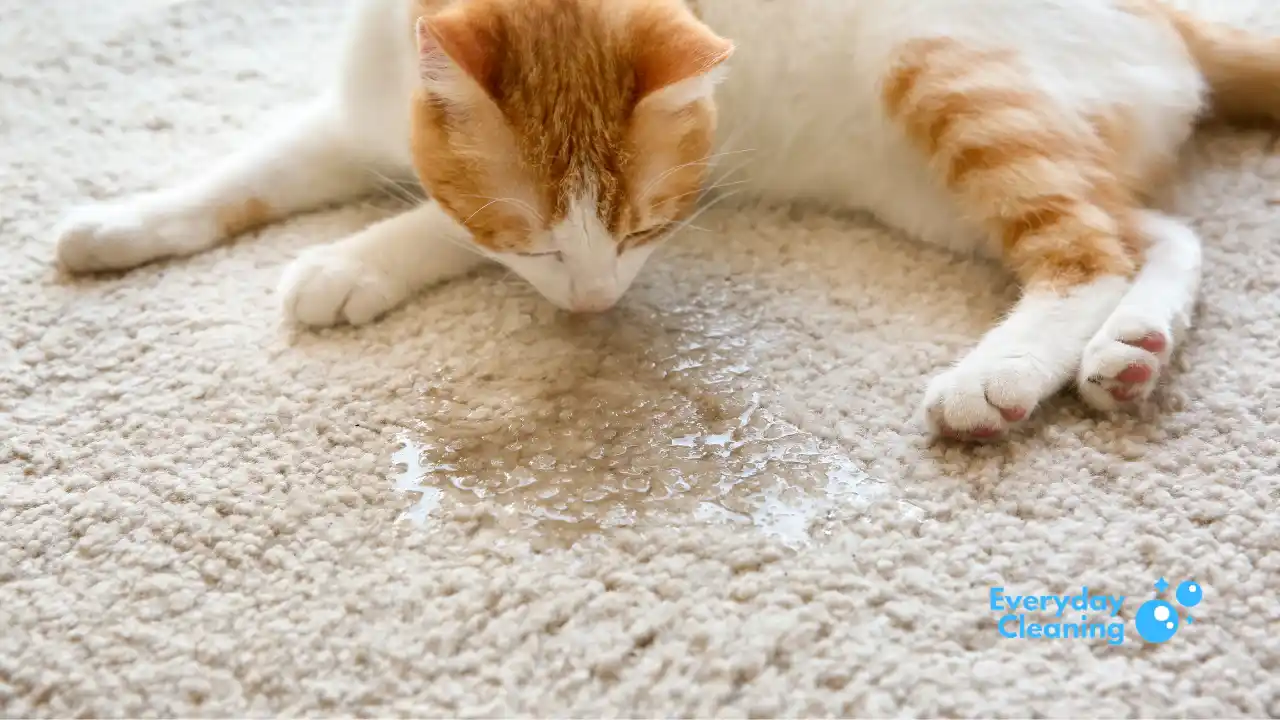
Cat pee smell in carpet is one of those problems that sticks around no matter how many sprays you try. I’ve tested this method myself and it works. It’s simpler than anything you’ll find in a bottle.
Why Topical Sprays Don’t Work
This is the part most people get wrong. They buy an enzyme spray, soak the surface, and wonder why the smell comes back in a week.
Here’s the problem. When a cat urinates on carpet, the urine doesn’t just sit on top. It soaks down through the carpet fibers, through the padding, and all the way into the concrete slab or subfloor underneath.
No spray you apply to the surface is going to reach down that far. It might mask the smell for a little while, but the source of the odor is still sitting in the pad and subfloor below. That’s why the smell keeps returning.
To actually fix it, you need to push a cleaning solution down to the same depth the urine reached.
What You Need
- Hot water
- Apple cider vinegar (white vinegar works too, but apple cider vinegar is a little less pungent)
- An old towel
Mix the vinegar and hot water in roughly a 50/50 ratio. It doesn’t need to be exact. The vinegar neutralizes the enzymes in the urine that cause the smell. That’s it. No commercial cleaner needed.
How to Find the Spot
If you’re not sure exactly where the spot is, put on a pair of white socks and walk the area. You’ll find it.
You can also try this in low light with a UV blacklight. Urine glows under UV light, which makes it easy to map out the full affected area before you start treating it.
How to Get Cat Pee Smell Out of Carpet
Step 1: Saturate the area.
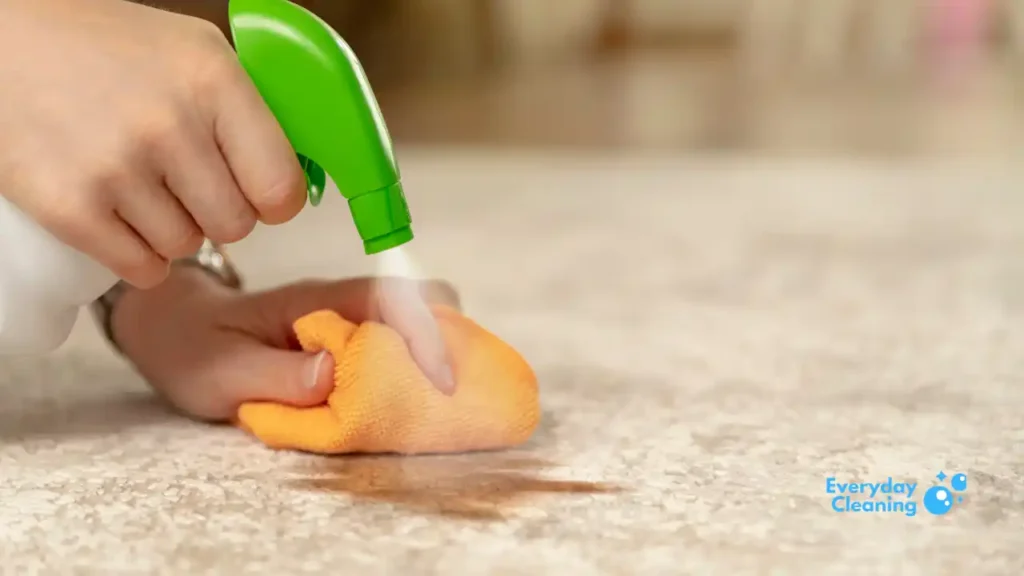
Pour your vinegar and hot water solution directly onto the stained area. Don’t be shy here. You want it truly saturated, not just damp. The goal is to push the solution down through the carpet fibers, through the pad, and into the subfloor below. That’s the same path the urine took.
This is the step most people skip. They apply a little spray and expect results. It doesn’t work that way.
Step 2: Let it soak.
Leave the solution in place for at least an hour. Two hours is better. You’re giving it time to penetrate the full depth of the urine contamination and neutralize the odor at the source.
Yes, your carpet will smell like vinegar during this time. That’s normal and temporary.
Step 3: Blot it up with a towel.
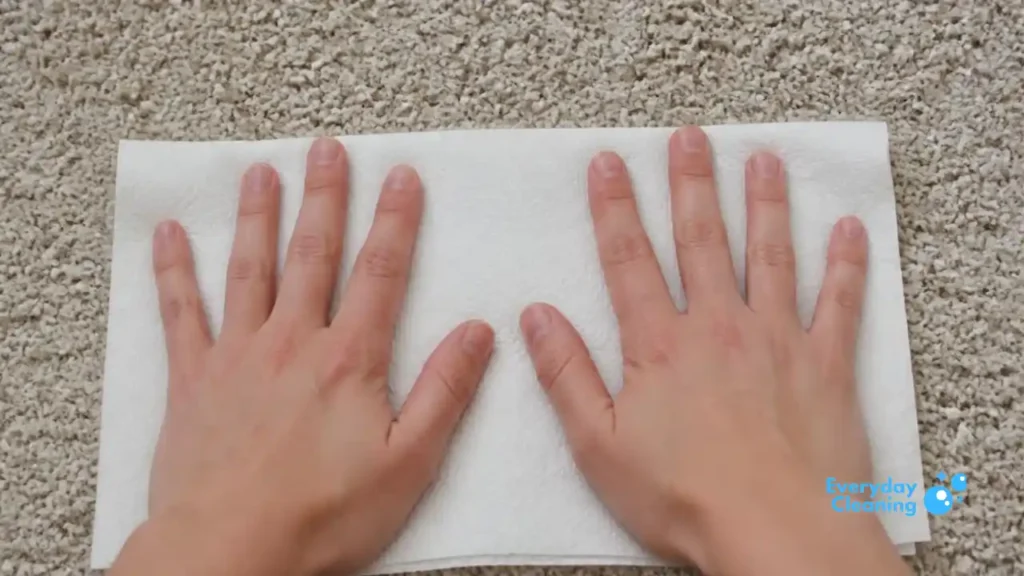
After the soak time is up, lay an old towel over the wet area. Step on it firmly to press it into the carpet and soak up the excess moisture. Repeat with a dry section of the towel if needed.
Don’t rub. Just press down and lift. Rubbing spreads the stain.
Step 4: Wash the towel.
Throw the towel in the wash immediately. You don’t want it sitting around with cat urine residue on it.
Step 5: Let the carpet dry completely.
The vinegar smell will fade as the carpet dries. Once it’s fully dry, the odor should be gone. If you can still detect a faint smell after drying, repeat the process once more.
Why Vinegar Works
Cat urine smell comes from the enzymes in the urine, not the urine itself. Urine is mostly water. The enzymes are what break down over time and produce that sharp, persistent ammonia-like odor.
Vinegar neutralizes those enzymes on contact. That’s why this works where most commercial sprays don’t. Most sprays only coat the surface. The vinegar solution, when applied in enough volume, reaches the enzymes wherever they are.
This is also why the method works on old stains. Even if the urine dried weeks ago, saturating the area with enough vinegar solution can still reach and neutralize the odor.
Tips to Prevent Future Accidents
Once you’ve cleaned the area, take a few steps to reduce the chances of your cat returning to the same spot.
Cats often go back to areas where they’ve urinated before because they can still detect trace amounts of smell even after cleaning. Keeping the spot clean and dry helps break that cycle.
Make sure your cat’s litter box is clean and easily accessible. Cats sometimes avoid a dirty box and look for alternatives. If the accidents are happening frequently, a vet visit is worth considering to rule out a urinary issue.
You can also use a UV blacklight to do a full sweep of your carpet and check for older spots you may not have noticed. Cleaning them all at once prevents the smell from building up over time.
If you’re dealing with repeat soiling in the same spot, you may want to look into homemade carpet cleaning solutions that can help with ongoing maintenance between deeper treatments.
Frequently Asked Questions
Does vinegar really get rid of cat pee smell in carpet?
Yes, but only when you use enough of it and let it soak properly. The vinegar neutralizes the enzymes in cat urine that cause the odor. A light surface spray won’t cut it. You need to saturate the area so the solution reaches as deep as the urine did.
How long does it take for the vinegar smell to go away?
The vinegar smell fades as the carpet dries, usually within a few hours. If it still smells strongly after drying, the carpet may still be slightly damp. Give it more time to air out fully.
What if the smell comes back after treatment?
If the smell returns, it usually means the urine soaked deeper than the solution reached. Repeat the process with a larger volume of the vinegar solution and extend the soak time to two hours or more.
Can I use white vinegar instead of apple cider vinegar?
Yes, white vinegar works the same way chemically. Apple cider vinegar just has a slightly milder smell during treatment, which some people prefer. Both neutralize cat urine enzymes equally well.
How do I know if the urine soaked into the subfloor?
If you’ve treated the carpet multiple times and the smell persists, especially on hot or humid days, the urine likely reached the subfloor. At that point, you may need to pull back the carpet and treat the subfloor directly, or consult a professional cleaner.
Should I use a carpet cleaner machine after this treatment?
You don’t have to, but it can help. Running a carpet cleaner over the area after the vinegar treatment dries can pull up any remaining residue and freshen the fibers. If you do a lot of pet cleaning, it might be worth investing in one. Our guide on how to clean a carpet at home walks through both DIY and machine options.