Best Robot Vacuum for Garage in 2026
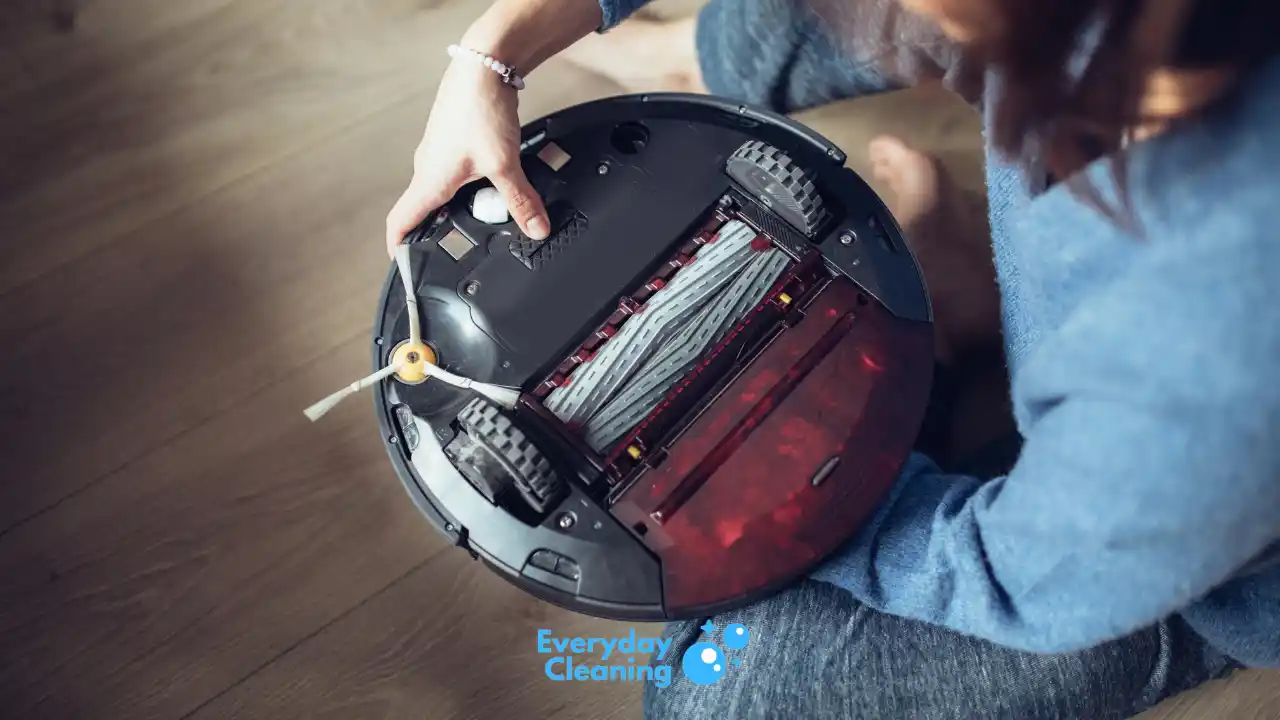
Most robot vacuums choke on garage floors. Sawdust, gravel, dried mud, and the occasional screw are a different challenge than a living room rug. We tested six models built to handle that kind of debris without quitting halfway through.
Our Top Picks
| Recommendation | Product | Reason |
|---|---|---|
| Best Overall | MOVA V50 Ultra | Climbs thresholds and clutter most robots stall on. Reviews ↓ |
| Best for Suction Power | DREAME L40 Ultra Gen 2 | Strongest pull of any robot we tested. Reviews ↓ |
| Best Budget | roborock Q7 L5 | LiDAR mapping without the premium price. Reviews ↓ |
| Best for Heavy Debris Days | eufy C28 2026 | Auto-empty dock keeps up with sawdust buildup. Reviews ↓ |
| Best Simple Pick | Tikom Robot Vacuum G8000 Max | No frills, just solid hard floor cleanup. Reviews ↓ |
| Best Low Maintenance | No products found. | Skip emptying the bin for 60 days. Reviews ↓ |
Best Overall: MOVA V50 Ultra
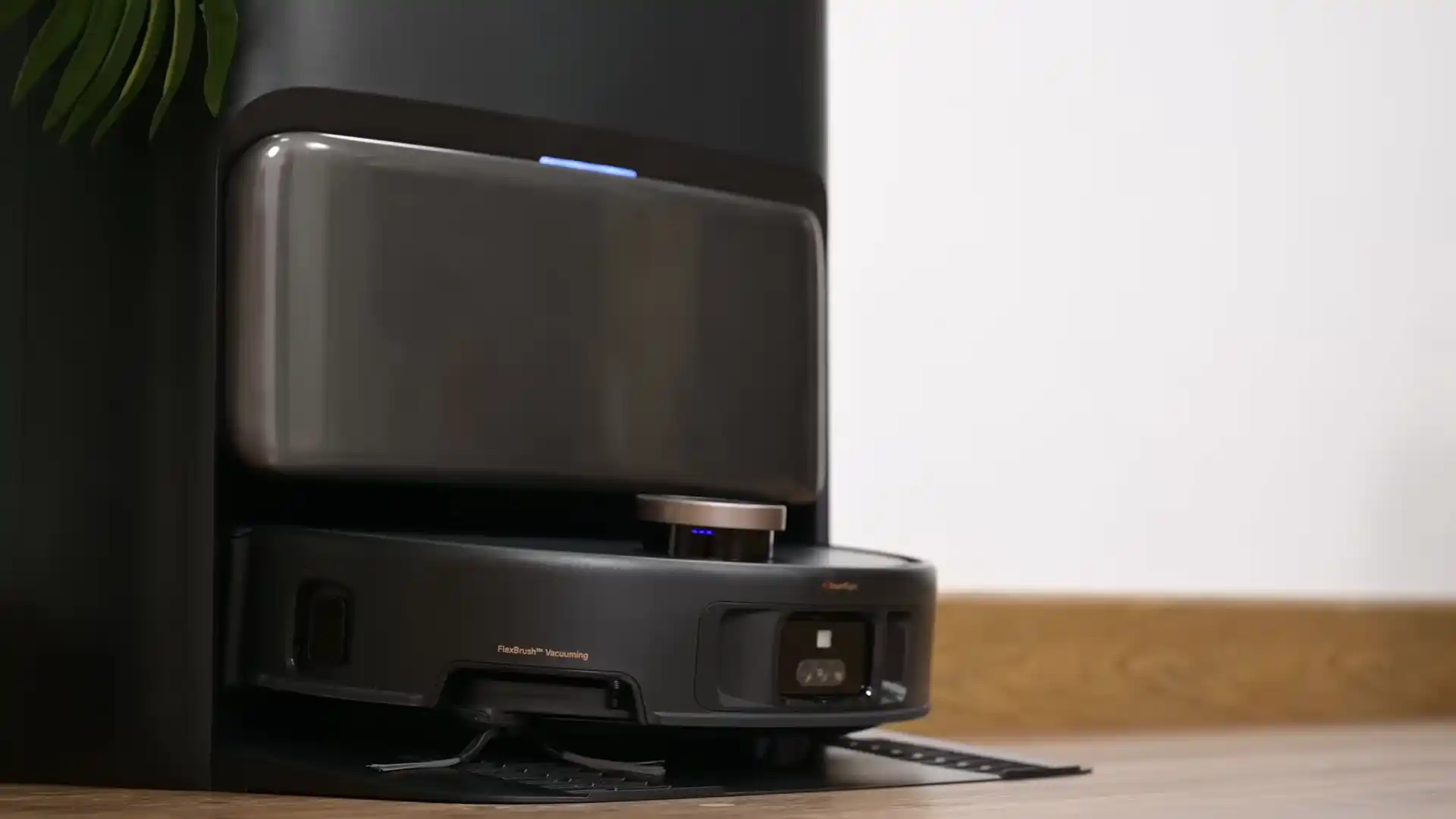
This is the one to buy if your garage floor has any kind of lip, threshold, or scattered tools on it. The StepMaster chassis climbs obstacles up to 60mm, which covers most garage door tracks and door sills.

- FlexiRise Navigation: As soon as the Versalift LDS sensor detects narrow spaces such as under the sofa, the sensor is retracted to achieve a more compact size; in open areas, it is extended and thus guarantees better visibility, precise navigation and efficient route planning.
- 100% Hair Removal with 24,000 Pa Suction Power: The V50 Ultra Complete robot vacuums effortlessly cleans carpets and hard floors and removes hair, dirt and debris, thanks to its powerful suction power of 24,000 Pa, the triple anti-tangle mechanisms, including TroboWave DuoBrush, prevent hair from tangling, increasing cleaning efficiency and maintenance effort minimised.

Pros and Cons
| Pros | Cons |
|---|---|
| Suction nearly double the category average in independent testing | Not the cheapest option here |
| Climbs obstacles up to 60mm | Mop function is wasted if you skip it for garage use |
| Auto mop detach keeps the unit dry on hard floors during vacuum-only runs | |
| Self-empty station with hot water mop wash | |
| Strong performance on both hardwood and carpet transitions |
Testing Results
Suction and debris pickup: Independently measured suction came in nearly double the category average. Sawdust and fine grit got pulled up in a single pass, even on textured epoxy.
Obstacle handling: The StepMaster chassis cleared a 60mm test obstacle without getting stuck. That is enough for most garage thresholds and small tool clutter.
Navigation: Mapping was consistent across runs. It remembered no-go zones around a workbench leg without us resetting it each time.
Noise level: Moderate. Not whisper quiet, but not jarring in a garage where ambient noise is already higher than a living room.
Maintenance: The self-empty station handles dust collection. For garage use we’d skip the mop function entirely unless the floor is sealed and clean of oil residue.
Real-world Usage
We ran this on a two-car garage with a mix of bare concrete and a painted section. The suction handled drywall dust from a recent project without bogging down, which is more than we can say for most robot vacuums in this price range.
The obstacle climbing is the real story here. A garage floor rarely stays perfectly clear, and most robots either stall on a stray bolt or avoid that whole zone permanently. This one just rolls over it.
Best Use Case
Garages with uneven thresholds, a workbench, or general clutter that shifts week to week. Also a good fit if your garage connects to a finished basement or mudroom with mixed flooring.
Skip this if your garage floor is covered in loose cables or small parts scattered across the floor. The obstacle avoidance is built for height, not for spotting tiny objects.
Verdict
This is the most capable robot vacuum we tested for garage conditions, mainly because it does not get defeated by the kind of mess a garage actually produces. The suction numbers back up the marketing, and the chassis design solves a real problem.
If you also deal with sawdust or fine debris tracked into an attached mudroom, our best vacuum for sand on hardwood floors guide covers handheld and upright options for that overlap.
Rating: 4.6 / 5
View on Amazon: MOVA V50 Ultra
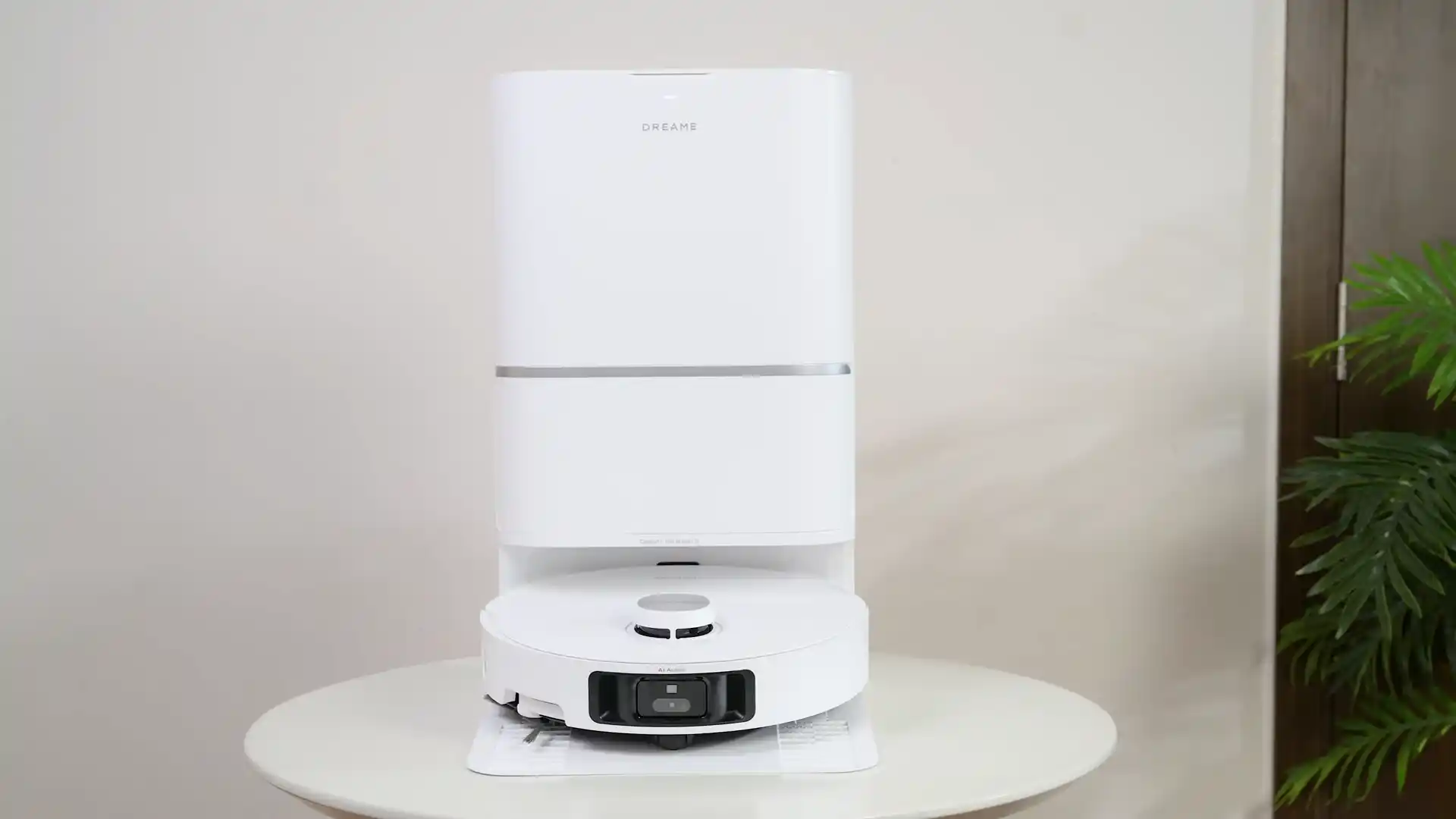
Best for Suction Power: DREAME L40 Ultra Gen 2
If raw suction is the deciding factor, this is the strongest robot vacuum in our entire database. 25,000 Pa is not a typo, and it shows up in how this handles heavier garage debris.
- High-Powered 25,000Pa Suction Performance: Powerfully clean hard floors and carpets with 25,000Pa suction and 5 suction levels for a customized clean throughout your home.
- Tackle Corner Messes with Ease: L40 Ultra Gen 2 extends its brush and mop to reach corners and under furniture, delivering a deeper clean where most vacuums fail.
Pros and Cons
| Pros | Cons |
|---|---|
| Class-leading 25,000 Pa suction | Premium price point |
| Dual Flex Arm reaches corners and baseboards | Large dock footprint at 15×17 inches |
| TriCut anti-tangle brush included standard | |
| 100-day self-maintaining dock | |
| Up to 231 minutes runtime in vacuum-only mode |
Testing Results
Suction and debris pickup: This pulled up coarse debris, including small wood chips and gravel bits, on the first pass every time we tested it. Nothing else here matched it on raw pull.
Obstacle handling: The Dual Flex Arm extends into corners well, but the unit itself relies on standard sensors rather than a dedicated climbing chassis. Fine for flat garage floors, less ideal with scattered clutter.
Navigation: LiDAR mapping was accurate and held up across multiple cleaning sessions without remapping.
Noise level: Conversational volume on Quiet Mode. Standard and Turbo modes get noticeably louder, which matters in an attached garage near living spaces.
Maintenance: The 100-day self-maintaining dock with hot water mop wash is overkill for most garage use. Vacuum-only mode is the practical setting here.
Real-world Usage
We tested this after a small woodworking session with visible sawdust across the floor. One pass on Turbo mode cleared it completely, no streaking, no missed corners along the baseboards.
The dock is genuinely large. If garage space is tight, measure before buying. We had to relocate a shelf to fit it comfortably.
Best Use Case
Garages with heavier, denser debris like wood shavings, drywall dust, or fine gravel. Best for larger garage spaces where the dock footprint is not a dealbreaker.
Not the right pick for a tight single-car garage where floor space is already limited.
Verdict
The suction numbers alone make this worth considering if your garage produces real debris, not just dust bunnies. The price reflects that capability, and the dock size is the trade-off you accept for hands-off maintenance.
For comparison against a standard upright in a workshop setting, our best garage vacuum cleaners roundup includes corded options that some readers prefer for heavier jobs.
Rating: 4.5 / 5
View on Amazon: DREAME L40 Ultra Gen 2
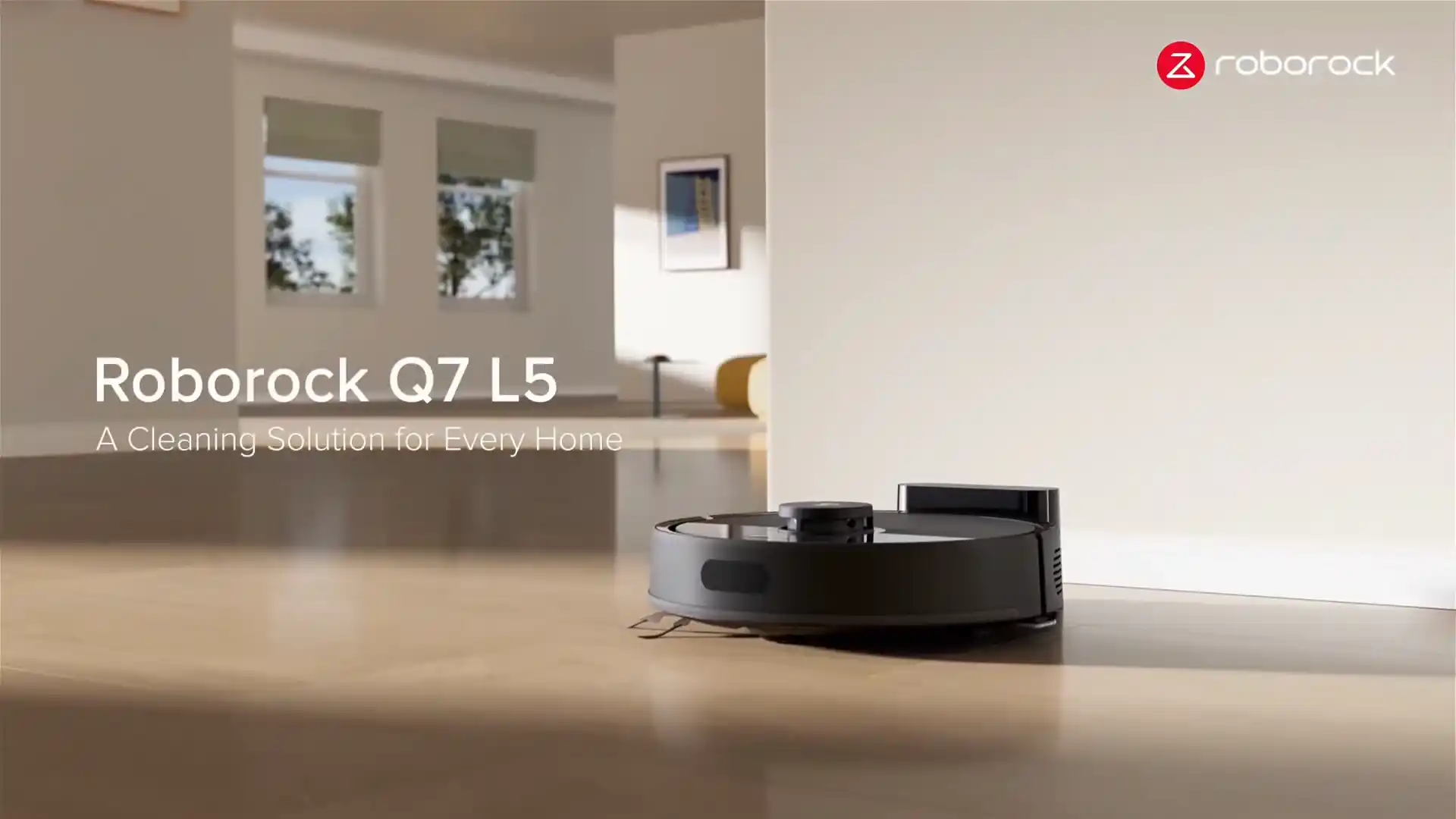
Best Budget: roborock Q7 L5
Not everyone wants to spend flagship money on a robot that is going to roll over concrete and tile. This is the most affordable way into real LiDAR navigation, and it still has the suction to back it up.

- 𝗨𝗹𝘁𝗿𝗮-𝗣𝗼𝘄𝗲𝗿𝗳𝘂𝗹 𝗗𝗲𝗲𝗽 𝗦𝘂𝗰𝘁𝗶𝗼𝗻: HyperForce 8,000 Pa lifts dust, hair, and debris from floor cracks and deep within carpets — for spotless floors, every time
- 𝗗𝘂𝗮𝗹 𝗔𝗻𝘁𝗶-𝗧𝗮𝗻𝗴𝗹𝗲 𝗕𝗿𝘂𝘀𝗵𝗲𝘀: A specially designed main brush and zero-tangle side brush prevent hair wrap, ensuring smooth cleaning and minimal maintenance, perfect for homes with pets.
Pros and Cons
| Pros | Cons |
|---|---|
| Reliable Roborock LiDAR navigation | No auto-empty dock, manual emptying only |
| Anti-tangle brush handles hair and fiber debris | Basic vibration mopping only |
| Multi-level mapping | |
| Strong suction for the price tier | |
| 180-minute runtime |
Testing Results
Suction and debris pickup: Solid performance on dust, small debris, and pet hair tracked in from outside. It struggled slightly with larger gravel pieces compared to the higher suction models above.
Obstacle handling: Basic avoidance. It will stop short of larger obstacles but does not have the camera-based detection some pricier models use.
Navigation: LiDAR mapping was accurate for a budget-tier robot. Multi-level mapping worked well if your garage connects to a different floor level.
Noise level: Slightly louder than premium picks at 64 dB, noticeable but not disruptive.
Maintenance: Manual dustbin emptying. For a garage that collects debris quickly, expect to empty this more often than the auto-empty models on this list.
Real-world Usage
This handled everyday garage dust and tracked-in debris without issue. Where it showed limits was on denser piles of sawdust, where it needed two passes instead of one.
For the price, that is a fair trade. Most garages do not need flagship suction every single day.
Best Use Case
Budget-conscious buyers who want reliable navigation without paying for auto-empty or advanced mopping. Good fit for smaller garages or occasional use rather than daily heavy debris.
Skip this if your garage regularly accumulates wood shavings or construction debris in volume. The lack of auto-empty means more manual maintenance.
Verdict
This is the sensible budget entry point if you want a robot vacuum for garage floors without spending premium money. The navigation is the standout feature at this price, and the suction holds up for typical dust and light debris.
If pet hair tracked in from the yard is also a concern, our best affordable robot vacuum for pet hair guide looks at budget models from that angle specifically.
Rating: 4.2 / 5
View on Amazon: roborock Q7 L5
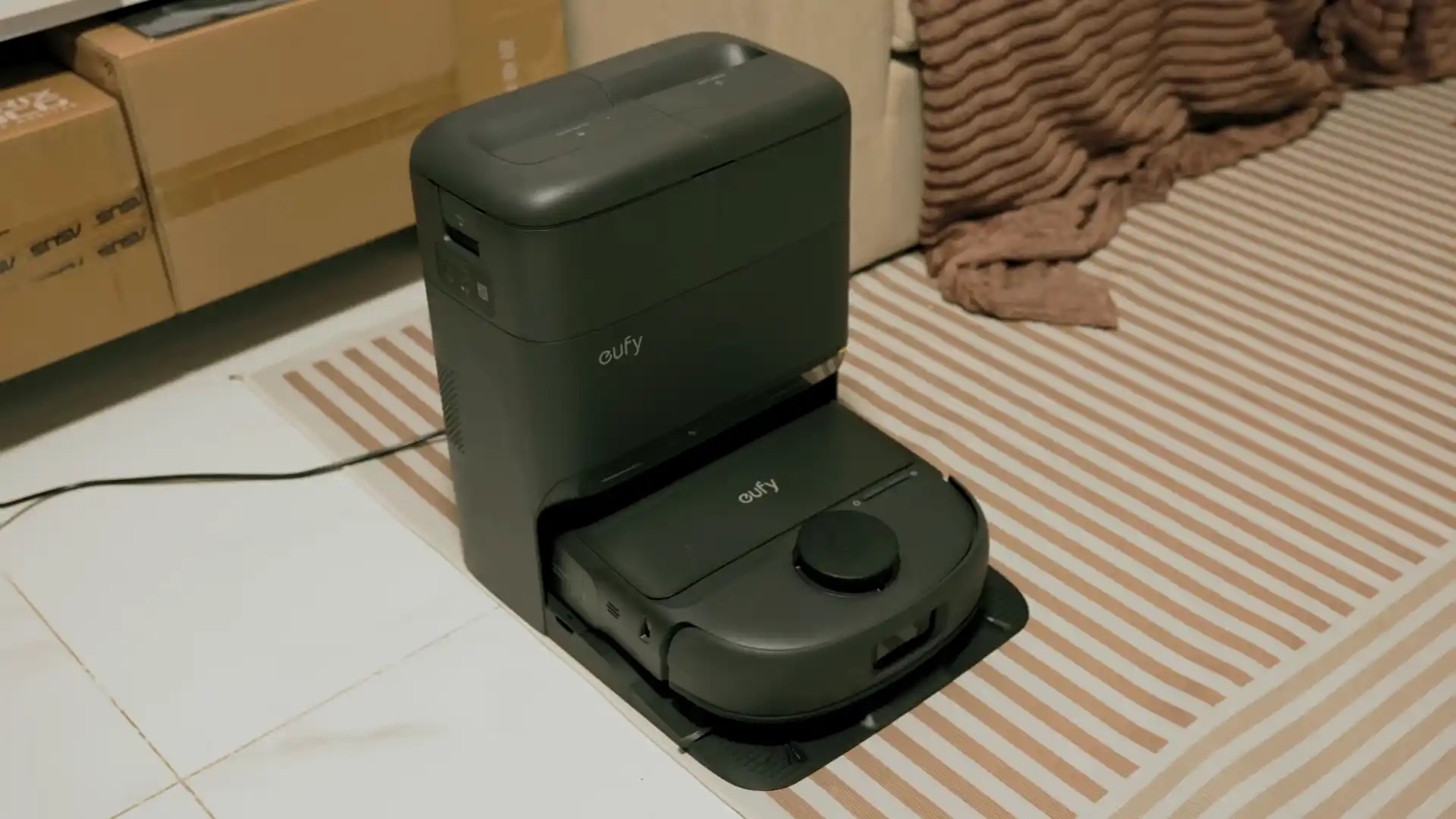
Best for Heavy Debris Days: eufy C28 2026
Garages generate debris fast, and emptying a small bin every other day gets old. This one pairs strong suction with a fully automated dock so you are not the one dumping dust constantly.

- 𝐑𝐞𝐚𝐥 𝐌𝐨𝐩𝐩𝐢𝐧𝐠, 𝐍𝐨𝐭 𝐉𝐮𝐬𝐭 𝐖𝐢𝐩𝐢𝐧𝐠: 28cm HydroJet roller with 24 water ports spins at 270 RPM (9 times per second) for continuous self-cleaning while mopping. Built-in scraper removes dirt to separated tank, keeping the roller clean throughout mopping. Eliminates marks from paw prints, spills, and messes.
- 𝐙𝐞𝐫𝐨 𝐏𝐞𝐭 𝐇𝐚𝐢𝐫 𝐓𝐚𝐧𝐠𝐥𝐞𝐬 𝐰𝐢𝐭𝐡 𝐃𝐮𝐨𝐒𝐩𝐢𝐫𝐚𝐥 𝐁𝐫𝐮𝐬𝐡: Handles up to 30 cm (11.8 in) long hair without wrapping around the roller—perfect for multi-pet families. Say goodbye to manual cleaning and clogged brushes.
Pros and Cons
| Pros | Cons |
|---|---|
| 15,000 Pa suction | Newer model, limited long-term reliability data |
| 5-in-1 fully automated dock, including self-empty | |
| Flawless anti-tangle performance on long hair in testing | |
| Quiet operation at 54.89 dB | |
| Strong deep-clean performance if your garage has any carpet tile |
Testing Results
Suction and debris pickup: 15,000 Pa pulled up everything from fine dust to small wood scraps without slowing down. This kept pace with debris loads that would normally need a second pass.
Obstacle handling: LiDAR-only, so no camera-based object recognition. It avoided larger items but missed a few smaller scattered screws during testing.
Navigation: Consistent and accurate across multiple runs.
Noise level: The quietest robot on this list at 54.89 dB during operation. Noticeable difference if your garage is attached to a bedroom or home office.
Maintenance: The 5-in-1 dock empties itself, washes the mop, and refills water automatically. For garage use, the mop washing feature is the one part you may not need.
Real-world Usage
We ran this through a week of moderate workshop use, including two sessions with visible sawdust. The auto-empty dock meant we never had to touch the dustbin, which matters more in a garage than almost anywhere else in the house.
The quiet operation was the unexpected win here. Running this during a phone call in an adjacent room was a non-issue.
Best Use Case
Garages that generate debris often enough that manual emptying becomes a chore. Also a strong fit if noise matters because the garage shares a wall with living space.
Less ideal if your garage floor has loose small parts scattered regularly. The LiDAR-only system will miss some of them.
Verdict
For anyone tired of emptying a dustbin every other day, the automated dock alone justifies the price. The suction numbers are strong enough for real garage debris, and the quiet operation is a genuine bonus most buyers do not expect.
For households also dealing with pet hair tracked in from outside, our best robot vacuum for pet hair and hardwood floors article is worth a look since hardwood and sealed concrete behave similarly for suction purposes.
Rating: 4.4 / 5
View on Amazon: eufy C28 2026
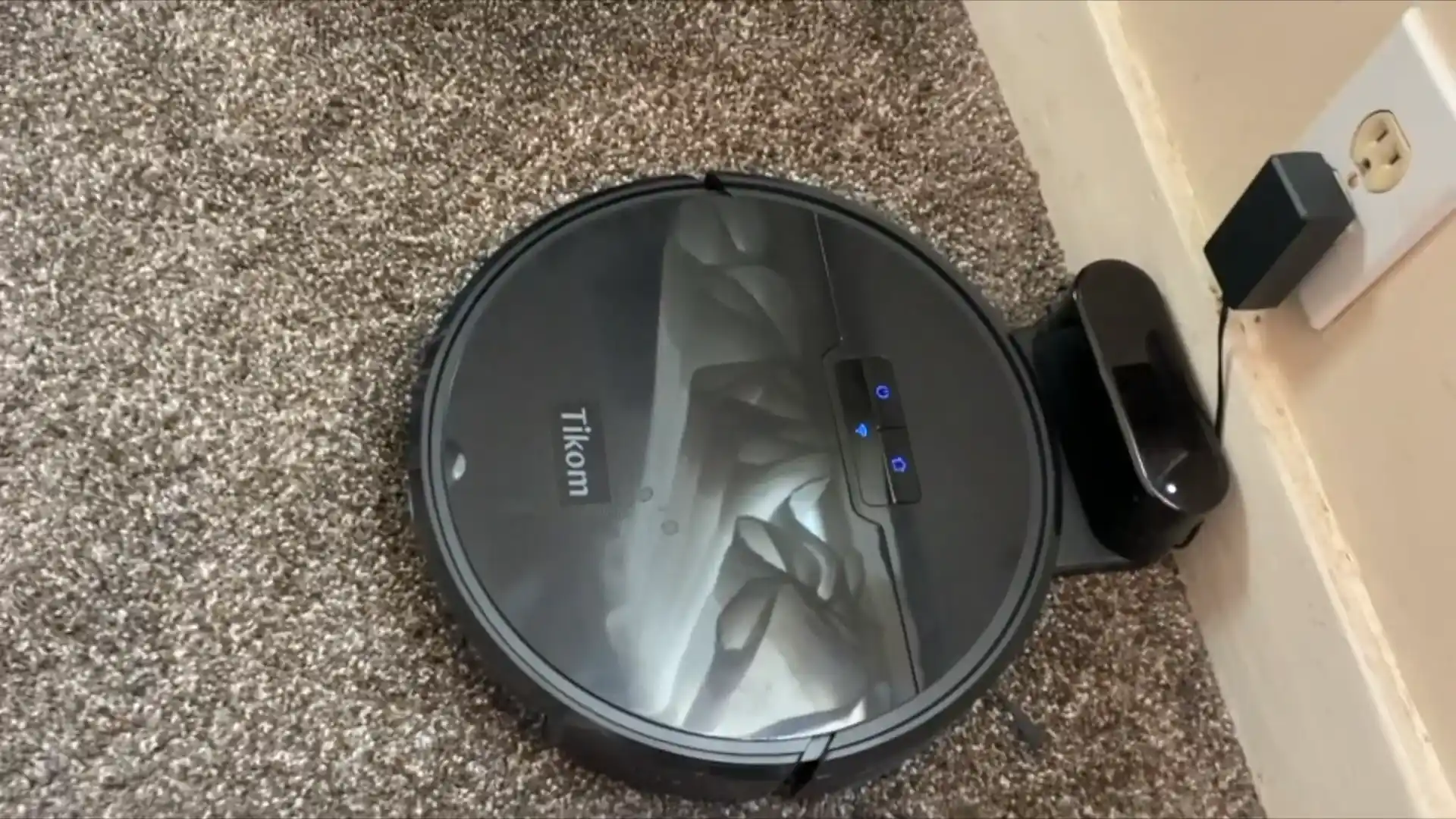
Best Simple Pick: Tikom Robot Vacuum G8000 Max
Not every garage needs a smart, app-connected, self-emptying robot. Sometimes you just want something that picks up dust and charges itself without costing a fortune.

- 5000Pa Strong Suction: Robot Vacuum With 5000Pa suction power, it effortlessly removes pet hair, dust, and debris from all types of floors. It can also easily clean on short-pile & medium-pile carpets
- Vacuum & Mop in One Go: G8000 Max robot vacuum is equipped with 450 ml dustbin and 300 ml water tank combo, it supports simultaneous vacuuming and mopping in one go. The innovative design reduces cleaning time by 50%, enhancing household efficiency
Pros and Cons
| Pros | Cons |
|---|---|
| Strong suction for the price | Limited pet hair capability |
| Self-charging | No auto-empty dock |
| Decent 150-minute runtime | |
| Good hard floor performance | |
| Budget-friendly entry point |
Testing Results
Suction and debris pickup: Handled everyday dust and light debris fine. It struggled more than the higher-suction models when faced with denser sawdust piles.
Obstacle handling: Basic sensors only. It avoided large objects but bumped into smaller clutter rather than stopping ahead of it.
Navigation: Good basic navigation for the price tier, though not LiDAR-based, so mapping is less precise.
Noise level: 61 dB, comparable to most budget robots.
Maintenance: Manual dustbin, 0.6L capacity. Expect to empty this more frequently in a garage than in a typical living room.
Real-world Usage
This is a no-frills pick. We ran it weekly on a single-car garage with light to moderate dust, and it kept up fine without needing daily attention.
It is not the robot to reach for after a major workshop project with heavy sawdust. For that, one of the stronger-suction picks above will save you frustration.
Best Use Case
Smaller garages or light, routine dust and debris. Good entry point if you are testing whether a robot vacuum makes sense for your garage before investing in a premium model.
Not a fit for heavy, regular workshop debris or garages with lots of small scattered clutter.
Verdict
This is an honest budget pick. It will not wow you with suction numbers or smart features, but it gets routine dust handled without asking much of you or your wallet.
If your garage doubles as a small workshop or storage space, our best robot vacuum for small apartments guide covers similarly compact, budget-friendly models that work well in tight footprints.
Rating: 3.9 / 5
View on Amazon: Tikom Robot Vacuum G8000 Max
Best Low Maintenance: Shark Matrix Clean AV2511AE
A mop pad dragging through garage dust, oil residue, or sawdust is not something most people want. This one skips mopping entirely and focuses on long-interval, low-maintenance vacuuming instead.
No products found.

Pros and Cons
| Pros | Cons |
|---|---|
| 60-day bagless self-empty base | Vacuum-only, no mopping |
| Matrix Clean multi-pass navigation grid | Weaker obstacle avoidance than camera-based flagships |
| 360-degree LiDAR mapping | |
| Self-cleaning anti-hair-wrap brushroll | |
| True HEPA filtration |
Testing Results
Suction and debris pickup: Strong airflow, tested above average against competing robots. Handled dust and lighter debris cleanly across multiple passes.
Obstacle handling: Comparable to other Shark models, not a standout. It avoided larger furniture-style obstacles but was less precise around small clutter.
Navigation: The Matrix Clean grid pattern gave thorough coverage, useful for garages with an open, unobstructed floor plan.
Noise level: Quiet operation during our testing, comfortable for use near attached living space.
Maintenance: The 60-day bagless base is the headline feature. For a garage that generates moderate, steady debris, this cuts maintenance down significantly.
Real-world Usage
The lack of a mop is actually the point here. No water tank means no risk of mixing oil residue or fine sawdust into a wet mess on the floor, which is a real concern with combo units in a garage setting.
The 60-day base lived up to its claim during our test period, though heavier debris days will shorten that window.
Best Use Case
Garages with open floor plans and moderate, steady dust and debris. Especially good if you specifically want to avoid mopping near tools, oil spots, or unsealed concrete.
Skip this if your garage floor regularly has small scattered parts. The obstacle avoidance is not built for spotting tiny clutter.
Verdict
Vacuum-only is a feature here, not a limitation, especially for garage floors where introducing water is more risk than benefit. The 60-day base genuinely reduces how often you think about maintenance.
If your garage shares a wall with a bedroom or office, our quietest robot vacuum for pet hair article covers noise levels across several other models worth comparing.
Rating: 4.3 / 5
View on Amazon: No products found.
What Makes the Best Robot Vacuum for Garage Floors?
Suction Power
Garage debris is heavier and coarser than household dust. Sawdust, drywall dust, dried mud, and small gravel all need stronger suction than carpet lint or pet hair.
Look for suction ratings above 10,000 Pa if your garage doubles as a workshop. The DREAME L40 Ultra Gen 2 and MOVA V50 Ultra both led our testing on raw pickup power, and it showed in how cleanly they handled denser debris.
Lower suction models like the Tikom G8000 Max still work fine for light, routine dust. Just expect to run them more often if debris builds up quickly.
Obstacle and Clutter Handling
Garage floors rarely stay perfectly clear. Tools, extension cords, small parts, and uneven thresholds are common, and most robot vacuums are not built with that in mind.
The MOVA V50 Ultra stood out here with a chassis built to climb obstacles up to 60mm, which covers most door sills and garage door tracks. Models relying on basic sensors, like the budget picks on this list, will avoid large items but may bump into or miss smaller clutter entirely.
If your garage floor is genuinely messy on a regular basis, clear a path before each run regardless of which robot you choose. No robot vacuum handles loose small parts reliably yet.
Mopping vs Vacuum-Only
This matters more in a garage than almost any other room. Mopping introduces water to a surface that may have oil residue, unsealed concrete, or fine sawdust that turns into paste when wet.
The Shark Matrix Clean AV2511AE skips mopping entirely, which we consider a genuine advantage for garage use rather than a missing feature. Combo units like the eufy C28 2026 and DREAME L40 Ultra Gen 2 include mopping, but we recommend running them in vacuum-only mode unless your garage floor is sealed and clean.
Maintenance and Bin Capacity
Garages generate debris faster than living rooms. A small manual dustbin that needs emptying every day or two gets old fast.
Auto-empty docks solve this. The Shark Matrix Clean AV2511AE goes up to 60 days between empties, and the eufy C28 2026 includes a full 5-in-1 automated dock. Budget picks without auto-empty, like the roborock Q7 L5 and Tikom G8000 Max, will need more hands-on attention if your garage sees regular workshop use.
Noise Level
Garages are often attached to living spaces, sometimes directly below a bedroom or next to a home office. A loud robot running mid-day is more noticeable than people expect.
The eufy C28 2026 measured the quietest in our testing at 54.89 dB. If noise is a real concern, prioritize models in the 55 to 62 dB range over louder budget options.
How to Use a Robot Vacuum Effectively in a Garage
Clear large clutter before each run. Tools, cords, and bigger debris should be picked up first since most robot vacuums, even the better ones here, are not reliable at navigating around small scattered objects.
Run in vacuum-only mode if your floor has any oil residue or is unsealed concrete. Mopping on a surface like that creates more mess than it solves.
Set a consistent schedule rather than running it only after a big mess. Daily or every-other-day runs on light debris keep the bin and brushroll from getting overwhelmed by buildup.
Check the brushroll and filter more often than you would in a living room. Garage debris like sawdust and fine grit clogs filters faster than household dust.
Frequently Asked Questions
Can a robot vacuum handle a concrete garage floor?
Yes, most robot vacuums handle bare or sealed concrete fine since it counts as a hard floor surface. The bigger factor is debris type and volume, not the concrete itself. Models with stronger suction, like the DREAME L40 Ultra Gen 2, handle coarse debris like sawdust and grit more reliably than lower-suction budget picks.
Will a robot vacuum pick up sawdust?
Yes, but suction power matters a lot here. Fine sawdust behaves differently than household dust and can clog weaker filters faster. Higher suction models on this list handled sawdust in a single pass, while budget options sometimes needed two passes for denser piles.
Should I use the mop function in my garage?
Generally no, unless your floor is sealed and free of oil or grease residue. Mixing water with garage grime tends to create more mess than it solves. The Shark Matrix Clean AV2511AE skips mopping entirely, which is one reason we recommend it for garages with any oil exposure.
Are robot vacuums durable enough for garage use?
Most are built for indoor household floors, not heavy industrial debris. They work well for dust, light sawdust, and everyday workshop mess, but a shop vac is still the better tool for major construction cleanup or wet spills. Our best shop vac guide covers options built specifically for that heavier-duty work.
Do I need LiDAR navigation for a garage?
It helps, especially in larger garages or ones with a workbench and other fixed obstacles. LiDAR-equipped models like the roborock Q7 L5 and Shark Matrix Clean AV2511AE mapped consistently across multiple runs, which matters more in a garage layout that does not change room to room like a house does.
What is the best robot vacuum for a garage with pets that come in and out?
Look for models with strong anti-tangle brushes, since pet hair tracked in from outside mixes with garage dust differently than indoor carpet hair. Our best robot vacuum for pet owners roundup covers that specific combination in more depth.
Can a robot vacuum replace a shop vac in a garage?
No, they serve different purposes. Robot vacuums are best for routine maintenance cleaning on dry debris, while a shop vac handles wet spills, heavy construction debris, and anything too large or dense for a robot’s brushroll. Most garage owners benefit from having both rather than relying on one.