Steam Mop vs Spin Mop: Which Is Worth Your Money?
The steam mop vs spin mop debate comes up a lot, and honestly, there’s no single “winner” here. It depends on your floors, your lifestyle, and how much effort you want to put in. Let’s break it all down so you can stop guessing and just get clean floors.
Table of Contents
How Each Mop Actually Works
Before comparing results, it helps to understand what you’re dealing with. These two mops work in completely different ways.
How a Spin Mop Works
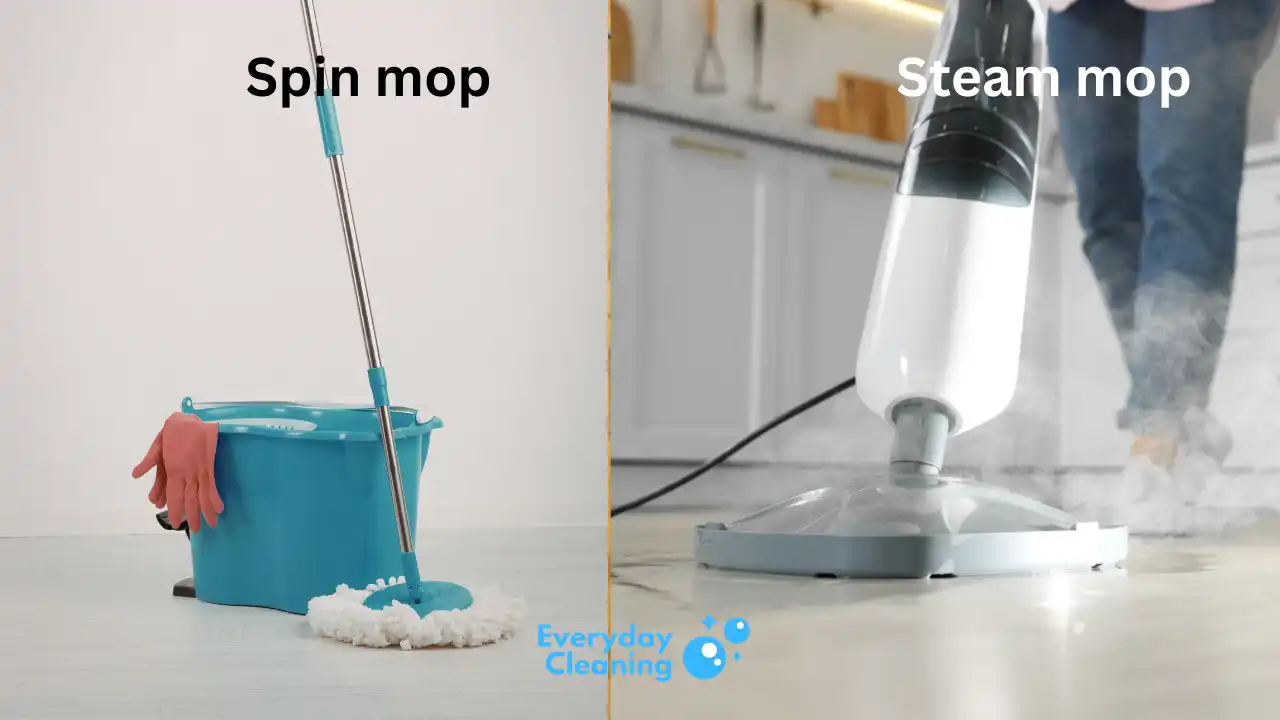
A spin mop uses a microfiber or cotton mop head that you wet with your own cleaning solution, then wring out using a foot-pedal or hand-press bucket mechanism. The spinning action removes excess water so the mop is damp but not soaking. You push it around the floor, the mop head picks up dirt, and when it gets too dirty, you rinse it in the bucket and spin again.
It’s a manual process, but it gives you full control over what cleaning product you use and how wet the floor gets. Great for anyone who has their own preferred floor cleaner or likes to add a little vinegar to the mix.
How a Steam Mop Works
A steam mop heats water in a built-in tank and releases hot steam through a microfiber pad. That steam loosens dirt, kills bacteria, and sanitizes the surface without any chemical cleaner. You plug it in, wait a minute or two for it to heat up, and then glide it across your floors. The pad absorbs the loosened grime as you go.
Because it uses heat instead of chemicals, it’s especially good for households with kids, pets, or allergy sufferers. But it does leave some moisture on the floor, and not every floor type handles steam well. If you’re cleaning hardwood or certain types of laminate, you need to be careful. We’ve put together a detailed guide on the best steam mops for wood floors if that’s your situation.
Steam Mop vs Spin Mop: Side-by-Side Comparison
Here’s a quick breakdown to help you see the differences at a glance.
| Feature | Steam Mop | Spin Mop |
|---|---|---|
| Average Price | $50 to $200+ | $20 to $60 |
| Cleaning Method | Hot steam (no chemicals needed) | Damp mopping with your own cleaner |
| Effort Required | Low (plug in and go) | Moderate (rinsing, wringing, refilling bucket) |
| Sanitizing Power | High (kills bacteria and dust mites) | Depends on cleaning solution used |
| Floor Compatibility | Tile, sealed hardwood, laminate (check label) | Most floor types including unsealed wood |
| Drying Time | 5 to 15 minutes | 10 to 30 minutes (depends on how wet mop is) |
| Chemical-Free | Yes | No (but you choose what to use) |
| Maintenance | Replace pads, descale tank occasionally | Wash mop head, clean bucket |
| Best For | Deep cleaning, sanitizing, tile floors | Daily cleaning, budget-friendly, versatile use |
Which Is Better for Tile Floors?
If your home has tile floors, especially in the kitchen or bathroom, a steam mop is going to impress you. Steam gets into grout lines and lifts built-up grime that a regular mop just pushes around. You don’t have to scrub nearly as hard, and the sanitizing power is a real bonus in rooms where moisture and bacteria love to hang out.
Tile is also durable enough to handle the heat and moisture from steam without any damage. If you’ve been struggling to keep grout looking clean, check out our roundup of the best steam mops for tile floors and grout to find one built for that job.
A spin mop will still clean tile just fine for everyday maintenance. If you’re not dealing with deeply stained grout and just need to wipe up daily messes, a spin mop with a good cleaner gets the job done without the electric plug.
Which Is Better for Hardwood Floors?
This one’s trickier. Hardwood floors and too much moisture don’t mix well. A spin mop can actually be safer here because you have more control over how wet the mop head is. A well-wrung spin mop leaves just a thin layer of moisture that evaporates quickly.
Steam mops on hardwood are fine only if the floor is sealed and the mop has a low-moisture or hardwood-safe setting. Even then, you want to keep passes quick and not linger in one spot. The heat and steam can warp or dull the finish on unsealed or delicate wood over time.
If you do want to go the steam route on hardwood, make sure you’re using one designed for it. Our guide to the best steam mop for hardwood floors covers which models handle wood safely.
What About Laminate?
Laminate is even more moisture-sensitive than hardwood. A lightly wrung spin mop works well here. For steam, you need a mop with a very low moisture output setting and you should move quickly. Many laminate manufacturers actually void warranties if steam cleaning is used, so worth checking before you commit. If you’re set on using steam on laminate, this guide on steam mops for laminate floors helps you pick one that won’t cause damage.
Water Usage and Drying Time
If you hate waiting for floors to dry before the kids or pets walk through, this section matters.
- Steam mops tend to dry faster than you’d expect. Because the steam is hot, it evaporates quickly. Most floors are dry within 5 to 15 minutes. Some models with adjustable steam output dry even faster on lower settings.
- Spin mops dry more slowly because you’re applying actual liquid water to the floor. Even when well wrung, the floor stays damp longer, anywhere from 10 to 30 minutes depending on how much water was in the mop head and how porous the floor surface is. The trick is to wring it as thoroughly as possible before mopping, which the spin bucket helps with but still requires some technique.
In terms of total water used, spin mops require a full bucket of water while steam mops only use the water in their tank (usually 10 to 30 ounces). For eco-conscious households, steam comes out ahead on water efficiency.
Maintenance and Ease of Use
Neither mop requires a lot of upkeep, but they’re different kinds of work.
Spin Mop Maintenance
- Rinse the mop head after each use
- Machine wash the mop head regularly (most are machine washable)
- Empty and rinse the bucket to prevent mildew buildup
- Replace the mop head every few months depending on use
The bucket is the most annoying part. You have to carry it to the sink, fill it, carry it to the floor, and then dump it when you’re done. It’s not hard, but it’s more steps than most people want for a quick clean.
Steam Mop Maintenance
- Swap out the microfiber pad after each session (most come with 2 to 4 pads)
- Machine wash the pads
- Descale the water tank every month or two if you have hard water (a mix of water and white vinegar run through the tank works well)
- Store with the tank empty to prevent mineral buildup
Steam mops are easier to use in the moment. Plug in, heat up, mop. No bucket to carry. The descaling step can catch people off guard if they forget it, but it only takes a few minutes every couple of months.
Price: What You Actually Pay
Spin mops win on upfront cost, no question. A decent spin mop with a bucket costs $20 to $50. You can find solid options for under $30 that hold up well with regular use. Replacement heads are inexpensive too, usually a few dollars each.
Steam mops start around $50 on the low end and go well past $200 for feature-rich models. If you’re watching your budget but still want the benefits of steam cleaning, it’s worth looking at what a budget-friendly steam mop can realistically offer before dismissing the category entirely.
Over time, the spin mop costs more in cleaning solution and mop heads, while the steam mop just needs water and occasional pad replacements. The long-term cost difference tends to be small.
Who Should Buy Which
Get a Steam Mop If:
- You have tile floors with grout that needs deep cleaning
- You want to sanitize without chemicals (especially with kids or pets at home)
- You’re willing to spend more upfront for less effort over time
- You deal with allergens, bacteria, or dust mites regularly
- You don’t want to deal with a bucket and cleaning solution
Get a Spin Mop If:
- You have multiple floor types including unsealed or sensitive hardwood
- You’re on a budget and need something that works right now
- You like using your own preferred cleaning product
- You clean frequently and want something low-fuss to maintain
- You don’t want to wait for a machine to heat up before you can start
What If You Can’t Decide?
Some people end up with both. A spin mop for everyday quick passes and a steam mop for weekly deep cleans. It’s not a crazy approach if you have a larger home or mixed floor types. That said, if you can only pick one and your home is mostly tile or sealed hard flooring, a steam mop earns its keep quickly. If your floors are more sensitive or varied, a spin mop gives you the flexibility you need without the risk.
The steam mop vs spin mop decision really comes down to your floors and your cleaning habits. Neither tool is universally better. But knowing exactly what each one does well means you won’t end up with buyer’s remorse either way.