Vacuum Cleaner Buying Guide: What to Actually Get

Table of Contents
Most people buy the wrong vacuum not because they picked a bad brand, but because they picked the wrong type for how they actually live. Here is how to get it right the first time.
What Type of Home Do You Have?
Before anything else, this is the real decision. Every other spec is secondary.
Mostly hard floors (hardwood, tile, LVP)?
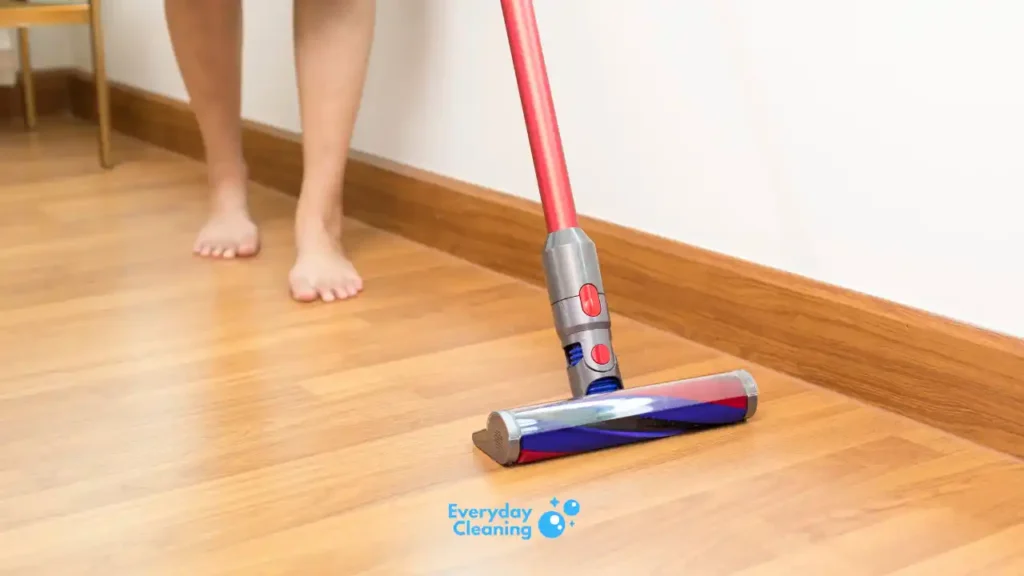
Get a cordless stick. Full stop. Uprights are overkill for hard floors and the constant cord is genuinely annoying when you are just doing a quick sweep. A good cordless on hard floors feels like a completely different experience from what most people expect from a vacuum.
The only time you should skip the cordless: if your home is large (2,000+ sq ft) and you vacuum every room in one go. Battery life becomes a real problem at that scale.
For specific picks, see our roundup of the best cordless stick vacuum cleaners.
Mostly carpet or thick rugs?

You need an upright or a canister with a powered brushroll. Cordless stick vacuums struggle to pull deeply embedded dirt out of carpet. They work fine for surface-level debris, but if you have medium-to-thick pile, you will be disappointed.
A corded upright is not glamorous. It is also genuinely better at carpet than anything cordless under $500. If carpet is your main surface, own that decision.
See our best upright vacuum cleaners for pet hair if pets are in the picture.
Mixed floors (some hard, some carpet)?
This is the most common situation and also the most overengineered. Most people in this category buy a cordless for quick daily cleaning and keep a cheap corded upright for a deeper carpet clean once a week. Two cheap vacuums often beat one expensive all-rounder.
If you want one vacuum that does both reasonably well, look at a mid-range cordless with a motorized floorhead. It will handle both surfaces well enough for most households. Just do not expect carpet performance to match a dedicated upright.
Our guide on vacuums for tile floors and carpet covers the best options for mixed-floor homes.
The 5 Types: Honest Takes
Cordless Stick Vacuums
The default choice for most modern homes and for good reason. Lightweight, fast to grab, easy to store. The trade-off is battery life (30 to 60 minutes depending on mode) and suction that does not match a corded machine.
Get one if: You vacuum little and often, live in an apartment or smaller home, or have mostly hard floors.
Skip if: You have a large home with wall-to-wall carpet, or you need to vacuum multiple floors in one session without stopping.
Upright Vacuums
Heavy. Powerful. Great at carpet. They feel like a chore to get out, which is exactly why most people vacuum less often with them. But for deep carpet cleaning, nothing in the cordless world at the same price comes close.
Get one if: Carpet is your primary surface and you want the most suction for the money.
Skip if: You have mostly hard floors or hate dealing with a cord.
Canister Vacuums
Underrated. The canister body rolls behind you while a lightweight wand does the actual cleaning. This makes them easier to maneuver than uprights and surprisingly effective on both hard floors and carpet. Great for stairs.
Get one if: You have stairs, lots of furniture to vacuum around, or you want versatility without going cordless.
Skip if: You want simple grab-and-go convenience. Canisters take a minute to set up and store.
For a full comparison, see the best canister vacuum cleaners.
Robot Vacuums
The job of a robot vacuum is not to replace your main vacuum. It is to keep your floors from getting visibly dirty between real cleans. If you set that expectation correctly, they are genuinely useful. If you expect them to deep-clean carpet, you will be annoyed.
Get one if: You want daily floor maintenance without thinking about it, especially on hard floors.
Skip if: Your floors are cluttered, you have thick rugs, or you are hoping to replace manual vacuuming entirely.
See the best robotic vacuum cleaners and best robot vacuums for busy families for specific picks.
Handheld Vacuums
Not a main vacuum. A supplement. Good for car interiors, couch cushions, and crumbs on a kitchen counter. If you are considering a handheld as your only vacuum, reconsider.
Features That Actually Matter
Filtration
If anyone in your home has allergies or asthma, this is the most important spec on the list. A HEPA filter traps particles that a standard filter pushes back into the air. You will notice the difference.
For sealed-system HEPA models, see best vacuum cleaners with HEPA filters.
Bagged vs Bagless
Bagless is more convenient and costs less to run. Bagged is cleaner to empty because you are not opening a dust cup and releasing a cloud of fine particles. If allergy control matters, bagged is the better call. Most people go bagless and are fine with it.
Weight
Matters more than most product pages suggest. A 6-lb cordless feels completely different from a 3-lb one when you are carrying it upstairs or vacuuming overhead. If you have mobility issues or multiple floors, check the actual weight before buying.
For lightweight options, see best lightweight vacuum cleaners.
Suction Power (Pa ratings)
Ignore the Pa ratings in most cordless marketing. They measure peak suction in a lab setting, not what the machine pulls in real use. A better signal is whether the model has a motorized brushroll (not just suction alone) and how it performs specifically on your floor type.
Attachments
Most people use the floorhead and nothing else. The crevice tool gets used occasionally. Everything else collects dust in a drawer. Do not pay a premium for an attachment bundle you will not use.
How Much Should You Spend?
Under $100: You are in disposable vacuum territory. These work for a small apartment with hard floors and light use. Do not expect them to last more than a couple of years.
$100 to $250: The honest sweet spot for most people. You get reliable suction, decent build quality, and a motorized brushroll. Shark and Bissell do well here. This range covers most household needs without the premium brand markup.
$250 to $400: Where the good cordless machines live. Dyson V11/V12, Shark Stratos. Real performance, good battery life, proper filtration. Worth it if you vacuum often or have pets.
$400 and up: Diminishing returns for most households. You are paying for specific features like self-emptying bases, LiDAR navigation on robots, or top-tier suction. Justified if the feature genuinely solves a problem you have.
If You Have Pets
Pet hair changes the equation on almost every vacuum type. The brushroll is the thing that matters most here. A standard brushroll will wrap with long fur within minutes. Look for a rubber or anti-tangle brushroll specifically.
On carpet, pet hair gets pushed deeper into the pile and standard suction will not pull it out reliably. You need a motorized brushroll with real power behind it.
For cordless picks that handle pet hair well, see best cordless vacuum cleaners for pet hair. For general options across all vacuum types, our best vacuum cleaners for pet hair covers the full picture.
Frequently Asked Questions
What is the best vacuum cleaner for most people?
A mid-range cordless stick in the $150 to $300 range covers most households well. If you have carpet as your main floor and do not care about cord-free convenience, a corded upright in the same price range will outperform it. The “best” vacuum depends entirely on your floors and how often you vacuum.
Is Dyson worth the price?
For cordless vacuums, yes, if you are buying in the V11 range or above. The suction, filtration, and build quality are genuinely better than most competitors at the same price. Below that, you are mostly paying for the brand. A $150 Shark often performs comparably to a $250 Dyson for the same use case.
Do I need a separate vacuum for each floor type?
Not necessarily, but the two-vacuum approach (cheap cordless for daily use, corded upright for deep carpet cleaning) is cheaper than buying one premium machine that tries to do everything. It also means you actually use the right tool for each job.
How long should a vacuum cleaner last?
A decent corded upright or canister will last 8 to 10 years with basic maintenance. Cordless stick vacuums have a shorter lifespan because the battery degrades over time, typically 3 to 5 years before you notice a real drop in runtime. Battery replacement on some models extends that significantly.
Is a robot vacuum worth it?
If you have hard floors and hate the daily sweep, yes. If you expect it to deep-clean carpet or work in a cluttered space, no. Think of it as an automatic Swiffer, not a replacement for a real vacuum.
Bagged or bagless: which is better?
Bagless is more convenient. Bagged is cleaner to empty and better for allergy sufferers. If no one in your home has allergies, bagless is the easier choice. If someone does, the extra cost of replacement bags is worth it.