5 Best Steam Mops for Concrete Floors (Tested & Reviewed)
Editor’s note: I tested and wrote this article in May 2026 on the tile floors in my home. I’ll update it with additional products if I get the chance to test more in the future.



Concrete and sealed tile floors are unforgiving. The problem is, a standard steam mop often doesn’t cut it here. You need high heat and sustained steam pressure to break through that buildup quickly. Use a weak one, and you’ll be scrubbing back and forth for ages with frustrating results.
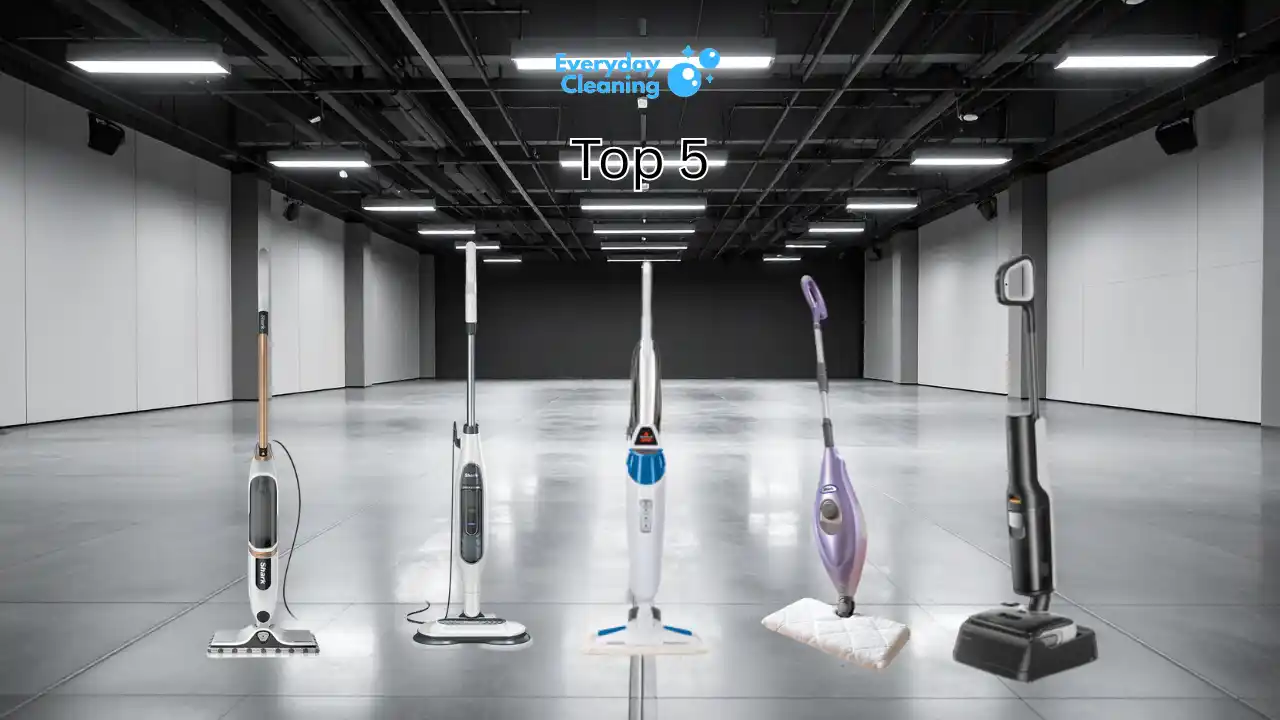
I’ve tested plenty of steam mops on my own floors, and below are the 5 that I think hold up best for long-term use on concrete and sealed tile surfaces.
Best Overall: Shark Steam & Scrub Steam Mop S8001
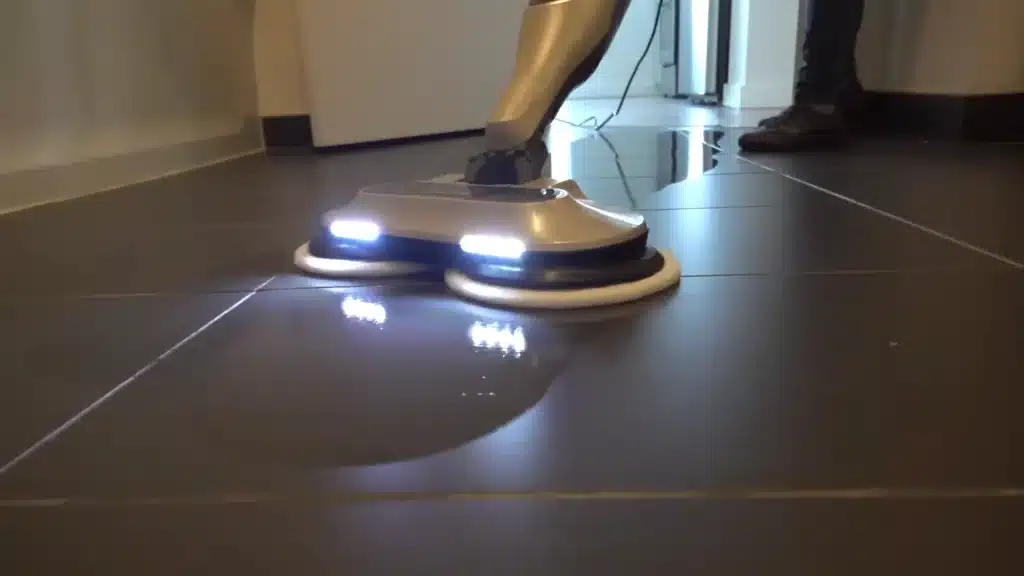
The Shark S8001 is my top pick for most people cleaning concrete or sealed tile floors at home. It combines rotating scrub pads with strong, consistent steam — the kind of combination that actually makes a dent in ground-in grime without you having to push hard. It’s easy to set up, comfortable to use for longer sessions, and the 3-step steam control gives you real flexibility.
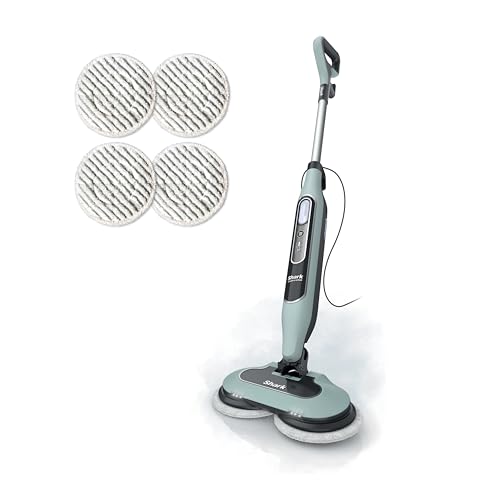
- SCRUBBING AND SANITIZING*: Tough on stains and gentle on floors. *To sanitize floors, be sure to completely follow the product’s directions for use. See sanitization instructions in Owner’s Guide for important details on sanitizing floors. Sanitization studies were conducted under controlled test conditions. See the Owner’s Guide for details on testing.
- 3 STEAM MODES: Light, for quick cleanups; Normal, for everyday use; and Deep, for stuck-on messes and stains.

Pros & Cons
| Pros | Cons |
|---|---|
| Rotating pads add physical scrubbing action | Water tank is on the smaller side for large areas |
| 3 steam modes for different messes | No handheld attachment |
| LED headlights illuminate debris | No steam lock for hands-free continuous steam |
| Machine-washable Dirt Grip pads (4 included) | |
| Removable tank for easy refills | |
| Swivel steering for maneuvering around furniture |
Testing Result
On my tile floors, the S8001 was one of the most satisfying to use. The rotating pads do something that most flat-pad steam mops just can’t — they actively work the grime loose rather than just pushing hot moisture over it. I used the Deep mode on a section near the kitchen doorway that always collects greasy footprints, and it cleared up in two or three slow passes. No repeat scrubbing needed.
You might see this one compared a lot to the Bissell SpinWave — both use rotating pads, and both clean well. But I chose the Shark for a few reasons. First, the steam output on the S8001 felt more consistent throughout the whole cleaning session. Second, the LED headlights are genuinely useful on floors with grout lines — you can actually see what you’re cleaning and whether you’ve missed a spot. Third, the Dirt Grip pads are noticeably more aggressive on texture while still being gentle enough not to worry about surface damage.
The one honest downside is the water tank capacity. For a large room, you might need one refill. But the removable tank design makes that a 30-second job, so it’s not a dealbreaker.
At around 6.9 pounds, it’s manageable for most people. For anyone who wants a reliable steam mop that really works on tile and grout, this is the one I’d hand to a friend without hesitation.
Buy now: Shark Steam & Scrub Steam Mop
Premium Choice: McCulloch MC1385 Deluxe
If the Shark S8001 is a strong everyday performer, the McCulloch MC1385 is in a different category altogether. This machine comes close to commercial-grade steam cleaning territory. At 58 PSI and with water heated to over 200°F, it generates the kind of sustained, high-pressure steam that breaks down layers of hardened grease and mineral residue that a standard upright mop can’t touch.

- CHEMICAL-FREE CLEANING — Naturally deep clean without the use of harsh chemicals using hot, pressured steam to eliminate grease, grime, and stains from a wide range of surfaces including tile, grout, granite, laminate, appliances, grills, autos, and more.
- 23 ACCESSORIES — Equipped for steam cleaning jobs in and around your home including a floor mop, mop pads, nylon brushes, brass brush, angled nozzle, scrub pad, scraper, squeegee, & more. Conveniently store accessories on-board or in included storage bag.

Pros & Cons
| Pros | Cons |
|---|---|
| 58 PSI steam pressure — near commercial grade | Takes 12 minutes to heat up |
| 64 oz tank = up to 120 minutes of continuous steam | Louder than upright steam mops |
| 23 accessories included | Higher price point |
| Variable steam dial + steam lock for hands-free cleaning | |
| 18-ft power cord + 7-ft steam hose | |
| Handheld capability for walls, grout, and fixtures |
Testing Result
On my floors, the difference was most obvious in the grout lines. I ran the Shark over them first, then followed up with the McCulloch’s narrow brush attachment — and it still pulled out additional grime. That says a lot about how deep this machine gets.
The 64-ounce water tank is the largest here, and 120 minutes of continuous steam means you can clean an entire home on a single fill. The 23 accessories also mean you’re not limited to floors — you can clean walls, bathroom fixtures, kitchen appliances, and even car interiors with the same machine. If you want to understand the difference between these two types of cleaners, this breakdown of steam mops vs. steam cleaners explains it well.
The trade-off is convenience. The canister design means you’re dragging a unit behind you, and the 12-minute heat-up time means you can’t just grab it for a quick 5-minute cleanup. This is a machine you bring out when you mean business. If your concrete floors are in a garage, workshop, or heavily used utility space — or if you’re dealing with years of buildup — the MC1385 is worth every dollar.
Buy now: McCulloch MC1385 Deluxe
Best Value: Shark SteamSpot Steam Blaster S2001
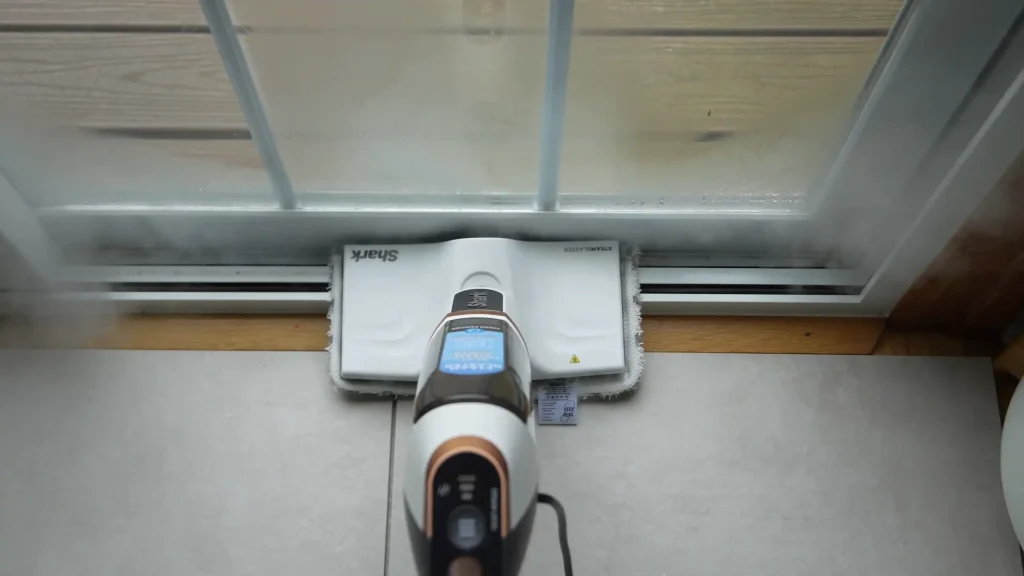
The Shark S2001 SteamSpot is the best all-around value on this list. It cleans well across multiple floor types, is lightweight enough that you won’t dread getting it out, holds up over time, and is priced competitively enough that it doesn’t feel like a compromise.

- POWERFUL PERFORMANCE: Combination of powerful steam, targeted steam blast, and textured pads provide up to 50% better stuck-on stain removal vs. a traditional steam mop*
- STEAM BLASTER TECHNOLOGY: A burst of targeted steam that is controlled at the touch of finger to provide even more steam power for stubborn spots and stuck-on messes.
Pros & Cons
| Pros | Cons |
|---|---|
| Steam Blaster trigger for targeted spot cleaning | Smaller water tank than the S8001 |
| Up to 50% better stain removal vs. traditional steam mops | Cord length shorter than some competitors |
| 3 steam modes + on-demand blast | No LED headlights |
| Very lightweight at 4.81 lbs | |
| Removable XL water tank | |
| Works on all sealed hard floors | |
| Machine-washable Dirt Grip pads |
Testing Result
What I like most about the S2001 is the Steam Blaster trigger. On most steam mops, if you hit a stubborn spot, your only option is to go over it more slowly or switch to a higher steam mode. The S2001 lets you squeeze a trigger to send a direct burst of steam right at that problem area. On concrete and tile, where you’ll regularly encounter spots with older, dried-on residue, this is a genuinely useful feature rather than just a marketing gimmick.
It’s also the lightest mop on this list at under 5 pounds — noticeably easier on your wrists and lower back compared to heavier models, especially when you’re cleaning a larger area.
I tested it on the same floor section as the other models, and performance was solid. It didn’t quite have the scrubbing aggression of the S8001’s rotating pads, but for general everyday cleaning and periodic deep cleaning, it handled everything I threw at it. The 3 steam modes are responsive, and the heat-up time is fast — you’re steaming within about 30 seconds.
For people who want something that performs well on a variety of sealed floors around the home — without spending a lot, the S2001 is a genuinely strong choice. It’s also worth mentioning that it performs well on vinyl and laminate, so if you have mixed flooring throughout your house, one mop handles everything.
Buy now: Shark SteamSpot Steam Blaster
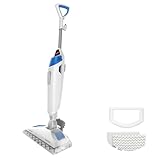
Best Budget: Bissell Steam Mop 1940A PowerFresh
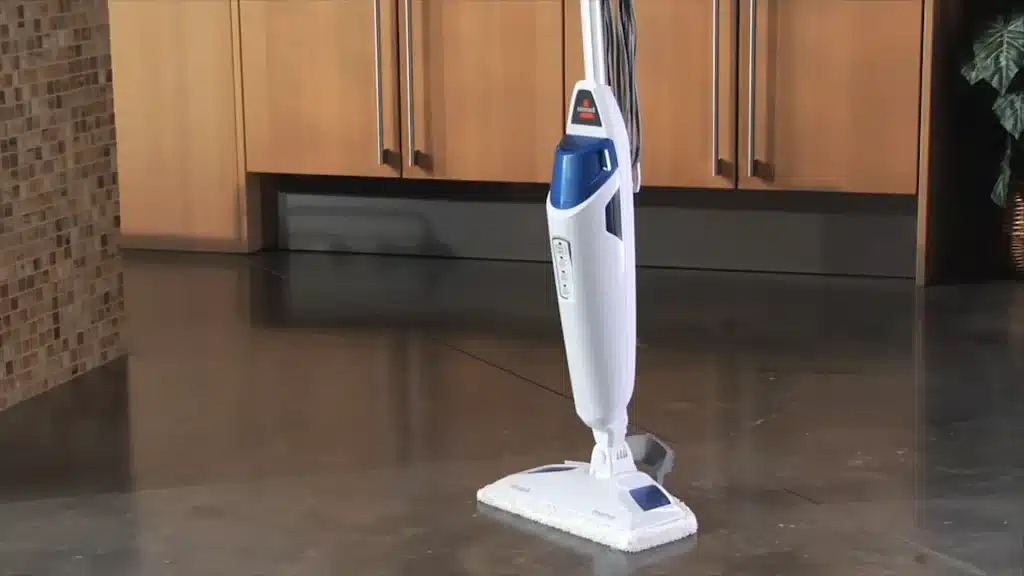
The Bissell PowerFresh 1940A is the pick for anyone who wants solid, reliable steam cleaning without spending more than they need to. It’s a proven model, widely used, and does a good job on sealed hard floors including tile and concrete. Not flashy, but dependable.
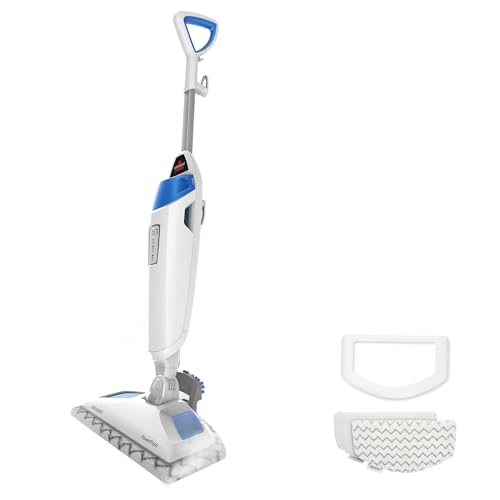
- SANITIZE WITH STEAM, NOT CHEMICALS. KILLS 99.9% OF GERMS, BACTERIA, & VIRUSES WHEN USED AS DIRECTED. Peace of mind for a cleaner home.
- BUILT-IN SCRUBBER FOR TOUGH GRIME. Flip down the Easy Scrubber to break up dried-on messes and grout buildup– no extra pressure required.
Pros & Cons
| Pros | Cons |
|---|---|
| Budget-friendly price | Elastic pad attachment can feel a bit fiddly |
| Long 23-ft power cord | No rotating or scrubbing pads |
| Removable water tank | Shorter run time at high steam setting |
| 3 steam modes | |
| Flip-down scrubbing tool for tough spots | |
| Fragrance disc compatibility for freshened floors | |
| Lightweight at 6.2 lbs |
Testing Result
The 1940A has been around for a while, and there’s a reason it still sells well. It’s a no-nonsense steam mop that heats up quickly, produces a steady stream of steam, and glides smoothly across hard floors. I used it on my tile with the middle steam setting and it cleaned everyday dirt and surface grime without any fuss.
Where it differs from the Shark models is the scrubbing capability. There are no rotating pads here — just a flat microfiber pad with a small flip-down scrubber you can deploy for tougher spots. On sealed concrete with normal surface dirt, this works fine. For deep-embedded grime or heavily textured surfaces, you’ll need more passes or a higher steam setting.
The 23-foot cord is genuinely impressive for a budget model — it’s one of the longest on this list, which means fewer outlet changes when cleaning a large space. The removable water tank is also a nice touch at this price point.
If you’re just getting started with steam cleaning, or if your floors are regularly maintained and just need a reliable refresh tool, the 1940A is a smart buy. For a deeper dive into how it holds up against Shark’s lineup, this Bissell vs. Shark steam mop comparison is worth a read before you decide.
Buy now: BISSELL Steam Mop 1940A PowerFresh
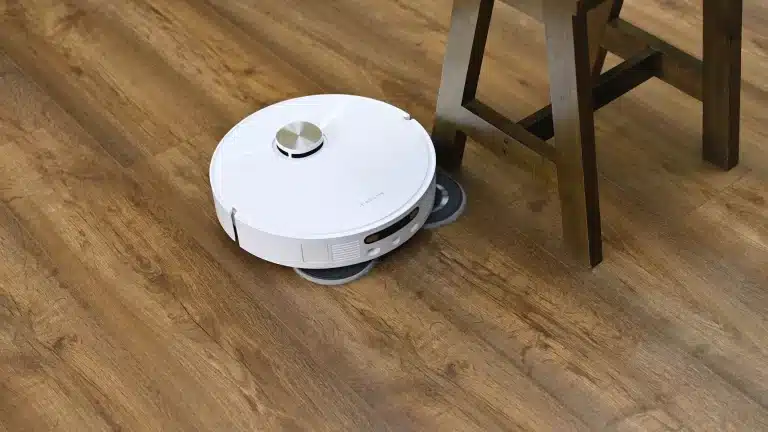
Best Vacuum Mop Combo: Roborock F25 Ultra
The Roborock F25 Ultra is a completely different category of cleaning tool. It vacuums, mops, and steams simultaneously — all in one cordless pass. If you want to reduce the number of steps in your floor cleaning routine, this is the most capable machine on this list.
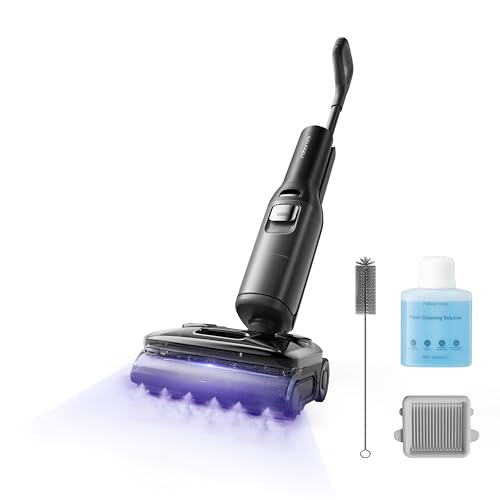
- Revolutionary 356℉ Steam & 187℉ Hot Water Cleaning: Experience powerful deep cleaning with this cordless steam vacuum cleaner. The 356℉ steam lifts dried messes, while 187℉ hot water breaks down grease and sticky spills. Perfect for tile, vinyl plank, hardwood, and laminate floors, it leaves kitchens and dining areas fresh, spotless, and effortlessly maintained.
- Blue Light for Hidden Debris Detection: Bright blue light reveals dust, crumbs, and fine particles on dark or hard-to-see surfaces like hardwood, vinyl, tile, and laminate. Spot every mess with confidence and precision. Perfect for thorough cleaning in kitchens, dining areas, and living spaces, making daily floor care simple, effective, and stress-free.
Pros & Cons
| Pros | Cons |
|---|---|
| 180°C steam mode for deep sanitization | Highest price on this list |
| 22,000 Pa suction — vacuums and mops at the same time | Overkill for small homes |
| Self-cleaning and self-drying dock | Takes longer to set up initially |
| 60-min battery life, 1L clean water tank | |
| App control + AI-enhanced SlideTech 2.0 wheels | |
| Blue light illuminates dust and fine particles | |
| 180° lay-flat design reaches under furniture |
Testing Result
Testing the F25 Ultra was eye-opening. This isn’t just a steam mop — it’s a complete floor cleaning system. The 180°C steam mode genuinely surprised me with how quickly it loosened residue that other mops had to work hard to remove. Combined with the 22,000 Pa suction that picks up dry debris at the same time, you effectively clean your floor in a single pass rather than vacuuming first and then mopping.
On concrete-like sealed tile, the steam output was powerful and consistent. The SlideTech 2.0 dual-motor wheel system made it surprisingly easy to maneuver for such a heavy machine — it pivots smoothly and responds almost instantly when you change direction.
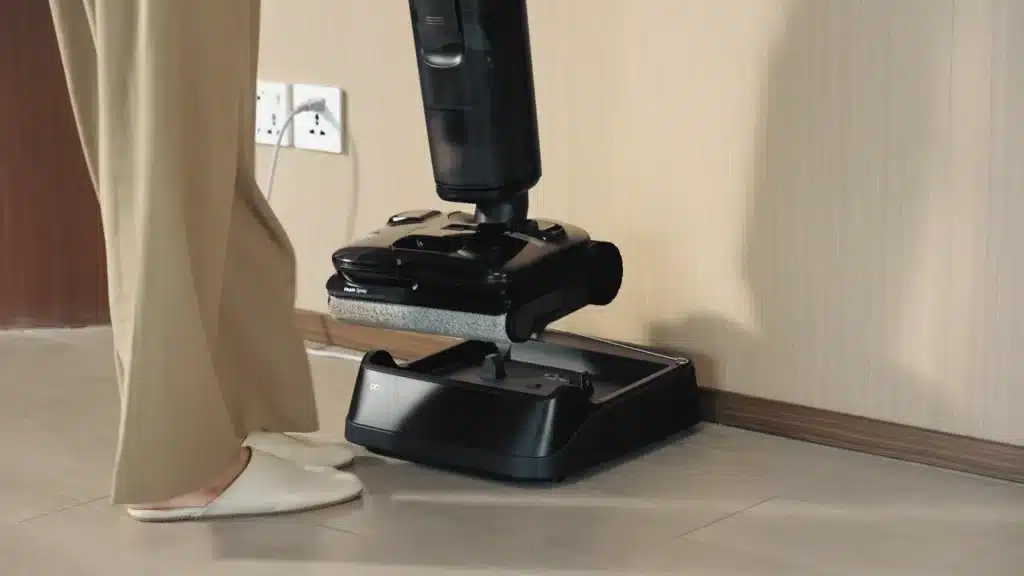
The self-cleaning dock is something you’ll appreciate after the first use. Instead of wringing out or rinsing a pad by hand, you just dock the machine and it cleans the roller with hot water automatically. That kind of low-maintenance design makes a real difference when you’re cleaning regularly.
The price is high, no question. But if you have large areas of concrete or hard floors and want a machine that handles vacuuming and deep steam cleaning in one go, the F25 Ultra delivers. It’s also worth noting that, unlike a traditional steam mop, it’s cordless — which makes a surprising difference in how free and natural it feels to use in a large space. If you’re still figuring out which type of cleaner suits your home, this guide on the key differences between steam mops and steam cleaners may help you decide.
How I Tested
I tested all five of these steam mops on the tile floors in my home in May 2026. The floors are sealed ceramic tile with standard grout lines — similar in texture and density to polished concrete, which made them a fair testing surface.
For each mop, I ran the same set of tests:
- Everyday grime test — standard foot traffic dirt and light dust that had built up over a week. I ran each mop over the same stretch of floor using the medium or normal steam setting.
- Stuck-on stain test — I placed small amounts of dried cooking oil and sugar solution on the floor and let them sit for 2 hours before cleaning. This tested how well each mop handled the kind of stubborn spots common on kitchen and entryway concrete.
- Grout line test — I focused the steam on grout lines to see how well each mop penetrated the narrow grooves. This is where pressure and temperature really matter.
- Extended use test — I ran each mop for 15–20 minutes continuously to check for steam consistency, pad performance after saturation, and any drop in steam pressure over time.
- Ease of use — I paid attention to heat-up time, weight over a full session, cord manageability, and how easy it was to refill the water tank mid-clean.
Each mop was evaluated on its own merits and scored based on cleaning performance, usability, and suitability for long-term use on hard, sealed surfaces.
What to Look for When Buying a Steam Mop for Concrete Floors
Concrete is one of the tougher surfaces for a steam mop. Here’s what actually matters:
Steam pressure and temperature This is the single most important factor. Standard steam mops produce steam at relatively low pressure — enough for light cleaning on smooth floors. For concrete and heavily textured sealed surfaces, you want a mop that reaches and sustains high steam temperatures (ideally 200°F / 93°C or above). Higher pressure means the steam penetrates deeper into surface pores and grout lines instead of just sitting on top.
Scrubbing capability Plain flat pads work for light dirt. If your concrete floors see heavy use or haven’t been cleaned deeply in a while, look for a model with rotating pads, a built-in scrubber, or a Steam Blaster-type function that concentrates steam on tough spots.
Steam modes Three adjustable steam levels give you real control. Low for quick maintenance, high for deep cleaning — being able to dial this in means you’re not overusing heat on areas that don’t need it, and not under-powering in the spots that do.
Water tank size Larger concrete areas, garages, or open floor plans need a bigger tank. The McCulloch’s 64 oz tank gives you up to 2 hours. Smaller models like the Bissell 1940A hold 16 oz and will need refills during a full clean. Removable tanks make refilling much easier.
Pad quality Microfiber pads that are machine-washable save you money long-term. Tighter-looped or textured pads grip better on rough surfaces. Look for pads that are described as “Dirt Grip” or textured rather than plain soft microfiber — those make a noticeable difference on concrete and tile.
Weight and maneuverability A heavier mop isn’t always a bad thing — it can add useful downward pressure on stubborn areas. But for long cleaning sessions, anything over 7–8 pounds can get tiring. Consider your floor size and how long you’ll typically be cleaning at one stretch.
Corded vs. cordless Corded mops give you unlimited runtime and consistent steam — no battery anxiety. Cordless models like the Roborock F25 Ultra offer freedom of movement but come at a higher price. For most home use, a corded model with a long cord (18+ feet) is more practical. If you’re comparing your options more broadly, it helps to look at what’s currently available across the full range of steam mop types before making a final call.
How to Use a Steam Mop Effectively on Concrete Floors
Getting the most out of your steam mop on concrete is about technique as much as equipment. Here’s what works:
Step 1: Sweep or vacuum first Never skip this step. Steam mops are not designed to pick up loose debris — they push it around or turn it into muddy residue. A quick vacuum or sweep before steaming makes a significant difference in how clean the floor ends up.
Step 2: Check your floor is sealed Steam should only be used on sealed concrete. Unsealed concrete is porous and can absorb moisture, which may cause issues over time. If you’re unsure whether your concrete is sealed, drip a few drops of water on it — if it beads up, it’s sealed; if it absorbs in, it’s not.
Step 3: Pre-treat stubborn spots if needed For older, set-in stains, do a quick dry pass with a scraper or stiff brush before using the steam mop. This breaks the surface of the stain so steam can penetrate it more effectively.
Step 4: Use the right steam level Start on medium and only move to high if needed. High steam is great for deep cleaning but uses water faster and may saturate the pad more quickly.
Step 5: Move slowly over dirty areas Slow, deliberate passes give the steam more time to work. On very dirty sections, two slow passes will almost always outperform four quick ones.
Step 6: Overlap your passes slightly This is especially important on concrete or tile where grout lines run in all directions. Overlapping ensures you don’t leave a streak or miss a section.
Step 7: Change or flip the pad when it’s dirty A saturated, dirty pad spreads grime rather than lifting it. If your pad looks dark or soggy, change it or flip it before continuing.
Step 8: Let the floor dry before walking on it Steam-cleaned floors dry quickly — usually within a few minutes — but walking on a damp sealed floor can pick up dust and leave marks. Give it 3–5 minutes and the surface will be dry and clean.
FAQs
1. Can I use a steam mop on unsealed concrete floors?
No — or at least, not recommended. Steam forces moisture into the floor surface, and unsealed concrete will absorb it. This can weaken the concrete over time, encourage mold growth in the pores, or cause surface staining. Always confirm your floor is sealed before using a steam mop. If it’s not, consider a regular mop with a concrete-safe cleaner instead.
2. What temperature should a steam mop reach for concrete?
For effective cleaning on concrete and sealed tile, aim for a steam temperature of at least 200°F (93°C). Higher-pressure models like the McCulloch MC1385 reach this easily. Most quality upright steam mops also hit this range on their highest steam setting.
3. How often should I steam mop concrete floors?
For most households, once a week is a good rhythm. High-traffic areas like entryways or kitchens may benefit from twice weekly. The advantage of steam is that it sanitizes as well as cleans, so regular use keeps bacteria and grease from building up over time.
4. Can I add vinegar or cleaning solution to my steam mop?
Most manufacturers say no, and for good reason. Vinegar and cleaning chemicals can damage the internal seals and heating element, and may void your warranty. Plain water is all you need — the heat does the work. A few models (like the Roborock F25 Ultra) have separate detergent compartments designed for approved cleaning solutions.
5. Is a canister steam cleaner better than an upright steam mop for concrete?
For heavy-duty or commercial-grade cleaning, yes. Canister models like the McCulloch MC1385 produce higher steam pressure and include brush attachments that can really work into grout and textured surfaces. For regular home maintenance, an upright steam mop is more convenient and easier to store.
6. How do I prevent streaks when steam mopping concrete floors?
Streaks usually happen when the pad is too wet or dirty, or when you’re using too much steam for the floor condition. Use the lowest effective steam setting, change pads when they’re heavily soiled, and always do an initial dry sweep before mopping. Moving slowly in one direction (rather than back and forth) also helps.
7. Can I use a steam mop on concrete garage floors?
Yes, if the floor is sealed. Garage floors often have oil, rubber marks, and chemical stains that require high steam pressure. The McCulloch MC1385 or Roborock F25 Ultra would handle garage concrete best due to their higher pressure output and accessory options.
8. Do steam mops work on concrete grout lines?
They help, especially models with narrow nozzle attachments (like the McCulloch). Upright steam mops with flat pads do clean grout to a degree, but for really dark or stained grout, a canister steamer with a brush attachment is more effective. If grout is a priority, this guide on steam mops for tile and grout covers the best options in more detail.
9. My steam mop seems weak on concrete — what’s the problem?
A few common causes: the pad is oversaturated and needs changing, scale or mineral buildup is blocking the steam nozzle (descale with diluted citric acid solution if allowed by your model), or you’re using too fast a pace. Slow down and give the steam more contact time with the surface.
10. Is it worth spending more on a premium steam mop for concrete?
If your concrete floors are large, heavily used, or prone to grease and stubborn buildup — yes. A higher-end model with more steam pressure, better pads, and a larger tank saves you time and effort over the long run. For smaller areas with lighter use, a mid-range model like the Shark S2001 or Bissell 1940A gives you excellent results without the premium price tag.