6 Top Rated Steam Mops of 2026 (Tested & Reviewed)

Editor’s note: I tested and wrote this article in May 2026 on my mixed hardwood and tile floors at home. I’ll update the list with new products as I get the chance to test more in the future.
Updated September 2026 to add the PurSteam 10-in-1 after additional testing


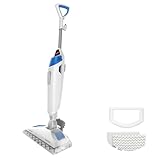
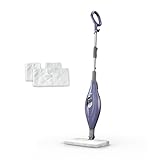


Just honest results from someone who mopped the same stubborn kitchen stains, grout lines, and high-traffic living room tiles over and over again until I could tell you exactly what each machine can and can’t do.
Best Overall: Shark SteamSpot Steam Blaster S2001
The Shark SteamSpot S2001 hits that sweet spot that’s hard to find: great cleaning power, a price that doesn’t sting, a lightweight body, and the flexibility to handle everything from quick daily cleanups to stubborn stuck-on messes. After testing it on both my tile grout and sealed hardwood, I kept going back to it more than any other mop on this list.

- POWERFUL PERFORMANCE: Combination of powerful steam, targeted steam blast, and textured pads provide up to 50% better stuck-on stain removal vs. a traditional steam mop*
- STEAM BLASTER TECHNOLOGY: A burst of targeted steam that is controlled at the touch of finger to provide even more steam power for stubborn spots and stuck-on messes.


Pros & Cons
| Pros | Cons |
|---|---|
| 3 steam modes for different cleaning needs | No handheld/detachable steamer function |
| Steam Blaster burst for stubborn spots | Smaller cleaning path (~9 inches wide) |
| Removes 99.9% of bacteria using only water | Single pump control for burst can tire fingers on long sessions |
| Two machine-washable Dirt Grip pads included | |
| XL removable water tank, easy to refill | |
| Works on all sealed hard floors | |
| Lightweight at under 5 lbs |
Testing Results
- Heat-up time: Ready in about 30 seconds.
- Floors tested: Sealed hardwood, ceramic tile, vinyl planks.
- Performance on everyday grime: Excellent. Normal mode removed pet footprints, light dust, and food residue in a single pass.
- Performance on stuck-on messes: Very good. The Steam Blaster burst feature made a noticeable difference on dried-on kitchen grease and sticky spots that regular steam alone wouldn’t lift as quickly.
- Drying time: Floors dried in about 60-90 seconds with the pads absorbing most of the moisture.
- Maneuverability: Slim profile and lightweight made it easy to get under furniture and around chair legs without frustration.
The S2001 is the upgrade from the S2000, and the difference matters: you get three steam modes instead of two, plus the targeted Steam Blaster button right at your fingertips. That burst of extra steam directed at a specific spot is genuinely useful. I pressed it on a dried tomato sauce splot on my tile and it came off in one wipe.
What I appreciate most is how versatile this mop is without being complicated. You’re not overwhelmed by attachments or settings. You pick your steam level, mop, and hit the burst button when you need extra power. For most households, this is all you’ll ever need. The chemical-free cleaning is a big plus if you have kids or pets running around on those floors right after you’ve mopped.
If you’re still deciding between hardwood-specific or tile-specific options, this breakdown of our top picks for wood floors is a good place to start before committing to one machine.
Best for: Families with mixed floor types who want reliable daily cleaning plus the power to tackle tougher messes when needed.
Buy now: Shark SteamSpot Steam Blaster
Premium Choice: Shark Steam & Scrub Steam Mop S8001
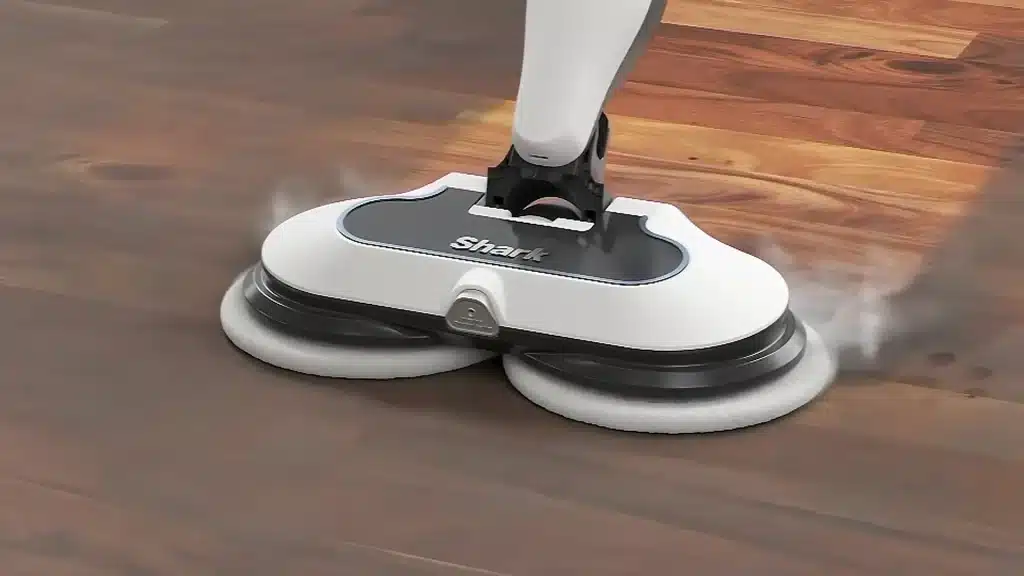
The Shark Steam & Scrub S8001 takes everything good about a standard steam mop and adds a motorized scrubbing action that genuinely makes a difference on stubborn dirt. It’s a step up in price from the S2001, and it earns that price difference.
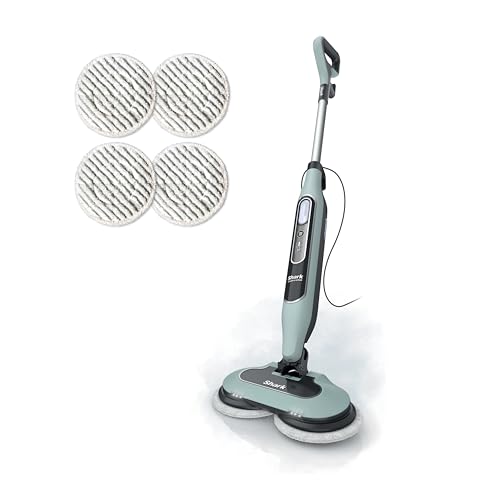
- SCRUBBING AND SANITIZING*: Tough on stains and gentle on floors. *To sanitize floors, be sure to completely follow the product’s directions for use. See sanitization instructions in Owner’s Guide for important details on sanitizing floors. Sanitization studies were conducted under controlled test conditions. See the Owner’s Guide for details on testing.
- 3 STEAM MODES: Light, for quick cleanups; Normal, for everyday use; and Deep, for stuck-on messes and stains.

Pros & Cons
| Pros | Cons |
|---|---|
| Rotating scrub pads for up to 2x better stain removal | Heavier than the S2001 at 6.9 lbs |
| LED headlights reveal hidden debris | Water tank capacity on the smaller side for large homes |
| 3 steam modes for flexible cleaning | Higher price point than basic steam mops |
| 4 Dirt Grip Soft Scrub washable pads included | |
| 18.6-ft power cord for wider coverage | |
| Swivel steering for easy maneuvering | |
| Chemical-free, works on all sealed hard floors |
Testing Results
- Heat-up time: About 30 seconds.
- Floors tested: Ceramic tile, sealed hardwood, stone tile.
- Performance on everyday grime: Excellent. The rotating pads pick up surface dirt in fewer passes than a standard flat-head mop.
- Performance on stuck-on messes: Outstanding. On grout lines with built-up grime, the scrubbing action combined with steam lifted dirt that a traditional steam mop would have needed multiple passes to handle.
- LED headlights: More useful than expected. They revealed dusty patches and debris near baseboards that were invisible in normal lighting.
- Drying time: Comparable to the S2001, floors were mostly dry within 90 seconds.
This model often gets compared to the Bissell SpinWave SmartSteam, which is a fair comparison since both feature spinning pad technology. But I chose the S8001 for this list for a few reasons: the four included pads give you more between-wash sessions, the swivel steering is noticeably smoother, and the LED headlights are a genuinely practical feature that I kept appreciating rather than forgetting about after the first use.
The scrubbing action also makes this a better fit for tile floors with grout. The rotating motion gets into the slight texture of grout lines better than a flat pad sliding across the surface. If cleaning tile floors and grout is your main priority, the S8001 moves up the list quickly.
The trade-off is weight and tank size. It’s a couple of pounds heavier than the S2001, and the water tank will need more frequent refilling if you have a large open-plan space. But for most homes, the performance it delivers more than justifies those compromises.
Best for: Households with tile floors or heavily used areas where scrubbing power matters, not just steaming.
Buy now: Shark Steam & Scrub Steam Mop
Best Value: BISSELL PowerFresh Steam Mop 1940A
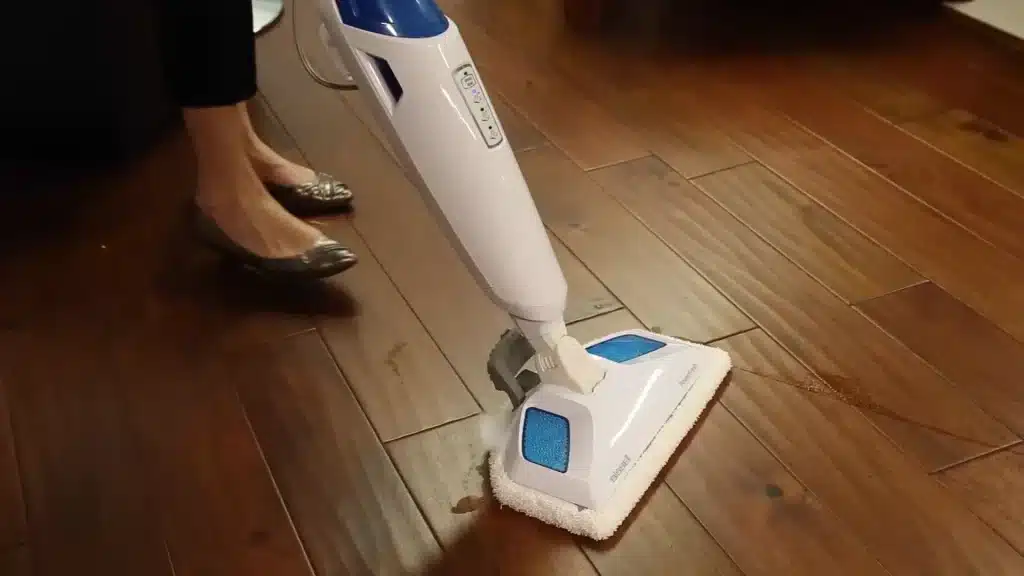
The BISSELL PowerFresh 1940A has been around long enough to prove itself. It’s one of those products that keeps showing up on “best value” lists year after year for a reason: it consistently delivers solid cleaning performance at a price that sits comfortably under $100, and the water tank is genuinely impressive for the price.
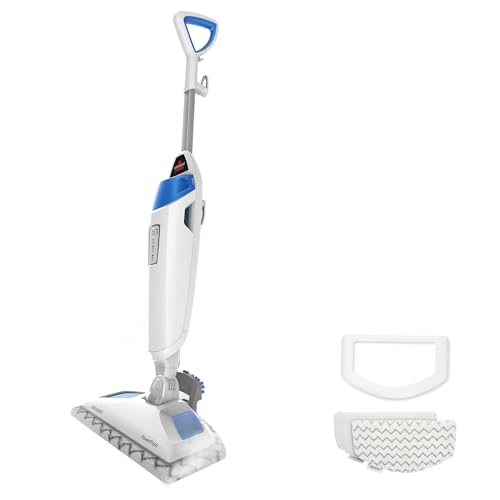
- SANITIZE WITH STEAM, NOT CHEMICALS. KILLS 99.9% OF GERMS, BACTERIA, & VIRUSES WHEN USED AS DIRECTED. Peace of mind for a cleaner home.
- BUILT-IN SCRUBBER FOR TOUGH GRIME. Flip down the Easy Scrubber to break up dried-on messes and grout buildup– no extra pressure required.
Pros & Cons
| Pros | Cons |
|---|---|
| Large 474 ml removable water tank | Cord length could be longer for large rooms |
| 3 steam levels for different tasks | Cleaning path is narrower than wider-head alternatives |
| Flip-down Easy Scrubber for stuck-on messes | |
| Carpet glider attachment included | |
| Fragrance disc compatible for scented cleaning | |
| Machine-washable microfiber pads | |
| 23-ft power cord |
Testing Results
- Heat-up time: Approximately 30 seconds.
- Floors tested: Vinyl plank, tile, sealed hardwood.
- Performance on everyday grime: Very good. Consistent steam output across all three settings, and the mop head glides smoothly without leaving streaks.
- Performance on stuck-on messes: Good. The flip-down scrubber is simple but effective for small sticky patches that steam alone doesn’t lift. It’s not as powerful as a motorized rotating pad, but it handles everyday stuck-on residue well.
- Water tank: The standout feature for this price range. The 474 ml removable tank lasted through my entire kitchen and living room without needing a refill. That’s roughly 1,000-1,200 sq ft of coverage depending on your steam setting.
- Fragrance discs: Nice optional touch. The discs slide into the pad pocket and release a mild scent as you mop. I used them on the first test session and they’re pleasant without being overwhelming.
The 1940A strikes the right balance between features and affordability. You get a legitimately useful flip-down scrubber, a tank large enough for whole-home mopping sessions, and a carpet glider that works reasonably well for refreshing area rugs.
For anyone keeping an eye on budget, I also have a detailed guide on the best budget steam mops if you want to compare a few more affordable options side by side before deciding.
Best for: Budget-conscious buyers who want genuine performance, a large water tank, and a few useful extras without spending big.
Buy now: BISSELL Steam Mop 1940A PowerFresh
Best Budget: Shark Steam Pocket S3501
The Shark Steam Pocket S3501 is as simple as a steam mop gets. No fancy modes, no motors, no LCD screen. You plug it in, wait 30 seconds, and mop. For a certain type of user, that simplicity is exactly what they want, and this little mop handles light-to-moderate cleaning surprisingly well for its price.
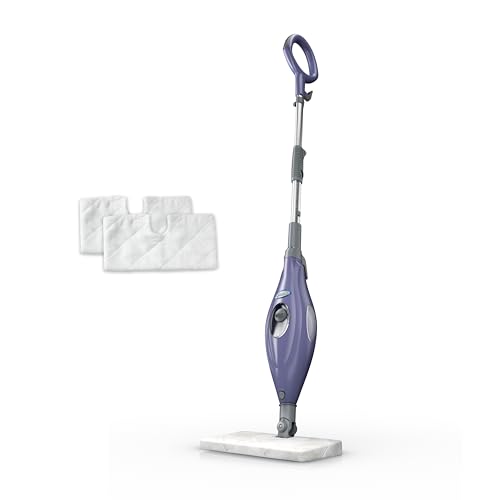
- STEAM SANITIZATION*: Removes 99.9% of common household bacteria** with the power of steam, using just water.
- DUAL-SIDED CLEANING: Flip the mop head to clean using both sides of our double-sided pads, extending your cleaning session with fewer washes.

Pros & Cons
| Pros | Cons |
|---|---|
| Very lightweight at under 5 lbs | Single steam setting only (no variable control) |
| Quick 30-second heat-up | Requires manual pumping to generate steam bursts |
| Double-sided mop head (flip without changing pad) | Tank fill design is a bit awkward |
| Machine-washable microfiber pads | Not suited for heavy-duty stuck-on messes |
| Budget-friendly price | |
| Swivel steering for easy maneuvering |
Testing Results
- Heat-up time: 30 seconds. Floors tested: Ceramic tile, sealed hardwood, vinyl.
- Performance on everyday grime: Good. For light daily mopping and freshening up floors, it does the job cleanly and quickly.
- Performance on stuck-on messes: Average. The on-demand pump system means you have to physically pump the handle to generate bursts of steam, which adds effort on tougher spots. It managed mild stuck-on residue with extra passes, but it is not a match for dried-on grease or heavy grime.
- Double-sided pad: Genuinely convenient. Flip the head, keep mopping without stopping to replace the pad. That’s a smart design for the price.
- Drying time: Fast. The pads are absorbent enough that floors dried quickly.
The S3501’s biggest limitation is the single steam level and the on-demand pump mechanism. For anyone who’s used a higher-end steam mop with continuous steady steam, the pumping action feels like extra work. But if your floors are generally well-maintained and you’re mostly doing light maintenance cleaning, this mop does the job without any fuss.
It’s worth mentioning: if you have primarily laminate floors, the S3501’s gentler, lower-intensity steam can actually be an advantage since laminate is more sensitive to heat and moisture than tile or sealed hardwood.
Best for: Apartments, smaller homes, light regular mopping, and anyone who wants a no-complication steam mop that won’t break the bank.
Buy now: Shark Steam Pocket S3501
Best Heavy-Duty Cleaning: McCulloch MC1385 Deluxe
Let’s be clear about what the McCulloch MC1385 Deluxe is: it is not simply a steam mop. It is a pressurized canister steam cleaning system that happens to include a floor mopping attachment. And once you understand that distinction, everything about it makes sense, including the price.

- CHEMICAL-FREE CLEANING — Naturally deep clean without the use of harsh chemicals using hot, pressured steam to eliminate grease, grime, and stains from a wide range of surfaces including tile, grout, granite, laminate, appliances, grills, autos, and more.
- 23 ACCESSORIES — Equipped for steam cleaning jobs in and around your home including a floor mop, mop pads, nylon brushes, brass brush, angled nozzle, scrub pad, scraper, squeegee, & more. Conveniently store accessories on-board or in included storage bag.

Pros & Cons
| Pros | Cons |
|---|---|
| Massive 64 oz water tank, up to 2 hours of steam | 12-minute heat-up time with full tank |
| 23 accessories included | Bulky canister design takes up more storage space |
| Pressurized steam for deep-cleaning grout, tile, appliances | Tank filling can be awkward and messy if not done slowly |
| 10-ft steam hose + 18-ft power cord for extended reach | Higher price than standard steam mops |
| Handles floors, mattresses, car interiors, kitchen surfaces | |
| Chemical-free steam reaches surfaces a mop head can’t | |
| Variable steam control dial |
Testing Results
- Heat-up time: About 12 minutes with a full 64 oz tank.
- Surfaces tested: Tile grout, sealed hardwood floors, stovetop, car interior upholstery.
- Performance on floors: Excellent. With the floor mopping attachment, it cleaned my tile grout to a noticeably brighter condition compared to any of the standard steam mops.
- Performance on other surfaces: Where it truly separates itself. The hose and nozzle attachments got into oven door seals, car seat crevices, and behind appliances. No other product on this list does that.
- Steam duration: With a full tank, I mopped my entire kitchen and living area, cleaned the stovetop, and still had steam left. That 2-hour runtime is a genuine advantage for whole-home deep-cleaning sessions.
- Maneuverability: The canister drags behind you on wheels, which works fine on smooth floors. It requires slightly more spatial awareness than a standard upright mop.
This is the machine to reach for when you need the highest level of clean in the house, the kind of clean that feels less like regular mopping and more like a proper deep sanitization session. It handles every in-home cleaning task at the highest level: floors, mattresses, car interiors, kitchen surfaces, sofas.
Yes, the price is noticeably higher than the other mops on this list. But if you’ve ever paid for a professional steam cleaning service or struggled with a dirty oven door seal or tile grout that never looks truly clean, you’ll understand why this machine is worth the investment. It replaces several specialized cleaning tools in one.
If the multi-surface capability appeals to you but you’re curious how it compares to a dedicated residential unit, this guide to commercial steam mops walks through what separates consumer-grade and professional-grade machines.
Best for: Homeowners who want a single machine that can deep-clean every surface in the house, including floors, upholstery, appliances, and vehicles.
Buy now: McCulloch MC1385 Deluxe
Best Vacuum Mop Combo: Roborock F25 Ultra
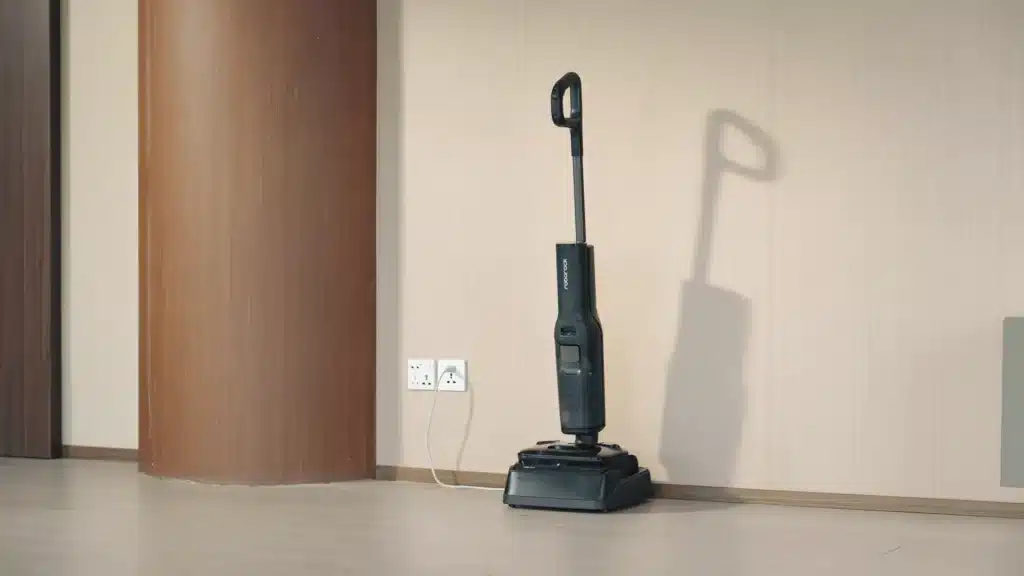
The Roborock F25 Ultra is the most technologically advanced product on this list by a significant margin. It vacuums, steam-mops, and hot-water washes floors simultaneously, then self-cleans its roller with 356°F steam after each session. It’s cordless. It has AI-assisted motorized wheels. If that sounds like a lot, it is. But it all works.
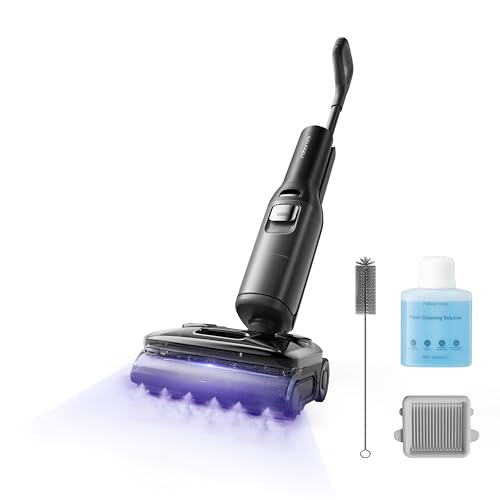
- Revolutionary 356℉ Steam & 187℉ Hot Water Cleaning: Experience powerful deep cleaning with this cordless steam vacuum cleaner. The 356℉ steam lifts dried messes, while 187℉ hot water breaks down grease and sticky spills. Perfect for tile, vinyl plank, hardwood, and laminate floors, it leaves kitchens and dining areas fresh, spotless, and effortlessly maintained.
- Blue Light for Hidden Debris Detection: Bright blue light reveals dust, crumbs, and fine particles on dark or hard-to-see surfaces like hardwood, vinyl, tile, and laminate. Spot every mess with confidence and precision. Perfect for thorough cleaning in kitchens, dining areas, and living spaces, making daily floor care simple, effective, and stress-free.
Pros & Cons
| Pros | Cons |
|---|---|
| Vacuums and steam mops in a single pass | Premium price |
| 356°F VaporFlow steam for true sanitization | Dirty water tank (0.72L) needs emptying mid-session in larger spaces |
| 187°F hot water mode for degreasing | |
| 22,000 Pa suction power for debris and spills | |
| Self-cleaning and self-drying roller system | |
| AI-assisted SlideTech 2.0 motorized wheels | |
| 4 cleaning modes (Auto, Steam, Hot Water, Sponge) | |
| 180° lay-flat design for cleaning under furniture | |
| 1L clean water tank with bottom-mounted placement |
Testing Results
- Heat-up time: Minimal. Ready to use almost immediately.
- Floors tested: Ceramic tile, sealed hardwood, vinyl plank.
- Performance on everyday debris: Outstanding. Pet hair, crumbs, and dust were vacuumed and mopped in a single pass. No pre-vacuuming needed before mopping.
- Performance on stuck-on messes: Excellent in Steam mode. Dried-on spills that would require multiple passes with a standard steam mop were handled in two to three passes.
- Hot water mode: Great for kitchen floors with light grease. Not as powerful as full steam, but faster to get into and better for everyday maintenance.
- Self-cleaning cycle: This is a standout feature. After mopping, the machine runs a 356°F steam cycle through its roller, then hot-air dries the internal components. There’s no smell, no dirty roller sitting wet after use, and no manual scrubbing. It’s a genuine quality-of-life improvement over any mop that requires you to wash pads by hand or let a dirty roller air dry.
- AI-assisted wheels: These make a real difference. The motorized wheels give the F25 Ultra a powered assist as you push, reducing the effort needed to cover large areas. You feel the difference especially on slightly textured tile where resistance builds up over time.
The F25 Ultra represents a different philosophy than the other mops on this list. Instead of asking you to vacuum first and mop second, it does both at once. And instead of leaving you with a dirty roller pad to wash, it cleans itself. It’s designed for people who want the cleanest floors possible with the least manual effort.
The price puts it firmly in premium territory, but if you’re currently buying both a quality mop and a quality vacuum, the F25 Ultra consolidates them into a single machine that genuinely outperforms either one used separately.
For a broader picture of how different steam options compare before deciding, understanding the difference between steam mops and steam cleaners can help you choose the format that fits your home best.
Best for: Tech-forward buyers who want the most efficient floor cleaning system available and are willing to invest in a premium cordless all-in-one.
Best with Attachments: PurSteam 10-in-1 Steam Mop
The PurSteam 10-in-1 is for people who want one machine to handle floors, grout, counters, appliances, and fabric without buying separate tools. The body detaches from the mop head and becomes a handheld steamer in seconds. At 4.4 lbs and under $60 at most times, it does a lot for the price.

- Chemical Free Cleaning – PurSteam 10-in-1 Steam Mop uses the natural power of heated steam to clean your home. Unlike many steamers for cleaning, this steam mop is perfect for homes with children and pets.
- Heats in 30 Seconds – Quickly steam mop hardwood floors and tile. Use the mop as a carpet cleaner, grout cleaner, or floor cleaner, even as a steam mop for laminate floors. Includes a measuring cup and funnel for water filling.
Pros and Cons
| Pros | Cons |
|---|---|
| Detachable handheld for above-floor cleaning | No motorized scrubbing action |
| 7 accessories included (grout brush, scraper, nozzle, squeegee, carpet glider) | Smaller 12.8 oz water tank |
| 3 steam settings for different surfaces | |
| Heats up in under 30 seconds | |
| Works on floors, tile, grout, counters, stove, fabric | |
| Very lightweight at 4.4 lbs | |
| Budget-friendly price |
Testing Results
- Heat-up time: Under 30 seconds. One of the fastest on the list.
- Floors tested: Ceramic tile, sealed hardwood, vinyl plank.
- Performance on everyday grime: Good. Steady steam output on the middle setting handled normal foot traffic mess in one to two passes.
- Performance on stuck-on messes: Decent on floors. On grout lines, the included grout brush attachment made a visible difference, getting into the texture that a flat mop pad slides over.
- Handheld performance: This is where it separates itself. Detached from the handle, it cleaned my stovetop burner rings, bathroom tile grout above the floor line, and the inside of my microwave without needing to swap to a different machine.
- Tank runtime: The 12.8 oz tank ran out faster than I would have liked on a full kitchen-plus-living-room pass. Plan to refill once for a larger space.
- Accessories: The grout tool and scraper are genuinely useful. The squeegee is passable. The carpet glider works for a quick refresh but is not a replacement for proper carpet cleaning.
Real-world Usage
If your cleaning routine involves floors plus some surface work, the PurSteam saves you a second trip with a separate steamer. I used it to clean the floors first, then detached the body and went after the kitchen backsplash and the bathroom grout on the wall. That whole session took about 25 minutes with one tool.
The trade-off is floor performance. It cleans floors well, but it is not in the same tier as the Shark S2001 or S8001 for pure floor-cleaning power. If your floors are your only priority, those are better picks. If you want to cover more ground with one machine, this is the one.
Best Use Case
Renters or homeowners who want a single machine that handles both floor mopping and detail cleaning on other surfaces. Also a good fit for apartments where storage space limits how many cleaning tools you can keep. Not the right pick if deep floor scrubbing is the main goal.
Verdict
The PurSteam 10-in-1 fills a gap that none of the other mops on this list covers: true multi-surface steam cleaning in a stick mop form factor. The floor performance is solid for its price. The handheld capability is where it earns its place on the list. If you have been using a separate handheld steamer alongside your floor mop, this replaces both.
For anyone curious how a multi-attachment steam mop compares to a full canister system like the McCulloch, the difference comes down to pressure and tank size. The McCulloch is more powerful and runs longer. The PurSteam is lighter, cheaper, and easier to store.
Rating: 4.1 / 5
How I Tested
All six mops were tested in May 2026 in my home, on a combination of sealed hardwood floors and ceramic tile. I didn’t test in a controlled lab. I tested the way most people actually clean: after normal daily life had done its damage.
My testing process for each mop covered:
- Everyday grime test. I let foot traffic, cooking residue, and general household mess accumulate for 48 hours without sweeping, then ran each mop through the same areas to compare results.
- Stuck-on mess test. I dripped a small amount of cooking oil, honey, and dried tomato sauce on a section of tile, let it sit for 2 hours, then used each mop to see how many passes it took to remove each stain completely.
- Grout test. I moped the same tiled area near my kitchen entrance, which has slightly darkened grout, and compared before and after across all models.
- Maneuverability test. I mopped around dining chairs, under a low coffee table, and into bathroom corners to assess how well each mop handled tight spaces.
- Dry time. After each mopping session, I checked how long the floor took to be safe to walk on.
I also ran each mop for a full session to assess water tank life, cord limitations, and any fatigue from using the product.
What to Consider Before Buying a Steam Mop
Your floor type matters most. Sealed hardwood, tile, vinyl, and laminate all respond differently to steam. Higher heat and more moisture are fine for tile and sealed stone, but can damage laminate and unsealed wood over time. If you’re working with delicate floors, check the mop’s settings and pad type carefully. If you’re unsure whether a steam mop is safe for your surface at all, this guide on using steam mops on hardwood floors covers everything you need to know before you commit.
Steam levels vs. single setting. If you have one floor type and light cleaning needs, a single-setting mop like the S3501 is perfectly adequate. But if you’re switching between delicate hardwood and grimy tile grout in the same session, variable steam levels are genuinely worth having.
Water tank size. Smaller tanks (under 14 oz) are fine for apartments or quick daily mopping. For homes over 1,000 sq ft or anyone who does whole-home cleaning in a single session, a larger removable tank saves significant time.
Pad system. Washable microfiber pads are standard across good steam mops now. What differs is how easy they are to attach, remove, and whether you get spares included. Look for how many pads come in the box and whether replacements are easy to find and reasonably priced.
Weight and cord length. A 13-lb canister cleaner does things a 5-lb stick mop can’t. But if you’re carrying it up stairs or using it in a small apartment, weight matters a lot. Cord length is often overlooked but has a real impact on how often you have to stop and switch outlets.
Handheld or multi-attachment capability. Standard steam mops clean floors. That’s it. If you want to clean upholstery, grout with a brush, stovetops, or car interiors, you need either a detachable handheld steamer or a canister system like the McCulloch MC1385.
Budget range. You’ll find solid options from around $40 (basic single-setting mops) to $600+ (advanced vacuum-mop-steam combos). The good news is the best value options sit comfortably between $70-$130 and cover the cleaning needs of most households.
Detachable handheld vs. floor-only mop. Standard steam mops clean floors. That is all they do. If you also want to steam grout on walls, clean appliance surfaces, refresh fabric or upholstery, or detail bathroom tile above floor level, you need either a detachable stick mop like the PurSteam 10-in-1 or a canister system like the McCulloch MC1385. The PurSteam is the lighter and cheaper option. The McCulloch delivers more steam pressure and a much longer runtime. If your floors are your only concern, stick with a floor-dedicated mop. It will outperform a multi-tool on pure floor work every time.
How to Use a Steam Mop Effectively
Even the best steam mop won’t perform well if it’s used incorrectly. Here are a few habits that make a noticeable difference:
Sweep or vacuum first. Steam mops are not designed to pick up dry debris. If you run a steam mop over dust and crumbs, you push them around rather than clean them. A quick sweep or vacuum pass before mopping gives the steam mop a clean surface to work with.
Use distilled or filtered water. Tap water with high mineral content will cause mineral buildup inside your steam mop over time, reducing performance and eventually clogging the steam output. Distilled water extends the life of your machine significantly.
Let the steam work. Move the mop slowly over stubborn spots rather than pushing hard. Steam needs a second or two of contact time to loosen grime. Rushing over a stuck-on mess with too much force just moves it around.
Match steam level to surface. Low or medium steam for sealed hardwood and laminate. High steam for tile, grout, and stone. More steam is not always better, especially on heat-sensitive surfaces.
Keep pads clean. A dirty pad re-deposits grime on your floor. Swap pads mid-session if they’re visibly soiled, and machine-wash after every use. Most microfiber pads hold up well for dozens of washes before needing replacement.
Don’t leave the mop stationary while steaming. Steam concentrated in one spot can damage certain floor finishes, especially on wood and laminate. Keep it moving.
Empty the tank after use. Leaving water sitting in the tank encourages mineral buildup and can affect the quality of steam in future sessions.
FAQs
What is a top rated steam mop, and what makes one better than another?
A top rated steam mop consistently performs across multiple key areas: cleaning effectiveness, ease of use, reliability, and value for money. The best models heat up quickly, maintain consistent steam, work well on multiple floor types, and come with washable pads. Features like variable steam levels, large water tanks, and good maneuverability separate the top performers from budget-only options.
How hot does a steam mop need to be to sanitize floors?
To kill 99.9% of common household bacteria, steam needs to reach at least 212°F (100°C). Most quality steam mops produce steam well above this threshold at the mop head. However, the contact time matters too: moving too quickly across a surface reduces the sanitizing effect, even if the steam itself is hot enough.
Can I use a steam mop on hardwood floors?
Yes, but only on sealed hardwood. Unsealed wood can absorb the moisture and warp or swell. Even on sealed wood, use the lowest steam setting and avoid letting the mop sit in one spot. If you’re not sure whether your floor is sealed, this guide on steam mops and hardwood floors walks through how to check and what settings to use.
How often should I steam mop my floors?
For most households, once a week is sufficient for general cleaning and sanitization. High-traffic areas like kitchens and entryways can benefit from more frequent mopping, every 2-3 days. Low-traffic rooms like guest bedrooms may only need mopping every two weeks.
Do steam mops work on grout?
Yes, and they work very well, especially with a scrubbing action or a nozzle brush attachment. The combination of heat and moisture loosens the grime embedded in grout lines better than any chemical cleaner I’ve tried. The Shark S8001 and McCulloch MC1385 both performed particularly well on grout during my testing.
Can I add cleaning solution to my steam mop?
Most steam mop manufacturers recommend using only plain water to avoid damaging the internal components. Some models do allow specific cleaning solutions. Using the wrong solution can void your warranty and leave residue on your floors. For more detail on what’s safe to use, this topic is covered in depth on our site.
How long do steam mops take to heat up?
Most standard steam mops heat up in 30 seconds. The McCulloch MC1385 canister system takes around 12 minutes with a full tank due to its much larger volume of water being pressurized. The Roborock F25 Ultra, being a different type of product, is ready almost immediately.
Are steam mops safe for vinyl plank flooring?
Generally yes, but with caution. Vinyl plank can be sensitive to heat and excess moisture at the seams. Use the lowest steam setting and keep the mop moving. For a full breakdown, check out our dedicated article on using a steam mop on vinyl plank flooring.
What’s the difference between a steam mop and a steam cleaner?
A steam mop is designed specifically for floor cleaning with a flat mop head. A steam cleaner (like the McCulloch MC1385) is a more versatile system with interchangeable attachments that can clean floors, upholstery, appliances, and other surfaces. Steam cleaners are more powerful and more versatile but also heavier and more expensive.
How long should a quality steam mop last?
With proper care, including regular descaling, using distilled water, and washing pads after each session, a quality steam mop should last 3 to 5 years or more. The Shark and BISSELL models in this review are well-known for durability at their respective price points. The McCulloch and Roborock are built for extended, heavy use and are designed to last even longer.