Best Way to Clean Polyester Carpet: Simple Methods That Actually Work

Table of Contents
Polyester carpets are actually quite forgiving when it comes to cleaning, and with the right approach, you can get them looking fresh again without breaking the bank.
This synthetic material doesn’t absorb liquids as readily as wool or cotton, which is great news for spill cleanup. However, it does attract oils and can hold onto pet odors if not cleaned properly.
Most polyester carpets can handle water-based cleaning solutions just fine, but you’ll want to avoid harsh chemicals that might damage the fibers or backing.
You might also like: How to Clean Different Types of Carpets
The Best Way to Clean Polyester Carpet: Step-by-Step Method
After years of trial and error with different approaches, I’ve found this method consistently delivers the best results while being gentle on your carpet fibers. Professional cleaners charge $200-400 for what you can accomplish at home for under $10 using items you likely already have.
This technique works because it tackles cleaning in the right order—removing loose debris first, then treating specific problem areas, followed by a thorough but gentle deep clean. Skip any step, and you’ll either push dirt deeper into the fibers or risk leaving residue that attracts more dirt later.
What You’ll Need
- Vacuum cleaner (any type works, but upright models are most effective)
- Warm water (not hot—hot water can set certain stains permanently)
- Mild dish soap (Dawn or Joy work best; avoid anything with bleach or degreasers)
- White vinegar
- Clean microfiber cloths or old bath towels (at least 4-5 pieces)
- Spray bottle
- Soft-bristled brush (an old toothbrush works perfectly for small areas)
Step 1: Vacuum Thoroughly
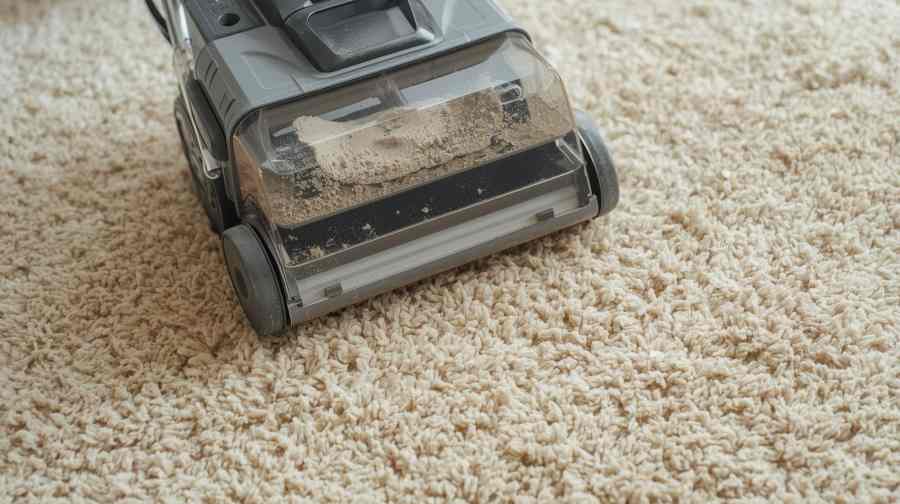
Most people vacuum too quickly and wonder why their cleaning efforts don’t work well. Here’s the right way to do it:
First Pass: Vacuum slowly in one direction, overlapping each stroke by about 2 inches. Move at about the pace of a slow walk, if you’re moving faster than that, you’re not giving the vacuum time to pull debris from deep in the fibers.
Second Pass: Turn 90 degrees and repeat the process. This cross-hatch pattern lifts dirt that was lying flat against the fibers in one direction.
Pay Extra Attention To: Doorways, in front of furniture, and anywhere people typically walk. These areas have compressed dirt that needs extra passes.
Step 2: Pre-Treat Stains
Basic Cleaning Solution: Mix 1 tablespoon of mild dish soap with 2 cups of warm (not hot) water. This concentration is strong enough to break down most dirt and grime but gentle enough not to damage polyester fibers.
For Tougher Stains or Odors: Add 1/4 cup of white vinegar to your basic solution. The acid in vinegar neutralizes alkaline stains (like pet urine) and kills odor-causing bacteria.
Spray stains generously, you want the solution to penetrate into the carpet backing where most stubborn stains actually live. Don’t just mist the surface.
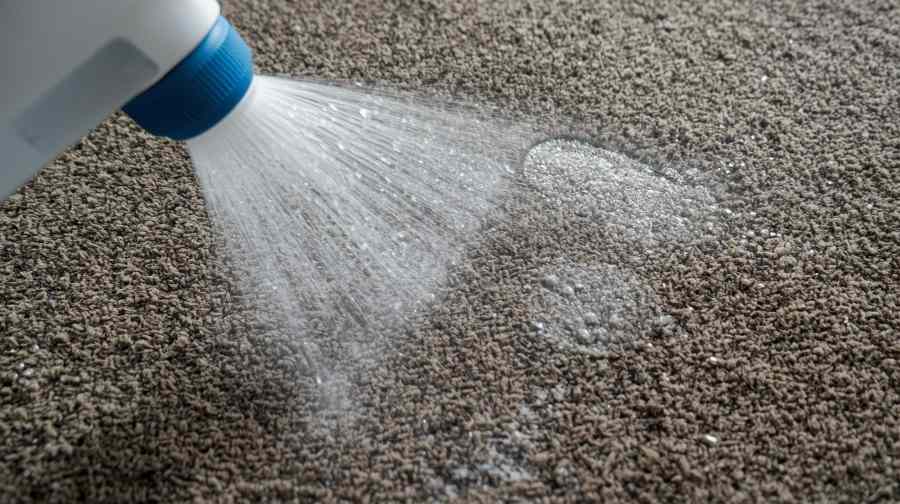
Let the solution sit for 10-15 minutes. Set a timer—this waiting period allows the cleaning agents to break down stain molecules. Many people skip this step and wonder why their scrubbing doesn’t work.
For Old, Set-In Stains: You might need to repeat this pre-treatment process 2-3 times before moving to the next step. It’s better to be patient here than to scrub aggressively and damage your carpet.
Step 3: Gentle Agitation
Use small circular motions, working from the outside of the stain toward the center. This prevents the stain from spreading outward.
Pressure: Use about the same pressure you’d use to pet a cat—firm but gentle. Polyester fibers can fuzz up if you’re too aggressive, and once that happens, those areas will always look different.
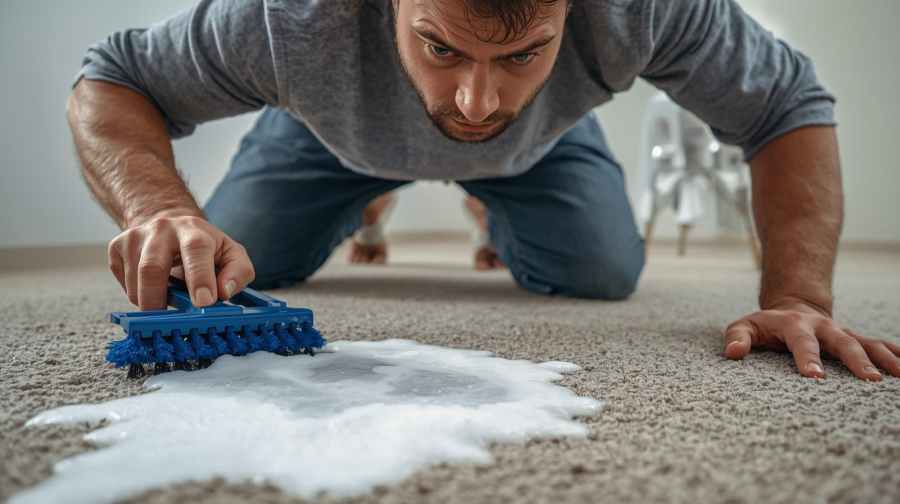
For larger areas, use a soft-bristled brush. For spot cleaning, a clean cloth wrapped around your finger gives you better control.
Working Time: Spend 30-60 seconds per square foot of stained area. If you’re not seeing results after a minute, apply more cleaning solution rather than scrubbing harder.
The cleaning solution should start to look dirty as it pulls stains from the carpet. If the solution stays clear, you may need a stronger concentration.
Step 4: Thorough Rinsing
This is where many DIY carpet cleaning attempts go wrong. Soap residue left in carpet fibers acts like a magnet for new dirt, making your carpet look dingy again within days.
Rinse Water: Use clean, lukewarm water in a separate spray bottle. Cold water doesn’t rinse as effectively, and hot water can set any remaining stains.
Rinsing Technique: Spray the area thoroughly with clean water, then immediately blot with a dry towel. Repeat this process 3-4 times or until the towel comes up clean with no suds visible.
Blotting Method: Press straight down and lift straight up—don’t rub or scrub during this step. Use a clean section of towel for each blot to avoid putting dirty water back into the carpet.
How Much Water: Use about the same amount of rinse water as you did cleaning solution. Under-rinsing is one of the biggest mistakes in DIY carpet cleaning.
Step 5: Strategic Drying
Place a box fan near the cleaned area, positioning it to blow across the wet carpet rather than straight down. This creates better airflow for faster drying.
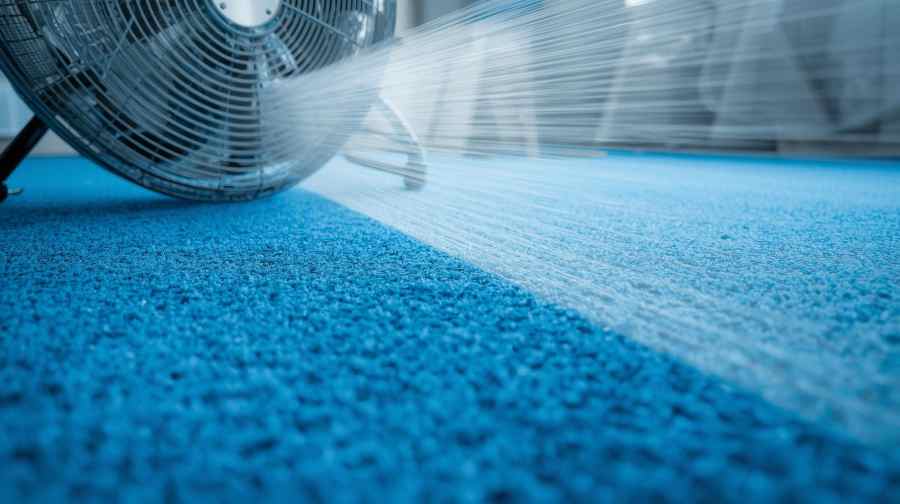
If you live in a humid climate, run a dehumidifier in the room during the drying process. High humidity can double or triple drying time.
Keep foot traffic off the area until it’s completely dry—usually 4-6 hours with good air circulation. Walking on damp carpet can push dirt from shoe soles deep into the wet fibers.
Speed-Drying Tricks: For faster results, use a hair dryer on cool setting, moving it constantly to avoid overheating any one spot. You can also lay clean, dry towels over the area and walk on them to absorb more moisture.
Testing for Dryness: Press a clean, dry cloth against the carpet. If any moisture transfers to the cloth, give it more drying time. Carpet that feels dry on top might still be wet at the backing level.
Tackling Specific Stain Types
Each type of stain requires a slightly different approach because different substances bond with polyester fibers in unique ways. Here’s your complete guide to handling the most common carpet emergencies you’ll face.
Pet stains
Pet urine isn’t just a surface stain—it penetrates deep into carpet backing and can create permanent odor problems if not handled properly. The best way to clean polyester carpet after pet accidents involves a three-phase approach.
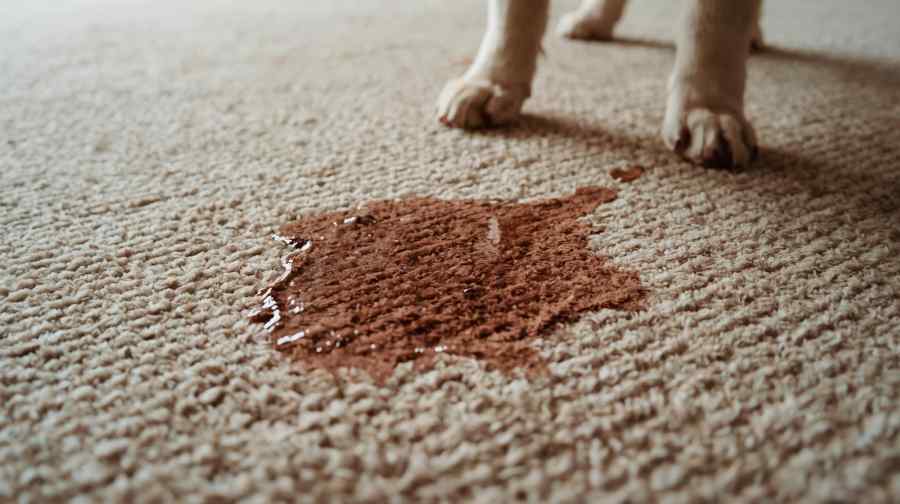
Immediate Response (First 5 Minutes):
- Blot up as much liquid as possible using paper towels—press firmly and replace towels frequently
- Don’t rub or scrub at this stage; you’ll just spread the urine over a larger area
- Work from outside edges toward the center to contain the spill
Phase 1 – Neutralization:
- Mix equal parts white vinegar and warm water in a spray bottle
- Saturate the area thoroughly—you need enough solution to reach the carpet padding where most of the odor lives
- Let sit for 20 minutes (set a timer—this step is crucial)
- Blot with clean towels until no more liquid comes up
Phase 2 – Deep Cleaning:
- Mix 2 tablespoons dish soap with 2 cups warm water
- Add 1/4 cup hydrogen peroxide (this breaks down remaining ammonia compounds)
- Spray generously and work into carpet with soft brush
- Let dwell for 15 minutes, then rinse thoroughly with clean water
Phase 3 – Odor Elimination:
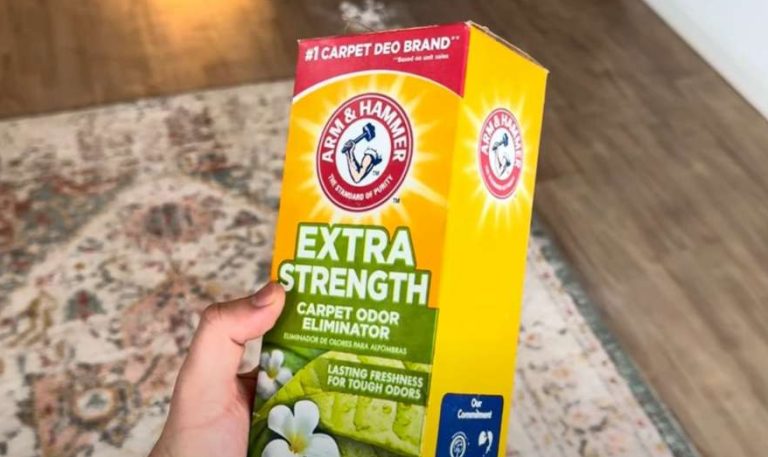
- Sprinkle baking soda over the completely dry area
- Let sit overnight (8-12 hours) to absorb any lingering odors
- Vacuum thoroughly the next day
For Old Pet Stains: You may need to repeat this entire process 2-3 times. Old urine stains often require multiple treatments because the ammonia has had time to crystallize in the carpet fibers.
Food and Beverage Spills
Coffee and Tea Stains:
- Blot immediately—don’t let it set
- Mix 1 tablespoon white vinegar + 1 tablespoon dish soap + 2 cups warm water
- Apply solution, let sit 10 minutes, then blot
- For stubborn stains, add 1 teaspoon of hydrogen peroxide to the mix
- Always test this solution in a hidden area first—some carpets may lighten
Red Wine Emergency Protocol:
- Blot up excess wine immediately—never rub
- Pour a small amount of white wine or club soda over the stain (counteracts the tannins)
- Blot again with clean cloths
- Mix 1 part dish soap + 3 parts hydrogen peroxide
- Apply with spray bottle, let sit 5 minutes, then blot clean
- Rinse with cold water and blot dry
Juice and Soda Stains:
- The sugar in these drinks makes them particularly stubborn if they dry
- Blot up excess liquid first
- Mix 1 tablespoon dish soap + 1 tablespoon white vinegar + 2 cups warm water
- Spray area, work in gently with soft brush
- Let sit 15 minutes, then rinse thoroughly—sugar residue attracts dirt if not completely removed
Grease and Oil-Based Stains
Oil stains are tricky because polyester fibers actually attract and hold onto greasy substances. The key is removing as much oil as possible before it sets permanently.
Fresh Oil Spills (Cooking oil, butter, salad dressing):
- Don’t add water initially—this just spreads the oil
- Sprinkle cornstarch, baking soda, or even flour liberally over the spill
- Let sit for 30 minutes to absorb the oil
- Vacuum up the powder
- Now treat with dish soap solution: 2 tablespoons Dawn + 1 cup warm water
- Work in with soft brush, let sit 20 minutes, then rinse thoroughly
Set-In Grease Stains:
- Heat a small amount of dish soap in the microwave for 10-15 seconds (warm, not hot)
- Apply warm soap directly to the stain with a soft brush
- Cover with plastic wrap and let sit for 30 minutes
- Remove plastic, add warm water, and work into a lather
- Rinse thoroughly with clean water
Motor Oil or Heavy Grease:
- Use WD-40 as a pre-treatment (spray lightly, let sit 30 minutes)
- Follow with dish soap treatment as above
- You may need to repeat this process 2-3 times for complete removal
Mud and Dirt
This goes against instinct, but wet mud is much harder to clean than dry mud.
Fresh Mud Tracking:
- Resist the urge to clean it immediately
- Let the mud dry completely (usually 2-4 hours)
- Vacuum up as much dried mud as possible
- Now treat remaining stains with basic soap solution
- Work in circular motions from outside edge toward center
Ground-In Dirt in High-Traffic Areas:
- Pre-treat with stronger solution: 3 tablespoons dish soap + 1/4 cup white vinegar + 2 cups warm water
- Let solution sit for 30 minutes
- Use soft brush to work solution deep into carpet fibers
- Rinse multiple times—dirt particles can resettle if not completely removed
Blood Stains
Heat will set blood stains permanently, so temperature control is critical.
Fresh Blood:
- Blot up excess blood with paper towels
- Rinse with cold water only—never warm or hot water
- Mix 1 tablespoon liquid dish soap + 2 tablespoons hydrogen peroxide + 1 cup cold water
- Apply to stain, let sit 5 minutes, then blot clean
- Rinse with cold water and blot dry
Dried Blood:
- Make a paste with cold water and meat tenderizer (sounds weird but works—the enzymes break down proteins)
- Apply paste, let sit 30 minutes
- Rinse with cold water and blot
- Follow up with hydrogen peroxide solution if needed
Ink and Marker Stains
Ballpoint Pen Ink:
- Dab (don’t rub) with rubbing alcohol on a clean cloth
- Work from outside edge toward center
- Keep dabbing with fresh alcohol until no more ink transfers to cloth
- Rinse with cold water and blot dry
Permanent Marker:
- Try rubbing alcohol first
- If that doesn’t work, use acetone-free nail polish remover sparingly
- Always test in hidden area first—these solvents can damage some carpet dyes
- Work quickly and rinse thoroughly
Wax and Gum
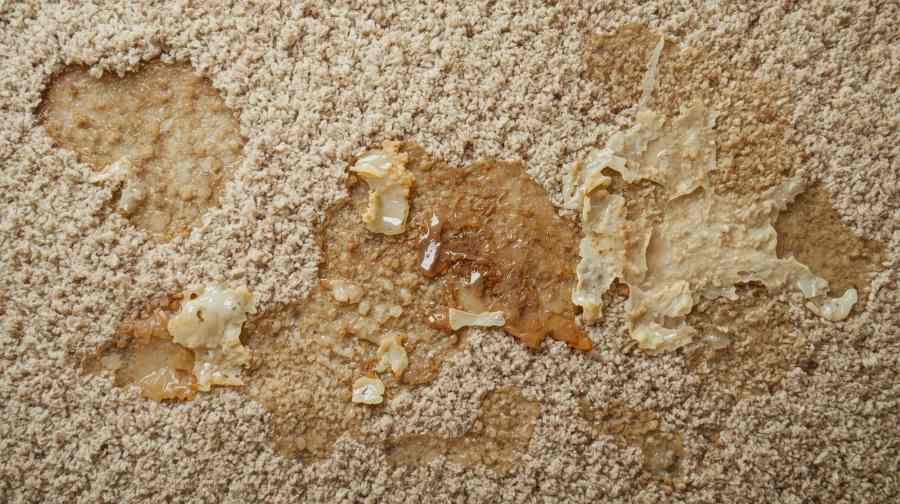
Candle Wax:
- Let wax harden completely
- Place ice cubes in a plastic bag over the wax for 10 minutes
- Scrape off hardened wax with a butter knife (work gently to avoid cutting carpet fibers)
- If any residue remains, place a paper towel over it and iron on low heat—the paper towel will absorb remaining wax
Chewing Gum:
- Apply ice until gum freezes solid
- Break off as much frozen gum as possible
- For remaining residue, use peanut butter (natural oils dissolve gum) or commercial gum remover
- Clean treated area with dish soap solution to remove any oily residue
Vomit and Bodily Fluids
Safety First:
- Wear rubber gloves and ensure good ventilation
- Remove solid matter with disposable tools
- Treat this as both a cleaning and sanitization job
Cleaning Process:
- Blot up liquid with paper towels and dispose immediately
- Mix 1 cup warm water + 1/2 cup white vinegar + 2 tablespoons dish soap
- Saturate area and let sit 15 minutes
- Blot clean, then follow with hydrogen peroxide solution for sanitization
- Final rinse with clean water and thorough drying
Odor Control:
- After cleaning, sprinkle baking soda over dry area
- Let sit overnight, then vacuum
- If odor persists, the stomach acid may have penetrated to carpet padding and you may need professional treatment
Unknown Stains
When you’re not sure what caused a stain, start with the gentlest method and work up:
- Test with plain water first
- Try basic dish soap solution
- Add vinegar if no improvement
- Use hydrogen peroxide for final attempt
- Consider professional help if none of these work
The best way to clean polyester carpet successfully is to match your cleaning method to the specific type of stain you’re dealing with. Taking a few extra minutes to identify the stain type and use the right approach will save you hours of frustration later.
Maintenance Tips to Keep Your Polyester Carpet Looking Great
The best way to clean polyester carpet is actually to prevent it from getting too dirty in the first place. Here are some simple habits that make a huge difference:
Weekly: Vacuum high-traffic areas twice, other areas once Monthly: Spot-clean any new stains immediately Seasonally: Deep clean with your preferred method Yearly: Consider professional cleaning for a thorough refresh
Quick Daily Habits
- Remove shoes at the door (or keep indoor-only slippers handy)
- Blot spills immediately—don’t let them set
- Keep a spray bottle of your homemade cleaning solution ready
- Vacuum pet areas more frequently