How to Get Dog Hair Out of Car Upholstery and Carpet
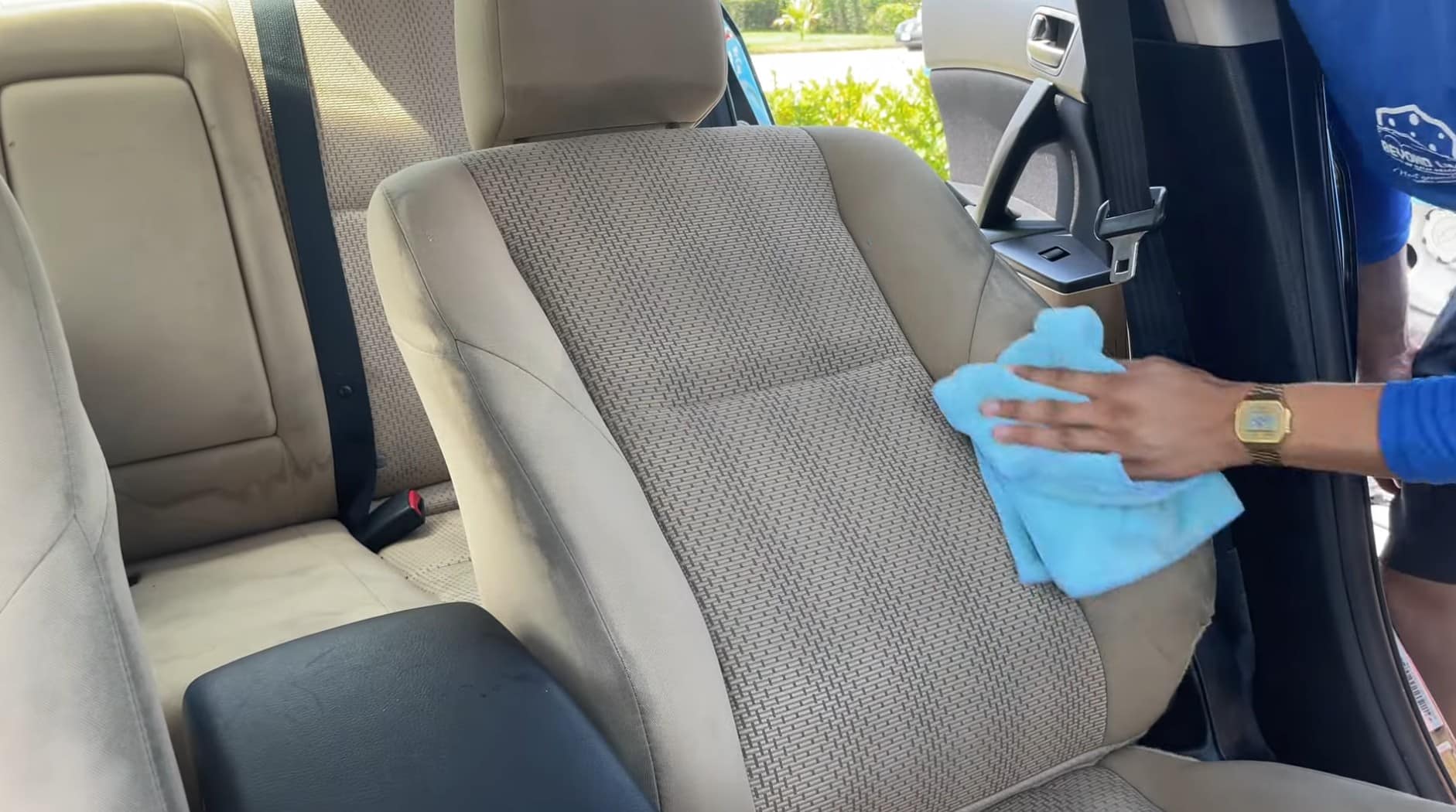
Dog hair in a car is one of the most stubborn cleaning problems there is. It works itself into upholstery fibers, embeds in carpet pile, and clings to surfaces that should repel it. A quick once-over with a lint roller barely touches it.
This guide covers every method that actually removes dog hair from car interiors, ranked by how well they work.
Method 1: Rubber Glove
A damp rubber glove is the most effective low-tech tool for removing dog hair from car seats and floor carpet.
Put on a standard rubber kitchen glove. Dampen it slightly with water. Rub it across the seat or carpet surface in short, firm strokes. The rubber creates friction and static that pulls hair out of the fibers and rolls it into clumps.
Pick up the clumps by hand and dispose of them before vacuuming. This pre-treatment is what makes vacuuming actually work. Trying to vacuum embedded dog hair without pre-treating it results in hair that shifts position without getting picked up.
Rubber pet hair brushes with short, stiff rubber bristles work the same way and cover more surface area per stroke. These are sold in most pet stores and work well on both fabric seats and carpet.
Method 2: Vacuum with the Right Attachment
After pre-treating with a rubber glove or brush, vacuuming removes the loosened hair and the fine debris underneath it.
The attachment matters:
- Motorized mini brush head — the best option for embedded dog hair. The spinning brush agitates fibers while the suction pulls hair out. More effective than a flat head on carpet and woven fabric seats.
- Upholstery attachment — works well on smooth fabric seats after rubber glove pre-treatment. Not strong enough alone on embedded hair.
- Crevice tool — essential for the gap between the seat and center console, seat seams, and along the seat rails. Dog hair packs into these areas densely.
Go slowly. The suction needs contact time to pull hair out of the weave. Fast passes move hair around more than they remove it.
A portable or handheld vacuum is more practical than a full-size vacuum for car interiors. Our roundup of the best handheld vacuums for pet hair covers the models with enough suction and the right attachments for this specific job. If you prefer a dedicated car vacuum, the best car vacuum cleaners guide includes options sized for interior detailing.
Method 3: Squeegee
A window squeegee used dry on car seat fabric and carpet is surprisingly effective on stubborn embedded hair.
Run the squeegee edge across the seat surface with firm, short strokes. The rubber edge grips hair and pulls it out of the fibers into rows you can pick up. It covers more surface area per stroke than a rubber glove and works on both fabric seats and carpet.
This works particularly well on velour and short-pile fabric seats. On leather or vinyl seats, the squeegee does nothing useful. Stick to a damp cloth for those.
After using the squeegee, vacuum the loosened hair before it redistributes.
Method 4: Lint Roller
A lint roller works on light surface hair that has not embedded into the fabric. It is not effective on hair that has worked itself into seat or carpet fibers.
Use it for maintenance between deeper cleaning sessions, not as a primary removal method after a dog has been in the car. For surface-level hair on leather seats, a lint roller is actually the most convenient tool because leather does not allow hair to embed.
Wide lint rollers cover more area per sheet. For car interiors, the oversized rollers (sold at pet stores) are noticeably more efficient than standard office-size ones.
Method 5: Fabric Softener Solution
A spray bottle with a small amount of fabric softener mixed into warm water loosens dog hair from fabric seat surfaces and carpet.
Mix one teaspoon of liquid fabric softener into two cups of warm water. Spray a light mist across the seat surface. Let it sit for 30 seconds. Then wipe with a rubber glove or rubber brush to clump the hair, and vacuum.
The fabric softener reduces static, which is part of what makes dog hair cling to surfaces. This method works well on heavily contaminated seats where the rubber glove alone is not pulling out enough.
Do not saturate the fabric. A light mist is enough. Wet fabric seats dry slowly in an enclosed car and can develop a musty smell.
Method 6: Balloon or Inflated Plastic Bag (Static Method)
An inflated balloon rubbed over seat fabric creates static that lifts fine hair off the surface. This works best on short, fine hair that other methods are not reaching.
It is low-efficiency for large areas but genuinely useful for small patches of fine hair on leather or smooth fabric where rubber tools are not getting traction.
Tackling Specific Areas
Fabric and Cloth Seats
Rubber glove pre-treatment followed by motorized brush vacuum is the most effective combination. Do the crevice tool on every seam after the main surface.
Leather and Vinyl Seats
Dog hair does not embed into leather the way it does into fabric. A lint roller or dry microfiber cloth handles most of it. Use the crevice tool for hair in the seat seams and stitching lines.
Do not use a rubber brush aggressively on leather. It can scuff the surface.
Floor Carpet and Mats
Car carpet is tighter-woven than home carpet and holds hair firmly. The squeegee method works well here. Follow with a motorized brush vacuum attachment on slow passes.
Remove floor mats and clean them outside the car. Shake them first to dislodge loose hair, then use the rubber glove and vacuum method on a flat surface where you have more room to work.
Cargo Area
The cargo area of SUVs and hatchbacks where dogs ride accumulates the highest concentration of hair. The squeegee or rubber brush followed by a vacuum handles most of it. For cargo liners made of rubber or plastic, a damp cloth wipes the hair off directly.
Best Routine for Regular Dog Hair Removal
After every trip: Quick pass with a lint roller on the seats. Takes two minutes and prevents buildup.
Weekly: Rubber glove pre-treatment on all fabric surfaces, then vacuum with crevice tool on seams and gaps.
Monthly: Full session — rubber glove, squeegee on carpet and seat fabric, motorized brush vacuum, crevice tool on all seams and gaps. Remove and clean floor mats separately.
The monthly session takes 20 to 30 minutes done properly. Consistent weekly maintenance keeps the monthly session from becoming a two-hour job.
Prevention: Reducing Hair in the First Place
Seat covers designed for dogs are the most effective prevention tool. They create a barrier between the dog and the seat fabric. Waterproof versions also protect against muddy paws and drool. Look for covers with anchor straps that stay in place as the dog moves around.
Cargo barriers keep dogs in the cargo area rather than climbing onto seats. Combined with a cargo liner, this confines the hair to the easiest-to-clean part of the car.
Brush the dog before car trips. Removing loose hair from the dog before it gets in the car is the simplest way to reduce how much ends up in the interior. A quick 60-second brush outside handles the majority of loose shedding hair.
Groom regularly. Dogs that are brushed regularly shed less loose hair overall. High-shedding breeds benefit significantly from weekly brushing in terms of how much hair ends up on every surface they touch.
Frequently Asked Questions
What removes dog hair from car seats fastest?
The rubber glove method followed immediately by vacuuming is the fastest effective approach. Pre-treating with the rubber glove loosens hair that the vacuum then picks up cleanly. Trying to vacuum first without pre-treating takes longer and leaves more hair behind.
Does a lint roller work for dog hair in cars?
On surface hair and light shedding, yes. On hair embedded in fabric seat weaves or carpet, no. A lint roller is a maintenance tool between proper cleaning sessions, not a solution for a heavily coated car interior.
What vacuum works best for dog hair in a car?
A compact handheld or cordless vacuum with a motorized brush attachment and a crevice tool. Full-size uprights are too bulky for car interiors. The motorized brush head is the key feature for embedded hair on fabric seats and carpet. Our best vacuum cleaners for dog hair roundup covers models with the right specs for this job.
How do I get dog hair out of car carpet?
The squeegee method is the most effective first step on car carpet. Run the squeegee edge across the carpet in short strokes to pull hair into rows, pick up the clumps, then vacuum with a motorized brush attachment. The rubber glove method also works well on carpet.
How do I stop dog hair from sticking to car seats?
Seat covers are the most effective solution. Anti-static sprays reduce cling temporarily but need reapplication. Fabric softener solution applied lightly before the dog gets in reduces static that causes hair to stick, but is not a long-term solution. Seat covers and regular pre-trip brushing of the dog are the only reliably effective prevention strategies.