How to Get Rid of Dust Mites in Carpet (What Actually Works)

Dust mites live in carpet by the millions. They feed on dead skin cells, thrive in warm humid conditions, and produce waste particles that trigger allergies and asthma. You cannot see them, but the effects show up fast: sneezing, itchy eyes, and congestion that gets worse indoors.
The good news is that reducing them significantly is straightforward. You do not need to replace the carpet. You need the right routine.
What Are Dust Mites and Why Carpet Is the Problem
Dust mites are microscopic arachnids, roughly 0.3mm long. A single gram of carpet dust can contain thousands of them. They do not bite. The allergen comes from their fecal particles and shed exoskeletons, which become airborne and inhaled.
Carpet is their ideal environment. The fibers trap dead skin cells and provide a stable, protected habitat. Wall-to-wall carpet holds more dust mites per square foot than almost any other surface in a home.
The goal is not total elimination. That is not realistic. The goal is reducing the population to a level where allergen exposure drops enough to reduce symptoms.
Step 1: Vacuum Regularly with the Right Vacuum

Vacuuming is the foundation. It removes the dead skin cells that dust mites feed on, and it pulls mite waste and shed particles out of the carpet before they become airborne.
The key is doing it right:
- Vacuum at least twice a week in rooms where people sleep or spend significant time. Once a week is the bare minimum for any carpeted space.
- Use a vacuum with a HEPA filter. A standard filter captures larger debris but lets fine mite allergen particles pass through the exhaust and back into the air. A HEPA filter captures particles down to 0.3 microns, which is small enough to catch mite waste. Without HEPA, you are redistributing the allergen more than removing it.
- Go slowly. A fast pass picks up surface debris. A slow pass with overlapping rows gives the suction enough contact time to pull material out of the carpet fibers.
- Vacuum in two directions. After a pass going one direction, go perpendicular. This cross-hatching loosens embedded debris the first pass pressed down.
- Do not forget edges and corners. Mite populations are highest where carpet meets baseboards and under furniture edges. A crevice tool along these areas removes material that the main head misses.
After vacuuming, change or wash the vacuum bag or filter immediately. A full bag of mite-contaminated debris sitting in the vacuum reintroduces allergens to the air over time.
For a guide to the best carpet cleaning routine overall, the complete carpet cleaning checklist covers what to do at each frequency, from daily maintenance to seasonal deep cleans.
Step 2: Use Baking Soda Before Vacuuming
Baking soda does not kill dust mites but it disrupts the environment they live in and helps loosen debris embedded in carpet fibers for the vacuum to pick up.
Sprinkle a generous, even layer over the carpet. Let it sit for 15 to 30 minutes. Then vacuum thoroughly.
The baking soda absorbs moisture, which dries out the habitat temporarily. It also picks up odors and fine particles as the vacuum pulls it up. It is a low-effort, no-cost addition to any vacuuming session.
Do not leave baking soda on carpet for hours or overnight. It compacts and becomes harder to vacuum fully and can leave residue in the fibers.
Step 3: Steam Clean the Carpet
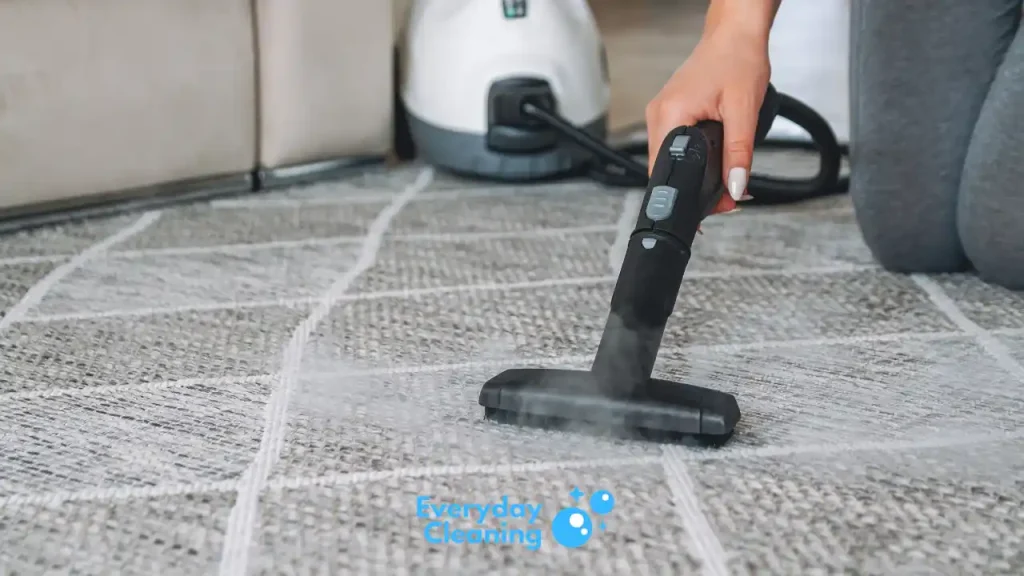
Steam cleaning is one of the most effective methods for reducing dust mites. Temperatures above 130°F kill dust mites on contact. Steam cleaners generate temperatures between 200°F and 250°F at the head, well above the threshold.
The heat penetrates into the carpet fibers where vacuuming does not reach and kills mites at all life stages, including eggs.
How to do it:
- Vacuum thoroughly before steam cleaning. Steam cleaning over debris pushes it deeper into the carpet rather than removing it.
- Work in slow, overlapping passes. Hold the steam head in contact with each section long enough for the heat to penetrate.
- Do not over-saturate the carpet. Most steam cleaners deliver relatively low moisture, but repeated passes on one area can cause the carpet backing to stay wet too long, which creates a mold risk.
- Allow the carpet to dry fully before walking on it or replacing furniture. Open windows or run a fan to speed drying.
Steam cleaning every one to three months is enough for most households. Monthly is better in homes where allergy sufferers sleep or spend significant time on carpeted floors.
For a step-by-step breakdown of using steam on carpet, how to use a steam cleaner on carpet covers technique, dwell time, and what to do on different carpet types.
Step 4: Try a Diatomaceous Earth Treatment
Food-grade diatomaceous earth (DE) is a fine powder made from fossilized algae. It kills dust mites by physically damaging their exoskeletons, causing dehydration.
Sprinkle a light, even layer over the affected carpet. Work it into the fibers gently with a soft brush. Leave it for four to eight hours, or overnight if possible. Then vacuum thoroughly.
DE is non-toxic to humans and pets but fine particles irritate lungs if inhaled during application. Wear a dust mask when applying and keep pets and children out of the room until it is vacuumed up.
This works differently from steam. Steam kills on contact with heat. DE works over time through physical contact. Used together on a monthly or quarterly schedule, they cover different stages of the mite lifecycle.
Step 5: Wash Rugs and Area Rugs Regularly
If the carpeted areas include removable rugs or area rugs, these need washing in addition to vacuuming.
Washing at 130°F (54°C) or higher kills dust mites. Check the care label on each rug before washing. Wool and delicate fiber rugs may require dry cleaning or lower temperatures. For synthetic rugs, a hot wash cycle is safe and effective.
For guidance on washing specific rug types without damaging them, how to clean a filthy carpet and the guide to cleaning wool carpet cover the specifics by fiber type.
Dry rugs fully before laying them back down. A damp rug laid on carpet creates the humid, warm conditions dust mites thrive in.
Step 6: Control Humidity in the Room
Dust mites cannot survive when relative humidity drops below 50%. Above 70%, they multiply rapidly.
Controlling humidity is one of the highest-impact long-term strategies and requires no scrubbing or chemical treatment.
- Run a dehumidifier in rooms with carpet if your home runs humid. Aim for 45% to 50% relative humidity.
- Fix any moisture issues like condensation, leaks, or poor ventilation that keep rooms damp.
- Avoid drying laundry indoors over carpeted areas.
- Air conditioning helps in summer months by reducing both temperature and humidity.
A hygrometer costs under $15 and tells you the exact humidity in any room. This is worth buying if dust mites are a significant concern. You cannot manage what you cannot measure.
Step 7: Reduce Carpet Temperature and Sunlight Exposure
Dust mites prefer warm, dark environments. Direct sunlight kills them. Carpet in rooms that receive regular direct sunlight has lower mite populations than carpet in permanently shaded rooms.
Open blinds and curtains during the day when possible, particularly in bedrooms. Roll out rugs into direct sunlight periodically during summer cleaning sessions.
Lowering the overall room temperature slightly also helps. Dust mites are less active and reproduce more slowly below 70°F (21°C).
What Does Not Work
Boric acid on carpet: Sometimes recommended, but the residue is difficult to remove and is harmful to pets and children. Steam cleaning is safer and more effective.
Anti-mite sprays alone: Most spray products reduce surface mite populations temporarily but do not penetrate deep into carpet fibers where the majority of the population lives. They are a supplement, not a solution.
Vacuuming without HEPA: A vacuum without a sealed HEPA filter redistributes fine allergen particles more than it removes them. The carpet may look cleaner but the allergen load in the room can stay the same or increase.
One-time treatment: Dust mites repopulate within weeks if conditions allow it. Single treatments do not hold without an ongoing routine behind them.
Long-Term Prevention Routine
| Task | Frequency |
|---|---|
| Vacuum with HEPA vacuum | 2x per week |
| Baking soda treatment + vacuum | Weekly |
| Steam clean carpet | Monthly to quarterly |
| Wash area rugs at 130°F+ | Monthly |
| Check and adjust room humidity | Ongoing |
| Professional carpet cleaning | Annually |
The routine compounds over time. A home that sticks to weekly vacuuming and quarterly steam cleaning will have substantially lower mite populations within a month, and that level is maintainable with regular upkeep.
Frequently Asked Questions
How do I know if I have dust mites in my carpet?
You cannot see them with the naked eye. The signs are allergy symptoms that worsen indoors, especially in carpeted rooms: sneezing, runny nose, itchy eyes, or worsening asthma. Symptoms that improve when you leave the house and return when you come back are a strong indicator of indoor allergen exposure from dust mites.
Does vacuuming get rid of dust mites?
Vacuuming reduces mite populations and removes their food source (dead skin cells) and waste particles. It does not kill mites directly. A vacuum with a HEPA filter removes allergen particles that would otherwise recirculate. Vacuuming is most effective as part of a routine that includes steam cleaning and humidity control.
Can I steam clean carpet myself to kill dust mites?
Yes. A consumer-grade steam cleaner generates enough heat to kill mites on contact. The key is slow passes and letting the steam penetrate the fibers. Renting a steam cleaner from a hardware store works if you do not own one. Our roundup of best home steam cleaners for carpets covers models worth considering for regular home use.
How long does it take to see improvement in allergy symptoms?
Most people notice a difference within two to four weeks of consistent vacuuming and one steam cleaning session. Humidity control produces the most sustained improvement over one to two months. Full allergen reduction takes time because mite waste particles embedded deep in carpet fibers take repeated cleaning cycles to remove.
Is carpet worse than hard floors for dust mites?
Yes. Hard floors do not trap skin cells and debris the way carpet fibers do. If severe dust mite allergy is a concern, replacing carpet in the bedroom with hard flooring is the single most impactful change available. If that is not an option, a consistent cleaning routine brings carpet allergen levels down significantly.
Does baking soda kill dust mites?
Baking soda does not kill dust mites. It absorbs moisture and debris and helps the vacuum pick up more material from the carpet fibers. It is useful as a vacuuming pre-treatment but not as a standalone mite treatment.
What temperature kills dust mites in carpet?
Dust mites die at temperatures above 130°F (54°C). Steam cleaners reach 200°F to 250°F at the head, well above this threshold. Washing rugs at 130°F or higher achieves the same result for washable items.