Best Budget Pressure Washer in 2026
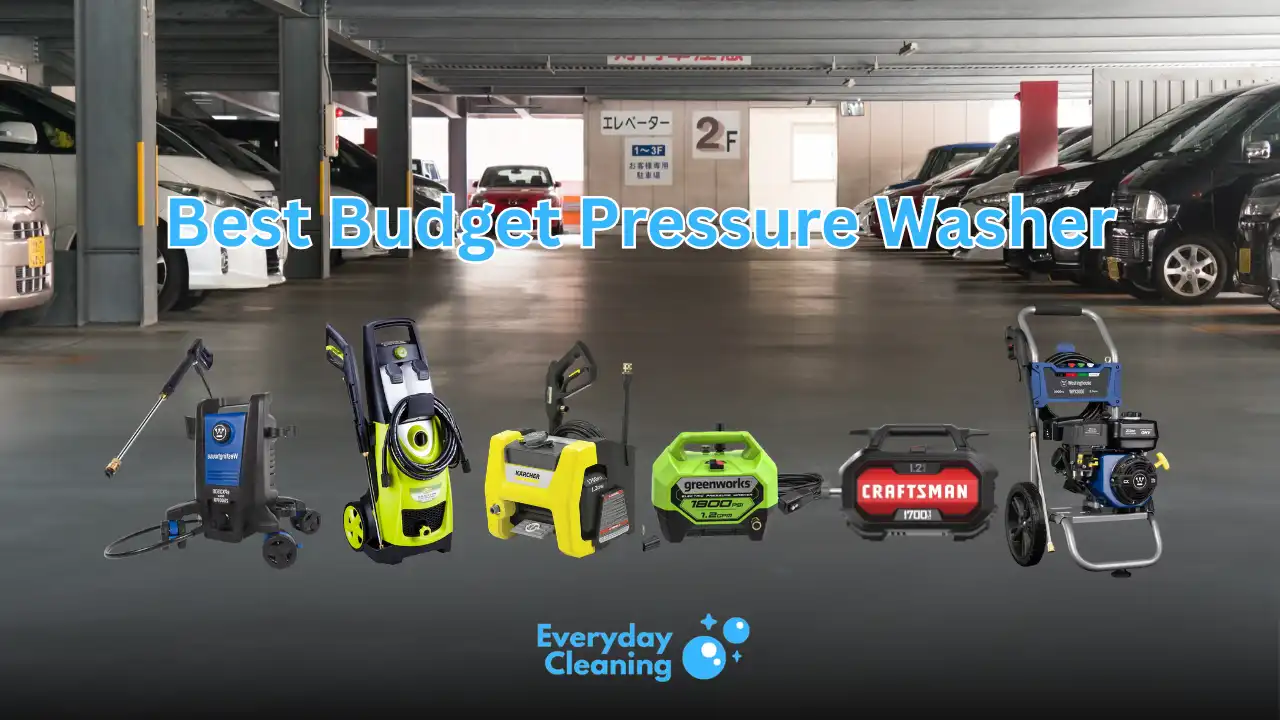
Most people do not need a $300 pressure washer to clean their driveway, patio, or car. We tested six budget models under $150 to find which ones deliver real cleaning power and which ones are a waste of money.
Our Top Picks at a Glance
| Recommendation | Product | Reason |
|---|---|---|
| Best Overall | Greenworks 1800 PSI | PWMA-certified with TSS and wheels at a beginner-friendly price. Reviews ↓ |
| Best Value Step-Up | Westinghouse ePX3500 | 4-wheel anti-tipping design, 5 nozzles, and 2500 PSI for around $150. Reviews ↓ |
| Best for Car Washing | Karcher K1700 | CETA-certified with a 25 ft hose and foot on/off switch built for car detailing. Reviews ↓ |
| Best Lightweight Pick | RYOBI RY141802 | Lightest corded option at 16 lbs with a 3-year warranty. Reviews ↓ |
| Best Foam Cannon Value | LWQ S5 | 2.5 GPM with foam cannon included, best GPM at this price point. Reviews ↓ |
| Best Name-Brand Entry | Craftsman CMEPW1700 | Cheapest name-brand option with onboard storage and a trusted warranty. Reviews ↓ |
Best Overall: Greenworks 1800 PSI
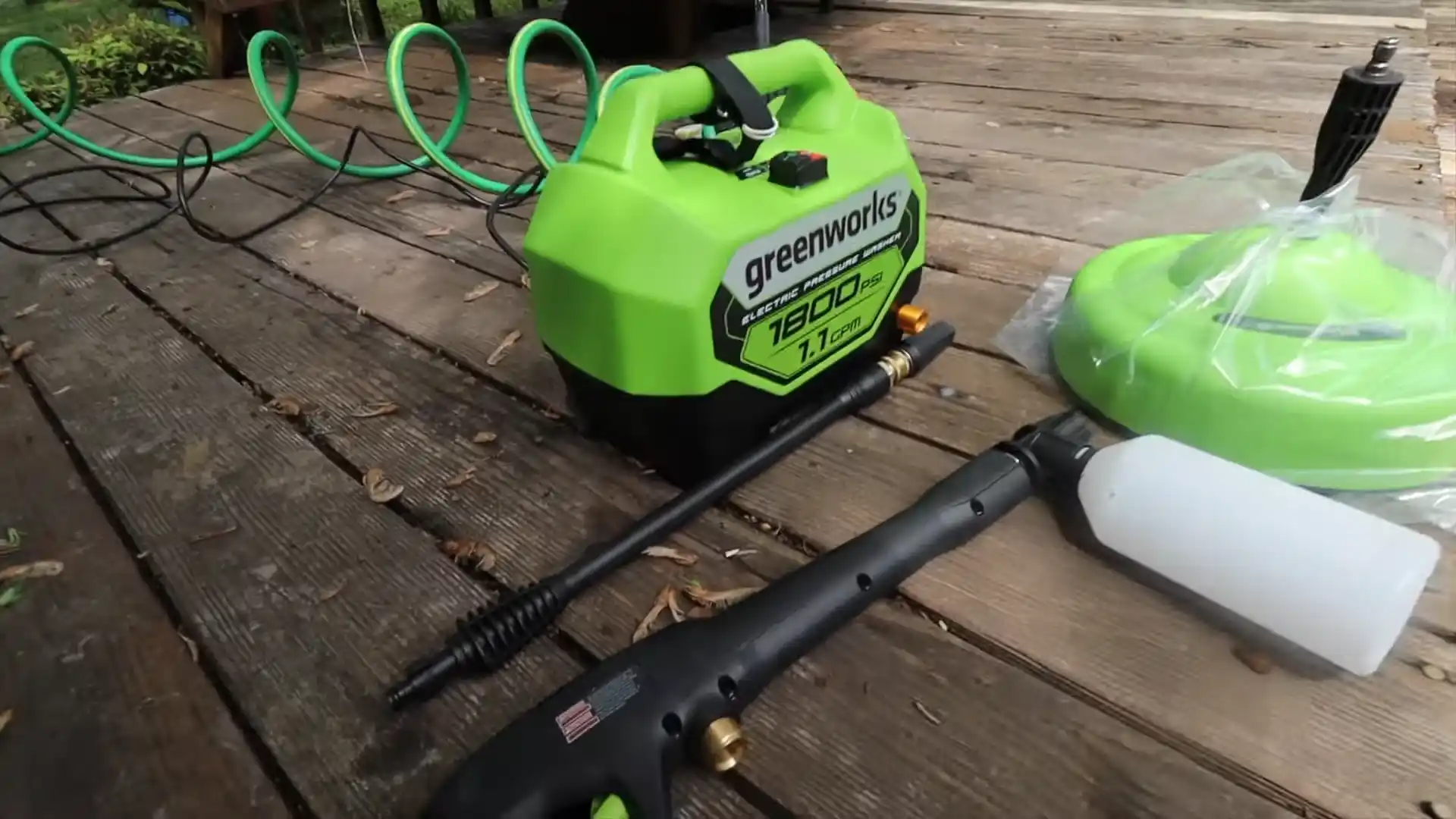
The Greenworks 1800 PSI is the smartest budget buy if you want a legit, no-surprises pressure washer. It is PWMA certified, which means the PSI and GPM numbers on the box are real, not inflated marketing figures.

- [1800 PSI @ 1.1 GPM] - Great for light-duty, residential cleaning. Clean cars, trucks, motorcycles, boats, RVs, outdoor patio furniture, windows, decks, etc
- [No Maintenance] - No gas, no oil, no spark plugs, no air filters, and no pull cord Push button start

Pros and Cons
| Pros | Cons |
|---|---|
| PWMA certified (honest specs you can trust) | 20 ft hose feels short on bigger jobs |
| Wheels for easy transport | |
| TSS pump protection extends machine life | |
| Trusted Greenworks brand | |
| Lightweight and easy to set up |
Testing Results
Cleaning Power (PSI/GPM): 1800 PSI and 1.1 GPM. Solid for cars, patio furniture, and light deck rinsing. Not enough for deep concrete stains or heavy mildew on brick.
Concrete / Driveway: Light duty only. Surface dirt rinses off fine. Ground-in oil stains need a stronger machine.
Siding: Yes. Handles light to medium siding cleanups without issues.
Deck / Fence: Yes. Good for regular maintenance washing on wood or composite.
Car Wash: Yes. Plenty of pressure for foam-and-rinse car washing without the risk of stripping paint.
Patio Furniture: Yes. Fast and effective on plastic and metal outdoor furniture.
Nozzle Versatility: Three quick-connect nozzles included (25 degree, 40 degree, turbo). No 0 or 15 degree, which limits it on stubborn surface spots.
Portability: Two-wheel hand-truck design makes it easy to drag across the yard. No need to carry it.
Ease of Setup: Straightforward assembly. Most users are washing within 15 minutes out of the box.
Real-world Usage
This is the pressure washer you grab at the start of spring to clean up the back patio, rinse off the grill, and wash the car after a long winter. It is not the tool for concrete restoration or blasting tough oil out of a driveway.
The PWMA certification is actually a big deal in this price range. A lot of budget models advertise 2200 or 2500 PSI and deliver half of that in real use. The Greenworks is certified, so what you see on the box is what you get.
Best Use Case
First-time buyers who want a reliable, no-confusion budget pressure washer for regular home maintenance. Also a strong pick for apartment dwellers with balconies or small driveways who need occasional light cleaning.
Not for anyone dealing with heavy stains, large driveways, or stubborn mildew on concrete or brick.
Verdict
The Greenworks 1800 PSI earns the top budget spot because it is honest. PWMA certification, TSS pump protection, and a wheel design all show up at this price. It has real limitations above 1800 PSI tasks, but within its lane it does the job every time. If you need more power, see our best electric pressure washer guide for step-up options.
Rating: 4.3 / 5
View on Amazon: Greenworks 1800 PSI
Best Value Step-Up: Westinghouse ePX3500
The Westinghouse ePX3500 sits just above the budget threshold at $149 to $179, but it packs features that most $200+ models do not offer. If you can stretch the budget slightly, this is where to go.
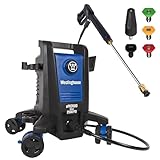
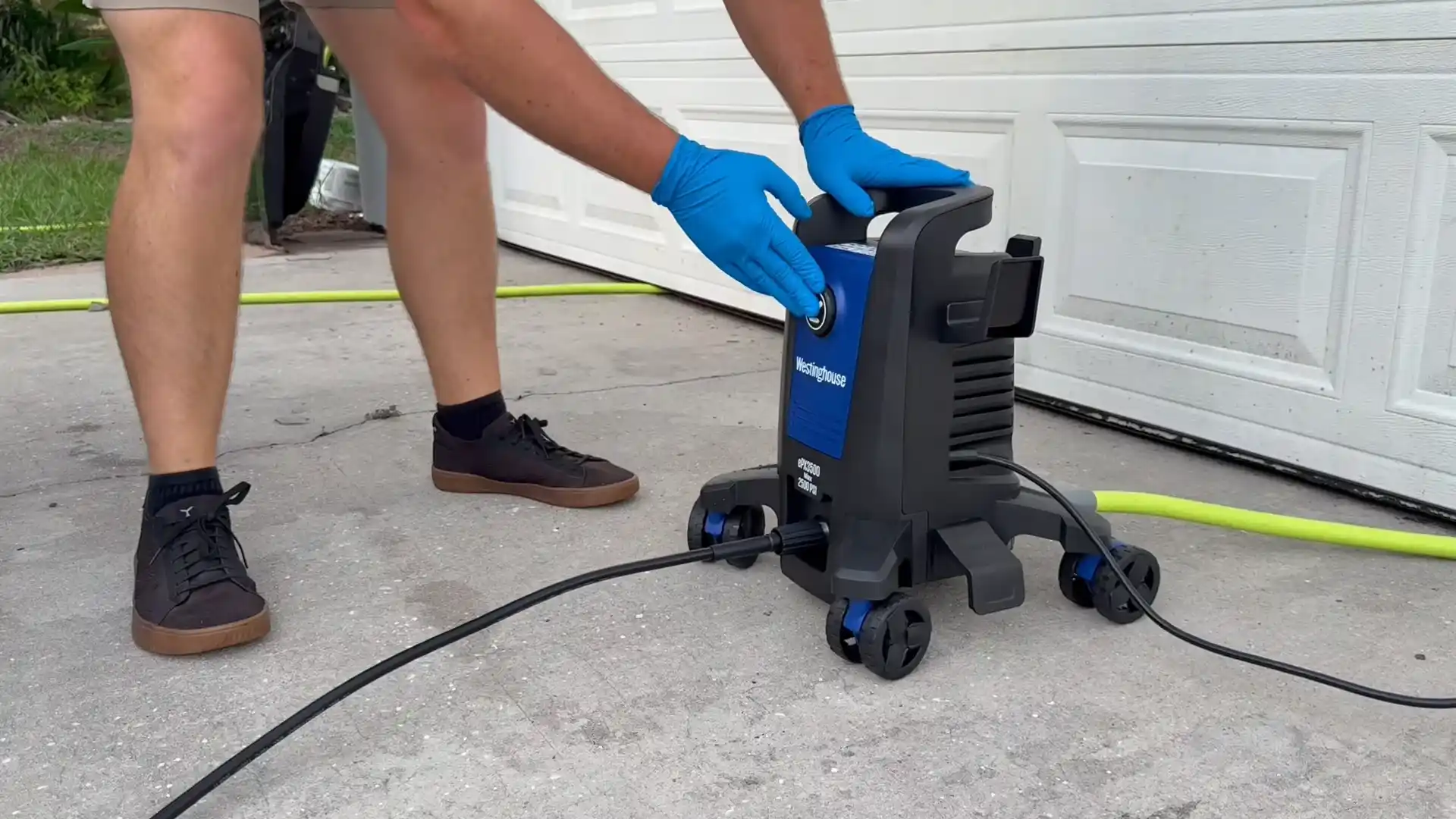
- Delivers 2500 max PSI and 1.76 max GPM (at lowest pressure), and 2000 rated PSI and 1.2 rated GPM of water flow; Pro-style steel extendable 17.5” wand with quick-connect nozzles (0°, 15°, 25°, turbo and soap applicator)
- Super compact and lightweight at 16.5” tall and 19 pounds for convenient storage and portability; Four quick-lock wheels with 360° steering design and low center of gravity engineered for anti-tipping design
Pros and Cons
| Pros | Cons |
|---|---|
| Anti-tipping 4-wheel 360-degree steering | 20oz soap tank is small, needs refilling on bigger jobs |
| 5 quick-connect nozzles including 0 degree | |
| Onboard 20oz soap tank | |
| 25 ft hose (longer than most budget models) | |
| Only 19 lbs | |
| 3-year warranty and TSS pump protection | |
| CSA tested |
Testing Results
Cleaning Power (PSI/GPM): Rated at 2500 PSI peak, but real-world rated output is closer to 2000 PSI / 1.2 GPM. Still a meaningful step up from 1700 to 1800 PSI budget models.
Concrete / Driveway: Yes, medium duty. Handles regular driveway cleaning and light stain removal. Not a concrete restoration machine.
Siding: Yes. Cleans siding comfortably without surface damage risk at the right nozzle setting.
Deck / Fence: Yes. Effective on both wood and composite decking.
Car Wash: Yes. Plenty of pressure with the right nozzle, and the soap tank makes sudsing up easier.
Patio Furniture: Yes. Works fast on any outdoor furniture.
Nozzle Versatility: All five angles covered, including 0 degree for stubborn spots. Best nozzle set in this price range.
Portability: Four-wheel 360-degree steering is genuinely useful. Anti-tipping design keeps it stable on uneven ground.
Ease of Setup: Fast. The 4-wheel frame is already assembled in most shipments. No tools needed.
Real-world Usage
The ePX3500 is the pressure washer that covers the whole property. Driveway in the morning, siding in the afternoon, car wash over the weekend. The 4-wheel steering and anti-tipping design mean you can pull it around on rough grass or gravel without it toppling over.
The 20oz soap tank is the one real nuisance. On a full car wash or large deck cleaning, you will refill it at least once. Minor inconvenience, not a dealbreaker.
Best Use Case
Homeowners who want a versatile all-purpose machine that handles driveways, siding, decks, and cars without specializing in any one task. The 5-nozzle set and 2500 PSI peak give more flexibility than any other pick on this list.
Not for anyone needing heavy-duty concrete blasting. For that, step up to a gas model, covered in our best pressure washer for driveways guide.
Verdict
The ePX3500 costs a bit more than strict budget models, but the jump in features is real. Four-wheel steering, five nozzles, onboard soap tank, 3-year warranty, and CSA testing all in one 19 lb machine. If the extra $30 to $50 over a basic model is manageable, this is where the value lands.
Rating: 4.5 / 5
View on Amazon: Westinghouse ePX3500
Best for Car Washing: Karcher K1700
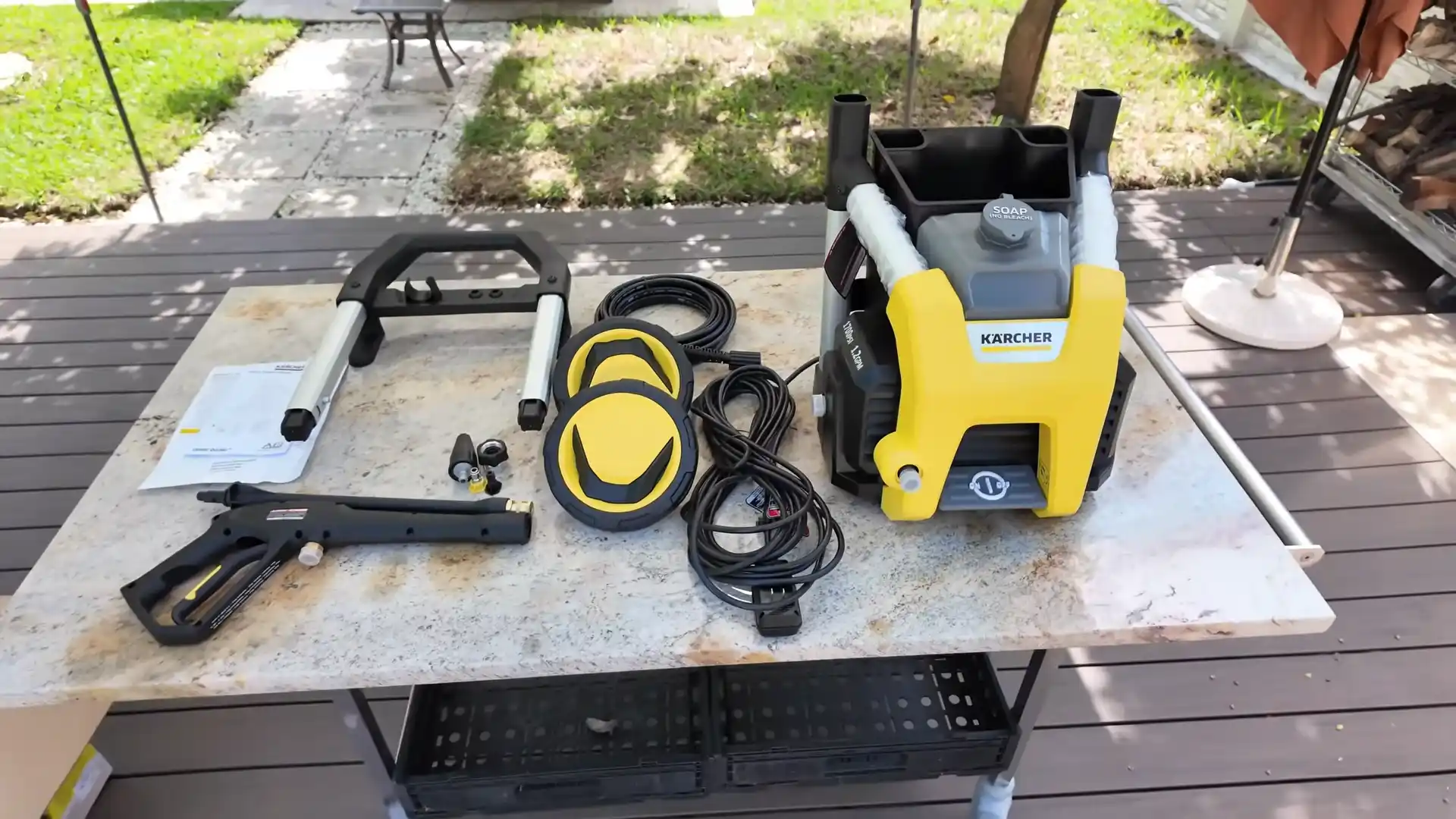
Karcher is the most recognizable name in pressure washers globally, and the K1700 is their affordable entry point for US buyers. If car washing is the main use case, this is the budget pick built for it.

- POWERFUL & CETA CERTIFIED: 1700 PSI TruPressure and 1.2 GPM for effective cleaning of various surfaces. Independently tested and CETA certified for proven performance you can trust.
- VERSATILE CLEANING OPTIONS: Equipped with three different nozzles (15°, turbo, and 65°), the K1700 allows you to tackle a wide range of cleaning jobs with precision
Pros and Cons
| Pros | Cons |
|---|---|
| CETA certified (independently verified specs) | Slightly pricier than Craftsman or RYOBI for similar PSI |
| Foot on/off switch (no bending over) | |
| Removable detergent tank for easy refilling | |
| 25 ft hose (best hose length at this price) | |
| Never-flat wheels | |
| Karcher brand build quality | |
| TSS pump protection |
Testing Results
Cleaning Power (PSI/GPM): 1700 PSI and 1.2 GPM. CETA certified, so these numbers are accurate. GPM is actually on the higher side for budget models at this PSI range, which helps rinsing speed.
Concrete / Driveway: Light only. Enough for surface dirt, not deep stains.
Siding: Yes. Handles regular siding rinses cleanly.
Deck / Fence: Yes. Good for maintenance washing.
Car Wash: Yes. The longer 25 ft hose and good GPM flow make this the smoothest car washing experience on the budget list.
Patio Furniture: Yes. Effective on any outdoor furniture.
Nozzle Versatility: Vario spray wand, turbo nozzle, and soap nozzle. No 0 or 15 degree click-in tips, which is a slight limitation for precise spot cleaning.
Portability: Never-flat wheels and the removable detergent tank make it easy to move and refill without bending awkwardly.
Ease of Setup: Slightly more setup than some competitors due to the wand-style nozzle system, but manageable within 20 minutes.
Real-world Usage
The foot on/off switch is the detail that separates the K1700 from most budget options. You do not have to crouch down or reach behind the unit to kill the pressure. For car washing, where you constantly move the machine around, that small feature saves real effort.
The 25 ft hose also gives more freedom on a two-car driveway. Most budget models top out at 20 ft. Getting the extra 5 ft of reach matters when you are working around the sides and rear of a vehicle.
Best Use Case
Car enthusiasts or anyone who frequently washes vehicles and wants a trusted brand name at a budget price. Also a strong pick if CETA certification and build quality matter more than raw PSI numbers.
Not the best pick if concrete or driveway stain removal is the main priority. For that, see our best pressure washer for concrete roundup.
Verdict
The Karcher K1700 trades raw power for quality-of-life features. The foot switch, longer hose, removable tank, and CETA certification all point to a machine that was designed for real-world usability, not just the spec sheet. For car washing, it is the most comfortable budget option on this list.
Rating: 4.2 / 5
View on Amazon: Karcher K1700
Best Lightweight Pick: RYOBI RY141802
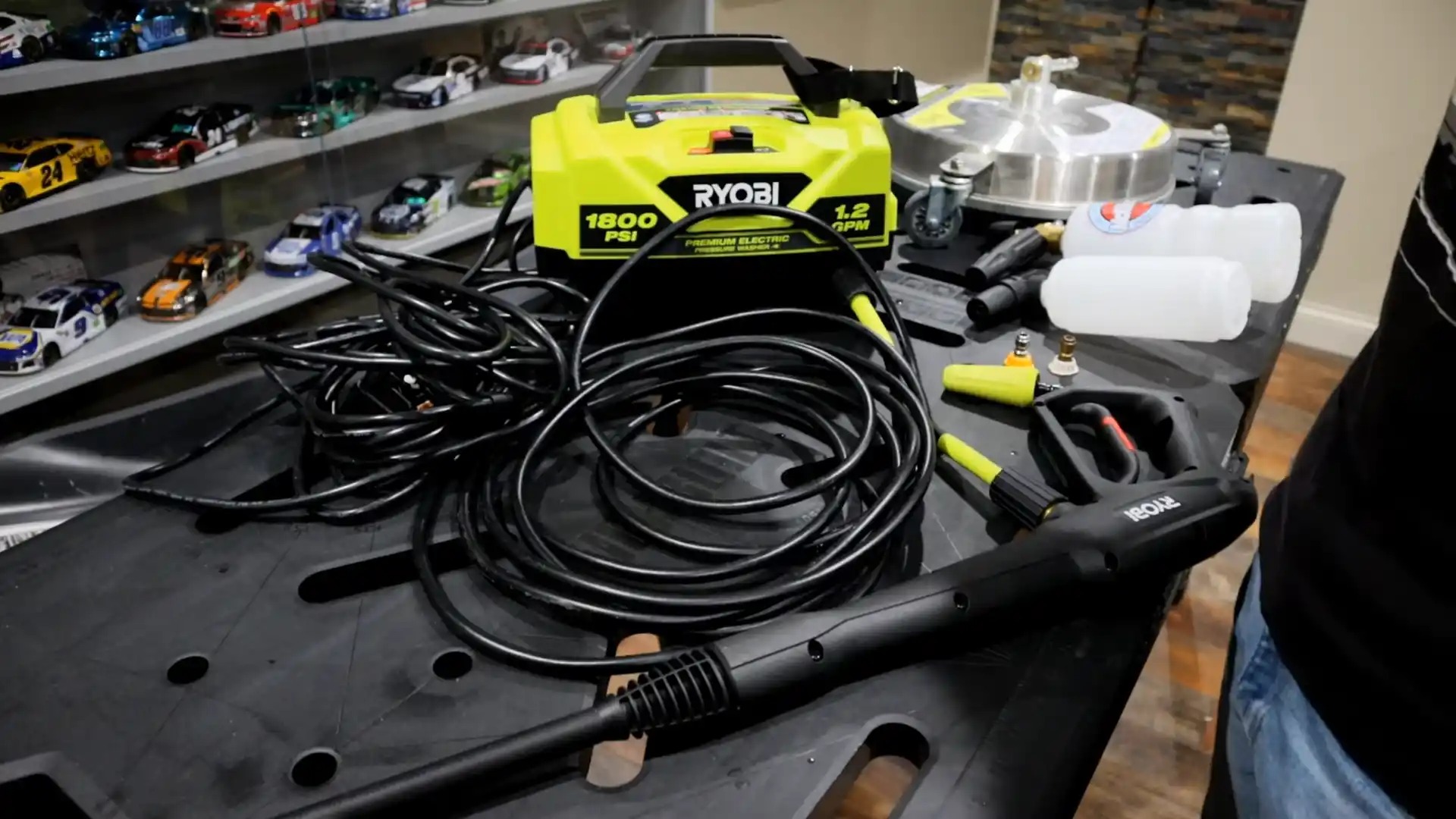
At 16 lbs, the RYOBI RY141802 is the lightest corded pressure washer on this list. For users who want to carry the machine rather than drag it on wheels, this is the one.

Pros and Cons
| Pros | Cons |
|---|---|
| Lightest pick at 16 lbs, easy to carry | Only 3 nozzles |
| 3-year RYOBI warranty (best on the budget list) | |
| Onboard detergent tank | |
| Turbo nozzle included | |
| TSS pump protection | |
| Compact roll-cage design |
Testing Results
Cleaning Power (PSI/GPM): 1800 PSI and 1.2 GPM. Not PWMA certified, but RYOBI’s budget models historically perform close to rated specs.
Concrete / Driveway: Light only. Surface-level concrete dirt rinses well. Stains require a stronger machine or more passes.
Siding: Yes. Comfortable pressure for vinyl and aluminum siding.
Deck / Fence: Yes. Good for regular deck maintenance.
Car Wash: Yes. The 1800 PSI is safe for paint at reasonable distances.
Patio Furniture: Yes. Cleans standard outdoor furniture fast.
Nozzle Versatility: Turbo, soap, and 15 degree included. The 15 degree is the most useful for actual cleaning. No 25 or 40 degree for gentler rinsing on delicate surfaces.
Weight and Portability: 16 lbs makes this genuinely easy to carry up steps, around the car, or anywhere without a handle or wheels. The roll-cage frame protects it if you set it down on rough ground.
Soap Delivery: Mixed results. Some users report good soap coverage, others find the mixing inconsistent. If consistent soap delivery matters, the Karcher K1700 with its removable detergent tank is more reliable.
Real-world Usage
The RYOBI works best for people who want to carry the machine around while cleaning, not park it and run a long hose. At 16 lbs, it is light enough to hold in one hand while positioning with the other. The 3-year warranty is the longest on the budget list, which adds long-term confidence for a brand this price.
Best Use Case
Homeowners who do a lot of vertical or above-ground cleaning, like windows, shutters, and siding on a single-story home. Also great for car washing where you move around the vehicle frequently and do not want to drag a machine behind you.
Not the right pick if you need consistent soap application or a full nozzle set for different cleaning angles.
Verdict
The 3-year warranty and 16 lb weight are the two reasons to buy the RYOBI RY141802. Everything else is comparable to the Greenworks or Craftsman at the same price. If portability is your top priority, this wins the budget category by a margin.
Rating: 4.1 / 5
View on Amazon: RYOBI RY141802
Best Foam Cannon Value: LWQ S5
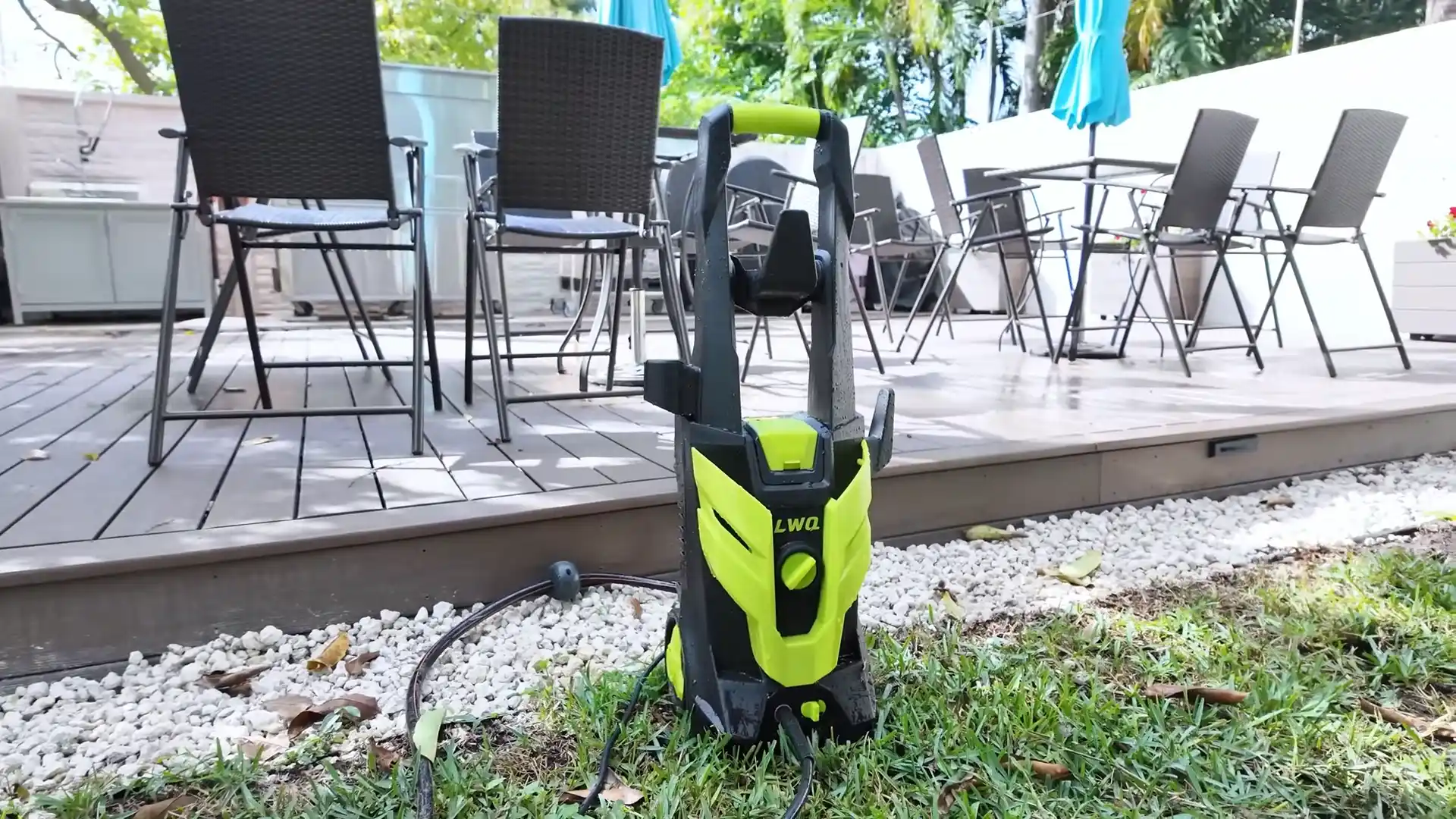
The LWQ S5 packs the highest GPM of any model on this list at 2.5 GPM, plus a foam cannon and four metal nozzles, all under $130. If foam cannon car washing is the goal, nothing at this price comes close.

- Powerful Pressure Washer: LWQ pressure washer with deep cleaning high pressure up to 2.5 GPM of water flow. The strong pressure for less time and water, more efficient cleaning
- Multi-Purpose Power Washer: LWQ power washer with 4 quick-connect spray nozzles (water-pressure strength: 0°›15°› 25°› 40°) and 1 foam cannon, it's easy to clean objects with complex shapes and structures, such as driveways, patio furniture, machine, and wheels
Pros and Cons
| Pros | Cons |
|---|---|
| Highest GPM at this price point (2.5 GPM) | Short 16 ft power cord severely limits reach |
| Foam cannon included out of the box | Brand is lesser-known |
| 4 metal quick-connect nozzles (0, 15, 25, 40 degree) | |
| Lightweight at 16.6 lbs | |
| Anti-tipping design with oversized wheels | |
| Can draw from bucket or tap |
Testing Results
Cleaning Power (PSI/GPM): The 2.5 GPM is the real selling point. High GPM means more water volume, which translates to faster rinsing and better foam coverage. The 2030 PSI rating is manufacturer-claimed and not independently verified.
Concrete / Driveway: Light to medium. The higher GPM helps lift surface dirt faster than lower-flow models.
Siding: Yes. Handles standard siding jobs.
Deck / Fence: Yes. Good pressure and flow for decks and fencing.
Car Wash: Yes. The foam cannon plus high GPM makes this the best foam washing setup on the budget list.
Patio Furniture: Yes. Fast and effective.
Nozzle Versatility: All four standard angles in metal quick-connect format. Best nozzle set at this price alongside the Westinghouse ePX3500.
Cord Length: The 16 ft power cord is the biggest limitation. Most homes will need an extension cord to reach a driveway or back yard. Factor that in.
Soap Delivery: The foam cannon is the standout feature. Produces thick, clinging foam similar to touchless car wash foam, which is rare at this price.
Real-world Usage
The LWQ S5 is the car detailing pick for people who want a proper foam cannon without spending $200+. Setup is simple, the foam output is strong, and the 4 metal nozzles do not feel like cheap plastic like on most budget models.
The 16 ft cord is a real issue you will feel immediately. Buy an outdoor-rated extension cord before the machine arrives. After that, it is a solid, practical setup for foam washing and standard outdoor cleaning. If you are cleaning a patio far from an outlet, look at our best portable pressure washer guide instead.
Best Use Case
Car detailing enthusiasts who want foam cannon washing on a tight budget. Also good for patio furniture and light deck cleaning where high GPM rinsing power saves time.
Not ideal for large properties or anyone without a nearby outlet.
Verdict
The LWQ S5 does one thing better than any other budget pressure washer: foam cannon performance at under $130. The short cord is annoying, and the brand does not have the track record of Greenworks or RYOBI. But if foam washing is the priority, the 2.5 GPM and included cannon make it hard to justify buying anything else at this price.
Rating: 4.0 / 5
View on Amazon: LWQ S5
Best Name-Brand Entry: Craftsman CMEPW1700
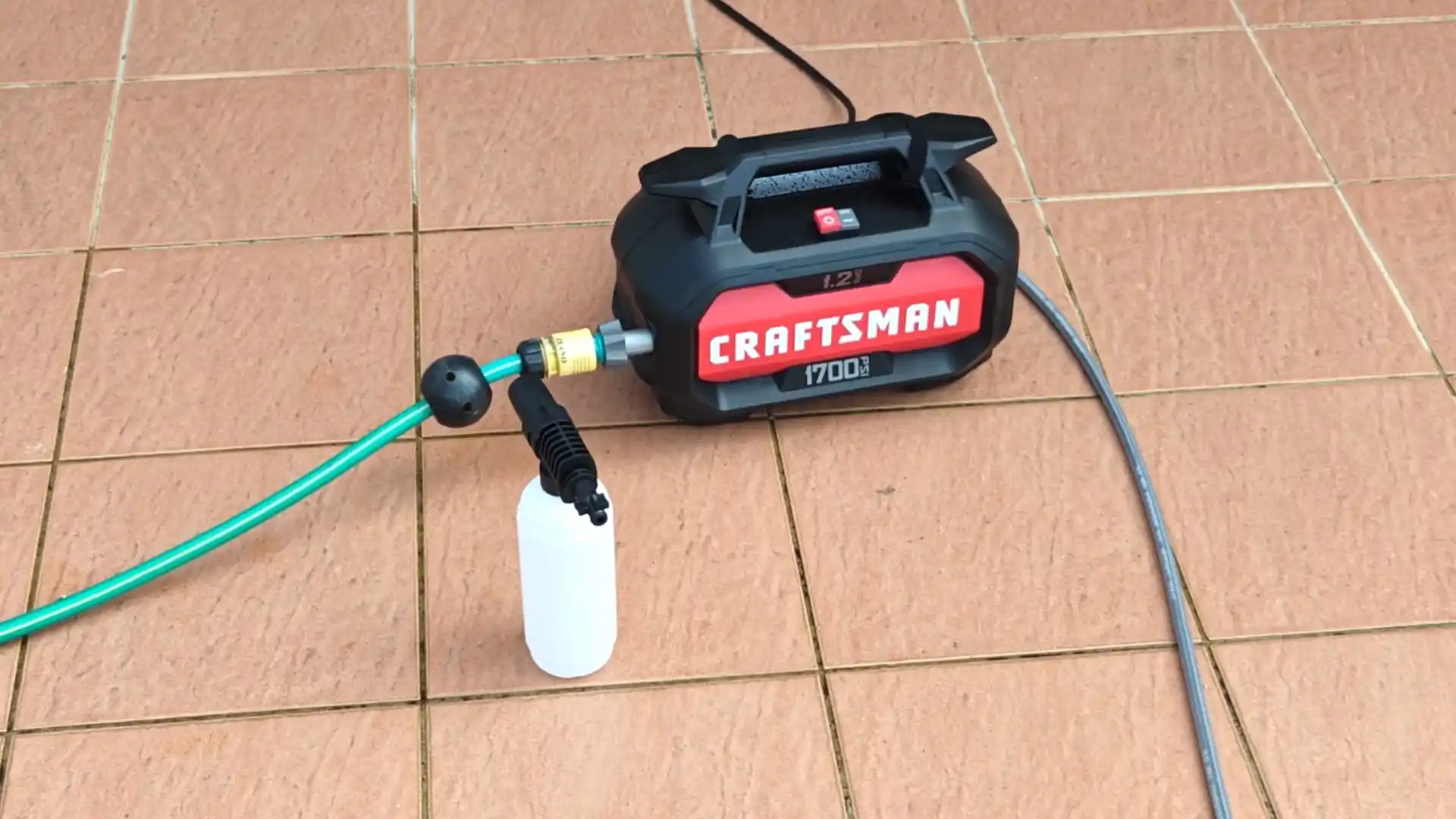
The Craftsman CMEPW1700 is the cheapest name-brand pressure washer you can buy. If budget is the primary constraint and brand trust matters, this is where to start.

- Powerful cleaning: Electric power washer with1700 max psi* and 1. 2 gpm**
- Added benefit: soap applicator bottle for cleaning with soap
Pros and Cons
| Pros | Cons |
|---|---|
| Lowest price on this list ($89 to $99) | Only 2 nozzles included (turbo and 40 degree) |
| Lightweight at 17.6 lbs | |
| Onboard storage for hose, cord, and nozzles | |
| Trusted CRAFTSMAN brand and 3-year warranty | |
| Comfortable grip wand |
Testing Results
Cleaning Power (PSI/GPM): 1700 PSI and 1.2 GPM. The lowest PSI on the corded list. Fine for light cleaning, not suitable for anything requiring sustained pressure on concrete.
Concrete / Driveway: Light only. Surface rinse is achievable. Deep stain removal is not.
Siding: Yes. Handles basic siding maintenance.
Deck / Fence: Yes. Works for regular deck washing.
Car Wash: Yes. Safe pressure for painted surfaces at this PSI.
Patio Furniture: Yes. Effective on standard outdoor furniture.
Nozzle Versatility: Only two nozzles: turbo and 40 degree. No adjustable angle options for gentler or more precise cleaning. The turbo nozzle does most of the work.
Storage: Onboard hose and cord wrap keeps everything tidy. Better organized than the Greenworks and LWQ out of the box.
Ease of Setup: Very quick. Light machine, simple design, minimal assembly.
Real-world Usage
The Craftsman CMEPW1700 is the pressure washer for someone who wants to get started at the absolute minimum investment. The CRAFTSMAN brand carries warranty trust and basic quality standards that off-brand models at this price often miss.
The missing TSS (Total Stop System) is the main concern. TSS stops the pump when you release the trigger, which protects the motor from overheating during pauses. Without it, you should not leave the machine running for long without actually spraying. That said, many entry-level users never have a problem if they use the machine sensibly.
Best Use Case
First-time buyers who want the cheapest possible entry from a brand with a real warranty. Good for light seasonal cleaning, car rinses, and basic patio maintenance a few times a year.
Not for frequent or heavy use. For anyone planning to wash more than once or twice a month, the Greenworks or RYOBI are better long-term investments.
Verdict
The Craftsman CMEPW1700 exists for one reason: it is the cheapest machine from a real brand you can trust. Performance is limited, the nozzle selection is minimal, and the lack of TSS is a small but real concern. But at $89 to $99 with a 3-year CRAFTSMAN warranty, it delivers basic cleaning capability without the risk of buying a no-name unit that breaks in the first season.
Rating: 3.9 / 5
View on Amazon: Craftsman CMEPW1700
What Makes the Best Budget Pressure Washer?
PSI and GPM: Which Number Actually Matters More
Most buyers fixate on PSI (pressure per square inch) without paying attention to GPM (gallons per minute). Both matter, but they do different jobs.
PSI determines how hard the water hits the surface. Higher PSI breaks up stuck-on grime, grease, and mildew. GPM determines how much water volume moves through the nozzle. Higher GPM rinses away loosened dirt faster and produces better foam coverage. For budget buyers, GPM around 1.1 to 1.2 is standard. The LWQ S5 stands out with 2.5 GPM, which is why it performs differently on foam cannon tasks even at a lower verified PSI.
For light residential cleaning, 1700 to 1800 PSI is enough for cars, patio furniture, siding, and decks. For concrete driveways or heavy stain removal, you will want 2300 PSI or above, which typically pushes you out of the strict budget category.
PWMA and CETA Certification: Why It Matters at This Price
The pressure washer industry has a PSI inflation problem. Brands routinely advertise peak PSI numbers that only occur for a fraction of a second under ideal lab conditions, not real-world use. A machine advertised at 2200 PSI may deliver 1400 PSI in actual operation.
PWMA (Power Washers Manufacturers’ Association) and CETA (Cleaning Equipment Trade Association) certifications verify that a machine’s PSI and GPM claims match real performance. On this list, the Greenworks is PWMA certified and the Karcher K1700 is CETA certified. If you are comparing uncertified models, treat advertised PSI numbers with healthy skepticism.
Nozzles: More Is Not Always Better, But the Right Ones Matter
Most budget pressure washers include two to five nozzles in the kit. The angle determines how concentrated the spray is.
A 0 degree nozzle fires a pinpoint stream at maximum force. It removes the most stubborn stains but can easily damage wood, siding, and painted surfaces. A 15 degree nozzle is the general-purpose workhorse for tough surfaces like concrete. A 25 degree angle works well on siding and decks. A 40 degree spray is the gentlest and works best on cars and delicate surfaces. A turbo nozzle rotates rapidly to cover more surface area with concentrated pressure.
For most budget buyers, look for at least three angles in the kit. The Westinghouse ePX3500 and LWQ S5 both include four or five, which gives more flexibility without spending extra.
Cord Length vs. Hose Length: Know the Difference
Budget buyers often overlook cord length. The hose is what connects to the wand, and most budget models include 20 to 25 ft hoses. The power cord connects to your outlet, and that number is just as important.
Most models on this list include a 35 ft cord. The LWQ S5 only has a 16 ft cord, which is the reason it ranks lower for general use despite having strong specs. You will almost always need an extension cord for outdoor pressure washing anyway, so factor that into the setup if you buy the LWQ.
TSS (Total Stop System): Should You Care?
TSS automatically shuts off the pump motor when you release the spray trigger. Without it, the pump keeps running even when no water is flowing, which builds heat and can cause premature wear.
For occasional use, a machine without TSS (like the Craftsman CMEPW1700) will survive for years if you use it sensibly and do not let it idle for long periods. For regular use or longer sessions, TSS is worth having. Every model on this list except the Craftsman includes TSS.
How to Use a Budget Pressure Washer Effectively
Getting the most out of a 1700 to 1800 PSI machine means using it correctly, not just pointing and spraying.
Start by sweeping or brushing off loose debris before washing. Pressure water pushes dirt around more than it lifts it. Removing the loose stuff first makes the washing pass more effective.
Choose the right nozzle for the surface. A 15 degree nozzle on a car will strip wax and can scratch softer paint if held too close. Start with a 40 degree nozzle on painted or delicate surfaces and move closer only if needed.
Use a detergent for anything greasy or mildewed. Plain water pressure alone struggles with oil stains and biological growth. Let the detergent dwell for two to three minutes before rinsing. Most soap nozzles reduce pressure significantly, which is why you apply soap first and rinse with a higher-angle nozzle after.
Maintain distance. A 1800 PSI machine at 6 inches from a wood deck can still leave lines. Start at 18 to 24 inches and move closer gradually. Check a small hidden area first on any new surface.
Keep the machine cool during long sessions. Even with TSS, give the pump a rest if you are washing for over 30 minutes without breaks.
Frequently Asked Questions
What is the minimum PSI needed for a useful budget pressure washer?
For light-duty tasks like car washing, patio furniture, and rinsing siding, 1700 PSI is enough. If you want to clean a concrete driveway or handle mildew on a deck, 1800 PSI is the practical minimum and 2000 PSI is more comfortable. Below 1700 PSI, you are essentially working with a garden hose attachment rather than a real pressure washer.
Is a budget electric pressure washer good enough for a concrete driveway?
For surface dirt and light staining, yes. A 1800 PSI model will rinse a driveway and remove loose buildup from concrete. For deep stains, oil spots, or years of grime, you need at least 2300 to 2500 PSI and higher GPM. Our best pressure washer for driveways guide covers the more powerful options if driveway cleaning is your main use case.
How long do budget pressure washers last?
With reasonable care, a budget electric pressure washer from a major brand (Greenworks, RYOBI, Karcher, Craftsman) typically lasts 3 to 5 years of seasonal use. Machines with TSS protection last longer because the pump is not overheating between sprays. No-name models at very low prices often do not survive two full seasons. Stick to brands with a real warranty and the machine will likely outlast the warranty period.