6 Best Rated Pressure Washers of 2026
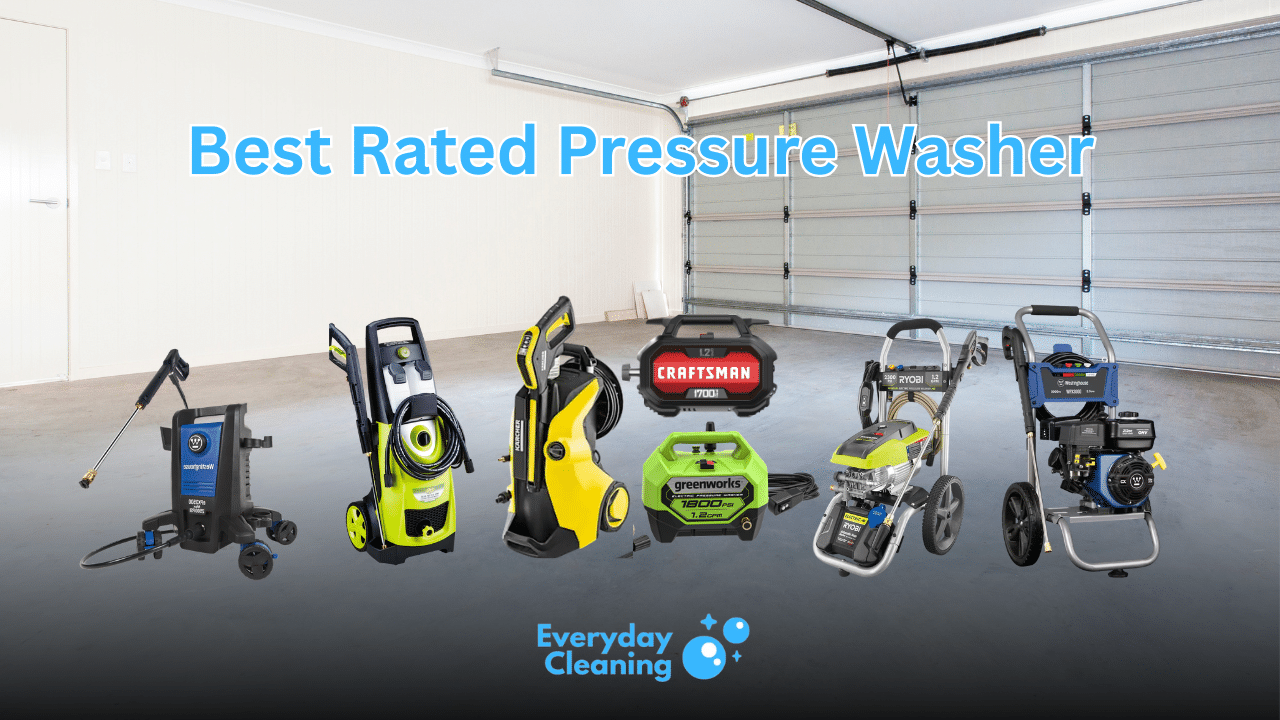
Not every highly rated pressure washer deserves its star count. We tested and researched the most reviewed models across electric, gas, and cordless to find the ones that actually hold up on driveways, siding, decks, and car washes.
Our Top Picks
| Recommendation | Product | Reason |
|---|---|---|
| Best Overall | Westinghouse ePX3500 | Anti-tip 4-wheel design, 5 nozzles, 2500 PSI in 19 lbs — Reviews ↓ |
| Best Value | Sun Joe SPX3000 | 20,000+ reviews at 4.8 stars, dual soap tanks, PWMA certified — Reviews ↓ |
| Best High-Power Electric | Westinghouse WPX3000e | 3000 PSI induction motor, quieter than gas, 10-inch wheels — Reviews ↓ |
| Best Premium Electric | Greenworks Pro GPW3001 | PWMA-certified 3000 PSI, 10-year motor warranty, TruBrushless smart sensing — Reviews ↓ |
| Best Gas | Westinghouse WPX3400 | 3400 PSI and 2.6 GPM, 24,000+ reviews, easy-start 212cc engine — Reviews ↓ |
| Best Cordless | EGO HPW3200 | 3200 PSI fully cordless, 60-min runtime, no outlet needed — Reviews ↓ |
Best Overall: Westinghouse ePX3500
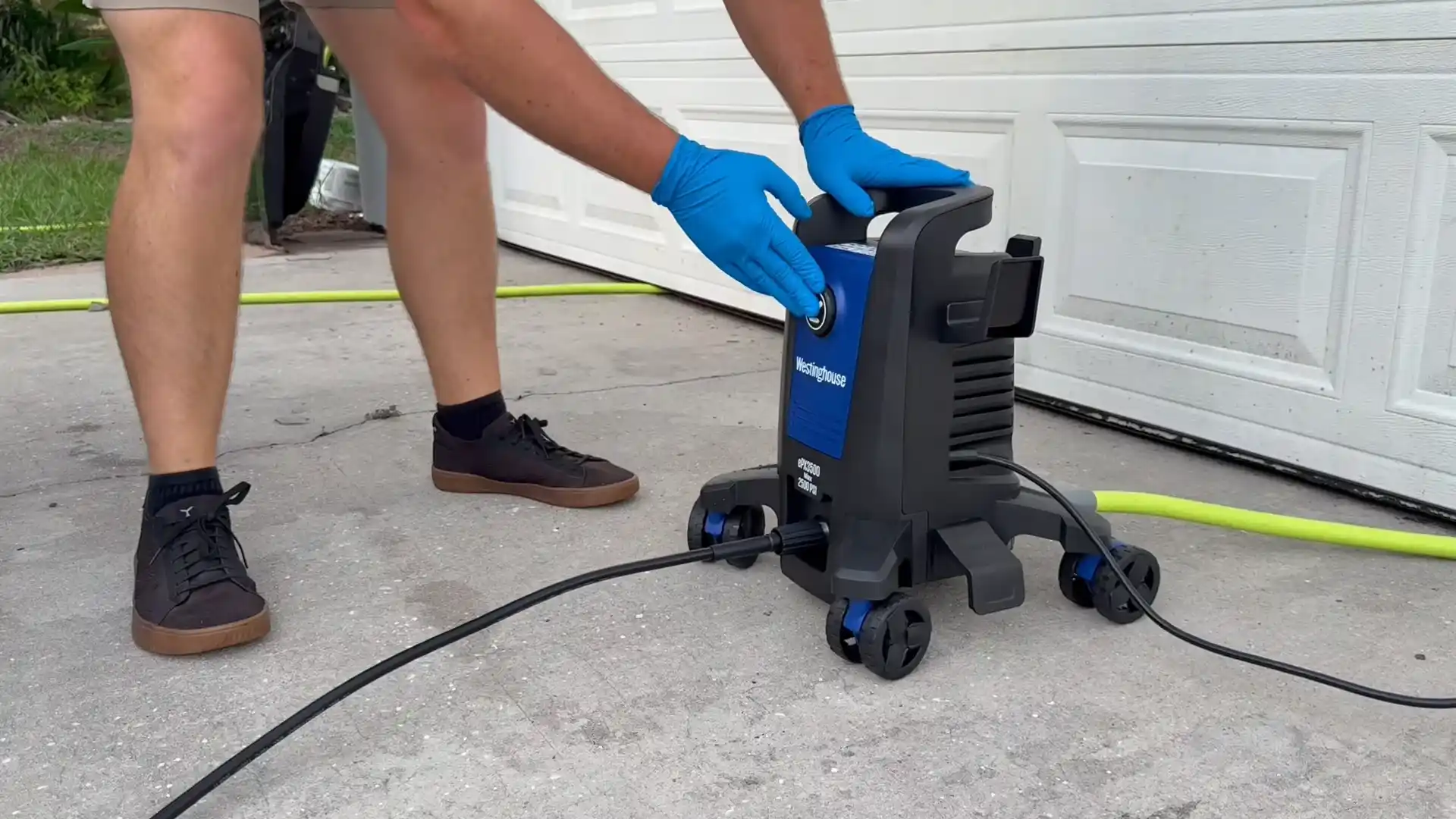
The Westinghouse ePX3500 is the easiest pick for most homeowners. It hits 2500 PSI, weighs only 19 lbs, and rolls on four 360-degree steering wheels that won’t tip over on uneven ground. That’s a combination very few electric models match.
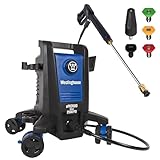
- Delivers 2500 max PSI and 1.76 max GPM (at lowest pressure), and 2000 rated PSI and 1.2 rated GPM of water flow; Pro-style steel extendable 17.5” wand with quick-connect nozzles (0°, 15°, 25°, turbo and soap applicator)
- Super compact and lightweight at 16.5” tall and 19 pounds for convenient storage and portability; Four quick-lock wheels with 360° steering design and low center of gravity engineered for anti-tipping design

Pros and Cons
| Pros | Cons |
|---|---|
| Anti-tip 4-wheel 360-degree steering | Onboard soap tank is only 20oz |
| Five quick-connect nozzles including 0 degree | |
| Only 19 lbs with a 25 ft hose | |
| TSS pump protection included | |
| 3-year Westinghouse warranty |
Testing Results
PSI and GPM cleaning power: Rated 2500 PSI max / 2000 PSI working and 1.2 GPM continuous. Solid for driveways and decks at medium duty. Not a heavy stain blaster, but handles most residential jobs well.
Concrete / Driveway: Yes, medium duty. Handles standard concrete stains, aged dirt, and light oil marks. Not suitable for serious concrete restoration.
Siding: Yes. The 25-degree nozzle works well on vinyl and painted wood siding without damage risk.
Deck / Fence: Yes. Effective on wood and composite. Use 25 or 40 degree nozzle to avoid raising grain on softer wood.
Car Wash: Yes. Safe with the 40-degree nozzle at normal distance. Foam soap tank makes it convenient.
Patio Furniture: Yes. Easy on metal, resin, and wicker at any nozzle setting.
Heavy Stains: Light to medium only. The 1.2 GPM continuous flow is the limiting factor on deep embedded stains.
Portability and weight: 19 lbs. One of the lightest mid-range electrics available. The 4-wheel design rolls over cracked driveways and grass edges without issue.
Noise level: Quieter than most universal motor electric washers. Comfortable to use for extended sessions without hearing protection.
Nozzle versatility: Five quick-connect nozzles including 0, 15, 25, turbo, and soap. Full range for most residential tasks.
Soap tank and detergent delivery: Onboard 20oz tank covers car washes and spot cleaning. Small for large siding jobs.
Real-world Usage
The ePX3500 is the pick for people who want one machine that handles the driveway on Saturday and the car on Sunday without swapping machines. The 4-wheel design is the feature that separates it from similar-power competitors. Most electric washers tip easily on sloped driveways. This one doesn’t.
The 20oz soap tank is small enough to refill once or twice during a siding job. That’s a minor inconvenience rather than a dealbreaker, and the rest of the kit more than makes up for it.
Best Use Case
Ideal for homeowners cleaning driveways, patios, siding, fences, and cars with one machine. The lightweight body makes it easy to move between tasks without fatigue. Not the right choice for anyone tackling heavy concrete staining, oil spills on garage floors, or two-story exterior washing where more PSI and GPM are needed.
Verdict
The ePX3500 earns its “best overall” spot because of what it gets right at a price most people are comfortable with. Five nozzles, anti-tip stability, a 3-year warranty, and 19 lbs of total weight. For a typical suburban homeowner, this covers 90% of outdoor cleaning jobs without breaking a sweat.
If you ever need to step up for heavy concrete work, our best 3000 PSI electric pressure washer guide covers options with more cleaning muscle.
Rating: 4.7 / 5
View on Amazon: Westinghouse ePX3500
Best Value: Sun Joe SPX3000
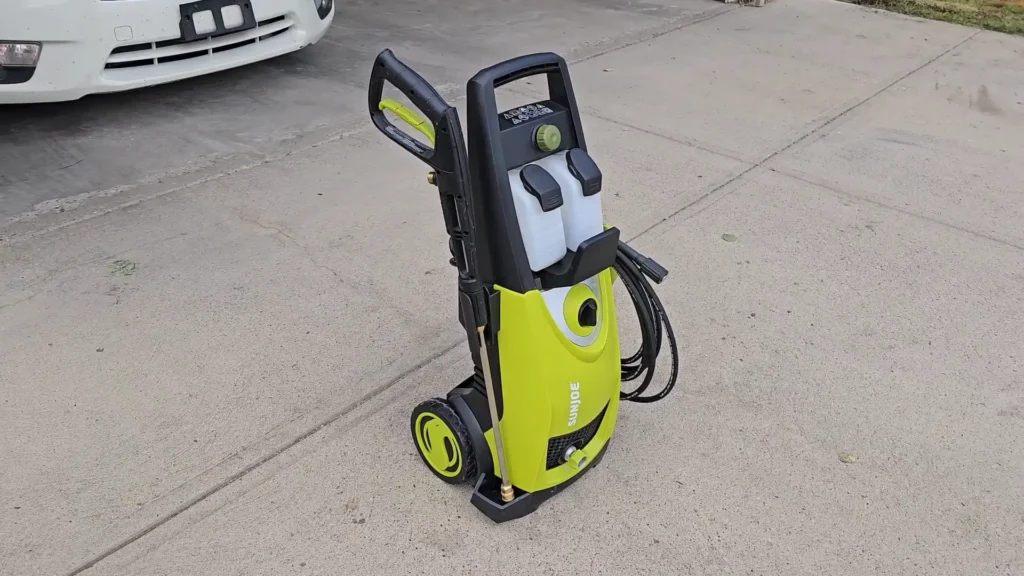
The Sun Joe SPX3000 is the most-reviewed electric pressure washer on Amazon, with over 20,000 ratings averaging 4.8 stars. That kind of track record is hard to argue with. The dual detergent tank system is a feature you won’t find on any other model at this price.

- High-Pressure Cleaning: This electric pressure washer delivers up to 2030 PSI working pressure and 1.2 GPM water flow to help remove dirt, grime, and buildup from homes, driveways, vehicles, RVs, and outdoor equipment
- Multiple Spray Options: This water pressure washer includes five quick-connect spray tips (0°, 15°, 25°, 40°, and soap) to switch between narrow jet streams and wider fan patterns, plus a soap applicator for detergent use
Pros and Cons
| Pros | Cons |
|---|---|
| 20,000+ Amazon reviews at 4.8 stars | 1.2 GPM is lower than newer competitors |
| Unique dual soap tank system (switch soaps mid-job) | 20 ft hose feels short for large jobs |
| PWMA certified (honest PSI rating) | |
| Five nozzles including 0 degree | |
| Solid brass fittings on all connections |
Testing Results
PSI and GPM cleaning power: PWMA-certified 2030 PSI at 1.2 GPM. Specs are honest. Performance matches what buyers actually see.
Concrete / Driveway: Yes, medium duty. Good on standard residential concrete. Slower rinsing speed than models with higher GPM.
Siding: Yes. Works well on vinyl, wood, and fiber cement siding with proper nozzle selection.
Deck / Fence: Yes. Effective on treated wood, composite, and vinyl fencing. Use 25 or 40 degree nozzle to protect wood grain.
Car Wash: Yes. The 40-degree nozzle is safe for most paint at standard distance.
Patio Furniture: Yes. Easy to manage on any material.
Heavy Stains: Light to medium only. The 1.2 GPM limits deep cleaning speed on embedded stains.
Soap tank and detergent delivery: The dual 0.9L tank system is the headline feature. Load different cleaners in each tank and switch between them with a dial. Useful for jobs that require a degreaser on one section and a general cleaner on another.
Nozzle versatility: Five quick-connect nozzles give a full spread from 0 degree blast to soap application.
Portability and weight: 24.3 lbs with rear wheels. Manageable but heavier than the ePX3500.
Real-world Usage
The SPX3000 has been in more garages and storage sheds than any other pressure washer on this list. Its reputation is built on years of consistent performance at an approachable price.
The dual soap tank is genuinely useful if you do a lot of varied outdoor cleaning. Load your car soap in one tank and your deck cleaner in the other. No stopping to refill or switch bottles mid-job.
Best Use Case
Best for value-focused buyers who want a proven, well-reviewed machine for general residential use. Driveways, patios, siding, decks, and cars are all in its wheelhouse. Not the right choice for buyers who want lightweight portability or extra GPM for large surface jobs.
Verdict
The SPX3000 is the machine that introduced pressure washers to a generation of homeowners who previously hired someone for the job. That 4.8-star rating across 20,000 purchases is earned through reliability and honest specs, not marketing. For the price, it’s hard to beat.
Rating: 4.6 / 5
View on Amazon: Sun Joe SPX3000
Best High-Power Electric: Westinghouse WPX3000e
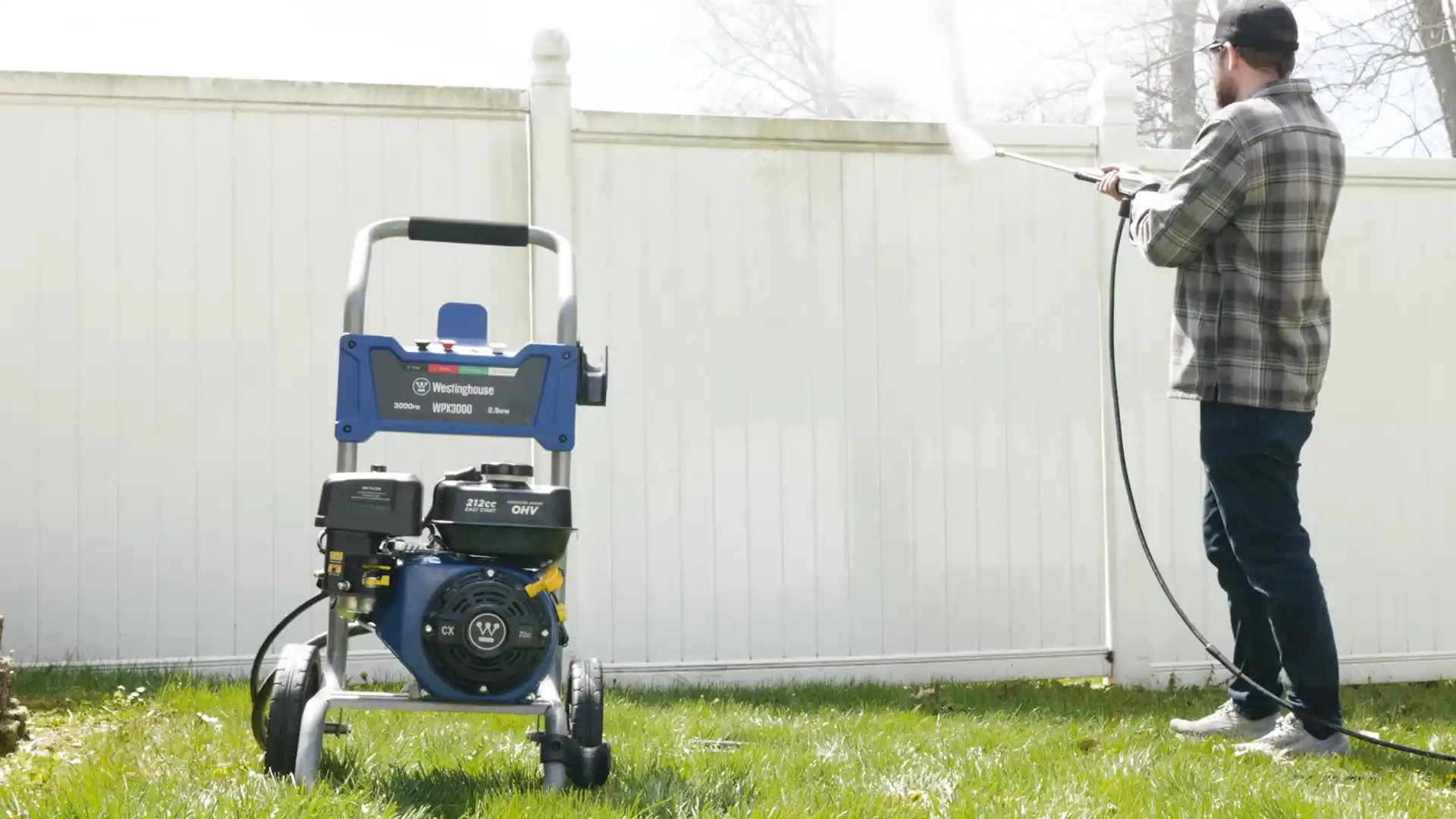
The WPX3000e is what you buy when the ePX3500 isn’t enough but you don’t want to deal with gas. It hits 3000 PSI with an induction motor that runs noticeably quieter than any universal motor competitor. The 10-inch never-flat wheels handle rough terrain that smaller electric models can’t manage.
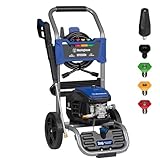
- Delivers 3000 max PSI and 1.76 max GPM (at lowest pressure), and 2600 rated PSI and 1.1 rated GPM of water flow. Perfect for decks, sidewalks, fences, garage floors, exterior walls, cars and patio furniture; Comes with a .45 gallon soap tank
- 25′ abrasion resistant super-flex hose with lightweight high pressure metal spray gun and wand with 5 quick connect nozzles (0°, 15°, 25°, soap and turbo); Compatible with pressure washer accessories like surface cleaners, undercarriage cleaners and foam cannons with M22 fittings
Pros and Cons
| Pros | Cons |
|---|---|
| 3000 PSI with induction motor (quieter, more durable) | Heavier at 36.8 lbs |
| 10-inch never-flat wheels handle rough terrain | |
| Rugged steel frame construction | |
| 0.45-gallon onboard soap tank | |
| 3-year warranty and M22 accessory compatibility |
Testing Results
PSI and GPM cleaning power: 3000 PSI max / 2600 PSI rated. Real working output is closer to 2600. That’s a meaningful step up from 2000-2500 PSI electrics for concrete and heavy stain work. GPM is 1.1 continuous, which is where the tradeoff shows up on large surfaces.
Concrete / Driveway: Yes, heavy duty. This is the first electric on this list that genuinely handles embedded concrete staining with good results.
Siding: Yes. The induction motor holds consistent pressure better than universal motors under extended use.
Deck / Fence: Yes. Clean and effective across wood, composite, and vinyl.
Car Wash: Yes, using the 25 or 40-degree nozzle at standard distance. More PSI means more caution required around delicate surfaces.
Patio Furniture: Yes.
Heavy Stains: Yes. Oil stains, mildew, and ground-in concrete grime respond well to the WPX3000e. Slower rinse speed than gas, but the PSI is there for the work.
Noise level: The induction motor is the quiet story here. Reviewers consistently note that neighbors didn’t complain during early weekend use. That matters.
Portability and weight: 36.8 lbs is on the heavier side for electric. The 10-inch never-flat wheels make up for it on rough terrain.
Real-world Usage
This machine fills the gap between a standard mid-range electric and a gas washer. If you have a large driveway with oil staining, an older concrete patio with deep mildew, or two-story siding that needs real pressure, the WPX3000e is the electric to reach for.
The M22 accessory compatibility is a bonus if you want to extend your hose. A 50-foot M22 extension hose makes a real difference on large driveways. Our best pressure washer extension hose guide covers compatible options.
Best Use Case
Built for homeowners who need electric convenience with near-gas pressure. Best on large driveways, aged concrete, heavy mildew, and two-story siding jobs. Not ideal for buyers who prioritize lightweight portability or anyone who washes a car more than a driveway.
Verdict
The WPX3000e is the quietest heavy-duty electric option available. The induction motor is noticeably different in operation than a universal motor machine. If power and long-term durability are the priority and you want to skip gas entirely, this is the right machine.
Rating: 4.5 / 5
View on Amazon: Westinghouse WPX3000e
Best Premium Electric: Greenworks Pro GPW3001
The GPW3001 is the pressure washer for buyers who want gas-level results without the gas hassle. PWMA-certified 3000 PSI means the spec is independently verified. The 10-year motor warranty is the best offered by any electric pressure washer on this list.

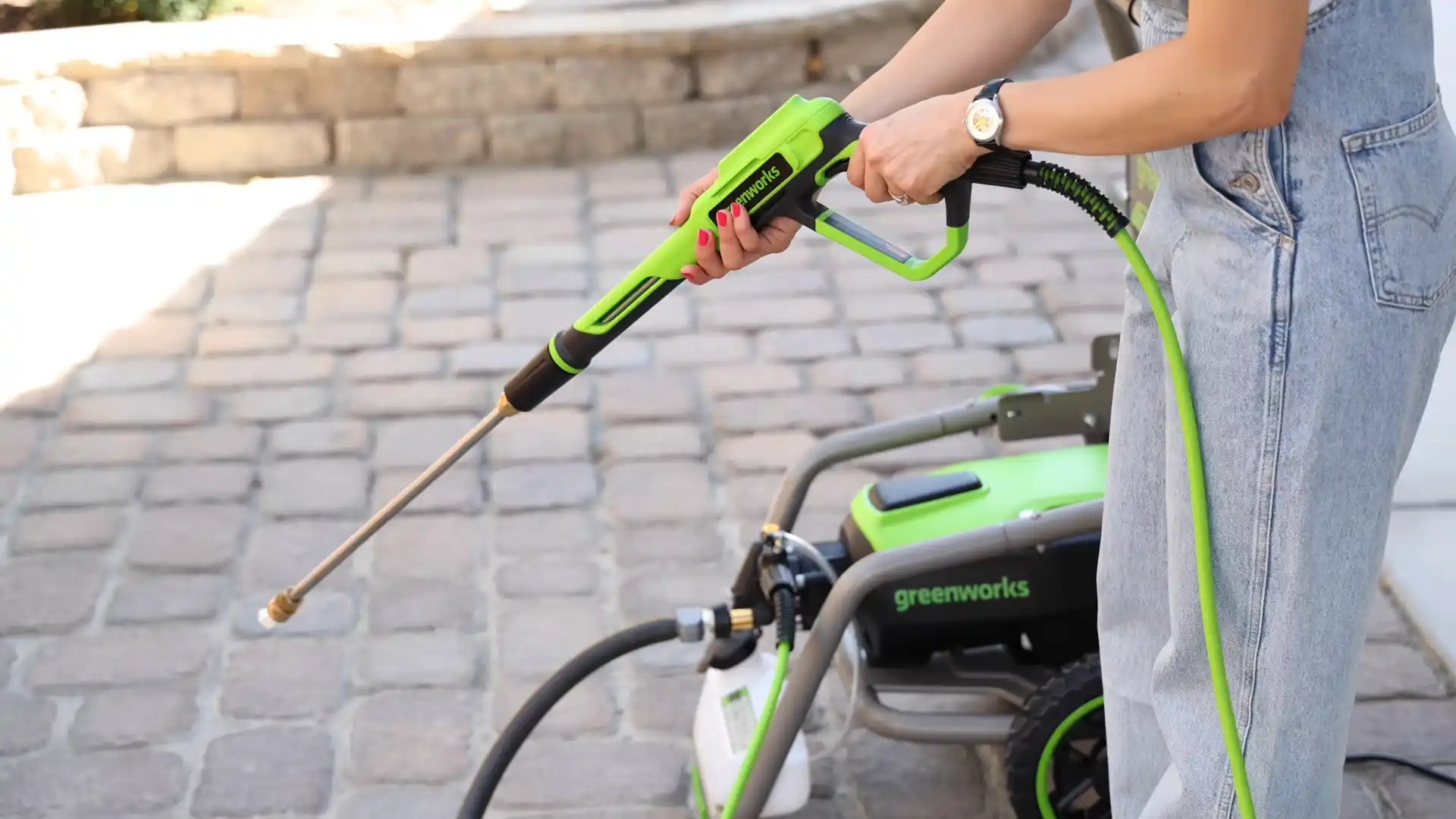
- TRUBRUSHLESS MOTOR : Powerful 14 Amp TruBrushless motor generates 3000 PSI and 2.0 GPM for maximum cleaning power.Cleaning Units 3300 C.U. Maximum Inlet Water Temperature 104°F (40°C).Frequency : 60 hz
- PWMA CERTIFIED (Pressure Washer Manufacturers‘ Association) : All water pressure (PSI) and flow rate (GPM) claims for this product were tested and verified by an independent lab, ensuring you’ll take home the power you were promised
Pros and Cons
| Pros | Cons |
|---|---|
| PWMA-certified 3000 PSI (independently verified) | Heaviest electric at 49 lbs |
| 10-year motor / 3-year tool warranty | Expensive at $374-499 |
| TruBrushless smart-sensing motor adjusts per nozzle | |
| 1-gallon soap tank (largest on list) | |
| Inline GFCI with waterproof plug | |
| Vertically stored (saves 50% floor space) |
Testing Results
PSI and GPM cleaning power: PWMA-certified 3000 PSI at 1.1 GPM. The PWMA certification matters here. Most budget electrics advertise inflated PSI numbers that don’t hold under independent testing. The GPW3001’s numbers are what you actually get.
Concrete / Driveway: Yes, heavy duty. One of the best electric options available for concrete. The TruBrushless motor maintains consistent pressure across long cleaning sessions without thermal throttling.
Siding: Yes. Excellent, consistent performance on all siding types.
Deck / Fence: Yes. Smart pressure sensing adapts to nozzle selection, which protects softer wood surfaces when you switch to the 40-degree tip.
Car Wash: Yes, with the 40-degree nozzle.
Patio Furniture: Yes.
Heavy Stains: Yes. The certified 3000 PSI handles embedded oil, mildew, and algae effectively. The 1 gallon soap tank means fewer stops to refill during a long job.
Noise level: TruBrushless is quieter than universal motor electrics. Not as quiet as the Karcher K5’s water-cooled motor, but noticeably better than standard electrics.
Portability and weight: 49 lbs is the trade-off. The wheelbarrow-style steel frame and vertical storage help, but this is not a carry-around machine.
Real-world Usage
The GPW3001 is what you buy when you’ve owned a budget electric before and got frustrated by inconsistent pressure or early pump failure. The 10-year motor warranty signals that Greenworks built this to last. The smart-sensing motor is a practical feature rather than a marketing gimmick. Switch to a turbo nozzle and the motor ramps up to match it.
If you’re wondering whether to compare electric vs gas options before committing, our electric vs gas pressure washer breakdown covers what actually matters for residential use.
Best Use Case
The right pick for homeowners who want the closest electric alternative to a gas machine. Best on large driveways, stubborn concrete, heavy mildew on brick, and two-story siding jobs where consistent pressure across a long session matters. Not for buyers on a tight budget or those who need something light and easy to move.
Verdict
The GPW3001 is the easiest electric to recommend for buyers who are serious about outdoor cleaning. The 10-year motor warranty alone sets it apart. PWMA certification confirms the numbers are real. For anyone who wants to skip gas forever, this is the machine that makes that possible without compromise.
Rating: 4.6 / 5
View on Amazon: Greenworks Pro GPW3001
Best Gas: Westinghouse WPX3400
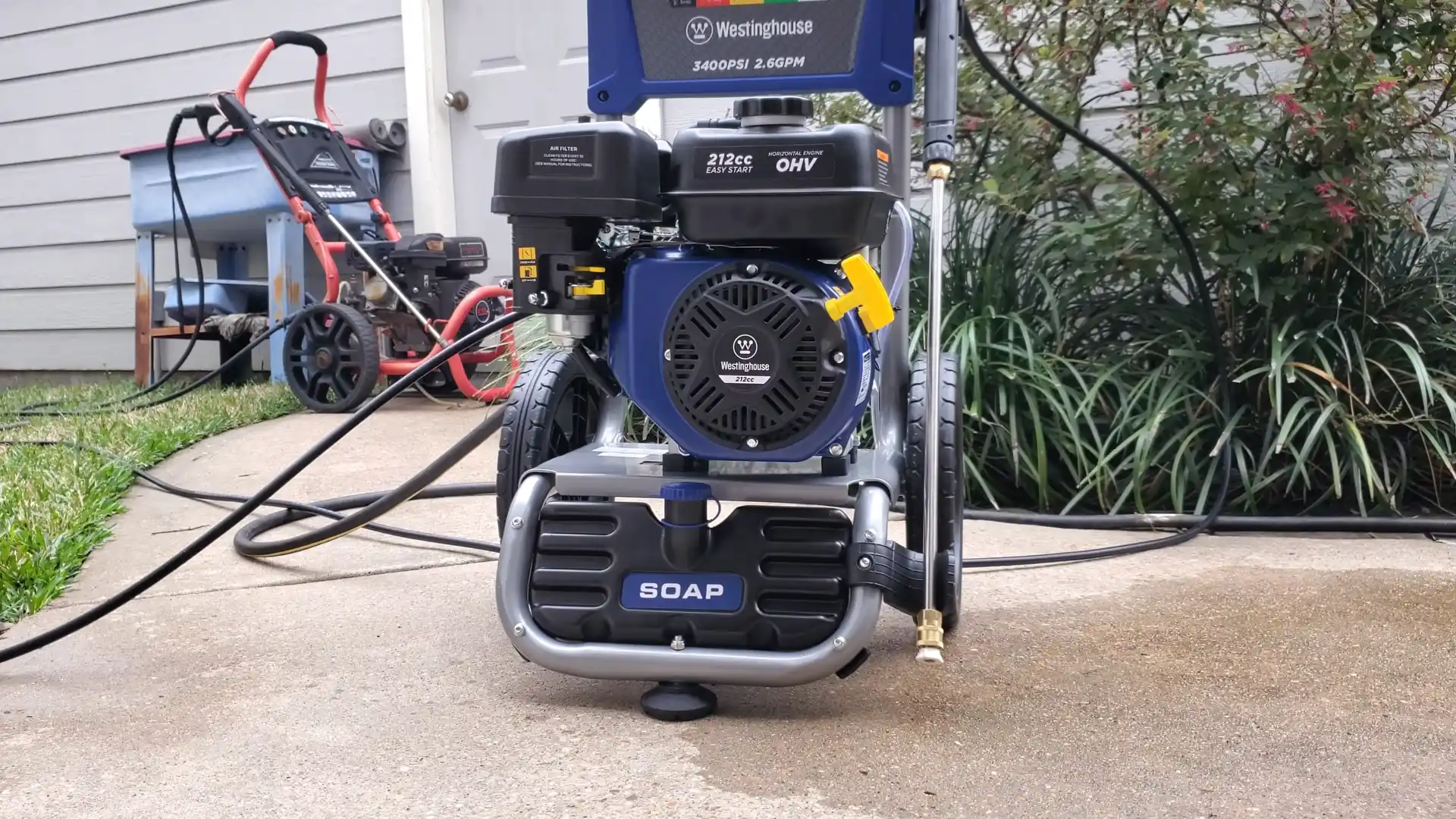
The WPX3400 has 24,000+ Amazon reviews averaging 4.6 stars. At 3400 PSI and 2.6 GPM, no electric model on this list comes close to its raw cleaning power. The 212cc engine fires on the first or second pull, which matters when you’re pulling it out of storage after a winter of sitting.

- 3400 PSI and 2.6 GPM of Powerful, Deep-Cleaning Water Pressure Perfect for Decks, Sidewalks, Siding, Fences, Railings, Garage Floors, Exterior Walls, Cars and Patio Furniture – Easy to Fill 1 Gallon Gas Tank and Half Gallon Onboard Soap Tank
- 25′ Foot Abrasion Resistant Super-Flex Hose With Lightweight High Pressure Spray Gun and 5 Quick Connect Nozzles (0°, 15°, 25°, 40° & Soap) - Compatible with Pressure Washer Accessories such as Surface Cleaners, Undercarriage Cleaners, and Foam Cannons with M22 fittings
Pros and Cons
| Pros | Cons |
|---|---|
| 3400 PSI and 2.6 GPM, highest cleaning power on list | Gas requires oil changes and winterization |
| 24,000+ Amazon reviews at 4.6 stars | Loud. Neighbor complaints are likely |
| 12-inch never-flat wheels handle any terrain | |
| Onboard 1.6L soap tank | |
| Steel frame construction | |
| 3-year warranty |
Testing Results
PSI and GPM cleaning power: 3400 PSI at 2.6 GPM. Cleaning units (PSI x GPM) are significantly higher than any electric model here. That difference shows up in how fast you move across a driveway and how quickly embedded stains respond.
Concrete / Driveway: Yes, heavy duty. A 3400 PSI machine cleans a standard residential driveway in roughly half the time of a 2000 PSI electric. The difference is real and visible.
Siding: Yes. More than enough power for any siding type. Use 40-degree nozzle and maintain distance on softer materials.
Deck / Fence: Yes. Effective on all deck types. Keep the 15-degree nozzle away from older wood.
Car Wash: Yes, with the 40-degree nozzle held at proper distance. 3400 PSI is higher than ideal for paint safety, so technique matters.
Patio Furniture: Yes.
Heavy Stains: Yes. Oil stains, tire marks, algae, mold, and mildew don’t require multiple passes at this power level. Our guide to removing oil stains from a driveway covers the technique when using high-PSI machines.
Startup reliability: The 212cc OHV engine pulls clean on the first or second attempt across a range of temperatures. User reviews consistently flag this as a positive compared to other gas models.
Noise level: Loud. Plan around neighborhood noise expectations. Not a 7am machine.
Portability and weight: 67 lbs. The 12-inch never-flat wheels make movement manageable. Not a machine you carry.
Real-world Usage
A gas pressure washer changes what you’re willing to tackle on a weekend. Driveway restoration, stripping a fence before painting, blasting moss off a brick retaining wall. Tasks that take an afternoon with an electric take an hour with the WPX3400.
The 1.6L soap tank is large enough to get through a full driveway application in one load. Winterizing is a 15-minute job once a year. If you’ve already accepted gas for a lawn mower, the maintenance here is no different.
Best Use Case
Best for homeowners with large driveways, aging concrete, heavy mildew on exterior surfaces, or anyone who wants to complete big outdoor cleaning jobs quickly. Also the right tool for prep work before painting or staining a deck or fence. Not right for apartment/condo owners, noise-sensitive neighborhoods, or buyers who want to avoid fuel maintenance.
Verdict
If cleaning power is the priority, the WPX3400 wins this list. 24,000+ verified reviews say it delivers. The 212cc engine’s easy start is a genuine selling point for gas-skeptic buyers. For anyone with a large property and serious outdoor grime, this is the machine that gets the job done fastest.
Rating: 4.7 / 5
View on Amazon: Westinghouse WPX3400
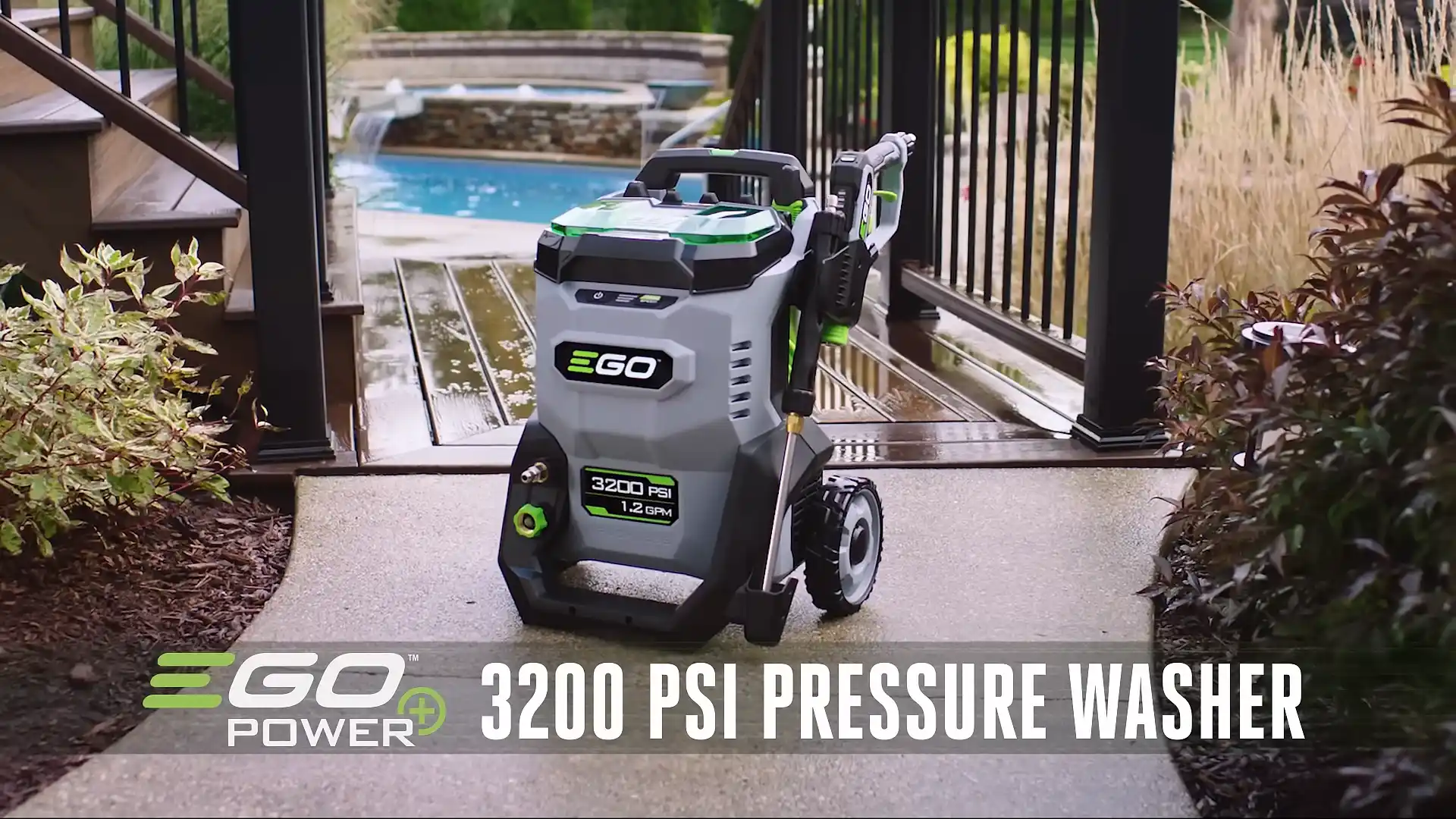
Best Cordless: EGO Power+ HPW3200
The EGO HPW3200 is the most powerful cordless pressure washer available. Two 56V batteries combine through Peak Power technology to push 3200 PSI with up to 60 minutes of runtime. No outlet, no cord, no limits on where you can clean.

- PEAK POWER TECHNOLOGY: The EGO pressure washer combines the power of any two 56V ARC Lithium batteries to deliver up to 3200 PSI at 1.2 GPM—and up to 2.0 GPM max—for powerful cleaning.
- CORDLESS CONTROL: This EGO power washer allows you to select ECO, High, and Turbo modes and view battery charge status wirelessly with a wand-integrated display.
Pros and Cons
| Pros | Cons |
|---|---|
| Most powerful cordless at 3200 PSI | Expensive at $500-779 depending on kit |
| Up to 60 minutes runtime with two 6.0Ah batteries | 53 lbs with batteries installed |
| ECO / High / Turbo modes selectable from wand | |
| Compatible with all EGO 56V PowerSeries batteries | |
| Telescoping handle and rugged build | |
| No outlet needed, clean anywhere |
Testing Results
PSI and GPM cleaning power: 3200 PSI max at 1.2 GPM rated. The Peak Power system combines two batteries for a true cordless output that rivals residential gas models. ECO, High, and Turbo modes from the wand give real-time pressure control.
Concrete / Driveway: Yes, medium to heavy duty. At 3200 PSI, the EGO handles driveways, patios, and concrete effectively without the tether of a cord.
Siding: Yes. Turbo mode on siding removes stubborn mildew cleanly.
Deck / Fence: Yes. ECO or High mode is appropriate for most wood decking. Turbo mode on composite is fine.
Car Wash: Yes. ECO mode brings pressure down to a safe level for paint at normal distance.
Patio Furniture: Yes.
Heavy Stains: Yes, medium intensity. 3200 PSI addresses most residential heavy stains. Runtime at Turbo mode is shorter than ECO, so plan accordingly on larger jobs.
Runtime: Up to 60 minutes on two 6.0Ah EGO batteries in ECO mode. Turbo mode cuts runtime meaningfully. A single battery lasts 20-30 minutes in typical mixed-mode use.
Portability and weight: 53 lbs. Heavy for a cordless machine. The telescoping handle and rugged wheels manage the weight, but this is not a lightweight carry machine.
Real-world Usage
The HPW3200 is for two types of buyers: EGO battery platform owners who want to add pressure washing without buying new chargers, and people who genuinely need to clean where there’s no outlet nearby.
RV owners, boat dock users, and anyone with a large rural property where running 100 feet of extension cord is impractical benefit most from this machine. If you already own a corded option with access to an outlet, the HPW3200 is hard to justify at this price. But for true cordless freedom at real cleaning power, nothing else comes close.
Our cordless vs electric pressure washer comparison covers the actual scenarios where going cordless makes financial sense.
Best Use Case
Best for EGO battery ecosystem users, RV and boat owners, rural properties without nearby outlets, and anyone who cleans multiple locations that can’t all be reached from a single power source. Not ideal for buyers who have easy outlet access or who want to avoid a significant upfront investment.
Verdict
3200 PSI and 60 minutes of runtime makes the HPW3200 the most compelling cordless pressure washer on the market. The price is the only real barrier. If the budget works and the use case fits, it’s the best battery-powered option by a clear margin.
Rating: 4.4 / 5
View on Amazon: EGO HPW3200
What Makes the Best Rated Pressure Washer?
PSI and GPM: Both Numbers Matter
PSI (pounds per square inch) tells you how hard the water hits a surface. GPM (gallons per minute) tells you how fast water flows. Most buyers focus on PSI alone and miss the GPM story. A machine with 2000 PSI and 1.8 GPM cleans faster than a 2500 PSI machine running at 1.0 GPM. Multiply both numbers together and you get cleaning units. That’s the real measure of output.
For light tasks like cars and patio furniture, 1500-1800 PSI and 1.1+ GPM is enough. Driveways and decks are better served by 2000-2500 PSI. Concrete restoration and heavy mildew need 2800 PSI or more with at least 1.5 GPM.
PWMA and CETA Certification
Most pressure washer PSI ratings on Amazon are marketing numbers. They reflect peak burst pressure, not working pressure under load. PWMA (Pressure Washer Manufacturers’ Association) and CETA certification mean a third party tested the machine and confirmed the PSI and GPM claims are real. The Sun Joe SPX3000 and Greenworks GPW3001 are PWMA certified. Models without certification may still perform well, but treat their PSI numbers with healthy skepticism.
Motor Type: Universal vs Induction vs Brushless
Universal motors are the most common in budget and mid-range electric washers. They’re affordable and effective but louder and less durable over time. Induction motors, like the one in the Westinghouse WPX3000e and Karcher K5, run quieter and last longer. Brushless motors, like the TruBrushless in the Greenworks GPW3001, are the most efficient and can self-regulate pressure by nozzle type. For occasional weekend use, a universal motor is fine. For regular heavy use, invest in an induction or brushless model.
Hose Length and Cord Reach
The standard hose on most electric pressure washers is 20-25 feet. The standard cord is 35 feet. That gives you roughly 55-60 feet of total reach from the outlet. On a long driveway or two-story home, that runs short fast. If reach is a concern, check M22 compatibility for hose extensions before buying. Gas and cordless models eliminate the cord problem entirely at the cost of weight or fuel management.
Nozzle Versatility
Five quick-connect nozzles are the benchmark for a complete kit: 0, 15, 25, 40 degree, and soap. The 0-degree nozzle is for stripping and not safe near delicate surfaces. The 15-degree is for concrete and brick. The 25-degree is the everyday workhorse. The 40-degree is for cars and gentle surfaces. A turbo (rotary) nozzle adds cleaning speed to any job. Machines that ship with fewer than four nozzles require aftermarket purchases to be fully useful.
Gas vs Electric vs Cordless
Gas delivers the most power with no range limitations. Electric is quieter, lower maintenance, and sufficient for most homeowners. Cordless is the most convenient but expensive and heavier for comparable power. If you have a large property with serious outdoor cleaning needs, gas is the most efficient investment. For most suburban homeowners, a 2000-2500 PSI electric covers everything comfortably.
How to Use a Pressure Washer Effectively
Start with the Right Nozzle
Grab the 25-degree nozzle for most jobs. It’s the safest starting point for surfaces you haven’t cleaned before. Move closer or switch to a 15-degree tip if you need more cleaning power. Start with the 40-degree if you’re working on cars or painted wood.
Keep Moving
Don’t hold the spray in one spot. Keep the wand moving at a steady pace across the surface. Lingering in one area risks etching wood, stripping paint, or cutting channels into aged concrete.
Work Top to Bottom
Start from the highest point of the surface and work down. This prevents dirty water from running back over clean sections. On siding, work from the top edge down. On driveways, start at the high end and push dirt toward the street.
Apply Detergent First on Tough Jobs
For driveways, patios, and siding with embedded mildew, apply detergent with the soap nozzle and let it dwell for 2-5 minutes before rinsing. The detergent loosens the stain. The pressure finishes the job. Skipping the dwell time means more passes and more time.
Protect Plants and Trim
High-pressure water can damage plants, soil, and painted trim. Before starting on siding or patios adjacent to garden beds, wet the plants first and cover anything delicate. Rinse them again when you’re done.
Frequently Asked Questions
What PSI is good for a pressure washer for home use?
For most homeowners, 2000-2500 PSI covers everything from cars and patio furniture to driveways and siding. Light tasks like car washing and outdoor furniture need 1500-1800 PSI. Concrete restoration, heavy mildew on brick, and two-story siding cleaning benefit from 2800 PSI or more. If you’re unsure, a 2000-2500 PSI electric machine is the safest starting point. Our best pressure washer for home use guide breaks down the options by home size and use case.
Is electric or gas better for a home pressure washer?
For most homeowners, electric is the smarter choice. Lower maintenance, quieter operation, easier storage, and sufficient power for driveways, siding, decks, and cars. Gas adds significant power and unlimited range but comes with noise, fuel management, and winterization. If you have a large property with serious outdoor cleaning needs or work far from outlets, gas makes sense. If you clean a normal suburban property a few times a year, electric does the job well. Our full electric vs gas pressure washer comparison covers when each is worth it.
How important is GPM in a pressure washer?
More important than most buyers realize. GPM determines how quickly you rinse and move across a surface. A machine with high PSI and low GPM removes stains but rinses slowly. A machine with balanced PSI and higher GPM moves through jobs faster with less effort. Most electric pressure washers run 1.0-1.2 GPM. Gas models typically hit 2.4-2.6 GPM. If cleaning speed matters on large jobs, GPM is the number to watch. Our best high GPM pressure washer guide covers models optimized for flow rate.
What is a TSS and why does it matter?
TSS stands for Total Stop System. It automatically stops the pump motor when you release the trigger on the wand. Without TSS, the motor continues to run under no-load pressure, which stresses the pump and shortens its life. Most mid-range and premium electric models include TSS. Budget models often don’t. If you stop frequently during cleaning jobs, TSS extends pump life meaningfully. All six models on this list include TSS except the gas models, which don’t require it.
How do I winterize a pressure washer?
For electric models, run pump protector solution through the machine, drain all water from the pump and hose, and store it indoors. For gas models, add fuel stabilizer to the tank, run it briefly to cycle through the engine, then drain the pump. Never store a pressure washer with water sitting in the pump in freezing conditions. Our how to winterize a pressure washer guide covers the full process for both electric and gas machines.