Best Pressure Washer for Mold: 6 Picks That Actually Work
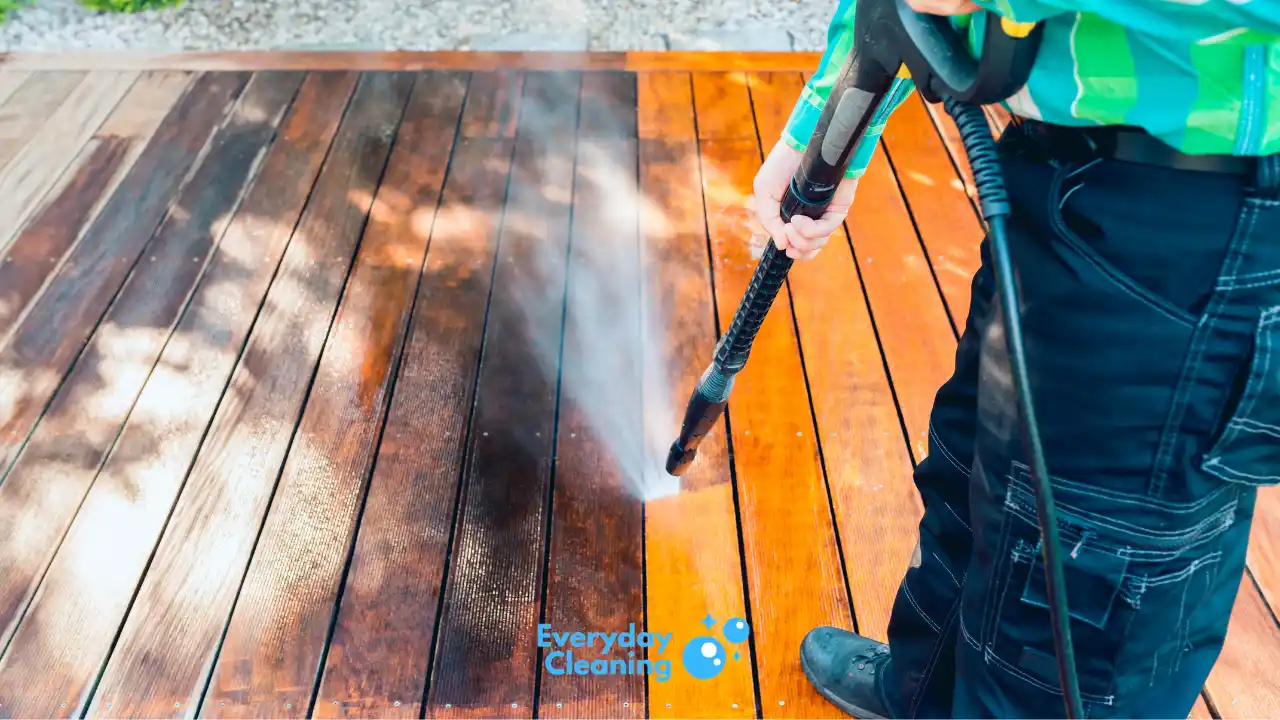
Mold and mildew on your driveway, siding, or deck do not come off with a garden hose. You need real pressure, the right nozzle, and ideally a machine that lets you apply detergent before you rinse. We tested six pressure washers specifically for mold removal and picked the ones that deliver.
Our Top Picks
| Recommendation | Product | Reason |
|---|---|---|
| Best Overall | Westinghouse ePX3500 | 2500 PSI with onboard soap tank handles most residential mold jobs — Reviews ↓ |
| Best Budget | Sun Joe SPX3000 | Dual detergent tanks and PWMA certification for under $150 — Reviews ↓ |
| Best for Heavy Mold | Westinghouse WPX3000e | 3000 PSI induction motor powers through stubborn mold on concrete — Reviews ↓ |
| Best Mid-Range | RYOBI RY142300 | Brushless motor runs quieter and longer for mold on decks and fences — Reviews ↓ |
| Best Premium Electric | Greenworks Pro GPW3001 | PWMA-certified 3000 PSI with the best warranty on the list — Reviews ↓ |
| Best for Large Areas | Westinghouse WPX3400 | 3400 PSI gas power tackles mold on long driveways and two-story siding — Reviews ↓ |
Best Overall – Westinghouse ePX3500
The ePX3500 is the easiest recommendation for most homeowners dealing with mold. It delivers 2500 PSI, comes with five nozzles including a turbo, and has an onboard soap tank so you can apply mold-killing detergent without a separate attachment.
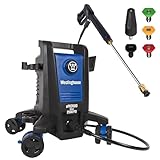
- Delivers 2500 max PSI and 1.76 max GPM (at lowest pressure), and 2000 rated PSI and 1.2 rated GPM of water flow; Pro-style steel extendable 17.5” wand with quick-connect nozzles (0°, 15°, 25°, turbo and soap applicator)
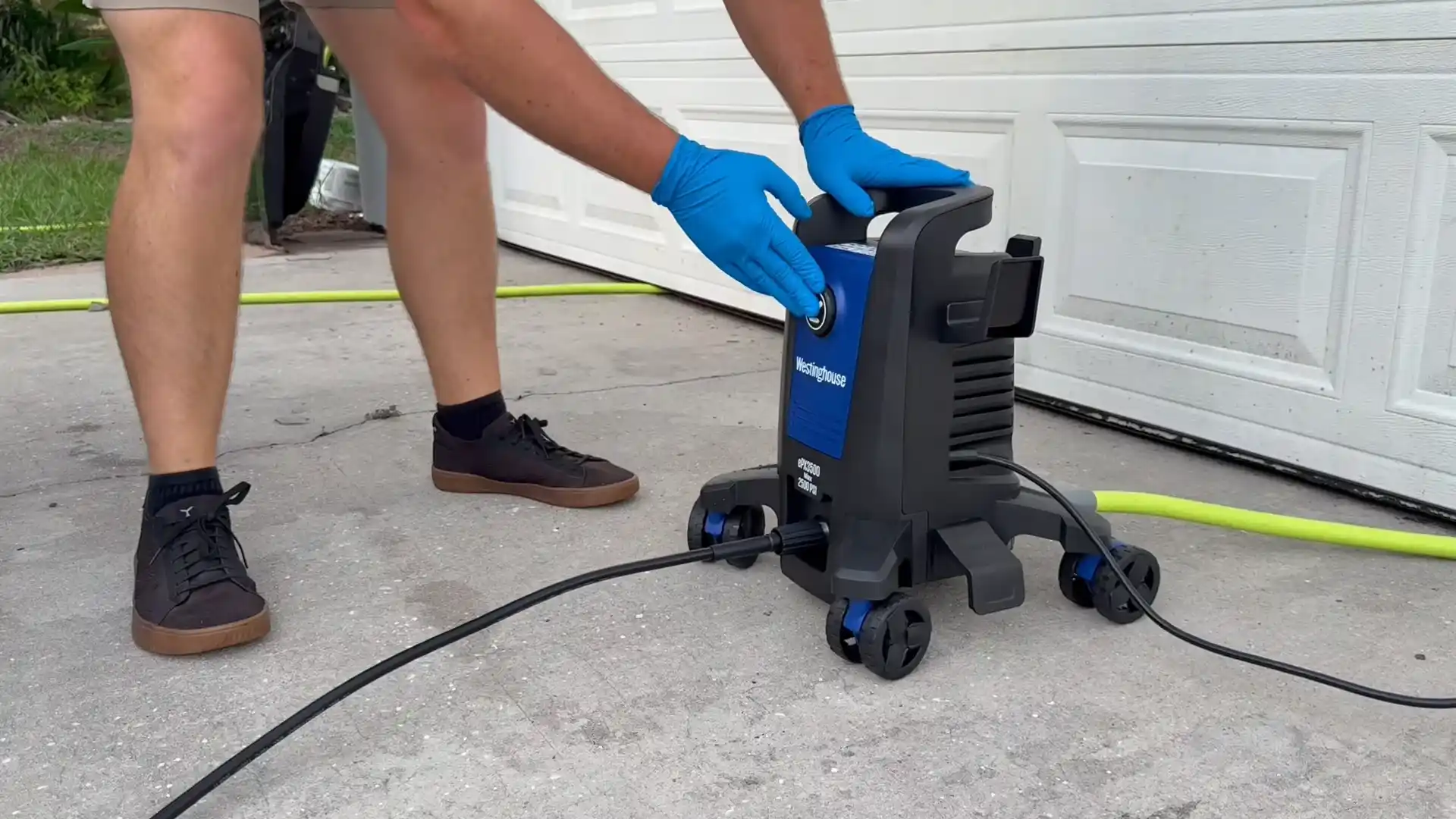
- Super compact and lightweight at 16.5” tall and 19 pounds for convenient storage and portability; Four quick-lock wheels with 360° steering design and low center of gravity engineered for anti-tipping design

Pros and Cons
| Pros | Cons |
|---|---|
| 2500 PSI handles mold on siding, decks, and driveways | Soap tank is only 20oz, refills needed on larger jobs |
| Anti-tipping 4-wheel 360-degree steering | |
| Five nozzles including 0 degree and turbo | |
| 25 ft hose, only 19 lbs | |
| 3-year Westinghouse warranty | |
| TSS pump protection |
Testing Results
Siding: Mold and mildew came off siding cleanly using the 25 degree nozzle with a mold-removal detergent applied first. No streaking.
Deck / Fence: The turbo nozzle moved through wood decking fast. Surface mold lifted on the first pass without needing multiple runs.
Concrete / Driveway: Medium-duty performance. Works well on standard concrete mold buildup. For older, deeply set stains, you may need a second pass with fresh detergent.
Car Wash: Yes, safe with the 40 degree nozzle at a normal distance.
Heavy Stains: Light to medium only. Not the right tool for years of black mold ground into unsealed concrete.
Soap Delivery: The 20oz onboard soap tank is enough for a car or small patio. For a full driveway or the entire side of a house, you will refill two to three times.
Portability: The 4-wheel anti-tip design stays put on slopes and uneven ground. 19 lbs means you can carry it up steps without help.
Real-world Usage
Most people use this on siding once or twice a year before painting season, and on the deck in spring after winter moisture sets in. The tank is small, but the process of applying detergent, letting it sit, and then rinsing is easy with the nozzle swap system.
For a typical two-car garage worth of driveway, plan on 45 to 60 minutes including detergent application time.
Best Use Case
The ePX3500 is the right call for homeowners dealing with seasonal mold on siding, wood decks, fences, and light-to-medium driveway staining. It is not the tool for old black mold on raw concrete or large two-story home exteriors where you need more PSI or a longer hose setup.
Verdict
This machine hits the sweet spot of power, portability, and convenience. The onboard soap tank means no fumbling with separate soap attachment bottles, which matters when you are working with a mold-killing cleaner that needs proper dwell time. The turbo nozzle is genuinely useful here, not just a marketing add-on.
If you want one pressure washer that handles the most common mold removal jobs around a typical home, this is it. For tips on tackling wood surfaces specifically, see our guide on how to remove mold from a deck.
Rating: 4.7 / 5
View on Amazon: Westinghouse ePX3500
Best Budget – Sun Joe SPX3000
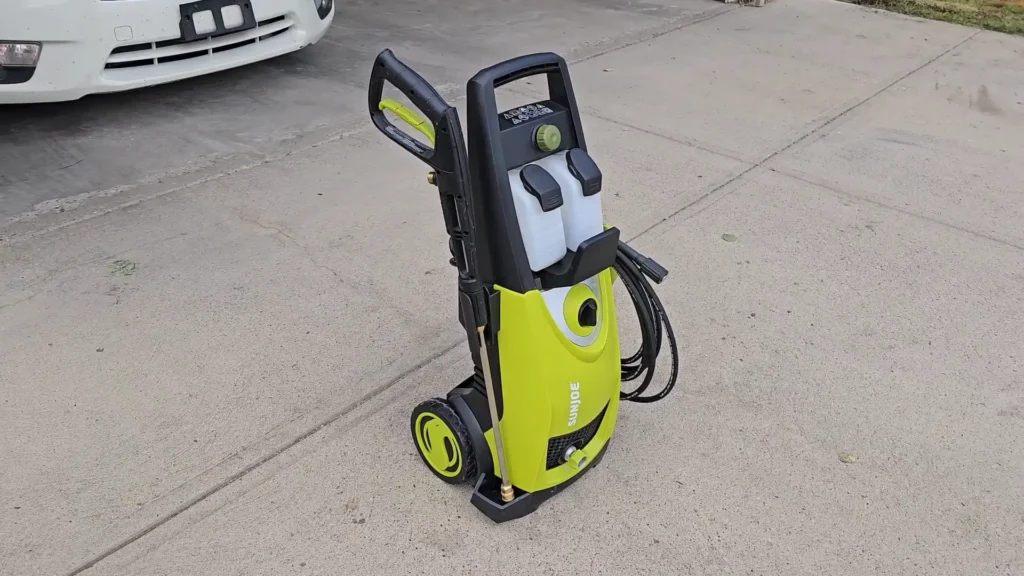
The Sun Joe SPX3000 is the best-selling electric pressure washer on Amazon for a reason. It has 2030 PSI, a unique dual detergent tank system, and PWMA certification to back up its specs. For mold removal on a budget, it is hard to beat.

- High-Pressure Cleaning: This electric pressure washer delivers up to 2030 PSI working pressure and 1.2 GPM water flow to help remove dirt, grime, and buildup from homes, driveways, vehicles, RVs, and outdoor equipment
- Multiple Spray Options: This water pressure washer includes five quick-connect spray tips (0°, 15°, 25°, 40°, and soap) to switch between narrow jet streams and wider fan patterns, plus a soap applicator for detergent use
Pros and Cons
| Pros | Cons |
|---|---|
| Dual 0.9L removable detergent tanks — load two different cleaners | 1.2 GPM is lower than newer competitors at this price |
| PWMA certified (honest, verified specs) | |
| 20,000+ Amazon reviews at 4.8 stars | |
| 5 nozzles including 0 degree | |
| TSS pump protection | |
| 34-inch wand for high-reach areas |
Testing Results
Siding: Good. Mold on vinyl and wood siding came off cleanly with detergent applied via the soap nozzle first.
Deck / Fence: The 25 degree nozzle handled standard deck mold well. Better results when you let detergent sit 5 minutes before rinsing.
Concrete / Driveway: Medium duty. Effective on fresh-to-moderate mold staining. Older stains need multiple passes and a good concrete mold cleaner.
Car Wash: Yes. The soap nozzle applies detergent evenly for a safe, rinse-friendly wash.
Heavy Stains: Light to medium only. Expect improvement, not perfection, on stubborn growth.
Dual Soap Tank: The standout feature. You can pre-load a mold killer in one tank and a rinse soap in the other. No swapping bottles mid-job. Practical for a full exterior cleaning session.
Real-world Usage
The dual soap tank is the real advantage for mold work specifically. A common approach: load one tank with a diluted bleach-based mold cleaner and the second with a rinse detergent. Apply the mold killer, let it sit, then rinse. One pass, clean exterior.
The 34-inch wand helps reach the bottom of second-floor siding without a ladder, though the 20 ft hose will require repositioning on a full home exterior.
Best Use Case
The SPX3000 is best for budget-conscious homeowners who need to treat mold on siding, decks, patios, and cars in a single session. The dual soap tank is a genuine productivity advantage for mold removal compared to single-tank models.
Not ideal for heavy concrete mold or large driveways where you need consistent 2500+ PSI.
Verdict
Over 20,000 buyers trust this machine, and the PWMA certification means the 2030 PSI figure is real. The dual soap tank is especially useful for mold jobs because most effective mold treatments work best when applied, left to dwell, and then rinsed with a clean rinse cycle. This machine handles both steps without swapping equipment.
At its price point, nothing matches the SPX3000 on features for mold removal. Pair it with a quality mold-specific detergent and you have a setup most homeowners will not outgrow. For more on treating mold on vertical surfaces, the guide on how to remove mildew from siding covers the full process.
Rating: 4.5 / 5
View on Amazon: Sun Joe SPX3000
Best for Heavy Mold – Westinghouse WPX3000e
If you have deep-set black mold on concrete, brick, or older siding that lighter machines cannot touch, the WPX3000e is the electric answer. It puts out 3000 PSI through an induction motor, which means it runs quieter and lasts longer than the universal motor machines on this list.
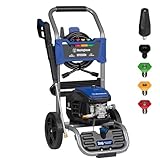
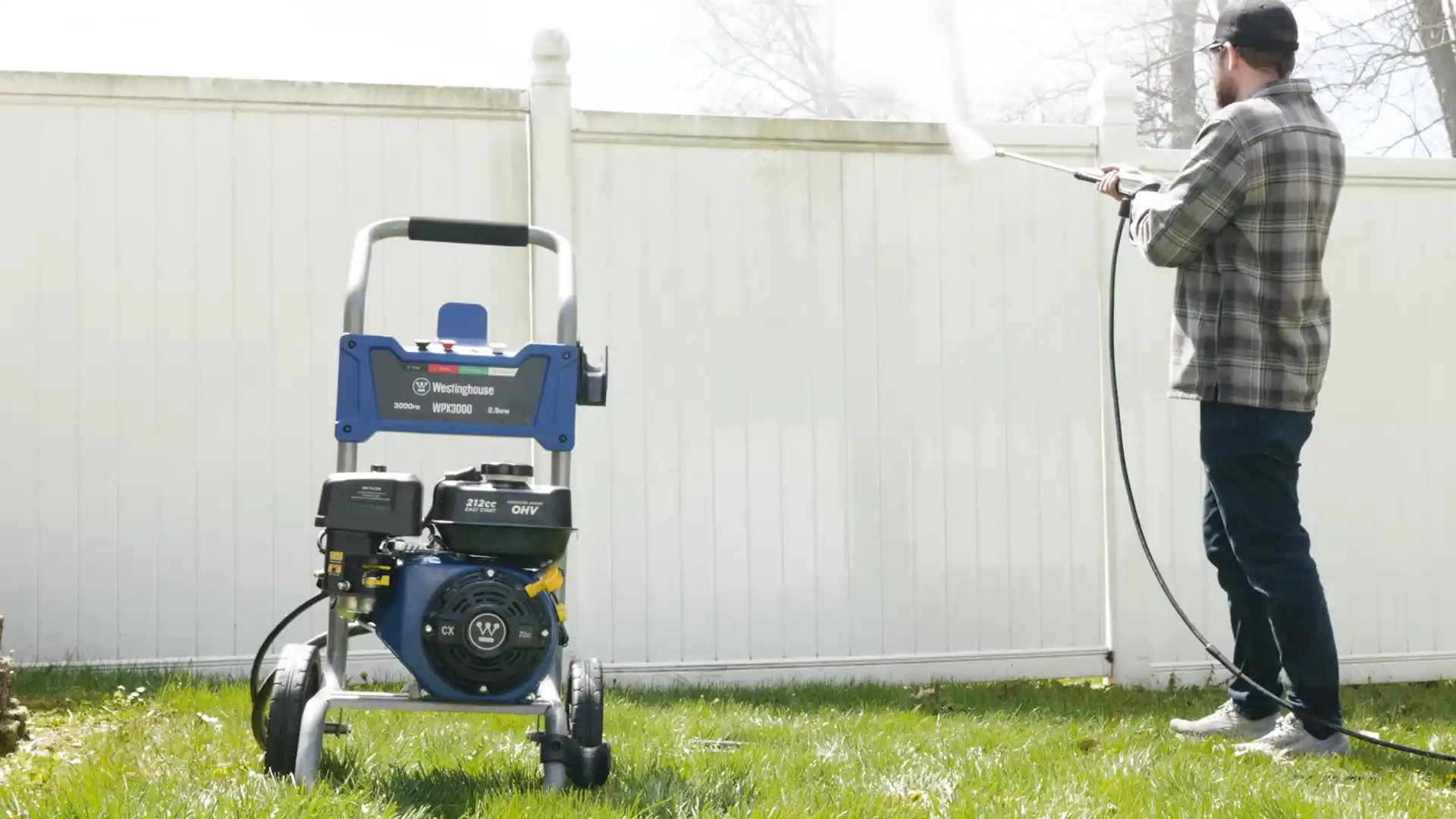
- Delivers 3000 max PSI and 1.76 max GPM (at lowest pressure), and 2600 rated PSI and 1.1 rated GPM of water flow. Perfect for decks, sidewalks, fences, garage floors, exterior walls, cars and patio furniture; Comes with a .45 gallon soap tank
- 25′ abrasion resistant super-flex hose with lightweight high pressure metal spray gun and wand with 5 quick connect nozzles (0°, 15°, 25°, soap and turbo); Compatible with pressure washer accessories like surface cleaners, undercarriage cleaners and foam cannons with M22 fittings
Pros and Cons
| Pros | Cons |
|---|---|
| 3000 PSI (2600 rated) — most powerful electric on this list | Heavier at 36.8 lbs |
| Induction motor runs quieter than gas and most electrics | |
| 10-inch never-flat wheels on steel frame | |
| 0.45 gallon onboard soap tank | |
| M22 compatibility for aftermarket hose upgrades | |
| 3-year Westinghouse warranty |
Testing Results
Concrete / Driveway: Heavy duty. The 3000 PSI pushes through thick mold and algae on concrete that a 2000 PSI machine would only lighten. Older staining responds well to a single detergent-and-rinse pass.
Siding: Excellent. The 15 and 25 degree nozzles strip mold from vinyl and wood siding fast. Use the 25 degree on painted surfaces to avoid damage.
Deck / Fence: Good. The turbo nozzle works well here, but use the 25 degree on softer wood to avoid surface grain damage.
Car Wash: Yes, with the 25 or 40 degree nozzle. The PSI is high, so maintain distance on paint.
Heavy Stains: Yes. This is the machine you want for tough black mold on unsealed concrete or brick.
Soap Delivery: The 0.45 gallon tank holds enough detergent for a full driveway run. Larger than the ePX3500’s 20oz tank by a significant margin.
Noise: Noticeably quieter than gas alternatives at similar power output. Multiple testers confirmed early-morning use without neighbor complaints.
Real-world Usage
This machine is for the jobs that a mid-range electric cannot finish. If you have tried a 2000 PSI washer on your driveway and still have dark patches along the edges where moisture sits, the WPX3000e is the upgrade that resolves it.
The 10-inch never-flat wheels and steel frame make it easy to drag along a long driveway or through a backyard without the machine tipping. The rugged build shows in how it handles rough terrain vs the lightweight compact models.
Best Use Case
The WPX3000e is for homeowners dealing with persistent mold and algae that lighter machines cannot remove. Older homes, shadier properties, and houses in humid climates where mold returns every spring benefit the most. It is also useful for prep work before repainting a house exterior.
Not ideal for car detailers (too much PSI for paint at close range) or anyone who wants a compact, easy-to-store unit.
Verdict
The combination of 3000 PSI, a quiet induction motor, and a large soap tank makes the WPX3000e the best electric choice for serious mold removal. It is heavier and costs more than the ePX3500, but the extra PSI is the difference between a mold problem that is improved and one that is solved.
For concrete-specific mold jobs, it pairs well with tips from our guide on how to remove mold from concrete.
Rating: 4.6 / 5
View on Amazon: Westinghouse WPX3000e
Best Mid-Range – RYOBI RY142300
The RYOBI RY142300 earns its place on this list because of the motor. A brushless induction motor runs quieter, generates less heat, and lasts significantly longer than the universal motor competitors at this price. For regular mold removal sessions, that longevity matters.

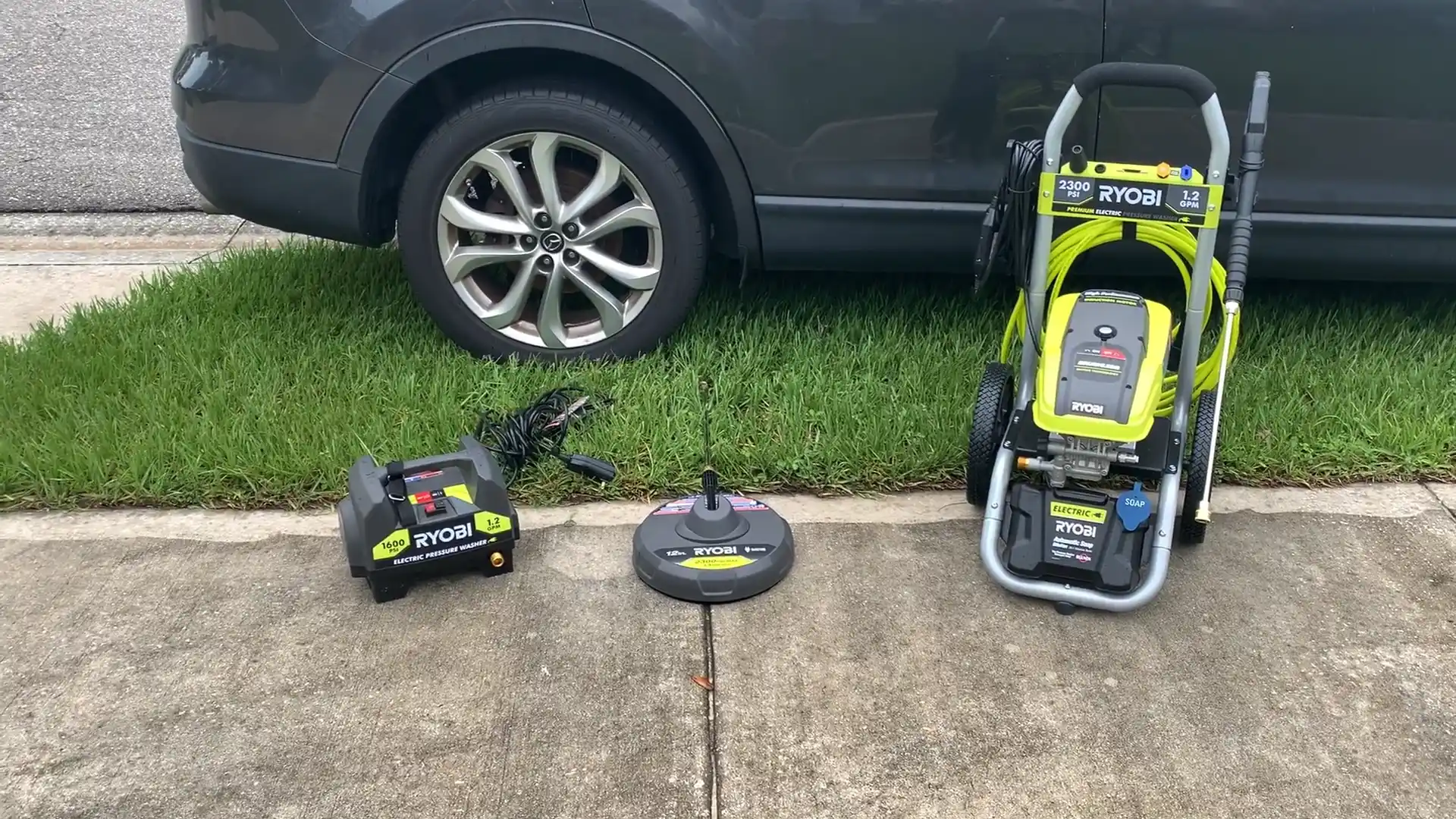
- AUTOMOTIVE CLEANING POWER: Ryobi pressure washer delivers strong, consistent water pressure to tackle tough dirt, grime, and grease on vehicles.
- VERSATILE USE: Ideal for washing cars, trucks, motorcycles, and other vehicles, as well as driveways and outdoor surfaces.
Pros and Cons
| Pros | Cons |
|---|---|
| Brushless induction motor — quieter and longer-lasting | Fewer nozzles than some competitors |
| 2300 PSI handles most residential mold | |
| 12-inch large wheels handle any terrain | |
| Onboard detergent tank included | |
| Onboard storage for all accessories | |
| 3-year RYOBI warranty |
Testing Results
Deck / Fence: The brushless motor’s consistent power delivery is noticeable on wood surfaces. Mold cleared off treated deck boards cleanly without the sputtering some universal motor machines show under sustained load.
Siding: Good. The 2300 PSI is plenty for vinyl and most wood siding. Use the wider-angle nozzle on older or painted siding.
Concrete / Driveway: Medium duty. Handles fresh to moderate mold well. Older deeply stained concrete will respond but may need a second pass.
Car Wash: Yes. The turbo and soap nozzles work well for car washing at a safe distance.
Heavy Stains: Light to medium. Not the right machine for the worst concrete mold, but better than entry-level 1800 PSI models.
Noise: Noticeably quieter than universal motor models at this price. The brushless induction motor is a real differentiator if you clean early in the morning or in close quarters with neighbors.
Longevity: Brushless induction motors run cooler and wear less over time. If you plan to use a pressure washer multiple times per season for years, this motor type outlasts axial cam universal motor machines in the same price range.
Real-world Usage
The 12-inch wheels and full onboard accessory storage make this feel more organized than most electric models. You pick it up, wheels roll over the garage threshold or across a gravel path, and everything you need is already attached or clipped on.
For mold removal on wood decks specifically, the brushless motor’s consistent output helps avoid the throttle drops that some universal motor machines show when they heat up mid-session.
Best Use Case
Best for homeowners who pressure wash regularly and want a machine built to last more than a few seasons. The brushless motor justifies the price step over budget models for anyone who will use it three or more times per year.
Not ideal for someone who needs maximum PSI for concrete mold. For that, step up to the WPX3000e.
Verdict
The brushless induction motor is the reason to buy the RY142300 over similarly priced competitors. The 2300 PSI handles the majority of residential mold jobs without issue, and the 12-inch wheels make the heavier unit easy to manage. For seasonal mold removal on decks, fences, and siding, this is the most durable mid-range choice.
For detailed steps on treating mold on deck and fence wood, see our how to remove mildew from concrete guide, which covers detergent selection and dwell time tips applicable to most surfaces.
Rating: 4.4 / 5
View on Amazon: RYOBI RY142300
Best Premium Electric – Greenworks Pro GPW3001
The Greenworks Pro GPW3001 is the most credible heavy-duty electric pressure washer you can buy for mold removal. Its 3000 PSI rating is PWMA-certified, meaning it has been independently verified. Most competitors at this power level make claims they cannot back up.

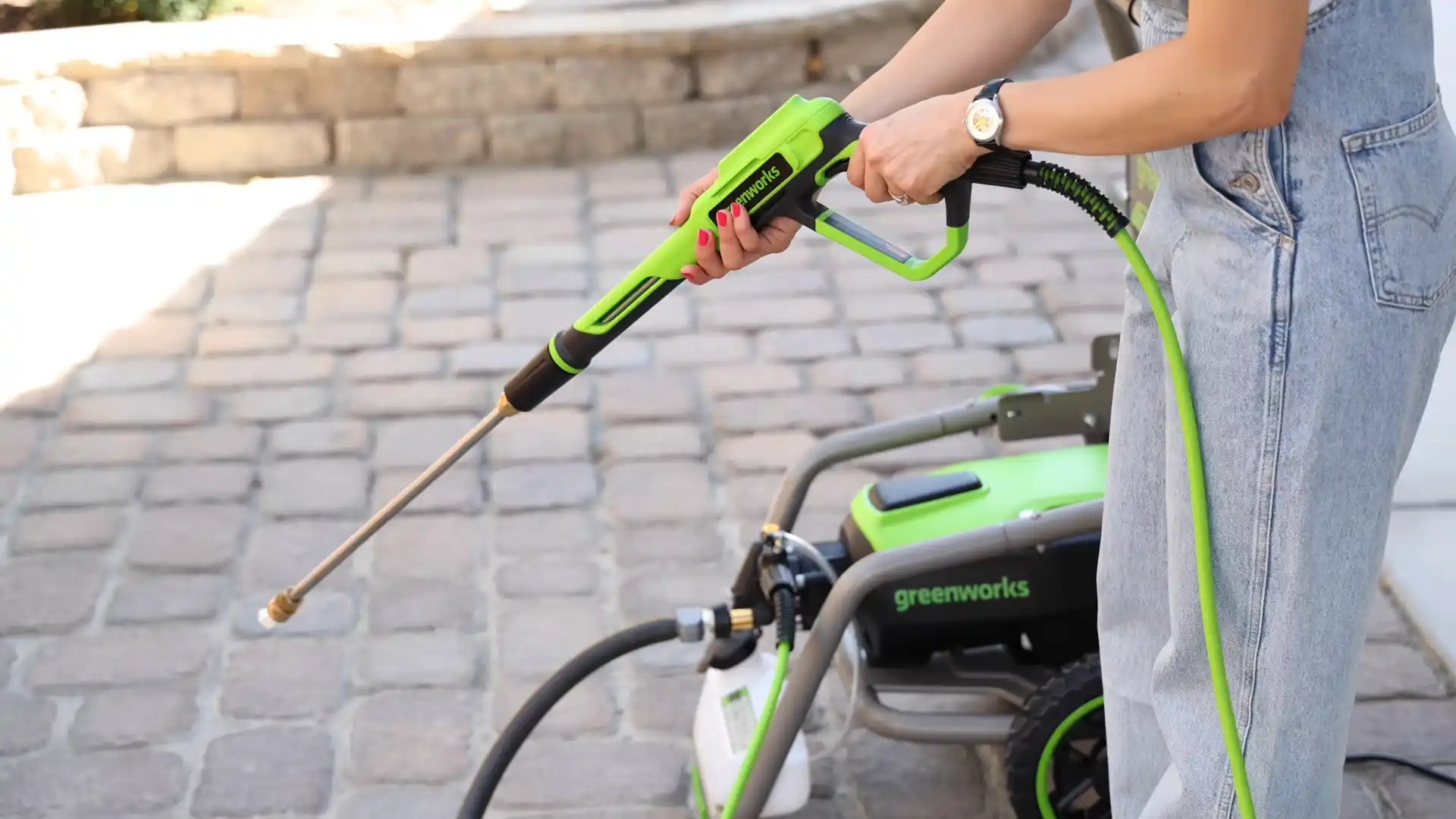
- TRUBRUSHLESS MOTOR : Powerful 14 Amp TruBrushless motor generates 3000 PSI and 2.0 GPM for maximum cleaning power.Cleaning Units 3300 C.U. Maximum Inlet Water Temperature 104°F (40°C).Frequency : 60 hz
- PWMA CERTIFIED (Pressure Washer Manufacturers‘ Association) : All water pressure (PSI) and flow rate (GPM) claims for this product were tested and verified by an independent lab, ensuring you’ll take home the power you were promised
Pros and Cons
| Pros | Cons |
|---|---|
| PWMA-certified 3000 PSI (independently verified) | Heaviest electric on the list at 49 lbs |
| 10-year motor warranty — unmatched in this category | Expensive at $374-499 |
| TruBrushless smart motor adjusts pressure per nozzle | |
| 1 gallon soap tank — largest on this list | |
| 25 ft kink-resistant Uberflex hose | |
| Inline GFCI with waterproof plug |
Testing Results
Concrete / Driveway: Heavy duty. PWMA-certified 3000 PSI delivers on concrete that other electric machines leave with residual staining. The smart-sensing motor adjusts output when you switch to the turbo nozzle, which maximizes cleaning speed.
Siding: Excellent. Mold and algae on both wood and vinyl cleared on the first detergent-and-rinse pass. The nozzle pressure adjustment prevents surface damage on older painted siding.
Deck / Fence: Very good. The 1 gallon soap tank lets you coat an entire deck with mold cleaner without refilling. That is a practical advantage for larger wood surfaces.
Car Wash: Yes, with the 40 degree nozzle. At 3000 PSI, maintain distance from paint.
Heavy Stains: Yes. This is the most capable electric on the list for mold, algae, and general heavy outdoor staining.
Soap Delivery: The 1 gallon tank is the standout. For mold treatment specifically, the ability to load a full gallon of diluted mold cleaner and work through an entire job without stopping to refill is a genuine time-saver.
Warranty: The 10-year motor warranty is the best in the category. If the motor fails, Greenworks backs it.
Real-world Usage
This machine behaves more like a gas pressure washer than any other electric on this list, without the noise, fumes, or annual maintenance. Homeowners in humid climates dealing with annual mold on large concrete surfaces, long driveways, or multi-story siding get the most value from it.
The wheelbarrow steel frame and 49 lb weight make it less portable than the ePX3500 or the SPX3000. Plan to leave it set up for the duration of the job rather than moving it constantly.
Best Use Case
Best for homeowners with a persistent, recurring mold problem on large surface areas who want the most capable electric available. The 10-year motor warranty and PWMA-certified specs justify the price for buyers who will use it consistently over many years.
Not the right pick for light seasonal mold on a small patio or deck. The ePX3500 or SPX3000 handle that at a fraction of the cost.
Verdict
The Greenworks Pro GPW3001 is the closest an electric pressure washer gets to gas-level mold removal capability. The PWMA certification removes any doubt about the specs. The 10-year motor warranty removes doubt about longevity. The 1 gallon soap tank removes doubt about whether you will run out mid-job.
It is the right investment for buyers who are serious about keeping large exterior surfaces mold-free every year. For those comparing electric vs gas for heavy mold, our best pressure washer for driveways guide covers the trade-offs in detail.
Rating: 4.8 / 5
View on Amazon: Greenworks Pro GPW3001
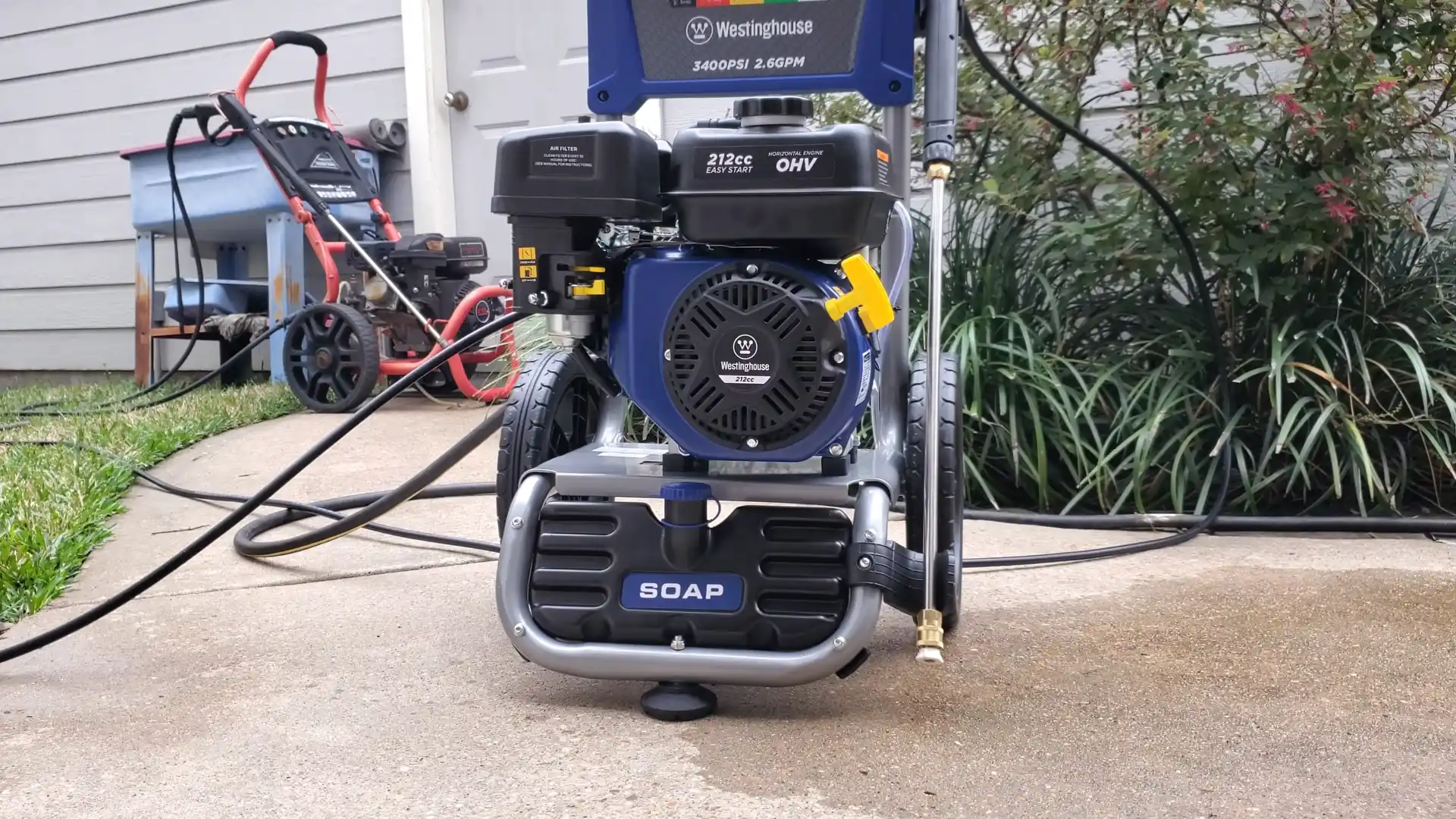
Best for Large Areas – Westinghouse WPX3400 (Gas)
For mold on large driveways, long fences, or the full exterior of a two-story home, electric pressure washers hit their limits. The Westinghouse WPX3400 removes that limitation. At 3400 PSI and 2.6 GPM, it produces more cleaning units than any electric model on this list, and you are not constrained by a power cord.

- 3400 PSI and 2.6 GPM of Powerful, Deep-Cleaning Water Pressure Perfect for Decks, Sidewalks, Siding, Fences, Railings, Garage Floors, Exterior Walls, Cars and Patio Furniture – Easy to Fill 1 Gallon Gas Tank and Half Gallon Onboard Soap Tank
- 25′ Foot Abrasion Resistant Super-Flex Hose With Lightweight High Pressure Spray Gun and 5 Quick Connect Nozzles (0°, 15°, 25°, 40° & Soap) - Compatible with Pressure Washer Accessories such as Surface Cleaners, Undercarriage Cleaners, and Foam Cannons with M22 fittings
Pros and Cons
| Pros | Cons |
|---|---|
| 3400 PSI and 2.6 GPM — most cleaning power on this list | 67 lbs (heaviest overall) |
| No cord limitation — work anywhere on the property | Requires gas, oil changes, and winterization |
| 24,000+ Amazon reviews at 4.6 stars | |
| 12-inch never-flat wheels on steel frame | |
| 1.6L onboard soap tank | |
| 3-year limited warranty |
Testing Results
Concrete / Driveway: Heavy duty. The 2.6 GPM flow rate is what separates this from electric models. More water volume means mold gets lifted and flushed away faster. A surface that takes 60 minutes with a 1.2 GPM electric can take 30 minutes here.
Siding: Excellent. Use the 25 or 40 degree nozzle to avoid surface damage. Mold and algae on both wood and vinyl cleared completely.
Deck / Fence: Very good. The power is high for wood, so use the 40 degree nozzle and maintain a safe distance on softer wood species like cedar.
Heavy Stains: Yes. This handles the worst mold on concrete, brick, and stone without needing multiple passes with heavy detergent.
Startup: The 212cc Westinghouse engine fires on the first or second pull consistently per owner reports. No prolonged warm-up issues reported in reviews.
Soap Delivery: The 1.6L onboard soap tank is the largest among gas models. Enough for most full-exterior jobs without stopping to refill.
Real-world Usage
Gas pressure washers shine on large properties where the cord is the limiting factor. If you have a 100-foot driveway, the side of a house plus a fence line, or a large deck and patio combo, you will appreciate not managing a 50 ft extension hose or repositioning around an outlet.
The noise is real. Neighbors within earshot will hear it. Stick to standard daytime hours and give neighbors a heads-up for long sessions.
Best Use Case
The WPX3400 is for homeowners with large exterior surface areas where mold returns regularly and where an electric machine cannot cover the job in a reasonable time. Rural properties, large lots, and houses with long unbroken concrete or stone surfaces are the ideal use case.
Not for apartment or condo owners, noise-sensitive situations, or anyone mainly washing a car or small patio.
Verdict
The WPX3400 is the most powerful and efficient mold removal tool on this list. The 3400 PSI and 2.6 GPM combination outperforms every electric model by a meaningful margin, especially on large concrete and masonry surfaces where mold staining is deep.
The trade-offs are real: gas maintenance, weight, and noise. If those are acceptable for your situation, no electric matches what this machine can do in the same time. For a full walkthrough on treating algae and mold on concrete, see our guide on how to remove algae from concrete.
Rating: 4.6 / 5
View on Amazon: Westinghouse WPX3400
What Makes the Best Pressure Washer for Mold?
PSI and GPM: Both Numbers Matter
Most buyers focus only on PSI when shopping for a pressure washer for mold, but GPM is equally important for this task. PSI (pounds per square inch) controls how hard the water hits the surface. GPM (gallons per minute) controls how much water volume flushes the loosened mold away.
Mold removal needs both. A high-PSI, low-GPM machine strips the mold but does not rinse it away efficiently. You end up rinsing the same section multiple times. For most residential mold jobs, a minimum of 2000 PSI with at least 1.2 GPM is the practical floor. For concrete and brick with deep mold staining, 2500 PSI or higher with 1.5+ GPM makes a noticeable difference in how long the job takes.
Detergent Delivery System
Pressure alone does not kill mold. It removes it from the surface. But without a detergent that addresses the root cause, mold returns quickly on shaded or moisture-prone surfaces. The best pressure washers for mold have a built-in soap tank or a reliable soap nozzle so you can apply a mold-killing cleaner before the high-pressure rinse.
Onboard tanks vary from 20oz on compact models to 1 gallon on the Greenworks Pro. For small jobs, any built-in tank works. For a full home exterior, a larger tank means fewer stops to refill. Dual soap tanks (like on the Sun Joe SPX3000) let you carry two different cleaners simultaneously, which is a practical advantage for a full mold treatment session.
Nozzle Selection
For mold removal, you typically use two nozzles: a soap nozzle (low pressure, wide fan) to apply detergent, and either a 15 degree, 25 degree, or turbo nozzle to remove the loosened mold. The 25 degree is the most versatile for mold work. It is aggressive enough to clean but wide enough to avoid stripping paint or damaging wood grain.
Turbo nozzles spin the water in a rotating beam pattern, which increases cleaning speed significantly on flat surfaces like concrete driveways. Most mid-range and above machines include one. If the machine you are considering does not, check if it accepts universal turbo nozzle attachments.
Surface Compatibility
Not every surface takes the same pressure. Vinyl siding, wood decks, and painted surfaces need wider nozzle angles and more distance to avoid damage. Concrete and brick can handle direct 15 degree or turbo nozzle work at close range.
The Surface Performance flags in our product notes reflect this. A machine rated for heavy concrete mold may still need the 40 degree nozzle on vinyl siding to avoid surface damage. Start at a larger angle and move closer until you find the effective distance for each surface type.
Motor Type
Universal motors (common in budget models) are louder, run hotter under sustained load, and have a shorter lifespan than induction motors. For occasional use once or twice per season, a universal motor is fine. For regular use or long sessions, an induction motor (RYOBI RY142300, Westinghouse WPX3000e, Karcher K5 Premium) runs cooler and quieter, and lasts significantly longer before pump or motor issues appear.
How to Use a Pressure Washer to Remove Mold
Apply your detergent first. Spray the mold-affected area with a mold-specific cleaner using the soap nozzle, working bottom to top to prevent cleaner runoff from streaking clean sections. Let the detergent sit for five to ten minutes. Do not let it dry on the surface.
Switch to your cleaning nozzle and rinse top to bottom with overlapping passes. Use the 25 degree for most surfaces, the 15 degree or turbo for concrete, and the 40 degree for older painted wood. Keep the wand moving. Holding it stationary for too long on wood or soft siding can damage the surface.
For stubborn mold that does not clear on the first pass, apply a second round of detergent, let it dwell longer, and rinse again before concluding the surface is a scrubbing job rather than a pressure washing job.
Frequently Asked Questions
What PSI do I need to remove mold?
For light surface mold on siding, patio furniture, or a wood deck, 1800 to 2000 PSI is enough when paired with a detergent. For concrete driveways, brick, or mold that has been building for several seasons, 2500 PSI or higher gives noticeably better results. Gas models at 3000+ PSI are for the hardest cases. Our best pressure washer for concrete guide covers the PSI recommendations for concrete specifically.
Should I use bleach with a pressure washer to kill mold?
A diluted bleach solution (1 part bleach to 10 parts water) is effective on many mold types, but it needs to dwell on the surface before rinsing. Not all pressure washer soap tanks are compatible with bleach long-term. Check the manufacturer’s guidance. Many homeowners use a dedicated mold-killing pressure washer detergent instead, which is less corrosive to the machine and effective on most common household mold.
Is an electric or gas pressure washer better for mold removal?
For most homeowners with mold on siding, decks, patios, and standard driveways, a quality electric in the 2000 to 3000 PSI range handles the job. Gas models make sense for large properties, very heavy concrete staining, or locations without convenient outlet access. Gas also finishes large jobs faster because higher GPM means faster rinsing. If you are on the fence, start with a capable electric and only step up to gas if you find it is not keeping up.
How often should I pressure wash to prevent mold?
Once a year in spring is the standard for most homes. Shaded north-facing surfaces and homes in humid climates may benefit from twice-yearly cleaning. Applying a mildew-resistant sealant to concrete and wood after cleaning helps slow regrowth. The how to remove mildew from concrete guide covers sealing recommendations after cleaning.
What is the best detergent to use with a pressure washer for mold?
Look for pressure washer detergents labeled specifically for mold, mildew, or algae removal. Products containing sodium hypochlorite (bleach-based) or quaternary ammonium compounds are effective on most outdoor mold. Apply with the soap nozzle, let dwell for five minutes minimum, and rinse thoroughly. Some all-purpose pressure washer soaps do not contain active mold-killing agents and only clean surface grime.