Best Pressure Washer for Moss in 2026
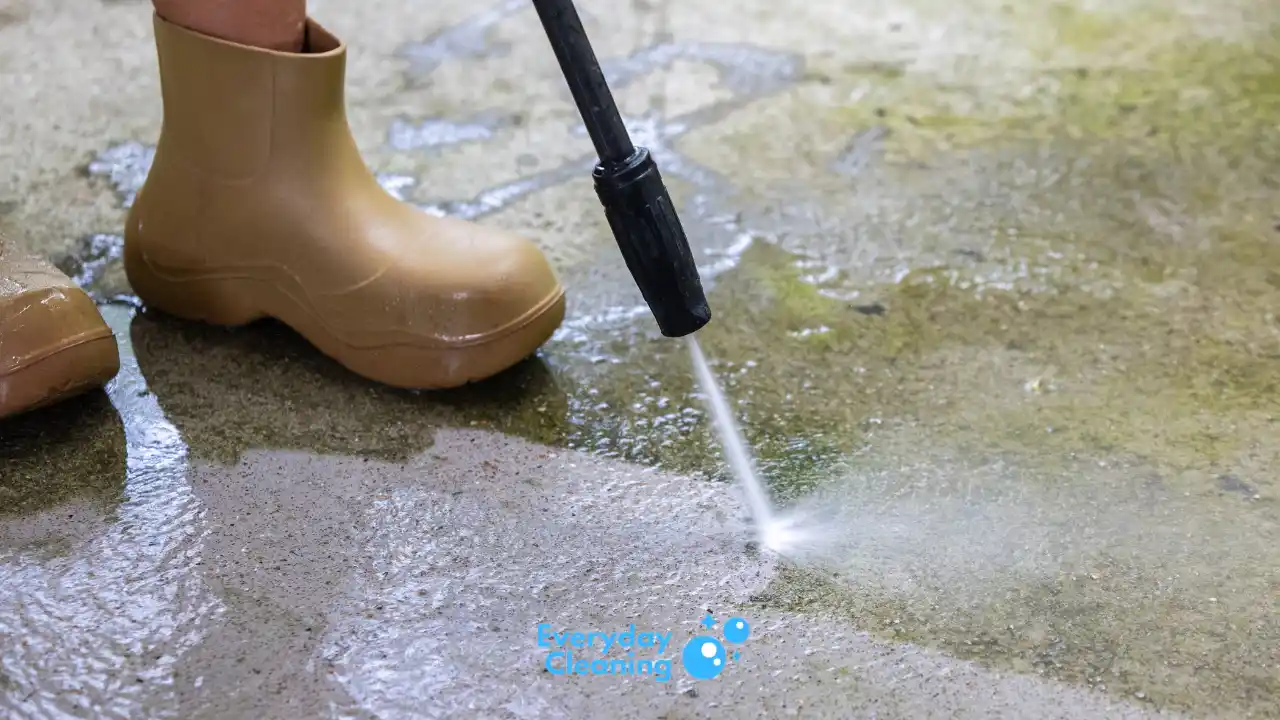
Moss looks soft, but it clings to concrete, deck boards, and patio stone like it was glued on. A regular garden hose won’t cut it. You need a pressure washer with enough PSI to break the grip, plus the right nozzle to clear it without damaging the surface underneath.
Our Top Picks
| Recommendation | Product | Reason |
|---|---|---|
| Best Overall | Westinghouse ePX3500 | 2000 rated PSI in a 19 lb frame with 4-wheel stability — Reviews ↓ |
| Best Budget | Sun Joe SPX3000 | 20,000+ reviews, dual soap tanks, solid mid-range power — Reviews ↓ |
| Best for Heavy Moss | Westinghouse WPX3000e | 2600 rated PSI with a quiet induction motor for stubborn growth — Reviews ↓ |
| Best for Large Areas | Westinghouse WPX3400 | 3400 PSI and 2.6 GPM blasts moss off driveways and two-story siding fast — Reviews ↓ |
| Best Premium Electric | Greenworks Pro GPW3001 | PWMA-certified 3000 PSI with a 10-year motor warranty — Reviews ↓ |
| Best for Light Moss | RYOBI RY142300 | Brushless motor longevity with 2300 PSI for decks and patios — Reviews ↓ |
Best Overall: Westinghouse ePX3500
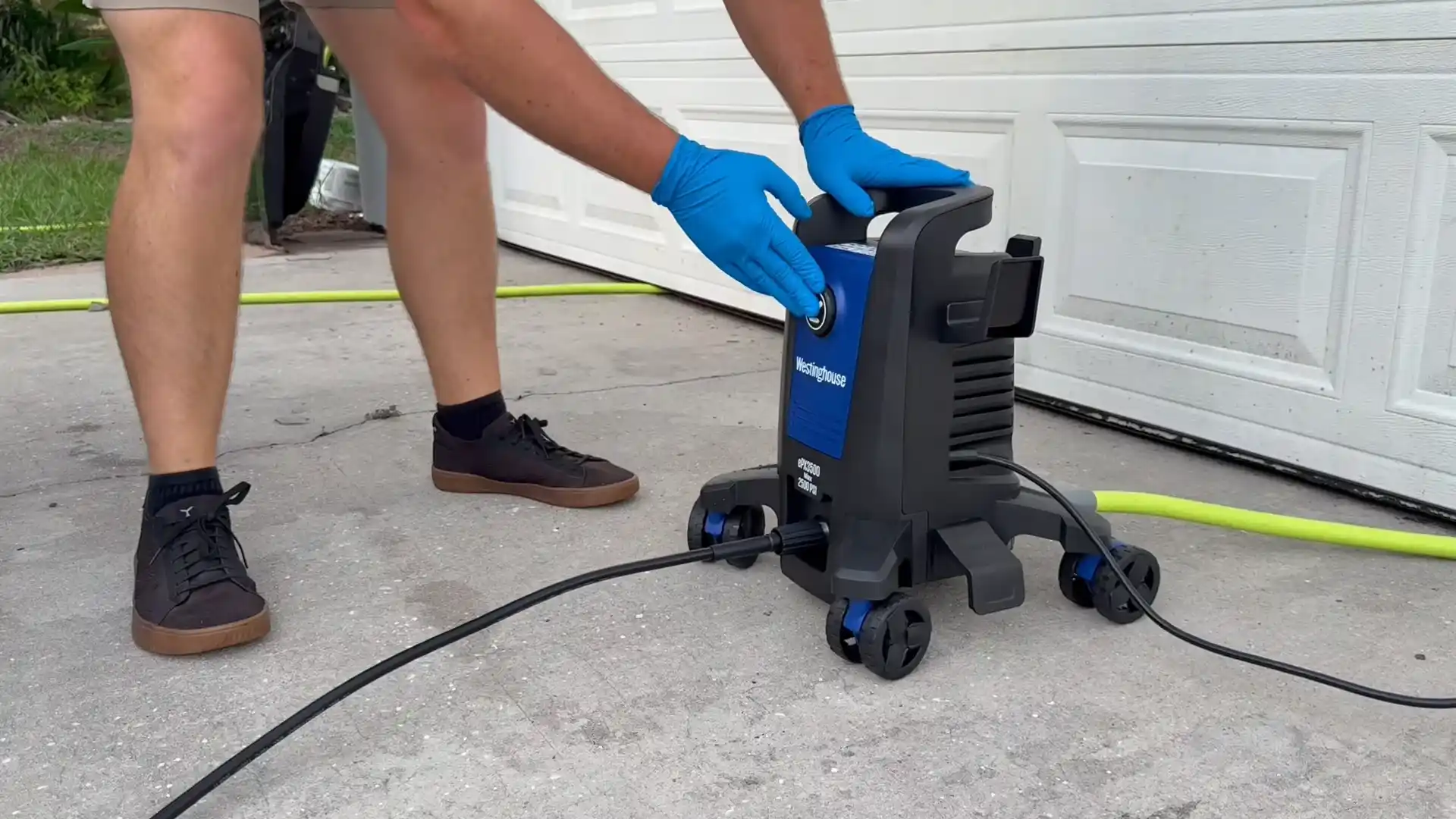
The ePX3500 is the easiest pressure washer to recommend for moss removal. It delivers 2000 rated PSI in a machine that weighs 19 lbs and rolls on 4-wheel 360-degree steering. For patios, walkways, and smaller driveways, this is the one.
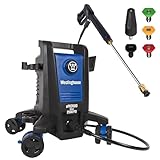
- Delivers 2500 max PSI and 1.76 max GPM (at lowest pressure), and 2000 rated PSI and 1.2 rated GPM of water flow; Pro-style steel extendable 17.5” wand with quick-connect nozzles (0°, 15°, 25°, turbo and soap applicator)
- Super compact and lightweight at 16.5” tall and 19 pounds for convenient storage and portability; Four quick-lock wheels with 360° steering design and low center of gravity engineered for anti-tipping design

Pros and Cons
| Pros | Cons |
|---|---|
| Anti-tipping 4-wheel 360-degree steering design | Onboard soap tank is just 20oz |
| Only 19 lbs — lightest mid-range on this list | |
| 5 nozzles including 0 degree for stubborn moss spots | |
| 25 ft hose reaches most standard outdoor areas | |
| TSS pump protection extends motor life | |
| 3-year warranty — stronger than most at this price |
Testing Results
PSI and GPM: Rated 2000 PSI and 1.2 GPM in real use. Enough to lift moss cleanly off patio pavers, deck boards, and siding without blasting through the surface. On thick concrete with heavy growth, you may need multiple passes.
Deck and Fence: Yes. The 25-degree nozzle handles deck boards well at a safe angle. The 15-degree is better for fence posts and vertical surfaces with heavy buildup.
Patio and Concrete: Yes (medium duty). Clears moss on pavers and standard concrete driveways. Deep-set growth on rough concrete may take 2-3 passes with the turbo nozzle.
Nozzle Versatility: 5 quick-connect nozzles including 0, 15, 25, turbo, and soap. The turbo nozzle does most of the heavy work for moss. The soap nozzle lets you pre-treat with a moss killer before rinsing.
Ease of Setup: Straightforward. Snap the handle together, connect the hose, plug in, and go. Most owners report setup under 10 minutes out of the box.
Portability and Weight: At 19 lbs with 4-wheel steering, this moves easily across a patio or around the yard without tipping or dragging. The lightest stable unit on this list.
Soap Tank and Detergent Delivery: The onboard 20oz soap tank is on the small side. For a full deck treatment with a moss-killing detergent, you’ll refill it once or twice. Not a dealbreaker, but something to know going in.
Noise Level: Universal motor, so it’s audible — roughly comparable to a power drill running continuously. Not the quietest option here, but typical for this class.
Real-world Usage
Most homeowners reach for this one because it handles every outdoor surface without requiring gas or a heavy machine. A weekend of deck cleaning, patio scrubbing, and fence rinsing is well within its range. The 4-wheel design is genuinely useful when moving across an uneven backyard.
The 35 ft cord handles a standard outdoor setup without needing an extension cord for most jobs. If your driveway is long or your home is large, you’ll want a heavier-duty option.
Best Use Case
Best for homeowners with a medium-sized deck, patio, or walkway covered in moss. The 5-nozzle kit handles pre-treatment and rinsing without switching machines. Not the right pick for deep-set moss on thick concrete or large driveways.
Verdict
The ePX3500 is the easiest entry point for most moss removal jobs. Lightweight, stable, and powerful enough for nearly every residential surface. The 20oz soap tank is the only real quirk, but it’s a minor inconvenience rather than a flaw. If you want a single machine for patios, decks, siding, and car washing, this is the one to start with. For pairing with a dedicated detergent, check out what works best for outdoor stone when reading up on how to remove moss from your patio.
Rating: 4.7 / 5
View on Amazon: Westinghouse ePX3500
Best Budget: Sun Joe SPX3000
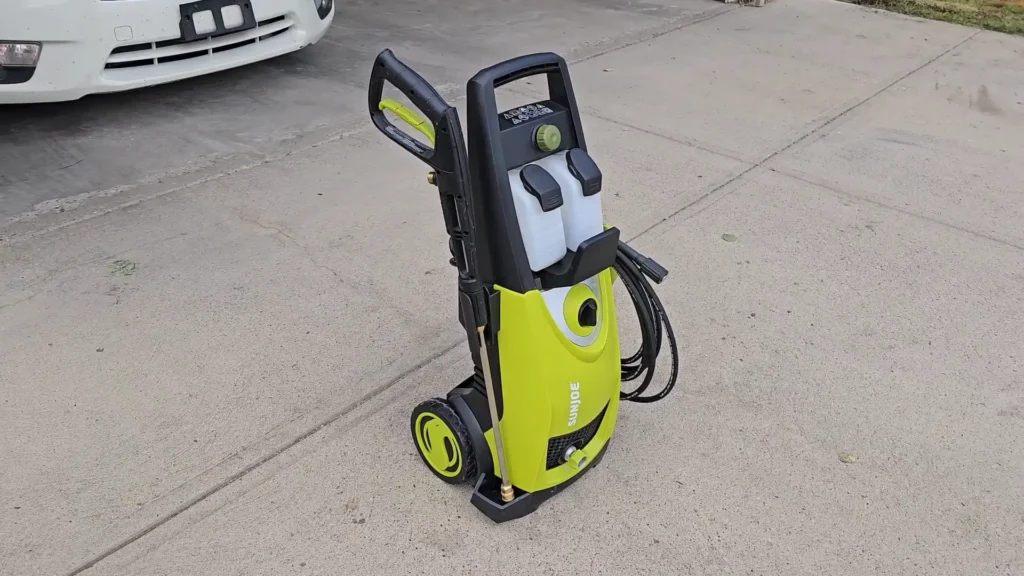
The SPX3000 is the best-selling electric pressure washer on Amazon for a reason. Over 20,000 reviews at 4.8 stars. Two detergent tanks. Five nozzles. And a price that stays below $170 most of the year.

- High-Pressure Cleaning: This electric pressure washer delivers up to 2030 PSI working pressure and 1.2 GPM water flow to help remove dirt, grime, and buildup from homes, driveways, vehicles, RVs, and outdoor equipment
- Multiple Spray Options: This water pressure washer includes five quick-connect spray tips (0°, 15°, 25°, 40°, and soap) to switch between narrow jet streams and wider fan patterns, plus a soap applicator for detergent use
Pros and Cons
| Pros | Cons |
|---|---|
| 20,000+ Amazon reviews at 4.8 stars | Smaller rear wheels struggle on uneven terrain |
| Dual soap tanks — switch between two cleaning solutions | |
| PWMA certified — PSI claims are independently verified | |
| 5 nozzles including 0 degree | |
| Solid brass fittings and metal connections | |
| TSS pump protection |
Testing Results
PSI and GPM: 2030 PSI with 1.2 GPM. Clears light-to-medium moss from decks, patios, and siding. Heavy moss on rough concrete will need multiple passes or a pre-treatment soak.
Deck and Fence: Yes. Reliable for standard deck boards and painted fences at the 25-degree setting.
Patio and Concrete: Yes (medium duty). Handles standard concrete and patio pavers without issue. For deeply embedded moss on older concrete, expect more passes than a 2500+ PSI unit.
Nozzle Versatility: Five nozzles — 0, 15, 25, 40, and soap. The dual soap tanks are the standout here. You can fill one with a moss-killing concentrate and the other with general detergent, then switch between jobs without stopping to drain and refill.
Ease of Setup: Very easy. The SPX3000 is one of the simplest to assemble out of the box. Hose connects quickly, and the nozzles snap into place without force.
Portability and Weight: 24.3 lbs with rear wheels. The wheels are smaller than some competitors and can struggle on grass or gravel, but for smooth patio surfaces they’re fine.
Soap Tank and Detergent Delivery: The dual-tank system is genuinely useful for moss jobs where you want to pre-soak with a moss killer and then rinse with a general cleaner. No other model on this list at this price has two tanks.
Noise Level: Universal motor — typical noise for the class. Not quiet, but not louder than comparable machines.
Real-world Usage
The dual-tank setup makes the SPX3000 practical for a full moss removal session. Pre-treat a section with moss killer in tank one, let it sit, then rinse and scrub with the pressure stream. The 34-inch adjustable wand reaches gutters and upper siding without a ladder in most cases.
The 20 ft hose is the main gripe. For a deck or small patio it’s workable, but for a driveway you’ll feel the constraint quickly. A basic 20 ft extension hose solves this without affecting performance.
Best Use Case
Best for budget-conscious homeowners who want a reliable, well-reviewed machine for decks, patios, siding, and car washing. The dual soap tanks make it especially practical for moss jobs where pre-treatment matters. Skip it if your main priority is clearing heavy moss from large concrete driveways.
Verdict
The SPX3000 earns its bestseller status. 20,000+ verified reviews don’t lie. For the price, you’re getting five nozzles, certified PSI ratings, and a dual soap system that no budget competitor matches. The 20 ft hose and lower GPM are the only real limitations. For pavers and stonework that tend to grow moss quickly, the dual soap tanks pair well with the advice in how to remove green algae from your patio.
Rating: 4.5 / 5
View on Amazon: Sun Joe SPX3000
Best for Heavy Moss: Westinghouse WPX3000e
When moss has been sitting on concrete for years, 2000 PSI doesn’t always cut it. The WPX3000e runs at 2600 rated PSI with a quiet induction motor, and it handles the kind of growth that makes other electric washers work twice as hard.
- Delivers 3000 max PSI and 1.76 max GPM (at lowest pressure), and 2600 rated PSI and 1.1 rated GPM of water flow. Perfect for decks, sidewalks, fences, garage floors, exterior walls, cars and patio furniture; Comes with a .45 gallon soap tank
- 25′ abrasion resistant super-flex hose with lightweight high pressure metal spray gun and wand with 5 quick connect nozzles (0°, 15°, 25°, soap and turbo); Compatible with pressure washer accessories like surface cleaners, undercarriage cleaners and foam cannons with M22 fittings
Pros and Cons
| Pros | Cons |
|---|---|
| 2600 rated PSI — most powerful electric on this list (short of the Greenworks) | Heavy at 36.8 lbs |
| Induction motor runs noticeably quieter than universal motors | |
| 10-inch never-flat wheels handle rough terrain | |
| 0.45 gallon soap tank — fills once for most jobs | |
| Steel frame build quality | |
| M22 accessory compatibility for aftermarket hose extensions | |
| 3-year warranty |
Testing Results
PSI and GPM: 2600 rated PSI with 1.1 GPM continuous. That PSI is real and consistent. The lower GPM means you move slower across large areas, but the pressure is enough to strip deep-rooted moss from aged concrete and textured pavers in one pass.
Deck and Fence: Yes. Use the 25-degree nozzle on deck boards and keep distance consistent. The higher PSI needs a careful angle on softer wood.
Patio and Concrete (Heavy Duty): Yes. The WPX3000e earns its spot for concrete and masonry. Old driveways and rough stone paths respond well to the turbo nozzle at this PSI level.
Heavy Stains: Yes. Handles heavy staining from moss and mildew on concrete without needing multiple passes on most surfaces.
Noise Level: The induction motor runs significantly quieter than universal motor machines. Testers report being able to run it at 7am without neighbor complaints — that’s meaningful if you want to get an early start on outdoor work.
Portability and Weight: 36.8 lbs. The 10-inch never-flat wheels and hand-truck frame help, but this is not a lightweight machine. Moving it up stairs or across soft ground takes effort.
Soap Tank and Detergent Delivery: The 0.45 gallon (1.7L) tank handles most jobs without a refill. Large enough to pre-treat a full driveway with moss killer before switching to the rinse nozzle.
Real-world Usage
This is the machine to reach for when the moss problem is serious. Thick concrete stains, patchy algae on stone steps, mildew staining along the base of a fence — the WPX3000e handles all of it without the noise or fuel cost of a gas model. The quiet induction motor is a genuine quality-of-life improvement if you’re working on a weekend morning.
The 25 ft hose limits reach on long driveways. A 50 ft extension hose is the easy fix, and the M22 threads are compatible with most aftermarket options.
Best Use Case
Best for homeowners dealing with heavy, recurring moss on concrete driveways, stone patios, or aged brick surfaces. Also the right pick if you want gas-level cleaning without gas-level noise. Not the right choice for light moss on a small patio — the ePX3500 handles that at lower cost and weight.
Verdict
The WPX3000e sits in the gap between mid-range electric and full gas. Most homeowners with serious moss problems will find it does the job completely without the maintenance headaches of a gas engine. If your concrete has turned persistently green every spring, this is a durable, quieter solution. For context on what to do after the moss is gone, removing mildew from concrete covers the follow-up treatment step.
Rating: 4.6 / 5
View on Amazon: Westinghouse WPX3000e
Best for Large Areas: Westinghouse WPX3400 Gas
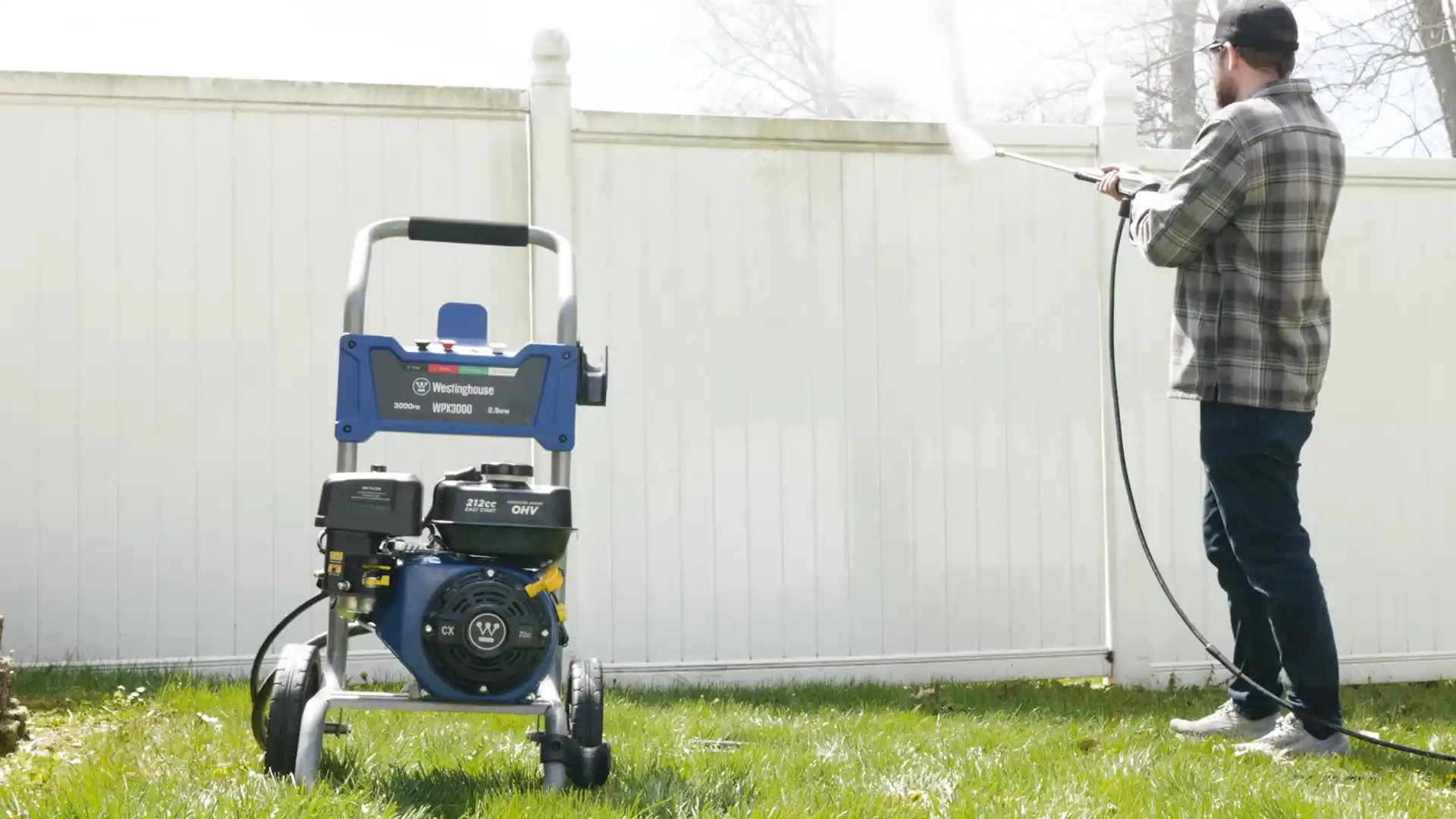
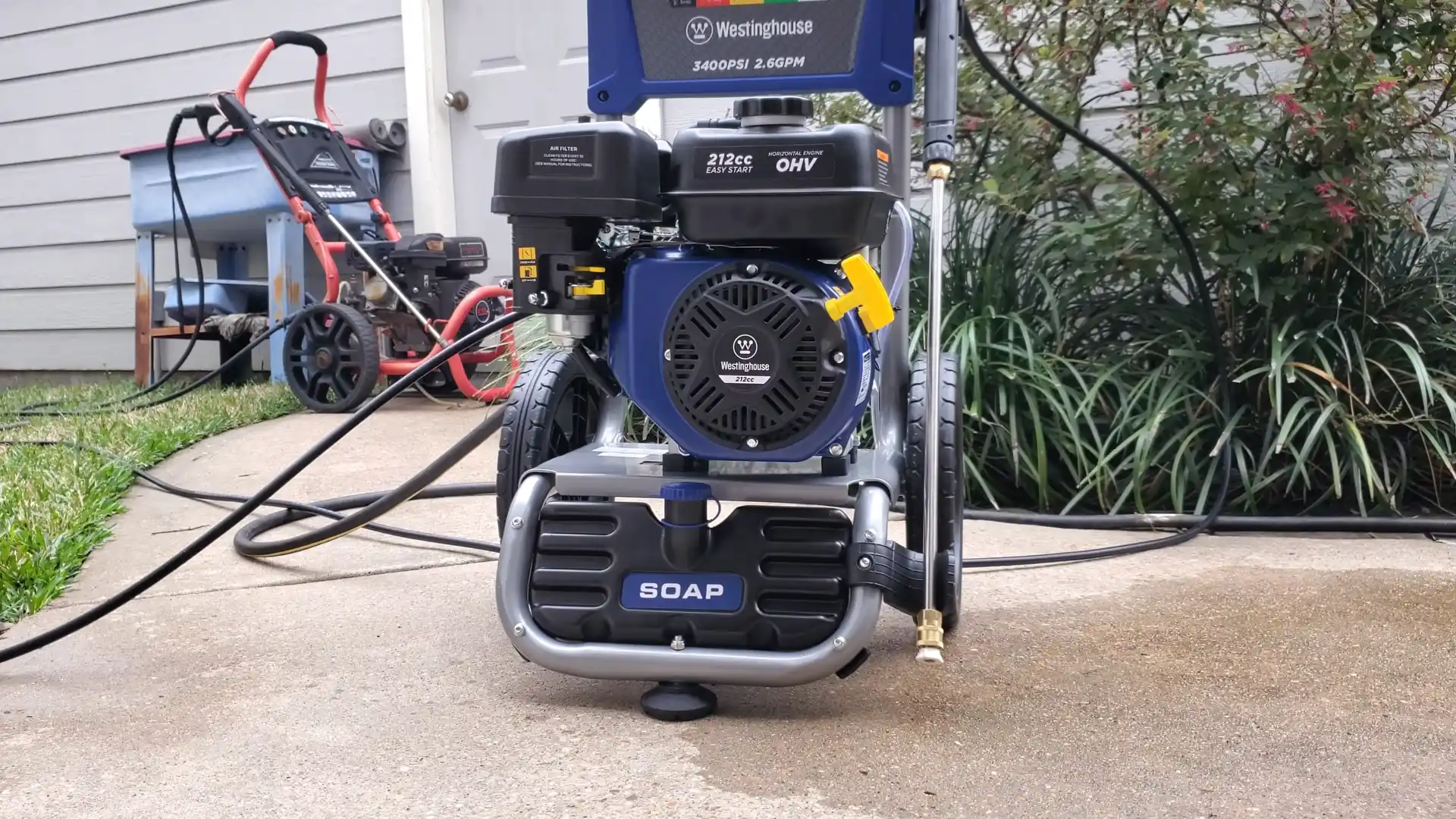
If the driveway is long, the siding is two stories, and the moss has taken over most of it, the WPX3400 is the only machine on this list with the raw numbers to finish the job in one session. 3400 PSI. 2.6 GPM. No cord to manage.

- 3400 PSI and 2.6 GPM of Powerful, Deep-Cleaning Water Pressure Perfect for Decks, Sidewalks, Siding, Fences, Railings, Garage Floors, Exterior Walls, Cars and Patio Furniture – Easy to Fill 1 Gallon Gas Tank and Half Gallon Onboard Soap Tank
- 25′ Foot Abrasion Resistant Super-Flex Hose With Lightweight High Pressure Spray Gun and 5 Quick Connect Nozzles (0°, 15°, 25°, 40° & Soap) - Compatible with Pressure Washer Accessories such as Surface Cleaners, Undercarriage Cleaners, and Foam Cannons with M22 fittings
Pros and Cons
| Pros | Cons |
|---|---|
| 3400 PSI and 2.6 GPM — most cleaning power on this list | 67 lbs, heaviest unit here |
| No cord — unlimited range for large properties | Gas requires oil changes and seasonal winterization |
| 12-inch never-flat wheels handle rough terrain | |
| Onboard 1.6L soap tank | |
| Steel frame construction | |
| 3-year warranty and 24,000+ Amazon reviews | |
| Consistent easy-start engine |
Testing Results
PSI and GPM: 3400 PSI at 2.6 GPM. No electric washer on this list comes close. Multiply those numbers and you’re looking at cleaning units that put it in a different class for large-area moss removal.
Deck and Fence: Yes. Keep your distance and use the 40-degree nozzle. At 3400 PSI you can strip paint off a fence board if you get too close with a narrow nozzle. Deck boards need the same caution.
Concrete and Driveway (Heavy Duty): Yes. This is what the WPX3400 was built for. Thick, years-old moss on rough concrete clears in a single pass at the right angle.
Siding: Yes. Use the 40-degree nozzle and maintain distance. The high PSI handles two-story siding without a ladder for most applications.
Heavy Stains: Yes. Handles the worst moss and mildew staining on masonry, stone, and concrete.
Startup Reliability: Testers report consistent first- or second-pull starts. The 212cc Westinghouse OHV engine has a strong track record in the 24,000+ verified reviews.
Noise Level: Loud. This is a gas engine — expect the same noise level as a lawn mower. Plan your sessions accordingly.
Portability and Weight: 67 lbs. The 12-inch never-flat wheels handle the load well on flat surfaces. Moving it up steps or across soft ground is a two-person job.
Real-world Usage
The WPX3400 is for homeowners with significant square footage to cover. A long driveway, a large fence line, or the full exterior of a two-story home — this machine finishes those jobs fast. The cordless setup lets you move freely without planning around outlet locations.
Gas maintenance is the trade-off. Oil changes every 50 hours, fresh fuel at the start of each season, and proper winterization. If you’re not comfortable with that routine, an electric model is a simpler long-term commitment.
Best Use Case
Best for homeowners with large driveways, long fence lines, or multi-story exterior siding where moss growth is significant. Also the right pick for rural properties without convenient outdoor outlets. Skip it if you’re dealing with a small patio or light moss — the extra power is unnecessary and the added noise and maintenance aren’t worth it.
Verdict
No electric pressure washer replaces the cleaning units on this machine. If the job is large and the moss is thick, the WPX3400 gets it done faster and more thoroughly than anything else on this list. The gas maintenance is the honest trade-off. For homeowners who run a lawn mower and know the routine, it’s not a burden. For others, the WPX3000e electric is the better fit. If you also have algae problems on your siding, the combination approach in how to remove algae from siding works well with this machine’s soap tank.
Rating: 4.6 / 5
View on Amazon: Westinghouse WPX3400
Best Premium Electric: Greenworks Pro GPW3001
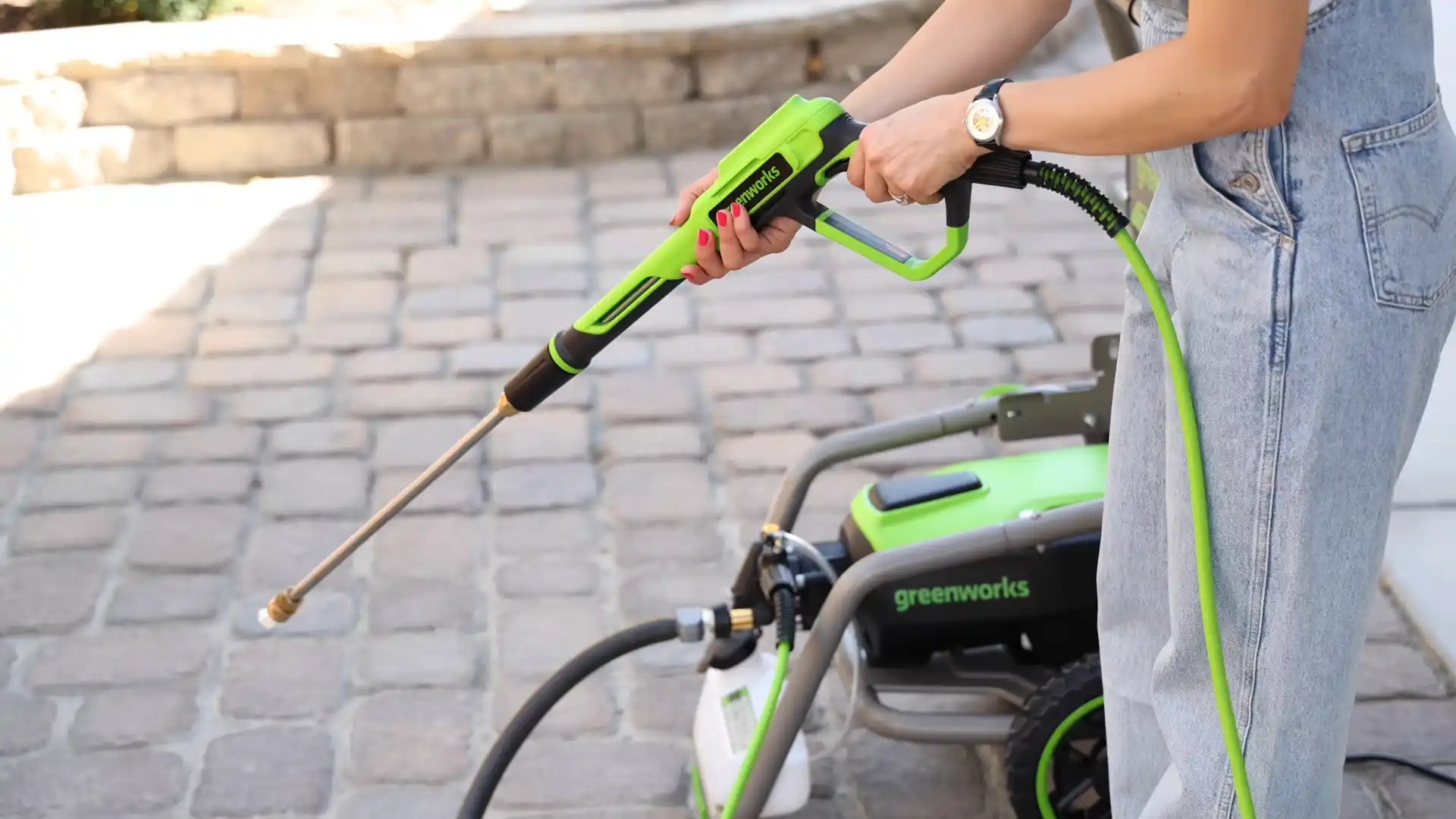
The Greenworks GPW3001 is the only machine on this list with PWMA-certified 3000 PSI and a 10-year motor warranty. The TruBrushless motor adjusts pressure automatically per nozzle. It’s expensive. It earns it.

- TRUBRUSHLESS MOTOR : Powerful 14 Amp TruBrushless motor generates 3000 PSI and 2.0 GPM for maximum cleaning power.Cleaning Units 3300 C.U. Maximum Inlet Water Temperature 104°F (40°C).Frequency : 60 hz
- PWMA CERTIFIED (Pressure Washer Manufacturers‘ Association) : All water pressure (PSI) and flow rate (GPM) claims for this product were tested and verified by an independent lab, ensuring you’ll take home the power you were promised
Pros and Cons
| Pros | Cons |
|---|---|
| PWMA certified — 3000 PSI claims are independently verified | Most expensive electric on this list at $374-499 |
| 10-year motor warranty — best on this list by far | |
| TruBrushless motor auto-adjusts pressure per nozzle | |
| 1 gallon soap tank — fill once and forget | |
| 25 ft kink-resistant Uberflex hose | |
| Wheelbarrow steel frame — stores vertically to save space | |
| Inline GFCI with waterproof plug |
Testing Results
PSI and GPM: 3000 PWMA-certified PSI with 2.0 GPM max. The certification matters here — other machines list peak numbers that don’t reflect real operation. The Greenworks delivers its rated pressure consistently.
Smart Pressure Sensing: The TruBrushless motor adjusts output automatically based on which nozzle is attached. Attach the soap nozzle and it drops to low-pressure detergent mode. Switch to the turbo and it ramps up. No manual dial, no mode switching.
Deck and Fence: Yes. The auto-sensing prevents over-pressuring on delicate surfaces.
Concrete and Driveway (Heavy Duty): Yes. At 3000 certified PSI, this clears heavy moss from aged concrete and masonry in fewer passes than any other electric option here.
Heavy Stains: Yes. Full heavy-duty performance on concrete, brick, stone, and aged siding.
Portability and Weight: 49 lbs. The wheelbarrow frame and 10-inch wheels help, but this is a substantial machine. Store it vertically to cut the footprint by about half.
Soap Tank and Detergent Delivery: 1 gallon tank. Fill it once at the start of a session and you won’t need to refill for a standard driveway or full exterior clean.
Noise Level: The TruBrushless motor runs quieter than universal motors. Not as quiet as the WPX3000e’s induction motor, but notably better than most machines at this power level.
Real-world Usage
The GPW3001 is for homeowners who want the best electric money can buy and plan to use it heavily for years. The 10-year motor warranty backs that up. Smart pressure sensing is genuinely useful if you’re moving between delicate deck boards and heavy concrete in the same session.
At $374-499, it’s a serious investment. If you’re doing one moss-clearing session a year on a small patio, the ePX3500 at $149 does the job. The Greenworks makes sense when you have a large property, use it frequently, and want to avoid ever touching a gas engine.
Best Use Case
Best for serious homeowners with large, high-value outdoor surfaces — flagstone patios, aged brick driveways, two-story siding — where consistent, certified pressure and long-term durability matter. Also the right fit for anyone who wants gas-level performance without gas maintenance. Not the pick for light moss or occasional cleaning.
Verdict
The PWMA certification, 10-year warranty, and smart pressure sensing separate this from every other electric on this list. The price tag is real and it’s not for everyone. But if you’re comparing it to a gas pressure washer on total cost over 5-10 years (no oil, no tune-ups, no winterization), the math gets closer than it looks. The best pressure washer for concrete guide is worth reading alongside this if your main surface is a heavy concrete driveway.
Rating: 4.7 / 5
View on Amazon: Greenworks Pro GPW3001
Best for Light Moss: RYOBI RY142300
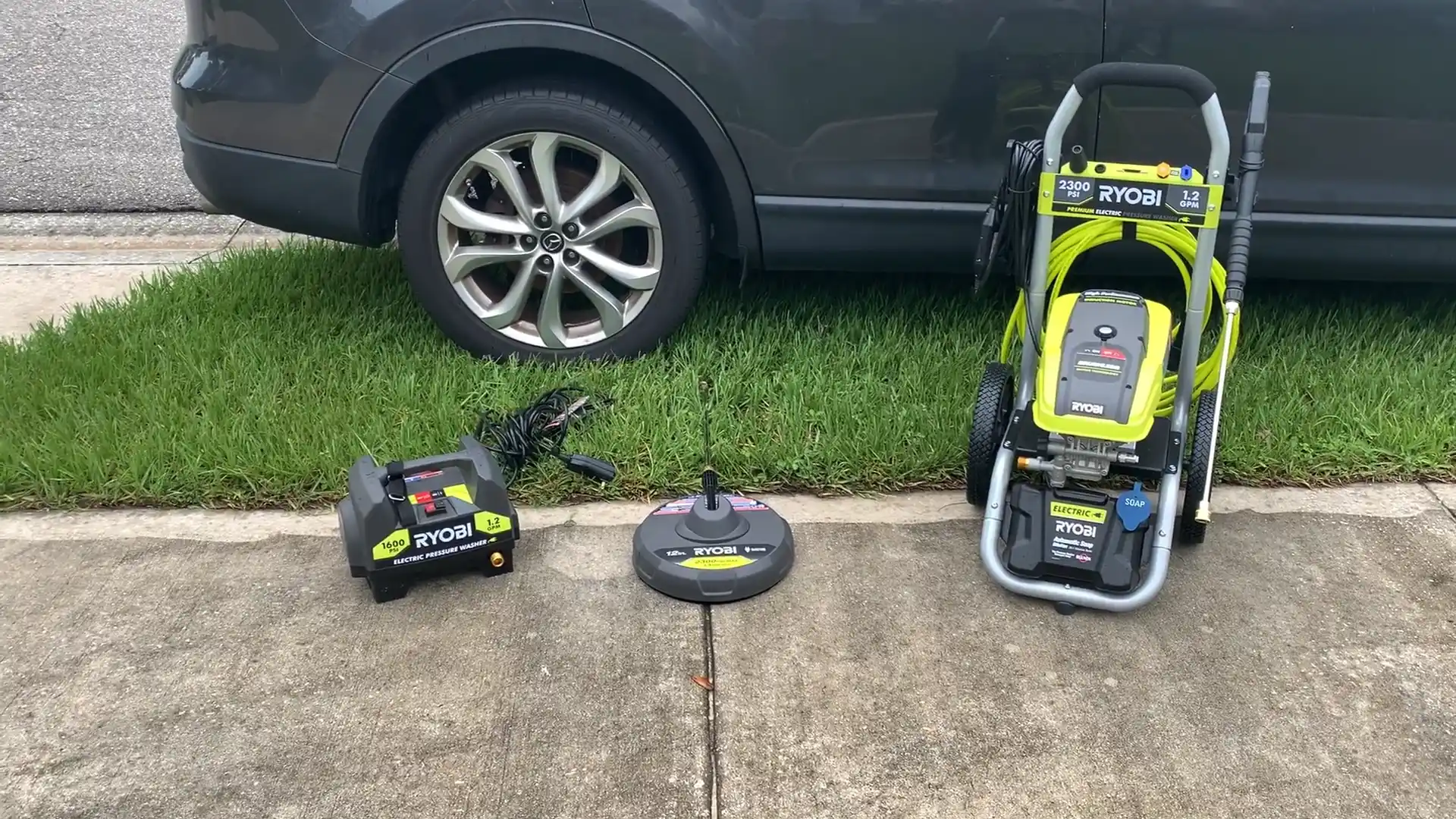
Light moss on a deck or fence doesn’t need 3000 PSI. The RYOBI RY142300 runs a brushless induction motor at 2300 PSI, handles standard residential surfaces cleanly, and lasts longer than universal motor competitors at the same price.

- AUTOMOTIVE CLEANING POWER: Ryobi pressure washer delivers strong, consistent water pressure to tackle tough dirt, grime, and grease on vehicles.
- VERSATILE USE: Ideal for washing cars, trucks, motorcycles, and other vehicles, as well as driveways and outdoor surfaces.
Pros and Cons
| Pros | Cons |
|---|---|
| Brushless induction motor — quieter and longer-lasting than universal motors | Fewer nozzles than some competitors (turbo and soap included, others vary by kit) |
| 2300 PSI handles standard residential moss removal | |
| 12-inch large wheels — the best wheel size on any mid-range electric here | |
| Onboard storage for all accessories | |
| 3-year RYOBI warranty | |
| Quieter than most machines at this power level |
Testing Results
PSI and GPM: 2300 rated PSI with 1.2 GPM. Handles light to medium moss without issue. Good for regular maintenance sessions before growth gets heavy.
Deck and Fence: Yes. The brushless motor keeps a consistent pressure without the surging that some universal motors show under load. Better for detailed work on deck boards.
Patio and Concrete (Medium Duty): Yes. Handles standard concrete and patio pavers at medium duty.
Heavy Stains: Light to medium only. Not the pick for deeply embedded growth or years of neglect. Pair it with a moss-killing pre-treatment detergent for best results on older growth.
Noise Level: Brushless induction motor is noticeably quieter than universal motor machines at similar PSI. Not silent, but a step down in noise that’s easy to notice.
Portability and Weight: 27 lbs with 12-inch large wheels. The wheels are the best on any electric mid-range here. Handles grass, gravel, and uneven terrain better than smaller-wheeled competitors.
Ease of Setup and Assembly: Standard RYOBI assembly — clear instructions, snap-connect fittings, and onboard storage for the hose and nozzles so nothing goes missing.
Real-world Usage
This is the machine for a homeowner who treats moss early and often rather than letting it build up. Run it on the deck every spring before moss sets deep, rinse the patio after fall, and the brushless motor will still be running fine years from now. RYOBI’s tool ecosystem is also worth noting — if you already have RYOBI tools, the brand warranty and parts support are consistent.
For heavier growth or large driveways, the power ceiling is real. Step up to the WPX3000e or WPX3400 if the moss has been sitting for multiple seasons.
Best Use Case
Best for homeowners who stay on top of moss maintenance and need a reliable mid-range machine for decks, patios, fences, and siding. The brushless motor longevity is the main reason to choose this over the SPX3000 at a similar price point. Not the pick for heavy or long-neglected moss growth.
Verdict
The RY142300 is a solid, durable mid-range pick that rewards consistent use. The brushless motor is the standout feature at this price — it runs quieter, lasts longer, and draws less power than universal motor competitors. For moss removal on a well-maintained deck or patio, it handles the job without complaint. If you want more context on keeping outdoor concrete surfaces clean between sessions, how to remove mildew from concrete is useful follow-up reading.
Rating: 4.3 / 5
View on Amazon: RYOBI RY142300
What Makes the Best Pressure Washer for Moss?
PSI: How Much Do You Actually Need?
Moss is softer than concrete staining or grease, but it holds on firmly to porous surfaces. In general, 1500-2000 PSI handles light moss on decks, patios, and fences. Anything above 2000 PSI gives you the margin to clear heavier, older growth in fewer passes and with less effort.
The key nuance is surface type. Deck boards are softer than concrete. Using a 3400 PSI gas machine on aging cedar with a 15-degree nozzle will strip the wood. For wood surfaces, keep PSI between 1500 and 2500 and use a wider nozzle angle. For concrete and masonry where moss has set in deep, the higher PSI machines on this list earn their value.
PWMA-certified PSI numbers (Sun Joe SPX3000, Greenworks GPW3001) reflect independently tested performance. Other machines list peak or max PSI that may not reflect rated output. When comparing two models at similar price points, certified numbers are worth more than marketing claims.
GPM: The Underrated Spec for Moss Removal
GPM (gallons per minute) determines how fast you rinse loosened moss off the surface. Lower GPM means more passes, more time, and a slower session overall. Most electric pressure washers run 1.1 to 1.4 GPM in real use. Gas models jump to 2.0 GPM or higher, which is why they finish large driveways significantly faster than electric models at similar PSI.
For a small deck or patio, 1.2 GPM is workable. For a full driveway or large fence line, the difference between 1.2 GPM and 2.6 GPM (the WPX3400) is measured in hours. If time and area coverage matter, prioritize GPM alongside PSI.
Motor Type: Universal vs Induction vs Brushless
Universal motors are the most common in budget and mid-range electric pressure washers. They’re cheap to manufacture, get the job done, and run loud. Rated lifespan is typically around 500 hours before performance drops.
Induction motors (Karcher K5, Westinghouse WPX3000e) run significantly quieter and cooler. They last longer under regular use and maintain more consistent pressure. If you plan to use the machine frequently across multiple seasons, the induction motor is the better long-term investment.
Brushless motors (RYOBI RY142300, Greenworks GPW3001 TruBrushless) add efficiency and smart-sensing capability. The Greenworks TruBrushless auto-adjusts pressure per nozzle, which reduces the risk of accidentally over-pressuring a delicate surface. Worth it if you’re moving between wood and concrete in the same session.
Nozzle Selection for Moss
The nozzle angle determines how the pressure contacts the surface. For moss, the practical options are the 15-degree, 25-degree, and turbo nozzle.
The 15-degree nozzle concentrates pressure in a narrow fan. Good for concrete edges and between patio pavers where moss hides. Use it carefully on wood.
The 25-degree nozzle is the standard workhorse for moss on most surfaces. Wide enough to cover area quickly, narrow enough to cut through growth.
The turbo (or rotary) nozzle spins the water stream in a tight circular pattern, combining the cutting power of a 0-degree with the coverage of a 25-degree. On tough concrete moss, it’s the fastest way to clear a large area. Most of the machines on this list include one.
The soap nozzle matters for pre-treatment. Apply a moss-killing detergent, let it dwell for 10-15 minutes, then switch to the turbo and rinse. That sequence consistently outperforms pressure alone.
Electric vs Gas for Moss Removal
Electric pressure washers handle the vast majority of residential moss jobs cleanly. Light to medium growth on decks, patios, walkways, and siding is firmly within the range of a 2000-2600 PSI electric model. Corded models give you consistent power without battery management. No fuel, no oil, no seasonal maintenance.
Gas pressure washers make sense when the job is large, the moss is thick, or the property is too far from an outlet to run a cord. The WPX3400’s 3400 PSI and 2.6 GPM is a different class of cleaning power. For a long driveway with years of growth, it finishes faster and more completely than any electric on this list.
How to Use a Pressure Washer for Moss Effectively
Start by clearing loose debris. Sweep the surface to remove leaves, dirt, and anything sitting on top of the moss. Pressure washing over debris wastes time and clogs nozzles.
Pre-treat with a moss-killing detergent. Apply it with the soap nozzle and let it sit for 10-15 minutes. The detergent breaks down the moss root system and makes the pressure rinse significantly more effective. This step makes the difference between one pass and three.
Work at a consistent angle. Hold the nozzle 6 to 12 inches from the surface and move in overlapping sweeps. For concrete, a 25-degree or turbo nozzle at 6-8 inches is standard. For deck boards, back the nozzle out to 10-12 inches and use the 25-degree to avoid grain damage.
Rinse top to bottom on vertical surfaces. Start at the top of a fence or siding panel and let the loosened moss wash down rather than pushing it back into areas you’ve already cleaned.
Let the surface dry fully before inspecting. Wet concrete and wood look uniform when wet. Once dry, you’ll see if any patches need a second pass. Avoid applying sealers or treatments until the surface is completely dry.
Frequently Asked Questions
What PSI do I need to remove moss from a driveway?
For standard concrete driveways, 2000-2500 PSI handles moderate moss growth in one to two passes. Older concrete with deep-set growth benefits from 2600-3000 PSI, which is where the WPX3000e and Greenworks GPW3001 come in. Gas models at 3400 PSI are the fastest option for large driveways but aren’t necessary for most residential jobs.
Does pressure washing actually kill moss or just remove it?
Pressure washing removes the visible growth, but it doesn’t necessarily kill the spores embedded in porous surfaces. That’s why pre-treatment with a moss-killing detergent matters. The detergent kills the root system before you rinse, which slows regrowth significantly. Without it, moss often returns within a season on north-facing or shaded surfaces. For ongoing algae issues on concrete, how to remove algae from concrete covers the full treatment approach.
Is a cordless pressure washer good enough for moss removal?
Cordless models are convenient for light jobs but fall short on moss removal in most cases. Battery-powered pressure washers typically run below 1000 PSI and have limited runtime. They’re useful for rinsing off loose moss after a pre-treatment, but they lack the sustained pressure needed to fully clear a mossy surface in one session.
How often should I pressure wash areas prone to moss?
Once a year is the minimum for most residential properties with shade or moisture exposure. Spring is the best time — before moss sets into the surface for another growing season. North-facing surfaces and areas under tree canopy may benefit from a treatment in both spring and fall. A good detergent pre-treatment at each session slows regrowth and reduces the work needed the following year.