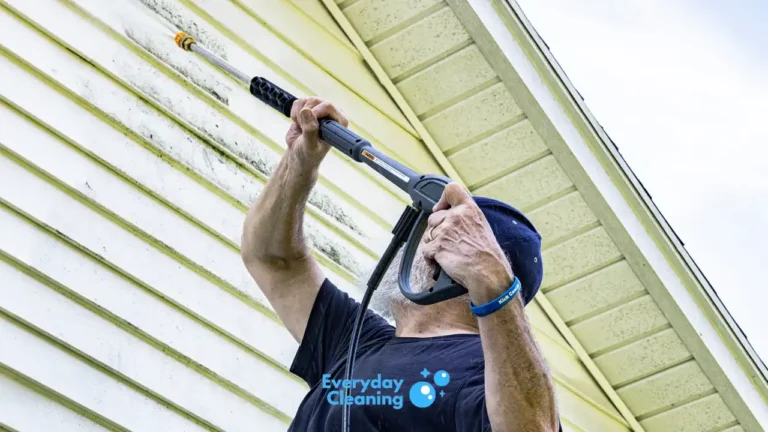
6 Best Pressure Washers for Fences
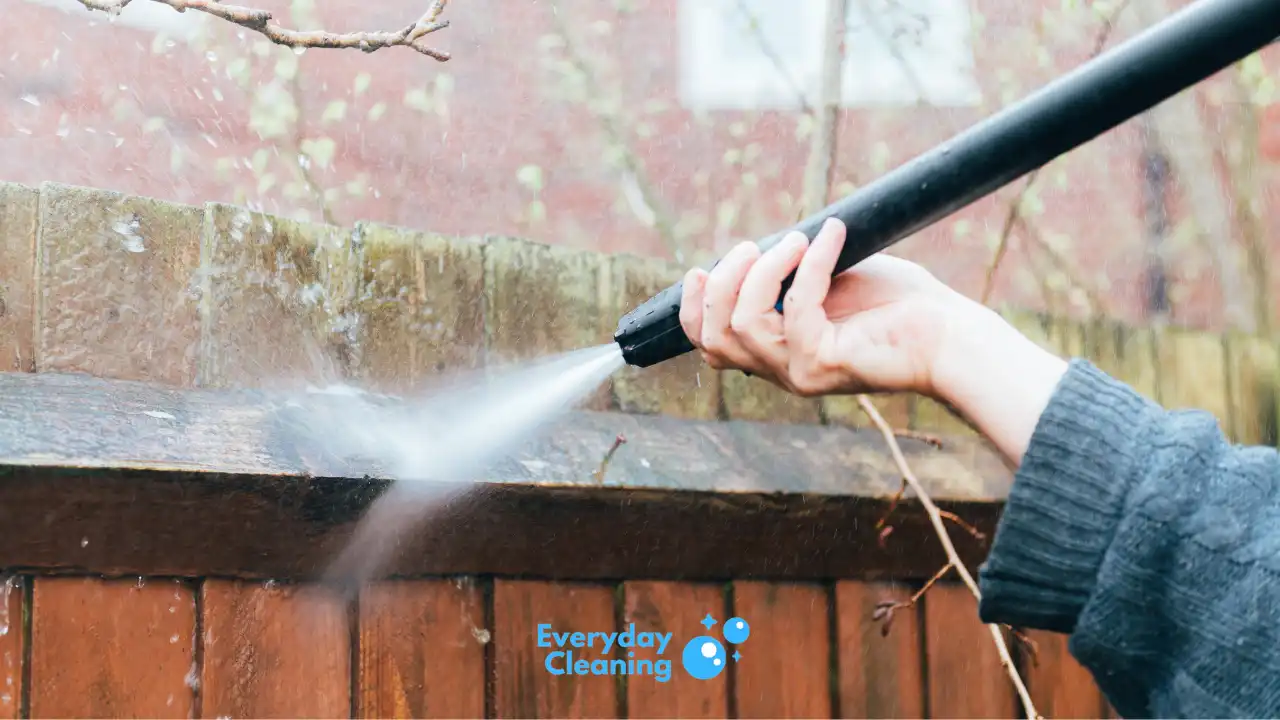
Fence cleaning is one of those jobs that looks easy until you grab the wrong machine and strip the wood or leave green streaks behind. These six pressure washers hit the right balance of PSI, GPM, and nozzle control for fences without causing damage.
Our Top Picks
| Recommendation | Product | Reason |
|---|---|---|
| Best Overall | Westinghouse ePX3500 | 2500 PSI, 4-wheel design, 5 nozzles for any fence type. Reviews ↓ |
| Best Budget | Greenworks 1800 PSI | PWMA-certified, TSS protection, wheels included at entry price. Reviews ↓ |
| Best Value | Sun Joe SPX3000 | Amazon’s #1 bestseller, dual soap tanks, 5 nozzles. Reviews ↓ |
| Best for Longevity | Karcher K5 Premium | Induction motor lasts 5x longer, DirtBlaster wand for stubborn stains. Reviews ↓ |
| Best High-Power Electric | Westinghouse WPX3000e | 3000 PSI induction motor, handles vinyl and heavy-duty fence jobs. Reviews ↓ |
| Best Cordless | EGO HPW3200 | 3200 PSI, no cord, 60-minute runtime for remote fence lines. Reviews ↓ |
Best Overall: Westinghouse ePX3500
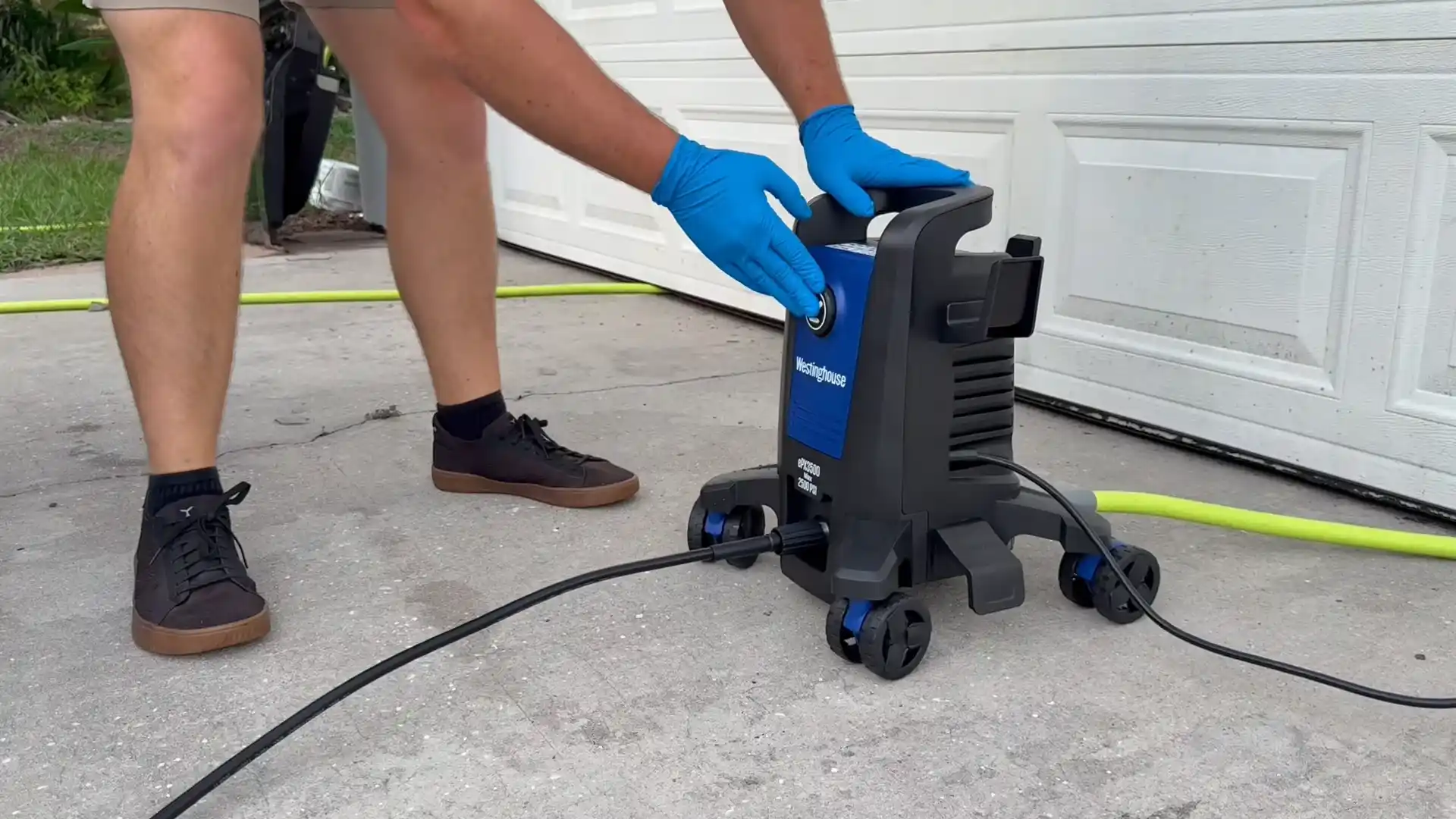
The ePX3500 is the right machine for most fence cleaning jobs. It hits 2500 PSI, weighs only 19 lbs, and rolls on four wheels that actually steer. Perfect for working along a long fence line without fighting the unit.
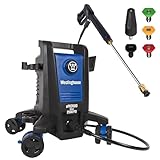
- Delivers 2500 max PSI and 1.76 max GPM (at lowest pressure), and 2000 rated PSI and 1.2 rated GPM of water flow; Pro-style steel extendable 17.5” wand with quick-connect nozzles (0°, 15°, 25°, turbo and soap applicator)
- Super compact and lightweight at 16.5” tall and 19 pounds for convenient storage and portability; Four quick-lock wheels with 360° steering design and low center of gravity engineered for anti-tipping design

Pros and Cons
| Pros | Cons |
|---|---|
| 2500 PSI handles wood, vinyl, and composite fencing | 20oz soap tank is small |
| 4-wheel 360-degree anti-tipping design moves easily along fence lines | |
| 5 nozzles including 0 degree for stubborn stains | |
| 25 ft hose and 19 lb weight keep it maneuverable | |
| 3-year Westinghouse warranty | |
| TSS pump protection when trigger is released |
Testing Results
Deck / Fence Performance: Yes. Clears mildew, algae, and dirt from wood fence boards cleanly with the 25-degree nozzle. No grain damage on cedar or pine at standard distance (12-18 inches).
Cleaning Power (PSI / GPM): Rates 2500 PSI peak and 1.76 GPM. In real use, rated closer to 2000 PSI but that is still more than enough for fence cleaning. Rinsing speed is solid at this flow rate.
Nozzle Versatility: Comes with 0, 15, 25, turbo, and soap nozzles. For fences, the 25-degree is your go-to. Turbo helps on deeply stained wood. Soap nozzle applies detergent before rinsing.
Portability and Reach: 4-wheel design with 360-degree steering rolls smoothly across uneven ground. 25 ft hose gives solid reach, though a 50 ft extension helps on long fence runs. Unit weighs just 19 lbs.
Ease of Setup: Onboard soap tank and quick-connect nozzles make setup fast. Cord is 35 ft, so plan your outlet placement before you start.
Noise Level: Universal motor is louder than an induction-motor model like the K5. Normal for this class of machine.
Real-world Usage
The ePX3500 does not feel like a chore to lug around the yard. The four-wheel steering means you can pull it along a fence line instead of dragging it. That matters when you have 100 feet of fence to cover.
For wood fences, run the 25-degree nozzle and keep moving. Do not hold the wand still over one board. Apply fence-safe detergent through the soap nozzle first, let it sit for a few minutes, then rinse top to bottom. Vinyl and composite fences respond even faster.
Best Use Case
Homeowners with wood, vinyl, or composite fencing who want one machine that handles fence cleaning and other outdoor jobs. Not ideal for fence lines far from an outlet without an extension cord.
Verdict
This is the pick for most people. It has enough PSI to cut through green algae and mildew without being so powerful that it damages soft wood. The 4-wheel design and light weight make it genuinely easy to use along a fence. The 3-year warranty adds confidence for the price.
If you want tips on technique after buying, check out how to clean a wood fence for step-by-step guidance on prep, detergent use, and drying.
Rating: 4.6 / 5
View on Amazon: Westinghouse ePX3500
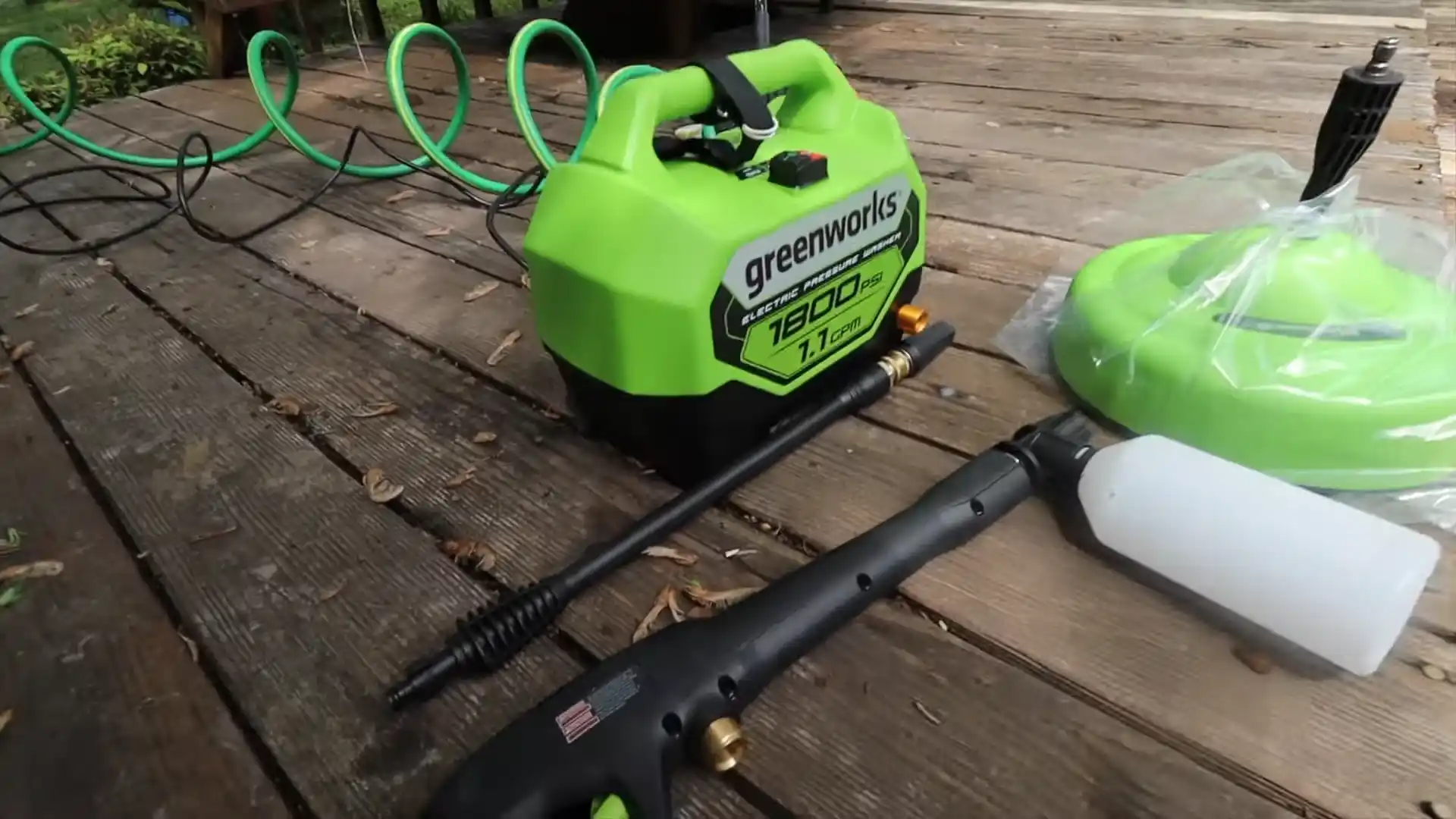
Best Budget: Greenworks 1800 PSI (5110202)
If you need a solid fence cleaner at the lowest possible price, the Greenworks 1800 PSI delivers. It is PWMA certified, has wheels, and includes TSS pump protection. That is a lot to get for under $130.

- [1800 PSI @ 1.1 GPM] - Great for light-duty, residential cleaning. Clean cars, trucks, motorcycles, boats, RVs, outdoor patio furniture, windows, decks, etc
- [No Maintenance] - No gas, no oil, no spark plugs, no air filters, and no pull cord Push button start
Pros and Cons
| Pros | Cons |
|---|---|
| PWMA certified, specs are honest | Only 3 nozzles, no 0 or 15 degree |
| Wheels for easy movement along fence lines | |
| TSS pump protection | |
| Trusted Greenworks brand | |
| Lightweight build at 22.9 lbs |
Testing Results
Deck / Fence Performance: Yes. Works well on lightly to moderately dirty fences. Clears algae and surface grime from wood and vinyl. For heavily stained or weathered wood, it will take multiple passes.
Cleaning Power (PSI / GPM): 1800 PSI is on the lower end for fence work but PWMA-certified so you know what you are getting. The 1.1 GPM flow rate is noticeable on wide fence panels.
Nozzle Versatility: Comes with 25-degree, 40-degree, and turbo nozzles. No 15-degree, which means less flexibility for tough spots. Turbo nozzle compensates somewhat.
Portability and Reach: Hand-truck style two-wheel design makes it easy to tilt and roll. 20 ft hose is short but workable for most residential fence jobs.
Ease of Setup: Simple and fast. Quick-connect nozzles, PWMA-honest specs, and straightforward operation make this great for first-time buyers.
Noise Level: Universal motor noise is typical. Not the quietest option but no worse than comparable budget models.
Real-world Usage
For a lightly weathered wood fence or a vinyl fence with algae buildup, the Greenworks 1800 PSI handles the job. Do not expect it to strip deep-set stains in one pass. Apply a cleaning solution first, let it soak, then rinse with the turbo nozzle.
This is the machine to buy if you clean your fence once a year and do not need a unit that handles driveway blasting at the same time. A straightforward, honest budget pick.
Best Use Case
First-time buyers or homeowners with light to moderate fence cleaning needs. Great for vinyl fencing and wood fences cleaned regularly. Not ideal for neglected fences with years of buildup or concrete cleaning on the same job.
Verdict
Budget pressure washers often oversell PSI. This one does not. PWMA certification means 1800 PSI is what you actually get. For the money, it is a reliable, dependable fence cleaner with enough extras (wheels, TSS) to compete above its price.
Rating: 4.1 / 5
View on Amazon: Greenworks 1800 PSI
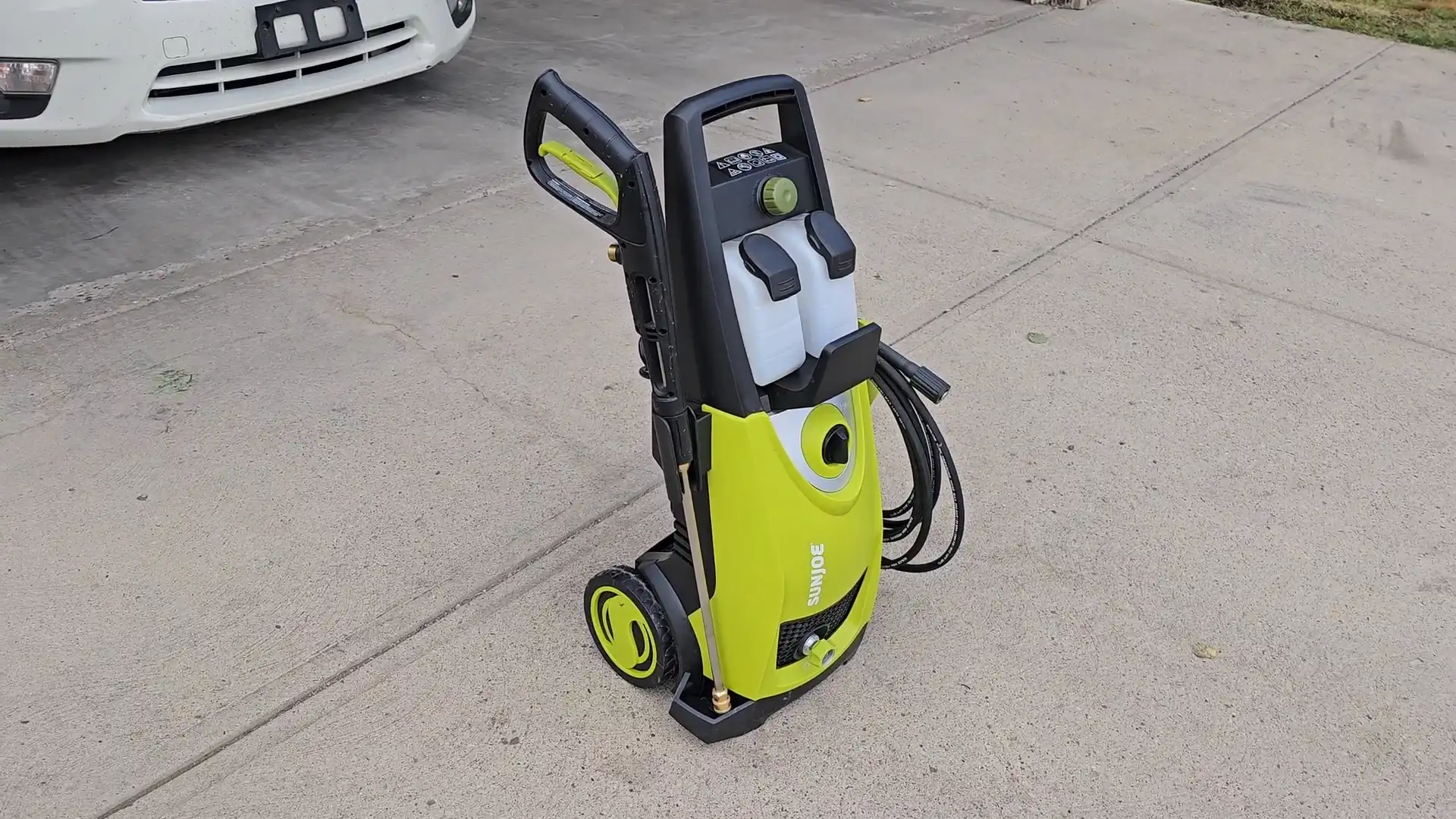
Best Value: Sun Joe SPX3000
The Sun Joe SPX3000 has over 20,000 Amazon reviews at 4.8 stars. That is hard to ignore. Dual removable soap tanks, 5 quick-connect nozzles, and 2030 PSI make it the most versatile mid-range electric on this list.

- High-Pressure Cleaning: This electric pressure washer delivers up to 2030 PSI working pressure and 1.2 GPM water flow to help remove dirt, grime, and buildup from homes, driveways, vehicles, RVs, and outdoor equipment
- Multiple Spray Options: This water pressure washer includes five quick-connect spray tips (0°, 15°, 25°, 40°, and soap) to switch between narrow jet streams and wider fan patterns, plus a soap applicator for detergent use
Pros and Cons
| Pros | Cons |
|---|---|
| 20,000+ Amazon reviews at 4.8 stars | 20 ft hose feels short on long fence runs |
| Dual soap tank system, switch between two detergents | Smaller wheels struggle on uneven ground |
| 5 nozzles including 0 degree | |
| PWMA certified | |
| Solid brass fittings and metal connections | |
| 34-inch wand for reaching high fence sections |
Testing Results
Deck / Fence Performance: Yes. Works well on wood, vinyl, and composite fence panels. The 25-degree nozzle handles most fence cleaning. The 0-degree nozzle can target stubborn mildew spots on fence posts.
Cleaning Power (PSI / GPM): 2030 PSI PWMA-certified. The 1.2 GPM is on the lower end but adequate for fence cleaning. Rinsing a large fence section will take longer than with a higher-GPM machine.
Nozzle Versatility: Full five-nozzle set. The 0, 15, 25, 40, and soap nozzles cover every fence cleaning scenario. Most users will live on the 25-degree during fence cleaning, with occasional jumps to the turbo for post sections.
Portability and Reach: Rear wheels are functional but smaller than the ePX3500’s setup. The 34-inch wand is great for reaching the top rails of a privacy fence without a ladder.
Ease of Setup: The dual soap tank is the standout feature here. Load one tank with fence-cleaning detergent and leave the other empty for plain water rinse. Switching is easy mid-job.
Noise Level: Universal motor. Similar noise level to other electric models at this price.
Real-world Usage
The dual soap tank system is genuinely useful for fence cleaning. Apply detergent on the first pass, switch tanks and rinse on the second. It keeps you moving instead of stopping to refill.
The 34-inch wand extension means you can work the top rail of a 6-foot privacy fence without getting too close. Keep the 25-degree nozzle about 12 inches away from the wood and sweep in even strokes. For best pressure washer for decks work, this same machine handles both jobs well.
Best Use Case
Homeowners who want one electric unit to handle fence, deck, driveway, and car washing. The dual soap tanks and full nozzle set make it the most adaptable pick at this price. Not the top choice if rinsing speed (GPM) is a priority.
Verdict
The SPX3000 has earned its reputation. No frills, no drama. Honest PSI, five nozzles, smart soap system, and a track record backed by thousands of real buyers. At under $170, it is the value pick on this list.
Rating: 4.4 / 5
View on Amazon: Sun Joe SPX3000
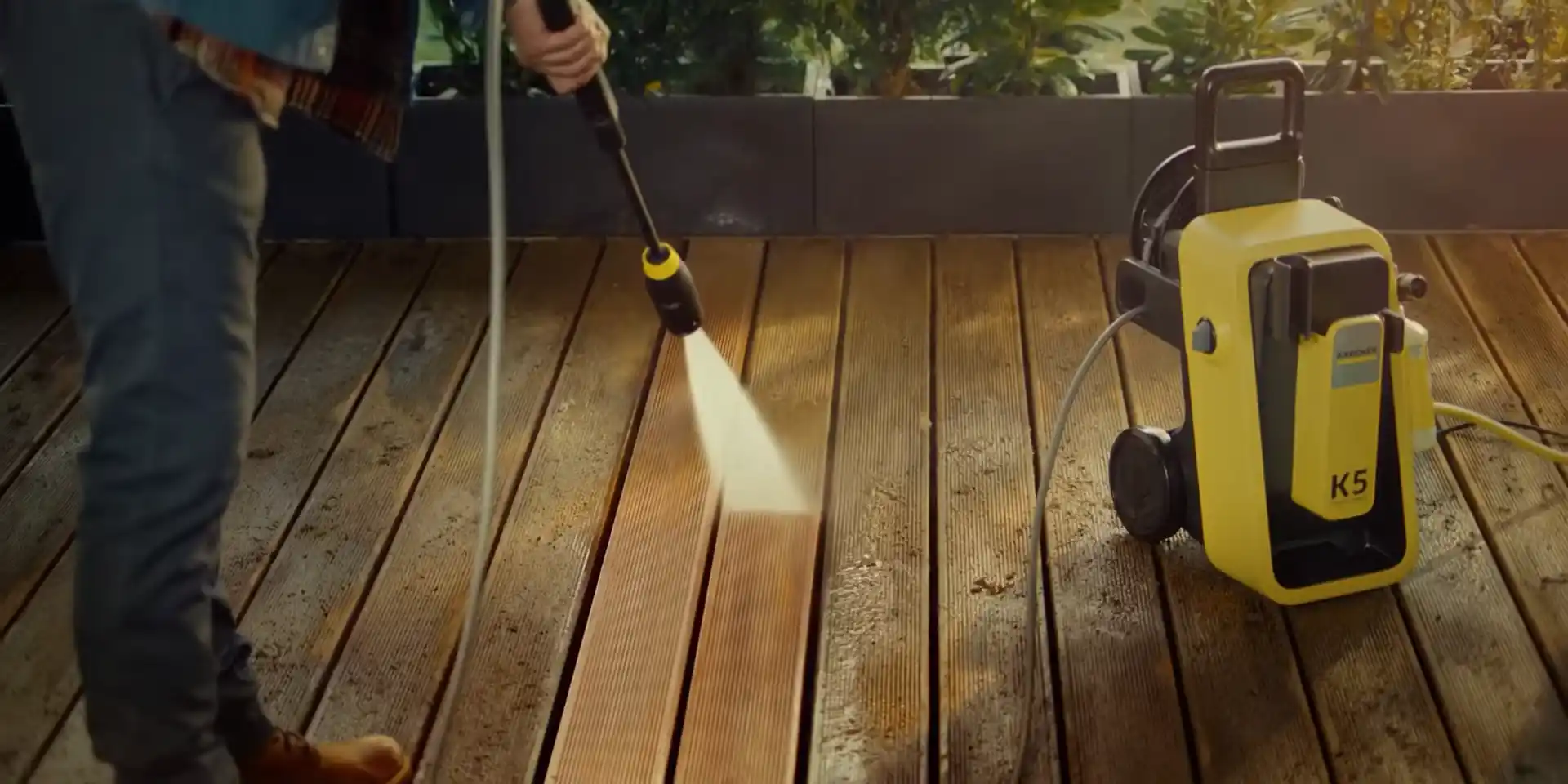
Best for Longevity: Karcher K5 Premium
The K5 Premium is the most expensive electric on this list by a clear margin. The reason to pay it: a water-cooled induction motor rated to last five times longer than the universal motors in every other electric here. If you plan to own this for a decade and clean fences every year, the math works out.

- Powerful Performance: The K 5 pressure washer lasts longer than universal motors and delivers exceptional cleaning results! Water-Cooled brushless induction-motor and non-corrosive N-COR pump.
- Pressure Regulating: Use the Vario Power spray wand for light-duty jobs, and a patented Dirt Blaster spray wand for superior cleaning performance on tough-to-clean surfaces.
Pros and Cons
| Pros | Cons |
|---|---|
| Water-cooled induction motor lasts 5x longer than universal motors | Expensive for the PSI output |
| N-COR non-corrosive pump for longevity | |
| Pressurized hose reel stores and retracts easily | |
| DirtBlaster wand boosts cleaning power by 80% on stubborn spots | |
| Quietest electric pick here | |
| Karcher Rapid Exchange warranty program |
Testing Results
Deck / Fence Performance: Yes. The induction motor runs quieter than any universal motor electric, making it easier to use early morning near neighbors. DirtBlaster wand rotates and concentrates spray for mildew on fence posts and base boards.
Cleaning Power (PSI / GPM): 2000 PSI is not the highest number on this list. But the motor runs cooler and more consistently over long sessions than universal motor machines. For fence cleaning, consistent output matters more than peak numbers.
Nozzle Versatility: Two wands instead of quick-connect nozzles. The Vario Power wand adjusts spray angle continuously. The DirtBlaster wand is a rotating nozzle that Karcher claims adds 80% more cleaning power. Both work well for fence applications.
Portability and Reach: 25 ft hose and 7.68-inch wheels. Heavy at 35.8 lbs. The hose reel is the standout feature. No more dealing with a tangled hose on the ground around your fence line.
Ease of Setup: The pressurized hose reel requires a slightly different setup habit than quick-connect models. Once learned, it is faster than untangling a loose hose every session.
Noise Level: Noticeably quieter than every other electric on this list. The induction motor runs smooth and low.
Real-world Usage
This is the machine for someone who wants to stop replacing pressure washers every 3-4 years. The induction motor handles regular seasonal use without overheating issues. For fence cleaning, the DirtBlaster wand makes short work of posts with years of buildup or weathered sections along a shaded fence line.
It is heavier, but the hose reel makes up for it on the go. You are not fighting with a tangled 25-foot hose across the yard. That is worth more than most people expect until they experience it.
Best Use Case
Long-term buyers who prioritize durability over raw PSI. Homeowners who clean fences, decks, and siding annually and want a machine that will still be running in 10 years. Not the right pick for buyers who need budget pricing or maximum PSI output.
Verdict
The K5 Premium is an expensive machine with lower PSI than what you can get for less money. That is a fair trade if you value quiet operation, a hose reel, and a motor that will outlast three universal motor machines. For the value-focused buyer, the ePX3500 wins. For the durability-focused buyer, this one does.
Rating: 4.3 / 5
View on Amazon: Karcher K5 Premium
Best High-Power Electric: Westinghouse WPX3000e
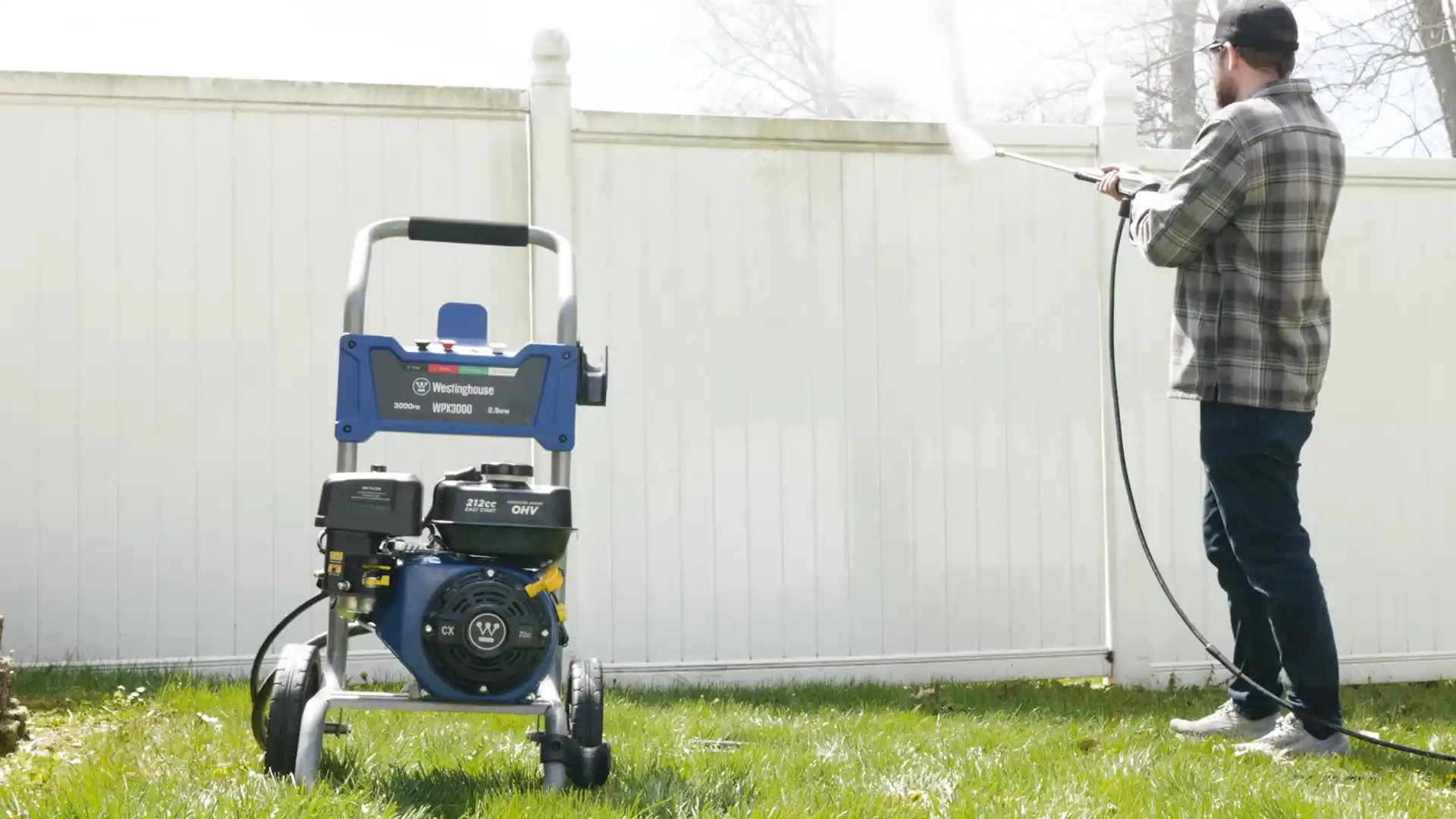
The WPX3000e is where the conversation shifts from “enough for fences” to “enough for everything.” At 3000 PSI with an induction motor, it handles heavy-duty fence jobs, concrete, and siding in the same machine. And it does it without the gas engine noise.
- Delivers 3000 max PSI and 1.76 max GPM (at lowest pressure), and 2600 rated PSI and 1.1 rated GPM of water flow. Perfect for decks, sidewalks, fences, garage floors, exterior walls, cars and patio furniture; Comes with a .45 gallon soap tank
- 25′ abrasion resistant super-flex hose with lightweight high pressure metal spray gun and wand with 5 quick connect nozzles (0°, 15°, 25°, soap and turbo); Compatible with pressure washer accessories like surface cleaners, undercarriage cleaners and foam cannons with M22 fittings
Pros and Cons
| Pros | Cons |
|---|---|
| 3000 PSI induction motor, most powerful electric here | 1.1 GPM in real use limits rinsing speed |
| Quieter than gas at similar output | 36.8 lbs, not lightweight |
| 10-inch never-flat wheels handle rough terrain | |
| 0.45 gallon onboard soap tank | |
| Rugged steel frame | |
| M22 accessory compatibility for aftermarket hoses | |
| 3-year warranty |
Testing Results
Deck / Fence Performance: Yes. At 3000 PSI, you need to manage nozzle choice carefully on wood fences. Use the 25 or 40-degree nozzle and maintain 12-18 inch distance. The 0-degree nozzle is for concrete, not fence boards.
Cleaning Power (PSI / GPM): 3000 PSI with a rated 2600 PSI sustained output. The real-use GPM of 1.1 limits rinsing speed on large fence areas. For targeted cleaning of deeply stained sections, the power is excellent.
Nozzle Versatility: Five quick-connect nozzles: 0, 15, 25, soap, and turbo. For fences, live on the 25-degree. Turbo is useful for stubborn mildew on fence posts or dense staining on the bottom boards.
Portability and Reach: 10-inch never-flat wheels are the best in class for moving across a yard. They roll over gravel, roots, and uneven ground without stopping. The 25 ft hose is manageable but add a 50 ft extension for longer fence runs.
Ease of Setup: Steel frame and induction motor mean a slightly heavier setup process. The large soap tank means fewer refill stops on a long fence job.
Noise Level: Induction motor is significantly quieter than any gas model at this output level. Testers have used this before 8 am without neighbor complaints.
Real-world Usage
On a fence that has not been cleaned in a few years, the WPX3000e makes short work of it. Heavy mildew on the base boards, algae on the north-facing sections, weathered gray wood: this machine handles all of it faster than anything else electric here.
For vinyl fences, use the 40-degree nozzle and keep your distance. The PSI is overkill for vinyl if you get too close. For wood, the 25-degree at 12-15 inches is the right combination. If you also want the best pressure washer for patios and driveways, this handles those jobs too with no adjustments.
Best Use Case
Homeowners with heavily stained fences, large fence runs, or multiple surface cleaning needs (fence, concrete, siding). The quieter induction motor is a real advantage for early morning or weekend jobs near neighbors. Not the right pick for someone who only needs to clean fences once a year.
Verdict
If your fence is in bad shape or you want one powerful electric machine that handles every outdoor cleaning job, the WPX3000e is the answer. The induction motor adds longevity and quieter operation. The tradeoff is weight and price. Worth it for regular heavy users.
Rating: 4.5 / 5
View on Amazon: Westinghouse WPX3000e
Best Cordless: EGO Power+ HPW3200
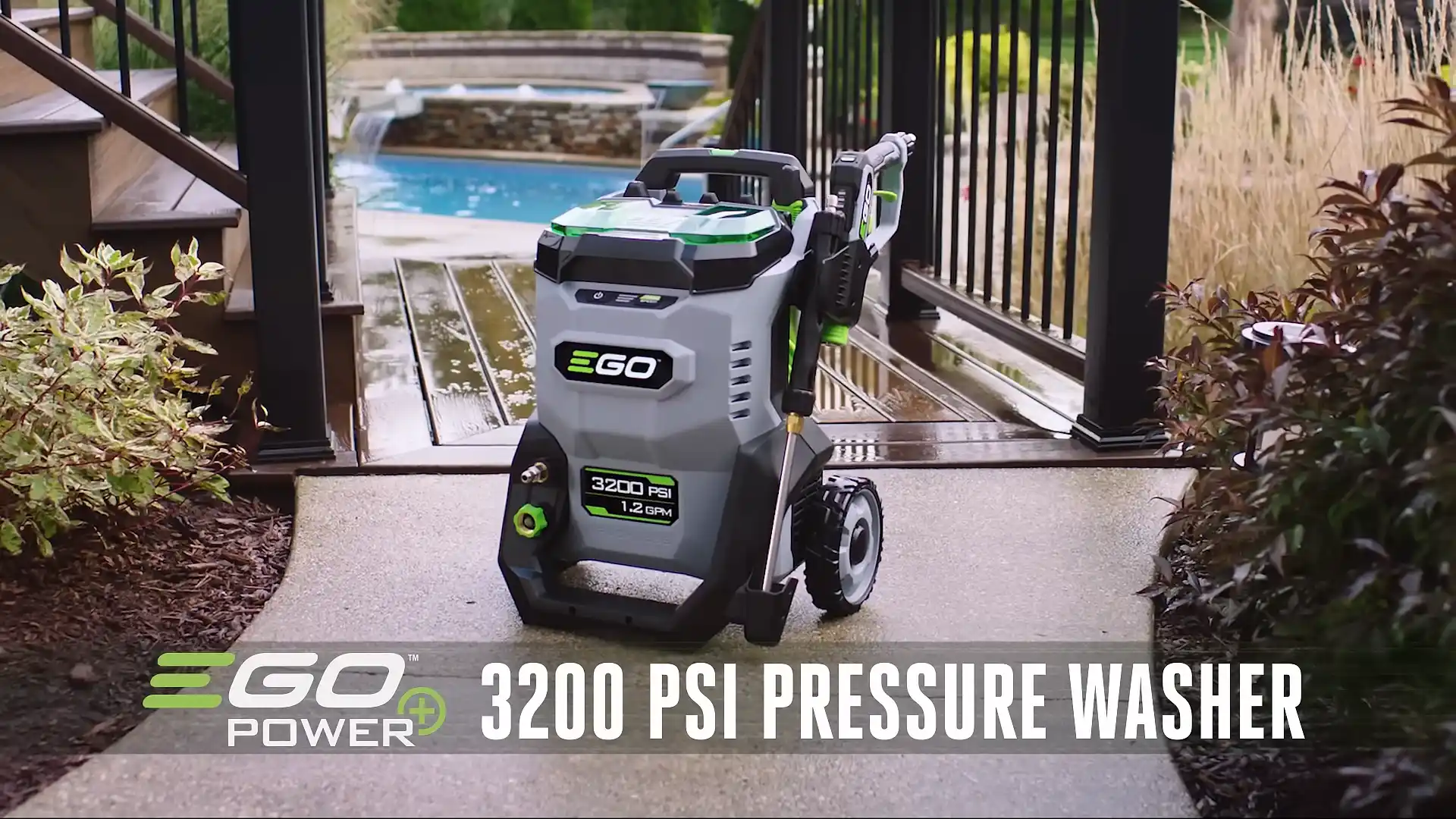
The EGO HPW3200 is the only machine on this list that does not need an outlet. At 3200 PSI on two 56V batteries, it delivers serious cleaning power wherever your fence is. That matters more than people expect when your fence line is 200 feet from the nearest outlet.

- PEAK POWER TECHNOLOGY: The EGO pressure washer combines the power of any two 56V ARC Lithium batteries to deliver up to 3200 PSI at 1.2 GPM—and up to 2.0 GPM max—for powerful cleaning.
- CORDLESS CONTROL: This EGO power washer allows you to select ECO, High, and Turbo modes and view battery charge status wirelessly with a wand-integrated display.
Pros and Cons
| Pros | Cons |
|---|---|
| 3200 PSI, highest on this list, fully cordless | Expensive ($500-779 depending on kit) |
| No outlet needed for any fence location | Heaviest at 53 lbs with batteries |
| Up to 60 min runtime on two 6.0Ah batteries | |
| ECO, High, and Turbo mode selection from the wand | |
| Compatible with all EGO 56V batteries | |
| Telescoping handle for transport |
Testing Results
Deck / Fence Performance: Yes. 3200 PSI with mode selection is well suited for fence cleaning. ECO mode works for light vinyl and aluminum fences. High mode handles most wood fences. Turbo for weathered or deeply stained sections.
Cleaning Power (PSI / GPM): 3200 PSI peak and 2.0 GPM. The 2.0 GPM is the best on this list for rinsing speed. Large fence jobs rinse faster than any other pick here.
Nozzle Versatility: Five nozzles: 15, 25, 40, turbo, and rinse. No 0-degree, which limits some concrete applications but is not a concern for fence cleaning. The 25-degree is the workhorse nozzle for most fence jobs.
Portability and Reach: Total freedom from outlets. 25 ft hose gives working range. The 53 lb weight with batteries is real. It rolls well but is not a lightweight machine.
Ease of Setup: Swapping in charged EGO batteries and pulling the trigger is genuinely easy. No cord management, no extension cord planning. The siphon soap system is the one downside: you need to bring a bucket of detergent solution instead of using an onboard tank.
Noise Level: Battery motor is quieter than gas, slightly louder than corded induction motors. Still very usable in residential neighborhoods.
Real-world Usage
The cordless advantage is real for fence cleaning. No cord to manage across 150 feet of fence. No tripping hazard. No outlet proximity planning. You just load the batteries and go.
For wood fences, use High mode with the 25-degree nozzle. For vinyl, drop to ECO mode and keep 15-18 inches of distance. The battery life indicator on the wand tells you how much runtime is left, so you can plan your pass accordingly. For a best pressure washer for wood fence use case with no cord access, this is the clear pick.
Best Use Case
Homeowners with long fence lines far from outlets, RV owners, and anyone who wants to eliminate cord management entirely. Also strong for EGO battery ecosystem users who can share batteries between tools. Not for budget shoppers or people with short fences near a garage outlet.
Verdict
At $500-779 depending on kit, the EGO HPW3200 asks you to pay a real premium for the cordless advantage. If your fence is close to power, one of the corded picks above is better value. If cord-free operation solves a real problem for your property, this machine is excellent and the 3200 PSI leaves nothing lacking.
Rating: 4.4 / 5
View on Amazon: EGO HPW3200
What Makes the Best Pressure Washer for Fences?
PSI Range: More Is Not Always Better
Fences require a narrower PSI window than most people expect. Wood fences clean well between 1500 and 2500 PSI. Vinyl fences need even less, somewhere in the 1200 to 1800 PSI range to avoid surface damage. Go too high and you can strip paint, raise wood grain, or crack vinyl panels.
The sweet spot for most residential fences is 1800 to 2500 PSI. All six picks on this list fall within that range in real use. The key word is “real use.” Some machines advertise 3000+ PSI as a peak or burst number. What matters is the sustained, rated output. PWMA and CETA certifications exist specifically to keep manufacturers honest about their numbers.
GPM Matters More Than Most Buyers Realize
PSI determines how hard the water hits. GPM determines how fast you cover ground. For fence cleaning, this matters because fences are large surface areas. A machine with 2000 PSI and 1.76 GPM will rinse a fence faster than one with 2030 PSI and 1.2 GPM.
For most fence jobs, you want at least 1.4 GPM to keep the work moving at a reasonable pace. Several budget models on this list sit at 1.1 to 1.2 GPM. They work, but a 150-foot fence will take noticeably longer to rinse.
Nozzle Selection for Fence Surfaces
The 25-degree nozzle is the right choice for most fence cleaning. It covers a wider spray area while still delivering enough pressure to cut through algae and dirt. The 40-degree nozzle is safer for vinyl and painted fences where surface damage is a concern.
Avoid the 0-degree and 15-degree nozzles directly on fence boards. They concentrate pressure enough to raise wood grain or leave marks on vinyl. Keep those nozzles for concrete and other hard surfaces. The turbo (rotating) nozzle is useful for fence posts and bottom boards where buildup concentrates.
Hose Length and Mobility on Long Fence Lines
A 20 ft pressure washer hose covers a small portion of a typical residential fence. Most homeowners end up adding a 25 to 50 ft pressure washer hose extension, which is standard practice and widely available. Factor this into your setup before your first cleaning session.
Wheels make a bigger difference on fence jobs than on any other cleaning task. You are moving along a linear path, not a compact area. Units with good wheel designs like the ePX3500’s 360-degree four-wheel setup or the WPX3000e’s 10-inch never-flat wheels stay with you instead of tipping over on grass or gravel.
Electric vs. Cordless vs. Gas for Fence Cleaning
Corded electric models are the right choice for most fence jobs. They deliver consistent output, require no fuel, and the PSI range is appropriate for wood and vinyl surfaces. The limitation is the cord. If your fence is more than 50 to 75 feet from the nearest outlet, you will need an extension cord.
Cordless battery models solve the outlet problem and are worth considering for longer fence lines. The EGO HPW3200 is the only serious cordless option at 3200 PSI, and it delivers on its specs. Gas pressure washers are generally too powerful for most fence materials and more hassle than the job requires. They are better suited to concrete driveways and commercial applications. For the same reason, check out the best pressure washer for composite decking guide before using any high-PSI machine on delicate materials.
Motor Type and Long-Term Reliability
Universal motors are found in nearly all budget and mid-range electrics. They work fine and deliver good output but run hotter and have a shorter lifespan than induction motors. Induction motors run cooler, last longer, and operate noticeably quieter. The Karcher K5 Premium and Westinghouse WPX3000e both use induction motors, which is why they cost more.
If you plan to own the same pressure washer for 5 to 10 years and use it seasonally, the induction motor models are worth the premium. If you are buying for occasional light use, a universal motor machine at half the price makes more sense.
How to Pressure Wash a Fence Without Damaging It
Start by clearing the area around your fence. Move pots, furniture, and anything else that could get hit by overspray. Wet down nearby plants with plain water before you start so they are not absorbing concentrated detergent runoff.
Apply a fence-appropriate cleaning solution through the soap nozzle first. Let it sit for five to ten minutes depending on how dirty the surface is. This step does the heavy lifting so your pressure washer does not have to work as hard. For a thorough breakdown, the how to clean wood deck guide covers the same prep and rinse process in detail.
Attach the 25-degree nozzle for rinsing and keep the wand 12 to 18 inches from the fence surface. Move in smooth, overlapping horizontal strokes. Work one board at a time on horizontal fence styles, or top to bottom on vertical boards. Keep the wand moving. Do not hold it still in one spot on wood.
Let the fence dry completely before applying any stain, sealant, or paint. Depending on your climate and the wood type, this can take 24 to 72 hours. Rushing the drying step is the most common reason wood fences look bad after refinishing.
Frequently Asked Questions
What PSI is safe for a wood fence?
For most wood fences, stay between 1500 and 2500 PSI. Higher than that and you risk raising the grain on softer woods like cedar and pine. If you are unsure, test a hidden section first with the 25-degree nozzle at 18 inches before doing the entire fence. Pine and cedar need more caution than hardwood fence materials.
Can I use a pressure washer on a vinyl fence?
Yes, and vinyl is actually easier to clean than wood. Use the 40-degree nozzle and keep your PSI on the lower side (1200 to 1800 is plenty). Keep the wand at 15-18 inches from the surface. Vinyl can crack or discolor if you use a 0 or 15-degree nozzle too close. A machine like the Greenworks 1800 PSI at its full setting with the 40-degree nozzle is the right setup for vinyl.
Can the same pressure washer clean my fence and my pool deck?
Yes. Any of the mid-range picks here handle both surfaces. The same 25-degree nozzle setup works for fencing, and many pool decks respond well to 2000 to 2500 PSI. Just switch to the 15-degree or turbo for the concrete deck sections and drop back to 25-degree for the fence. For a dedicated look at pool deck cleaning, check out the best pressure washer for pool deck guide for surface-specific advice.
Is it worth buying a gas pressure washer for fence cleaning?
For most homeowners, no. Gas models start above 3000 PSI and that is more than wood or vinyl fencing needs. They are louder, require fuel and oil maintenance, and are harder to store. The only case where gas makes sense for fences is if you also need to blast a heavily stained concrete driveway or large hardscape area during the same session. Otherwise, a 2000 to 2500 PSI electric handles fence cleaning with less hassle.