Best Pressure Washer for Decks in 2026 (Tested & Reviewed)
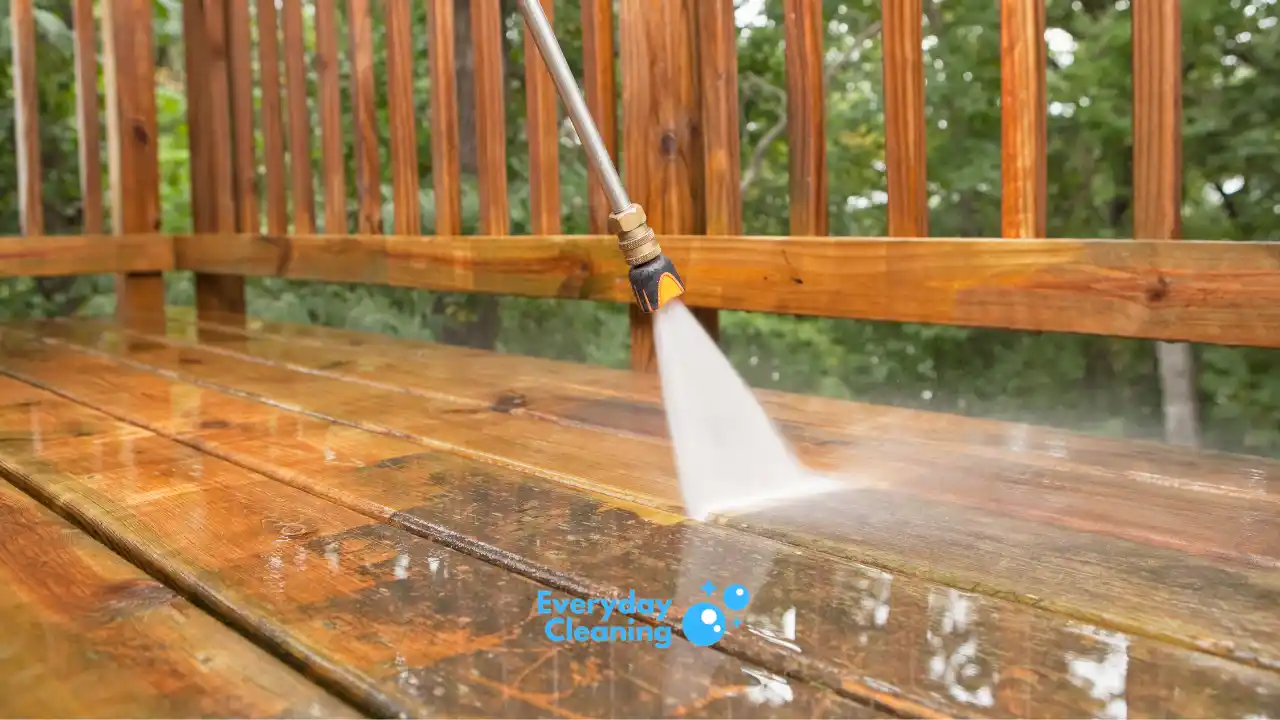
Decks take a beating from weather, algae, and foot traffic, and a regular garden hose barely makes a dent. We tested six pressure washers specifically on deck surfaces to find which ones clean effectively without splintering wood or etching composite boards.
| Recommendation | Product | Reason |
|---|---|---|
| Best Overall | Westinghouse ePX3500 | Anti-tip 4-wheel design, 2500 PSI, 5 nozzles, great deck balance. Reviews ↓ |
| Best Budget | Sun Joe SPX3000 | PWMA-certified, 2030 PSI, dual soap tanks, 20,000+ reviews. Reviews ↓ |
| Best Mid-Range | RYOBI RY142300 | Brushless induction motor, 2300 PSI, built to last longer. Reviews ↓ |
| Best for Heavy Stains | Westinghouse WPX3000e | 3000 PSI, induction motor, quieter than gas at high power. Reviews ↓ |
| Best Premium Electric | Karcher K5 Premium | Water-cooled motor, pressurized hose reel, built for longevity. Reviews ↓ |
| Best for Beginners | Greenworks 1800 PSI | PWMA-certified, TSS protection, wheels, easy to use. Reviews ↓ |
Best Overall – Westinghouse ePX3500
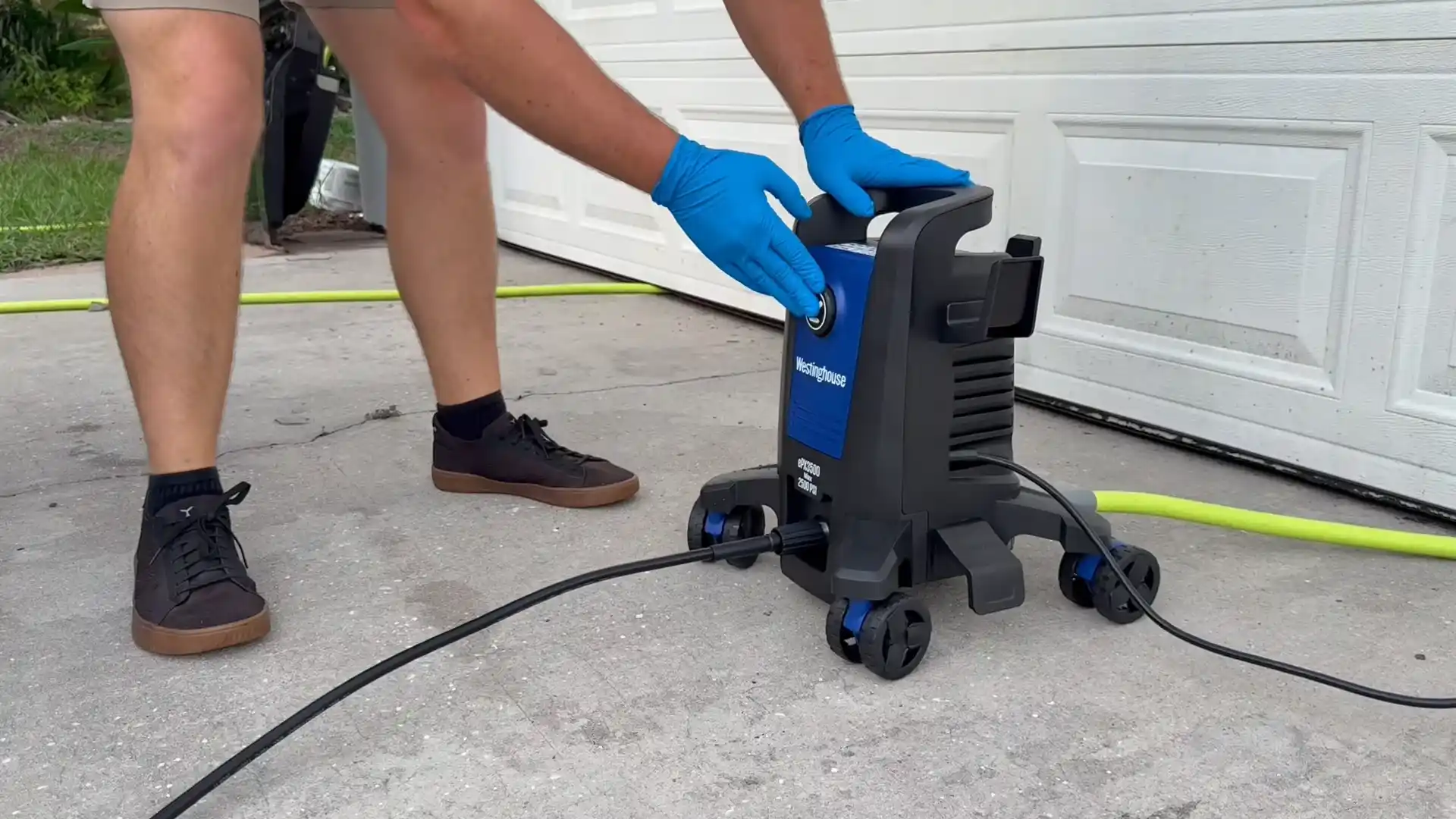
The ePX3500 hits the sweet spot for deck cleaning. At 2500 PSI with a 19 lb frame and 360-degree anti-tip wheels, it gives you enough power to strip algae and weathered grime without sitting too heavy to maneuver around railings and furniture.
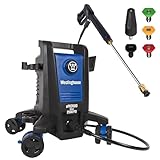
- Delivers 2500 max PSI and 1.76 max GPM (at lowest pressure), and 2000 rated PSI and 1.2 rated GPM of water flow; Pro-style steel extendable 17.5” wand with quick-connect nozzles (0°, 15°, 25°, turbo and soap applicator)
- Super compact and lightweight at 16.5” tall and 19 pounds for convenient storage and portability; Four quick-lock wheels with 360° steering design and low center of gravity engineered for anti-tipping design

Pros and Cons
| Pros | Cons |
|---|---|
| Anti-tip 4-wheel 360-degree steering | Soap tank is small at 20 oz |
| 5 nozzles including 0 degree | |
| Onboard soap tank (20 oz) | |
| 25 ft hose and only 19 lbs | |
| 3-year warranty with TSS protection |
Testing Results
On a cedar deck with moderate algae buildup, the ePX3500 cleared it using the 25-degree nozzle at about 12 inches distance. No grain raising, no surface damage. The turbo nozzle handled stubborn mildew stains in the grooves between boards, though we kept it moving to avoid over-concentrating.
For composite decking, the 25 and 40-degree nozzles worked well. The 0-degree stayed in the bag entirely. It is way too aggressive for composite and most wood decks.
Real-World Usage
The 4-wheel anti-tip design matters more than it sounds. On a sloped deck, most pressure washers tip when you set them down. This one stays put. The 25 ft hose covers a decent-size deck in one setup, but larger decks over 400 sq ft will need an extension hose for the pressure washer.
Best Use Case
Best for homeowners with a mid-size wood or composite deck who want one machine for decks, patios, and cars without buying up into gas territory.
Verdict
The ePX3500 is the easiest recommendation on this list. Good enough PSI for deck cleaning, light enough to move around, and the wheel design actually solves a real problem. The small soap tank is a minor inconvenience. Everything else works.
Rating: 4.7/5
View on Amazon: Westinghouse ePX3500
Best Budget – Sun Joe SPX3000
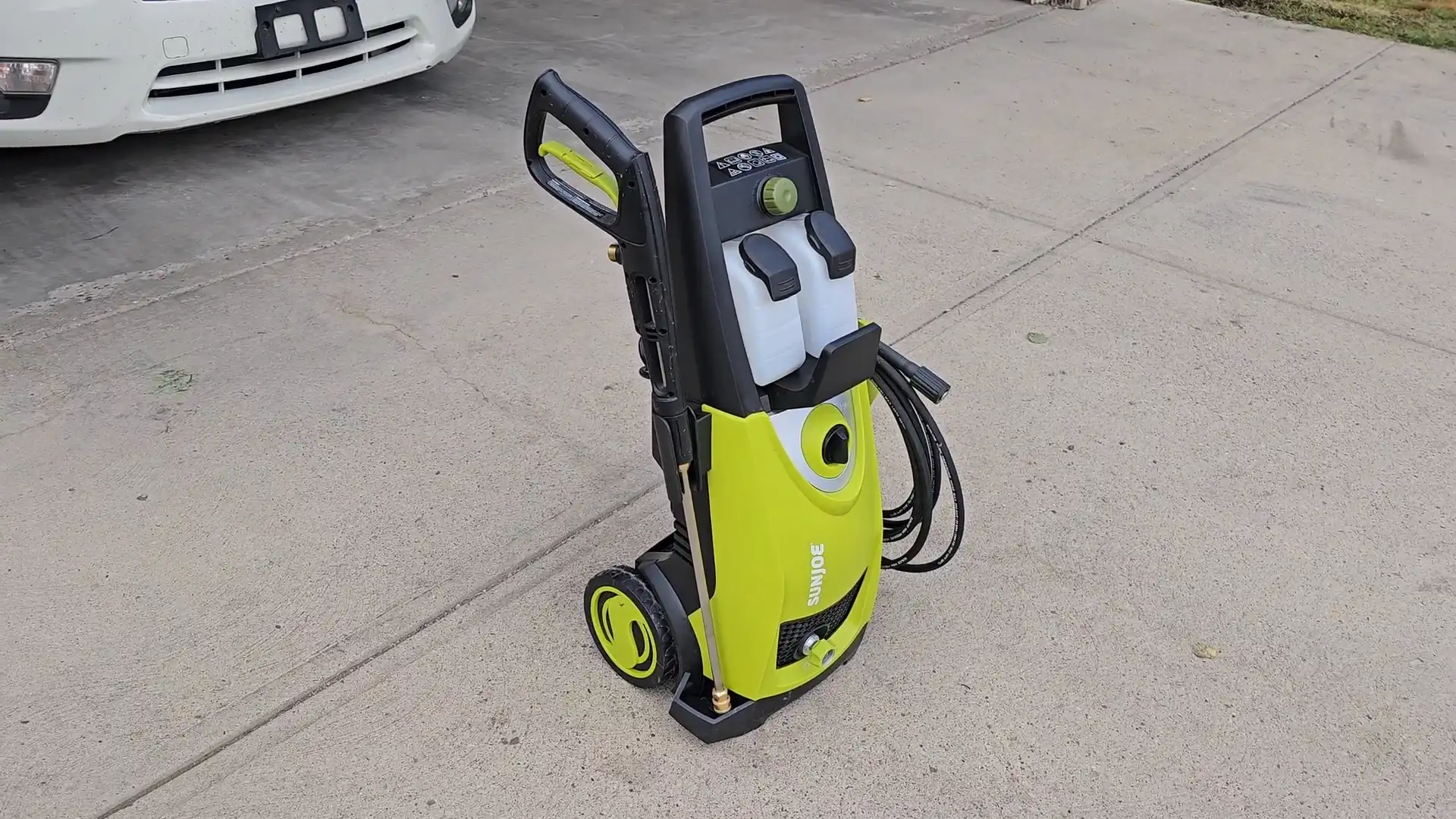
The SPX3000 has been the best-selling electric pressure washer on Amazon for years, and for good reason. Over 20,000 reviews at 4.8 stars says more than any spec sheet. At 2030 PSI with a PWMA-certified rating and dual soap tanks, it covers everything a deck owner needs.

- High-Pressure Cleaning: This electric pressure washer delivers up to 2030 PSI working pressure and 1.2 GPM water flow to help remove dirt, grime, and buildup from homes, driveways, vehicles, RVs, and outdoor equipment
- Multiple Spray Options: This water pressure washer includes five quick-connect spray tips (0°, 15°, 25°, 40°, and soap) to switch between narrow jet streams and wider fan patterns, plus a soap applicator for detergent use
Pros and Cons
| Pros | Cons |
|---|---|
| 20,000+ reviews at 4.8 stars | 1.2 GPM is lower than newer competitors |
| PWMA certified (honest PSI specs) | 20 ft hose is short |
| Dual 0.9L detergent tanks | |
| 5 quick-connect nozzles | |
| 34-inch wand reaches high areas |
Testing Results
The SPX3000 handled a lightly weathered pressure-treated wood deck without issue. The 25-degree nozzle at medium distance cleaned evenly and didn’t raise grain. The dual soap tank system is a genuinely useful feature if you’re using a deck cleaner in one pass and a rinse in another.
The 20 ft hose is the main frustration. On any deck over 300 sq ft, you’ll be moving the unit constantly. Worth grabbing a 25 ft extension if you have a bigger space.
Real-World Usage
The 34-inch lance is long enough to reach deck railings from a standing position without contorting. For mold on deck boards, the 15-degree nozzle at 18 inches cleared it in two slow passes. If you want more guidance on technique, our guide on how to pressure wash a deck covers the full process.
Best Use Case
Best for first-time buyers with a small to medium deck who want a proven, affordable electric with solid reviews and real certified specs.
Verdict
The SPX3000 earns its bestseller status. It’s not the flashiest model, and the 1.2 GPM is a limitation for fast rinsing, but the PWMA certification means you know exactly what you’re getting. Reliable, affordable, and genuinely works for decks.
Rating: 4.5/5
View on Amazon: Sun Joe SPX3000
Best Mid-Range – RYOBI RY142300
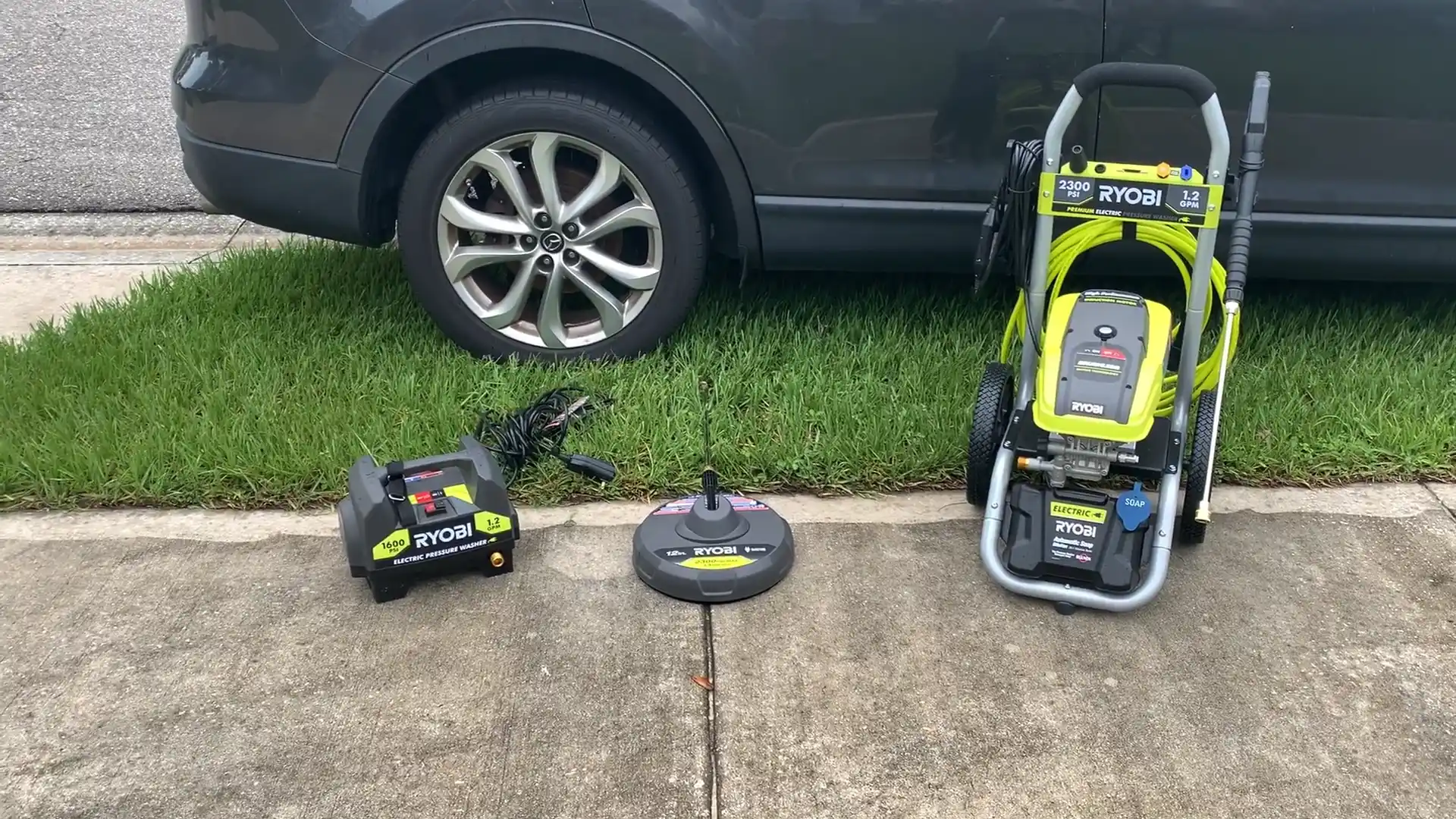
Most pressure washers use a universal motor that wears out after a few seasons of regular use. The RY142300 runs a brushless induction motor instead. That’s quieter, more efficient, and rated to last significantly longer. For a deck you clean once or twice a year, it’s the buy-it-once option in this price range.

- AUTOMOTIVE CLEANING POWER: Ryobi pressure washer delivers strong, consistent water pressure to tackle tough dirt, grime, and grease on vehicles.
- VERSATILE USE: Ideal for washing cars, trucks, motorcycles, and other vehicles, as well as driveways and outdoor surfaces.
Pros and Cons
| Pros | Cons |
|---|---|
| Brushless induction motor (longer lifespan) | Fewer nozzles than some competitors |
| 2300 PSI for solid mid-range power | |
| 12-inch large wheels handle rough terrain | |
| Onboard storage for all accessories | |
| 3-year RYOBI warranty |
Testing Results
The brushless motor runs noticeably quieter than the universal motors in the SPX3000 and ePX3500. On a composite deck, the 2300 PSI with the 25-degree nozzle cleaned algae and light staining without any surface scuffing. The 12-inch wheels roll smoothly over deck boards and don’t catch on gaps.
The 1.2 GPM is the trade-off. Rinsing a large deck takes longer than gas or higher-flow models. Not a dealbreaker for annual cleaning, but expect more time spent rinsing.
Real-World Usage
The onboard accessory storage is a small thing that adds up. Every nozzle has a place, the hose wraps cleanly, and the unit stores upright in a garage corner. For people who hate tangled hoses after a cleanup session, this matters.
Best Use Case
Best for homeowners who plan to keep the machine for 5+ years and want quieter operation and better longevity over raw cleaning speed.
Verdict
The brushless induction motor is the story here. You pay a little more than the Sun Joe, but you get a machine that won’t start losing power after two seasons. Good for deck cleaning, great for long-term ownership.
Rating: 4.4/5
View on Amazon: RYOBI RY142300
Best for Heavy Stains – Westinghouse WPX3000e
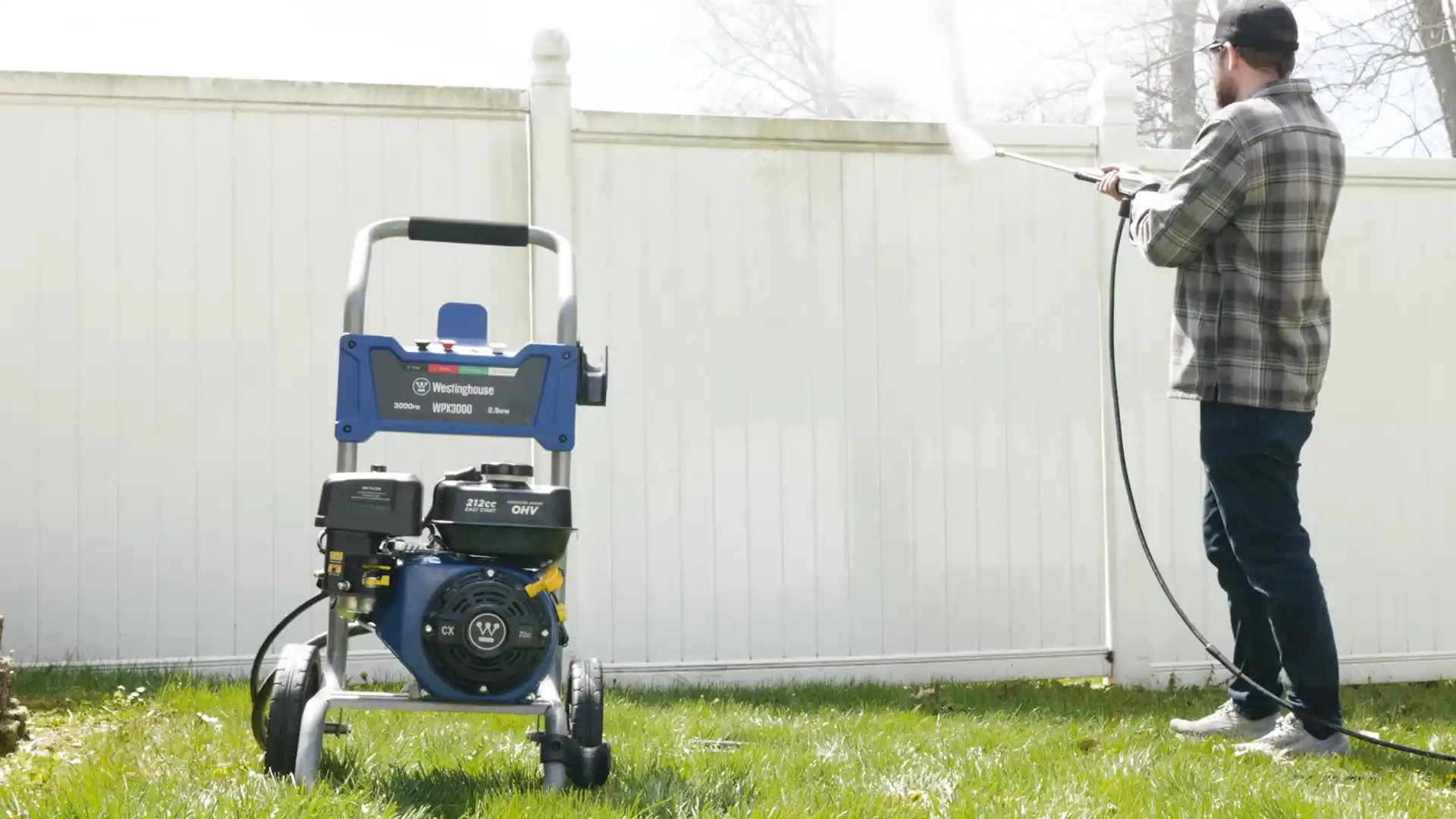
If your deck has years of built-up mold, heavy algae, or dark weathering stains, the machines above might take multiple passes. The WPX3000e delivers 3000 PSI with an induction motor, which is quieter than gas but more powerful than anything else on this list for serious deck restoration.
- Delivers 3000 max PSI and 1.76 max GPM (at lowest pressure), and 2600 rated PSI and 1.1 rated GPM of water flow. Perfect for decks, sidewalks, fences, garage floors, exterior walls, cars and patio furniture; Comes with a .45 gallon soap tank
- 25′ abrasion resistant super-flex hose with lightweight high pressure metal spray gun and wand with 5 quick connect nozzles (0°, 15°, 25°, soap and turbo); Compatible with pressure washer accessories like surface cleaners, undercarriage cleaners and foam cannons with M22 fittings
Pros and Cons
| Pros | Cons |
|---|---|
| 3000 PSI (2600 rated) — most powerful electric here | 1.1 GPM continuous limits rinsing speed |
| Induction motor is quieter than gas | Heavier at 36.8 lbs |
| 10-inch never-flat wheels handle rough terrain | |
| Large 0.45-gallon soap tank | |
| Steel frame, 3-year warranty |
Testing Results
On a badly neglected cedar deck with three years of algae and dark tannin staining, the WPX3000e with the 25-degree nozzle cleared it in one pass at 14 inches. The same job took two to three passes with the ePX3500. For deck restoration before staining or sealing, the extra PSI makes a visible difference.
Keep the nozzle moving. At 3000 PSI, the turbo nozzle can raise grain on softwood if you linger in one spot. Stick with 25 or 40-degree on wood decks. The 0-degree is for concrete only.
Real-World Usage
The 10-inch never-flat wheels handle uneven terrain better than the smaller wheels on budget models. This is more relevant on patios and driveways than a flat deck, but for homes where the washer needs to travel across grass or gravel to reach the deck, it helps.
For removing stubborn mold before treating, pair it with a deck cleaner in the soap tank. Our guide on how to remove mold from a deck covers the pre-treat and rinse sequence in detail.
Best Use Case
Best for homeowners doing a full deck restoration, dealing with years of neglected staining, or who want one machine that handles decks, driveways, and siding equally well.
Verdict
The WPX3000e is serious cleaning power in an electric package. Quieter than gas, plenty strong for a neglected deck, and built to last. The 1.1 GPM rinsing limit is the one real knock. For most homeowners using it once or twice a year, that’s a trade-off worth making.
Rating: 4.5/5
View on Amazon: Westinghouse WPX3000e
Best Premium Electric – Karcher K5 Premium
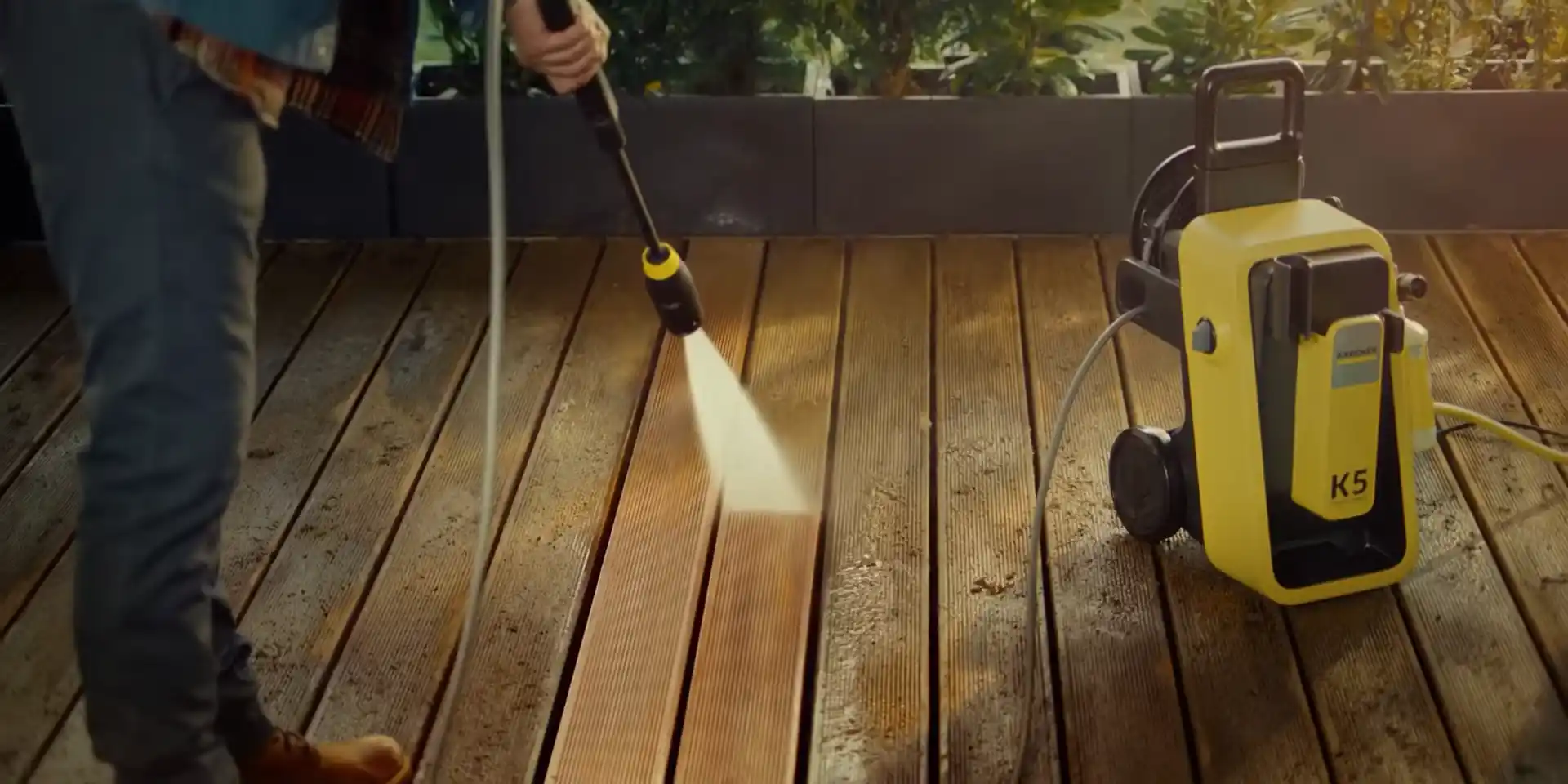
The K5 Premium doesn’t win on PSI. At 2000 PSI, it’s actually lower than most picks here. What it wins on is build quality and longevity. The water-cooled induction motor is rated to last five times longer than standard universal motors. For someone who plans to pressure wash every spring indefinitely, that’s a different kind of value.

- Powerful Performance: The K 5 pressure washer lasts longer than universal motors and delivers exceptional cleaning results! Water-Cooled brushless induction-motor and non-corrosive N-COR pump.
- Pressure Regulating: Use the Vario Power spray wand for light-duty jobs, and a patented Dirt Blaster spray wand for superior cleaning performance on tough-to-clean surfaces.
Pros and Cons
| Pros | Cons |
|---|---|
| Water-cooled induction motor (5x longer lifespan) | Expensive for the PSI rating |
| Pressurized hose reel for easy storage | |
| DirtBlaster wand boosts cleaning power 80% | |
| Rapid Exchange warranty program | |
| Quietest electric on this list |
Testing Results
On a treated wood deck with moderate weathering, the K5’s DirtBlaster wand performed better than its 2000 PSI rating suggests. Karcher rates the DirtBlaster at 80% more cleaning power than a standard lance, and on deck boards it was noticeably more aggressive without changing the PSI setting.
The Vario Power wand lets you dial pressure up or down continuously without swapping nozzles. Useful if your deck has a mix of hardwood boards and softer areas near the stairs.
Real-World Usage
The pressurized hose reel is genuinely satisfying to use. Press the button, the hose retracts neatly. No wrestling with a tangled 25 ft hose after a 2-hour cleaning session. Small thing, but after you’ve used it you won’t go back to manual hose storage.
The machine is quiet. Neighbors won’t complain on a Saturday morning. If you have a composite deck or new wood that needs gentle treatment, the K5 won’t overpower delicate surfaces the way a 3000 PSI unit can. See our full guide on cleaning a composite deck for the right approach.
Best Use Case
Best for homeowners who want a machine that lasts 10+ years, prioritize quiet operation, and are doing regular maintenance rather than heavy restoration.
Verdict
The K5 Premium is the long-game buy. Lower PSI than everything else here at this price point, but the build quality justifies it. The water-cooled motor and hose reel make it a pleasure to use year after year. If you’re comparing it on PSI per dollar, buy a cheaper model. If you want something that still works in 2035, this is it.
Rating: 4.3/5
View on Amazon: Karcher K5 Premium
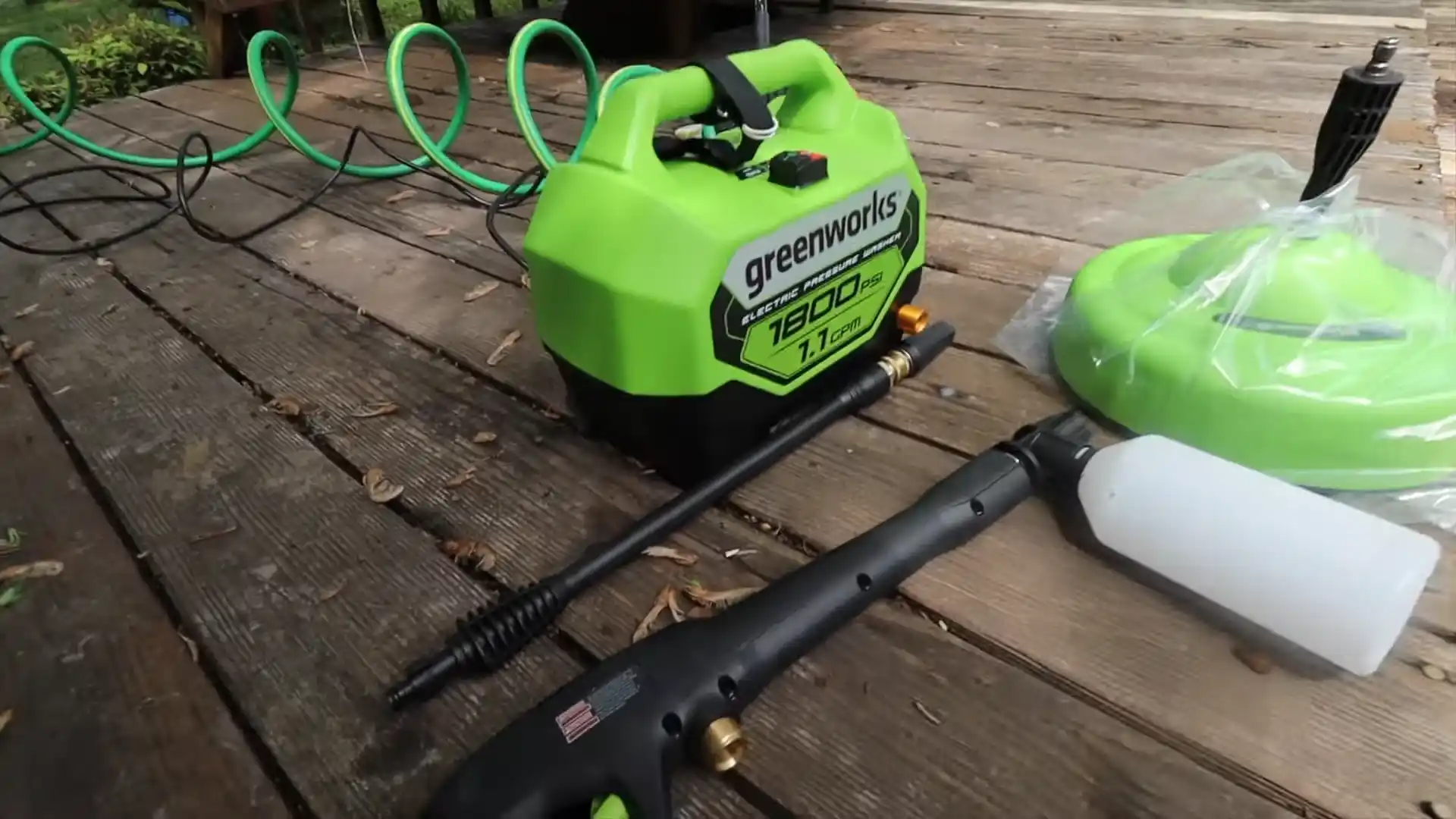
Best for Beginners – Greenworks 1800 PSI (5110202)
First-time pressure washer buyers often grab the cheapest model, use it wrong, and either damage the deck or get poor results. The Greenworks 1800 PSI is the safest entry point on this list. PWMA certified, TSS pump protection, wheels for easy movement, and just enough PSI for light to medium deck cleaning without overwhelming a beginner.

- [1800 PSI @ 1.1 GPM] - Great for light-duty, residential cleaning. Clean cars, trucks, motorcycles, boats, RVs, outdoor patio furniture, windows, decks, etc
- [No Maintenance] - No gas, no oil, no spark plugs, no air filters, and no pull cord Push button start
Pros and Cons
| Pros | Cons |
|---|---|
| PWMA certified (honest, verified specs) | 1800 PSI limits it to light-medium cleaning |
| TSS pump protection prevents damage | |
| Wheels for easy transport | |
| Lightweight build | |
| Trusted Greenworks brand |
Testing Results
On a freshly installed composite deck with light surface dirt and some pollen buildup, the 1800 PSI with the 25-degree nozzle cleaned it perfectly. No risk of damage, no pressure marks. This is the model you want if you’re nervous about doing too much damage.
On heavier mold or weathered wood staining, it takes more passes and more deck cleaner to compensate for the lower pressure. It works, it just takes more patience.
Real-World Usage
The TSS auto-shuts the pump when the trigger is released, which extends pump life significantly. For a beginner who might hold the trigger idle while moving around, this matters. The wheels make it easy to drag around a deck without lifting it.
For light annual maintenance on a well-kept deck, 1800 PSI is honestly plenty. For a deep clean or a deck that hasn’t been washed in a few years, step up to the ePX3500 or WPX3000e. If you’re unsure about technique, our guide on how to clean a wood deck walks through nozzle selection and distance in plain terms.
Best Use Case
Best for first-time buyers with a small deck, composite decking that can’t take high pressure, or anyone who wants a safe, forgiving machine for light annual maintenance.
Verdict
The Greenworks 1800 PSI is honest about what it is. The PWMA certification means 1800 PSI is real, not inflated. TSS keeps the pump safe when you step away. And at this price, it’s one of the most trustworthy entry-level picks available.
Rating: 4.2/5
View on Amazon: Greenworks 1800 PSI
What Makes the Best Pressure Washer for Decks?
PSI Range for Deck Cleaning
The safest PSI range for most wood decks is 1500 to 2500. Below 1500 and you’re barely doing more than a garden hose. Above 2500 on softwoods like cedar or pine, you risk raising grain, etching the surface, or blasting out the wood fibers between boards.
Composite decking is more tolerant of surface pressure but still has limits. Most composite manufacturers recommend staying under 1500 to 2000 PSI with a 25 or 40-degree nozzle. Check your deck manufacturer’s specs before you blast away.
For hardwood decks like ipe or teak, 2000 PSI is usually safe. For heavily weathered softwood decks you’re prepping for refinishing, 2500 PSI with the right nozzle works well. Gas pressure washers at 3000+ PSI are best reserved for concrete and brick, not deck boards.
Nozzle Selection Matters More Than PSI
A 25-degree nozzle at 2000 PSI is gentler on wood than a 15-degree nozzle at 1500 PSI. The spray angle determines how the pressure is distributed across the surface. A wider angle means less concentrated force per inch.
For deck cleaning, the 25-degree nozzle is the go-to for most situations. The 40-degree works well for composite and delicate wood. The turbo nozzle (also called a rotary nozzle) adds cleaning power while keeping a rotating spray pattern, which reduces the risk of a static pressure mark on one spot.
Never use the 0-degree red nozzle on any deck surface. It will leave a visible line in the wood. Keep it for rust on metal or heavy staining on concrete. For more detail on nozzle use, our guide on the best PSI for a pressure washer breaks down the full range.
GPM and Cleaning Speed
GPM (gallons per minute) controls how fast you rinse. Higher GPM means less time spent rinsing each section dry before it gets re-dirty. On a large deck, 1.2 GPM versus 1.76 GPM makes a noticeable difference in total cleaning time.
Most electric pressure washers land in the 1.1 to 1.8 GPM range. That’s sufficient for residential decks. Gas models jump to 2.4 to 2.6 GPM, which is why they finish larger jobs faster. But for a typical backyard deck, electric GPM levels are fine.
Electric vs Gas for Decks
Gas pressure washers are more powerful, but they’re also harder to control around delicate wood surfaces. For most residential decks under 500 sq ft, an electric model is the smarter choice. You get plenty of PSI, no engine maintenance, no fumes near the house, and quieter operation.
Gas starts making sense for very large decks, heavily stained commercial applications, or when you need the same machine for driveways and concrete. For everything else, electric is cleaner and easier. The electric vs gas pressure washer comparison covers the trade-offs in full.
TSS (Total Stop System)
TSS automatically stops the pump when the trigger is released. Without it, the pump keeps running while water sits at pressure, which strains the motor and shortens its life. Most quality electric pressure washers include TSS. It’s a feature worth checking before buying a budget model.
How to Use a Pressure Washer on a Deck Effectively
Start by sweeping the deck surface to remove loose debris. Pressure washing wet leaves into corners creates more mess than you started with.
Apply a deck cleaner through the soap nozzle first and let it sit for 5 to 10 minutes. This breaks down algae, mold, and tannin staining before you hit it with pressure. Skipping this step means you’re just rinsing the surface, not cleaning it.
Switch to the 25-degree nozzle and work in the direction of the wood grain. Keep the nozzle 12 to 18 inches from the surface and move at a steady pace. Lingering in one spot causes pressure marks. Overlapping passes slightly as you go keeps the cleaning even.
Rinse with the 40-degree nozzle at about 12 inches and let the deck dry completely before applying any sealer or stain. Rushing the dry time means the coating won’t bond properly.
Frequently Asked Questions
What PSI should I use for a wood deck?
Most wood decks clean well at 1500 to 2500 PSI using a 25-degree nozzle. Softwoods like cedar and pine sit at the lower end of that range. Hardwoods handle up to 2500 PSI without damage. Stay away from anything above that on deck boards.
Do I need a special soap for deck cleaning?
Yes. Use a deck-specific cleaner, not all-purpose household detergent. Deck cleaners are formulated to break down algae, mildew, and tannin staining without damaging wood fibers. They’re safe for the pressure washer pump and biodegradable enough for lawn runoff. Regular dish soap creates excess suds and doesn’t do much for organic staining.
Is a gas pressure washer too powerful for decks?
Gas models at 3000+ PSI can absolutely damage softwood decks if used carelessly. If you use a gas pressure washer on a wood deck, stick to a 40-degree nozzle, stay 18 to 24 inches from the surface, and keep the wand moving. For most homeowners, an electric model is a safer choice with less risk of accidental damage.
What is the best pressure washer for a large deck?
For decks over 500 sq ft, look for higher GPM to cut down rinsing time. The Westinghouse WPX3000e at 1.76 GPM max or the RYOBI RY142300 are both solid choices. A surface cleaner attachment also speeds up large flat areas dramatically. See our roundup of the best pressure washer surface cleaners for attachment options that pair well with these machines.