What Floors Can You Use a Steam Mop On? (And What to Avoid)

Steam mops clean fast and skip the chemicals, but use one on the wrong floor and you’ll have a warped, bubbling, or delaminated mess that no amount of scrubbing will fix.
Here’s a straight breakdown of what floors can handle steam and which ones cannot.
Overview
| Floor Type | Safe for Steam Mop? |
|---|---|
| Sealed hardwood | Yes, with caution (low steam, quick passes) |
| Unsealed hardwood | No |
| Tile (ceramic/porcelain) | Yes |
| Stone tile (sealed) | Yes, with caution |
| Stone tile (unsealed) | No |
| Laminate | No |
| Luxury vinyl plank (LVP) | Usually no |
| Vinyl sheet flooring | No |
| Linoleum | Generally no |
| Carpet | Yes (with carpet glider) |
Floors You Can Use a Steam Mop On
Ceramic and Porcelain Tile
Ceramic and porcelain tile are the most steam-friendly floors you have. The material is dense, water-resistant, and built to handle heat. Steam cuts through grease and grime in grout lines far better than a regular mop does.
Use a steam mop on tile freely. You do not need to worry about heat damage on the tile itself. The only thing to watch is older grout that may be cracked or unsealed, because steam can work moisture into those gaps over time.
Sealed Stone Tile
Marble, slate, travertine, and other natural stone tiles can handle steam if they are properly sealed. The sealant acts as a barrier between the steam and the porous stone underneath.
The problem is that most homeowners do not reseal their stone floors as often as they should. If your stone has not been resealed in the last 1 to 2 years, hold off on the steam mop. Use a pH-neutral cleaner and a regular mop instead until you reseal.
Sealed Hardwood
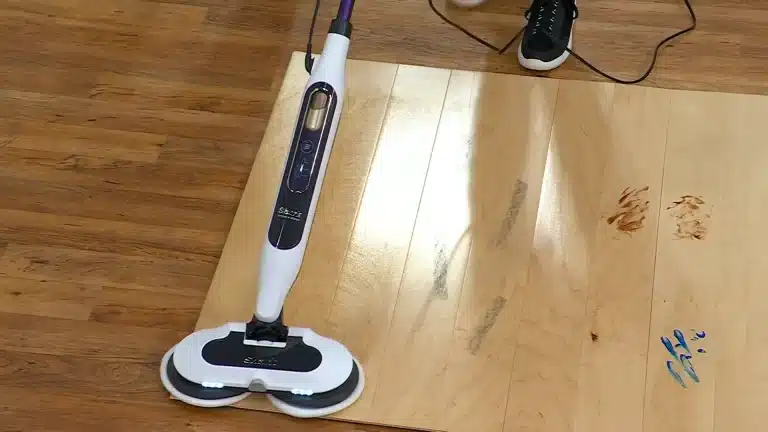
This is where most people get confused. Sealed hardwood can handle occasional steam mopping if you are careful. The key word is “sealed.” Factory-finished hardwood with a polyurethane or aluminum oxide coating has some moisture protection.
That said, hardwood and water are never truly friends. Use the lowest steam setting, keep the mop moving, and do not let it sit in one spot. Once or twice a month is fine. Daily steam mopping on hardwood is a bad idea no matter how well it is sealed.
Carpet (With a Carpet Glider)
Most steam mops come with a carpet glider attachment that lets you run the mop over carpet to freshen and sanitize it. This works well for odors, light bacteria, and surface dirt.
Do not expect the steam to deep clean carpet fibers the way a carpet cleaner would. It is a maintenance tool, not a replacement for deep carpet cleaning. For regular freshening between deeper cleans, it works.
Floors You Should NOT Use a Steam Mop On
Laminate Flooring
Laminate is the most common floor that people ruin with a steam mop. The core of laminate flooring is made from compressed wood fiber, which swells when it absorbs moisture. Steam gets under the top layer through the seams and causes the planks to warp, bubble, or separate at the edges.
Most laminate manufacturers explicitly void the warranty if you use a steam mop. There is no good reason to try it. Use a damp microfiber mop with a laminate-safe cleaner instead.
Luxury Vinyl Plank (LVP) and Sheet Vinyl
Vinyl floors are waterproof on the surface, which leads a lot of people to assume steam is fine. It is not. The issue is heat, not water. High heat can soften vinyl, cause it to expand, and break down the adhesive that holds the planks or sheet to the subfloor.
Some newer LVP products are advertised as steam-mop safe. Check your manufacturer’s warranty and installation guide before trying it. If the documentation does not explicitly say steam is safe, skip it.
Unsealed Hardwood
Unsealed or wax-finished hardwood has no real moisture barrier. Steam will penetrate the wood grain, cause swelling, and leave water stains or gray discoloration that is difficult to reverse. If your hardwood floors are older and were finished with wax or oil rather than polyurethane, do not use steam on them.
Not sure if your hardwood is sealed? Drop a small amount of water on a hidden section. If it beads up, it is sealed. If it soaks in within a few seconds, it is not.
Unsealed Natural Stone
Granite, marble, and travertine without a fresh sealant coat are porous. Steam drives moisture deep into the stone, which can cause staining, promote mold growth, and erode the material over time. This is especially a problem with marble, which is also sensitive to heat.
If you have natural stone floors, check the seal regularly. A water bead test works here too.
Linoleum
Linoleum is often confused with vinyl, but it is actually made from natural materials like linseed oil and wood flour. It is more sensitive to heat and moisture than vinyl and can warp, crack, or separate from the subfloor with repeated steam exposure.
Does “Waterproof” Mean It’s Safe for a Steam Mop?

No. This is one of the most common misconceptions about steam mops.
“Waterproof” means the surface resists liquid water at room temperature. A steam mop does not work at room temperature. It produces heat and moisture together, which puts pressure on seams, adhesive layers, and protective coatings in a way that standing water does not.
A floor can be 100% waterproof and still be damaged by steam. Luxury vinyl plank is the clearest example. The planks themselves do not absorb water, but the heat from a steam mop can cause them to expand, warp, or lift at the seams.
Always check the manufacturer’s documentation, not just the marketing label.
How to Use a Steam Mop Safely on Your Floors
A few basic habits will protect your floors and get the best results from your steam mop.
Use the right setting. Most steam mops have low, medium, and high settings. Tile and grout can take high heat. Hardwood and stone should stay on the lowest setting.
Keep the mop moving. Never let a steam mop sit in one spot. Concentrated heat and moisture in one place will damage almost any floor over time.
Change the pad regularly. A dirty pad drags grime back across the floor and can leave streaks. Rinse or replace it as soon as it looks saturated or soiled.
Let the floor dry before walking on it. Steam cleans fast, but the surface is still warm and slightly damp after a pass. Give it a minute before foot traffic.
Do not add cleaning solutions. Most steam mops are designed to work with water only. Adding soap or cleaner can clog the machine and leave residue on the floor. If you need a cleaning boost on tile, pre-spray the area with a tile cleaner before running the steam mop over it.
Signs Your Floor Should Not Be Steam Mopped
Sometimes the floor type is not the only factor. Even steam-safe floors can show signs that steam mopping is causing problems.
Lifting or bubbling near seams. If you notice the floor edges or seams starting to rise or bubble, stop steam mopping immediately. Moisture is getting under the surface.
Dull or hazy finish on hardwood. A cloudiness that was not there before usually means the steam is breaking down the protective coating. Switch to a hardwood-safe spray mop instead.
Grout crumbling or darkening over time. Old or poorly sealed grout that gets regular steam exposure can weaken. If you see crumbling or discoloration, reseal the grout before continuing.
Warping or cupping on planks. Any visible warping on hardwood or laminate planks after steam mopping is a sign of moisture damage. This is usually permanent on laminate. On hardwood, it may improve if you stop mopping and allow the floor to dry out fully over several weeks.
Squeaking in spots that did not squeak before. On wood floors, new squeaks can signal that the subfloor or planks have absorbed moisture and shifted. This is a slower warning sign but worth noting.
If your floors are showing any of these signs, switch to a standard microfiber mop with a floor-appropriate cleaner. You can find a comparison of steam mop alternatives if you are not sure what to use next.
Frequently Asked Questions
Can you use a steam mop on hardwood floors every day?
No. Even sealed hardwood is not built for daily steam exposure. Stick to once or twice a month at most, and always use the lowest steam setting. For routine maintenance, a dry microfiber mop or a barely damp mop works better between deeper cleans.
Is a steam mop safe for LVP flooring?
Usually not. Most LVP manufacturers do not recommend steam mops because the heat can break down the adhesive or cause expansion at the seams. A few newer LVP products list steam as acceptable, but you should confirm this in your specific product’s warranty before trying it. When in doubt, skip the steam.
Can a steam mop sanitize floors?
Yes. Steam heat kills most common household bacteria and dust mites on contact. This makes steam mops genuinely useful for households with pets, allergies, or young children who spend time on the floor. Just make sure the surface is appropriate for steam before prioritizing the sanitizing benefit.
What floors are best for a steam mop?
Ceramic and porcelain tile are the ideal match. The material is dense, non-porous, and not affected by heat. Grout lines get noticeably cleaner with steam compared to traditional mopping. If you have mostly tile floors, a steam mop will give you the best results.