5 Best Pressure Washers for Brick
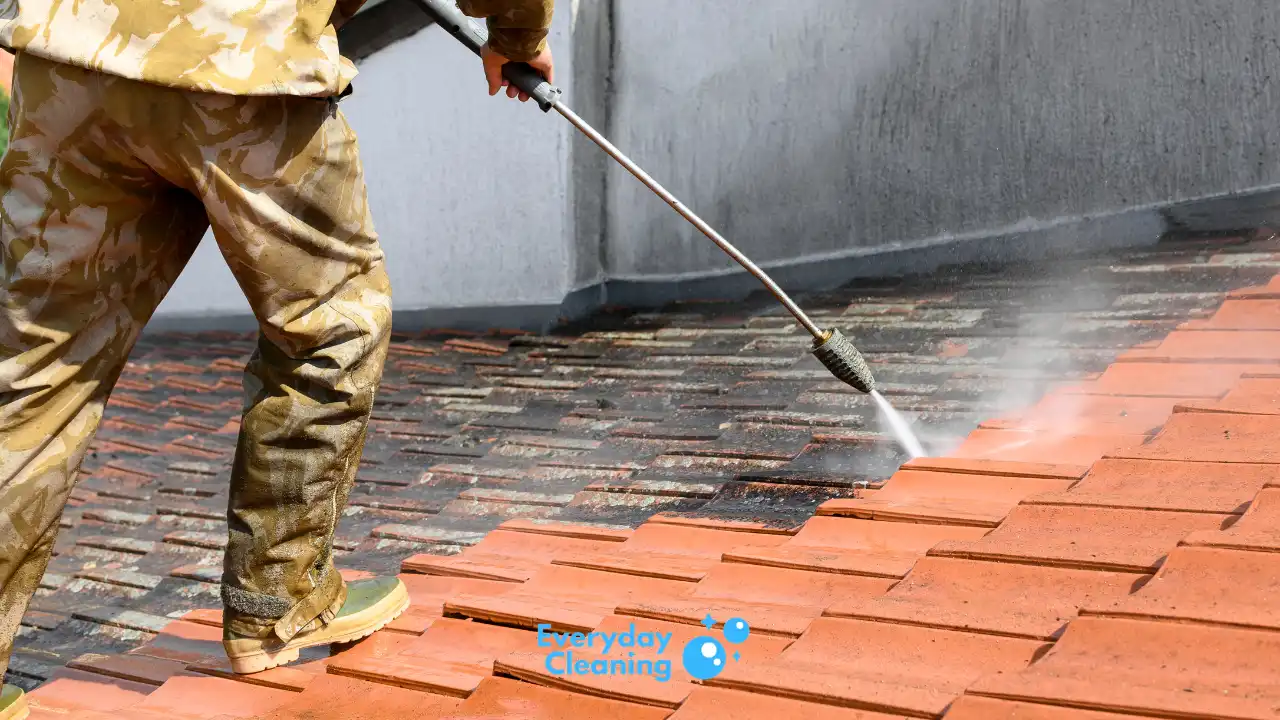
Brick is durable, but it’s also porous. Use the wrong pressure washer setting and you’ll blast out mortar, crack the surface, or push water deep into the wall. We tested five electric models to find the ones that clean brick effectively without causing damage.
Our Top Picks
| Recommendation | Product | Reason |
|---|---|---|
| Best Overall | Westinghouse ePX3500 | Right PSI for brick, easy to control — Reviews ↓ |
| Best Value | Sun Joe SPX3000 | Top-selling electric with 5 nozzles and PWMA cert — Reviews ↓ |
| Best for Heavy Stains | Westinghouse WPX3000e | 3000 PSI induction motor handles deep grime — Reviews ↓ |
| Best Premium | Greenworks Pro GPW3001 | PWMA-certified 3000 PSI with 10-year motor warranty — Reviews ↓ |
| Best Brushless Motor | RYOBI RY142300 | Quieter, longer-lasting brushless motor under $200 — Reviews ↓ |
Best Overall: Westinghouse ePX3500
The ePX3500 hits the sweet spot for brick cleaning. At 2000 to 2500 PSI, it has enough power to strip dirt, mildew, and algae without the mortar-blasting risk you get from 3000+ PSI machines.
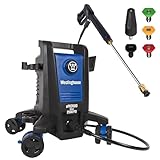
- Delivers 2500 max PSI and 1.76 max GPM (at lowest pressure), and 2000 rated PSI and 1.2 rated GPM of water flow; Pro-style steel extendable 17.5” wand with quick-connect nozzles (0°, 15°, 25°, turbo and soap applicator)
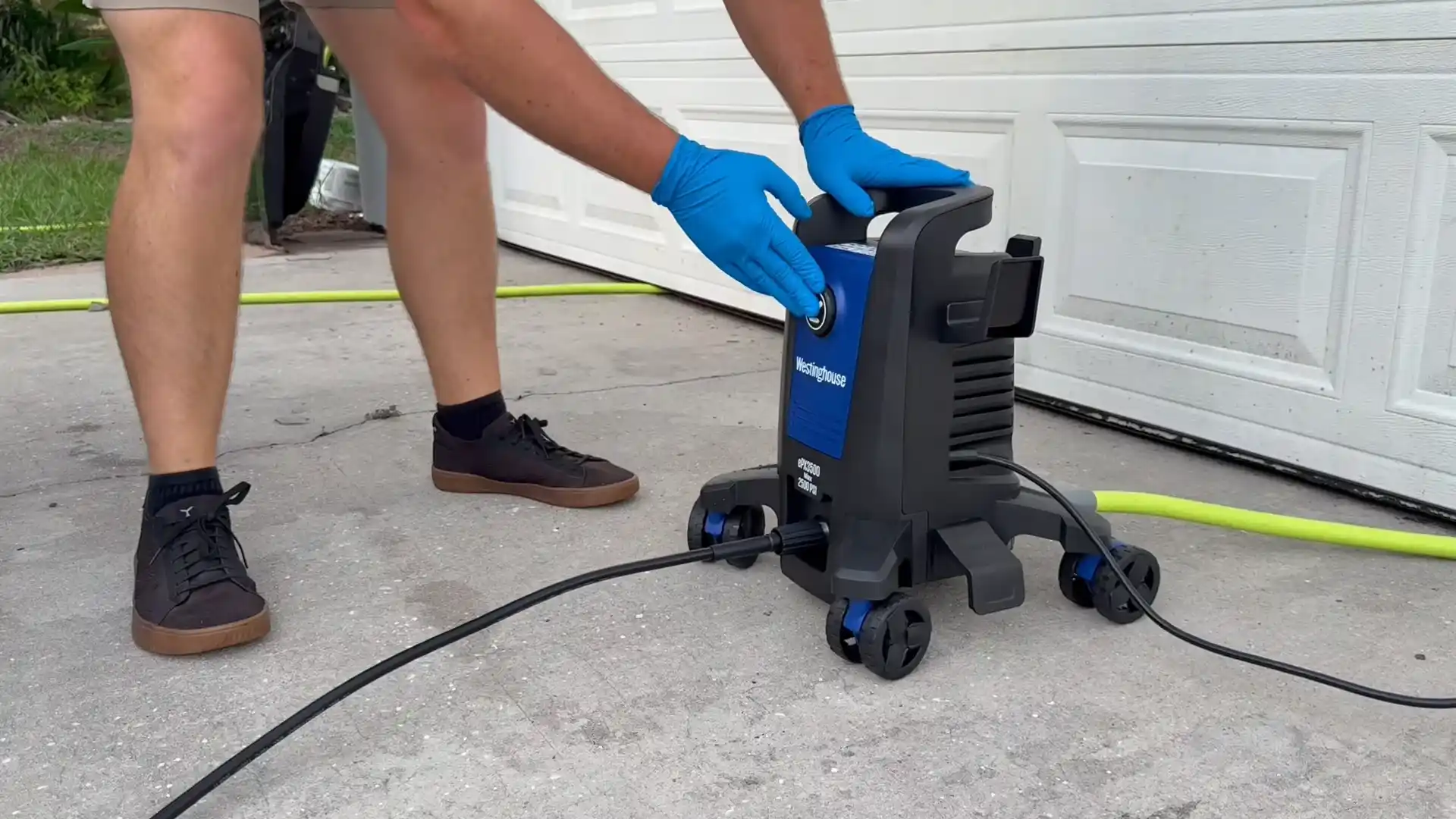
- Super compact and lightweight at 16.5” tall and 19 pounds for convenient storage and portability; Four quick-lock wheels with 360° steering design and low center of gravity engineered for anti-tipping design

Pros and Cons
| Pros | Cons |
|---|---|
| 2500 PSI is safe for most brick surfaces | 20oz soap tank fills up fast on large areas |
| 5 quick-connect nozzles including 0 degree | |
| Anti-tipping 4-wheel 360-degree design | |
| Only 19 lbs, easy to move around | |
| TSS pump protection and 3-year warranty |
Testing Results
PSI and Cleaning Power: At 2000 to 2500 PSI, this machine removes surface grime, algae, and light mildew from brick without blasting mortar. Using the 25-degree nozzle at 12 to 18 inches gives the safest, most controlled clean.
Nozzle Versatility: Five nozzles cover every need. The 25-degree nozzle is ideal for general brick washing. The 15-degree works on tougher stains in open mortar joints. The 40-degree is safe for painted or older brick.
Concrete/Driveway: Yes (medium duty). Handles brick driveways and patios well at this PSI range.
Heavy Stains: Light to medium only. Embedded oil stains or heavy efflorescence may need a follow-up with a brick cleaner for pressure washers.
Maneuverability: The 4-wheel 360-degree steering is the standout feature. No tipping when dragging the hose across a patio or adjusting angles on a brick wall.
Ease of Setup: Plug in, attach hose, snap nozzle in. No choke, no priming, no gas. Ready in under two minutes.
Real-world Usage
For a brick house with a dirty facade, this is the machine to reach for first. The 19 lb weight means you can carry it up steps without strain. The 35 ft cord and 25 ft hose give you about 60 feet of total range from the outlet, enough to cover most front walls.
The 20oz soap tank is small. For a full brick wall with mildew, you’ll refill it two or three times. Not a dealbreaker, but worth knowing before you start.
Best Use Case
Best for homeowners cleaning brick walls, patios, and walkways. Works on brick driveways with moderate dirt buildup. Not the right call for heavy efflorescence or deep oil stains in brick mortar.
Verdict
The ePX3500 is the most sensible pick for brick because it gives you enough pressure to clean without the risk of surface damage. The 4-wheel anti-tip design makes it easy to work around a yard. The 3-year warranty adds peace of mind. If you want one electric pressure washer that handles brick, siding, and patios without complication, this is it.
Rating: 4.6 / 5
View on Amazon: Westinghouse ePX3500
Best Value: Sun Joe SPX3000
The SPX3000 has over 20,000 Amazon reviews at 4.8 stars. That kind of track record at the $140 to $169 price point makes it hard to argue with as a value pick for brick cleaning.

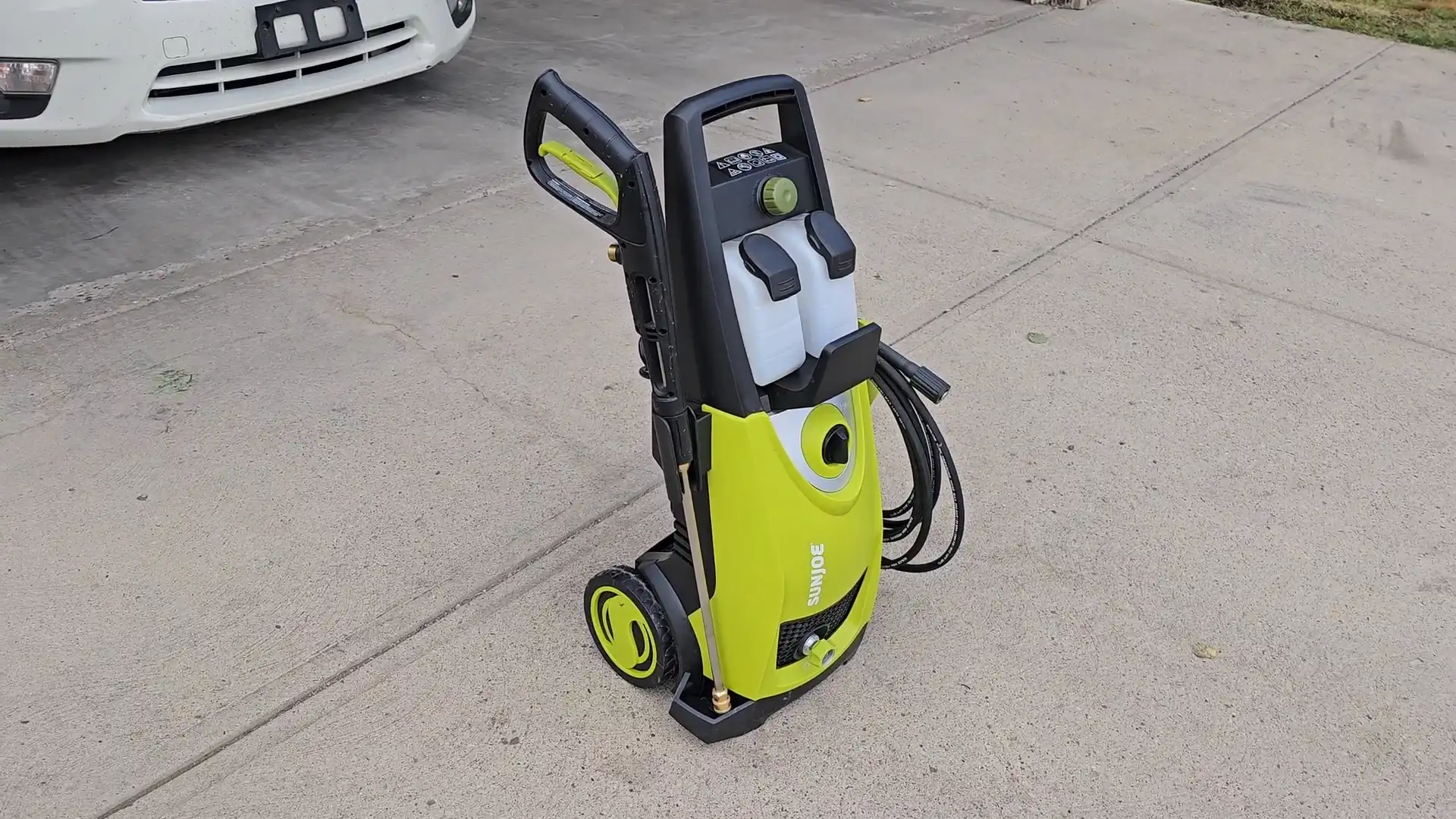
- High-Pressure Cleaning: This electric pressure washer delivers up to 2030 PSI working pressure and 1.2 GPM water flow to help remove dirt, grime, and buildup from homes, driveways, vehicles, RVs, and outdoor equipment
- Multiple Spray Options: This water pressure washer includes five quick-connect spray tips (0°, 15°, 25°, 40°, and soap) to switch between narrow jet streams and wider fan patterns, plus a soap applicator for detergent use
Pros and Cons
| Pros | Cons |
|---|---|
| 20,000+ Amazon reviews at 4.8 stars | 20 ft hose feels short on large areas |
| PWMA certified (PSI claims independently verified) | |
| Dual 0.9L detergent tanks, switch soaps mid-job | |
| 5 nozzles including 0 degree | |
| TSS pump protection | |
| Solid brass fittings and metal connections |
Testing Results
PSI and Cleaning Power: 2030 PSI with PWMA certification means that number is real. For brick, it’s a safe operating range. Dirt, mold, and algae come off cleanly with the 25-degree nozzle.
Concrete/Driveway: Yes (medium duty). Handles brick patios and driveways with moderate soiling. Not a deep-cleaning machine for heavy stains.
Heavy Stains: Light to medium only. Efflorescence and embedded grime may need detergent assist from one of the two soap tanks.
Dual Soap Tank System: The standout feature on this machine. Load one tank with a degreaser and one with a rinsing agent. Useful when cleaning brick with heavy algae or mildew where you want to presoak and then rinse without refilling.
Hose Length: The 20 ft hose is the main limitation. On a two-story brick wall or a long driveway, you’ll find yourself repositioning the unit frequently. A 25 or 50 ft extension hose is worth buying separately.
Noise Level: Moderate. Louder than induction motor models like the WPX3000e, but typical for a universal motor at this price.
Real-world Usage
The SPX3000 is the machine most homeowners buy and don’t regret. It’s not the most powerful on this list, but it gets the job done on standard brick cleaning tasks: dirt, algae, mildew, and surface grime. The dual detergent tank is genuinely useful when you want to use two different cleaning products without stopping to refill.
For larger jobs, the short hose is the main frustration. Budget $20 to $30 for a pressure washer hose extension if you’re cleaning a full house facade.
Best Use Case
Best for homeowners who want a proven, budget-friendly option for brick walls, brick patios, and general outdoor cleaning. The dual soap tank makes it a strong pick for areas with heavy mildew where detergent application matters. See our full best pressure washer for patios guide if patio cleaning is your main use case.
Verdict
Hard to beat for the price. The PWMA certification gives you confidence the specs are real. The dual soap tank is a genuine differentiator. The short hose is annoying but manageable. For a first pressure washer that covers brick cleaning, this is the safe buy.
Rating: 4.4 / 5
View on Amazon: Sun Joe SPX3000
Best for Heavy Stains: Westinghouse WPX3000e
If your brick has deep-set stains, efflorescence, or has not been cleaned in years, the WPX3000e is the step up you need. At 3000 PSI with an induction motor, it cleans aggressively without the noise of a gas machine.
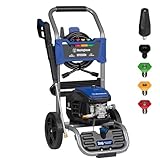
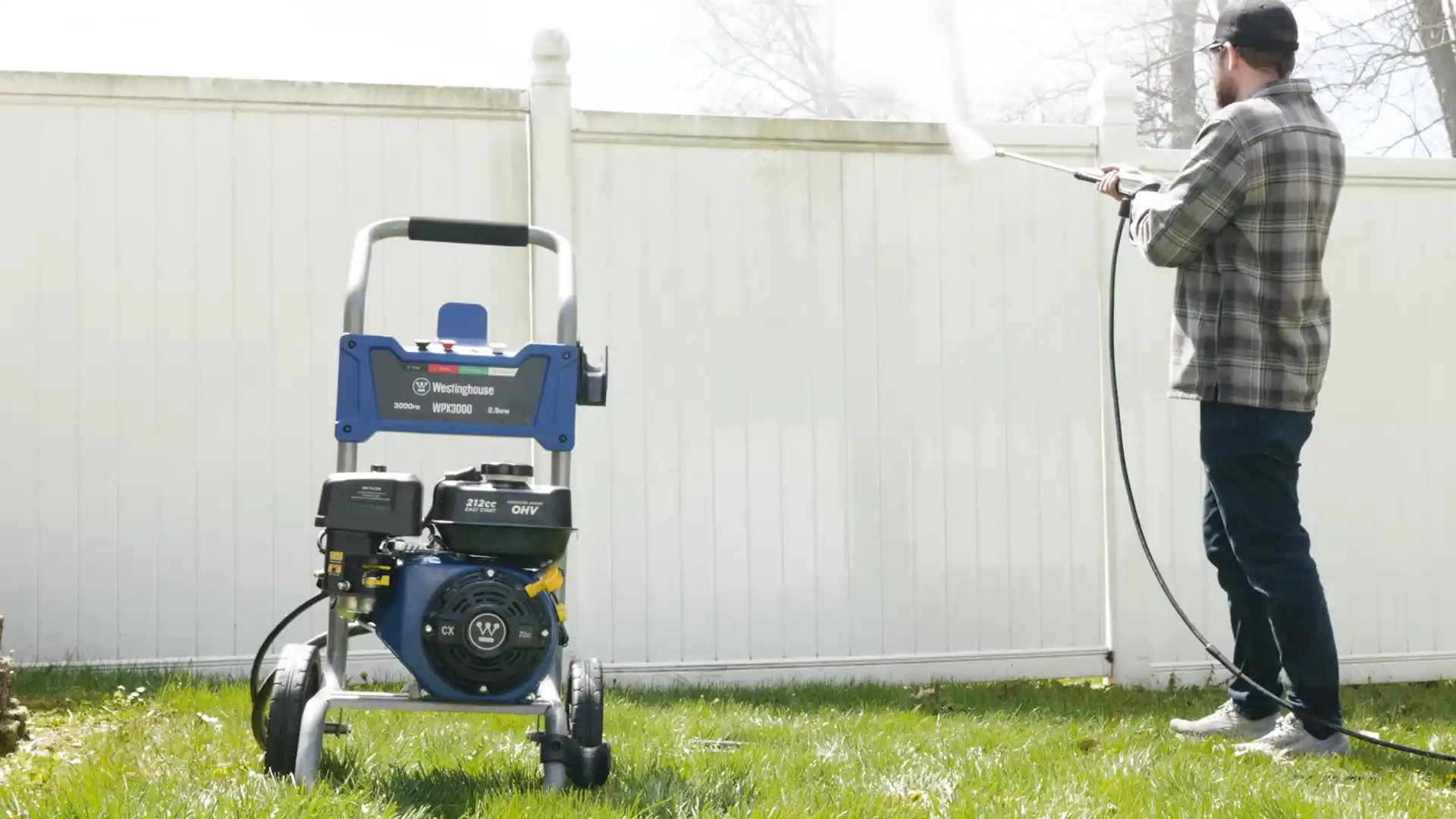
- Delivers 3000 max PSI and 1.76 max GPM (at lowest pressure), and 2600 rated PSI and 1.1 rated GPM of water flow. Perfect for decks, sidewalks, fences, garage floors, exterior walls, cars and patio furniture; Comes with a .45 gallon soap tank
- 25′ abrasion resistant super-flex hose with lightweight high pressure metal spray gun and wand with 5 quick connect nozzles (0°, 15°, 25°, soap and turbo); Compatible with pressure washer accessories like surface cleaners, undercarriage cleaners and foam cannons with M22 fittings
Pros and Cons
| Pros | Cons |
|---|---|
| 3000 PSI (2600 rated), most powerful electric on this list | Heavy at 36.8 lbs |
| Induction motor is noticeably quieter than gas | |
| 10-inch never-flat wheels handle rough terrain | |
| Heavy stains: Yes (confirmed by surface performance rating) | |
| 0.45 gallon soap tank | |
| Steel frame build, rugged and stable |
Testing Results
PSI and Cleaning Power: 3000 PSI (2600 rated) handles heavy stains that the mid-range machines leave behind. On old brick with embedded dirt and algae, using the 15-degree nozzle at 18 to 24 inches delivers a noticeably deeper clean.
Heavy Stains: Yes. This is the only electric on this list confirmed for heavy stain removal. Use with a brick-safe detergent for best results on efflorescence.
Concrete/Driveway: Yes (heavy duty). Also handles brick driveways and thick mortar residue at the edges of brick borders.
Noise Level: The induction motor makes a real difference. Testers report being able to use it at 7 a.m. without neighbor complaints. It’s not silent, but it’s quieter than gas by a wide margin.
Maneuverability: The 10-inch never-flat wheels roll over gravel, rough pavement, and lawn edges without issue. The hand-truck design keeps it stable when you pull the hose hard.
Soap Tank: At 0.45 gallons (1.7L), the soap tank is larger than the ePX3500’s but still not huge. For cleaning a full brick facade, you may refill once.
Real-world Usage
This machine is for homeowners who have let brick get genuinely grimy. Think five-year-old brick patios covered in green algae, brick retaining walls with efflorescence, or dark-stained mortar joints from years of runoff. The 3000 PSI cleans it in fewer passes than a mid-range unit.
The weight is the trade-off. At 36.8 lbs, it’s harder to drag up steps or position on an uneven slope. The wheels help, but this is a ground-level machine more than a ladder-adjacent one.
Best Use Case
Best for homeowners with neglected brick, heavy staining, or large brick areas like retaining walls and driveways. Also a strong pick if you have other tough jobs around the house, like concrete driveway stain removal. Not ideal for older, softer brick where 3000 PSI may cause surface damage.
Verdict
The WPX3000e justifies its price for heavy-duty residential use. The induction motor gives you gas-level cleaning power at electric noise levels. If your brick is genuinely dirty and mid-range machines have failed you, this is the right tool.
Rating: 4.5 / 5
View on Amazon: Westinghouse WPX3000e
Best Premium: Greenworks Pro GPW3001
The GPW3001 is the only electric on this list with a PWMA-certified 3000 PSI and a 10-year motor warranty. If you want the longest-lasting, most verified electric pressure washer for brick, this is it.

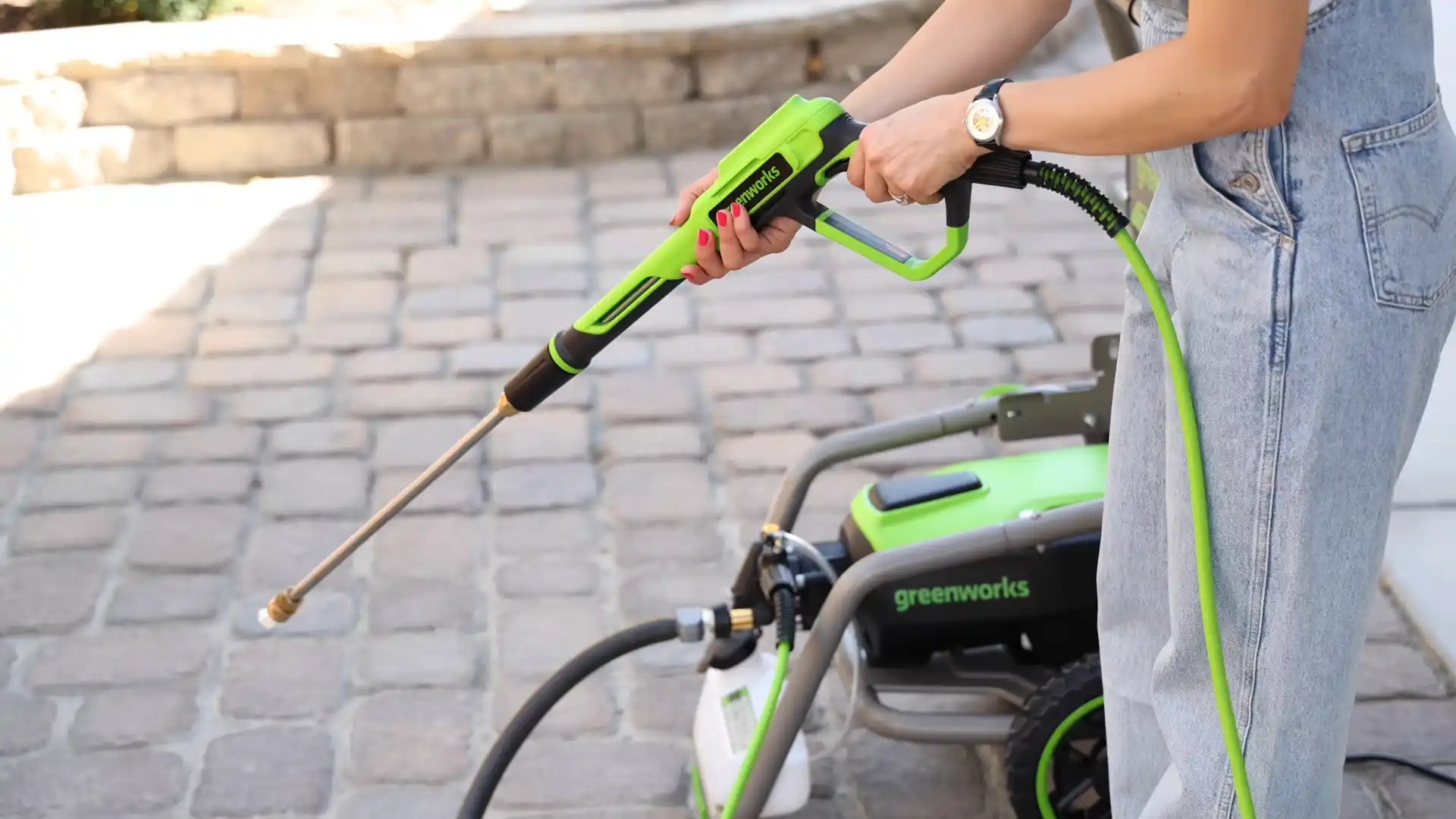
- TRUBRUSHLESS MOTOR : Powerful 14 Amp TruBrushless motor generates 3000 PSI and 2.0 GPM for maximum cleaning power.Cleaning Units 3300 C.U. Maximum Inlet Water Temperature 104°F (40°C).Frequency : 60 hz
- PWMA CERTIFIED (Pressure Washer Manufacturers‘ Association) : All water pressure (PSI) and flow rate (GPM) claims for this product were tested and verified by an independent lab, ensuring you’ll take home the power you were promised
Pros and Cons
| Pros | Cons |
|---|---|
| PWMA certified, 3000 PSI independently verified | Most expensive electric on the list ($374-499) |
| 10-year motor warranty, best in class | Heaviest at 49 lbs |
| TruBrushless motor auto-adjusts pressure per nozzle | |
| 1 gallon soap tank, enough for a full wall | |
| Heavy stains: Yes | |
| GFCI waterproof plug and Uberflex kink-resistant hose |
Testing Results
PSI and Cleaning Power: PWMA certification means 3000 PSI is not a marketing number. It cleans brick with the same confidence as a light-duty gas machine. Heavy stains, thick algae, and embedded dirt all respond in fewer passes.
Heavy Stains: Yes. Confirmed for heavy duty concrete and heavy stain removal. Brick mortar joints with dark organic buildup clear up noticeably faster than with the mid-range picks.
TruBrushless Smart Sensing Motor: The motor automatically adjusts pressure when you swap nozzles. Switch from a 15-degree to a 40-degree tip and the pressure drops accordingly. Useful for brick because you can use a more aggressive nozzle on problem areas and a gentler one on older mortar without manually adjusting anything.
Soap Tank: The 1-gallon tank is the largest on this list. For a full brick house facade, you can often complete the soapdown pass without stopping to refill.
Noise Level: Quieter than gas but similar to the WPX3000e. Induction brushless motors are the quieter class of electric.
Portability: At 49 lbs, this is not a portable machine. The wheelbarrow frame rolls well on flat surfaces, but it is not designed to be carried.
Real-world Usage
The GPW3001 is for homeowners who use their pressure washer regularly and want the machine to last a decade. The 10-year motor warranty is a real differentiator. For brick cleaning specifically, the smart pressure adjustment makes it safer on older masonry because you get the right PSI per tip, not a fixed high-pressure output regardless of nozzle.
The price is the barrier. At $374 to $499, it’s more than twice the cost of the Sun Joe. If you clean brick twice a year, the investment is hard to justify. If you’re cleaning brick, concrete, siding, and driveways regularly, it makes more sense.
Best Use Case
Best for homeowners with large properties, multiple outdoor cleaning tasks, or anyone who wants a machine that will still work reliably 10 years from now. A strong pick alongside our best pressure washer for concrete guide if you’re covering multiple hard surfaces. Not the right buy for light or occasional brick cleaning.
Verdict
The GPW3001 is genuinely exceptional hardware. PWMA-certified PSI, a 10-year motor warranty, smart pressure sensing, and a 1-gallon soap tank are features you do not find at any lower price point. For serious homeowners who maintain their property regularly, this justifies the cost. Everyone else should start with the ePX3500 or WPX3000e.
Rating: 4.7 / 5
View on Amazon: Greenworks Pro GPW3001
Best Brushless Motor: RYOBI RY142300
The RY142300 is the only brushless induction motor on this list under $200. Brushless motors run quieter, last longer, and draw less electricity than the universal motors in most mid-range electric pressure washers.

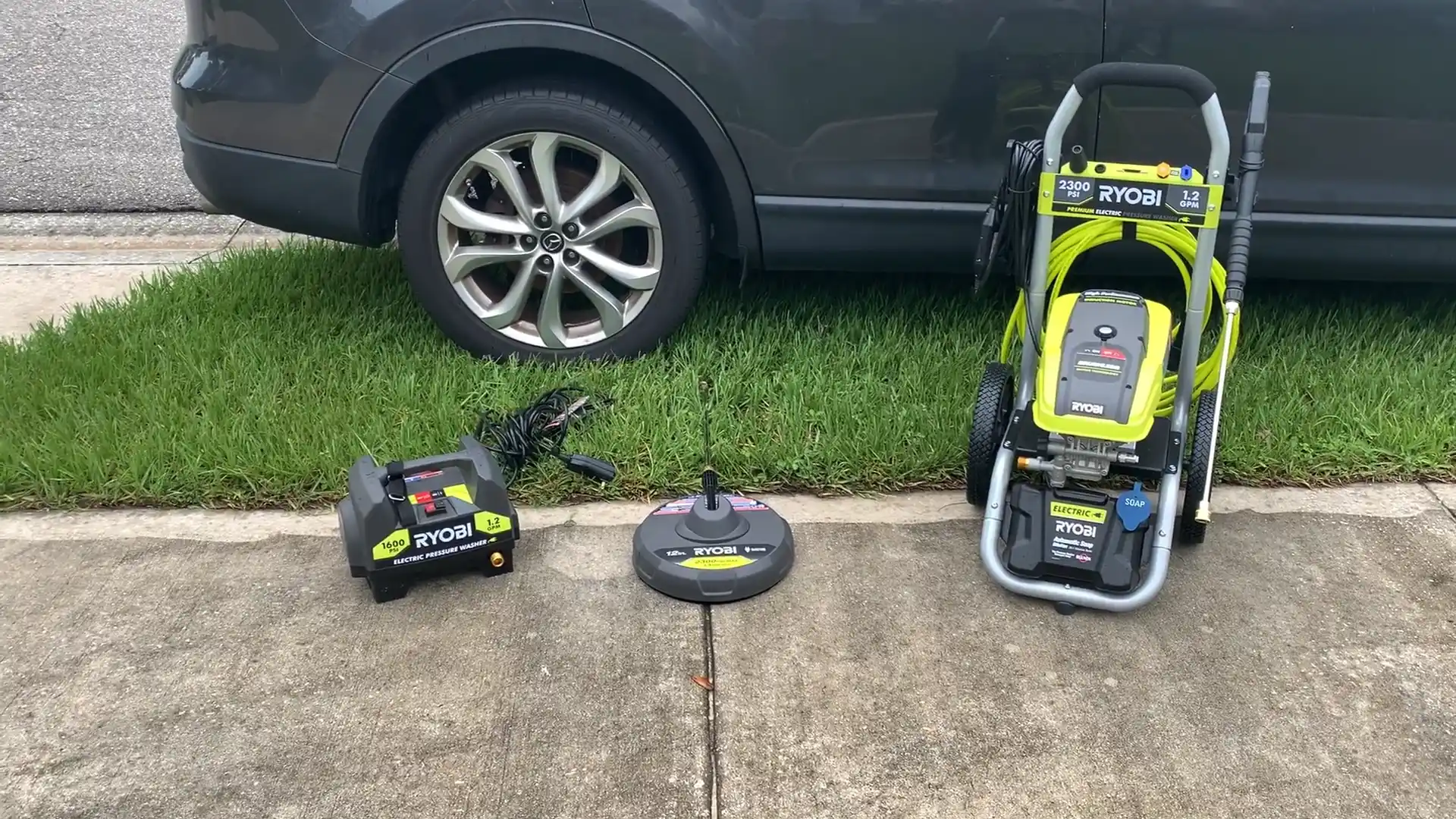
- AUTOMOTIVE CLEANING POWER: Ryobi pressure washer delivers strong, consistent water pressure to tackle tough dirt, grime, and grease on vehicles.
- VERSATILE USE: Ideal for washing cars, trucks, motorcycles, and other vehicles, as well as driveways and outdoor surfaces.
Pros and Cons
| Pros | Cons |
|---|---|
| Brushless induction motor lasts longer than universal motors | Fewer nozzles than some competitors |
| 2300 PSI rated, solid mid-range power for brick | |
| 12-inch large wheels roll over any terrain | |
| Onboard storage for all accessories | |
| 3-year RYOBI warranty |
Testing Results
PSI and Cleaning Power: 2300 PSI rated is sufficient for most brick cleaning tasks. Dirt, mold, surface algae, and light efflorescence all clean up well. Not a heavy-stain machine, but a strong mid-range performer.
Concrete/Driveway: Yes (medium duty). Handles brick driveways and patios at moderate soil levels.
Heavy Stains: Light to medium only. Deep mortar staining and heavy efflorescence will need the WPX3000e or GPW3001.
Motor Longevity: The brushless induction motor is the reason to choose this over the Sun Joe at a similar price. Universal motors in budget electrics can burn out after a few seasons. The RYOBI brushless motor is rated for significantly more hours of use.
Wheels and Maneuverability: The 12-inch wheels are the largest on any corded electric on this list. They roll over gravel paths, lawn edges, and uneven concrete without any resistance. Easy to drag around a brick patio without tipping.
Noise Level: Noticeably quieter than the Sun Joe SPX3000 at the same distance. Not silent, but more comfortable for extended cleaning sessions.
Real-world Usage
This is the machine for a homeowner who wants something built to last more than two or three seasons without paying premium prices. The RYOBI brushless motor gives you the longevity of the Karcher or Greenworks at a mid-range price. For brick walls, the 2300 PSI is enough pressure for regular maintenance cleaning.
The 1.2 GPM is the consistent trade-off at this price tier. You’ll rinse more slowly than a gas machine. On a large brick wall, budget extra time for the rinse pass.
Best Use Case
Best for homeowners who prioritize motor longevity over raw PSI. A good fit for brick house walls, brick patios, and driveways that need regular maintenance cleaning each season. Also a smart pick if you own other RYOBI tools and want a consistent brand ecosystem. Pairs well with tips from our how to pressure wash a fence guide if you have both brick and wood surfaces to clean.
Verdict
The brushless motor makes this a better long-term investment than most electrics in the $170 to $200 range. The 2300 PSI handles brick cleaning reliably. If the SPX3000 feels disposable and the WPX3000e is more than you need, the RY142300 is a sensible middle path.
Rating: 4.3 / 5
View on Amazon: RYOBI RY142300
What Makes the Best Pressure Washer for Brick?
PSI Range and Brick Safety
Brick seems tough, but the mortar between bricks is the vulnerable part. Most residential mortar can handle 1500 to 3000 PSI without damage, but older homes with soft or deteriorating mortar are at risk above 1800 PSI. The safest approach is to start at the lower end and increase pressure only if needed.
For brick walls and facades, 2000 to 2500 PSI is the practical sweet spot. It removes dirt, algae, and mildew without blasting out mortar or etching the brick surface. For brick driveways and patios where the mortar is thicker and less exposed, 3000 PSI is workable. Gas machines above 3000 PSI are generally overkill for brick and carry real risk of surface damage.
GPM and Cleaning Speed
PSI determines how hard the water hits. GPM determines how fast you rinse. For brick cleaning, 1.2 GPM is workable but slow. At 1.76 GPM or higher, you rinse noticeably faster, which matters on a large brick driveway or a two-story wall.
The products on this list range from 1.2 to 2.0 GPM. If rinsing speed matters to you, prioritize the WPX3000e (1.76 GPM max) or the GPW3001 (2.0 GPM max) over the 1.2 GPM models.
Nozzle Selection for Brick
The 25-degree nozzle is the default for brick. It delivers good cleaning force with a wide enough spray angle to reduce the risk of concentrated surface damage. The 40-degree nozzle is safer for older or painted brick. The 15-degree nozzle is useful on heavy stains in mortar joints, but should not be held closer than 18 inches from the surface.
Zero-degree nozzles have almost no use on brick. The concentrated stream can chip the surface, damage mortar, and force water behind the brick face. Avoid it entirely on brick applications.
Electric vs Gas for Brick
Gas pressure washers above 3000 PSI are more commonly recommended for concrete driveways and commercial jobs. For residential brick, electric machines in the 2000 to 3000 PSI range are usually the right tool. They’re quieter, lighter, easier to start, and produce no fumes. You can use them in covered areas like a brick garage floor or a porch without ventilation concerns.
If your brick is heavily stained or has not been cleaned in many years, an electric in the 2600 to 3000 PSI range like the WPX3000e is the practical maximum before gas starts to make sense. Our best electric pressure washer guide covers the full electric lineup if you want to compare more options.
Soap Tank and Detergent Use
Detergent does most of the actual cleaning on brick. Pressure strips the loosened dirt, but a good masonry cleaner breaks down algae, mildew, and efflorescence before the water touches it. A built-in soap tank is not optional for brick cleaning. Apply detergent, let it dwell for three to five minutes, then rinse with the appropriate nozzle at operating pressure.
All five picks on this list include a soap tank. The GPW3001’s one-gallon tank is the standout for large jobs. The SPX3000’s dual tank system is useful if you use two different products. The ePX3500’s 20oz tank is small but fine for spot work.
How to Pressure Wash Brick Without Causing Damage
Start with a test spot in a less visible area before cleaning the full surface. Set up your machine with the 25-degree or 40-degree nozzle and hold the wand 18 to 24 inches from the brick. Move steadily across the surface, working in horizontal passes from top to bottom.
Apply detergent first and let it dwell. Do not let the detergent dry on the surface. Rinse thoroughly starting from the top, so dirty water runs down and off the bottom edge. Check the mortar joints after the first pass. If mortar appears to be loosening or washing out, move farther from the surface or drop to the 40-degree nozzle.
Avoid working in direct sun on hot days. Brick heated by the sun can cause detergent to evaporate before it has time to work. Early morning or cloudy days give you the best results.
Frequently Asked Questions
What PSI is safe for pressure washing brick?
For most residential brick, 1500 to 2500 PSI is the safe range. Older homes with softer mortar should stay below 1800 PSI. Hard, modern brick on driveways and patios can handle up to 3000 PSI. Always start low, test in a hidden spot, and move farther from the surface before increasing pressure.
Can you pressure wash brick without damaging the mortar?
Yes, if you use the right nozzle and the right distance. The 25-degree or 40-degree nozzle held 18 to 24 inches from the surface is safe for most brick. The zero-degree nozzle will damage mortar. Avoid high-pressure close work in mortar joints, especially on older homes.
Is electric or gas better for cleaning brick?
Electric is usually the better choice for brick. Most residential brick does not need more than 2500 PSI, which electric machines handle well. Gas machines above 3000 PSI risk surface damage on exposed brick faces and mortar. Electric machines are also quieter, start instantly, and can be used in enclosed spaces.
Do I need a special detergent for brick?
Yes. Use a masonry cleaner or an all-purpose pressure washer detergent rated for masonry. Standard car soap or all-purpose cleaners can leave residue on porous brick. For mold and mildew, look for a detergent that contains sodium hypochlorite or citric acid. You can find suitable options in our best concrete cleaner for pressure washer guide.