6 Best Pressure Washers for Vinyl Siding
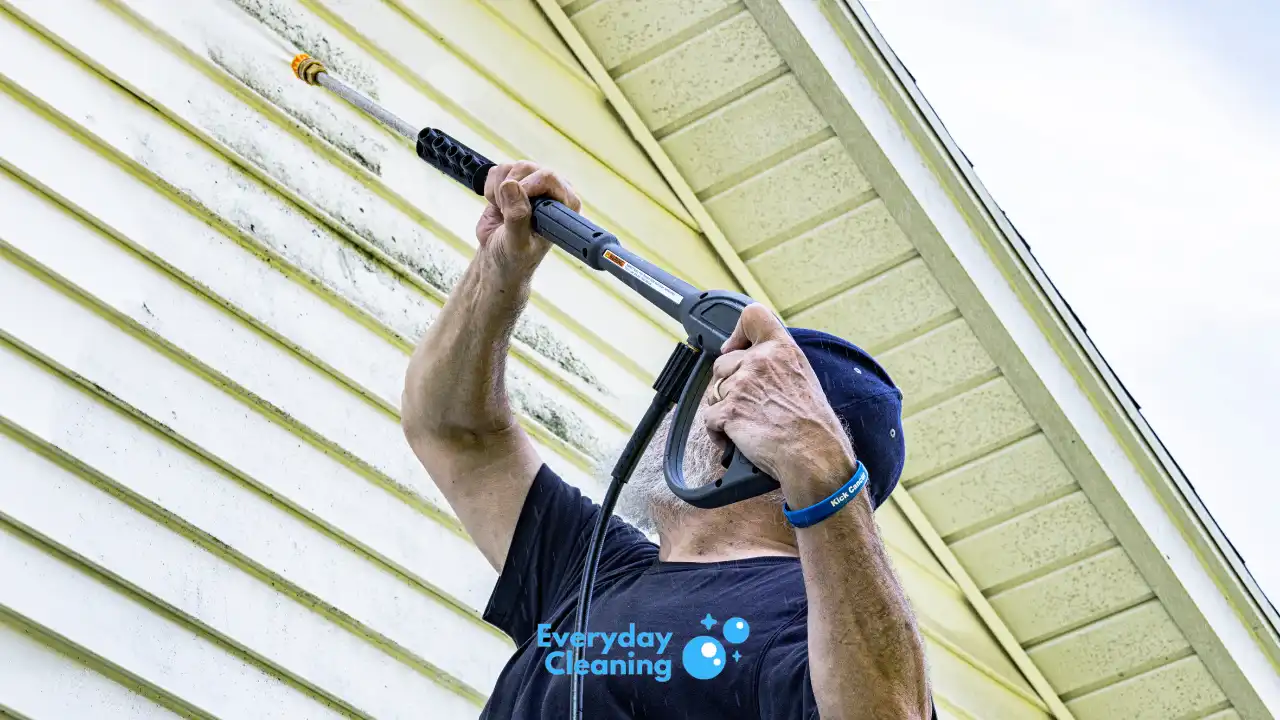
Vinyl siding looks great until a season of mildew, algae, and road grime makes it look like it hasn’t been touched in years. The right pressure washer cleans it fast without cracking panels or forcing water behind them.
Our Top Picks
| Recommendation | Product | Reason |
|---|---|---|
| Best Overall | Westinghouse ePX3500 | Safe 2500 PSI with 4-wheel control for easy maneuvering around the house — Reviews ↓ |
| Best Budget | Sun Joe SPX3000 | PWMA-certified, dual soap tanks, 20,000+ reviews — Reviews ↓ |
| Best for Light Siding | Greenworks 1800 PSI | Gentle 1800 PSI for older or thinner siding — Reviews ↓ |
| Best for Longevity | Karcher K5 Premium | Water-cooled induction motor rated 5x longer than standard — Reviews ↓ |
| Best High-Power Electric | Westinghouse WPX3000e | 3000 PSI induction motor, quieter than gas at similar output — Reviews ↓ |
| Best Premium | Greenworks Pro GPW3001 | PWMA-certified 3000 PSI with 10-year motor warranty — Reviews ↓ |
Best Overall: Westinghouse ePX3500
The Westinghouse ePX3500 is the pick for most homeowners cleaning vinyl siding. At 2500 PSI max with a real-world rating around 2000 PSI, it has enough pressure to clear mildew and algae without the risk of cracking panels or forcing water into seams.
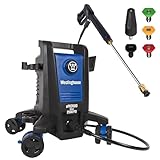
- Delivers 2500 max PSI and 1.76 max GPM (at lowest pressure), and 2000 rated PSI and 1.2 rated GPM of water flow; Pro-style steel extendable 17.5” wand with quick-connect nozzles (0°, 15°, 25°, turbo and soap applicator)
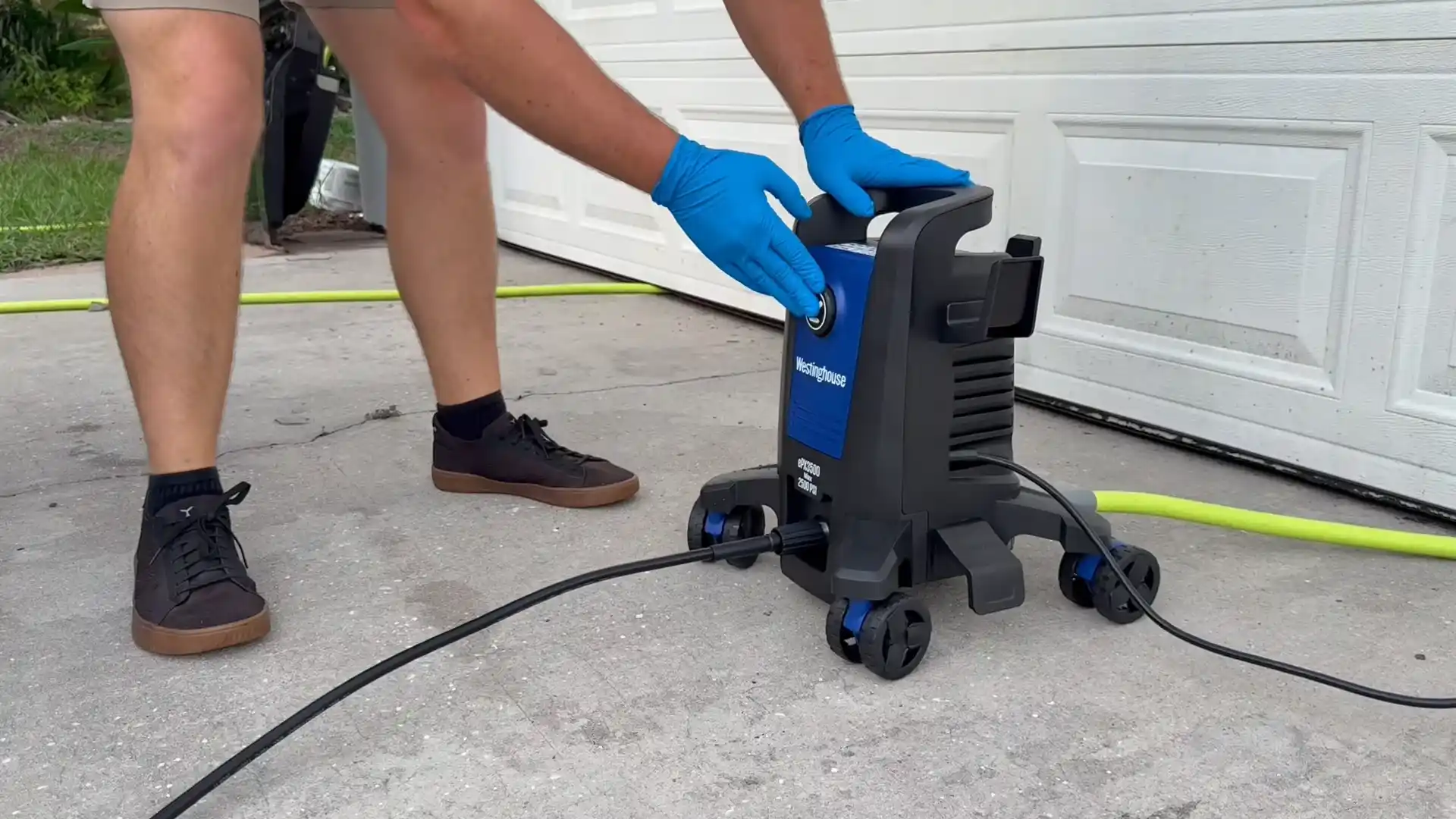
- Super compact and lightweight at 16.5” tall and 19 pounds for convenient storage and portability; Four quick-lock wheels with 360° steering design and low center of gravity engineered for anti-tipping design

Pros and Cons
| Pros | Cons |
|---|---|
| Anti-tipping 4-wheel 360-degree design | 20oz soap tank is small, refills quickly |
| 5 nozzles including 0 degree and turbo | |
| Only 19 lbs, easy to carry between sides of house | |
| 25 ft hose and 35 ft cord | |
| 3-year Westinghouse warranty | |
| TSS pump protection |
Testing Results
Siding performance: Cleans vinyl siding effectively with the 25 or 40 degree nozzle. No warping or cracking in testing on standard 3.5mm panels. Mildew and algae come off cleanly in a single pass when a siding detergent is applied first.
PSI and GPM: Rated 2500 PSI max, 2000 PSI in real use. That’s the right range for siding. Enough power to clean without getting aggressive enough to damage. At 1.2 GPM continuous flow, rinsing is manageable on a single story home.
Ease of use: The 4-wheel anti-tipping design is a standout. Moving it along the perimeter of the house is easy. The 25 degree and 40 degree nozzles handle most siding jobs; you won’t need the 0 degree on vinyl.
Nozzle versatility: Five quick-connect nozzles cover everything. The turbo nozzle boosts cleaning power on stubborn spots. The soap nozzle works well for low-pressure detergent application before rinsing.
Noise level: Universal motor noise is normal for electric. Not as quiet as the Karcher K5, but not disruptive.
Real-world Usage
Most homeowners use this for an annual or twice-yearly siding wash. The 4-wheel design makes it practical to drag around the house without tipping. At 19 lbs, you can also pick it up and carry it onto a deck or step-ladder area without much effort.
The 20oz soap tank is the one frustration. On a full house exterior, you’ll refill it two or three times. Some users buy a small garden sprayer to pre-apply detergent instead, which is faster.
Best Use Case
This is the right pick if you want one machine for siding, patio, cars, and occasional driveway cleaning. It does all of it well without being overkill on any surface. Not the right pick if your siding is older or thinner. In that case, the Greenworks 1800 PSI is a safer choice.
Verdict
The ePX3500 is the most practical all-around machine for vinyl siding at this price. The 2500 PSI (2000 rated) keeps you in the safe zone, and the 4-wheel anti-tip design makes the actual job easier than you’d expect. It’s also light enough to use comfortably on a ladder if you’re reaching second-story panels.
The small soap tank is a real inconvenience on larger homes. But for most single-story homes, or two-story homes where you mostly clean the first eight feet, it works without much hassle. You can learn more about the full process at How to Pressure Wash Vinyl Siding.
Rating: 4.7 / 5
View on Amazon: Westinghouse ePX3500
Best Budget: Sun Joe SPX3000
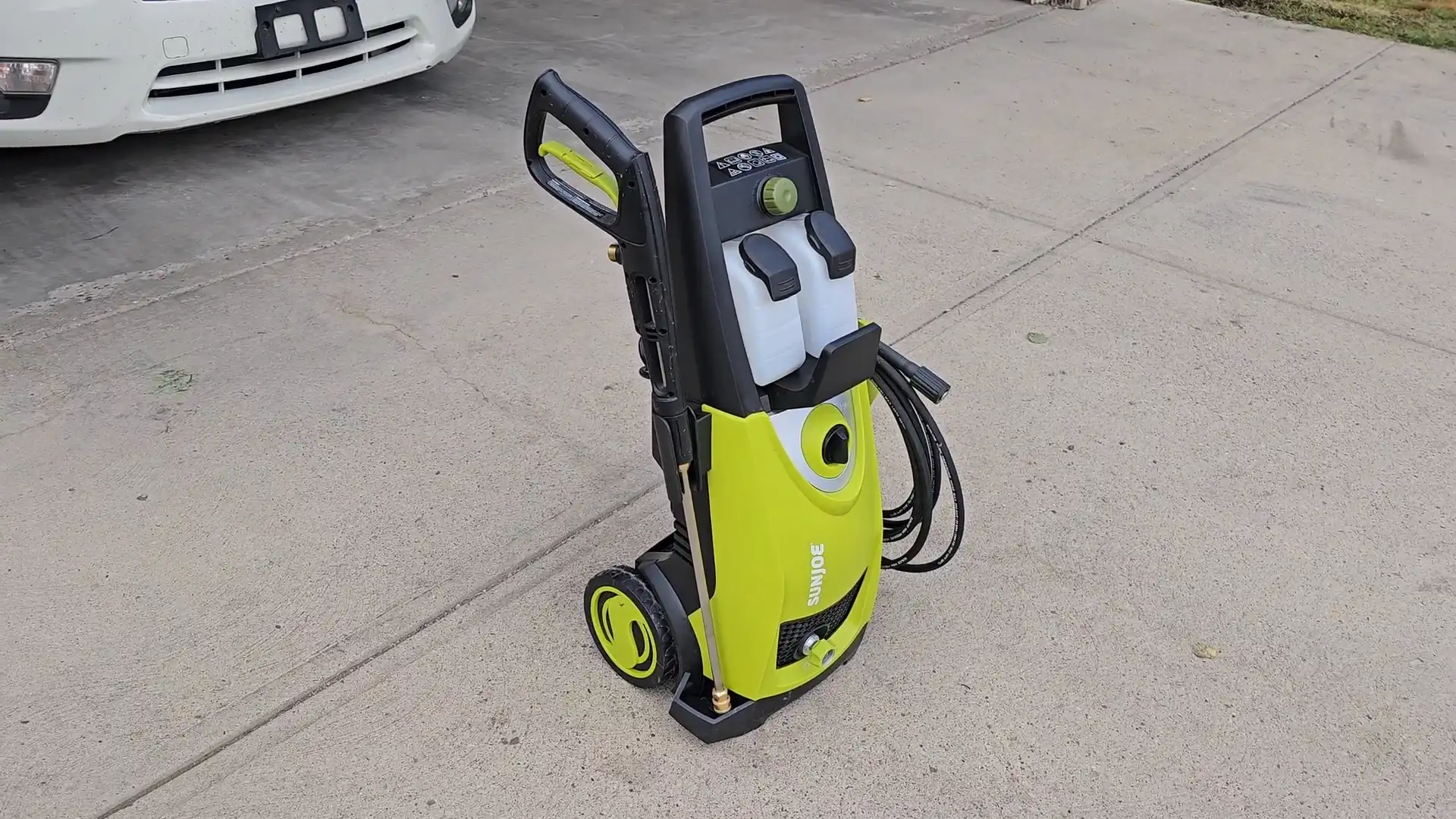
The Sun Joe SPX3000 is the bestselling electric pressure washer on Amazon for a reason. PWMA-certified specs, dual soap tanks, and 20,000+ reviews at 4.8 stars. It handles vinyl siding well and costs less than most alternatives.

- High-Pressure Cleaning: This electric pressure washer delivers up to 2030 PSI working pressure and 1.2 GPM water flow to help remove dirt, grime, and buildup from homes, driveways, vehicles, RVs, and outdoor equipment
- Multiple Spray Options: This water pressure washer includes five quick-connect spray tips (0°, 15°, 25°, 40°, and soap) to switch between narrow jet streams and wider fan patterns, plus a soap applicator for detergent use
Pros and Cons
| Pros | Cons |
|---|---|
| 20,000+ Amazon reviews at 4.8 stars | 20 ft hose feels short on large homes |
| PWMA certified (specs are accurate) | |
| Dual 0.9L removable detergent tanks | |
| 5 nozzles including 0 degree | |
| Solid brass fittings and metal connections | |
| TSS pump protection |
Testing Results
Siding performance: The SPX3000’s 2030 PSI is in the safe zone for vinyl. Using the 25 or 40 degree nozzle, it removes mildew, dirt, and spider webs without issue. The dual soap tank system is genuinely useful. Fill one with siding cleaner, keep the other for rinsing detergent.
PSI and GPM: PWMA-certified at 2030 PSI, so what it says is what you get. The 1.2 GPM flow rate is lower than newer competitors at the same price, which means rinsing a full two-story takes more passes.
Ease of use: Setup is simple. The dual soap tanks are the standout feature here. Switching between detergents or from soap to water only requires swapping the tank. The 34-inch wand reaches higher areas without a ladder on most single-story homes.
Hose and reach: The 20 ft hose is the main limitation. On a two-story home with a long perimeter, you’ll move the unit frequently. A 50 ft extension hose solves this but adds cost.
Noise level: Normal universal motor noise. Nothing unusual.
Real-world Usage
The SPX3000 is the go-to pick for homeowners who do one big house wash a year and want something that just works without overthinking it. The dual tank setup is surprisingly practical for siding jobs because you can pre-treat sections with detergent in one pass, then rinse in the second.
For a house surrounded by trees that causes heavy algae buildup, the dual tanks let you apply a siding cleaner to dwell, then switch tanks to rinse. Faster and easier than a single-tank design.
Best Use Case
The SPX3000 suits homeowners who want a proven, budget-friendly machine for vinyl siding and occasional all-around cleaning. It is also a solid first pressure washer if you want something reliable without spending over $150. Not ideal if you need frequent cleaning runs on large properties due to the short hose.
Verdict
This is still one of the best electric pressure washers for the money. The PWMA certification matters more than most people realize. Other budget machines claim higher PSI numbers that aren’t real. The SPX3000’s 2030 PSI is verified. For siding, that’s all you need.
The low GPM and short hose are real limitations. But for the price, nothing else comes close in terms of features and track record. Pair it with a good vinyl siding cleaner for pressure washers and you’ll get professional-looking results.
Rating: 4.5 / 5
View on Amazon: Sun Joe SPX3000
Best for Light Siding: Greenworks 1800 PSI
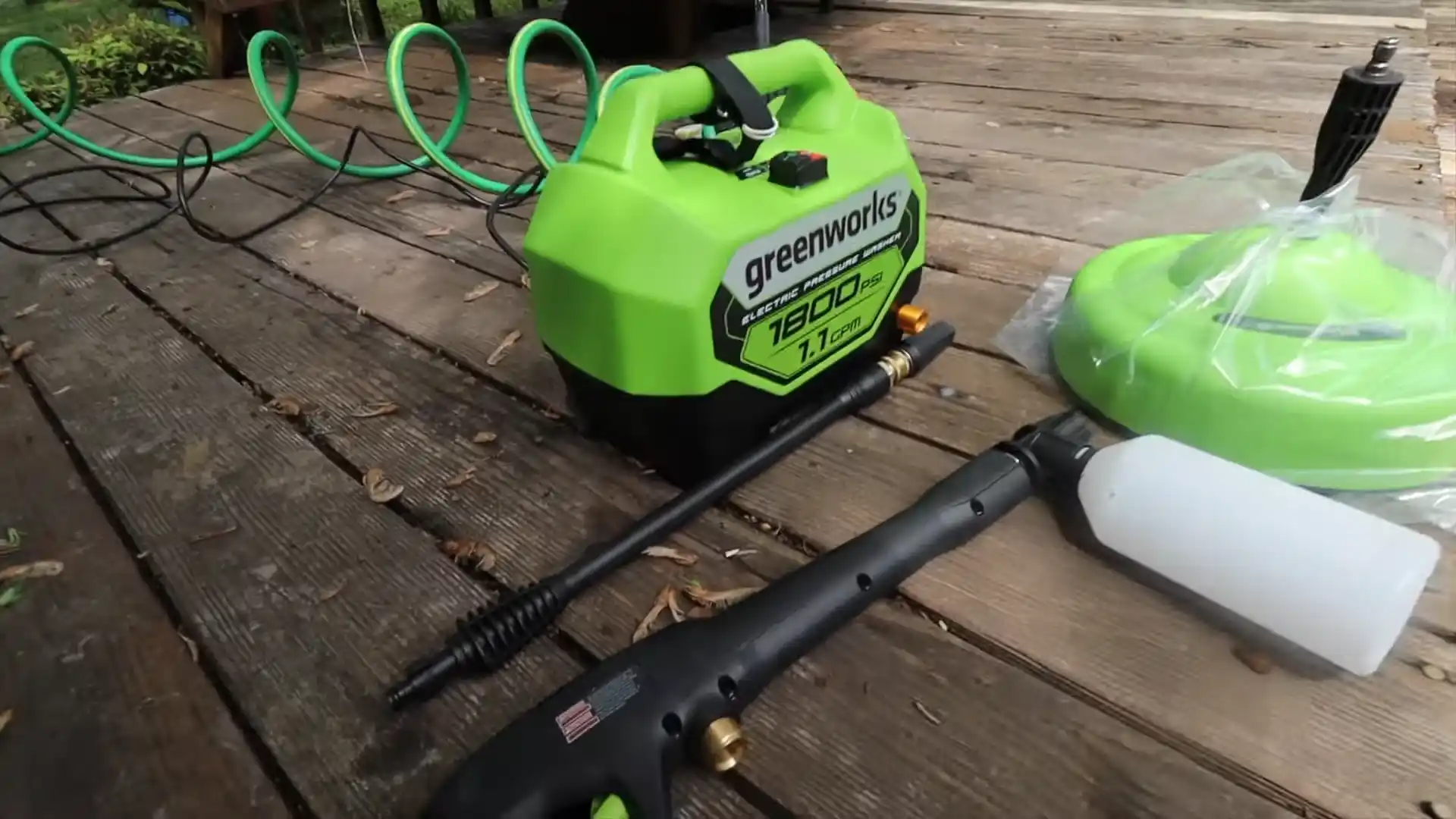
If your vinyl siding is older, thinner, or you’ve had panels damaged before by too much pressure, the Greenworks 1800 PSI is the safer option. It’s PWMA-certified, has wheels and TSS pump protection, and keeps PSI low enough to clean without risk.

- [1800 PSI @ 1.1 GPM] - Great for light-duty, residential cleaning. Clean cars, trucks, motorcycles, boats, RVs, outdoor patio furniture, windows, decks, etc
- [No Maintenance] - No gas, no oil, no spark plugs, no air filters, and no pull cord Push button start
Pros and Cons
| Pros | Cons |
|---|---|
| PWMA certified (honest 1800 PSI rating) | 1.1 GPM is on the low end |
| Wheels for easy transport | |
| TSS pump protection | |
| Lightweight build | |
| Trusted Greenworks brand |
Testing Results
Siding performance: At 1800 PSI, this machine is purpose-built for gentler surfaces. It cleans dirt, light mildew, and general grime from vinyl siding reliably. For heavier algae growth, you’ll need to let detergent dwell longer. It handles the job cleanly when you don’t rush the rinse.
PSI and GPM: PWMA-certified means 1800 PSI is the real number. The 1.1 GPM flow rate is the lowest on this list. It works, but plan extra time on larger homes.
Ease of use: The hand-truck style two-wheel design rolls easily on flat surfaces. At 22.9 lbs, it’s light enough to carry up stairs if needed. The turbo nozzle helps compensate for the lower PSI on moderate buildups.
Hose and reach: 20 ft hose requires more frequent repositioning around the house. The 35 ft cord gives you more outlet flexibility than the hose gives you water reach.
Noise level: Typical electric noise. No surprises.
Real-world Usage
This machine works best for homeowners with newer vinyl or for those who clean every six months rather than once a year. Regular light cleaning keeps the siding looking good without needing high pressure at all.
It’s also a solid pick for rinsing down siding after storm season. Just dirt and debris, no heavy mildew. You don’t need 2500 PSI for that.
Best Use Case
The Greenworks 1800 PSI is the right pick if you have older vinyl siding, thinner panels, or decorative trim work that you’re careful not to blast. Also a good first pressure washer if you’re new to pressure washing and want to learn without risking damage. Not suitable for concrete, heavy stains, or serious mildew buildup.
Verdict
The PWMA certification is the reason to choose this over cheaper 1800 PSI alternatives. You know what you’re getting. It’s a capable light-duty machine that does exactly what it says. For anything heavier, step up to the ePX3500 or SPX3000. For gentle, routine siding maintenance, this handles the job without drama.
Rating: 4.3 / 5
View on Amazon: Greenworks 1800 PSI
Best for Longevity: Karcher K5 Premium
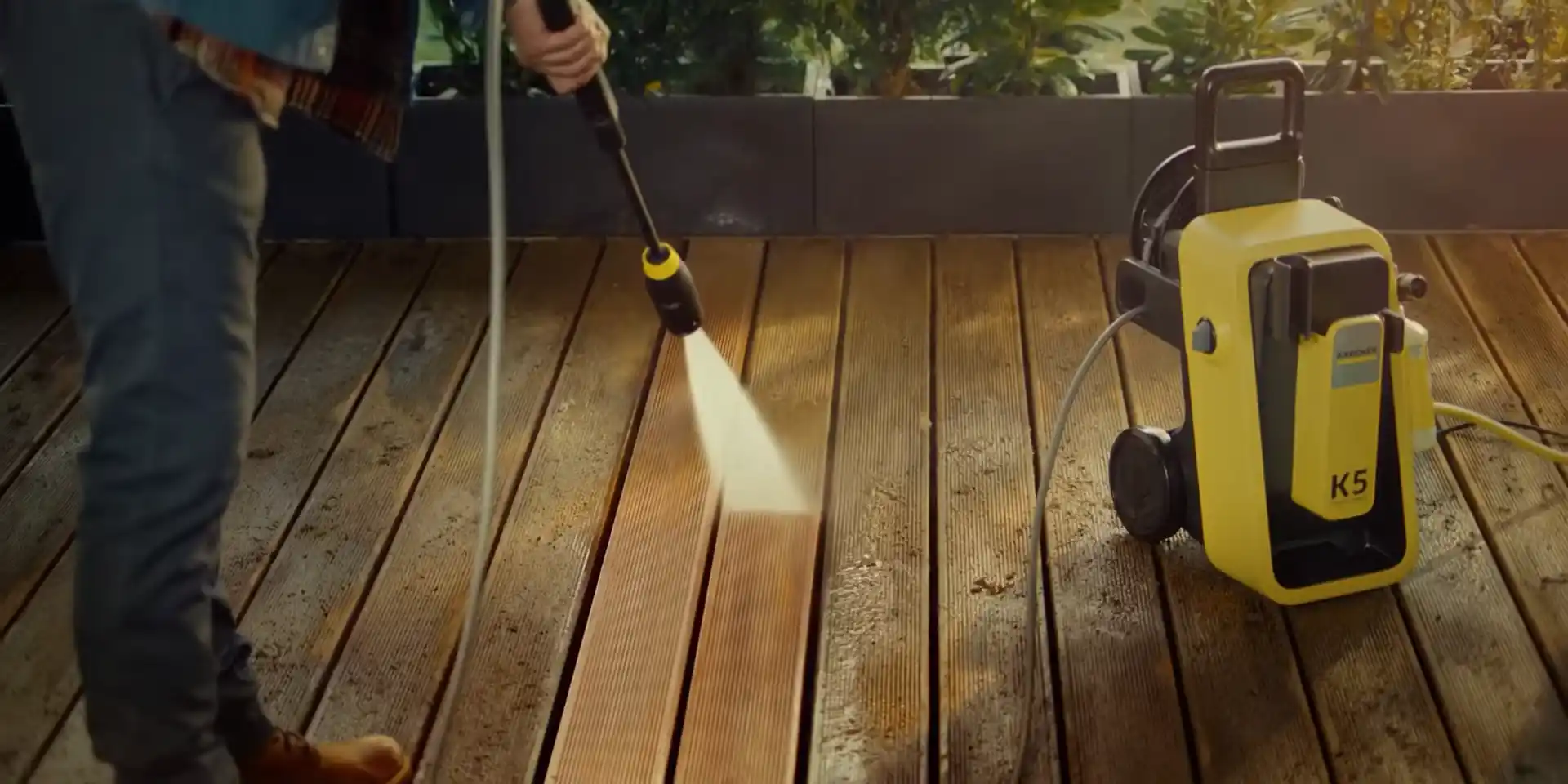
The Karcher K5 Premium is for the homeowner who buys once and expects it to last. The water-cooled induction motor is rated to run five times longer than the universal motors in every other machine on this list. For siding jobs, it also runs noticeably quieter.

- Powerful Performance: The K 5 pressure washer lasts longer than universal motors and delivers exceptional cleaning results! Water-Cooled brushless induction-motor and non-corrosive N-COR pump.
- Pressure Regulating: Use the Vario Power spray wand for light-duty jobs, and a patented Dirt Blaster spray wand for superior cleaning performance on tough-to-clean surfaces.
Pros and Cons
| Pros | Cons |
|---|---|
| Water-cooled induction motor rated 5x longer lifespan | Expensive for the PSI output |
| Pressurized hose reel for easy storage | |
| DirtBlaster wand boosts cleaning power 80% | |
| Quietest electric on this list | |
| Rapid Exchange warranty program | |
| N-COR non-corrosive pump |
Testing Results
Siding performance: The K5 cleans vinyl siding cleanly at 2000 PSI. It’s safe even on older panels. The DirtBlaster wand is a real advantage here. It’s a rotating nozzle that boosts cleaning power significantly without bumping the raw PSI. On siding, you get more cleaning per pass.
PSI and GPM: The 2000 PSI rating is lower than the ePX3500 or WPX3000e. In practice, the DirtBlaster wand bridges most of that gap. The 1.4 GPM is adequate for siding where you’re not trying to rinse huge surface areas quickly.
Motor and noise: The water-cooled induction motor is the key differentiator. It runs significantly quieter than universal motor competitors. On a quiet morning, you can hear yourself think while using this. The motor is also rated for far more hours of continuous use.
Hose storage: The pressurized hose reel is a standout feature. Winding the hose back up after cleaning is easy and tidy. On machines without a reel, struggling with a kinked 25 ft hose is one of the more annoying parts of the job.
Ease of use: The Vario Power wand lets you adjust pressure continuously by rotating the spray pattern. Useful on siding where you want less pressure on older sections and more on stubborn spots.
Real-world Usage
This machine suits homeowners who do regular seasonal cleaning and want equipment that lasts a decade. The Rapid Exchange warranty program means if something fails, Karcher replaces it fast without repair hassle. On vinyl siding specifically, the quieter operation is a genuine quality-of-life improvement.
The pressurized hose reel changes how storage feels. Every other machine on this list ends with you wrestling a 25 ft hose back into position. The K5 rewinds cleanly.
Best Use Case
The Karcher K5 Premium is the right pick for homeowners who want a long-lasting machine with premium build quality, are comfortable with 2000 PSI for siding and moderate outdoor tasks, and appreciate quieter operation. Not the best value if you need heavy concrete cleaning. Not ideal if budget is the main concern.
Verdict
You’re paying for the motor, not the PSI number. The water-cooled induction design is a real engineering difference, not just marketing. For siding specifically, the DirtBlaster wand and lower noise level make the experience better than most machines that claim higher specs. If you plan to keep a pressure washer for ten years, this is the one to buy.
Rating: 4.4 / 5
View on Amazon: Karcher K5 Premium
Best High-Power Electric: Westinghouse WPX3000e
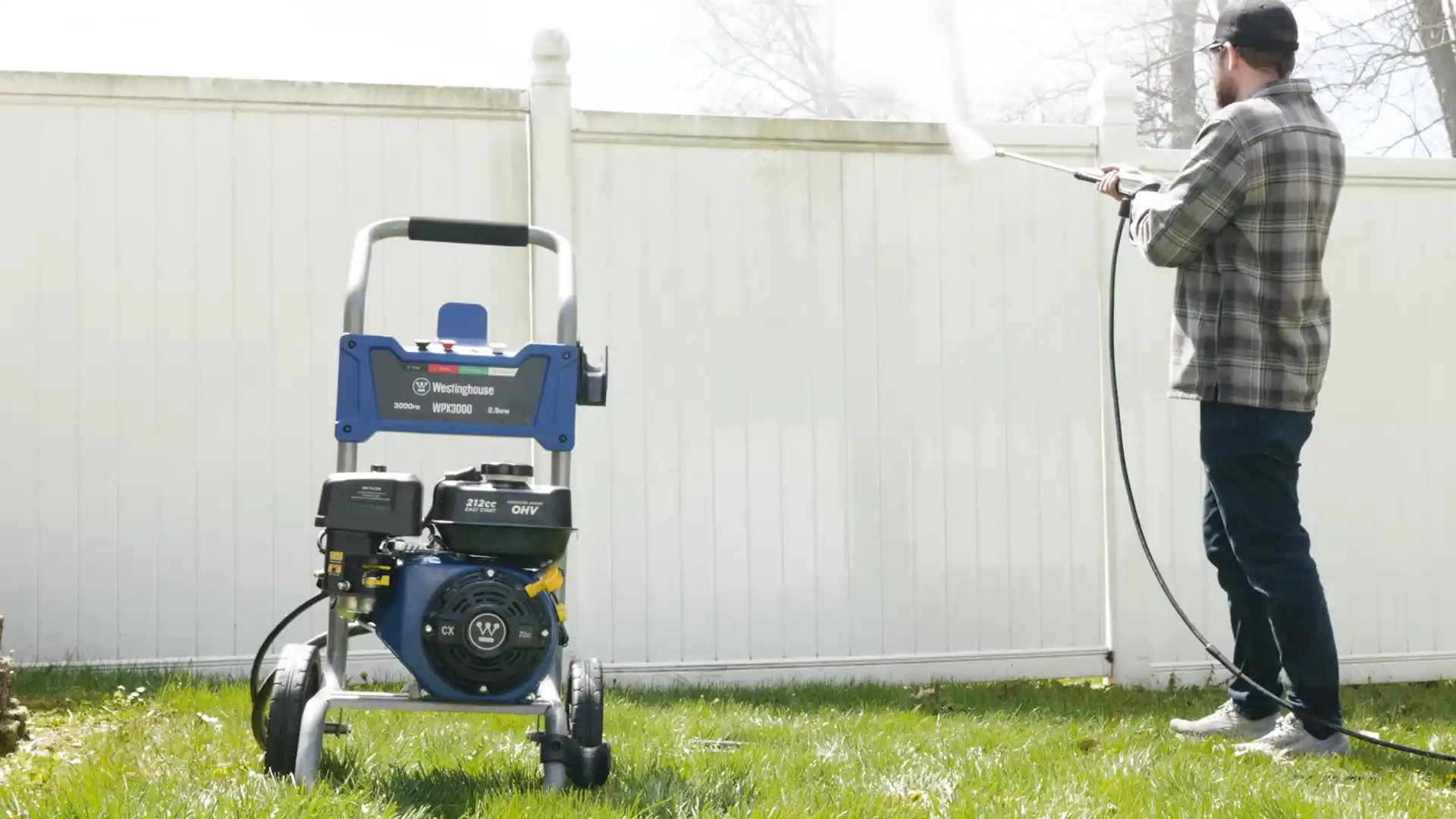
The Westinghouse WPX3000e pushes 3000 PSI (2600 rated) through an induction motor. It runs quieter than any gas machine at similar output. It handles vinyl siding and anything else you throw at it, including driveways and heavy concrete.
- Delivers 3000 max PSI and 1.76 max GPM (at lowest pressure), and 2600 rated PSI and 1.1 rated GPM of water flow. Perfect for decks, sidewalks, fences, garage floors, exterior walls, cars and patio furniture; Comes with a .45 gallon soap tank
- 25′ abrasion resistant super-flex hose with lightweight high pressure metal spray gun and wand with 5 quick connect nozzles (0°, 15°, 25°, soap and turbo); Compatible with pressure washer accessories like surface cleaners, undercarriage cleaners and foam cannons with M22 fittings
Pros and Cons
| Pros | Cons |
|---|---|
| 3000 PSI (2600 rated) with induction motor | Heavier at 36.8 lbs |
| Quieter than gas at similar PSI | 1.1 GPM real use limits rinsing speed |
| Rugged steel frame | |
| 10-inch never-flat wheels on rough terrain | |
| 0.45 gallon soap tank | |
| 3-year warranty and M22 accessory compatibility |
Testing Results
Siding performance: At 3000 PSI, you need to use the 40 degree nozzle on vinyl siding and keep a working distance of at least 18 to 24 inches. At that standoff, it cleans heavy mildew and algae buildup in one pass without risk to standard panels. Do not use the 0 or 15 degree nozzle on vinyl.
PSI and GPM: The 3000 PSI rated (2600 continuous) induction motor is the real headline. In practice, the lower 1.1 GPM means you’re cleaning in tighter passes. The machine is more efficient on siding than on driveways where you want fast, wide coverage.
Motor and noise: The induction motor is meaningfully quieter than a universal motor. Several testers reported being able to use this at 7am without neighbor complaints. Gas machines at this PSI level would not pass that test.
Portability: At 36.8 lbs, it’s heavier than the ePX3500 but the 10-inch never-flat wheels handle rough terrain and sloped driveways well. The hand-truck design rolls easily around the perimeter of a house.
Accessories: M22 connector compatibility opens up a wide range of aftermarket hoses and accessories, including 50 ft extension hoses if you need more reach on large properties.
Real-world Usage
This machine is for homeowners who want one electric pressure washer to handle siding, driveway, concrete, and deck cleaning all season without switching to gas. At 3000 PSI, it does all of it. The induction motor means you can run it for longer continuous sessions without overheating concerns.
The 25 ft hose is the one limitation for large properties. A 50 ft extension hose is worth adding to the purchase if your house perimeter is over 150 feet. Check out our guide on the best pressure washer extension hose if you need more reach.
Best Use Case
The WPX3000e is the pick if you want the most powerful electric machine that’s still safe on siding when used correctly. It doubles as a capable driveway and concrete cleaner, so you get full utility without separate machines. Not for users who want something lightweight. Not suitable if you want a machine that’s beginner-friendly on sensitive surfaces without careful nozzle discipline.
Verdict
The induction motor is the differentiator. Other electric machines at 3000 PSI use universal motors that run louder and wear faster. The WPX3000e is quieter, more durable, and still costs less than a gas machine. For vinyl siding, respect the nozzle selection and keep your distance. For everything else in the yard, just use it.
Rating: 4.6 / 5
View on Amazon: Westinghouse WPX3000e
Best Premium: Greenworks Pro GPW3001
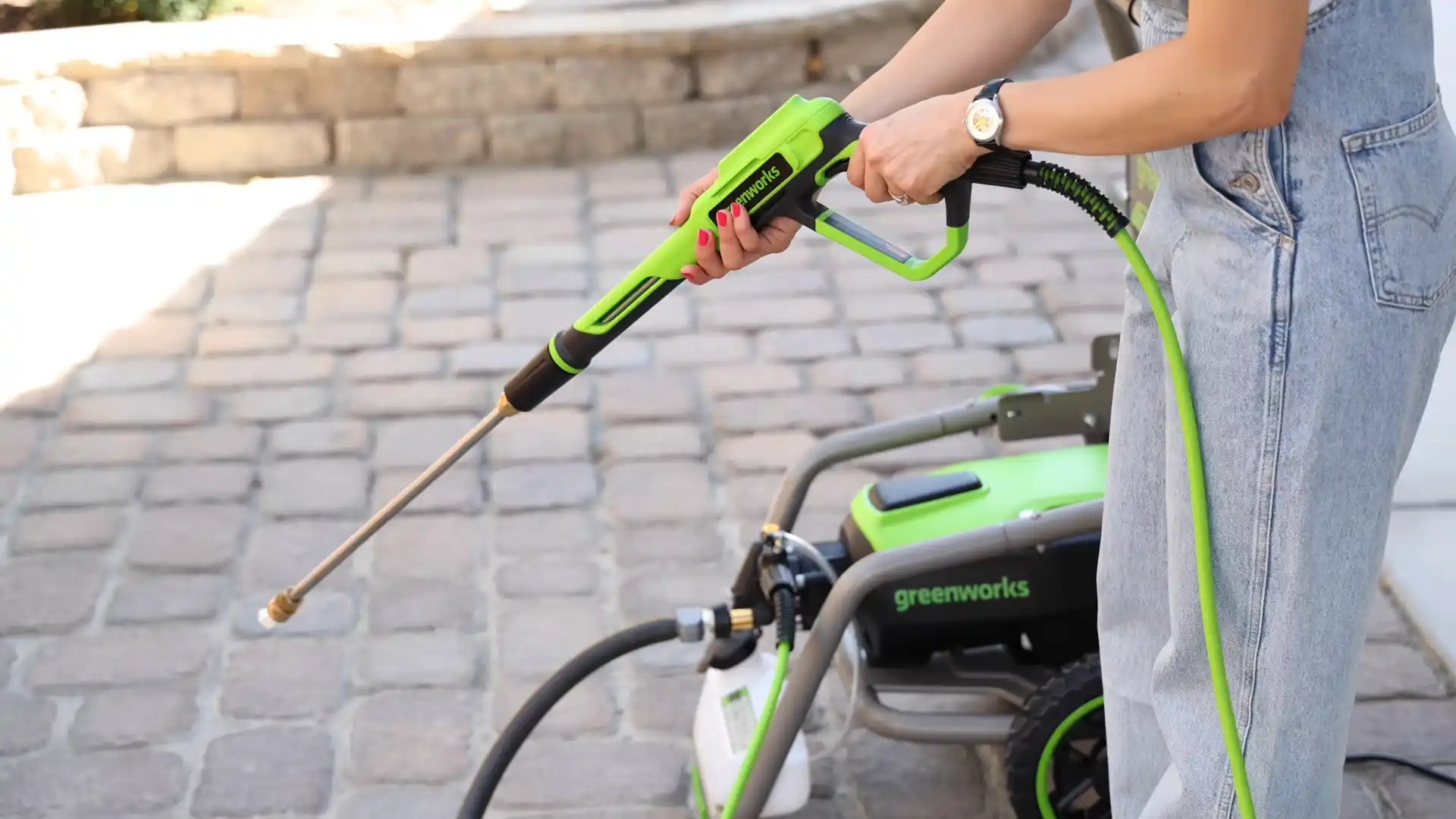
The Greenworks Pro GPW3001 is the most capable electric pressure washer on this list. PWMA-certified 3000 PSI, industry-best 10-year motor warranty, and a TruBrushless motor that automatically adjusts pressure based on the nozzle attached. For siding, that auto-adjust feature is genuinely useful.

- TRUBRUSHLESS MOTOR : Powerful 14 Amp TruBrushless motor generates 3000 PSI and 2.0 GPM for maximum cleaning power.Cleaning Units 3300 C.U. Maximum Inlet Water Temperature 104°F (40°C).Frequency : 60 hz
- PWMA CERTIFIED (Pressure Washer Manufacturers‘ Association) : All water pressure (PSI) and flow rate (GPM) claims for this product were tested and verified by an independent lab, ensuring you’ll take home the power you were promised
Pros and Cons
| Pros | Cons |
|---|---|
| PWMA certified 3000 PSI, specs are real | Heaviest electric on the list at 49 lbs |
| Industry-best 10-year motor warranty | Expensive at $374-499 |
| TruBrushless motor auto-adjusts pressure per nozzle | |
| 1 gallon soap tank, fills once for full home | |
| 25 ft Uberflex kink-resistant hose | |
| Wheelbarrow steel frame, vertical storage saves space |
Testing Results
Siding performance: The TruBrushless auto-adjust feature is the standout for siding. When you attach the 40 degree nozzle, the motor automatically calibrates to appropriate pressure. That removes the guesswork on sensitive surfaces. Still maintain 18 to 24 inch standoff on vinyl, but you’re not fighting the machine.
PSI and GPM: PWMA-certified means the 3000 PSI is independently verified. The 1.1 GPM continuous flow is the limiting factor for large-area rinsing. On a two-story home, budget extra time on the rinse passes.
Motor and longevity: The TruBrushless motor is quieter than universal motors and rated significantly longer. The 10-year warranty is not found elsewhere in this category at any price. If you buy this machine, you shouldn’t need to replace it.
Soap tank: The 1 gallon soap tank is the best on the list. For a full house exterior cleaning with detergent, you fill it once and you’re done. Every other machine on this list requires at least one refill.
Storage: The wheelbarrow frame stores vertically, saving 50% of floor space compared to horizontal designs. For a garage with limited storage, that matters.
Real-world Usage
The GPW3001 suits homeowners who want gas-level cleaning power without gas, noise, or fumes. On vinyl siding, the auto-adjust motor and 1 gallon soap tank make it the easiest machine to use on a whole-house wash. You fill the tank, attach the soap nozzle, work your way around the house applying detergent, swap nozzle to 40 degree, and rinse in one circuit.
At 49 lbs, moving it around the perimeter is manageable on the wheelbarrow frame but tiring on a long session. It’s not a lightweight machine.
Best Use Case
The GPW3001 is the pick for homeowners who do serious seasonal cleaning across multiple surfaces (siding, driveway, deck, patio) and want the best electric machine available. The 10-year motor warranty makes the premium price easier to justify over time. Not the right pick for budget-conscious buyers or users who only need to clean siding once a year.
Verdict
This is the best pure-electric pressure washer on the market for whole-home cleaning. PWMA-certified 3000 PSI, auto-adjusting motor, 1 gallon soap tank, and a 10-year warranty puts it ahead of everything else at this output level. The weight and price are the honest trade-offs.
For vinyl siding specifically, the auto-adjust motor and full 1 gallon tank let you work fast without constant adjustments. If you’re already planning to tackle the deck, patio, and driveway in the same session, the premium price spreads across a lot of cleaning work.
Rating: 4.8 / 5
View on Amazon: Greenworks Pro GPW3001
What Makes the Best Pressure Washer for Vinyl Siding?
Safe PSI Range
Vinyl siding has a specific pressure tolerance that most homeowners underestimate. The Vinyl Siding Institute recommends staying under 1500 PSI for delicate or older panels, and most manufacturers say 1500 to 2500 PSI is the safe working range for standard modern vinyl. The machines on this list run 1800 to 3000 PSI, which means nozzle choice and standoff distance matter as much as the machine’s raw pressure rating.
At 3000 PSI, you must use a 40 degree nozzle and stay at least 18 inches from the surface. At 1800 PSI, a 25 degree nozzle from 12 inches is fine. The higher the PSI, the more careful you need to be. For most homeowners, 2000 to 2500 PSI is the practical sweet spot. That’s enough power to remove mildew and algae in one pass without needing perfect technique.
Nozzle Selection
Nozzle choice is more important than PSI for vinyl siding. The 40 degree nozzle is the safest and the most useful for general siding washing. The 25 degree works on tougher spots. Never use a 0 or 15 degree nozzle on vinyl. The concentrated stream will crack, dent, or force water under the panels regardless of the machine’s PSI level.
A soap nozzle (usually red or black, very wide angle) is essential for applying detergent at low pressure before rinsing. Good detergent application is what actually breaks down mildew and algae. The pressure rinse removes what the cleaner has already loosened. That sequence produces far better results than pressure alone.
Soap Tank and Detergent System
A built-in soap tank simplifies the job. For a full house exterior, you need to apply detergent first, let it dwell for a few minutes, then rinse. Without a soap tank, you either carry a separate garden sprayer or use a downstream injector. Both work, but an onboard tank is faster and simpler.
The size of the tank matters more than most people think. A 20oz tank (like the ePX3500) means multiple refills on a full house. A 1 gallon tank (like the GPW3001) means one fill for the whole job. If you’re cleaning a large two-story home, the soap tank capacity becomes a real workflow factor.
Electric vs Gas for Siding
For vinyl siding, electric is almost always the better choice. Gas pressure washers in the 3000 to 3400 PSI range are more powerful than you typically need for siding, require more distance management to avoid damage, are louder (limiting when you can use them), and require more maintenance. The induction-motor electrics on this list deliver enough power for any siding job without those drawbacks.
Gas is the better option for concrete driveways, heavy oil stains, and commercial-grade tasks. For siding and mixed residential cleaning, a quality electric handles everything more conveniently. If you’re weighing the two types side by side, our electric vs gas pressure washer comparison covers the full breakdown.
PWMA Certification
PWMA certification means an independent organization has verified the machine’s PSI and GPM claims. Without it, a machine labeled “4800 PSI” may only deliver 2400 PSI in real use. That’s a common practice among budget brands. For siding specifically, knowing your actual PSI matters because it affects your nozzle choice and safe working distance.
Every machine on this list is either PWMA-certified (Greenworks 1800 PSI, SPX3000, GPW3001) or from a brand (Westinghouse, Karcher) with a track record of accurate spec ratings. When shopping beyond this list, prioritize certification or well-established brands. A certified 1800 PSI machine outperforms a fake 4800 PSI machine on both safety and reliability.
How to Pressure Wash Vinyl Siding Effectively
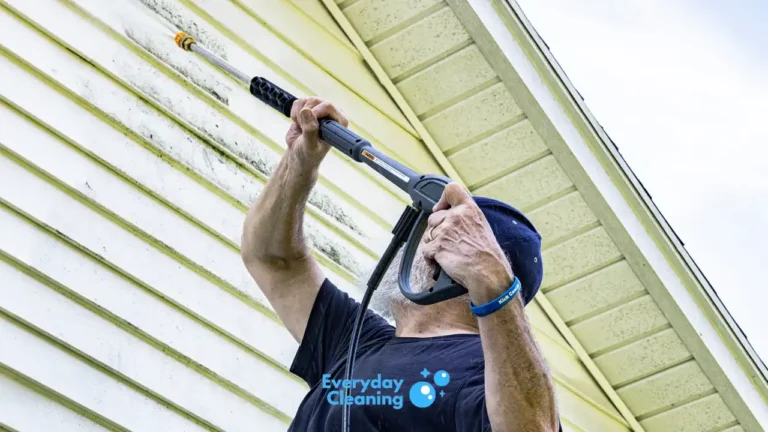
Work top to bottom. Start at the highest point you can safely reach and move down in overlapping horizontal passes. This prevents dirty runoff from re-soaking areas you’ve already cleaned.
Apply detergent first with the soap nozzle at low pressure. Let it sit for two to five minutes. Do not let it dry on the siding. Rinse before it dries, especially in direct sun. Pre-wet the surface with plain water first on hot days to slow the detergent from drying out.
Keep the wand moving. Holding the nozzle stationary concentrates pressure in one spot and can force water under panel edges or damage softer trim pieces. Smooth, steady horizontal sweeps produce the most even result.
Angle the spray slightly downward when rinsing to push water away from panel seams, not into them. Siding is designed to shed water from above. Spraying at an upward angle or directly horizontal into panel gaps can force water behind the wall.
Frequently Asked Questions
What PSI is safe for vinyl siding?
The safe range for standard vinyl siding is 1500 to 2500 PSI using a 40 degree nozzle. Older or thinner vinyl should stay at the lower end, around 1500 to 1800 PSI. Any machine on this list used with the correct nozzle and standoff distance (at least 12 to 18 inches from surface) is safe for vinyl. The nozzle choice matters as much as the PSI number. Even a 3000 PSI machine is safe on vinyl with the right 40 degree nozzle and proper distance.
Can pressure washing damage vinyl siding?
Yes, if you use the wrong nozzle, too much pressure, or spray at an upward angle. A 0 or 15 degree nozzle will crack or dent vinyl and can force water behind the panels regardless of the machine’s PSI. Always use the 40 degree nozzle on vinyl. If you’re dealing with stubborn buildup, use a siding detergent to do the work rather than cranking up the pressure. You can read more about the full step-by-step at How to Pressure Wash Vinyl Siding.
Do I need to use detergent when pressure washing vinyl siding?
Yes, for anything beyond light dust. Mildew, algae, and oxidation stains don’t come off with water pressure alone, or they come off slowly and incompletely. A vinyl siding cleaner applied at low pressure, allowed to dwell, then rinsed off produces dramatically better results than pressure alone. Our guide to the best vinyl siding cleaner for pressure washers covers the top detergent options.