Canister vs Upright Vacuum: Which One Is Right for Your Home?
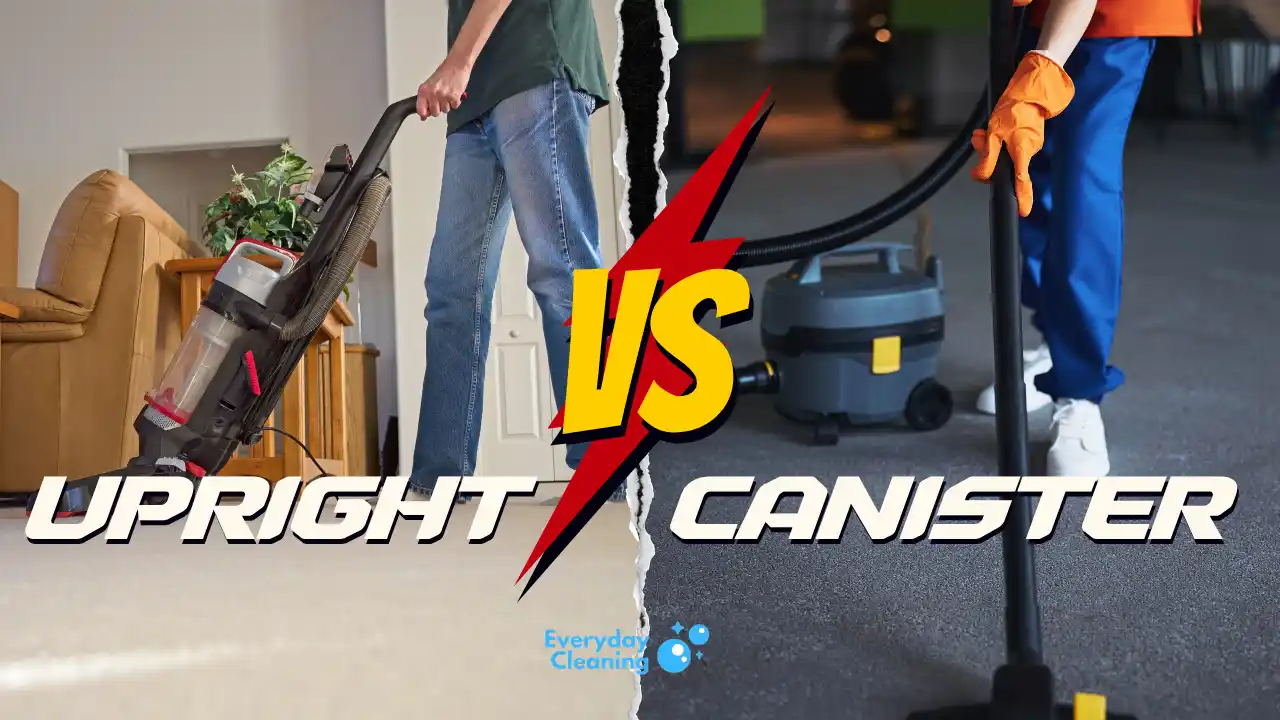
Choosing between a canister and an upright vacuum trips up a lot of buyers because both types look capable on paper. This guide breaks down the actual differences so you know which one fits your home before you spend the money.
Quick Comparison: Canister vs Upright Vacuum
| Feature | Canister | Upright |
|---|---|---|
| Deep carpet cleaning | Good (with motorized head) | Better |
| Hardwood and tile | Better | Good |
| Stairs | Better | Poor |
| Above-floor cleaning | Better | Limited |
| Maneuverability | Better | Good on open floors |
| Noise level | Quieter | Louder |
| Weight in hand | Lighter | Heavier |
| Storage footprint | Larger | More compact |
| Simplicity of use | Moderate | High |
What Is a Canister Vacuum?
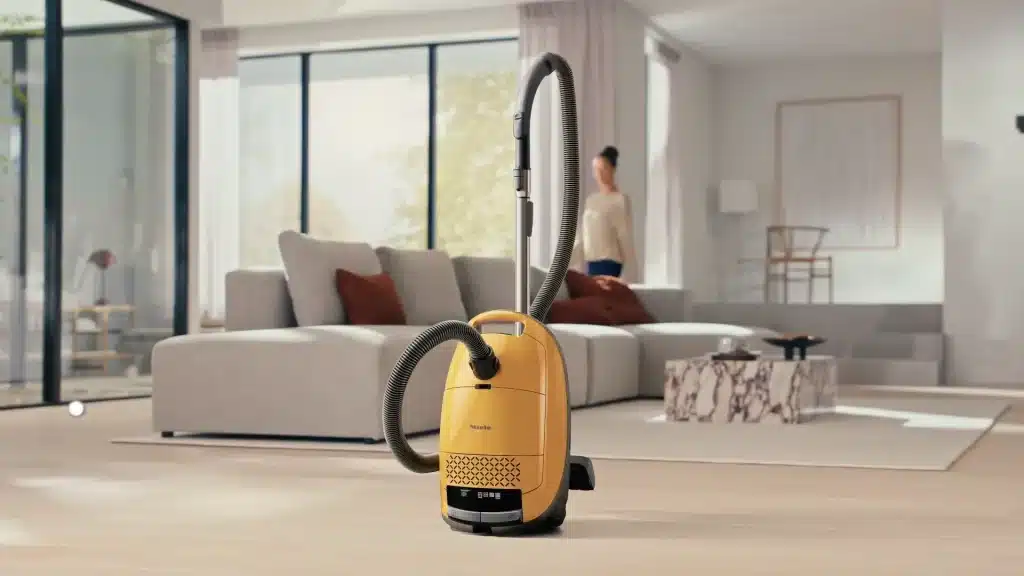
A canister vacuum splits the machine into two parts: a motor and dustbin unit that sits on the floor (or rolls behind you), connected by a hose to a separate cleaning head. You push and pull the wand with one hand while the canister follows along.
The big advantage is flexibility. You can swap the cleaning head for crevice tools, upholstery brushes, or bare-floor attachments without dragging the whole machine. The motor stays on the ground, which also means less weight in your hand.
Canister vacuums are popular in Europe and among people who clean mixed-floor homes. They handle hardwood, tile, area rugs, stairs, and above-floor surfaces well. The tradeoff is storage: you’re keeping a body, a hose, a wand, and usually several attachments somewhere.
What Is an Upright Vacuum?
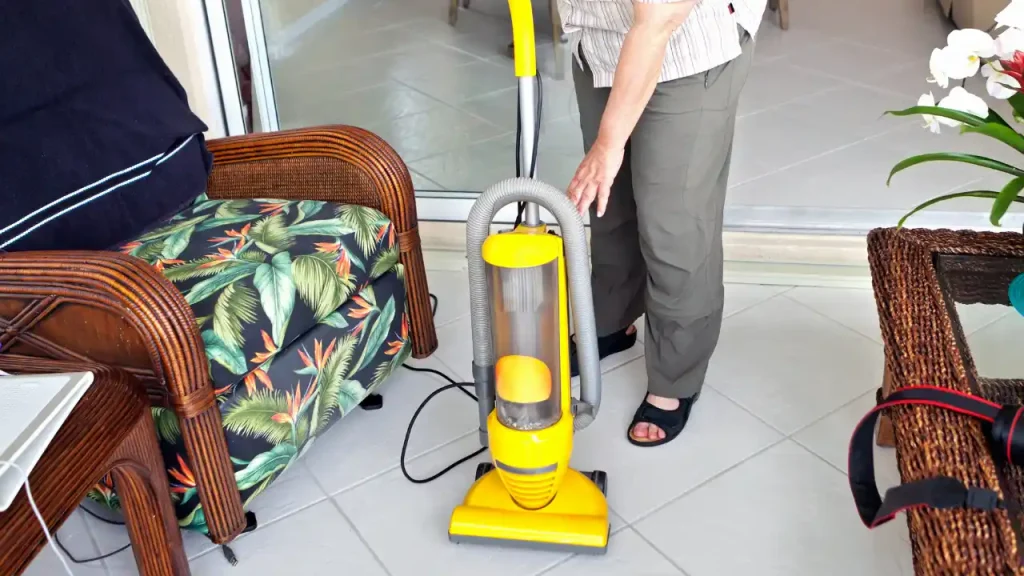
An upright vacuum is a single unit where the motor, dustbin, brushroll, and handle are all connected. You push it forward and back across the floor. Nothing trails behind you.
The brushroll sits right at the suction opening, which gives upright vacuums a strong advantage on thick carpet. The agitation loosens embedded dirt and pet hair more aggressively than most canister heads can.
Uprights are simpler to use and easier to store. You park it in a closet and it takes up a predictable, vertical footprint. The downside: they’re heavier to push, harder to maneuver in tight spaces, and less versatile for above-floor cleaning.
Canister vs Upright: Head-to-Head
Suction Power
Both types use similar motors, so raw suction is roughly comparable at the same price point. The real difference is how that suction gets applied.
Uprights have a powered brushroll directly at the floor. That mechanical agitation makes them better at pulling embedded dirt and pet hair out of carpet fibers. If most of your home is wall-to-wall carpet, this matters.
Canister vacuums compensate with interchangeable heads. A canister with a motorized brush attachment can match an upright on carpet. Without it, a basic suction-only head will underperform on deep-pile rugs.
Carpet Cleaning
Upright vacuums are the traditional choice for carpet-heavy homes. The brushroll does most of the work, and you cover ground quickly with wide cleaning paths.
Canisters can clean carpet well too, but you need the right head. A motorized turbo brush or electric powerhead gets you close to upright performance. Bare-suction canister heads are fine for low-pile or area rugs, but struggle with thick, plush carpet.
If your home is mostly carpet, an upright is the safer default.
Hardwood and Bare Floor Cleaning
This is where canisters shine. You can switch to a soft-bristle bare-floor attachment that glides without scattering debris. The suction pulls everything up without the spinning brushroll flicking dust around.
Many upright vacuums have a brushroll on/off switch for hard floors, which helps. But the design still puts a large, heavy head on the floor, and some uprights leave fine dust behind or scratch surfaces if the bristles are too stiff.
If your home is mostly hard floors with a few rugs, a canister is the smarter choice.
Stairs
Canister vacuums win here clearly. You carry the lightweight wand and hose, run the crevice tool or stair tool up each step, and the canister sits at the bottom or gets parked on a landing. It’s not fast, but it works well.
Upright vacuums are genuinely awkward on stairs. You’re carrying the whole machine, balancing it on a step, and trying to clean a small surface with a tool built for wide floors. Most people end up using a handheld or switching tools entirely. If you have a multi-story home with carpet stairs, check out the best vacuum cleaner for carpeted stairs before committing to an upright.
Above-Floor Cleaning
Canister vacuums are designed for this. The long wand and flexible hose reach ceiling fans, curtains, upholstery, and baseboards without awkward lifting. Most models come with dedicated attachments for exactly this.
Uprights can reach above-floor surfaces using the hose port (if they have one), but it’s a secondary feature, not a strength. The hose is shorter, the tools are fewer, and the whole machine gets unwieldy.
Maneuverability
Canister vacuums are easier to move around furniture. The cleaning head is small and low-profile, and it swivels easily under beds, around chair legs, and into corners. You’re steering a lightweight wand, not the whole machine.
Upright vacuums are more of a straight-line tool. Good on open floors, but slower around obstacles. Swivel-steering models improved this, but a canister still has the edge in cluttered rooms.
Noise Level
Canisters are generally quieter. The motor sits away from the cleaning head, and the body absorbs some sound. This is part of why they’ve stayed popular in apartments and European homes where noise matters.
Uprights put the motor closer to the user and vibrate the floor directly. They’re not all loud, but as a category they run noisier than canisters at similar suction levels.
Weight and Ease of Use
Uprights feel heavier in use because you’re pushing the full machine weight. Most weigh 10 to 18 lbs and that load transfers to your wrist and shoulder over a full cleaning session. This is a real issue for seniors or anyone with joint pain.
Canisters split the weight. The canister rolls behind you (usually on wheels), and you’re only holding a lightweight wand. The machine may weigh the same on paper, but the in-hand feel is much lighter. For anyone who finds vacuuming tiring, this matters.
Storage
Uprights win on storage. They stand vertically, take up a small footprint in a closet, and everything stays in one piece. No parts to wrangle.
Canisters need more room. You’re storing the body, the hose, the wand, and a handful of attachments. Some models have onboard storage for tools, but the overall footprint is larger. If you’re in a small apartment, this is worth thinking through.
Dustbin and Bag
Both types come in bagged and bagless versions. Upright bagless bins tend to be larger (often 1.5 to 2.5 liters), which means less frequent emptying. Canister bins vary widely by model.
Bagged models exist in both categories. Bagged vacuums trap allergens better and are cleaner to empty, but you pay for replacement bags over time.
Who Should Buy a Canister Vacuum?
A canister vacuum makes the most sense if your home has mixed flooring: some hardwood, some tile, some rugs. It handles transitions easily, and you can swap attachments without stopping.
It’s also the right call if you clean stairs regularly, have a lot of furniture to work around, or want to vacuum upholstery, curtains, and vents. The flexible hose and wand make above-floor cleaning practical instead of a chore.
People who are sensitive to noise or find vacuuming physically tiring tend to prefer canisters too. The lighter wand and quieter motor make the whole job easier. If you want to compare the top canister models currently available, the best canister vacuum cleaners roundup covers the strongest options in this category. For carpet-specific performance, the best canister vacuums for carpet narrows it down further.
Who Should Buy an Upright Vacuum?
An upright makes the most sense if the majority of your home is carpet, especially medium to thick pile. The brushroll agitation is its core strength, and you’ll feel the difference compared to a basic canister head.
Uprights are also the simpler tool. One machine, easy to grab and go, no parts to attach. If you want something that works without fuss and your floors are mostly uniform, an upright is the less complicated choice.
They tend to cost less than canister vacuums at similar performance levels, which matters if you’re buying on a budget. For a shortlist of the best options in this category, see the best upright vacuum cleaners roundup.
What About Stick Vacuums?
If neither canister nor upright feels right, a cordless stick vacuum is worth considering as a third option. Stick vacuums are lighter, more portable, and can handle quick daily cleanups without dragging out a full machine.
The tradeoff is power and runtime. Most stick vacuums run 30 to 60 minutes on a charge and have less suction than a full-size canister or upright. They work well for small apartments, quick daily maintenance, or as a second vacuum. For stairs specifically, a cordless model is often the most practical solution, and the best cordless vacuum for stairs covers the top picks.
Frequently Asked Questions
Is a canister vacuum better than an upright?
It depends on your floors. Canisters are better for hard floors, stairs, and above-floor cleaning. Uprights are better for deep carpet. Neither is universally superior. Pick based on where you spend the most time cleaning.
Are canister vacuums harder to use?
Not harder, but different. You have more parts to manage and more attachments to swap. The actual vacuuming is easier in some ways because the wand is light. The setup and storage take slightly more effort than grabbing a single upright.
Which is better for pet hair, canister or upright?
Both can handle pet hair well. Uprights with a strong brushroll are excellent on pet hair in carpet. Canisters with a motorized head do well on hard floors and upholstery. If your pet sheds on all surfaces, check the best vacuum cleaners for pet hair for options that handle mixed surfaces.
Are upright vacuums good for hardwood floors?
Most uprights have a brushroll on/off switch that makes them safe for hardwood. They work fine, but they’re not designed for it. A canister with a bare-floor head will generally do a cleaner, gentler job on wood and tile.
Which type lasts longer?
Both can last 5 to 10 years with basic maintenance. Brand and build quality matter more than the canister vs upright distinction. Keep the filters clean, empty the bin regularly, and check for blockages. That extends the life of either type.
Can a canister vacuum replace an upright entirely?
es, for most homes. A canister with a motorized powerhead handles carpet, hard floors, stairs, and upholstery from one machine. The only scenario where an upright has a real edge is a large, fully carpeted home where the brushroll agitation makes a noticeable difference over time.