Stick Vacuum vs Upright: Which One Should You Buy?
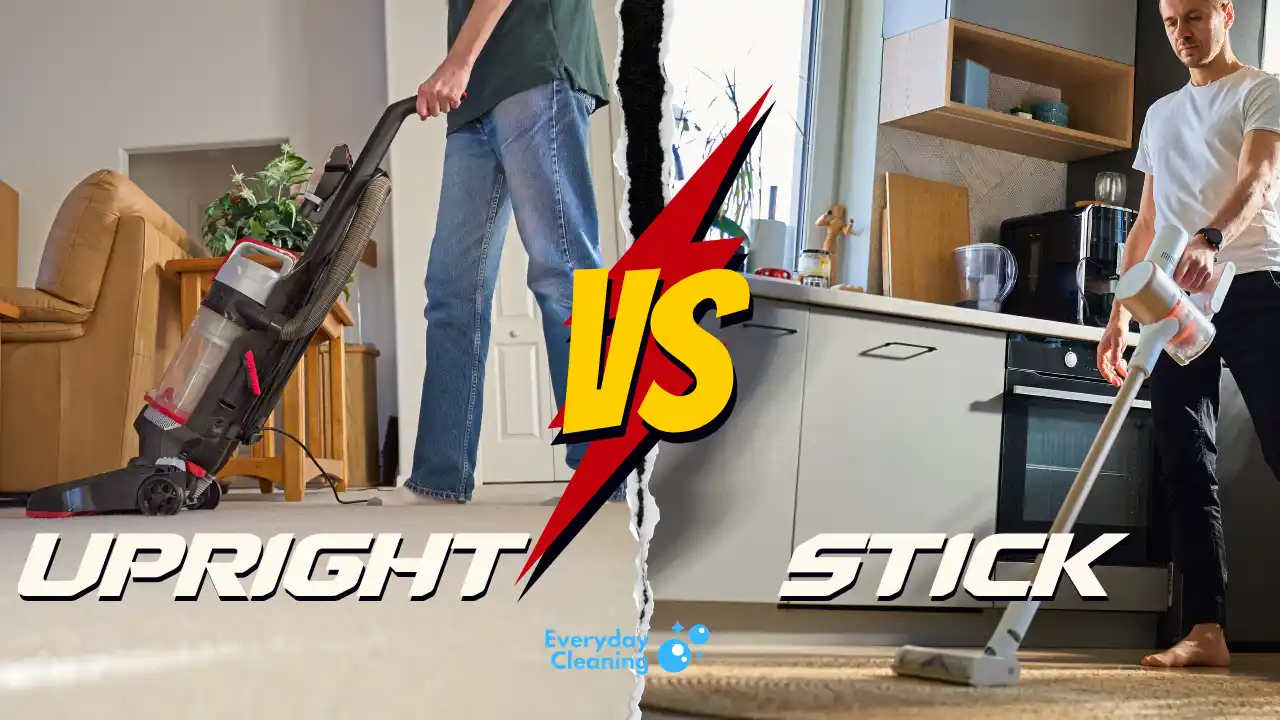
Stick vacuums and uprights overlap more than they used to, which makes the choice harder. This breaks down the real differences so you know which one fits your home and cleaning habits.
Quick Comparison: Stick Vacuum vs Upright
| Feature | Stick Vacuum | Upright |
|---|---|---|
| Deep carpet cleaning | Good | Better |
| Hard floor cleaning | Better | Good |
| Stairs | Better | Poor |
| Above-floor cleaning | Better | Limited |
| Weight | Lighter | Heavier |
| Runtime | Limited (battery) | Unlimited (cord) |
| Storage | Compact (wall mount) | Closet footprint |
| Dustbin size | Smaller | Larger |
| Versatility | Higher | Lower |
| Value at budget price | Moderate | Better |
What Is a Stick Vacuum?
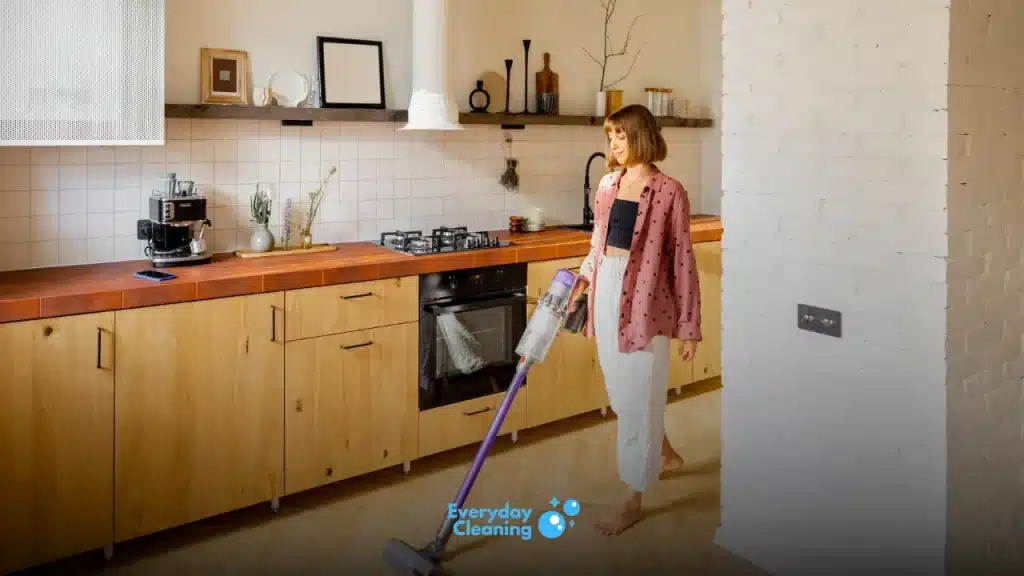
A stick vacuum is a slim, lightweight cordless vacuum where the motor, dustbin, and cleaning head are stacked in a single vertical unit. Most run on a rechargeable battery and weigh between 5 and 8 lbs.
The design trades raw power for convenience. You grab it off the wall mount, clean, and put it back. No cord to unplug, no heavy machine to push. Most modern stick vacuums convert to a handheld by detaching the wand, which makes them useful for furniture, car interiors, and stairs.
Battery life is the main constraint. Most run 20 to 60 minutes per charge depending on suction mode. That’s enough for a quick daily cleanup but can fall short on a full deep-clean session in a larger home.
What Is an Upright Vacuum?
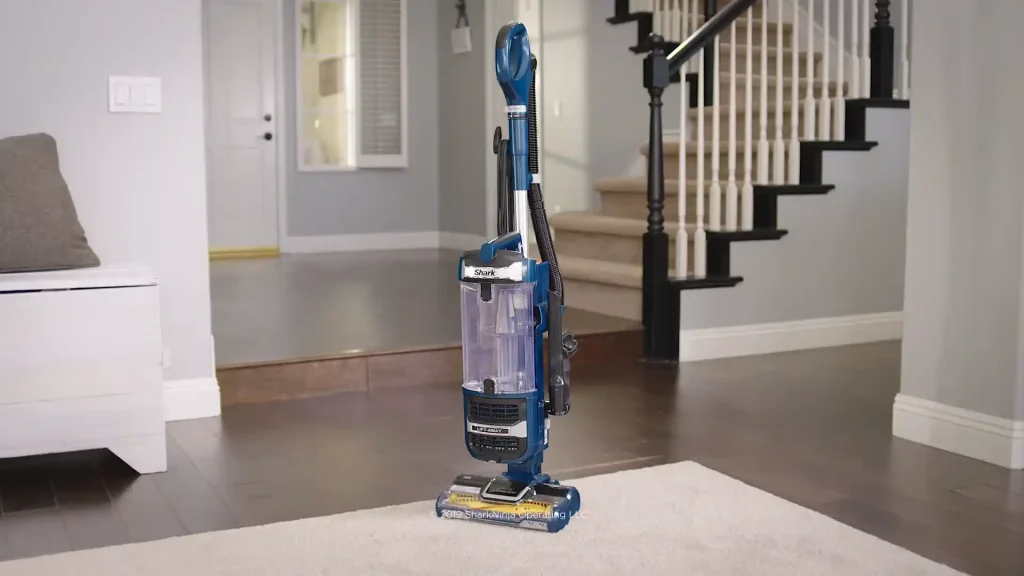
An upright vacuum is a full-size, typically corded machine where the motor, brushroll, and dustbin form a single standing unit. You push it across the floor using a handle at the back.
Uprights are built for thorough cleaning. The powered brushroll agitates carpet fibers directly, pulling out embedded dirt and pet hair more effectively than most stick vacuums can. Because they run on cord power, you never stop mid-clean to recharge.
The tradeoffs are weight and bulk. Most uprights weigh 12 to 18 lbs, and pushing them through a full house takes more effort. Storage is also more straightforward than a canister but still requires closet space.
Stick Vacuum vs Upright: Head-to-Head
Suction Power
This is where uprights still have an edge. A corded upright pulls consistent, full-power suction for as long as you need it. The brushroll adds mechanical agitation on top of that, which is especially effective on thick carpet.
Stick vacuums have improved significantly. Premium models like the Dyson V15 or Shark PowerDetect deliver suction that competes with entry-level uprights. But at the same price point, an upright generally provides more raw cleaning power, and it never degrades mid-session as a battery drains.
Carpet Cleaning
Uprights are better at deep carpet cleaning. The motorized brushroll loosens embedded dirt, pet dander, and hair that surface suction alone won’t reach. On thick or high-pile carpet, you can feel the difference.
Stick vacuums handle low-pile and medium carpet reasonably well. Most have a motorized brush head that does a decent job on everyday messes. Where they fall short is repeated deep cleaning on heavy-traffic carpet areas. If carpet is most of your home, an upright is the stronger choice. For a look at how different vacuums perform on carpet, the best vacuum cleaners for carpet covers the top options.
Hard Floor and Tile Cleaning
Stick vacuums are excellent on hard floors. The lightweight head glides easily, most models have soft-roller attachments for bare floors, and the cordless design lets you move quickly from room to room without dragging a cord or machine.
Uprights work fine on hard floors too, especially models with a brushroll on/off switch. But the heavier head and corded setup make them slightly less natural on smooth surfaces. If your home is mostly hard floors with some rugs, a stick vacuum handles the mix well. See the best cordless vacuum for tile floors and pet hair for stick options that handle both surfaces.
Stairs
Stick vacuums win here. You detach the wand and use the handheld unit or a crevice tool to clean each step. It’s light enough to carry up the staircase without effort. Most models ship with a stair or upholstery tool for exactly this. The best stick vacuum for stairs covers which models handle this best.
Uprights are clunky on stairs. You’re carrying a 12 to 18 lb machine, balancing it on a step, and trying to reach into carpet with a tool built for flat floors. Most people end up using a separate handheld. If you have stairs and plan to use an upright, budget for a second tool.
Weight and Physical Effort
Stick vacuums are lighter by a significant margin. Most weigh 5 to 8 lbs and feel even lighter in use because the weight distributes along the wand. You’re not fighting the machine. This matters a lot for seniors, people with joint pain, or anyone who finds full vacuuming sessions tiring.
Uprights push 12 to 18 lbs across the floor. Some have self-propel features that reduce the effort, but there’s no getting around the bulk. For anyone who finds upright vacuums physically demanding, a stick vacuum is worth serious consideration. The best cordless vacuum for seniors is a useful starting point.
Runtime and Convenience
Cordless convenience is the reason most people switch to stick vacuums. You don’t manage a cord, you don’t hunt for outlets, and you can move between rooms and floors without stopping. For quick daily cleanups, nothing is faster to grab and use.
The limitation is battery life. Budget stick vacuums give you 20 to 30 minutes. Mid-range and premium models push 40 to 60 minutes, sometimes longer in low-power mode. That’s fine for maintenance cleaning. For a thorough weekly clean of a larger home, it can require stopping to recharge or have a second battery ready.
Uprights run as long as you need. Plug in, clean, done. No planning around battery levels.
Versatility
Most stick vacuums convert to a handheld, which makes them a two-in-one tool. You can vacuum the floor, then detach and do the sofa, the car interior, a shelf, or the inside of a cabinet without switching machines.
Uprights are primarily floor vacuums. Some have an onboard hose or attachments for above-floor cleaning, but it’s not their strength. If you want one machine that handles floors and surfaces, a stick vacuum covers more ground.
Storage
Stick vacuums take up almost no space. A wall mount keeps the vacuum, charger, and attachments off the floor and out of a closet entirely. This is a real advantage in smaller homes or apartments.
Uprights stand vertically in a closet and don’t require a wall mount, but they need more floor space. Neither type is hard to store, but the stick vacuum is the easier fit in tight spaces. If you’re in a smaller home, the best cordless vacuum for small apartments is worth a look.
Dustbin Size
Uprights typically have larger dustbins, often 1.5 to 2.5 liters. Fewer trips to empty. Stick vacuums run smaller, usually 0.5 to 0.8 liters, which means emptying more often during a full session.
If you have pets or a large home with heavy debris loads, the smaller bin on a stick vacuum becomes noticeable. You’ll stop and empty more often, which interrupts the cleaning flow.
Price
Both types cover a wide range. Budget uprights start around $80 to $150 and deliver solid carpet performance. Budget stick vacuums in the same range tend to have weaker suction and shorter battery life.
Premium stick vacuums (Dyson, Shark, Miele) now compete directly with mid-range uprights on performance, but you pay for it. If performance is the priority and budget is tight, an upright gives you more cleaning power per dollar. If convenience and versatility matter more, the extra spend on a quality stick vacuum is worth it.
Who Should Buy a Stick Vacuum?
A stick vacuum is the right call if your home has mostly hard floors or mixed surfaces, and you want something you can grab and use in under 10 seconds. The cordless convenience changes how often you actually vacuum, which matters more than most people expect.
It’s also the better choice for smaller homes, apartments, or anyone who cleans stairs regularly. Seniors and people with joint pain consistently prefer stick vacuums for the lighter weight and easier handling. The best lightweight vacuum cleaners covers a range of options if weight is a priority.
One thing to be realistic about: if you have a large, heavily carpeted home and need deep weekly cleaning, a stick vacuum may not be enough on its own. Many people use a stick vacuum for daily maintenance and a second machine for deep cleans.
Who Should Buy an Upright Vacuum?
An upright makes the most sense for carpet-heavy homes. If most of your rooms are medium to thick pile carpet and you’re doing regular deep cleans, the brushroll agitation and consistent corded suction are hard to match at a comparable price.
Uprights are also the simpler, lower-maintenance choice. One machine, no battery to manage, larger bin to empty less often. If you want reliability without thinking about runtime or charging, an upright delivers that. The best upright vacuum cleaners is a good place to compare models.
Can You Use Both?
A lot of households do. A stick vacuum handles the daily and mid-week maintenance: crumbs on the kitchen floor, a quick pass through the living room, cleaning the couch after the dog. An upright comes out on the weekend for the proper deep clean.
This setup works well and is often cheaper than buying one premium machine that tries to do everything. It’s worth thinking about whether you actually need one tool or two before defaulting to the most expensive option in either category.
Frequently Asked Questions
Is a stick vacuum as good as an upright?
For hard floors, quick cleanups, and small to medium homes: yes, a quality stick vacuum is just as good. For deep carpet cleaning in a large home, an upright still has the edge in suction and brushroll performance.
Do stick vacuums work on thick carpet?
Most stick vacuums handle medium carpet well. Thick, high-pile carpet is tougher. Premium models with strong motorized brush heads manage it, but a corded upright with a full brushroll does the job more thoroughly.
How long do stick vacuum batteries last?
Most batteries last 20 to 60 minutes depending on suction mode and model. Premium models like the Dyson V15 push toward 60 minutes in standard mode. Budget models average 20 to 30 minutes. Battery life also degrades over time.
Are stick vacuums worth it for pet hair?
Yes, if you choose the right model. Look for a stick vacuum with a motorized brush head and good filtration. For pet hair across multiple floor types, the best cordless vacuum cleaners for pet hair covers which models actually perform.
Which is better for a two-story home?
A stick vacuum is easier to carry between floors and much better on stairs. If you have an upright on the lower floor and a stick vacuum for the upper floor and stairs, that’s a practical setup that many homeowners use.
Are uprights better than stick vacuums for allergies?
Not automatically. What matters is filtration, not the vacuum type. Both uprights and stick vacuums come in HEPA-filter versions that trap fine particles and allergens. Check the filtration specs rather than the vacuum style.