
How to Clean Pavers Without Power Washing: 7 Effective Methods

Table of Contents
Your beautiful paver patio or walkway has lost its shine, and you’re wondering if there’s a gentler way to bring it back to life? You’re in the right place! While power washing might seem like the obvious solution, it’s not always the best choice for your pavers – and sometimes it’s simply not available to you.
Whether you’re dealing with stubborn stains, moss growth, or just general dirt buildup, learning how to clean pavers without power washing can save you money, protect your pavers from potential damage, and give you that satisfying feeling of a job well done with your own two hands.
Essential Tools and Materials You’ll Need
Before we jump into the specific cleaning methods, let’s gather our arsenal of paver-cleaning weapons. The beauty of these techniques is that most items are probably already sitting in your kitchen or garage:
Basic Cleaning Supplies:
- Stiff-bristled brush or old toothbrush for detailed work
- Garden hose with spray attachment
- Bucket for mixing solutions
- Rubber gloves to protect your hands
- Knee pads for comfortable scrubbing
- Plastic scraper for stubborn debris
Natural Cleaning Agents:
- White vinegar (the unsung hero of natural cleaning)
- Baking soda for gentle abrasive action
- Dish soap (choose a grease-cutting formula)
- Lemon juice for natural bleaching power
- Table salt for extra scrubbing power
Optional Heavy-Duty Items:
- Oxygen bleach (gentler than chlorine bleach)
- Commercial paver cleaner
- Polymeric sand for joint refilling
- Sealant for post-cleaning protection
Method 1: The Classic Vinegar Solution
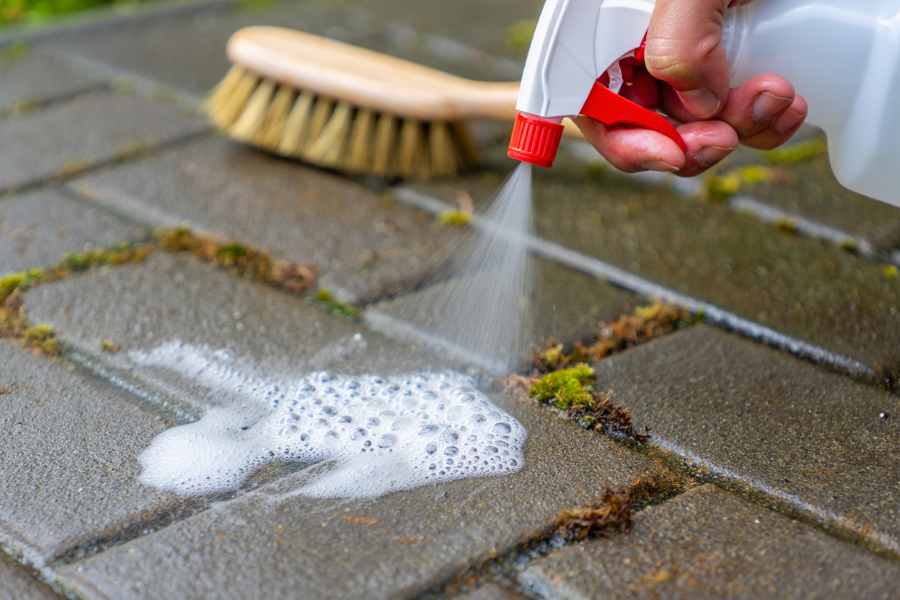
This time-tested approach is perfect for general cleaning and mild stain removal. White vinegar’s acidity breaks down dirt, grime, and even some organic stains without harsh chemicals.
Step-by-Step Process:
- Mix equal parts white vinegar and warm water in a large bucket
- Sweep away loose debris from the paver surface
- Pour the solution generously over the pavers
- Let it sit for 10-15 minutes to penetrate stains
- Scrub with your stiff brush, paying extra attention to stained areas
- Rinse thoroughly with your garden hose
- Allow to air dry completely
This method works exceptionally well on light stains, soap scum, and general dirt buildup. The acetic acid in vinegar naturally breaks down mineral deposits and organic matter without damaging most paver materials.
Method 2: Baking Soda Power Paste
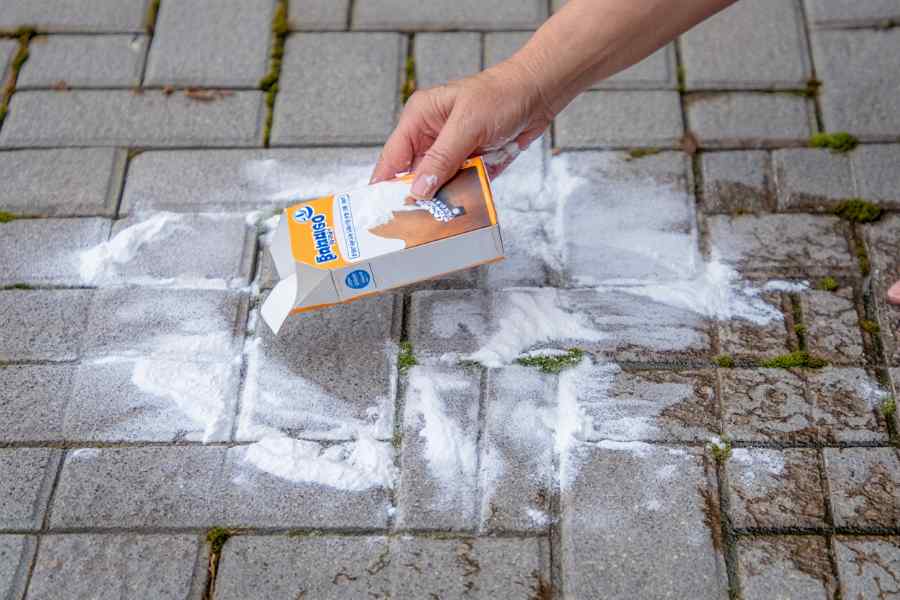
When you need a little more scrubbing power, baking soda becomes your best friend. This method is particularly effective for oil stains, food spills, and embedded dirt.
Creating Your Cleaning Paste:
- Mix three parts baking soda with one part water to form a thick paste
- For extra cleaning power, add a few drops of dish soap
- Spread the paste over stained areas using a putty knife or your hands
- Let it sit for 20-30 minutes
- Scrub vigorously with your brush
- Rinse clean with water
- Repeat if necessary for stubborn stains
The gentle abrasive action of baking soda lifts stains without scratching your pavers, while its alkaline nature neutralizes acids that can cause discoloration.
Method 3: Dish Soap Deep Clean
Sometimes the simplest solutions are the most effective. A good degreasing dish soap can work wonders on pavers, especially those plagued by food stains, grease, or general outdoor grime.
The Process:
- Fill a bucket with warm water
- Add 2-3 tablespoons of grease-cutting dish soap
- Using a mop or large brush, apply the soapy water liberally
- Work in sections, scrubbing each area thoroughly
- Allow the soap to sit for 15 minutes
- Scrub again with renewed vigor
- Rinse completely, ensuring no soap residue remains
This method is particularly effective for patios where barbecuing or outdoor dining has left its mark. The surfactants in dish soap break down greasy residues that water alone can’t touch.
The Oxygen Bleach Method
For those tough stains that seem permanent, oxygen bleach offers powerful cleaning action without the harsh effects of chlorine bleach. Unlike its chlorine cousin, oxygen bleach is color-safe and environmentally friendly.
Application Steps:
- Mix oxygen bleach powder with water according to package directions
- Apply the solution to stained areas
- Allow 30 minutes for the solution to work its magic
- Scrub with a stiff brush
- Rinse thoroughly with clean water
- Check results and reapply if needed
Oxygen bleach works by releasing oxygen molecules that break apart stain compounds at the molecular level. It’s particularly effective on organic stains like leaves, algae, and mildew.
Method 5: The Lemon and Salt Scrub
This natural combination harnesses citric acid and gentle abrasion to tackle stubborn stains while leaving behind a fresh, clean scent.
Natural Power Duo:
- Cut fresh lemons in half
- Sprinkle coarse salt generously over stained pavers
- Use the lemon halves as scrubbers, squeezing juice as you work
- The acid and salt work together to break down stains
- Let the mixture sit for 15 minutes
- Scrub with a brush and rinse clean
This method is particularly satisfying and works well on rust stains, mineral deposits, and organic discoloration.
Method 6: Steam Cleaning Alternative
If you have a steam cleaner (the kind used for indoor surfaces), you can adapt it for paver cleaning. While not as powerful as pressure washing, steam provides heat and moisture to loosen stubborn dirt.
Steam Technique:
- Fill your steam cleaner according to manufacturer instructions
- Work in small sections
- Hold the steam wand close to the paver surface
- Follow immediately with brush scrubbing while the surface is hot
- Wipe away loosened debris
- Rinse with clean water
The heat from steam opens up pores in porous pavers and softens hardened dirt, making it easier to remove with manual scrubbing.
Method 7: Commercial Paver Cleaners
When natural methods aren’t quite cutting it, commercial paver cleaners offer specialized formulations designed specifically for different types of paving materials.
Choosing the Right Product:
- Read labels carefully to ensure compatibility with your paver material
- Look for pH-balanced formulas that won’t damage stone or concrete
- Consider enzyme-based cleaners for organic stains
- Always test in an inconspicuous area first
Application Guidelines:
- Follow manufacturer’s instructions precisely
- Wear protective equipment as recommended
- Apply evenly using a pump sprayer or brush
- Allow appropriate dwell time
- Scrub if directed
- Rinse thoroughly
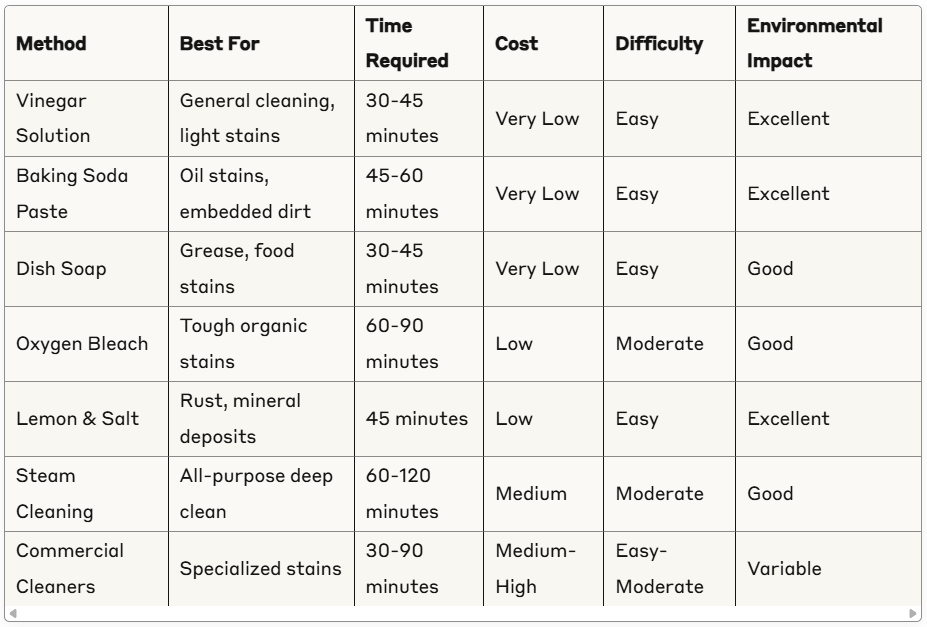
Comparison of Cleaning Methods
Pro Tips for Better Results
Timing Matters: Clean your pavers on overcast days or in the evening to prevent cleaning solutions from evaporating too quickly in direct sunlight.
Work Smart, Not Hard: Always sweep and remove loose debris before applying any cleaning solution. This prevents you from grinding dirt into the paver surface.
Test First: Before treating the entire area, test your chosen cleaning method on a small, inconspicuous section to ensure it won’t damage or discolor your pavers.
Protect Surrounding Plants: Cover nearby plants and grass with plastic sheeting, especially when using stronger cleaning solutions.
Don’t Rush the Process: Allow adequate time for cleaning solutions to work. Patience often produces better results than aggressive scrubbing.
When to Call in the Professionals
While these DIY methods handle most cleaning challenges, sometimes professional help is warranted:
- Extensive oil stains that penetrate deep into the paver
- Structural damage or significant settling
- Large areas that would be too time-consuming to clean manually
- Valuable or delicate paver materials that require specialized care
- Persistent stains that don’t respond to multiple treatment attempts
Professional cleaning services have access to specialized equipment and cleaning compounds not available to consumers, and they carry insurance to protect against accidental damage.
Seasonal Considerations
Different seasons present unique challenges for paver maintenance:
Spring: Focus on removing winter salt residue and addressing any damage from freeze-thaw cycles. This is an ideal time for deep cleaning after months of winter weather.
Summer: Battle against organic growth like algae and moss that thrive in warm, humid conditions. Regular cleaning prevents these organisms from establishing themselves.
Fall: Stay on top of leaf removal to prevent staining from tannins. Organic matter left on pavers can cause permanent discoloration.
Winter: In freezing climates, avoid cleaning when temperatures are below 40°F, as water can freeze in paver pores and cause cracking.
Safety First
While these natural cleaning methods are generally safe, always prioritize your wellbeing:
- Wear rubber gloves to protect your hands from cleaning solutions and rough surfaces
- Use knee pads to protect your joints during extended scrubbing sessions
- Ensure adequate ventilation when working with any cleaning products
- Never mix different cleaning chemicals
- Keep pets and children away from treated areas until completely dry
- Stay hydrated and take breaks during extended cleaning sessions
Conclusion
Learning how to clean pavers without power washing opens up a world of gentle, effective cleaning possibilities that protect your investment while delivering impressive results. From simple vinegar solutions to specialized commercial cleaners, you now have seven proven methods to restore your pavers’ natural beauty.
Remember, the key to success lies in choosing the right method for your specific situation, being patient with the process, and maintaining your pavers regularly to prevent future problems. With these techniques in your cleaning arsenal, you’ll keep your outdoor spaces looking their best year-round, all while saving money and avoiding potential damage from high-pressure cleaning methods.
Your pavers will thank you for the gentle care, and you’ll enjoy the satisfaction of achieving professional-quality results with nothing more than common household items and a little elbow grease.



One Comment
Comments are closed.