Cordless vs Electric Pressure Washer: Which One Is Right for You?
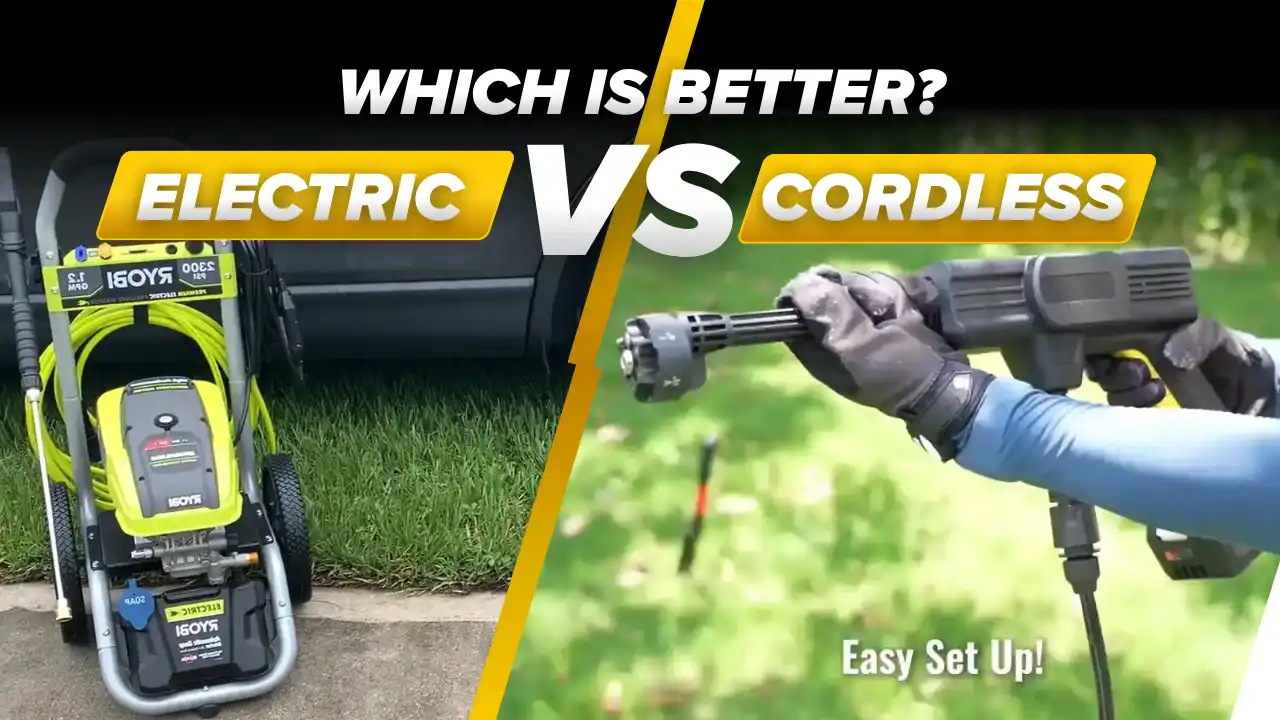
Corded electric or cordless battery pressure washer? Both plug into the “electric” category in a loose sense, but they work very differently. Here’s what actually separates them and how to pick the right one.
Cordless vs Electric Pressure Washer: Side-by-Side Comparison
| Feature | Corded Electric | Cordless (Battery) |
|---|---|---|
| PSI Range | 1,500 – 2,300 PSI (typical) | 400 – 1,500 PSI (typical) |
| GPM (Water Flow) | 1.2 – 1.8 GPM | 0.5 – 1.2 GPM |
| Runtime | Unlimited (while plugged in) | 15 – 45 minutes per charge |
| Power Source | Wall outlet + extension cord | Lithium-ion battery (18V–80V) |
| Water Source | Garden hose required | Garden hose or self-contained tank |
| Weight | 15 – 35 lbs | 5 – 20 lbs |
| Portability | Limited by cord length | Fully mobile |
| Maintenance | Minimal | Minimal (battery care) |
| Best For | Medium jobs, regular home use | Light jobs, quick rinses, remote spots |
| Price Range | $100 – $300 | $80 – $350 |
The Core Difference
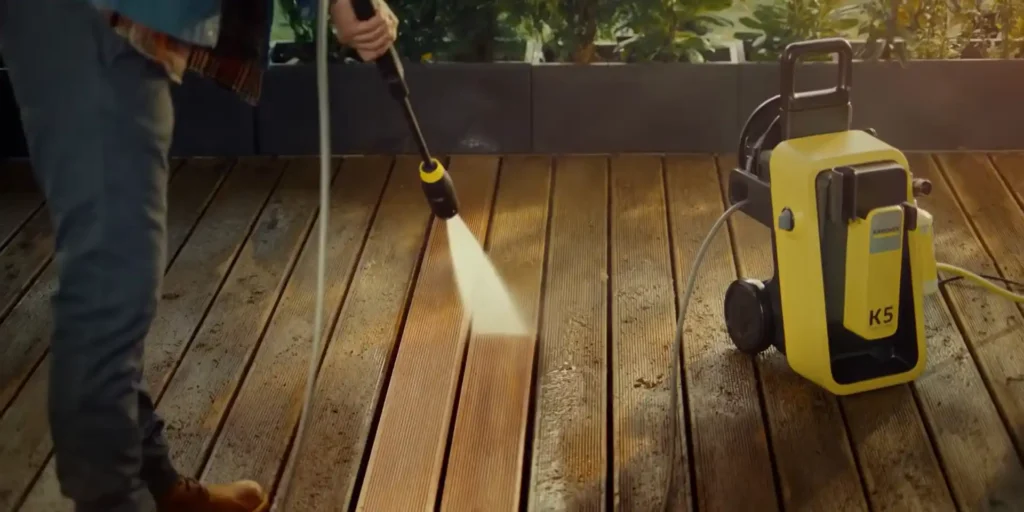
A corded electric pressure washer pulls consistent power from the grid. That means it can sustain higher PSI and water flow without interruption, as long as you have an outlet within reach.
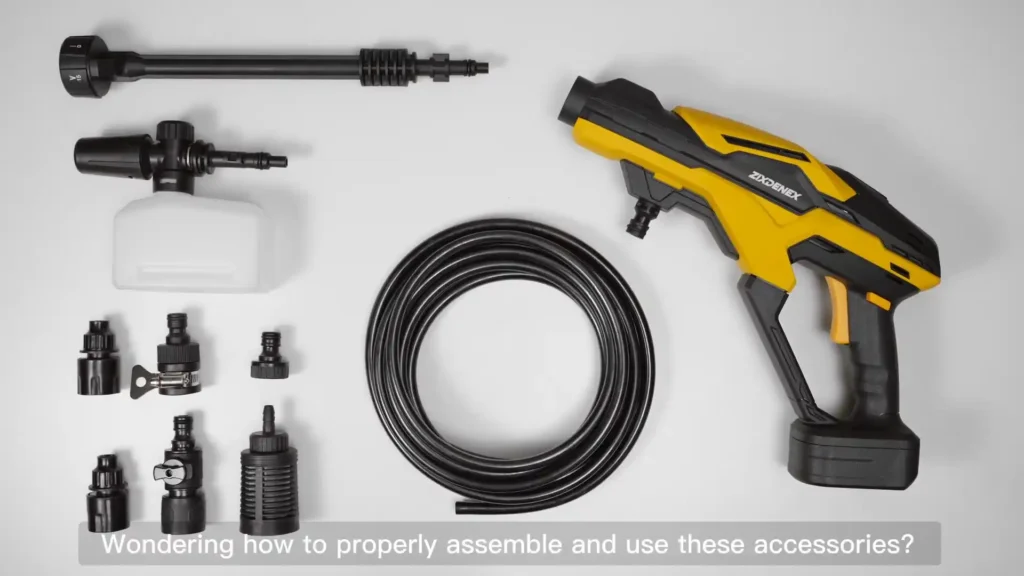
A cordless pressure washer runs on a rechargeable battery. The tradeoff is freedom: no cord, no outlet needed, and often no external water source required on smaller tank-based models. But battery-powered motors can’t match the sustained output of a corded unit, so PSI and GPM are lower across the board.
This is the fundamental split. More power with a cord, more freedom without one.
Power: How Big Is the Gap?
It’s significant. Most corded electric pressure washers deliver 1,800 to 2,300 PSI. Most cordless models top out around 1,000 to 1,500 PSI, and a lot of the popular handheld options are well below that.
In practice, that PSI difference is noticeable on anything beyond light rinsing. A corded electric unit will strip algae off a fence, clean a moderately dirty driveway, and wash a car in one pass. A cordless unit will handle the car wash fine, rinse off patio furniture easily, and knock dust off siding without issue. But on stained concrete or a fence with real buildup, you’ll feel the gap.
GPM matters just as much. More water per minute means faster rinsing and better cleaning overall. Cordless units move less water, which slows everything down even when the PSI seems adequate.
If you want to compare this category against gas pressure washers for really heavy-duty jobs, our electric vs gas pressure washer breakdown covers that comparison in full.
Portability: Where Cordless Wins
This is where cordless pressure washers genuinely shine.
A corded electric unit needs a power outlet within 50 to 100 feet, depending on your extension cord situation. That works fine for most driveways and backyard jobs. But if you need to clean a boat on a trailer, wash equipment in a field, rinse down a fence at the far end of a large property, or clean a camper at a campsite, a cord becomes a real problem.
Cordless units go anywhere. Some smaller models even include a built-in water tank, so you don’t need a garden hose at all. Just charge the battery, fill the tank, and go. That setup is particularly useful for boat owners, campers, and anyone doing vehicle washing away from home. Our best portable pressure washer guide covers some of the top tank-based cordless options if that’s what you’re after.
Runtime: The Cordless Limitation
Battery runtime is the biggest practical limitation of cordless pressure washers.
Most models run between 20 and 45 minutes on a full charge, depending on the battery size and how hard you’re running the motor. That’s often enough for washing a car or quickly rinsing a patio. It’s rarely enough for a full driveway, an entire fence line, or a thorough deck cleaning.
Some brands let you run the washer while the battery is charging, or offer swappable batteries so you can keep going. But in general, if your job takes more than 30 to 40 minutes, a corded unit is more practical. You won’t be stopping halfway through to wait on a charge.
Corded electric units have no runtime limit. As long as there’s power to the outlet and water in the hose, they keep running.
Water Source Options
Corded electric pressure washers almost always require a garden hose connection. They’re not designed for tank use, and the flow rates they deliver need a steady hose supply to work properly.
Cordless pressure washers vary. Larger cordless models also require a hose. But many compact and handheld cordless units include a small built-in tank (typically 0.5 to 1 gallon) that you fill yourself. This makes them genuinely self-contained for small jobs: wiping down a bike, rinsing off muddy boots, cleaning outdoor furniture away from the house.
The tank models are limited by capacity. You’ll refill them multiple times on anything larger than a quick spot clean. For regular outdoor cleaning jobs, a hose-connected model (corded or cordless) is still more practical.
Weight and Handling
Cordless pressure washers are lighter. Handheld cordless models can weigh as little as 4 to 8 pounds, making them easy to carry and maneuver in tight spots.
Corded electric models are heavier due to the motor and pump assembly, though still manageable at 15 to 35 pounds. Most have wheels, so moving them around a driveway or yard isn’t a problem.
If you have mobility concerns or need to hold the washer extended for long periods, a lightweight cordless unit has a real ergonomic advantage. For regular ground-level cleaning where the unit stays stationary, weight matters less.
Maintenance
Both types are low-maintenance compared to gas pressure washers.
Corded electric units need occasional pump flushing, proper winterization in cold climates, and that’s about it. No oil, no fuel, no spark plugs.
Cordless models add one extra task: battery care. Lithium-ion batteries last longer when stored at a partial charge (around 50 to 60%), not left fully drained or fully charged for extended periods. If you’re storing the unit over winter, take the battery out and store it indoors. That’s genuinely the only extra step.
Neither type is difficult to maintain. For most people, both feel like “plug in and go” tools compared to a gas unit.
Which Jobs Each Handles Best
Corded Electric Pressure Washer Best For
- Driveway and concrete cleaning (light to moderate staining)
- Deck and fence washing with real buildup
- Exterior siding on a full house
- Regular car washing with thorough rinsing
- Patio cleaning and outdoor furniture
- Any job that takes more than 30 minutes
For concrete cleaning, corded electric is usually the minimum you want. Our best pressure washer for concrete guide covers what PSI you need for different surface conditions.
Cordless Pressure Washer Best For
- Car washing and vehicle rinse-downs
- Rinsing patio furniture, bikes, and outdoor gear
- Spot cleaning siding or fences
- Cleaning in locations without power access
- Camping, boating, and travel use
- Quick pre-rinse jobs before deeper cleaning
For car detailing specifically, a cordless or lighter electric model is often the right call. Our best electric pressure washer for car detailing guide covers gentle but effective options.
Cost Breakdown
Entry-level corded electric pressure washers start around $100 to $150 for basic units. A solid mid-range model with good pump quality runs $180 to $280. Operating costs are just electricity, which is minimal.
Cordless pressure washers vary widely. Basic handheld models start under $100. Full-size cordless units with larger batteries run $200 to $350. If you already own tools from a brand like Ryobi, Greenworks, or Dewalt that uses a shared battery system, a compatible cordless pressure washer can be a great value since you’re not buying batteries separately. Check our best battery powered pressure washer roundup for the best models at each price point.
Cordless vs Electric Pressure Washer: The Direct Answer
Get a corded electric unit if you’re cleaning concrete, decks, fences, or siding on a regular basis. The unlimited runtime and higher PSI make it the practical workhorse for home maintenance. It’s also the better value if you mostly use it within reach of an outlet.
Get a cordless unit if portability is the main priority. Vehicles away from home, boats, camping gear, or jobs at a property without power access are exactly where cordless earns its place. Just go in knowing that runtime is limited and heavy-duty cleaning will take longer.
If you want to compare the full range of pressure washer types including gas, our best pressure washer overview covers every category side by side.
Frequently Asked Questions
Is a cordless pressure washer powerful enough for a driveway?
For light surface dirt and regular maintenance, yes. For moderate staining, oil spots, or algae, a cordless unit will struggle. Corded electric is the better call for driveway cleaning. If the driveway has heavy staining or hasn’t been cleaned in years, you may need a gas unit for best results.
Can I use a cordless pressure washer without a hose?
Some compact and handheld cordless models include a self-contained water tank, so yes. Larger cordless models still require a garden hose connection. Check the specs before buying if hose-free operation is important to you.
How long does a cordless pressure washer battery last?
Most run 20 to 45 minutes per charge depending on motor intensity and battery voltage. Higher-voltage batteries (40V, 60V, 80V) generally run longer and maintain better PSI throughout the charge cycle compared to budget 18V or 20V options.
Do cordless pressure washers work with foam cannons?
Most cordless units don’t generate enough water pressure or flow to work well with traditional foam cannons. Some brands make low-pressure foam nozzles designed specifically for cordless models. If foam application is important to you, a corded electric unit is the more reliable platform.
What brands make good cordless pressure washers?
Ryobi, Greenworks, and Dewalt are the most common brands with quality cordless options that share batteries across tool platforms. Sun Joe makes popular standalone cordless models at lower price points. Our best cordless pressure washer guide has tested picks across all price tiers.