Electric vs Gas Pressure Washer: Which One Do You Actually Need?
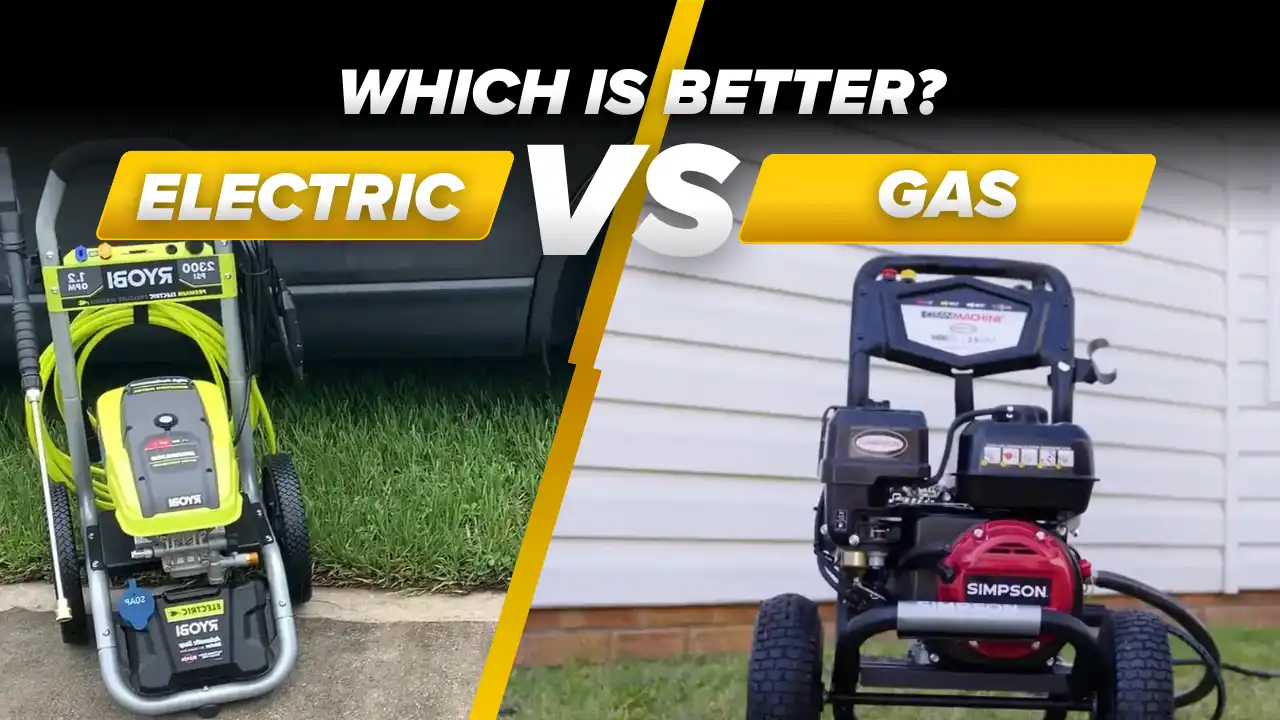
Most people buying a pressure washer get stuck on the same question: electric or gas? This guide breaks down how they actually compare so you can pick the right one without second-guessing yourself.
Electric vs Gas Pressure Washer: A Side-by-Side Comparison
| Feature | Electric | Gas |
|---|---|---|
| PSI Range | 1,500 – 2,300 PSI (typical) | 2,800 – 4,000+ PSI (typical) |
| GPM (Water Flow) | 1.2 – 1.8 GPM | 2.0 – 4.0 GPM |
| Weight | 15 – 35 lbs | 50 – 80+ lbs |
| Noise Level | Moderate (quieter) | Loud |
| Maintenance | Minimal | Oil checks, fuel, spark plug |
| Portability | Needs power outlet | No cord, fully mobile |
| Startup | Plug in and go | Pull-start or electric start |
| Fuel Cost | Electricity only | Gas + occasional oil |
| Best For | Homeowners, light-to-medium jobs | Contractors, heavy-duty cleaning |
| Price Range | $100 – $300 | $250 – $600+ |
What Is an Electric Pressure Washer?

An electric pressure washer runs off a standard household outlet. Plug it in, turn on the water supply, and you’re ready to go. No gas. No oil. No pull-cord.
Most electric models fall in the 1,500 to 2,300 PSI range. That’s enough pressure to clean a car, wash down siding, scrub patio furniture, and tackle most concrete and wood surfaces. For the average homeowner, this covers the majority of outdoor cleaning jobs.
The tradeoff is raw power. Electric units move less water at lower pressure, so heavily soiled surfaces take more passes and more time compared to a gas model.
What Is a Gas Pressure Washer?

A gas pressure washer runs on a combustion engine and doesn’t need an outlet. That means you can use it anywhere, including areas far from the house where running an extension cord isn’t realistic.
Gas units typically start at 2,800 PSI and go well beyond 4,000 PSI on heavy-duty models. They also push significantly more water volume (GPM), which is what makes them so much faster at blasting through grease, algae, and caked-on dirt. If you’re pressure washing for pay, the speed difference is real and it adds up fast.
The downsides are weight, noise, and maintenance. Gas pressure washers are heavy, loud, and need regular oil checks, fresh fuel, and occasional spark plug attention. If you neglect oil levels, most models have a low-oil shutoff to protect the engine, but it’s still one more thing to manage.
Power: PSI and GPM Explained
PSI measures how hard the water hits. GPM measures how much water comes out. Both matter.
A 2,000 PSI electric unit and a 3,400 PSI gas unit don’t just differ in how forceful the spray feels. The gas unit is also moving more water per minute, which means it rinses away loosened gunk faster. That combination makes a real difference on heavy stains, algae on wood, or grease on concrete.
For car washing, light fence work, or cleaning plastic furniture, the difference is much less noticeable. An electric unit at 1,800 PSI does that work fine. You might just need an extra pass or two. Our best electric pressure washer guide covers the top-rated electric models at different PSI levels if you want to dig deeper.
Noise and Weight
Electric pressure washers are noticeably quieter. You can use one on a Saturday morning without disturbing the neighborhood. They’re also lighter, which matters when you’re loading and unloading from a vehicle.
Gas units are heavy. A mid-range residential gas washer often weighs 60 to 80 pounds. Most have wheels, but lifting one in and out of a truck bed is still a two-person job depending on your situation. They’re also genuinely loud. Extended use means standing next to a running engine for however long the job takes.
If noise or portability is a real concern, gas is a harder sell for casual homeowners.
Maintenance Differences
Electric pressure washers need almost nothing. Rinse the machine, flush the pump occasionally, and store it out of the cold. That’s about it.
Gas washers need more attention. You’ll need to check and change the oil, use fresh fuel (or add stabilizer if storing it), and clean or replace the spark plug over time. None of this is complicated, but it does require a baseline understanding of small engine maintenance. If you let a gas unit sit with stale fuel in the tank, it can gum up the carburetor.
For people who just want to grab it and go, electric wins here by a wide margin.
Portability and Where You Can Use It
Electric pressure washers need an outlet within reach. That limits where you can use them, but for most residential jobs, an extension cord solves the problem.
Gas units have no cord at all. You can use them in the middle of a field, at a remote job site, or in a large parking lot far from any power source. That freedom is genuinely useful for contractors and anyone cleaning large commercial spaces or properties without accessible outlets.
One critical note: gas pressure washers produce carbon monoxide and must never be used indoors. Electric models are safe to use in garages and enclosed spaces (with adequate ventilation), which makes them better for indoor concrete cleaning or workshop floors.
Cost: What You’ll Actually Spend
A solid electric pressure washer runs between $150 and $300. Entry-level options exist below that, but the pump quality starts to drop.
Gas models start around $250 to $350 for residential units and climb to $500 or more for contractor-grade washers. You’ll also be spending on gas and oil over time, which adds up if you use it regularly. Our best gas pressure washer roundup breaks down which models give you the most for the money.
If you’re doing this for hire, a gas unit pays for itself quickly. If you’re a homeowner using it a few times a year, electric is the better value.
Which Jobs Does Each Handle Best?
Electric Pressure Washer Best For
- Washing vehicles (cars, trucks, motorcycles)
- Cleaning patio furniture and outdoor equipment
- Light-to-medium concrete and driveway cleaning
- Siding and exterior walls (vinyl, painted wood)
- Deck and fence maintenance that doesn’t have heavy buildup
- Indoor use: garage floors, workshop spaces (no carbon monoxide risk)
For concrete cleaning specifically, an electric unit will get the job done on a residential driveway if you have the time. It takes longer than gas, but the results are comparable on moderate soiling. Check our guide on the best pressure washer for driveways for surface-specific advice.
Gas Pressure Washer Best For
- Heavily soiled or stained concrete and driveways
- Removing algae, mold, and moss from wood fencing and decking
- Oil stains and grease on garage floors or commercial surfaces
- Large surface area jobs where speed matters
- Job sites without power access
- Professional cleaning and pressure washing as a business
If you’re cleaning a fence that hasn’t been touched in a few years, or a concrete driveway with grease stains and algae, gas is the right call. The power difference is not subtle. See our picks for the best pressure washer for oil stains if that’s your situation.
Electric vs Gas Pressure Washer: Which One Should You Buy?
Here’s the honest answer.
If you’re a homeowner cleaning the driveway, washing the truck, or freshening up the deck a few times a year, an electric pressure washer is the right choice. It’s lighter, quieter, cheaper, and requires almost no maintenance. For most residential jobs, it’s more than enough.
If you’re a contractor, or if you clean large surfaces regularly and need to move through the work fast, gas is worth the premium. The extra PSI and GPM make a meaningful difference on tough jobs. Any task you can do with an electric unit, a gas unit will do faster, and on really grimy surfaces, the gas unit will just do it better.
The one exception: if you need to work in tight or enclosed spaces, stick with electric. Gas engines cannot run indoors safely.
If you haven’t decided which category of pressure washer fits your situation, our best pressure washer for home use roundup is a good starting point.
Frequently Asked Questions
Is an electric pressure washer powerful enough for concrete?
Yes, for most residential concrete like driveways and walkways with moderate dirt and light staining. You’ll need more passes than with a gas unit, but a 2,000 PSI electric washer can clean concrete effectively if you’re patient. For oil stains or heavy algae buildup, gas will do a noticeably better job.
Can I use a gas pressure washer indoors?
No. Gas pressure washers produce carbon monoxide, which is dangerous in enclosed or semi-enclosed spaces like garages and carports. Use electric for any indoor or enclosed cleaning. Even a well-ventilated garage is a risk with a running gas engine.
What PSI do I need for a house?
For exterior siding, around 1,500 to 2,500 PSI is the sweet spot. Vinyl siding and painted wood surfaces can be damaged by pressure that’s too high, so a mid-range electric washer usually works well here. See our picks for the best pressure washer for vinyl siding if your main job is exterior cleaning.
How much does it cost to run an electric vs gas pressure washer?
Electric is cheaper to run day-to-day. The electricity cost per hour of use is minimal. Gas units require fuel plus periodic oil changes. Over a full season of regular use, the operating cost difference adds up, though neither is expensive for occasional homeowner use.
What’s the best battery-powered option if I want something in between?
Battery-powered pressure washers offer cord-free convenience without the gas maintenance burden. They’re typically lower PSI than gas, but more than electric corded models in some cases. Our best cordless pressure washer guide covers the best options if you want portability without a combustion engine.