How to Clean a Couch With a Steam Cleaner (Without Ruining the Fabric)
Your Couch Probably Needs This More Than You Think
Be honest, when was the last time you actually deep-cleaned your couch? Not just vacuumed the cushions or spot-wiped a spill, but really cleaned it? Most people skip it because it seems complicated, but learning how to clean a couch with a steam cleaner is honestly one of the most satisfying things you can do for your home.
Steam gets into the fabric fibers, kills bacteria and dust mites, and lifts embedded grime that vacuuming just cannot touch. And the best part? No harsh chemicals. Just water and heat doing the heavy lifting.
That said, there’s a right way and a wrong way to do this. Steam the wrong fabric or skip a few key steps and you could end up with water stains, shrinkage, or worse. So let’s walk through everything you need to know before you get started.
Can All Couches Be Steam Cleaned? Check the Tag First
Before you grab your steamer and go to town, flip those cushion covers over and find the care tag. It’s usually tucked into a seam and has a letter code that tells you exactly how the fabric should be cleaned.
Here’s what those codes mean:
| Code | What It Means | Safe to Steam? |
|---|---|---|
| W | Water-based cleaning only | Yes |
| S | Solvent (dry clean) only | No |
| W/S | Both water and solvent safe | Yes, with care |
| X | Vacuum only, no liquids | No |
If your couch has an “S” or “X” tag, put the steamer away. Moisture can permanently damage those fabrics. If you see “W” or “W/S,” you’re good to go.
Also check if the fabric is color-fast before you start. Dab a damp white cloth on a hidden area and press gently. If color transfers, steaming could cause fading or bleeding.
What Attachments to Use for Upholstery
Your steam cleaner likely came with a few attachments, and using the right one makes a real difference on upholstery.
Upholstery brush: This is your main tool for couches. The fabric or nylon bristles help work the steam into the fibers without direct contact from a bare nozzle.
Fabric nozzle or triangular tool: Great for getting into seams and tight corners between cushions.
Round detail brush: Good for armrests and decorative trims where grime tends to collect.
Extension wand: Helpful for reaching the back of the couch or under cushions without awkward bending.
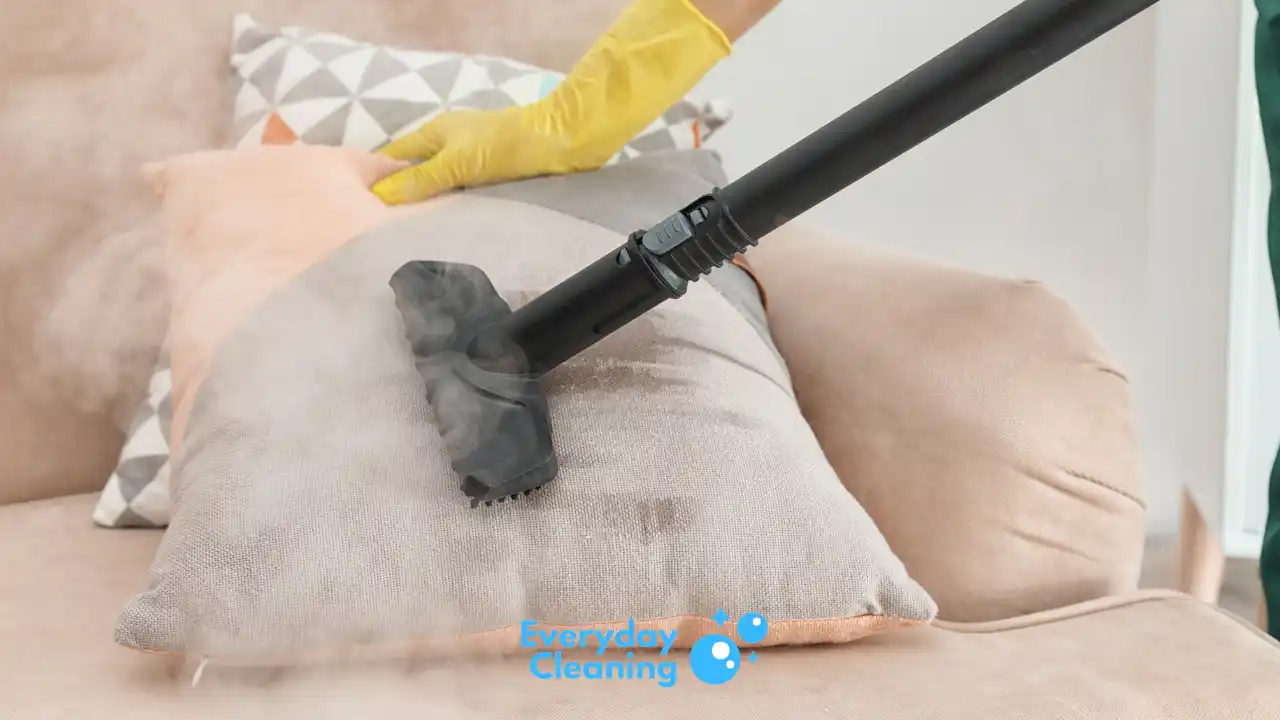
If you’re in the market for a new machine, a good professional upholstery steam cleaner will come with most of these attachments included. For smaller jobs or quick refreshes, a handheld steam cleaner for upholstery is surprisingly capable and much easier to maneuver around cushions and armrests.
How to Clean a Couch With a Steam Cleaner: Step-by-Step
Once you’ve confirmed your fabric is safe and you’ve got the right attachment, here’s the full process from start to finish.
Step 1: Remove Cushions and Vacuum Everything
Always vacuum before you steam. This removes loose dirt, pet hair, crumbs, and debris that could turn into muddy paste once moisture hits.
Remove the cushions and vacuum each one individually on all sides. Then vacuum the couch frame, paying attention to the crevices along the sides and under where the cushions sit. Use the crevice tool to get into tight spots.
Skipping this step is one of the most common mistakes people make.
Step 2: Pre-Treat Any Visible Stains
Steam alone is powerful, but stubborn stains benefit from a little help first. For food stains or general grime, mix a small amount of dish soap with warm water and lightly blot the area with a clean cloth. Don’t rub, just blot.
For pet stains or odors, an enzyme-based cleaner applied before steaming can break down the proteins that cause smells.
Let the pre-treatment sit for about 5 to 10 minutes before moving on.
Step 3: Fill and Heat Your Steam Cleaner
Fill the water tank with distilled water if possible. Tap water works, but distilled water reduces mineral buildup inside your machine over time, which keeps it working better for longer.
Let the machine heat up fully before using it. Most steam cleaners signal readiness with a light or by releasing a steady stream of steam. Attach your upholstery brush and you’re ready.
Step 4: Steam the Couch in Slow, Overlapping Passes
Hold the attachment about half an inch to an inch from the fabric surface. Move in slow, overlapping strokes, almost like you’re painting. Don’t hold it in one spot for too long as the concentrated heat and moisture can over-wet the fabric.
Work in sections, starting from the top of the couch and moving downward. Do the back first, then the arms, then the seat cushions.
For heavily soiled areas, make a second pass after giving the fabric a moment to breathe.
Step 5: Wipe Away Loosened Grime
As you steam, have a clean microfiber cloth nearby. After each section, lightly blot the area to absorb any loosened dirt and moisture that has risen to the surface. This prevents the grime from settling back into the fibers as things dry.
Step 6: Tackle the Crevices and Seams
Swap to the narrow nozzle or fabric detail tool and go along all the seams, the space between the seat and the arms, and underneath the cushion area. These spots collect a surprising amount of dirt and are often skipped.
How to Handle Different Fabrics
Not all fabrics respond the same way to steam, and adjusting your technique based on the material will get you much better results.
Microfiber
Microfiber is one of the most forgiving couch fabrics and handles steam well, as long as the tag says “W” or “W/S.” Use medium steam pressure and light, even strokes.
One thing to watch: microfiber can sometimes look stiff or streaky after cleaning. Once it’s fully dry, brush the fabric with a soft-bristle brush in a circular motion to restore the soft texture.
Velvet
Velvet needs a gentle touch. Use the lowest steam setting and keep the nozzle moving at all times. Never press or rub the surface while it’s damp.
After steaming, use a velvet brush (or a soft-bristled garment brush) to restore the pile direction while the fabric is still slightly warm. This prevents that flattened, crushed look.
Linen
Linen can shrink or water-stain if you’re not careful. Test a hidden spot first. Use medium steam, keep passes quick, and don’t let moisture accumulate in one area.
If your linen couch has removable slipcovers, it may actually be easier to wash those separately and only steam the main frame.
Polyester and Blends
Most polyester and synthetic blends handle steam just fine. These are probably the easiest fabrics to work with. Medium heat, steady passes, and you’re done.
Drying Tips to Avoid That Mildew Smell
This part matters just as much as the cleaning itself. Damp upholstery that takes too long to dry is a recipe for mildew, and that musty smell is incredibly hard to get rid of once it sets in.
Here’s how to dry your couch quickly and thoroughly:
Open windows and doors to create airflow in the room as soon as you finish steaming.
Point a fan directly at the couch for at least 2 to 3 hours. If you have a box fan, place it a couple feet away and let it run.
Use a dehumidifier if it’s a humid day. This speeds up drying time significantly.
Prop cushions upright rather than laying them flat so air can circulate around all sides.
Avoid sitting on the couch until it’s fully dry, which usually takes 3 to 6 hours depending on the fabric and how much steam was used. Pressing into damp foam cushions can push moisture deeper, which slows drying.
If you ever need to tackle a mattress with the same method, the process is very similar, and a good steam cleaner for mattress and couch can handle both jobs well.
What to Expect: Before and After
Let’s be real about what steam cleaning can and can’t do.
What steam cleaning does really well:
- Removes embedded dust, skin cells, and pet dander
- Kills dust mites and bacteria without chemicals
- Neutralizes mild odors
- Refreshes and brightens the overall look of the fabric
- Loosens and lifts light to moderate stains
What may need extra attention:
- Old, set-in stains (these may lighten but not fully disappear)
- Oil-based stains (need a degreasing pre-treatment first)
- Ink or dye stains (results vary widely)
After a good steam session, most people notice their couch looks noticeably fresher, the fabric feels lighter, and any mild odors are gone. It’s not a magic wand for every stain, but for general deep cleaning, it’s one of the best methods you can use at home.
If you’re also dealing with dust mites beyond just the couch, a steam cleaner designed specifically for dust mites is worth looking into since it can work across mattresses, carpets, and upholstery too. And if you want to see the full range of options before buying, checking out a roundup of the best steam cleaners for couches can help you find a machine that’s built with upholstery in mind.
How to clean a couch with a steam cleaner isn’t complicated once you know the steps, but the prep work and drying phase are just as important as the steaming itself. Do it right and your couch will look, smell, and feel like a whole new piece of furniture.