How to Get Soot Out of Carpet Without Leaving a Shadow Stain

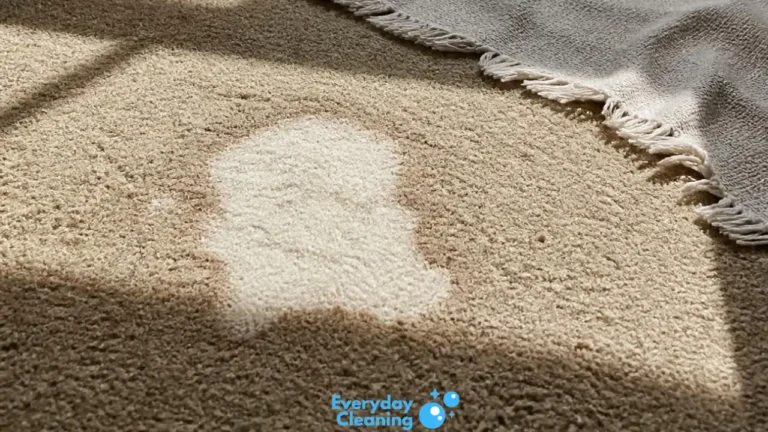
Soot on your carpet might look alarming, but here’s the good news, it’s actually one of the easier stains to clean if you handle it the right way. The catch? If you rush in and start rubbing or soaking it with water right away, you’ll push those fine black particles deeper into the carpet fibers and spread the stain wider. That shadow stain that refuses to go away? That’s almost always caused by a wrong first move.
Follow these steps in order, and you’ll lift soot out cleanly without leaving a trace behind.
What You’ll Need
- Vacuum cleaner
- Baking soda
- Two cups of cool water
- 1 tablespoon of dish soap
- Clean white cloths or paper towels
- Optional but highly recommended: Folex Carpet Spot Remover (for stubborn, oil-heavy soot stains)
How to Get Soot Out of Carpet: Step-by-Step
Before you start: Turn off any ceiling fans or nearby vents. Soot is made up of ultra-fine particles, the slightest airflow will scatter them across a larger area of your carpet before you even get started.
Step 1: Vacuum First — And Do It Thoroughly
This is the most critical step, and most people skip it or rush through it.
Soot is a dry, powdery substance. Your goal in this first step is to remove as much of that loose material as possible before introducing any moisture. The moment water touches dry soot, it turns into a paste that binds tightly to carpet fibers and that’s when the real trouble starts.
Use your vacuum’s hose attachment and go over the stained area slowly, multiple passes. Don’t press the nozzle into the carpet — hover it just above the surface so you’re lifting the particles up, not pushing them down. Repeat 3–4 times until you’ve pulled up as much loose soot as you can see.
Step 2: Sprinkle Baking Soda and Let It Sit
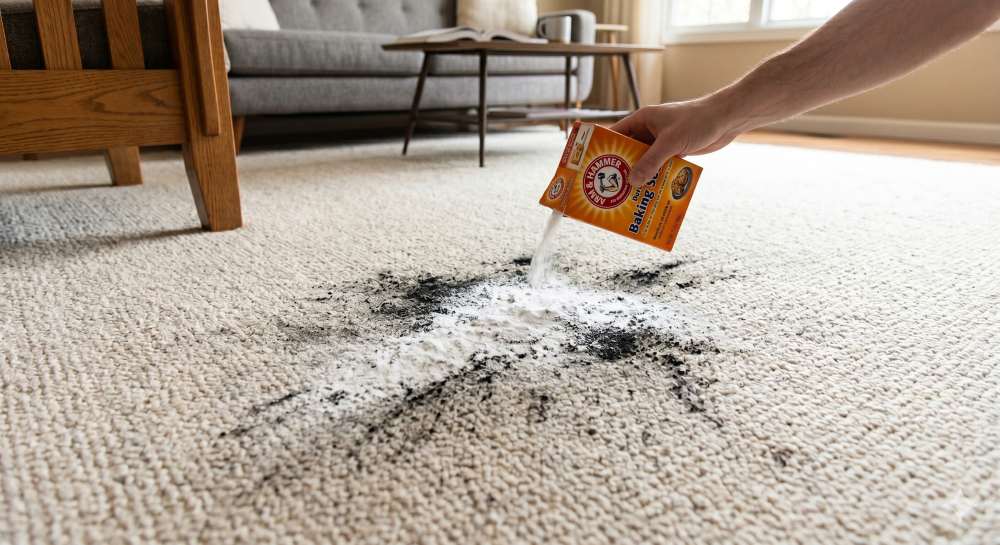
Once you’ve vacuumed, spread a thin, even layer of baking soda over the affected area and let it sit for 15 to 30 minutes.
Why baking soda? Soot isn’t just carbon dust, it carries oily residue and smoke odor that clings to fibers. Baking soda is mildly alkaline, which helps it break down and absorb those oily compounds while also neutralizing the smoky smell. Think of it as a dry pre-treatment that does a lot of the heavy lifting before you bring in any liquid.
After the wait, vacuum the baking soda up completely.
Step 3: Treat With a Cleaning Solution

Now mix your cleaning solution:
- 2 cups of cool water
- 1 tablespoon of dish soap
Dip a clean white cloth into the solution, do not pour it directly onto the carpet. Too much moisture soaks through to the backing and can cause mold or leave a water ring.
Blot the stain gently, working from the outside edge inward. This is important: blotting from the outside in keeps the stain from spreading further. Never scrub or rub in circular motions, that frays the carpet fibers and drives the soot deeper in.
Rotate to a clean section of your cloth as it picks up the soot, so you’re not just moving the stain around.
When Dish Soap Isn’t Enough
If you’re dealing with a darker, oilier soot stain that doesn’t budge with dish soap, maybe from a fireplace blowback or a heavy smoke event, dish soap alone may not be strong enough to cut through it.
In that case, reach for a dedicated carpet cleaner like Folex Carpet Spot Remover. It’s my go-to for tough spots. Just spray it directly onto the stain, wait about 3 minutes, and blot with a clean cloth. No rinsing needed, no residue left behind. It works on the same principle as enzymatic cleaners, breaking down the oily and protein-based compounds in soot at a molecular level rather than just lifting the surface layer.

- WORKS ACROSS MANY SURFACES – It safely lifts stains from upholstery, carpets, rugs, and other water-safe, colorfast materials. The formula is water based, non-flammable, and odor free for worry-free…
Step 4: Rinse and Dry
Dampen a fresh cloth with plain cold water and blot the area one more time to remove any soap residue. Leftover detergent in carpet fibers can attract dirt over time and create a dull, grimy patch, so this rinse step matters more than it seems.
Press a dry towel firmly against the carpet and let it absorb the moisture. You can weigh it down with a heavy book for 10–15 minutes. Then allow the carpet to air dry completely, open a window if you can, but keep fans angled away from the treated area until it’s fully dry.
Frequently Asked Questions
Can I use a steam cleaner on soot stains?
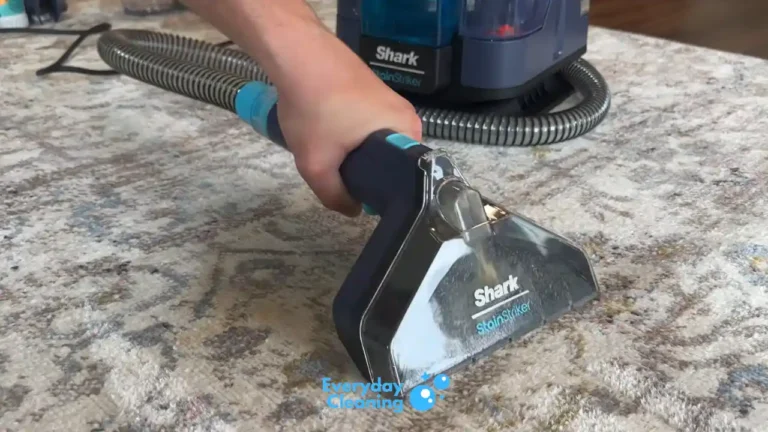
Skip the steam cleaner at first. Heat can set soot stains, especially the oily components, making them harder to remove. Always use cold or warm water, and only consider a steam cleaner after you’ve already removed the bulk of the stain with the steps above.
What if the soot stain has been there for a few days?
Older soot stains are trickier because the oily residue has had time to bond with the fibers. Skip straight to the Folex (or similar carpet cleaner) after vacuuming and baking soda — dish soap likely won’t be enough on a set stain.
Will baking soda damage my carpet?
No. Baking soda is safe for most carpet types, including wool and synthetic fibers. Just make sure you vacuum it up thoroughly — leftover powder can attract moisture over time.
Why is my carpet still showing a faint gray shadow after cleaning?
This is usually caused by either residual fine particles still embedded in the fibers, or soap residue left behind. Try a second round with Folex and make sure you do the plain-water rinse step before drying.
Can I use rubbing alcohol on soot?
Rubbing alcohol can help lift oily soot residue, but use it sparingly on a cloth — never pour it directly onto the carpet. Test on a hidden area first, since it can affect certain carpet dyes.