How to Pressure Wash a Fence Without Damaging the Wood
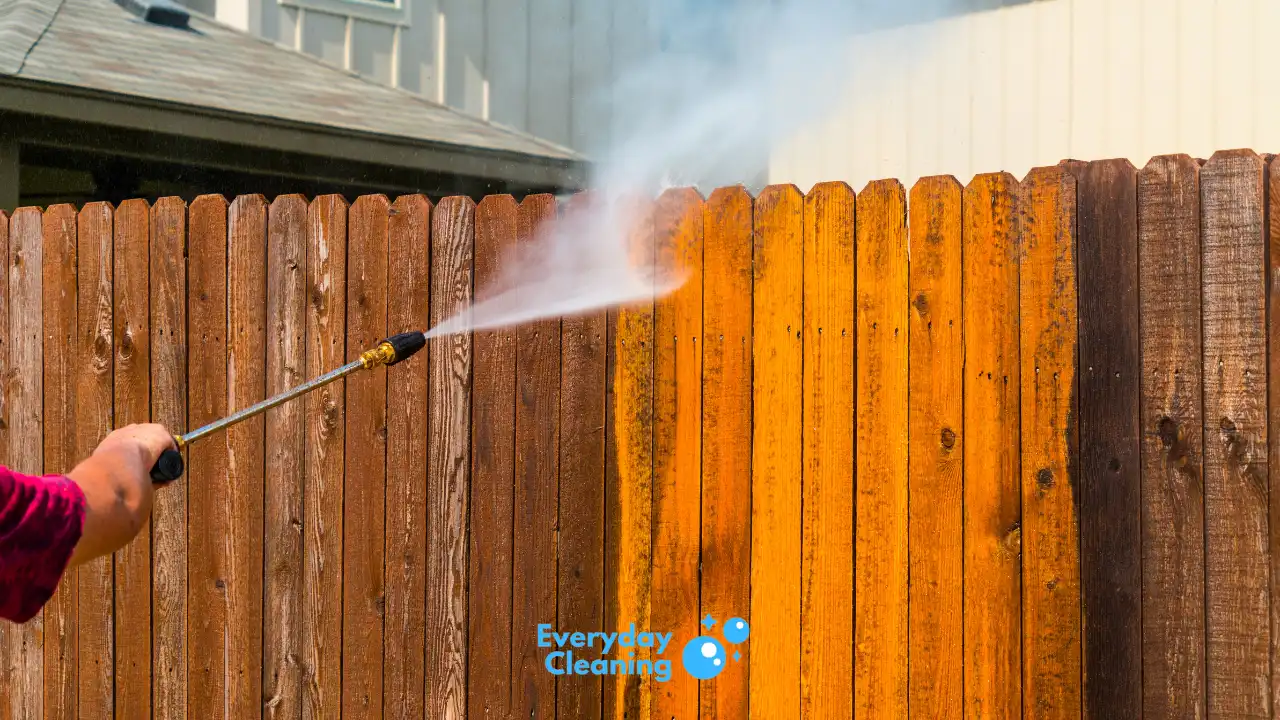
A fence that’s covered in mold, algae, or years of grime doesn’t have to stay that way. This guide walks you through how to pressure wash a fence safely, from pre-treating with cleaner to picking the right PSI so you don’t splinter the wood.
Step 1: Apply a Fence Cleaner Before You Pressure Wash
Do not skip this step. Pre-treating the fence with a cleaner does most of the heavy lifting and lets you use lower pressure later, which protects the wood.
A concentrate like 30 Seconds Outdoor Cleaner works well for this. You can mix it in a pump-up sprayer at roughly a 1:1 ratio of cleaner to water. If the fence is only lightly dirty, you can dilute it a bit further.
A pump-up sprayer gives you better control than a hose-end attachment. You’re less likely to overspray onto plants or garden beds.
Step 2: Protect Your Vegetation First
Before you spray anything on the fence, soak any nearby plants, grass, or shrubs with your garden hose. Cleaning chemicals can damage or kill vegetation if the concentration is high enough.
Keep rinsing the plants before, during, and after applying cleaner to dilute anything that drifts. It takes an extra few minutes but saves a lot of regret later.
Step 3: Apply the Cleaner to the Fence

Spray the fence while it is completely dry. Do not apply cleaner to damp or wet wood. It won’t work as well and you’ll waste product.
Work with the grain of the wood as you spray. For most fences, that means moving vertically, up and down each board. Try to get the fence wet enough to treat the surface without letting cleaner run down in heavy streaks.
If certain spots have heavier buildup of algae or mold, apply a little extra cleaner and scrub with a brush before rinsing. For green algae specifically, our guide on how to remove green algae from a fence has more targeted tips.
Step 4: Let It Dwell, Then Rinse
Let the cleaner sit on the fence for around 5 minutes before rinsing. Do not let it dry completely on the wood.
If you’re working on a long stretch of fence, clean it in sections so you can rinse each part before the cleaner dries. Once you’re ready to rinse, use a garden hose or the rinse setting on a hose-end attachment and work your way across the entire fence.
You should see a noticeable difference right away. If heavy staining remains, let the fence dry completely and do a second application. Let it dwell a little longer this time and scrub problem areas before rinsing.
Step 5: Use Your Pressure Washer for a Deeper Clean

Once the cleaner has done its job, a pressure washer can take the fence the rest of the way. This is optional but makes a real difference on older or heavily weathered fences.
The biggest mistake people make here is using too much pressure. Too high a PSI or the wrong nozzle tip will splinter the wood fibers, and that damage is permanent. You will not see it while you are working. You will see it when the fence dries.
Start at 1,000 to 1,500 PSI. Use the black soap nozzle that comes with most pressure washers. That is low enough to remove surface grime without tearing up the wood. If that is not cutting it, move up to the 40-degree nozzle (usually white). You can always increase pressure, but you cannot undo damage.
Step 6: Follow These Pressure Washing Best Practices
Getting the clean right is about technique, not just pressure. A few rules that make a real difference:
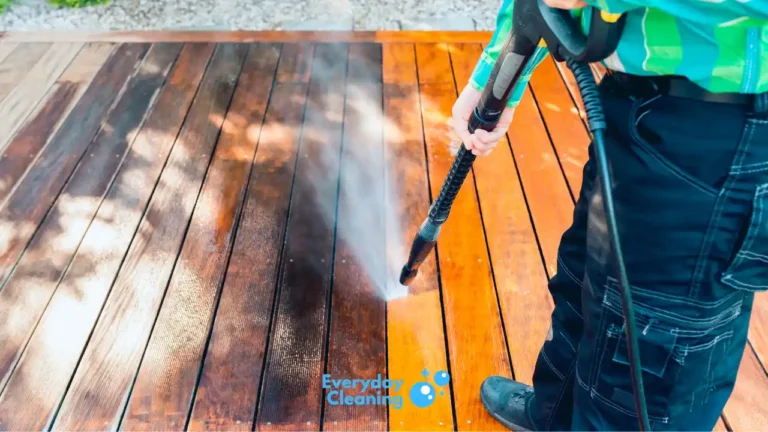
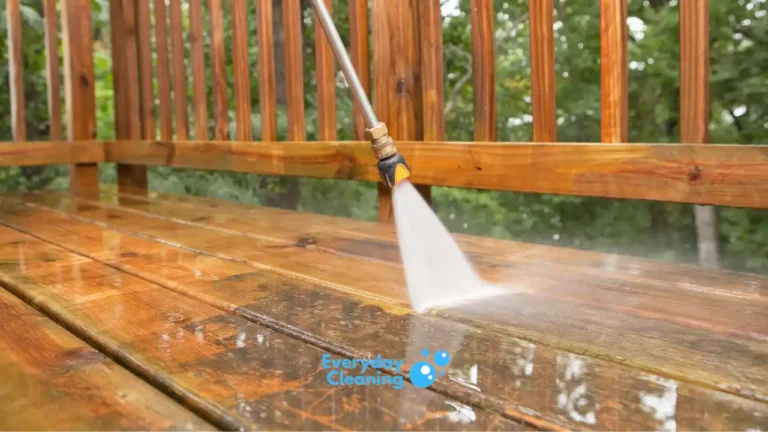
Wash with the grain. For most fence panels, the grain runs vertically. Spray up and down the board, not across it. Spraying against the grain can damage the wood and leave an uneven clean.
Keep a consistent distance. If you move closer or farther away from the fence while spraying, the pressure changes and you get an inconsistent result. In the worst case, you get visible stripes where one section was hit harder than the rest.
Keep a steady spray pattern. Move too fast and you will not clean the board properly. Move too slow or make too many passes in one spot and you risk splintering. Find a pace that feels even and stick to it.
These same principles apply if you are working on a deck. Our guide on how to remove mold from a deck covers a similar process for wood surfaces with heavy mold growth.
What PSI to Use for Pressure Washing a Fence
The right PSI depends on the age and type of wood, but 1,000 to 1,500 PSI is a safe starting point for most residential fences. Older or softer wood needs to stay on the lower end.
Here’s a quick reference:
| Fence Type | Recommended PSI | Nozzle |
|---|---|---|
| New or soft wood | 1,000 PSI | Black (soap) tip |
| Standard wood fence | 1,000–1,500 PSI | Black or 40-degree (white) tip |
| Older, weathered wood | 1,000 PSI max | Black (soap) tip only |
| Hardwood or composite | Up to 1,800 PSI | 40-degree (white) tip |
If you are not sure where your fence falls, start at 1,000 PSI and increase only if needed. The soap nozzle is your safest option.
How to Pressure Wash a Fence: Full Step-by-Step Summary
For anyone who wants the quick version:
- Soak nearby plants with water before you start
- Mix fence cleaner in a pump-up sprayer (1:1 ratio with water)
- Apply cleaner to a dry fence, working with the grain
- Let it dwell for 5 minutes, then rinse with a garden hose
- Allow the fence to dry. Repeat if heavy staining remains
- Bring out the pressure washer at 1,000 to 1,500 PSI with a black or 40-degree nozzle
- Wash with the grain, keep a consistent distance and spray pattern
The whole process takes longer than just blasting the fence with a pressure washer, but the result is much better and you will not risk damaging the wood.
Frequently Asked Questions
Can you pressure wash a wood fence without damaging it?
Yes, as long as you use the right PSI and nozzle. Start at 1,000 to 1,500 PSI with a 40-degree or soap nozzle and always wash with the grain. High pressure or a narrow nozzle tip (like a zero-degree) will splinter the wood, and that damage cannot be reversed.
Do you need to use a cleaner before pressure washing a fence?
It makes a significant difference. The cleaner breaks down algae, mold, and built-up grime before you even pick up the pressure washer. This lets you use lower pressure during washing, which protects the wood while still getting a thorough clean. If your fence has visible green or black growth, pre-treating is especially worth it. See our separate guide on removing mold from a deck for a closer look at dealing with biological buildup on outdoor wood.
How long should fence cleaner sit before rinsing?
About 5 minutes is the sweet spot for most outdoor cleaners. Long enough to penetrate and loosen grime, short enough that it does not dry on the surface. If you are working in hot or sunny conditions, work in smaller sections to avoid the cleaner drying before you rinse.
What is the best nozzle for pressure washing a fence?
The black soap nozzle is the safest choice for wood fences. It produces a wide, low-pressure fan that cleans without concentrating force on one spot. If you need a bit more cutting power, step up to the 40-degree white nozzle. Avoid the 25-degree (green) or zero-degree (red) nozzles on wood entirely.