Robot Vacuum vs Upright: Which One Do You Actually Need?
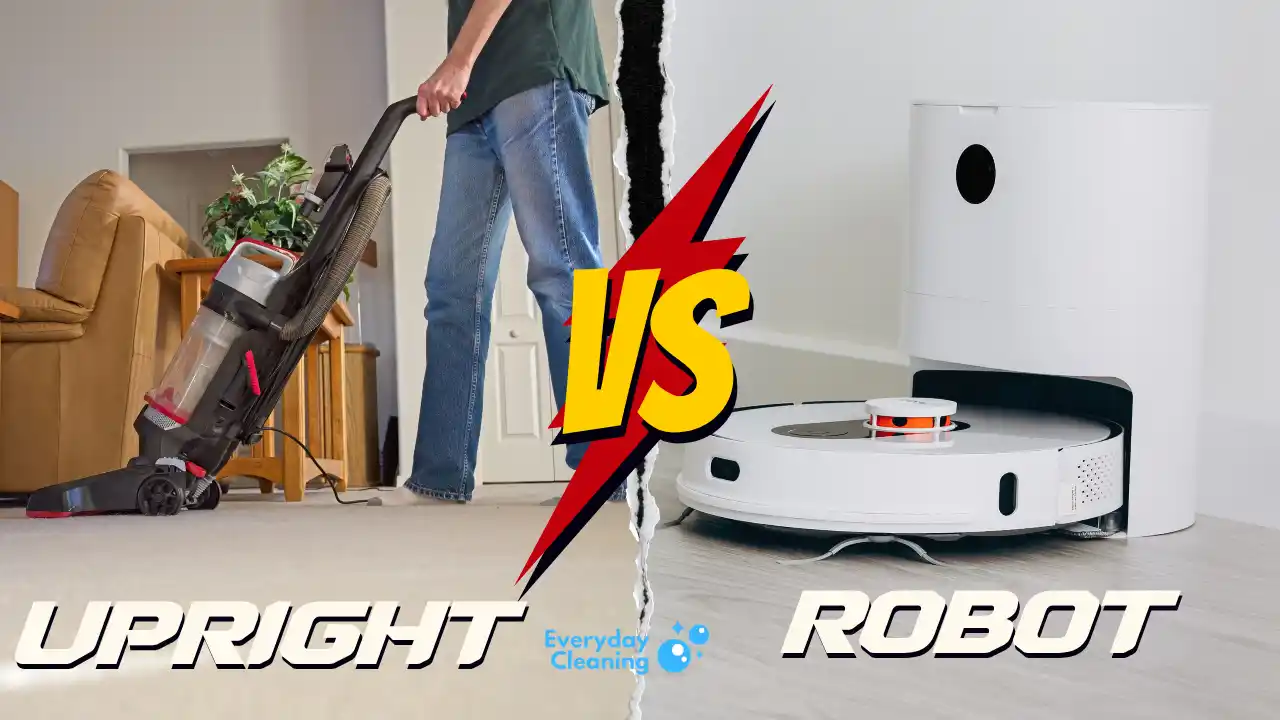
Robot vacuums and upright vacuums solve different problems, which is why comparing them isn’t as straightforward as comparing two similar products. This breaks down where each one actually delivers so you can decide which fits how you live.
Quick Comparison: Robot Vacuum vs Upright
| Feature | Robot Vacuum | Upright |
|---|---|---|
| Deep carpet cleaning | Good (daily maintenance) | Better (weekly deep clean) |
| Hard floor cleaning | Good | Good |
| Automation | Full | None |
| Stairs | Cannot clean | Can (with attachments) |
| Above-floor cleaning | No | Yes |
| Pet hair (daily) | Better | Good |
| Bin size | Small (0.3–0.6L) | Larger (1.5–2.5L) |
| Obstacle handling | Limited | Full |
| Noise while cleaning | Quieter | Louder |
| Entry price for quality | Higher ($300+) | Lower ($150+) |
What Is a Robot Vacuum?
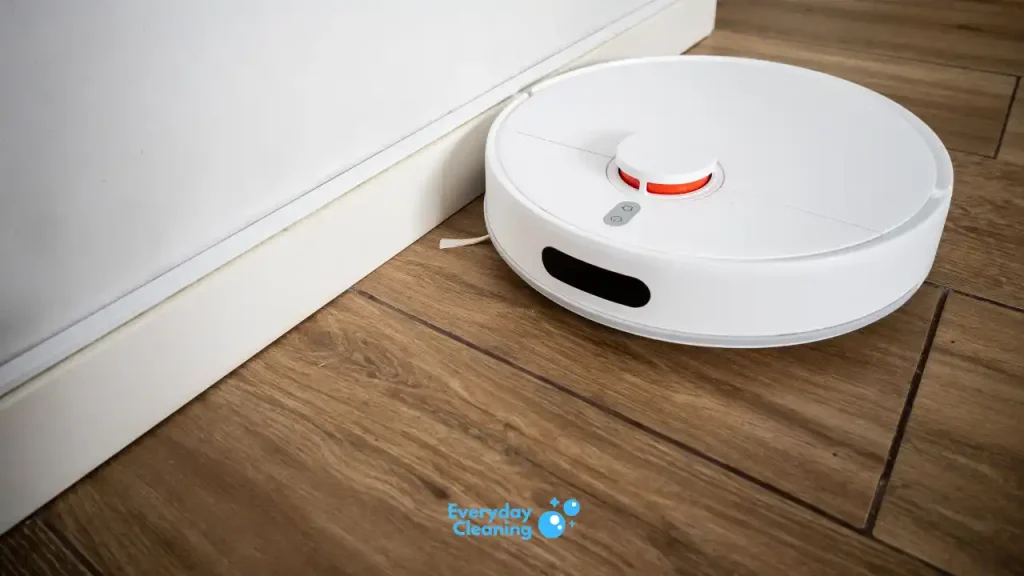
A robot vacuum is a small autonomous disc-shaped machine that cleans your floors on its own. You set a schedule, press a button, or use an app, and it navigates the room, vacuums, and returns to its dock to charge when it’s done.
Modern robot vacuums use a combination of sensors, cameras, and mapping software to navigate around furniture and obstacles. Higher-end models create a detailed floor plan of your home, let you set cleaning zones, and automatically empty their own dustbins into a base station.
The core appeal is automation. The vacuum runs whether you’re home or not, keeping floors consistently cleaner between manual cleaning sessions. The tradeoff is power: robot vacuums are smaller machines with smaller motors, and they can’t match the suction or brushroll agitation of a full-size upright.
What Is an Upright Vacuum?
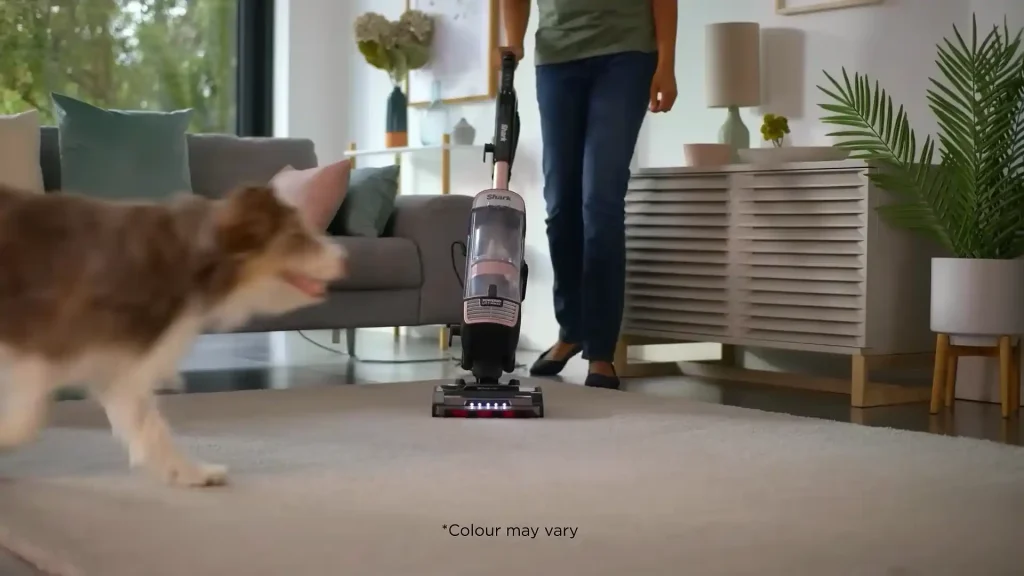
An upright vacuum is a full-size corded machine where the motor, brushroll, and dustbin form a single standing unit you push across the floor. It requires your time and effort to operate, but it delivers the kind of thorough, deep clean that autonomous machines aren’t built for.
Uprights are the most common vacuum type for a reason. They’re powerful, widely available at most budget levels, and require no setup beyond plugging in. When you need to clean something properly, an upright gets the job done.
Robot Vacuum vs Upright: Head-to-Head
Suction Power
Uprights are more powerful, and the gap is meaningful. A mid-range corded upright delivers consistent high suction with a motorized brushroll that agitates carpet fibers as it cleans. The motor runs on mains power and never weakens mid-session.
Robot vacuums have improved dramatically in recent years. Premium models from Roborock, iRobot, and Ecovacs deliver suction that handles everyday dirt and pet hair well. But the motors are physically smaller, constrained by the need to fit in a disc that slides under furniture. On deep-pile carpet with embedded debris, the difference is noticeable.
Think of robot vacuums as maintenance tools and uprights as deep-cleaning tools.
Automation and Convenience
This is where robot vacuums change the game entirely. A robot vacuum can run daily while you’re at work, keeping floors consistently clean without any active effort from you. You set the schedule once and mostly forget it exists.
Uprights require your time every time. You get it out, plug it in, push it through every room, put it away. For busy households, that time cost adds up and cleanings get skipped. A robot vacuum filling in between manual sessions keeps floors in noticeably better shape day-to-day.
For families juggling work, kids, and packed schedules, this alone justifies a robot vacuum. The best robot vacuum for busy families covers the top options for this use case.
Carpet Cleaning
Uprights are better at deep carpet cleaning. The powered brushroll reaches into the carpet pile and physically pulls out embedded dirt, dust mite debris, and pet hair. On high-traffic areas or thick carpet, a weekly upright session does more than a daily robot vacuum run.
Robot vacuums handle low-pile and medium carpet reasonably well. They pick up surface debris, pet hair, and everyday dust on schedules tight enough that dirt doesn’t build up deeply. Where they struggle is thick or high-pile carpet, where the disc shape limits how much brushroll pressure can be applied. For carpet-specific robot performance, the best robot vacuum for thick carpet covers which models manage it best.
For most carpeted homes, the practical answer is both: robot vacuum for daily maintenance, upright for weekly deep cleaning.
Hard Floor Cleaning
Robot vacuums excel on hard floors. The low profile lets them glide across hardwood, tile, and laminate easily, and many include soft-roller attachments specifically for bare surfaces. Running daily on a schedule means crumbs, dust, and pet hair never accumulate to the point where they’re noticeable.
Uprights work fine on hard floors but feel like overkill for routine maintenance. For a daily-use hard floor tool, a robot vacuum is more practical. If your home is predominantly hard floors with pets, the best robot vacuum for tile floors and pet hair covers the strongest options.
Pet Hair
Both types handle pet hair, but in different ways.
Robot vacuums are particularly useful for pet owners because they run frequently. Pet hair accumulates daily, and a robot vacuum running every day or two keeps it from reaching the point where it’s visibly covering floors and furniture. For households with heavy shedders, this is a genuine quality-of-life improvement.
Uprights with a strong motorized brushroll pull embedded pet hair out of carpet more effectively in a single pass. The combination that works best for most pet owners: robot vacuum running daily to catch surface hair, upright used weekly or biweekly for deeper carpet cleaning.
For pet-specific robot vacuum recommendations, the best robot vacuum for pet owners and best robot vacuum for pet hair and allergies are good starting points.
Stairs and Above-Floor Cleaning
Uprights handle stairs better than robot vacuums, though it’s still awkward. Most uprights have attachments for stairs, upholstery, and above-floor surfaces.
Robot vacuums cannot clean stairs at all. They stop at edges using cliff sensors to avoid falling. Above-floor surfaces like sofas, shelves, or curtains are also completely outside their capability. If stairs and upholstery are a priority, an upright is essential, and a robot vacuum is a supplement rather than a replacement.
Obstacles and Clutter
Robot vacuums require a reasonably clear floor to function well. Cables, small toys, socks, and low furniture legs can trap or confuse the machine. Some models now use cameras to identify and avoid obstacles automatically, but this is still imperfect. Running a robot vacuum generally means keeping floors tidier than you might otherwise.
Uprights handle cluttered floors with no issue. You can vacuum around anything or move it as needed. There’s no minimum tidiness requirement.
Navigation and Mapping
Mid-range and premium robot vacuums use LiDAR or camera-based mapping to create an accurate floor plan and clean systematically. You can set rooms, zones, and no-go areas via an app. Entry-level models navigate randomly, which is less efficient and means some areas get cleaned multiple times while others get missed.
If you’re considering a robot vacuum, mapping capability is worth the investment. Random navigation is noticeably less effective over a full session.
Bin Size and Emptying
Upright dustbins are large, often 1.5 to 2.5 liters, and you empty them when full. Simple and manual.
Robot vacuum bins are small, typically 0.3 to 0.6 liters, because the machine needs to be compact. Budget and mid-range models need emptying after every one or two sessions. Premium models include an auto-empty base station that vacuums the robot’s bin into a larger bag automatically, which can hold 30 to 60 days of debris. The auto-empty base is worth it for most households that want low-maintenance operation.
Noise
Robot vacuums are generally quieter than uprights at comparable suction levels. You can run them during the day without it being particularly disruptive. Many users schedule cleanings while they’re out, which makes the noise level largely irrelevant.
Uprights run at 70 to 85 decibels. You’re present the entire time, so the noise is more noticeable.
Price
Upright vacuums span a wide range. Reliable corded uprights start around $100 to $150. Quality mid-range options land at $200 to $400. You can get excellent deep-cleaning performance without spending a lot.
Robot vacuums cost more for equivalent quality. Budget models under $200 tend to have poor mapping and weak suction. A genuinely useful robot vacuum starts around $300 to $400, and premium auto-empty models with strong suction run $500 to $1,000+. The value proposition is the automation, not the cleaning power per dollar.
Who Should Buy a Robot Vacuum?
A robot vacuum suits households where consistency matters more than raw cleaning power. If your floors pick up daily debris from kids, pets, or high foot traffic, a robot running on a schedule keeps things manageable between proper cleaning sessions.
It’s an especially good fit for hard floor homes, open-plan layouts with minimal clutter, and anyone who travels frequently or keeps irregular hours. For pet owners managing daily shedding, a robot vacuum running every day or two makes a noticeable difference in how the home feels. Cat owners dealing with litter scatter will find the best robot vacuum for cat litter and best robot vacuum for cat hair and litter useful for finding models built for that specific problem.
Apartment dwellers benefit from the compact footprint and quiet operation. The best robot vacuum for small apartments covers models sized and priced for smaller spaces.
Who Should Buy an Upright Vacuum?
An upright is the right primary vacuum for most homes. If you have carpet that needs regular deep cleaning, stairs, or above-floor surfaces to maintain, an upright covers things a robot vacuum simply can’t.
It’s also the better choice if your budget is tight and you need one machine to do everything. A quality upright at $200 to $300 outperforms a robot vacuum in that price range on actual cleaning results. The best upright vacuum cleaners covers the current top performers, and for pet hair specifically, the best vacuum cleaners for pet hair narrows to the models that handle heavy shedding best.
Do You Need Both?
A lot of households end up with both, and it makes sense. The robot vacuum runs daily and keeps floors in good shape with no effort. The upright comes out once a week or biweekly for a proper deep clean, stairs, and upholstery.
This isn’t buying two vacuums because one isn’t good enough. It’s using two tools for two different jobs. The robot handles the frequency problem; the upright handles the depth problem. Together they do what neither can fully accomplish alone.
If you’re trying to decide whether to start with a robot vacuum or an upright as your primary tool, the answer usually comes down to your floor type and how often you realistically vacuum now. If you’re already disciplined about weekly vacuuming, an upright is your core machine. If your floors suffer between sessions because life gets busy, a robot vacuum addresses the actual problem.
Frequently Asked Questions
Can a robot vacuum replace an upright entirely?
For small apartments with mostly hard floors and light use, a premium robot vacuum can come close. For homes with carpet, stairs, upholstery, or heavy pet hair, a robot vacuum works best as a supplement to an upright rather than a replacement.
How often should a robot vacuum run?
Most households benefit from daily or every-other-day runs on hard floors, and every-other-day to every-three-days on carpet. Pet owners often run them daily. The advantage of scheduling means frequency costs you nothing extra once set up.
Do robot vacuums work on thick carpet?
Budget and mid-range models struggle with high-pile carpet. Premium models with strong suction and motorized brush heads handle medium-pile carpet well. Thick shag or plush carpet remains difficult for any robot vacuum. The best robot vacuum for thick carpet covers which models manage it best.
Are robot vacuums worth the money?
For most households, yes, if you choose the right tier. A $150 robot vacuum is often frustrating. A $400 to $600 model with mapping and decent suction genuinely changes how clean your floors stay day-to-day. The value isn’t in cleaning power per dollar — it’s in the hours of effort you get back over months and years of use.
Can robot vacuums handle pet hair without clogging?
Many can, but look for models with tangle-free or anti-tangle brush rolls specifically designed to handle hair without wrapping. Standard brush rolls clog with long or thick pet hair and need frequent manual clearing. This is worth checking before buying.
Do I need to be home when a robot vacuum runs?
No — that’s the point. Most people schedule runs while they’re at work or out. You come home to clean floors without having done anything. App-connected models send a notification when the run is complete.