Central Vacuum vs Upright: Which Is Better for Your Home?
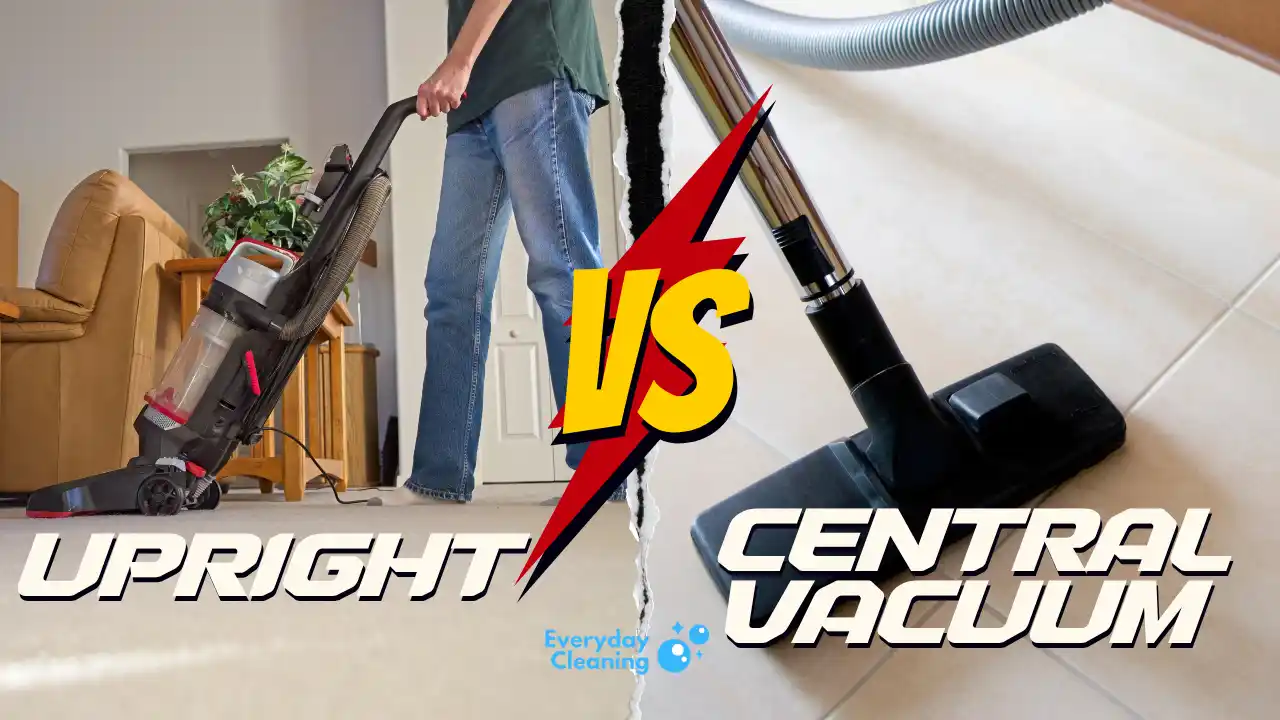
Central vacuums and upright vacuums are built on completely different ideas of how a home should be cleaned. This breaks down which one is actually worth it depending on your home, budget, and priorities.
Quick Comparison: Central Vacuum vs Upright
| Feature | Central Vacuum | Upright |
|---|---|---|
| Suction power | Higher | Good |
| Carpet cleaning | Excellent | Very good |
| Allergen control | Better (exhausts outside) | Good (HEPA models) |
| Noise in cleaning area | Much quieter | Louder |
| In-use weight | Light (hose only) | Heavier |
| Upfront cost | High ($1,500-$4,000+) | Low ($150-$600) |
| Installation required | Yes (professional) | No |
| Lifespan | 20-30 years | 5-10 years |
| Portability | No | Yes |
| Maintenance frequency | Low | Moderate |
What Is a Central Vacuum?
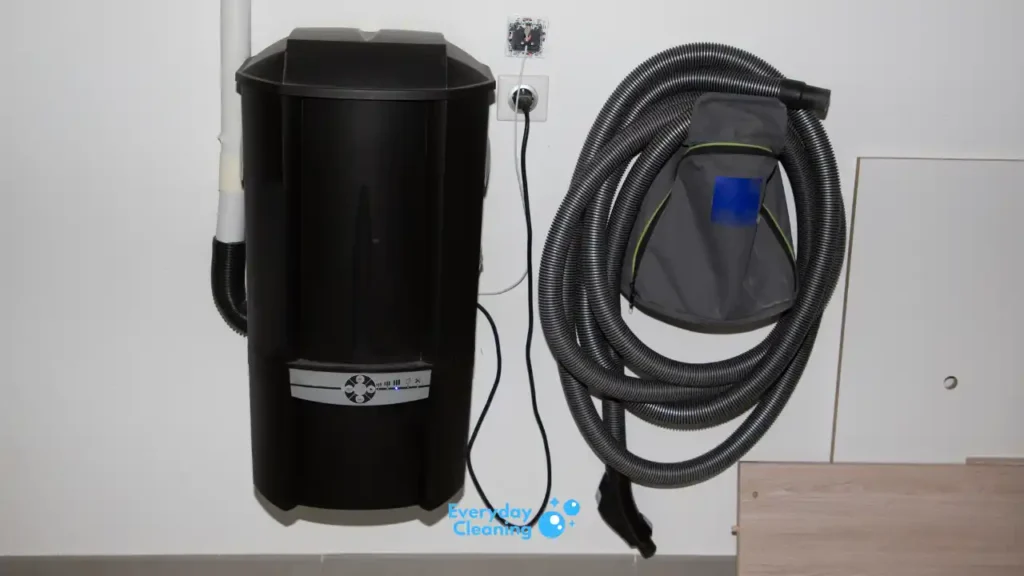
A central vacuum is a built-in system where the motor and collection unit are installed in a fixed location, usually a garage, basement, or utility room. Tubing runs through the walls to inlet valves placed throughout the home. To vacuum, you plug a lightweight hose into the nearest inlet and clean with just the hose and cleaning head.
The motor never moves. The heavy unit stays out of living spaces entirely. What you carry from room to room is just a lightweight hose and wand, usually 5 to 8 lbs total.
Central vacuums are a permanent home installation. They require professional fitting in most cases, particularly the in-wall tubing. Retrofitting an existing home is possible but adds cost and complexity. New construction and major renovations are the most common times people add them.
What Is an Upright Vacuum?
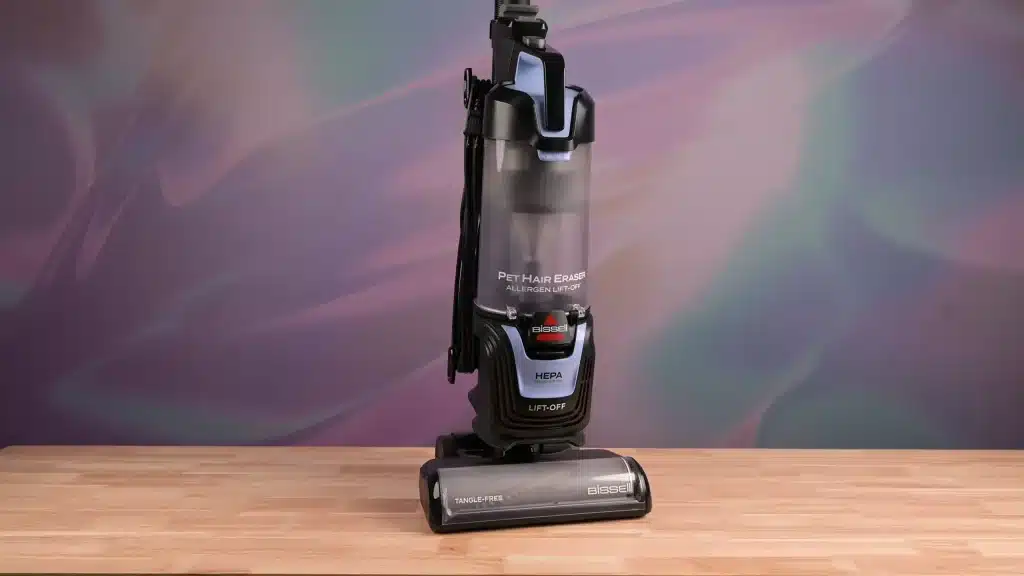
An upright vacuum is a standalone machine where the motor, brushroll, and dustbin form one portable unit. You store it, carry it to each room, plug it in, and push it across the floor. No installation required.
Uprights are the default vacuum type for most households. They’re widely available, cover a broad range of budgets, and require no professional setup. When the vacuum breaks or wears out, you replace it. No contractor needed.
The tradeoffs are weight and noise. Most uprights weigh 12 to 18 lbs, and the motor runs in the same room you’re cleaning. The bulk and noise are the main reasons people start looking at alternatives.
Central Vacuum vs Upright: Head-to-Head
Suction Power
Central vacuums are generally more powerful. The motor is larger because it doesn’t need to be portable, and the unit is built for whole-home performance rather than room-by-room use. Most central vacuum systems deliver 3 to 5 times more airflow than a standard portable vacuum.
That power advantage is most noticeable on heavy-traffic carpet and in homes with pets. The suction doesn’t fluctuate from room to room and never weakens because a dustbin is getting full.
Premium uprights like the Shark or Miele corded models close the gap significantly. But at a comparable total spend, the central vacuum usually delivers more raw suction.
Carpet Cleaning
Both types clean carpet well. The edge depends on setup.
A central vacuum with a motorized powerhead attachment is one of the most effective carpet cleaning systems available. The consistent high suction combined with brushroll agitation pulls deeply embedded dirt and pet hair more thoroughly than most portable machines manage over time.
Uprights are designed for carpet and perform well at it. The brushroll does real work on medium and thick pile. For most households with normal carpet and regular cleaning schedules, a good upright is entirely sufficient. If you’re evaluating upright options specifically for carpet, the best vacuum cleaners for carpet covers the strongest current models.
Allergen and Air Quality
This is where central vacuums have a clear advantage. When you vacuum with an upright, the exhaust air from the motor blows back into the room. Even with HEPA filtration, some fine particles recirculate. If someone in the home has allergies or asthma, this matters.
A central vacuum exhausts outside the living area entirely. The motor unit is in the garage or basement, and the exhaust either vents outdoors or filters into that remote space. Allergens, dust mites, and fine particles don’t re-enter the room you’re cleaning at all.
For allergy sufferers, this is often the deciding factor. It’s a genuinely different experience compared to even the best HEPA upright. If allergen control is a priority, the best vacuum for allergies covers portable alternatives, and the best HEPA vacuum for allergies narrows to filtration-focused models if you stay with a portable machine.
Noise Level
Central vacuums are significantly quieter in the cleaning area. The motor is in a remote location, so what you hear while vacuuming is mostly airflow through the hose. You can hold a conversation, have the TV on, or clean without waking someone sleeping in the next room.
Uprights are noticeably louder. The motor runs right next to you, often at 70 to 85 decibels. It’s not damaging, but it’s intrusive. If noise is a regular complaint in your household, a central vacuum solves it in a way no portable machine can match.
Weight and Physical Effort
The in-use weight of a central vacuum is just the hose and cleaning head, typically 5 to 8 lbs. You’re not carrying a motor. For seniors, people with back pain, or anyone who finds vacuuming physically taxing, this is a substantial difference from pushing a 15 lb upright around.
The tradeoff is the hose itself. A full-home central vacuum hose is typically 30 to 35 feet long, which lets you cover large areas from a single inlet. But managing a long hose has its own awkwardness, especially in rooms with furniture.
Installation and Setup
Upright vacuums require zero installation. Take it out of the box, plug it in, clean. That simplicity is one of their biggest advantages.
Central vacuums require professional installation of in-wall tubing and inlet valves. In new construction, this adds roughly $1,500 to $3,500 depending on home size and number of inlets. Retrofitting an existing home costs more because walls need to be opened for the tubing runs.
This is not a weekend project for most homeowners. If you’re mid-renovation or building new, it’s much simpler to add. If your home is finished, the installation cost and disruption are the main barriers.
Cost
The upfront cost comparison is stark. A quality upright vacuum runs $150 to $600. A central vacuum system installed in an existing home typically costs $1,500 to $4,000 or more depending on home size, inlet count, and whether it’s new construction or retrofit.
The long-term math shifts somewhat. Central vacuum motors last 20 to 30 years with minimal maintenance. You’re not replacing the unit every 5 to 10 years the way most households cycle through portable vacuums. The collection canister empties less frequently (often just a few times per year), and bags or filters cost less annually than maintaining a portable machine.
Over a 20-year period in a larger home, the total cost of ownership can be comparable. But the upfront investment is substantially higher, and that’s the number most buyers see first.
Coverage and Flexibility
A central vacuum covers a fixed home. Inlet valves are placed at installation, and the hose reaches from each one. If your home layout changes or you move, the system stays behind. You can’t take it with you.
Uprights go anywhere. Carry them to a vacation property, move them to a new house, use them in the garage. That portability is something a central vacuum can’t offer.
Maintenance
Central vacuums need very little day-to-day maintenance. The collection canister holds a large volume of debris, often 5 to 6 gallons, and needs emptying only a few times per year. The motor unit is out of the way and doesn’t require frequent filter changes.
Uprights need more regular attention. Filters need cleaning or replacing every 3 to 6 months depending on the model. The brushroll picks up hair and needs periodic clearing. Dustbins fill up during a session and need emptying. None of it is difficult, but it adds up over time.
Who Should Buy a Central Vacuum?
A central vacuum makes the most sense for homeowners in larger homes (2,000 sq ft and above) who are building new or doing a major renovation. The installation is far simpler and less expensive at that stage, and the long-term investment pays off over time.
It’s also a strong choice for households with allergy or asthma sufferers. The exhaust-outside design genuinely reduces airborne allergens in a way that no portable vacuum fully replicates. If someone in the home is sensitive to dust, pet dander, or dust mites, the best vacuum for dust mite allergies shows what portable machines can do, but a central system goes further.
Seniors and anyone who finds vacuuming physically demanding benefit from the lightweight hose setup. The reduced noise is also a quality-of-life improvement that’s hard to put a number on but consistently cited as a reason people love the system once installed.
For a comparison of the top central vacuum systems, the best central vacuum cleaners covers the leading options in this category.
Who Should Buy an Upright Vacuum?
An upright is the right call for most renters, anyone in a home under 1,500 sq ft, and homeowners who aren’t mid-renovation. The upfront cost is low, setup is instant, and the cleaning performance is more than adequate for normal household use.
Uprights also make sense if you want portability. One machine covers your home, a vacation property, a garage, or wherever else you need it. You’re not locked into a fixed installation.
If your home is mostly carpet and you want reliable deep cleaning without a large upfront spend, a quality corded upright is a practical, sensible choice. The best upright vacuum cleaners is a good starting point for comparing models. For pet hair specifically, the best vacuum cleaners for pet hair covers which upright options handle heavy shedding best.
Frequently Asked Questions
Is a central vacuum worth the cost?
For larger homes where you’re already renovating or building new, yes. The installation cost is lower at that stage, the system lasts 20 to 30 years, and the daily experience of quieter and lighter vacuuming adds up. For a finished smaller home, the upfront cost is harder to justify against a quality upright.
Can a central vacuum be added to an existing home?
Yes, but it’s more expensive and disruptive than installing during construction. Tubing runs through walls and requires cutting and patching. Most retrofits cost $2,500 to $4,500 depending on home size and layout complexity. It’s doable but not a casual decision.
Does a central vacuum increase home value?
It can. Central vacuum systems are listed as a home feature and can be appealing to buyers, particularly in higher-end markets. The value add is modest and hard to quantify, but it’s not zero.
How often does a central vacuum need to be emptied?
Most central vacuum canisters hold 5 to 6 gallons and need emptying only a few times per year in a typical household. Some bagged systems go even longer between changes.
Are central vacuums better for allergies than uprights with HEPA filters?
Generally yes. HEPA uprights trap fine particles well, but the motor exhaust still blows air back into the room. Central vacuums route all exhaust away from living areas, which means nothing recirculates. For severe allergy sufferers, that’s a meaningful difference.
What happens if a central vacuum breaks down?
The motor unit can be repaired or replaced without touching the in-wall tubing. The hose and cleaning attachments are replaceable independently. Repairs are less frequent than with portable vacuums, but when they happen, you’ll need a technician rather than just buying a new machine.