Vinyl Floor Cleaning: The Complete Guide (Daily, Weekly, and Deep Clean)
Vinyl floors are durable, water-resistant, and forgiving. But they are not maintenance-free. The wrong cleaner, too much water, or the wrong mop can dull the finish and leave residue that builds up fast.
This guide covers everything from daily upkeep to deep cleaning vinyl floors without damaging them.
Types of Vinyl Flooring
Not all vinyl is the same, and the differences affect how you clean it.
- Sheet vinyl is a single continuous layer rolled out across the floor. It has no seams, which makes it water-resistant but also means any buckle or tear is a bigger repair.
- Vinyl plank (LVP) mimics the look of wood and comes in individual planks that click together. The seams are tight but not fully waterproof. Excess water can work its way down between planks and cause swelling or adhesive failure underneath.
- Vinyl tile is laid in individual tiles. Same concern as planks: the grout lines or seam gaps are potential water entry points.
The cleaning principles are the same across all three types, but LVP and tile require more attention to water volume. Damp mopping is fine. Soaking is not.
What to Use and What to Avoid
Safe Cleaners for Vinyl Floors
- Warm water alone (handles most routine dirt)
- A few drops of dish soap in a bucket of warm water
- pH-neutral floor cleaner (labeled safe for vinyl or LVP)
- White vinegar diluted in water (about half a cup per gallon) for light grease
What to Avoid
These cause damage that is often permanent:
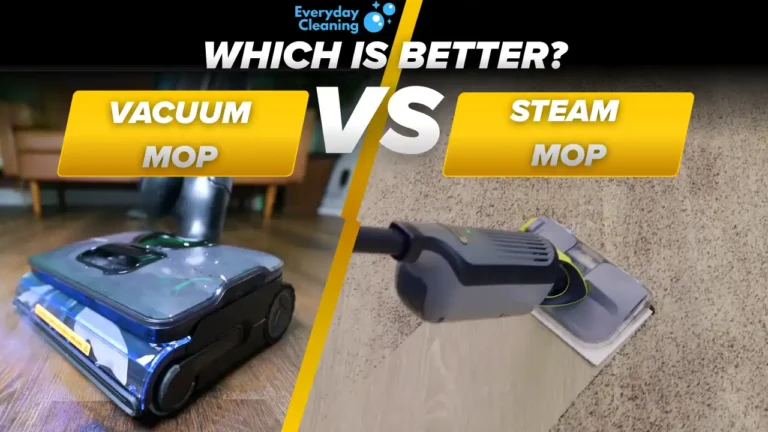
- Steam mops on LVP and vinyl plank — heat and moisture force their way into seams and cause swelling and warping. If you are considering steam on vinyl plank, read can you use a steam mop on vinyl plank flooring first. Sheet vinyl in good condition handles steam better, but it is still a risk.
- Abrasive scrubbers — steel wool or stiff bristle brushes scratch the wear layer permanently
- Bleach-based cleaners — discolor and degrade the surface over time
- Solvent-based cleaners or floor strippers — dissolve the finish and leave the surface dull
- Wax-based products — vinyl does not need wax and buildup from these is very hard to remove
- Excessive water — any standing water that sits more than a few minutes risks damage, especially with LVP
Daily and Weekly Vinyl Floor Cleaning
Daily: Sweep or Vacuum
Grit, sand, and fine debris are the biggest enemies of vinyl flooring. They act like sandpaper underfoot and scratch the wear layer gradually every time someone walks across the floor.
Sweeping or vacuuming daily in high-traffic areas removes this before it causes damage. It takes two minutes and prevents more wear than any other single habit.
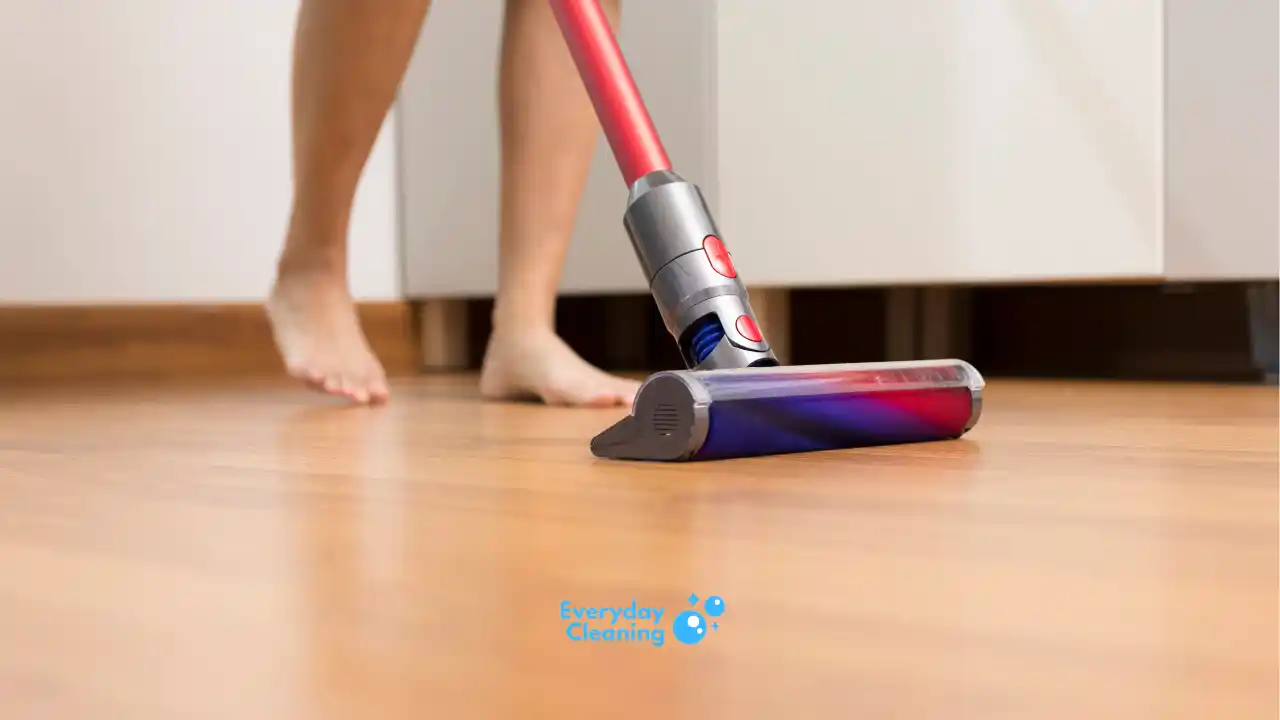
For vacuuming, use a hard floor setting and make sure the brush roll is off. A spinning brush roll can scratch vinyl, especially LVP with a wood-grain embossed surface. A vacuum with a soft roller brush or a dedicated hard floor head is safer. Our roundup of the best vacuum for tile floors and carpet covers models with settings that work well on both hard surfaces and area rugs, which comes up a lot in rooms with vinyl floors.
A microfiber dust mop is another solid daily option. No noise, no suction, just pushes debris to one spot efficiently.
Weekly: Damp Mop
Once a week is the right frequency for mopping vinyl in most households. High-traffic areas or homes with kids and pets may need it twice a week.
Here is the process:
- Sweep or vacuum first. Mopping over grit pushes it across the floor and scratches the surface.
- Fill a bucket with warm water and a small amount of pH-neutral cleaner. Less is more. Too much soap leaves a sticky film.
- Wring the mop thoroughly. It should be damp, not dripping. If you squeeze it and water runs out freely, it is too wet.
- Mop in the direction of the planks or tiles rather than across them.
- Rinse with a second pass using clean water if you used any cleaner.
- Let the floor air dry. Do not leave wet mop heads sitting on the floor.
A flat microfiber mop works better than a string mop on vinyl. String mops hold too much water and the wringing is less precise. A flat mop head gives you more control over how damp the surface gets.
If you are looking at steam options for your regular mop routine, the comparison in steam mop vs regular mop lays out when steam makes sense and when it does not.
How to Deep Clean Vinyl Floors
Deep cleaning once a month removes the residue and buildup that weekly mopping leaves behind.
Step 1: Clear the Room
Move furniture, rugs, and anything sitting on the floor. Deep cleaning only works if you reach the full surface, including under furniture edges and along walls.
Step 2: Vacuum Thoroughly
Vacuum the entire floor with a hard floor attachment. Pay attention to the edges along the baseboards and any seams between planks where grit packs in.
Step 3: Mix a Cleaning Solution
Warm water with a few drops of dish soap is enough for most floors. For vinyl with grease or heavy grime, a vinyl-specific floor cleaner used at the manufacturer’s recommended dilution works better.
For a DIY option, half a cup of white vinegar in a gallon of warm water cuts through grease and residue without damaging the surface. Do not go heavier than this ratio. Undiluted vinegar is acidic enough to affect the finish on some vinyl over time.
Step 4: Mop in Sections
Work in sections rather than trying to do the whole floor in one pass. Dip the mop, wring it very well, mop a section about six feet square, then move to the next.
Change the water when it looks gray. Mopping with dirty water deposits a thin film of grime rather than removing it.
Step 5: Rinse the Floor
After the cleaning pass, do a second pass with clean warm water only. This removes soap residue that dulls the surface if left to dry.
Step 6: Dry the Floor
Let the floor air dry before walking on it or moving furniture back. If you used a damp-enough mop, this takes five to ten minutes.
Do not use towels to dry vinyl floors by wiping in large strokes. This can push residue into seams and leave streaks.
Stain Removal on Vinyl Floors
Most stains on vinyl come out with warm water and a little dish soap applied with a cloth. For tougher spots:
- Scuff marks: A pencil eraser works on rubber scuffs. Rub gently, then wipe clean.
- Grease and oil: A few drops of dish soap applied directly to the stain. Let it sit for one minute. Wipe with a damp cloth.
- Permanent marker or ink: Rubbing alcohol on a cloth. Wipe gently. Do not scrub.
- Heel marks or black rubber streaks: A little WD-40 on a cloth removes these effectively. Wipe up any remaining residue with a damp cloth after.
- Dried food or sticky residue: Warm damp cloth placed over the area for a minute to soften, then wipe away. Do not scrape with anything metal.
- Mold or mildew (common in bathrooms): A solution of one part white vinegar to one part water, applied with a cloth and left for five minutes before wiping. For stubborn mildew in grout lines around vinyl tile, a dedicated grout cleaner is more effective.
Can You Use a Steam Cleaner on Vinyl Floors?
The answer depends on the type of vinyl and the condition of the seams.
For sheet vinyl in good condition with no lifted edges or cracks, a steam cleaner used carefully and quickly can work. Do not leave the steam head in one place.
For vinyl plank (LVP) and vinyl tile, steam is riskier. Even tight click-lock seams are not fully sealed. The heat and moisture from a steam cleaner can work into these joints over time. Most LVP manufacturers void the warranty if steam cleaning is used.
If sanitizing is the goal and you want to use steam, our guide to the best steam cleaner for vinyl floors covers the models with the settings and features that reduce the risk for this application. A low-moisture steam setting and fast, continuous passes are safer than high-steam stationary use.
Keeping Vinyl Floors Clean Longer
Use mats at every entry point. Most dirt on vinyl floors walks in from outside. A mat at every door catches it before it reaches the floor.
Felt pads under furniture legs. Chair and table legs without felt pads leave scratches and scuff marks every time the furniture moves.
Avoid dragging anything across the floor. Appliances, furniture, heavy boxes. Lift and carry. Dragging leaves marks that do not come out.
Deal with spills immediately. Vinyl is water-resistant but not waterproof at the seams. A spill wiped up in 30 seconds is no issue. One left for an hour is a potential problem with LVP, especially near the perimeter or where planks join.
Use a walk-off mat inside the door too. The first mat stops debris. The second mat, inside the door, catches moisture and anything the first mat missed.
How Often Should You Clean Vinyl Floors?
| Task | Frequency |
|---|---|
| Sweep or vacuum | Daily in high-traffic areas |
| Damp mop | Weekly |
| Deep clean | Monthly |
| Stain removal | As needed, immediately |
The daily sweep is the highest-impact habit. Grit that stays on the floor does more damage than anything else over time.
Frequently Asked Questions
What is the best cleaner for vinyl floors?
Warm water with a small amount of pH-neutral floor cleaner or a few drops of dish soap handles most routine cleaning. Avoid anything with bleach, solvent, or wax. Vinyl-specific cleaners like Bona Hard Floor Cleaner or Armstrong Floor Cleaner are safe options if you prefer a dedicated product.
Can I use a Swiffer on vinyl floors?
Yes. Swiffer dry cloths work well for daily dusting. Swiffer WetJet on vinyl is generally fine for routine mopping. The cleaning solution is pH-neutral and the moisture level is low. Avoid the heavy-duty pads, which are more abrasive.
Why does my vinyl floor look dull after mopping?
Soap residue is almost always the cause. Too much cleaner in the mop water leaves a film as it dries. Use less cleaner and do a rinse pass with clean water after mopping. Buildup from wax-based products also causes this and is harder to fix.
Can you use bleach on vinyl floors?
Diluted bleach is sometimes used for disinfecting but it is not recommended for regular cleaning. It can discolor the surface and degrade the finish over time. A pH-neutral disinfectant is a safer choice for sanitizing vinyl floors.
Is vinegar safe for vinyl plank flooring?
Diluted white vinegar (half a cup per gallon of water) is safe for most vinyl plank floors used occasionally. Do not use it regularly as the main cleaner. Some manufacturers recommend avoiding acidic cleaners entirely, so check your floor’s care guide if you have it.
How do I get rid of yellowing on vinyl floors?
Yellowing on vinyl is usually caused by rubber-backed mats left in place too long. Rubber reacts with the vinyl and stains it permanently. This type of staining does not come out with cleaning. Avoid rubber-backed mats on vinyl floors and use felt or vinyl-backed mats instead.