
The 7 best pressure washers of 2026
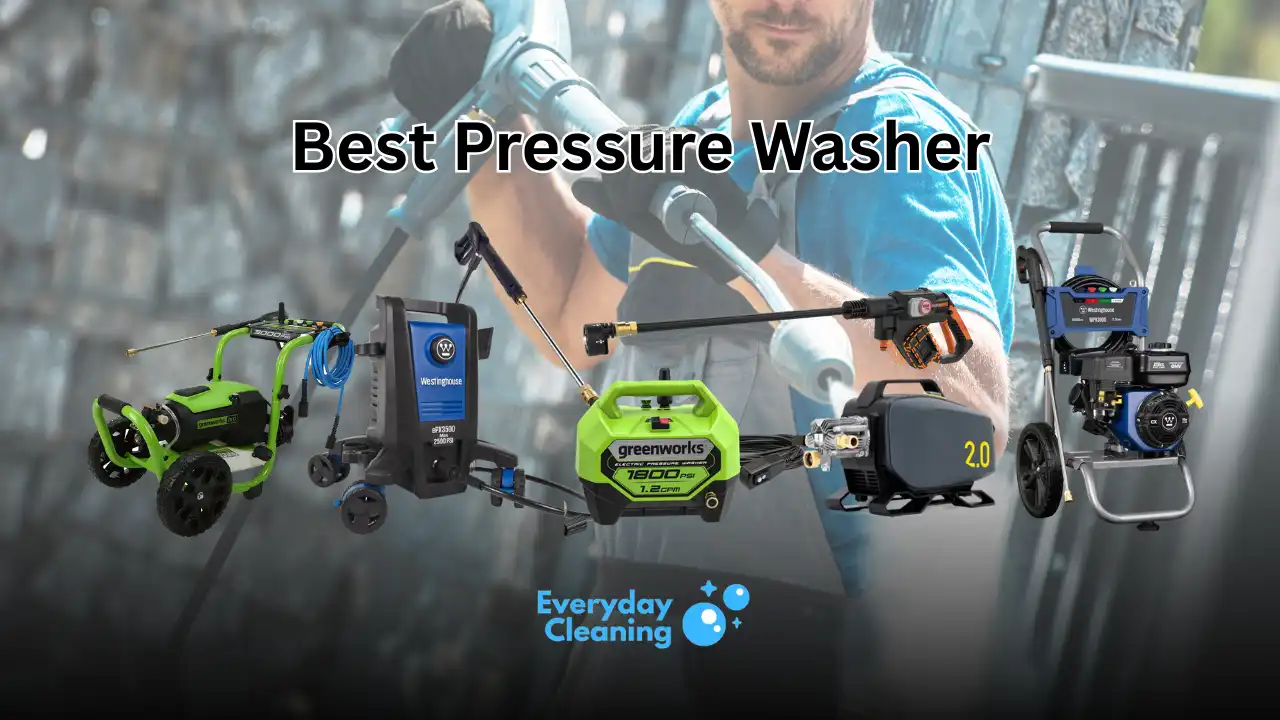
Dirty driveways, grimy siding, and stained patios are no match for the right pressure washer. We tested seven models across electric, cordless, and gas categories to find the ones that actually deliver.
Our Top Picks
| Recommendation | Product | Reason |
|---|---|---|
| Best Overall | Westinghouse ePX3500 | Anti-tipping 4-wheel design, 5 nozzles, 2500 PSI in 19 lbs. Reviews ↓ |
| Best Budget | Greenworks 1800 PSI | PWMA-certified with TSS and wheels at an honest price. Reviews ↓ |
| Best for Car Washing | Active 2.0 Pressure Washer | 2.0 GPM flow rate and 5-piston pump built for foam cannon detailing. Reviews ↓ |
| Best High-Power Electric | Westinghouse WPX3000e | 3000 PSI induction motor runs quieter than gas at heavy-duty output. Reviews ↓ |
| Best Premium Electric | Greenworks Pro GPW3001 | PWMA-certified 3000 PSI with a 10-year motor warranty. Reviews ↓ |
| Best Cordless | WORX WG647 Hydroshot | 800 PSI true portability from bucket, lake, or rain barrel. Reviews ↓ |
| Best Gas | Westinghouse WPX3400 | 3400 PSI and 2.6 GPM with 24,000+ verified Amazon reviews. Reviews ↓ |
Best Overall: Westinghouse ePX3500
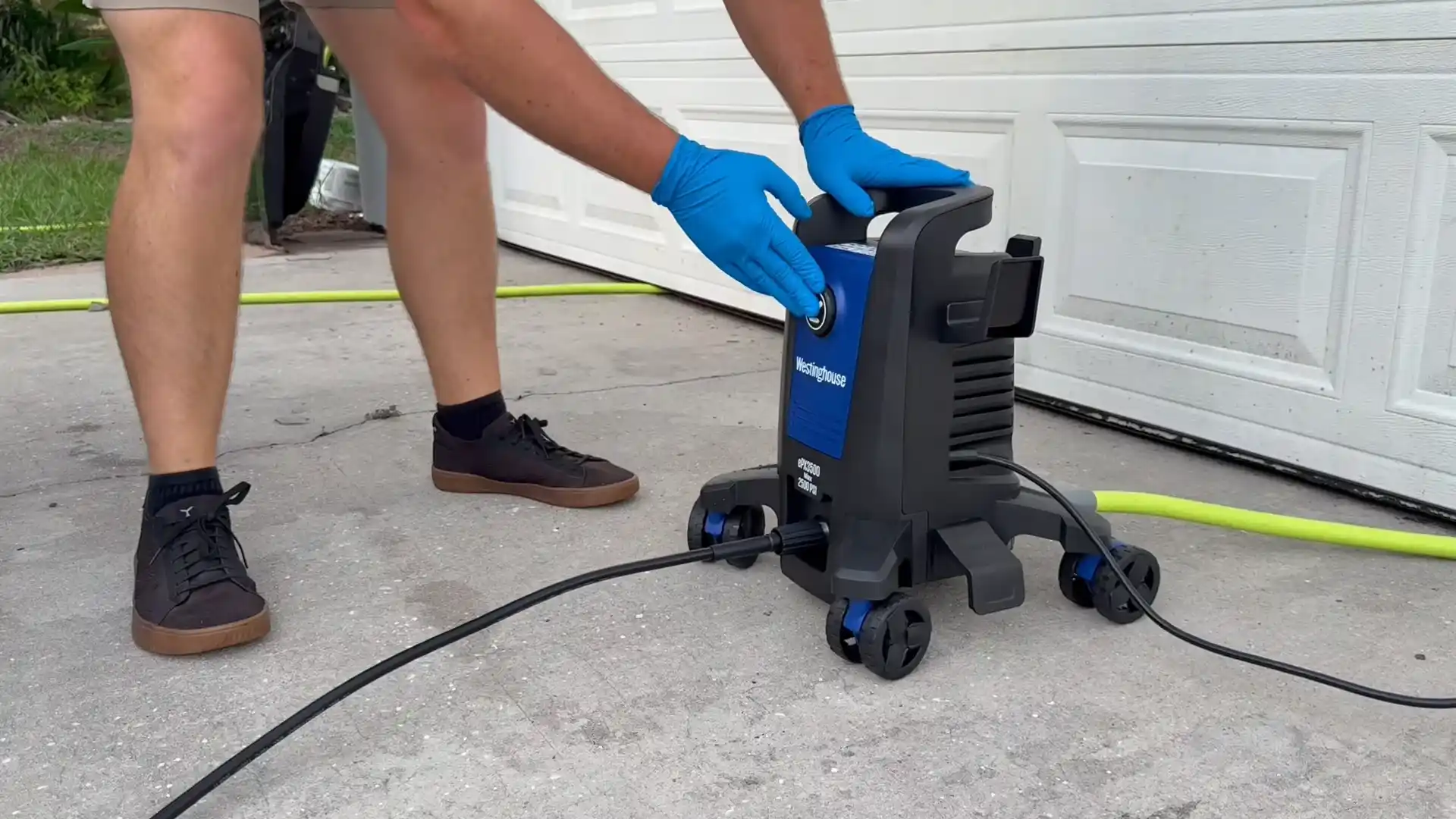
The ePX3500 is the pressure washer most homeowners should buy. It hits 2500 PSI in a 19-pound package with a four-wheel anti-tipping design that actually stays upright on slopes and uneven ground.
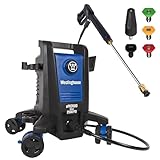
- Delivers 2500 max PSI and 1.76 max GPM (at lowest pressure), and 2000 rated PSI and 1.2 rated GPM of water flow; Pro-style steel extendable 17.5” wand with quick-connect nozzles (0°, 15°, 25°, turbo and soap applicator)
- Super compact and lightweight at 16.5” tall and 19 pounds for convenient storage and portability; Four quick-lock wheels with 360° steering design and low center of gravity engineered for anti-tipping design

Pros and Cons
| Pros | Cons |
|---|---|
| Anti-tipping 4-wheel 360-degree steering design | Plastic body |
| 5 nozzles including 0 degree | Not heavy enough for very stubborn concrete stains |
| 25 ft hose and 35 ft cord | |
| Only 19 lbs: easy to move | |
| 3-year Westinghouse warranty | |
| TSS pump protection included |
Testing Results
PSI and Cleaning Power: Rated 2000 PSI in real use (2500 peak). Handles driveways, patios, siding, and decks with no issues. Not a gas-level blaster, but more than enough for residential tasks.
Concrete and Driveways: Yes. Medium-duty performance. Light oil stains and algae clear up well. Deep-set grease stains may need a second pass with the turbo nozzle.
Siding: Yes. Safe with 25 or 40 degree nozzle. Works fast on light mildew.
Car Washing: Yes. Use the 40 degree nozzle to keep paint safe.
Nozzle Versatility: Five quick-connect nozzles including 0 degree for stubborn spots and a soap nozzle for detergent application. More than most competitors at this price.
Portability: The 4-wheel 360-degree steering is a real differentiator. You can push it backward, sideways, or over rough terrain without tipping. The soap tank is small at 20oz but convenient.
Noise Level: Moderate. Noticeably louder than gas alternatives would sound, but comparable to most corded electric pressure washers.
Real-world Usage
The ePX3500 handles a standard homeowner cleaning session well. Driveway, patio, and siding in a single afternoon is no problem. The 4-wheel steering means you spend less time repositioning and more time cleaning.
The 20oz soap tank is the one annoyance. It runs dry quickly on larger jobs. Keep a refill bottle nearby or plan to switch to bucket soap application for bigger surfaces.
Best Use Case
Ideal for homeowners who want a single pressure washer for all residential tasks: driveways, patios, decks, siding, and car washing. The anti-tipping design makes it better than most for users who clean on sloped driveways or grass.
Not the right pick for users who need gas-level power on heavily stained concrete or large commercial surfaces.
Verdict
The Westinghouse ePX3500 is the best all-around electric pressure washer for homeowners at this price point. Nothing else at $149 to $179 gives you anti-tipping four-wheel steering, five nozzles, a 25 ft hose, and a three-year warranty in a 19-pound package.
The real-world PSI of 2000 is honest enough to do serious work, and the steering design saves real effort on larger jobs. If you are buying one pressure washer for general home use, this is it.
Rating: 4.7 / 5
View on Amazon: Westinghouse ePX3500
Best Budget: Greenworks 1800 PSI
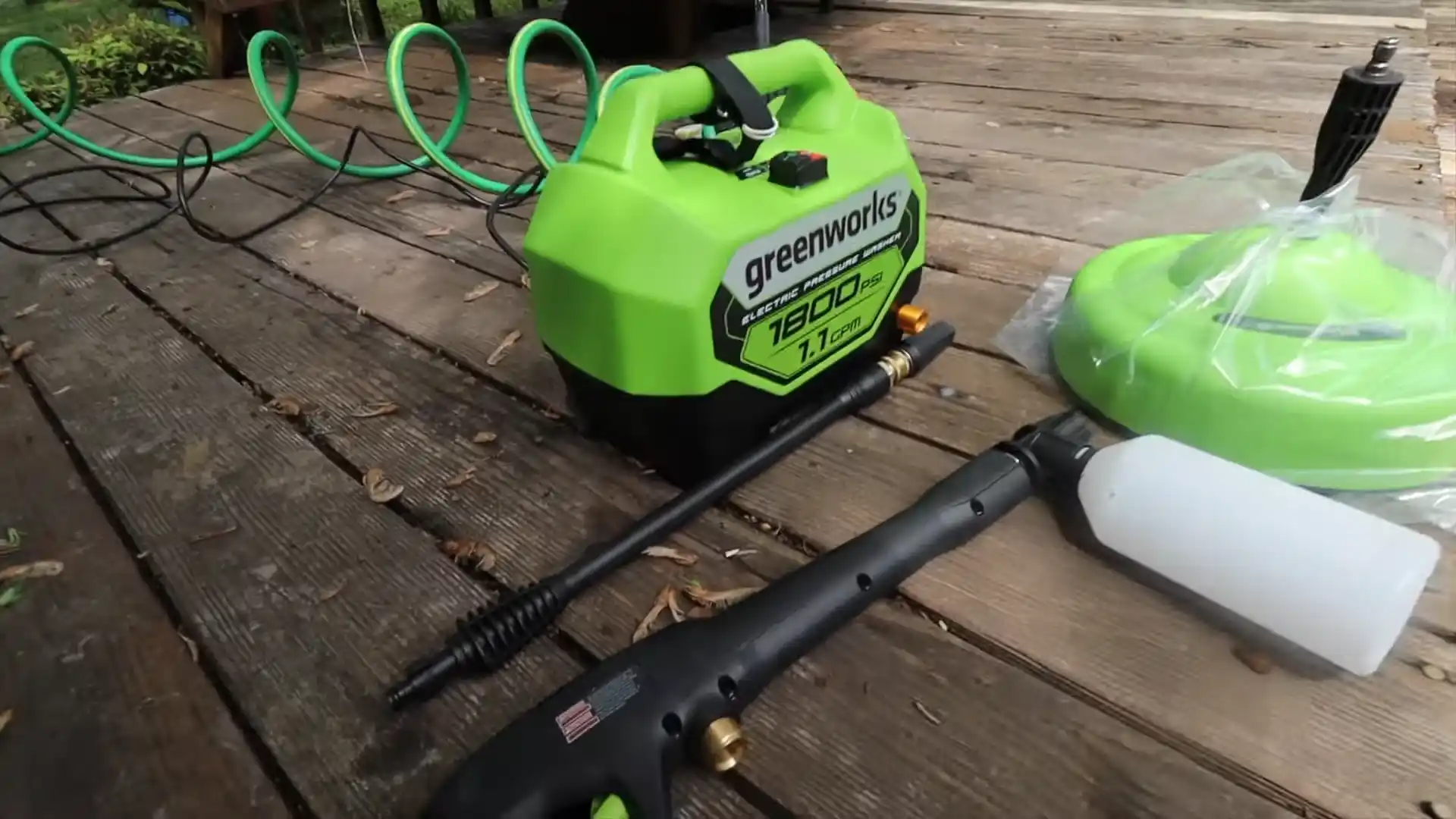
The Greenworks 1800 PSI (5110202) is the budget pick you can actually trust. It is PWMA-certified, meaning its 1800 PSI rating is independently verified. Most budget pressure washers inflate their numbers. This one does not.

- [1800 PSI @ 1.1 GPM] - Great for light-duty, residential cleaning. Clean cars, trucks, motorcycles, boats, RVs, outdoor patio furniture, windows, decks, etc
- [No Maintenance] - No gas, no oil, no spark plugs, no air filters, and no pull cord Push button start
Pros and Cons
| Pros | Cons |
|---|---|
| PWMA certified: PSI claim is independently verified | 1800 PSI limits it to light and medium-duty tasks |
| TSS pump protection | |
| Wheels for easy transport | |
| Trusted Greenworks brand | |
| Lightweight build | |
| 2-year warranty |
Testing Results
PSI and Cleaning Power: 1800 PSI at 1.1 GPM. Honest numbers backed by PWMA certification. Cleans cars, patio furniture, siding, and light decks without issues.
Concrete and Driveways: Light duty only. Surface algae and loose dirt rinse off cleanly. Do not expect it to lift deep stains or years of grime.
Siding: Yes. Works well on vinyl siding with the 25 or 40 degree nozzle.
Car Washing: Yes. This is where the Greenworks shines at this price. Gentle enough to avoid paint damage with the correct nozzle.
Portability: The hand-truck style two-wheel design is a nice touch at this price. Easier to pull across the yard than carrying a compact unit.
TSS Protection: Total Stop System is included. The motor stops when you release the trigger, reducing wear and extending pump life.
Real-world Usage
The Greenworks 1800 PSI is the right starting pressure washer for first-time buyers. It does what it promises, at the pressure it advertises. Cars, patio chairs, window frames, light deck rinsing. That is the realistic scope.
For homeowners who only need a pressure washer a few times a year, it is hard to justify spending more.
Best Use Case
First-time buyers, light residential tasks, car washing, and patio cleaning. Best for anyone who wants a recognizable brand with honest specs at a budget price.
Skip this if you have a large driveway, heavy stains, or need to clean concrete regularly.
Verdict
Budget pressure washers are full of inflated PSI claims. The Greenworks 1800 PSI stands apart because its numbers are independently verified. That alone makes it the most trustworthy option under $130.
Rating: 4.3 / 5
View on Amazon: Greenworks 1800 PSI
Best for Car Washing: Active 2.0
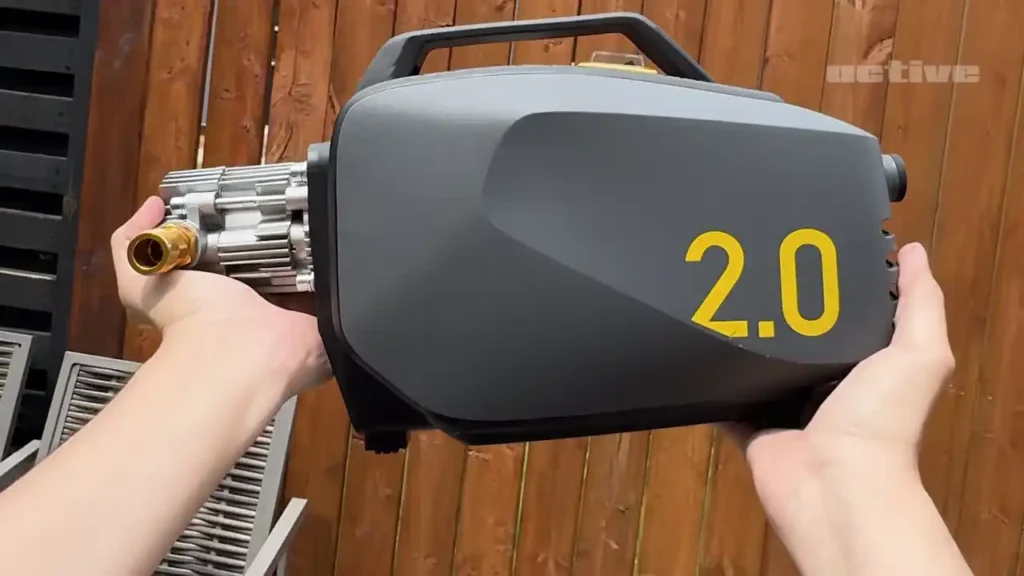
The Active 2.0 is a cult favorite among car detailers for good reason. It runs at 1100 PSI operating pressure, which sounds low until you realize that is exactly what you want near car paint. The 2.0 GPM flow rate is what sets it apart.

- COMPLETE KIT READY FOR IMMEDIATE USE: The 2.0 GPM 1800 Peak PSI unit arrives with all included hoses, nozzles, and accessories needed for fast, deep cleaning transformations on cars, patios, and detailing work without any additional purchases – all the while preventing paint damage
- UPGRADE-READY CONNECTIONS: Universal threading supports garden hose 3/4" GHA and pressure side M22-14mm for broad accessory fit. This interface lets you integrate aftermarket tools, hoses, and add-ons as your system evolves
Pros and Cons
| Pros | Cons |
|---|---|
| 2.0 GPM flow rate: best for foam cannon performance | 1100 PSI operating pressure limits heavy-duty cleaning |
| 5-piston pump rated 250 hours | No wheels |
| Safe working pressure for car paint | |
| Ultra-compact form factor | |
| Strong following on r/AutoDetailing | |
| TSS auto-shutoff included |
Testing Results
PSI and Flow: 1100 PSI operating / 1800 PSI max, 2.0 GPM. The high flow rate is the feature here. Foam cannons need volume, not pressure. This machine delivers.
Car Washing: Yes, best in class at this price. The low working pressure is actually a safety feature for clear coat and paint. Combine with a quality foam cannon and the pre-rinse and foam stages are seamless.
Concrete and Driveways: Light only. Not the machine for driveways.
Siding: Light to medium only. Works on mildew and surface grime, not deeply embedded stains.
Pump Durability: The 5-piston pump is rated 250 hours of use. That is significantly longer than axial cam pumps in most competitors.
Portability: No wheels. The compact box form fits on a shelf or in a cabinet easily. More storage-friendly than most pressure washers on this list.
Real-world Usage
The Active 2.0 is for buyers who take car washing seriously. If foam cannon pre-soak, two-bucket method, and paint-safe rinsing are part of your routine, this machine fits your workflow perfectly.
The r/AutoDetailing community has been recommending it for years. Multi-year ownership reports from detailers confirm consistent performance without pump failure.
It is not the right tool if you also need to blast concrete or tackle heavy outdoor cleaning. For that, you need a second machine or a different pick from this list.
Best Use Case
Car detailing enthusiasts, apartment dwellers with limited storage, and foam cannon users. Also a good fit for anyone with a garage setup who wants a dedicated car-wash station.
Not for heavy-duty exterior cleaning.
Verdict
The Active 2.0 earns its reputation in the detailing community. The flow rate, pump durability, and paint-safe working pressure are genuinely better than what you get from standard pressure washers at this price range.
If you mostly care about car washing and detailing, this is the right call. Our best pressure washer for car detailing roundup goes deeper on foam cannon setups and safe PSI ranges for different paint types.
Rating: 4.5 / 5
View on Amazon: Active 2.0 Pressure Washer
Best High-Power Electric: Westinghouse WPX3000e
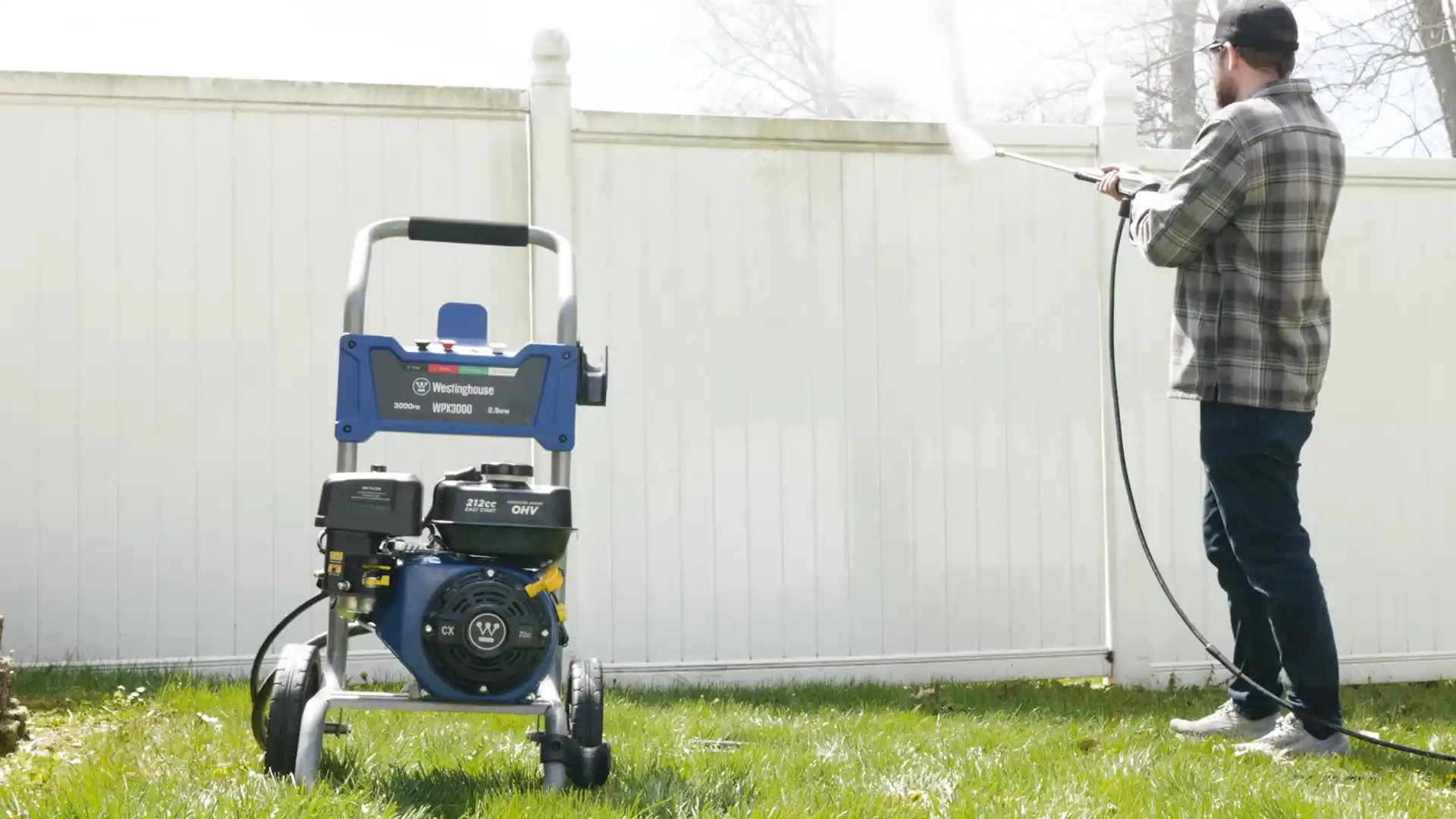
The WPX3000e is the most capable corded electric pressure washer for homeowners who need more than a mid-range machine. It runs at 3000 PSI with an induction motor, which means it is noticeably quieter than gas models at similar power.
- Delivers 3000 max PSI and 1.76 max GPM (at lowest pressure), and 2600 rated PSI and 1.1 rated GPM of water flow. Perfect for decks, sidewalks, fences, garage floors, exterior walls, cars and patio furniture; Comes with a .45 gallon soap tank
- 25′ abrasion resistant super-flex hose with lightweight high pressure metal spray gun and wand with 5 quick connect nozzles (0°, 15°, 25°, soap and turbo); Compatible with pressure washer accessories like surface cleaners, undercarriage cleaners and foam cannons with M22 fittings
Pros and Cons
| Pros | Cons |
|---|---|
| 3000 PSI (2600 PSI rated): most powerful electric here | 1.1 GPM in real use limits rinsing speed |
| Induction motor is quieter than any gas model at similar output | |
| Rugged steel frame | |
| 10-inch never-flat wheels handle rough terrain | |
| 0.45 gallon onboard soap tank | |
| M22 accessory compatibility for aftermarket hoses | |
| 3-year Westinghouse warranty |
Testing Results
PSI and Cleaning Power: 3000 PSI max, 2600 rated. Handles heavy residential cleaning. Concrete driveways, siding, brick, and multi-year stains all respond well.
Concrete and Driveways: Yes, heavy duty. The turbo nozzle on concrete is noticeably more effective than mid-range electric models.
Siding: Yes. Clears mildew fast. Careful with wood siding: use 25 or 40 degree.
Car Washing: Yes, use 25 or 40 degree nozzle and maintain distance. The 0 degree nozzle is for concrete only.
Noise Level: The induction motor runs quieter than comparable gas models. Testers reported using it at 7am without neighbor complaints. That alone is a real advantage over gas at this power level.
Wheels: 10-inch never-flat wheels are the best on any electric model here. Rough driveways, gravel, and grass are not a problem.
Real-world Usage
The WPX3000e is built for homeowners who have been underwhelmed by mid-range electric models. If a 2000 PSI unit did not fully clear your driveway stains, this one will.
The induction motor is the practical advantage. You can run it for longer sessions without the motor overheating, and the noise level is low enough for early morning or weekend use without disturbing neighbors.
The 1.1 GPM rated flow is the trade-off. Large driveways benefit from a 50 ft hose extension (M22 compatible).
Best Use Case
Homeowners who need genuine heavy-duty power but want to avoid gas hassle and noise. Best for driveways, concrete, and two-story siding where mid-range electrics fall short.
Not ideal for car detailing enthusiasts where 3000 PSI is more pressure than you want near paint.
Verdict
The WPX3000e is the best high-power electric option for homeowners who want gas-level cleaning without the noise, fumes, and maintenance. The induction motor is a real upgrade from universal motors, and 3000 PSI handles the tasks that most electric models cannot.
If noise is a concern and you need serious cleaning power, this is the pick.
Rating: 4.6 / 5
View on Amazon: Westinghouse WPX3000e
Best Premium Electric: Greenworks Pro GPW3001
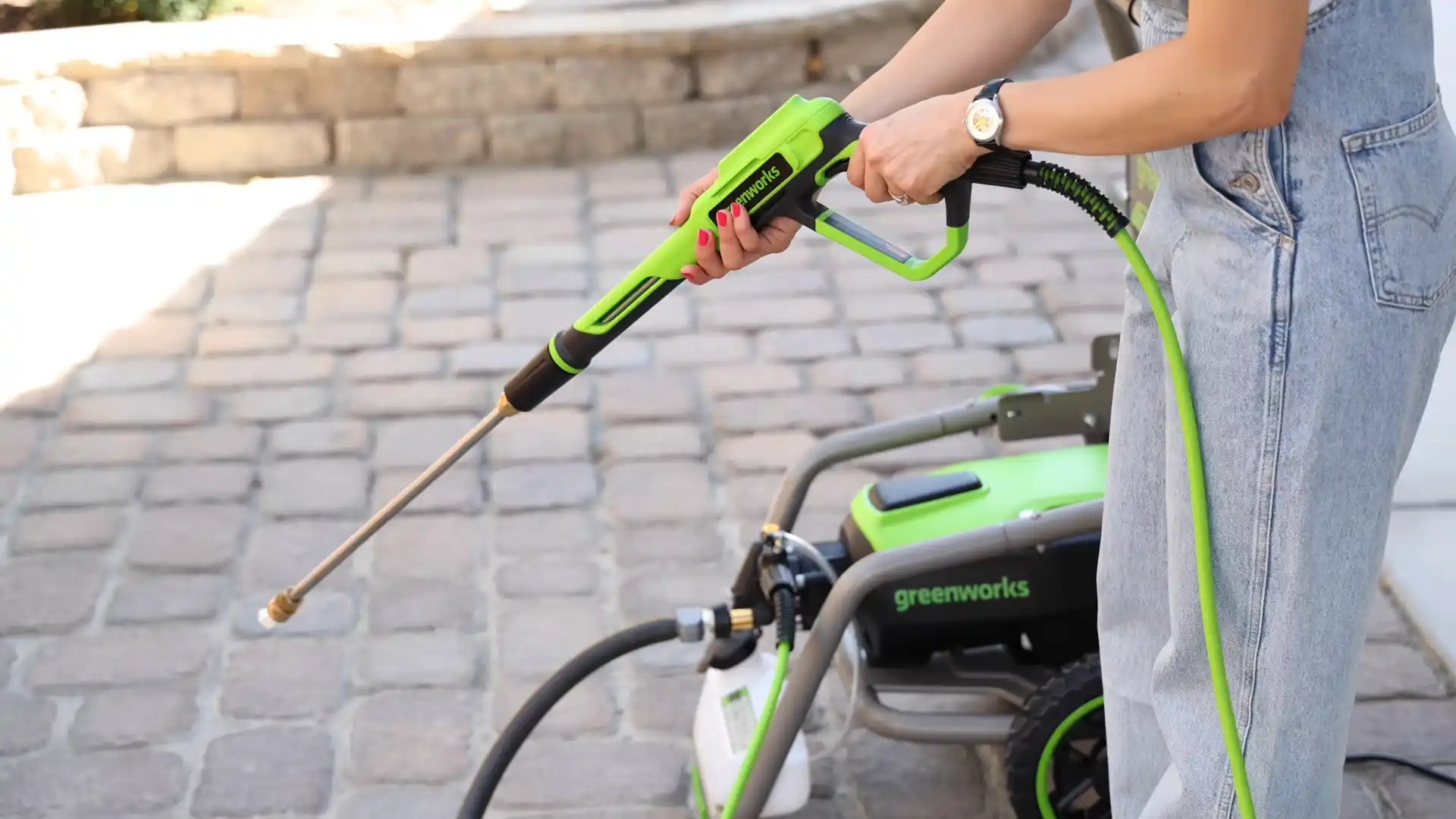
The Greenworks Pro GPW3001 is the closest thing to a gas pressure washer in electric form. It delivers PWMA-certified 3000 PSI with a TruBrushless motor that automatically adjusts pressure per nozzle and backs it all up with a 10-year motor warranty.

- TRUBRUSHLESS MOTOR : Powerful 14 Amp TruBrushless motor generates 3000 PSI and 2.0 GPM for maximum cleaning power.Cleaning Units 3300 C.U. Maximum Inlet Water Temperature 104°F (40°C).Frequency : 60 hz
- PWMA CERTIFIED (Pressure Washer Manufacturers‘ Association) : All water pressure (PSI) and flow rate (GPM) claims for this product were tested and verified by an independent lab, ensuring you’ll take home the power you were promised
Pros and Cons
| Pros | Cons |
|---|---|
| PWMA certified: 3000 PSI independently verified | Heaviest electric on the list at 49 lbs |
| Industry-best 10-year motor warranty | Expensive at $374-499 |
| TruBrushless motor auto-adjusts per nozzle | |
| 1 gallon soap tank: largest here | |
| 25 ft kink-resistant Uberflex hose | |
| Wheelbarrow steel frame, stores vertically | |
| Inline GFCI with waterproof plug |
Testing Results
PSI and Cleaning Power: PWMA-certified 3000 PSI. This is a verified number, not a marketing claim. Heavy concrete, brick, two-story siding, and year-old stains clear up without repeated passes.
Concrete and Driveways: Yes, heavy duty. The TruBrushless motor delivers consistent pressure across the entire session, not just at the start.
Siding: Yes. Two-story coverage without the risks of gas pressure at that height.
Car Washing: Yes, 40 degree nozzle only. Keep distance. The auto-pressure adjustment per nozzle is useful here.
Soap Tank: One gallon is the largest onboard tank on any electric model here. Fill it once and it lasts a full cleaning session.
Motor Technology: TruBrushless smart-sensing automatically adjusts pressure when nozzle type is changed. Less decision-making for the user.
Storage: Vertical storage footprint saves about 50% of floor space compared to standard wheeled designs. Useful in tight garages.
Real-world Usage
The GPW3001 is for homeowners who want the most capable electric pressure washer available and are willing to pay for it. The 10-year motor warranty is not marketing. Greenworks stands behind it.
The 49-pound weight is real. Moving it around a large property takes effort. The wheelbarrow handles and large wheels help, but this is not a lightweight machine.
Best Use Case
Homeowners with large driveways, heavy concrete cleaning needs, or multi-story exteriors who want to avoid gas. Also ideal for anyone in the EGO or Greenworks battery ecosystem who wants a matching corded unit for heavy work.
Not for buyers who primarily clean cars or do light-duty work. The price and weight are not justified for small jobs.
Verdict
The Greenworks Pro GPW3001 is a genuine gas alternative for heavy residential use. PWMA-certified specs, a smart brushless motor, and a 10-year warranty put it in a category above every other electric pressure washer on this list.
The price is real, but so is the performance. If you are done with gas hassle and want something that will last a decade, this is worth the investment. For buyers comparing it against other serious machines, our best heavy duty pressure washer guide covers the full field.
Rating: 4.8 / 5
View on Amazon: Greenworks Pro GPW3001
Best Cordless: WORX WG647 Hydroshot
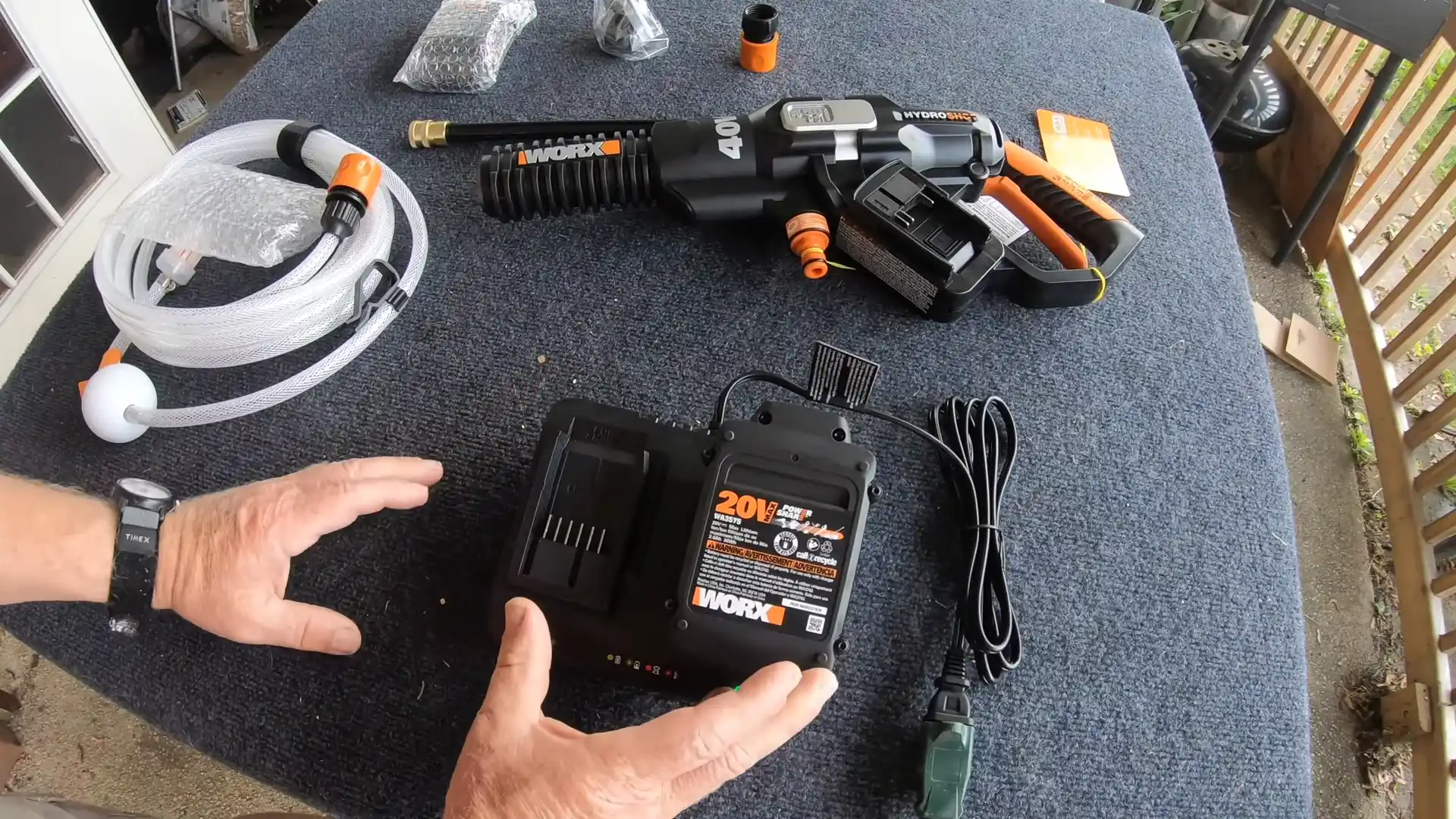
The WORX WG647 Hydroshot is not a pressure washer in the traditional sense. It runs at 800 PSI and draws water from a bucket, lake, or rain barrel. That is the entire value proposition: complete portability with no outlet required.

- Powerful Cleaning Performance: 800 PSI with 1.0 GPM for maximum efficiency in removing grime and debris
- Advanced Motor Technology: Efficient Brushless Motor 2.0 for longer runtime and enhanced durability
Pros and Cons
| Pros | Cons |
|---|---|
| True cordless freedom, no outlet needed | 800 PSI is limited: will not clean concrete or tough stains |
| Draws from bucket, lake, or rain barrel | Best for rinsing, not deep cleaning |
| 5-in-1 nozzle in one attachment | Runtime limited to battery capacity |
| Brushless motor 2.0 technology | |
| Compatible with all WORX 40V PowerShare batteries | |
| ECO and full-power modes | |
| Very lightweight at 5.8 lbs | |
| 3-year warranty |
Testing Results
PSI and Cleaning Power: 800 PSI. This is a rinse-and-light-clean tool. Do not compare it to corded models on raw cleaning ability.
Concrete and Driveways: No. The PSI is not there.
Siding: No. Too low pressure for real siding cleaning.
Car Washing: Yes, rinse mode. Good for rinsing loose dust and light dirt after a hand wash or foam cannon stage.
Patio Furniture: Yes. Great for rinsing outdoor furniture, coolers, and similar items.
Portability: This is the standout. Five-pound weight, no cord, works from any water source. Camping, RV trips, boat rinses, and deck rinsing where no outlet exists.
Battery Compatibility: Works with all WORX 40V PowerShare batteries. If you already own WORX tools, you may not need to buy batteries separately.
Real-world Usage
The Hydroshot makes sense for a specific type of buyer. You own a car and want a quick rinse after a drive through dusty roads. You have patio furniture that needs a seasonal clean-up. You camp or spend time at a lake and want to rinse gear. For all of those tasks, it is genuinely convenient.
Buy it as a rinse tool, not a replacement for a real pressure washer.
Best Use Case
Car rinses, outdoor furniture, camping and RV use, boat cleaning, locations without outlet access, and WORX 40V PowerShare ecosystem users.
Not for driveways, concrete, siding, or any serious cleaning task.
Verdict
The WORX WG647 Hydroshot earns its spot here because it does something no corded machine can: fully outlet-free operation from any water source. Within its limits, it delivers real convenience. Just know those limits before buying.
If you need actual cleaning power, step up to one of the corded electric picks above. For convenient light rinses anywhere, the Hydroshot is hard to beat.
Rating: 4.2 / 5
View on Amazon: WORX WG647 Hydroshot
Best Gas: Westinghouse WPX3400
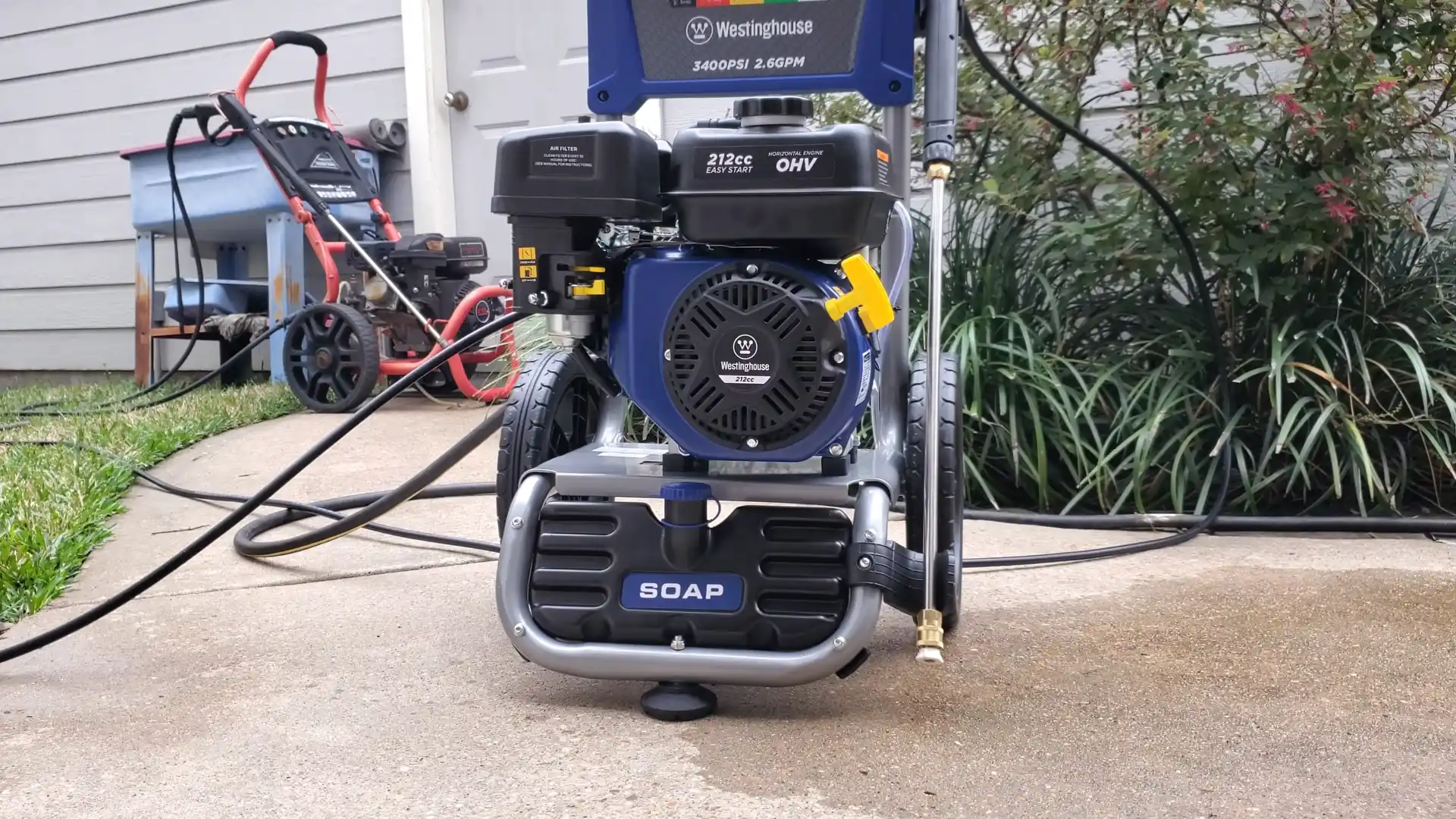
The Westinghouse WPX3400 is the most reviewed residential gas pressure washer on Amazon. Over 24,000 ratings at 4.6 stars. It delivers 3400 PSI and 2.6 GPM, which puts it at the top of raw cleaning power on this list.

- 3400 PSI and 2.6 GPM of Powerful, Deep-Cleaning Water Pressure Perfect for Decks, Sidewalks, Siding, Fences, Railings, Garage Floors, Exterior Walls, Cars and Patio Furniture – Easy to Fill 1 Gallon Gas Tank and Half Gallon Onboard Soap Tank
- 25′ Foot Abrasion Resistant Super-Flex Hose With Lightweight High Pressure Spray Gun and 5 Quick Connect Nozzles (0°, 15°, 25°, 40° & Soap) - Compatible with Pressure Washer Accessories such as Surface Cleaners, Undercarriage Cleaners, and Foam Cannons with M22 fittings
Pros and Cons
| Pros | Cons |
|---|---|
| 3400 PSI and 2.6 GPM: most powerful on the list | 67 lbs: heaviest pick |
| 24,000+ Amazon reviews at 4.6 stars | Gas requires oil changes and winterization |
| 12-inch never-flat wheels handle rough terrain | |
| Onboard 1.6L soap tank | |
| Steel frame construction | |
| 3-year warranty | |
| Consistent easy-start engine |
Testing Results
PSI and Cleaning Power: 3400 PSI at 2.6 GPM. These are the highest cleaning units on the list. Multi-year oil stains on concrete, thick mildew on brick, and heavy grime on driveways all come off cleanly.
Concrete and Driveways: Yes, heavy duty. The 2.6 GPM rinsing speed means jobs finish faster than lower-GPM electric models, even when PSI ratings are similar.
Siding: Yes. Two-story reach without strain. Use 40 degree nozzle and maintain distance on painted wood.
Car Washing: Yes, with care. 40 degree nozzle, maintain at least 24 inches of distance. The power level is higher than most car finishes need.
Startup Reliability: The 212cc Westinghouse OHV engine pulls first or second pull consistently. Cold starts in winter take one extra prime, but no persistent starting issues reported.
Noise Level: This is a gas engine. It is loud. Expect to hear it from inside the house. Noise-sensitive neighborhoods or early morning use will be a problem.
Real-world Usage
The WPX3400 is the pressure washer for serious outdoor cleaning jobs. Large driveways, thick concrete, heavily stained fencing, and full home exterior washes go significantly faster with 2.6 GPM compared to any electric model on this list. If the driveway is the main reason you are buying, our how to pressure wash a driveway guide covers technique, nozzle selection, and detergent for the best results.
The trade-offs are real: 67 pounds, gas and oil maintenance, loud operation, and outdoor-only use. If none of those are deal-breakers, the cleaning power is unmatched at this price.
For homeowners with large properties, a two-car driveway, or surfaces that lighter electric models have never fully cleaned, this is the machine to get.
Best Use Case
Large driveways, concrete restoration, two-story home exteriors, rural properties without outlet access, and homeowners who clean seasonal in big sessions rather than frequent short ones.
Not for apartment/condo use, noise-sensitive neighborhoods, or buyers who want minimal maintenance.
Verdict
The Westinghouse WPX3400 is the benchmark residential gas pressure washer. Nothing on this list moves more dirt per hour. The 24,000-plus reviews are not a fluke. It is reliable, powerful, and well-priced for what it delivers.
If you are willing to manage gas and oil maintenance, it rewards you with the fastest, most thorough cleaning on the list.
Rating: 4.7 / 5
View on Amazon: Westinghouse WPX3400
What Makes the Best Pressure Washer?
PSI and GPM: What the Numbers Actually Mean
PSI (pounds per square inch) measures how hard the water hits. GPM (gallons per minute) measures how much water flows. Both matter. A machine with high PSI but low GPM cleans slowly. A machine with high GPM but low PSI rinses efficiently but struggles with stubborn stains.
The real cleaning metric is Cleaning Units (PSI x GPM). A pressure washer with 2000 PSI at 1.5 GPM produces 3000 cleaning units. One with 3000 PSI at 1.0 GPM also produces 3000 cleaning units. They clean at roughly the same rate, but the higher-PSI model is riskier near painted surfaces. For most homeowners, 1800 to 2500 PSI at 1.2 to 1.8 GPM covers every common residential task.
Be skeptical of PSI claims from unknown brands. PWMA and CETA certifications mean the spec was independently tested. Without certification, advertised numbers can be peak surge figures rather than working pressure.
Electric vs Gas vs Cordless
Electric corded pressure washers cover most homeowner needs. They start instantly, require no fuel, and run quieter than gas. The limitation is cord and outlet dependency. Models in the 2000 to 3000 PSI range handle driveways, decks, siding, and car washing without trouble. For a full breakdown of the trade-offs, our electric vs gas pressure washer comparison covers the decision in detail.
Gas pressure washers deliver more power. At 3000 to 3500 PSI and 2.0 to 2.6 GPM, they clear heavy stains faster than any electric model. The trade-offs are weight, noise, exhaust fumes, and seasonal maintenance. Gas makes sense for large properties, seriously stained concrete, or rural locations far from outlets.
Cordless battery pressure washers prioritize portability. Models like the WORX WG647 Hydroshot work from a bucket or any water source, which makes them useful for camping, car rinses, and locations without power. Their PSI (typically 500 to 1000) limits them to rinsing rather than deep cleaning. If cordless is the main priority, our best cordless pressure washer roundup covers the full battery-powered field including higher-PSI options.
Motor Type: Universal vs Induction vs Brushless
Universal motors are the most common type in budget and mid-range electric pressure washers. They are loud, generate heat under extended use, and have a shorter lifespan. Fine for occasional use.
Induction motors run cooler, quieter, and longer. The Westinghouse WPX3000e and Karcher K5 Premium both use induction motors. If you plan to run extended sessions or use the machine frequently, induction is worth the upgrade.
Brushless motors take it further. The Greenworks Pro GPW3001’s TruBrushless motor automatically adjusts pressure based on nozzle type and is built to last significantly longer than either motor type above. This is the choice for buyers who want a pressure washer that lasts a decade.
Nozzle Selection
Nozzles control the spray angle and determine what surfaces you can safely clean. Zero-degree (red) delivers a concentrated pinpoint jet for tough stains on concrete. Never use it near cars or painted wood. Fifteen-degree (yellow) handles concrete and hard surfaces. Twenty-five-degree (green) is the general-purpose nozzle for decks, siding, and driveways. Forty-degree (white) is the safest choice for cars, painted surfaces, and windows. Soap nozzle (black) drops pressure to allow detergent application.
Most mid-range machines include three to five quick-connect nozzles. A turbo nozzle, which rotates at high speed for boosted scrubbing on concrete, is a useful upgrade if included.
Hose Length and Cord Reach
A 20 ft hose is the bare minimum. It limits how far you can move from the machine on each pass. A 25 ft hose is the practical standard and reaches most typical residential setups.
For gas machines or electric models used on large driveways, a 50 ft hose extension is often worth buying separately. Check that the machine’s fittings are M22 compatible before purchasing aftermarket hoses.
Cord length matters as much as hose length on electric models. A 35 ft cord gives you roughly 55 ft of total reach when combined with a 20 ft hose. If that is not enough for your property, plan for an outdoor extension cord rated for pressure washer use.
Pump Type and TSS Protection
Axial cam pumps are standard on residential models. They handle typical homeowner use well. Triplex pumps are found in professional machines and handle high-duty cycles without overheating.
Total Stop System (TSS) automatically shuts off the motor when you release the trigger. This prevents the pump from running dry or overheating between uses. It is worth having on any electric model. Budget machines sometimes skip it to reduce cost.
How to Use a Pressure Washer Effectively
Start by connecting your water supply and confirming there are no kinks in the hose. Squeeze the trigger with the water on but the machine off to purge air from the line before starting the motor. This reduces pressure spikes on startup.
Select the correct nozzle before you pull the trigger. White 40-degree for cars and painted surfaces. Green 25-degree for decks and general cleaning. Yellow 15-degree for concrete and hard grime. Red 0-degree only for concrete spot cleaning, never on wood or paint.
Apply detergent with the soap nozzle or a foam cannon before switching to a cleaning nozzle. Let the soap dwell for two to three minutes to break down grime. Then rinse from top to bottom with your cleaning nozzle to push dirty water down and away from already-cleaned areas.
Maintain consistent nozzle distance. Holding the wand too close concentrates pressure and can strip paint, etch concrete, or damage wood. Start at 18 to 24 inches and move closer only if stubborn stains remain.
Store the machine properly after each use. On electric models, run clean water through the pump for 30 seconds to clear detergent from the lines. On gas models, use fuel stabilizer before storing for the season. Drain the pump if storing in freezing temperatures.
Frequently Asked Questions
What PSI pressure washer do I need for a driveway?
For most residential driveways, 2000 to 3000 PSI at 1.5 GPM or better handles the job well. Light surface algae and dirt clean up at 1800 PSI. Deep oil stains and heavy grime generally need 2500 PSI or more. If your driveway has serious buildup from several years of neglect, a gas model at 3000 to 3400 PSI like the Westinghouse WPX3400 will clear it faster than any electric model. Our best pressure washer for driveways guide has more detail on matching PSI to surface type.
Is an electric pressure washer good enough, or do I need gas?
Electric pressure washers handle most residential tasks including driveways, patios, siding, decks, and car washing. The difference becomes meaningful when you are cleaning very large areas frequently or dealing with heavy concrete stains that require sustained high-PSI passes. If you clean your driveway twice a year, an electric model is almost certainly enough. If you have a four-car driveway with years of oil buildup, gas will finish the job faster.
What is the difference between PSI and GPM in a pressure washer?
PSI measures how hard the water hits. GPM measures how much water flows. High PSI with low GPM cleans intensely but slowly. High GPM with moderate PSI rinses larger areas faster. For deep stain removal, PSI matters more. For covering large surfaces quickly, GPM matters more. Most homeowners benefit from a balance of both.
Can a pressure washer damage my car?
Yes, if you use the wrong nozzle or hold it too close. The 0-degree (red) and 15-degree (yellow) nozzles can strip clear coat and etch paint at close range. Use the 40-degree white nozzle, stay at least 18 to 24 inches from the surface, and never aim at rubber seals, gaps around windows, or antenna bases. For detailing-focused car washing, the Active 2.0 is built specifically for paint-safe pressure.
How often should I use a pressure washer on my home exterior?
Most homeowners clean siding once a year in spring or early summer. Driveways benefit from seasonal cleaning, typically once or twice a year depending on traffic and weather. Over-washing wood decks can accelerate weathering, so one annual cleaning with the 25-degree nozzle and appropriate wood cleaner is usually the right frequency.
Do I need a PWMA or CETA certified pressure washer?
Not required, but helpful. PWMA and CETA certifications mean the PSI and GPM ratings were independently tested rather than self-reported. Many budget brands list inflated peak figures. Greenworks 1800 PSI and Greenworks Pro GPW3001 are PWMA certified. Karcher models use European certifications with similarly honest specs. If you want to know exactly what you are buying, look for a certified model.
What is TSS and why does it matter?
TSS stands for Total Stop System. It automatically shuts off the motor when you release the trigger. Without TSS, the motor keeps running even when you stop spraying, which generates heat and wears the pump faster. TSS extends pump life on electric models. Most mid-range and premium machines include it. Budget models sometimes skip it to reduce cost. It is worth paying a few extra dollars to have.


2 Comments
Comments are closed.