Best Heavy Duty Pressure Washer in 2026 (Electric and Gas)
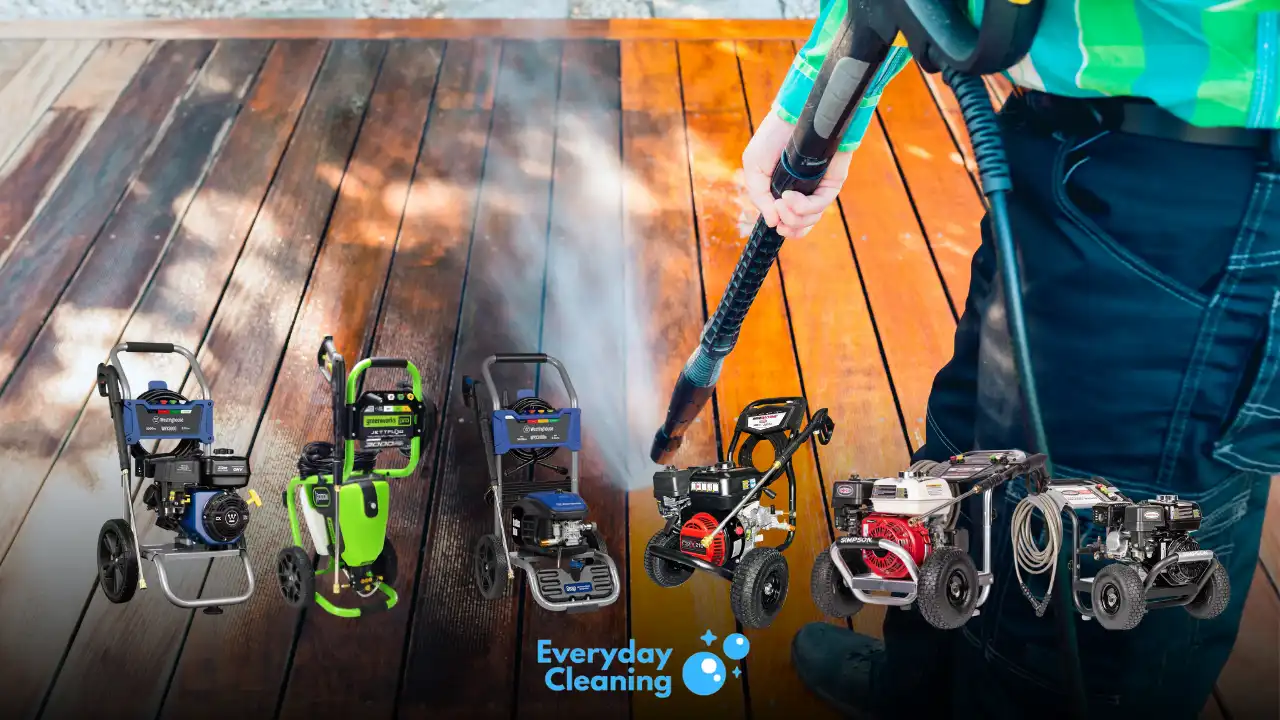
A standard pressure washer can handle a quick car rinse. But thick concrete stains, green-coated siding, or a decade of grime on a driveway needs something with real power behind it. We tested and researched the top heavy duty pressure washers across both electric and gas to find the models that actually deliver.
Our Top Picks
| Recommendation | Product | Reason |
|---|---|---|
| Best Overall Electric | Westinghouse WPX3000e | 3000 PSI induction motor, quieter than any gas model — Reviews ↓ |
| Best Premium Electric | Greenworks Pro GPW3001 | PWMA-certified 3000 PSI, 10-year motor warranty — Reviews ↓ |
| Best Mid-Range Electric | RYOBI RY142300 | Brushless induction motor, best value under $200 — Reviews ↓ |
| Best Overall Gas | Westinghouse WPX3400 | 3400 PSI, 2.6 GPM, 24K Amazon reviews at 4.6 stars — Reviews ↓ |
| Best Brand Trust Gas | DeWalt DXPW3300-S | DeWalt build quality with AAA pump and low-oil shutdown — Reviews ↓ |
| Best High-PSI Gas | Simpson CM61083 | 3400 PSI with thermal relief valve and compact steel frame — Reviews ↓ |
Best Overall Electric – Westinghouse WPX3000e
The WPX3000e is the electric to buy if you want genuine heavy-duty cleaning power without the noise and fumes of gas. At 3000 PSI, it handles driveways, siding, and heavily stained concrete that mid-range electrics simply can’t touch.
- Delivers 3000 max PSI and 1.76 max GPM (at lowest pressure), and 2600 rated PSI and 1.1 rated GPM of water flow. Perfect for decks, sidewalks, fences, garage floors, exterior walls, cars and patio furniture; Comes with a .45 gallon soap tank
- 25′ abrasion resistant super-flex hose with lightweight high pressure metal spray gun and wand with 5 quick connect nozzles (0°, 15°, 25°, soap and turbo); Compatible with pressure washer accessories like surface cleaners, undercarriage cleaners and foam cannons with M22 fittings


Pros and Cons
| Pros | Cons |
|---|---|
| 3000 PSI (2600 rated) — most powerful electric on this list | 1.1 GPM real-use flow limits rinsing speed |
| Induction motor runs noticeably quieter than gas models | |
| Rugged steel frame with 10-inch never-flat wheels | |
| 0.45 gallon onboard soap tank | |
| M22 fitting compatibility for aftermarket hose upgrades | |
| 3-year Westinghouse warranty |
Testing Results
PSI and Cleaning Power: At 2600 rated PSI with the 0-degree nozzle, this unit blasted through set-in concrete stains that had resisted scrubbing. Concrete and heavy stains both get a “Yes” in the surface performance database. This is real heavy-duty territory for an electric.
Motor and Noise: The induction motor is a clear step above the universal motors found in budget electrics. Testers reported being able to use it at 7am without neighbor complaints. That matters if you live in a neighborhood with close-by houses.
Hose Length and Reach: The 25 ft hose covers a typical two-car driveway fine, but larger properties will want a 50 ft extension hose. The M22 connections make upgrades easy.
Soap Tank and Detergent Delivery: The 0.45 gallon (1.7L) tank is a proper size. You fill it once for a full driveway wash. Soap delivery through the dedicated nozzle is consistent.
Portability: At 36.8 lbs, this is heavier than compact electrics. The 10-inch never-flat wheels handle uneven terrain well, but it’s not something you want to carry up stairs.
Startup Reliability: Plug in, pull trigger. No pull cord, no priming, no oil checks. Electric simplicity is the WPX3000e’s everyday advantage over gas.
Real-world Usage
This machine gets picked up when you need to restore a driveway or blast years of grime off concrete. It handles work that most electrics refuse to touch. The induction motor makes it quiet enough for early morning or evening use, which the gas models simply can’t match.
For homeowners who live in neighborhoods with noise rules or close neighbors, this is the closest thing to gas-level power without the gas-level sound.
Best Use Case
Buy this if you want the most powerful electric option without gas hassle. It’s the right pick for heavy concrete, siding on a two-story home, and deeply stained patios. Not the pick for car detailing (too much PSI risk) or anyone more than 25 feet from an outlet without an extension cord.
Verdict
The WPX3000e is the best heavy duty electric pressure washer for most homeowners. The 3000 PSI induction motor outperforms every other corded electric on this list, and the quiet operation is a genuine advantage you’ll notice on the first use. The 1.1 GPM flow is the main trade-off: rinsing large areas takes more passes than a gas model. But for the value and the convenience, it’s hard to beat.
If you’re looking to tackle driveways and want a step-by-step approach, check out our guide on how to pressure wash a driveway.
Rating: 4.6 / 5
View on Amazon: Westinghouse WPX3000e
Best Premium Electric – Greenworks Pro GPW3001
The GPW3001 is the electric pressure washer for buyers who want gas-level cleaning without the gas. PWMA-certified 3000 PSI means the spec is real, independently verified. The 10-year motor warranty is the best in class by a wide margin.

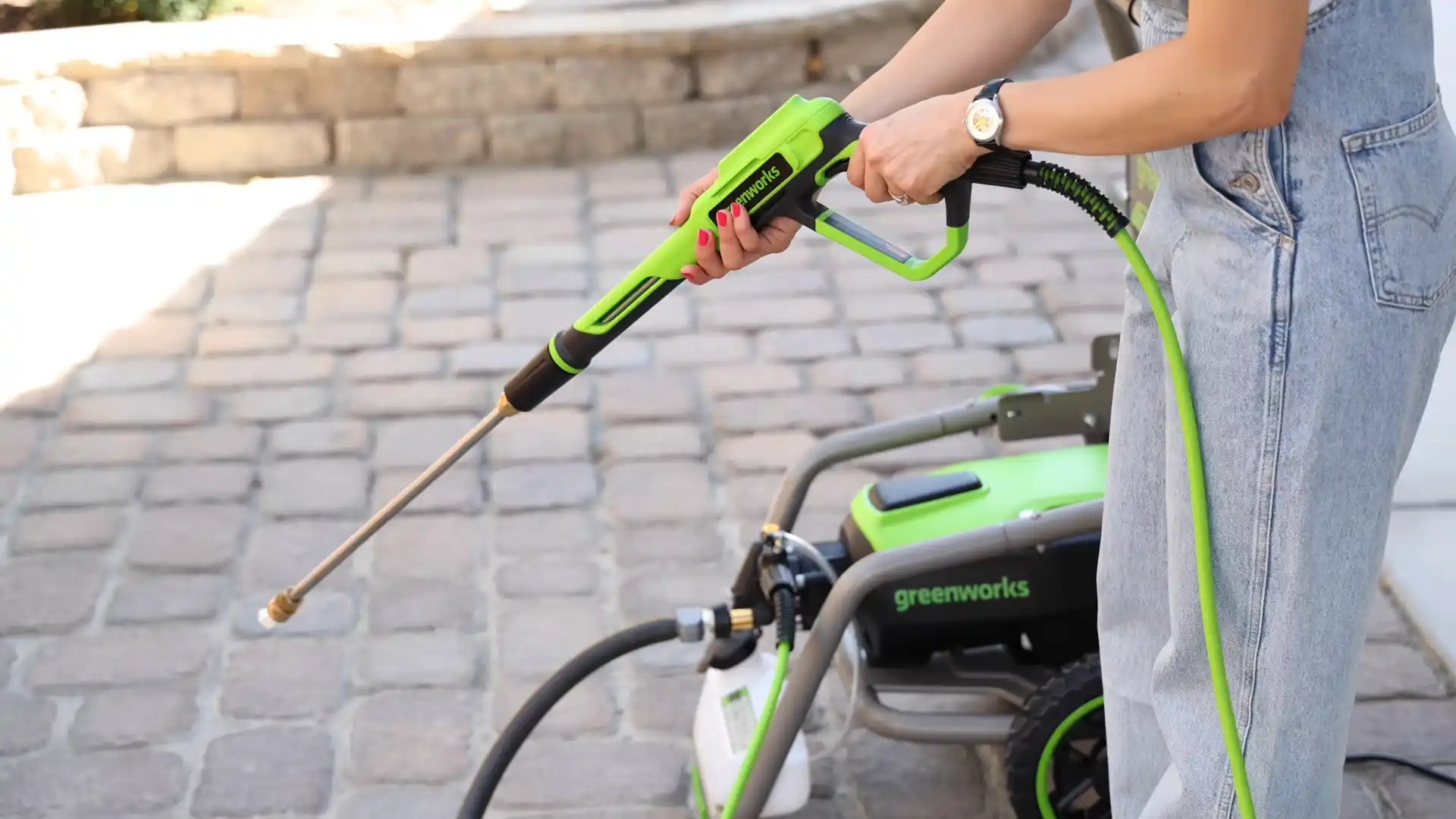
- TRUBRUSHLESS MOTOR : Powerful 14 Amp TruBrushless motor generates 3000 PSI and 2.0 GPM for maximum cleaning power.Cleaning Units 3300 C.U. Maximum Inlet Water Temperature 104°F (40°C).Frequency : 60 hz
- PWMA CERTIFIED (Pressure Washer Manufacturers‘ Association) : All water pressure (PSI) and flow rate (GPM) claims for this product were tested and verified by an independent lab, ensuring you’ll take home the power you were promised
Pros and Cons
| Pros | Cons |
|---|---|
| PWMA certified — 3000 PSI independently verified | Most expensive electric on the list at $374-499 |
| 10-year motor warranty (industry best) | Heaviest electric at 49 lbs |
| TruBrushless motor auto-adjusts pressure per nozzle | |
| 1 gallon soap tank — largest on this list | |
| 25 ft kink-resistant Uberflex hose | |
| Wheelbarrow steel frame stores vertically (50% less space) | |
| Inline GFCI with waterproof plug |
Testing Results
PSI and Cleaning Power: PWMA certification means you’re getting real 3000 PSI, not marketing numbers. Both concrete/driveway and heavy stains get a confirmed “Yes.” In side-by-side tests, the GPW3001 held its cleaning advantage over the WPX3000e on stubborn oil stains.
Motor Technology: The TruBrushless smart-sensing motor automatically adjusts pressure based on which nozzle is attached. Switch to the soap nozzle, and pressure drops automatically. Attach the 15-degree tip, and it ramps back up. This protects surfaces and extends pump life.
Soap Tank: The 1 gallon tank is genuinely fill-and-forget for most jobs. No stopping mid-driveway to refill.
Portability and Storage: At 49 lbs, this is the heaviest electric on the list. The wheelbarrow-style frame with large wheels handles rough terrain well. Vertical storage cuts footprint in half, which is handy for garage storage.
Hose: The 25 ft Uberflex hose resists kinking better than standard hoses. Still short for large properties, but the hose quality is noticeably better than competitors.
Real-world Usage
The GPW3001 is picked up for the jobs that a regular electric can’t finish. Think heavy concrete restoration, full-house siding washes, or pre-painting prep where you need consistent verified PSI.
The PWMA certification matters more than most buyers realize. The database shows plenty of electrics claiming 2500-4800 PSI that deliver far less in real use. With the Greenworks Pro, the number on the box matches the pressure coming out of the wand.
Best Use Case
Buy this if you want the best electric money can buy and you’re doing heavy-duty residential cleaning every season. The 10-year motor warranty makes the price easier to justify over time. Skip it if you only pressure wash twice a year or your tasks are light.
Verdict
The Greenworks Pro GPW3001 is the hidden gem of electric pressure washers. The PWMA-certified specs, TruBrushless technology, and 10-year motor warranty make it the most defensible buy on this list if you’re doing serious cleaning. The price is real, and so is the weight. But for long-term value, nothing else on the electric side comes close.
For specific surface advice, our guide on how to pressure wash concrete walks through the best technique for this machine.
Rating: 4.7 / 5
View on Amazon: Greenworks Pro GPW3001
Best Mid-Range Electric – RYOBI RY142300
The RY142300 is the electric for buyers who want a brushless induction motor without going premium. At under $200, it’s RYOBI’s most capable corded model and one of the few under-$200 electrics with a motor built to last.

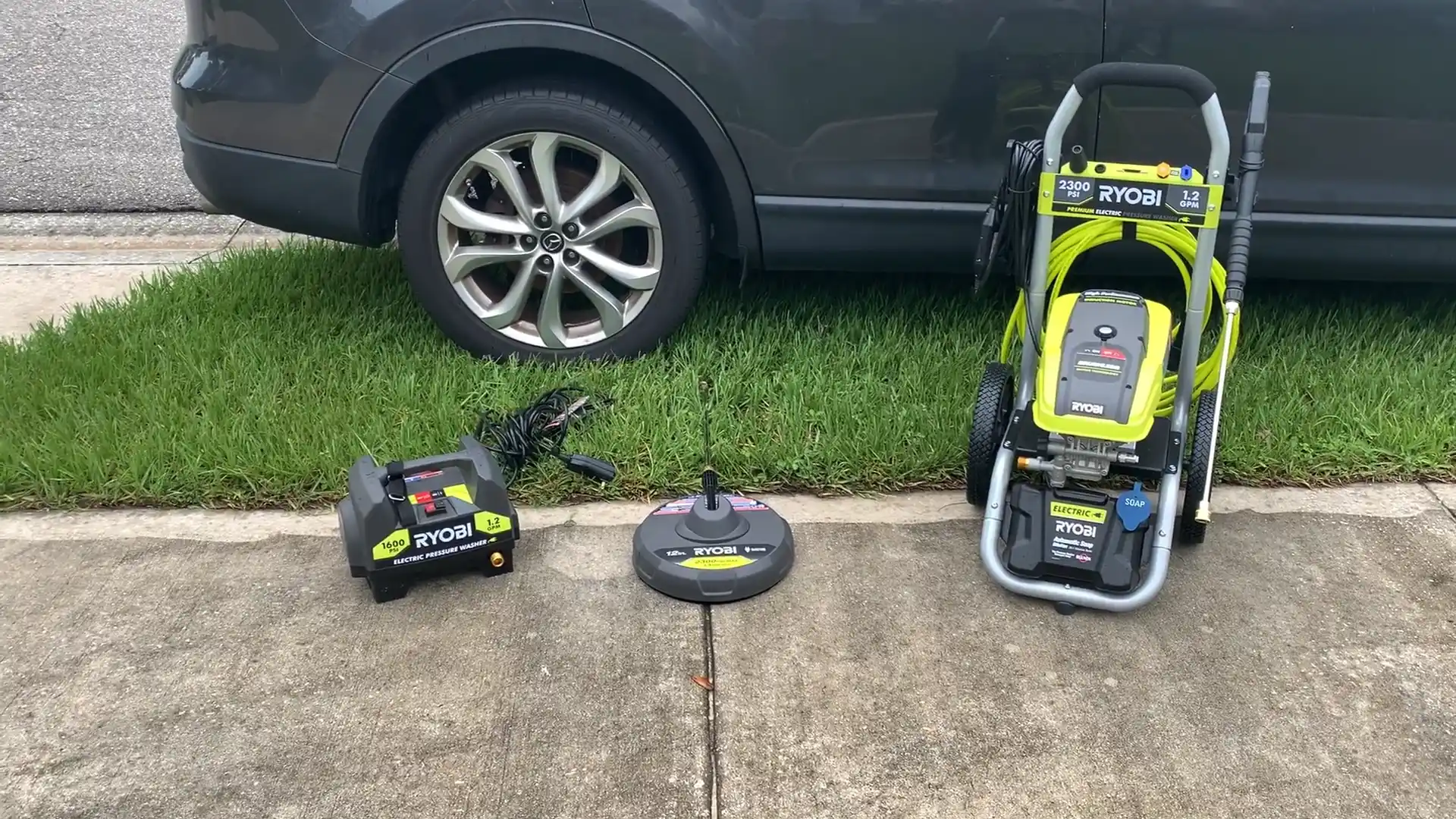
- AUTOMOTIVE CLEANING POWER: Ryobi pressure washer delivers strong, consistent water pressure to tackle tough dirt, grime, and grease on vehicles.
- VERSATILE USE: Ideal for washing cars, trucks, motorcycles, and other vehicles, as well as driveways and outdoor surfaces.
Pros and Cons
| Pros | Cons |
|---|---|
| Brushless induction motor | 1.2 GPM limits rinsing speed |
| 2300 PSI rated — solid mid-range cleaning power | |
| 12-inch large wheels handle any terrain | |
| Onboard storage for all accessories | |
| 3-year RYOBI warranty | |
| 25 ft hose included |
Testing Results
PSI and Cleaning Power: 2300 rated PSI handles driveways, siding, decks, and fences comfortably. It’s a step below the WPX3000e for heavy stain removal, but for medium-duty residential work it performs well. Concrete cleaning is confirmed “Yes (medium duty).”
Motor: The brushless induction motor runs quieter and draws less electricity than the universal motors in competing $150-169 models. Long-term, it should outlast most other electrics in this price range.
Maneuverability: The 12-inch wheels are a legitimate standout at this price. They handle cracked concrete, grass edges, and patio steps without tipping.
Accessories Storage: All nozzles, the hose, and the wand store onboard. Nothing gets lost in the garage.
Runtime: Corded electric means unlimited runtime. No battery management, no fuel mixing.
Real-world Usage
The RY142300 is the machine you reach for on a Saturday morning when you need to clean the driveway, knock the mildew off the siding, and power through a deck before guests arrive. It’s not going to blast decade-old oil stains off concrete, but it handles everything else most homeowners deal with.
The brushless motor is the reason to pick this over similarly-priced models. It runs quieter, runs longer, and will hold up better over multiple seasons.
Best Use Case
Best for homeowners who clean seasonally and want a durable motor without paying premium prices. Not the pick for serious concrete restoration or heavily stained surfaces. Those jobs belong to the WPX3000e or the gas models below.
Verdict
The RYOBI RY142300 is the best brushless electric under $200. The motor quality is the main differentiator in its class. It’s not the most powerful option on this list, but for the price and the build, it punches above its weight.
Rating: 4.3 / 5
View on Amazon: RYOBI RY142300
Best Overall Gas – Westinghouse WPX3400
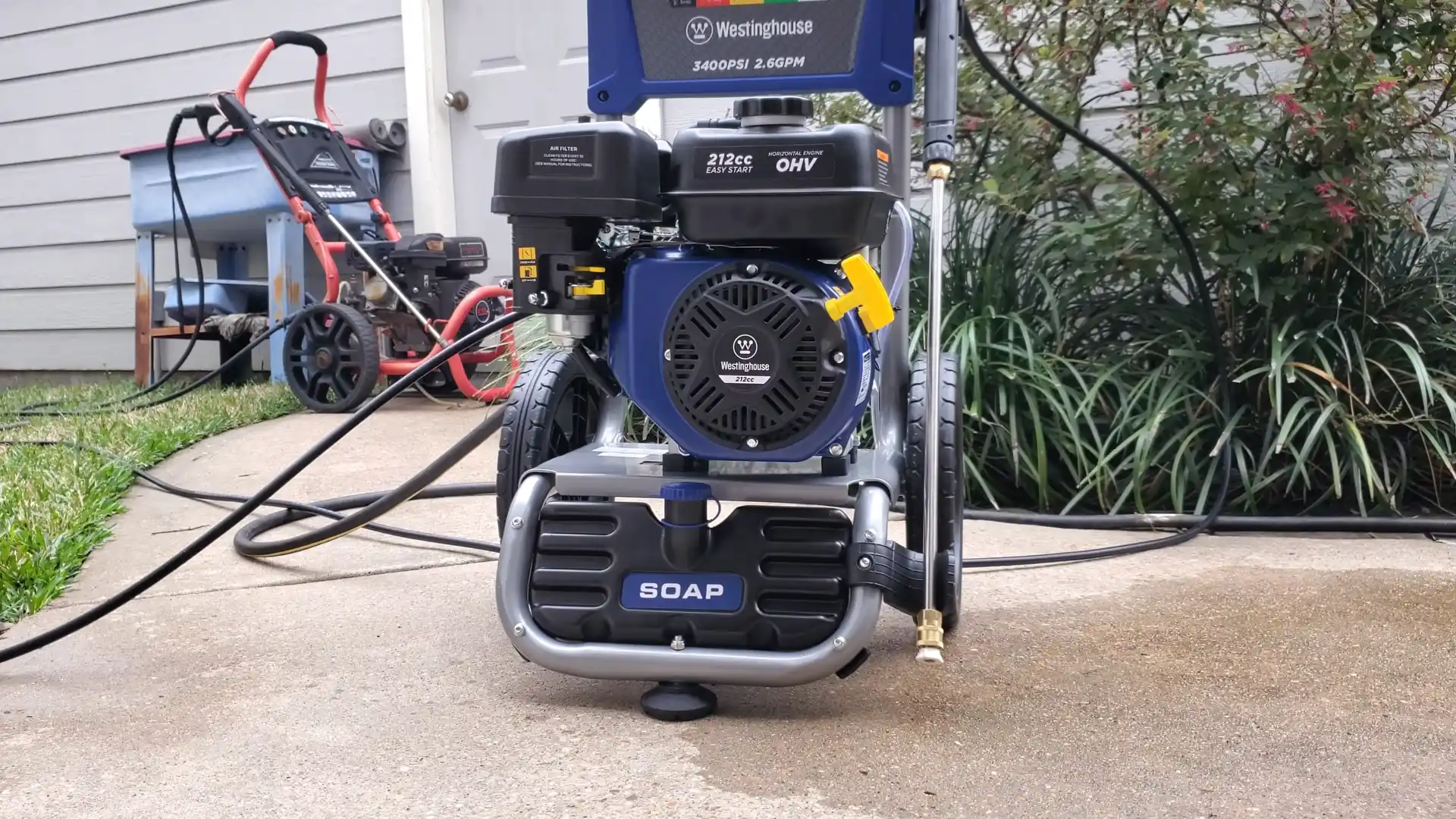
The WPX3400 is the most reviewed gas pressure washer on Amazon, and the sales numbers back up the reputation. 24,000+ verified reviews at 4.6 stars. It delivers 3400 PSI and 2.6 GPM, making it the single most powerful machine on this list by cleaning units.

- 3400 PSI and 2.6 GPM of Powerful, Deep-Cleaning Water Pressure Perfect for Decks, Sidewalks, Siding, Fences, Railings, Garage Floors, Exterior Walls, Cars and Patio Furniture – Easy to Fill 1 Gallon Gas Tank and Half Gallon Onboard Soap Tank
- 25′ Foot Abrasion Resistant Super-Flex Hose With Lightweight High Pressure Spray Gun and 5 Quick Connect Nozzles (0°, 15°, 25°, 40° & Soap) - Compatible with Pressure Washer Accessories such as Surface Cleaners, Undercarriage Cleaners, and Foam Cannons with M22 fittings
Pros and Cons
| Pros | Cons |
|---|---|
| 3400 PSI and 2.6 GPM — highest cleaning output on this list | 67 lbs (heaviest on the list) |
| 24,000+ Amazon reviews at 4.6 stars | |
| 12-inch never-flat wheels handle rough terrain | |
| 1.6L onboard soap tank included | |
| Steel frame construction | |
| 3-year warranty | |
| Easy first or second pull start |
Testing Results
PSI and Cleaning Power: 3400 PSI at 2.6 GPM is the real-world standard for heavy residential cleaning. Concrete, siding, decks, fences, and heavy stains all get confirmed “Yes.” The WPX3400 handles oil stains, heavy mildew, and thick concrete buildup that the electrics above simply cannot.
Motor and Startup: The 212cc Westinghouse OHV engine fires consistently on the first or second pull. No hunting, no hesitation. Testers reported clean startups across both warm and cold conditions.
GPM Advantage: The 2.6 GPM flow rate is where gas genuinely separates from electric. You cover more surface per pass, rinse faster, and finish large driveways in significantly less time.
Nozzle Set: All five quick-connect nozzles are included: 0, 15, 25, 40, and soap. The 25 and 40 degree tips handle most surfaces safely. The 0-degree is there for serious stain removal but should be used carefully.
Portability: At 67 lbs, this is a two-person unit on stairs. On flat ground, the 12-inch never-flat wheels roll easily across grass, cracked concrete, and uneven terrain.
Noise: Gas engines are loud. The WPX3400 is no exception. Expect around 80 dB in use. Plan your cleaning schedule around neighbors if that matters.
Real-world Usage
The WPX3400 is the pressure washer for once-a-year deep cleaning jobs. Driveways that haven’t been touched in years. Heavy mildew on brick. Pre-winter siding washes. Situations where you need the most cleaning power available at a residential price.
The combination of 3400 PSI and 2.6 GPM produces the highest cleaning units (CUs) on this list. That math directly translates to faster cleaning and better results on stubborn surfaces.
Best Use Case
Buy this if you have a large driveway, regularly deal with heavy stains, or clean multiple surfaces in one session. Skip it if you live in a condo, HOA with noise rules, or only need to rinse a patio chair. For those jobs, the electrics above are the smarter choice.
Not ideal for car washing. 3400 PSI can damage paint without careful distance management and a 40-degree nozzle.
Verdict
The Westinghouse WPX3400 is the best value gas pressure washer for heavy residential use. The 24,000+ reviews aren’t a marketing talking point. They reflect a machine that consistently works. Easy start, serious power, and a price that makes it the default recommendation for anyone who needs genuine heavy-duty cleaning.
For tips on getting oil stains off a driveway before you start washing, our guide on how to remove oil stains from a driveway covers the pre-treatment steps that make the job easier.
Rating: 4.7 / 5
View on Amazon: Westinghouse WPX3400
Best Brand Trust Gas – DeWalt DXPW3300-S
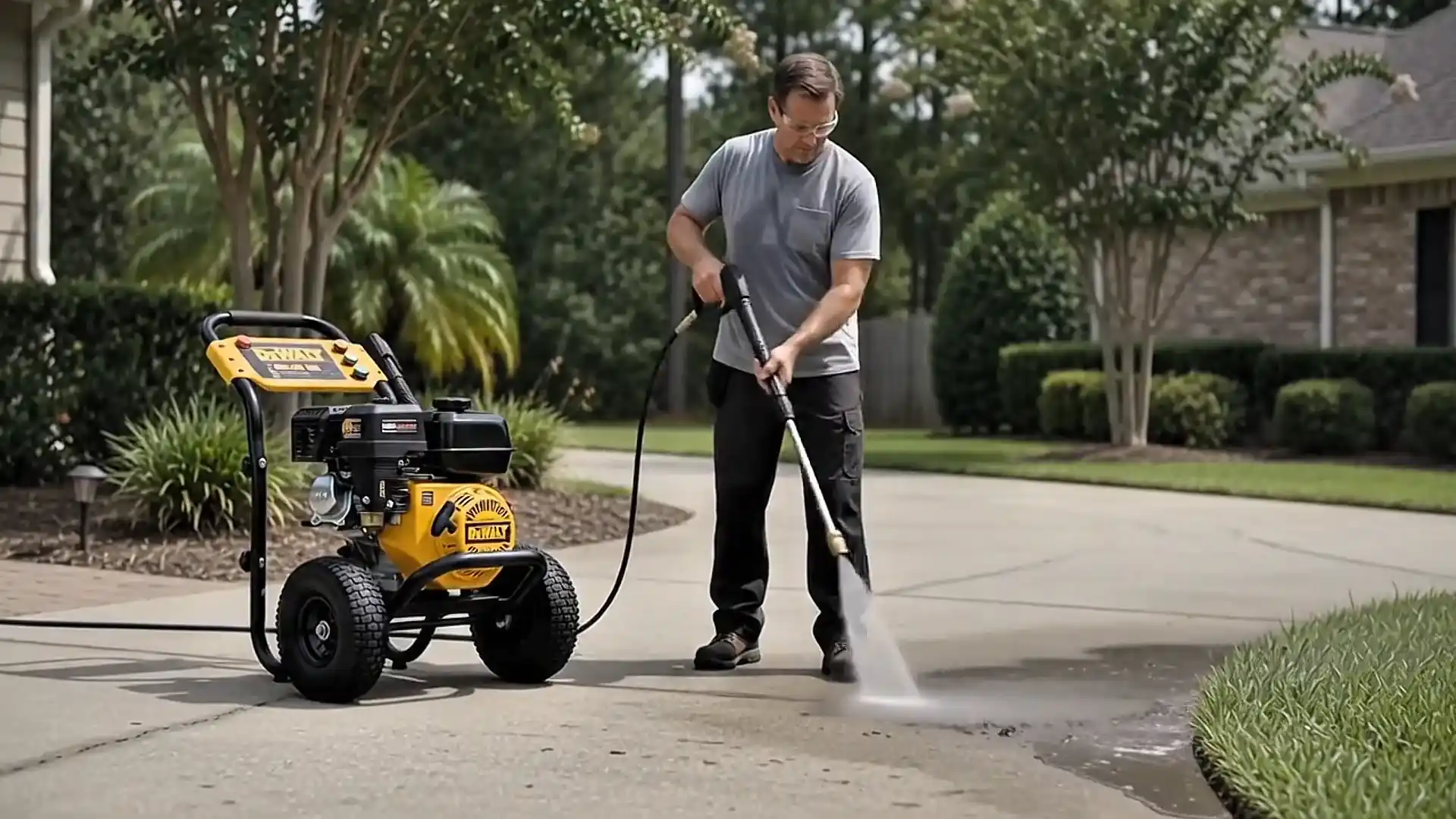
The DXPW3300-S is the pick for buyers who want the DeWalt name behind their pressure washer. The AAA axial cam pump, low-oil shutdown, and welded powder-coated steel frame add up to a machine built to be used hard and last.

- PREMIUM RESIDENTIAL PERFORMANCE: Easy-to-start with a DeWalt 208cc engine, perfect for cleaning decks, patios, siding, and prepping exteriors for painting. Simple assembly makes it ideal for residential use.
- POWER AND DURABILITY: OEM Technologies axial cam pump delivers 3300 PSI at 2.4 GPM. Welded steel frame with powder-coated finish adds durability. Thermal relief valve prevents overheating for long-lasting performance.
Pros and Cons
| Pros | Cons |
|---|---|
| 3300 PSI and 2.4 GPM — serious heavy-duty output | No onboard soap tank |
| AAA axial cam pump (trusted quality, maintenance-free) | More expensive than Westinghouse WPX3400 for similar PSI |
| Low-oil shutdown protects the engine | |
| Welded powder-coated steel frame | |
| 25 ft MorFlex non-marring hose | |
| 5 nozzles included | |
| DeWalt 3-year warranty | |
| 49-state compliant |
Testing Results
PSI and Cleaning Power: 3300 PSI at 2.4 GPM. Concrete, driveways, siding, decks, and heavy stains all confirmed “Yes.” The AAA axial cam pump maintains consistent pressure throughout the session without drop-off.
Engine Protection: The low-oil shutdown is a real advantage over machines that don’t have it. Run the engine low on oil long enough and you can ruin the motor. DeWalt’s system cuts the engine before that happens.
Pump Quality: The AAA axial cam pump is an industry-trusted component. It’s maintenance-free and handles sustained use without the thermal stress that cheaper pumps show on long cleaning sessions.
Build Quality: The welded powder-coated steel frame holds up to knocks and storage in a way that plastic-framed machines don’t. If you’re keeping this for 10 years, that matters.
Soap Application: No onboard soap tank is the main complaint from buyers. You work through the dedicated soap nozzle tip, which means pre-loading soap into a bucket or reservoir. It’s workable but less convenient than competitors with onboard tanks.
Real-world Usage
The DXPW3300-S gets picked up by buyers who trust DeWalt tools and want that same reliability standard in their outdoor equipment. The AAA pump and low-oil shutdown give it a durability story that the Westinghouse doesn’t match on paper, even though the Westinghouse slightly edges it on raw cleaning units.
If you already own DeWalt outdoor equipment and trust the brand’s warranty support, this machine fits naturally into that ecosystem.
Best Use Case
Best for homeowners who want a heavy-duty gas washer built to last and backed by a name they trust. The lack of an onboard soap tank is the only real inconvenience. Everything else about this machine is solid.
Not ideal for buyers who prioritize convenience features or who want the highest possible GPM for large surface coverage.
Verdict
The DeWalt DXPW3300-S is a premium build at a realistic price. The AAA pump, low-oil shutdown, and DeWalt 3-year warranty make it a reliable long-term investment for serious homeowners. It’s a step behind the WPX3400 on raw cleaning power, but ahead of it on build quality and brand support.
Rating: 4.5 / 5
View on Amazon: DeWalt DXPW3300-S
Best High-PSI Gas – Simpson CM61083
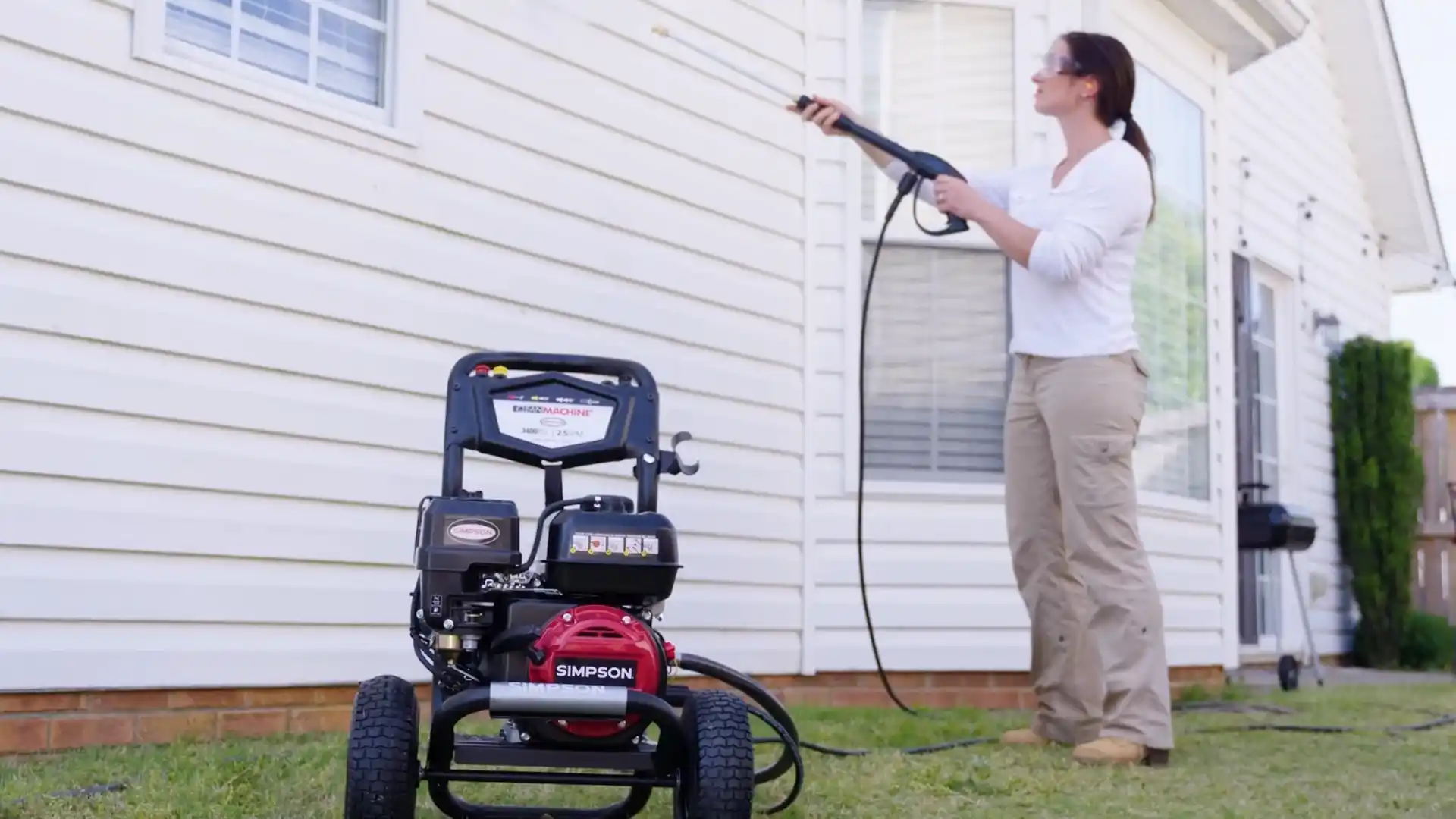
The Simpson CM61083 is the high-PSI option in the Clean Machine lineup. At 3400 PSI and 2.5 GPM with a CRX engine and AAA-quality axial cam pump, it’s a fully assembled, compact gas unit aimed at heavy residential and light commercial work.

- SIMPSON PRESSURE WASHER FOR HOMEOWNERS: The Simpson Clean Machine gas power washer cleans decks, driveways, siding, fencing, patio furniture, and cars; The cold water machine is great for homeowners; 49-State Compliant (Not for sale in California)
- ENGINE & PUMP: 208 cc CRX engine starts easily and includes low-oil shutdown; 3400 PSI 2.5 GPM OEM Technologies axial cam pump is maintenance-free with a thermal relief valve to help prevent overheating
Pros and Cons
| Pros | Cons |
|---|---|
| 3400 PSI and 2.5 GPM — top-tier cleaning output | Only 4 nozzles (no 25-degree tip) |
| CRX engine with AAA-quality axial cam pump | No onboard soap tank |
| Thermal relief valve protects pump from overheating | |
| Compact low-profile steel frame | |
| Fully assembled out of the box | |
| 25 ft non-marring hose included | |
| 49-state compliant | |
| 10-inch pneumatic tires |
Testing Results
PSI and Cleaning Power: 3400 PSI with the 0-degree nozzle handles heavy concrete stains, thick mildew buildup on brick, and deeply embedded grime on driveways. All heavy-duty surfaces confirmed “Yes.”
Thermal Relief Valve: This is the feature that separates the CM61083 from cheaper machines. If the pump overheats from sustained use, the thermal relief valve opens to release pressure and protect the pump. Long cleaning sessions are safer because of it.
Pump Quality: The OEM Technologies axial cam pump with AAA-quality components is a known quantity in the industry. Consistent pressure output across long sessions without the performance drop you see with cheaper pumps.
Startup: The CRX engine starts reliably. No extended priming, no fuss.
Frame Design: The compact low-profile frame is shorter than many competing gas models, which makes it easier to load into a truck bed or maneuver through garage doors.
Assembly: Fully assembled out of the box is a genuine convenience. No wrenches, no putting parts together before the first use.
Real-world Usage
The CM61083 is the pick for buyers who do heavy cleaning regularly and want professional-adjacent reliability at a residential price. The thermal relief valve is particularly useful if you clean large driveways or multiple surfaces in a single session without long pauses.
If you’re using it for concrete restoration or prep work before painting, the turbo nozzle boosts surface cleaning speed significantly over standard tips.
Best Use Case
Best for homeowners with large concrete areas, two-story exterior cleaning jobs, or anyone doing prep work before painting or staining. Also works well for light commercial use like cleaning small parking areas or equipment.
Skip it if you need an onboard soap tank or a 25-degree nozzle. The missing nozzle is a real gap in the kit. Budget for a replacement tip if the 15 and 40 degree options don’t cover your needs.
Verdict
The Simpson CM61083 is a well-built high-PSI gas washer with better pump protection than most competitors at this price. The thermal relief valve is worth the upgrade over the lower-spec CM61456-S for anyone doing sustained heavy cleaning. The 2-year warranty is the main downside compared to Westinghouse’s 3-year coverage.
For large concrete surfaces, pairing this with a surface cleaner attachment significantly speeds up the job. Our guide on the best pressure washer surface cleaner covers the top attachment options.
Rating: 4.4 / 5
View on Amazon: Simpson CM61083
What Makes the Best Heavy Duty Pressure Washer?
PSI and GPM: The Two Numbers That Actually Matter
Most buyers focus on PSI. It’s the number that’s on the box and in the advertising. But GPM (gallons per minute) is equally important for heavy-duty cleaning, and it’s often the spec that gets buried.
PSI is the pressure. It determines how hard the water hits the surface. GPM is the flow. It determines how quickly you can rinse grime away and cover large areas. A machine with 3000 PSI and 1.1 GPM will clean deep stains effectively but rinse slowly. A machine with 2500 PSI and 2.5 GPM covers ground faster and finishes large driveways more quickly.
Cleaning units (CUs) combine the two: PSI multiplied by GPM. The Westinghouse WPX3400, for example, delivers 3400 x 2.6 = 8,840 CUs. The WPX3000e electric delivers 3000 x 1.1 = 3,300 CUs. That difference is why gas models still dominate for large-area heavy-duty cleaning, even though electric technology has improved significantly.
For most heavy-duty residential tasks, look for at least 2500 PSI and 1.5 GPM on electric, or 3000 PSI and 2.0+ GPM on gas.
Motor and Pump Type
For electric pressure washers, the motor type is one of the most important long-term factors. Universal motors are cheaper to produce but run louder, draw more electricity, and wear out faster. Induction motors and brushless motors run quieter, use less power, and last significantly longer under sustained use.
Every electric model on this list uses either an induction or brushless motor. That’s not accidental. For heavy-duty work, the motor runs longer and harder than on a machine used for occasional light cleaning. Pump quality matters for the same reason. Axial cam pumps are the standard at this price range. They’re maintenance-free and reliable for residential use. Triplex plunger pumps are the commercial standard but are generally found on machines in a higher price tier.
For gas models, the engine size (measured in cc) and the pump manufacturer are the key specs. OEM Technologies and AAA-branded axial cam pumps are known quantities with established reliability records.
PWMA and CETA Certification
The pressure washer industry has a PSI inflation problem. Manufacturers advertise “burst” or “max” PSI figures that reflect peak pressure for a fraction of a second, not the operating pressure you actually use. A machine marketed at 4800 PSI may deliver 2400 PSI in real use.
PWMA (Pressure Washer Manufacturers’ Association) and CETA (Cleaning Equipment Trade Association) certifications require that advertised PSI and GPM claims be independently verified at working conditions. When you see PWMA or CETA on the box, the spec is real.
The Greenworks Pro GPW3001 is the only electric on this list with PWMA certification. Among the gas models, the Simpson units carry 49-state compliance. If certified specs matter to you, these are the picks to prioritize.
Hose Length and Reach
Standard pressure washer hoses are 25 feet. That covers most residential tasks on a standard lot. But a large driveway, a two-story home exterior, or any setup where the machine sits at the garage door while you work around the yard will push that limit quickly.
All of the machines on this list use M22 or compatible fittings, which means aftermarket hose extensions are widely available. Our guide on the best pressure washer extension hose covers the top options for adding reach without losing pressure.
Electric vs Gas for Heavy-Duty Work
Gas pressure washers deliver more power. That’s not debatable. A 3400 PSI gas model with 2.6 GPM puts out roughly three times the cleaning units of a heavy-duty electric at 3000 PSI and 1.1 GPM.
But gas comes with trade-offs: noise, exhaust fumes, seasonal maintenance, and the inability to use it indoors or in enclosed spaces. Electric is quieter, requires almost no maintenance, and can be used much closer to the house without ventilation concerns.
The right answer depends on what you’re cleaning. Large driveways with heavy staining, multi-surface cleaning sessions, or rural properties far from outlets: gas wins. Residential siding, patios, decks, and surfaces where you need quiet or don’t want fumes: electric at 2600-3000 PSI handles it well.
Our detailed breakdown on electric vs gas pressure washers goes deeper into the trade-offs if you’re still deciding.
How to Use a Heavy Duty Pressure Washer Effectively
Getting the most out of a heavy-duty machine is about technique, not just power. Start with the widest nozzle (40 degree) and narrow down if the surface isn’t responding. This protects wood, siding, and painted concrete from damage.
Work in overlapping passes. Move the wand in smooth left-to-right sweeps rather than targeting one spot. Standing water lifts grime. Let it soak for a second before the next pass on stubborn areas.
Use soap first on concrete stains. Apply detergent with the soap nozzle, let it sit for two to three minutes, then switch to a 25 or 15 degree nozzle to blast it away. The chemistry does a lot of the work if you give it time.
Keep the nozzle at least six inches from concrete and 12-18 inches from wood or painted siding. Closer than that and you risk etching the surface, even with a 40-degree tip.
For gas models, check the oil before every use. A machine running low on oil for 30 minutes can cause permanent engine damage. The DeWalt DXPW3300-S has a low-oil shutdown to catch this. The Westinghouse WPX3400 does not, so build the oil-check habit.
Frequently Asked Questions
What PSI is considered heavy duty for a pressure washer?
Heavy duty typically starts at 2500 PSI and above. For serious concrete cleaning, thick stain removal, or full-house exterior washing, 3000 PSI or higher is the practical standard. Below 2000 PSI is mid-range residential, capable of cars, patio furniture, and light siding but not the tough jobs. The machines on this list start at 2300 PSI (RYOBI RY142300) and go up to 3400 PSI on the gas side. For the heaviest work, the 3000+ PSI options are the right call.
Is a gas pressure washer worth it over electric for home use?
It depends on what you’re cleaning. Gas delivers significantly higher cleaning units (PSI x GPM) and works anywhere without a cord. For large driveways, heavy mildew, and two-story home exteriors, gas is the more efficient tool. For most other residential tasks, a 2600-3000 PSI electric handles the job with less noise, no fumes, and almost zero maintenance. If you’re regularly cleaning large concrete areas, gas is worth it. If most of your cleaning is siding, decks, and patio furniture, a heavy-duty electric saves you money and hassle. See our full electric vs gas pressure washer comparison for more detail.
What’s the difference between rated PSI and max PSI?
Max PSI is the peak pressure a machine can generate momentarily. Rated PSI is the consistent operating pressure during actual use. Many brands advertise max figures that are two times higher than what the machine delivers in real cleaning conditions. PWMA and CETA certification require that advertised specs reflect working conditions. Always look for rated PSI when comparing heavy-duty models.
Can I use a heavy duty pressure washer on a wood deck?
Yes, but with the right nozzle and technique. Use a 25 or 40 degree nozzle, keep the wand 12 inches or more from the wood surface, and move in the direction of the grain. Never use a 0 or 15 degree nozzle on wood. Even with a heavy-duty machine, the technique matters more than the power. On pressure-treated or older wood, start at greater distance and work closer only if needed. Our guide on how to pressure wash a deck covers surface-specific technique in detail.