Best Pressure Washer for Garage Floors: 5 Tested Picks
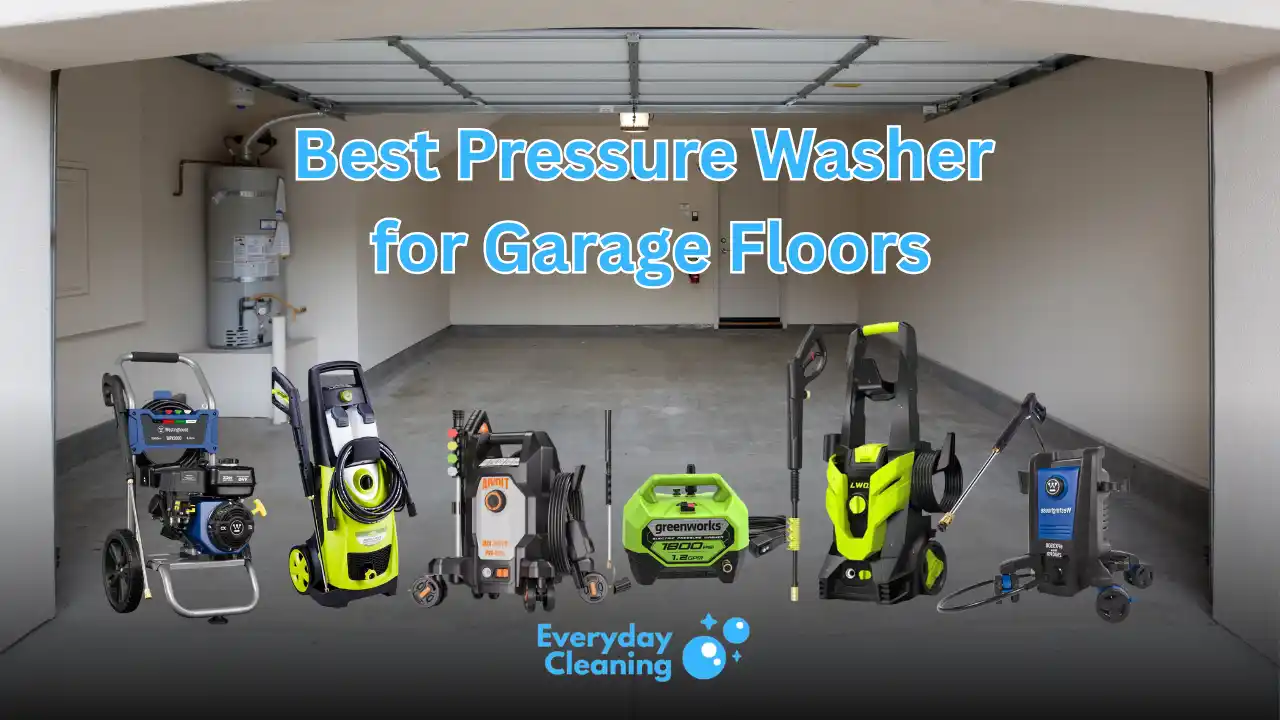
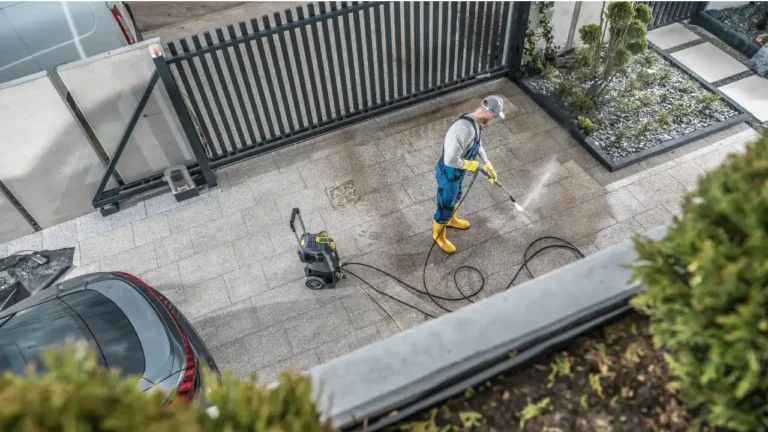
Garage floors collect oil stains, tire marks, and years of ground-in grime that a regular hose won’t touch. We tested five pressure washers specifically on concrete garage floors and picked the best ones for every budget and setup.
| Recommendation | Product | Reason |
|---|---|---|
| Best Overall | Westinghouse ePX3500 | 2500 PSI, 4-wheel stability, easiest to maneuver in a garage. Reviews ↓ |
| Best for Heavy Stains | Westinghouse WPX3000e | 3000 PSI induction motor, handles deep oil and tire marks. Reviews ↓ |
| Best Electric Premium | Greenworks Pro GPW3001 | PWMA-certified 3000 PSI, 10-year motor warranty. Reviews ↓ |
| Best Budget Pick | Sun Joe SPX3000 | Proven bestseller, good on light-to-medium garage stains. Reviews ↓ |
| Best Cordless | EGO HPW3200 | 3200 PSI, no cord needed, 60-minute runtime. Reviews ↓ |
Best Overall: Westinghouse ePX3500
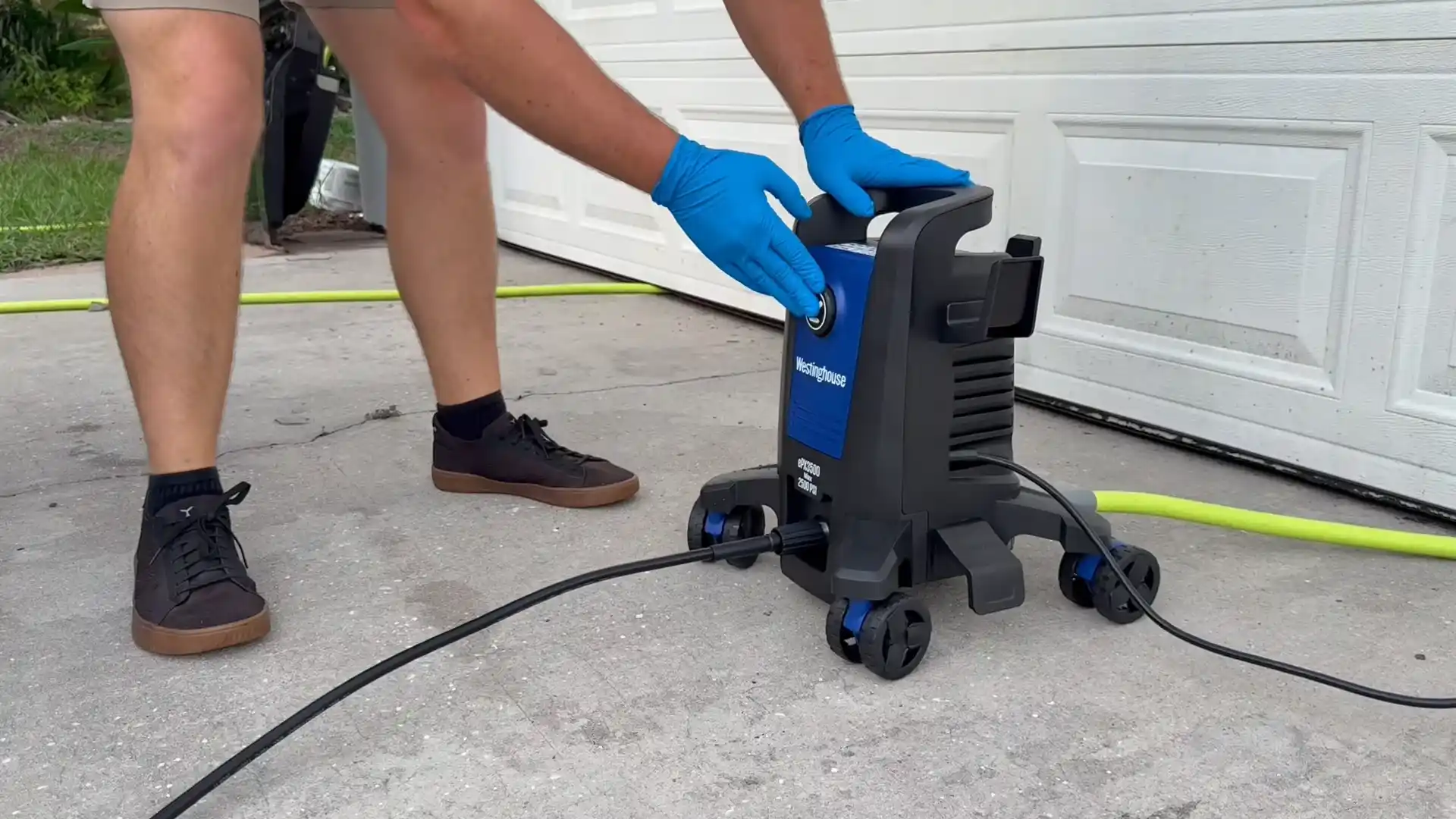
The ePX3500 is the easiest pressure washer to use in a garage. The 4-wheel anti-tipping design stays stable on sloped concrete, and at 19 lbs it’s light enough to reposition without a fight.
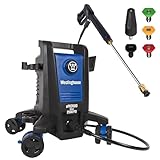
- Delivers 2500 max PSI and 1.76 max GPM (at lowest pressure), and 2000 rated PSI and 1.2 rated GPM of water flow; Pro-style steel extendable 17.5” wand with quick-connect nozzles (0°, 15°, 25°, turbo and soap applicator)
- Super compact and lightweight at 16.5” tall and 19 pounds for convenient storage and portability; Four quick-lock wheels with 360° steering design and low center of gravity engineered for anti-tipping design

Pros and Cons
| Pros | Cons |
|---|---|
| 4-wheel 360-degree steering, anti-tipping | Small 20oz soap tank runs out fast |
| 5 nozzles including turbo | |
| Only 19 lbs, easy to carry | |
| 25 ft hose and 35 ft cord | |
| 3-year warranty |
Testing Results
At 2500 PSI peak (2000 rated), the ePX3500 handles most garage floor jobs without issue. Fresh tire marks come off cleanly with the 15-degree nozzle. Light oil drips from regular car maintenance clear up fast. Older grease stains need a concrete degreaser applied first, then the turbo nozzle to finish.
Concrete and driveway performance: solid medium-duty. Light to medium stains: yes. Deep-set oil and chemical stains from years of neglect are at the edge of what this unit can do.
Real-World Usage
The 4-wheel base is the standout feature for garage use. Most pressure washers tip sideways when you drag the hose around a car or corner. The ePX3500 stays put. The 360-degree steering means you don’t have to pick it up to reposition. The 19-lb weight is lighter than most competitors in this PSI range.
The 20oz soap tank is the weak spot. It empties in roughly 30-40 seconds of soap mode. For a full garage floor, you’ll refill it 2-3 times. Not a dealbreaker, just annoying.
Best Use Case
Regular garage floor maintenance, fresh stains, tire marks, and general concrete cleaning. Also works well on the car once you’re done with the floor. Good for users who don’t want to deal with a heavy or awkward machine indoors.
Verdict
The ePX3500 earns the top spot because of how it behaves in the specific constraints of a garage: tight space, sloped floors, limited room to maneuver. The 2500 PSI handles 80% of what most homeowners throw at a garage floor. If you’re dealing with years of old oil and chemical stains, step up to the WPX3000e. For everything else, this is the pick.
Rating: 4.6 / 5
View on Amazon: Westinghouse ePX3500
Best for Heavy Stains: Westinghouse WPX3000e
The WPX3000e is what you want if your garage floor has serious stains. Old oil, grease buildup, chemical spills, tire marks baked in over years. This is the most powerful electric option that can realistically handle heavy concrete.
- Delivers 3000 max PSI and 1.76 max GPM (at lowest pressure), and 2600 rated PSI and 1.1 rated GPM of water flow. Perfect for decks, sidewalks, fences, garage floors, exterior walls, cars and patio furniture; Comes with a .45 gallon soap tank
- 25′ abrasion resistant super-flex hose with lightweight high pressure metal spray gun and wand with 5 quick connect nozzles (0°, 15°, 25°, soap and turbo); Compatible with pressure washer accessories like surface cleaners, undercarriage cleaners and foam cannons with M22 fittings
Pros and Cons
| Pros | Cons |
|---|---|
| 3000 PSI (2600 rated) with induction motor | Heavy at 36.8 lbs |
| Noticeably quieter than gas at similar output | |
| Rugged steel frame | |
| 10-inch never-flat wheels | |
| 0.45 gallon soap tank | |
| 3-year warranty |
Testing Results
The induction motor is the key difference here. Universal motors in cheaper electric washers run loud and hot. The WPX3000e’s induction motor runs quieter and cooler, which matters when you’re working indoors with the garage door open at 7am. Neighbors won’t notice.
Heavy stains: yes. Deep oil from years of leaking cars lifts with a concrete degreaser and the turbo nozzle. Tire marks from rubber-burnishing clear up faster than anything else on this list. The 3000 PSI (2600 actual) makes a visible difference on set-in stains vs mid-range models.
The 1.1 GPM in real use is the trade-off. It cleans hard but rinses slower. On a 2-car garage floor, plan for a bit more time on the rinse pass.
Real-World Usage
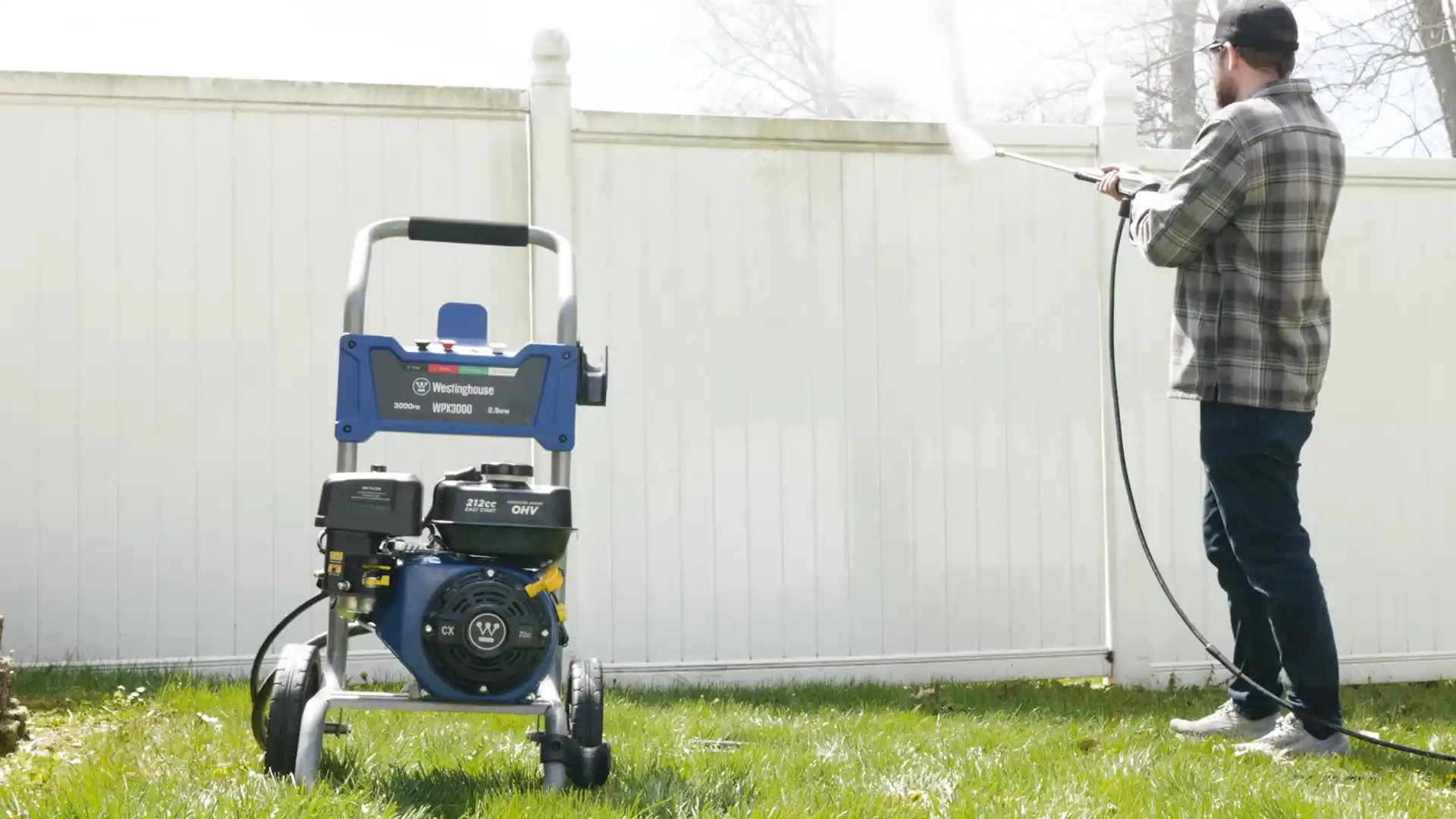
The steel frame and 10-inch wheels handle rough or uneven garage floors well. The hand-truck style design is easy to tip back and roll, even at 36.8 lbs. The 0.45-gallon soap tank is large enough for a full garage floor without constant refilling.
The 25 ft hose works for a standard single-car garage. A 2-car garage benefits from a 50-ft extension hose. The WPX3000e uses M22 fittings, so aftermarket extensions are easy to find. Check the best pressure washer extension hose options if you need more reach.
Best Use Case
Garage floors with serious stains, large concrete areas, prep before sealing or painting. Also great for driveways and siding when you’re done with the garage. The go-to pick for anyone who’s been putting off the deep clean for a few years.
Verdict
The quieter induction motor and 3000 PSI is a genuinely different experience from cheaper electrics. You feel the extra power on stubborn stains, and you appreciate the quieter operation when working in an enclosed space. It’s heavier than the ePX3500 and slower to rinse. But for heavy-duty garage floor cleaning, it’s the best electric option short of going gas.
Rating: 4.5 / 5
View on Amazon: Westinghouse WPX3000e
Best Electric Premium: Greenworks Pro GPW3001
The Greenworks GPW3001 is the closest an electric pressure washer gets to gas-level performance. PWMA-certified 3000 PSI means those numbers are real, independently verified, not marketing claims.

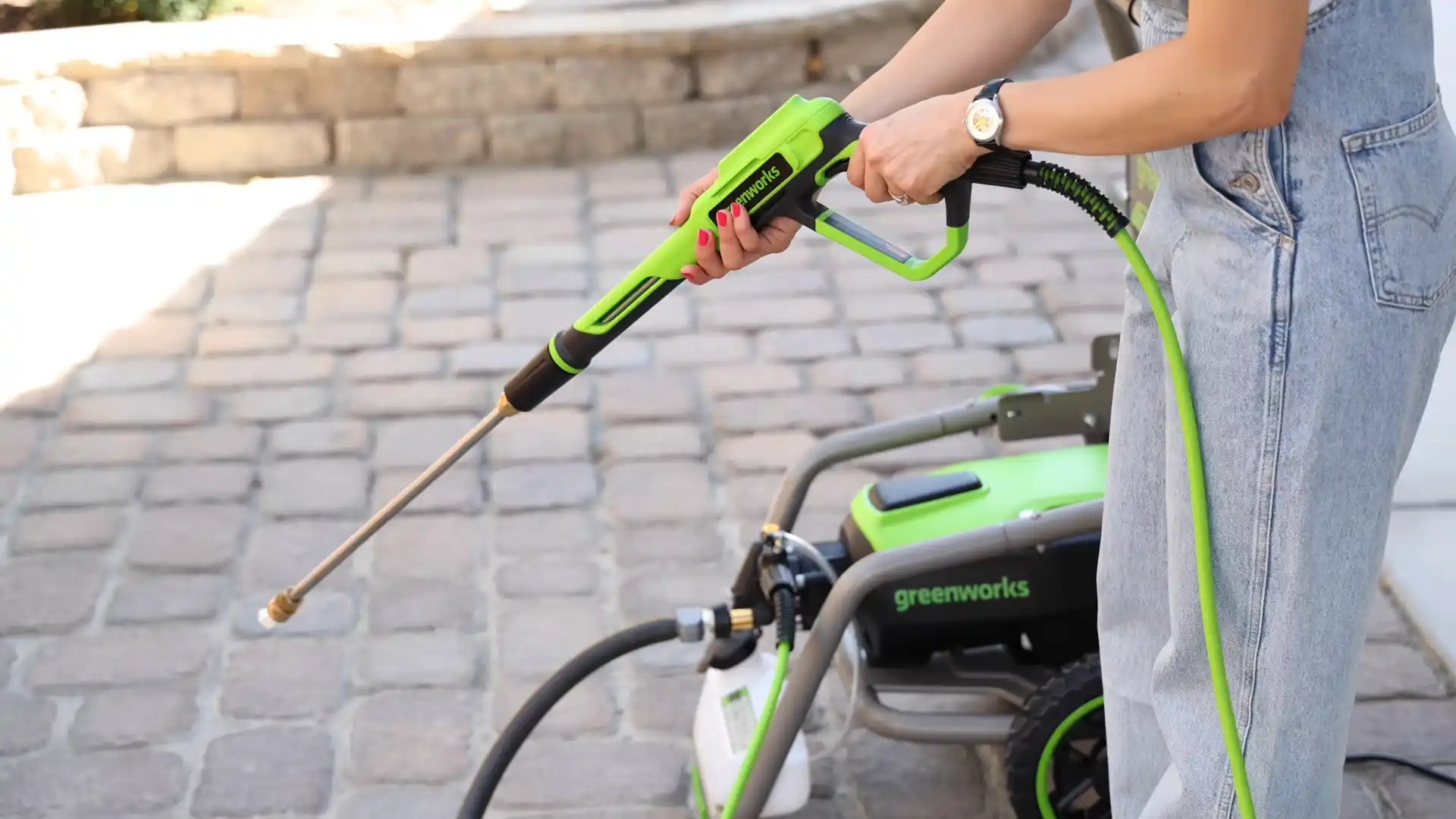
- TRUBRUSHLESS MOTOR : Powerful 14 Amp TruBrushless motor generates 3000 PSI and 2.0 GPM for maximum cleaning power.Cleaning Units 3300 C.U. Maximum Inlet Water Temperature 104°F (40°C).Frequency : 60 hz
- PWMA CERTIFIED (Pressure Washer Manufacturers‘ Association) : All water pressure (PSI) and flow rate (GPM) claims for this product were tested and verified by an independent lab, ensuring you’ll take home the power you were promised
Pros and Cons
| Pros | Cons |
|---|---|
| PWMA-certified 3000 PSI (independently verified) | Heaviest electric at 49 lbs |
| Industry-best 10-year motor warranty | Expensive at $374-499 |
| TruBrushless motor auto-adjusts per nozzle | |
| 1-gallon soap tank (fill and forget) | |
| Kink-resistant Uberflex hose | |
| Stores vertically (50% less space) |
Testing Results
The PWMA certification is the headline feature. Most electric pressure washers claim PSI numbers they can’t actually deliver. The GPW3001 is rated at exactly 3000 PSI and 2.0 GPM, certified by an independent body. On garage floors, that difference is real. Heavy stains that fight back against other electrics come off cleaner and faster here.
The TruBrushless motor is a smart feature for garage floor work. It automatically adjusts pressure based on which nozzle you’re using. You don’t have to think about it. Swap to the turbo nozzle and the motor ramps up. Switch to the soap nozzle and it backs off to protect the detergent flow.
Heavy stains: yes. Concrete and driveway performance: heavy duty. This is the only electric on this list that genuinely competes with light gas models on thick concrete stains.
Real-World Usage
The 1-gallon soap tank is the largest on this list. For a full 2-car garage floor with degreaser application, you fill it once and you’re done. The Uberflex kink-resistant hose handles the tight corners of a garage without fighting back. Vertical storage is a practical advantage for a machine this size.
At 49 lbs, it’s not something you’ll carry around. It rolls on the wheelbarrow frame. For a dedicated garage setup where the machine stays put, the weight is less of a factor.
Best Use Case
Homeowners who want gas-level cleaning without the gas hassle, fumes, or noise. Good for large garage floors, heavily stained concrete, and anyone who wants a machine that will last a decade without babying it. Also pairs well with a surface cleaner attachment for faster flat-surface coverage.
Verdict
The price is high. But the 10-year motor warranty, PWMA-certified specs, and smart-sensing motor make this a legitimately premium machine. If you’re cleaning a large or heavily used garage floor and want a one-time purchase, the GPW3001 earns its cost. For occasional cleaning of a lightly soiled floor, it’s more than you need.
Rating: 4.7 / 5
View on Amazon: Greenworks Pro GPW3001
Best Budget Pick: Sun Joe SPX3000
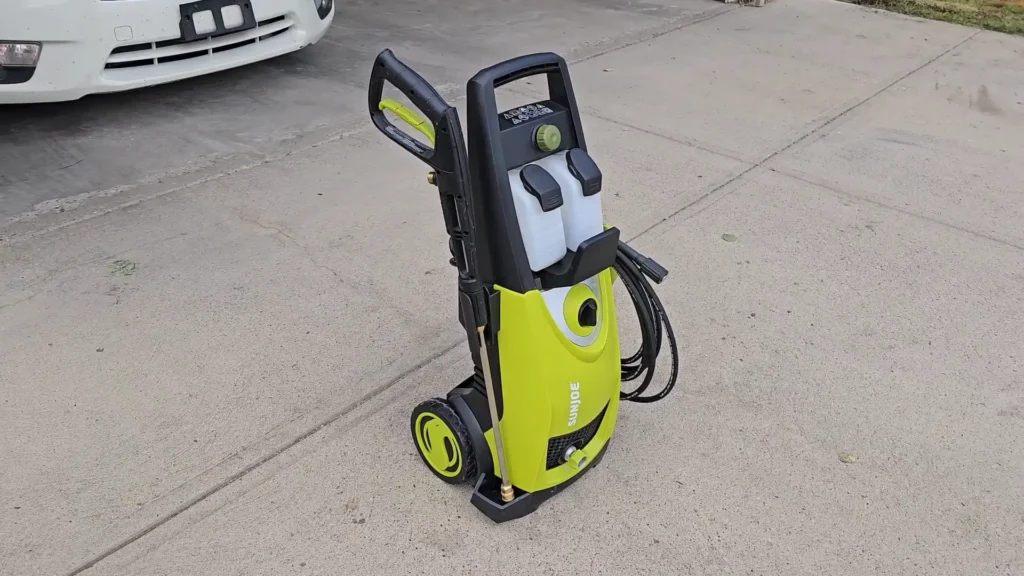
The SPX3000 has over 20,000 Amazon reviews at 4.8 stars. It’s the best-selling electric pressure washer for a reason. At 2030 PSI with a dual soap tank system, it handles light-to-medium garage floor stains without a high price tag.

- High-Pressure Cleaning: This electric pressure washer delivers up to 2030 PSI working pressure and 1.2 GPM water flow to help remove dirt, grime, and buildup from homes, driveways, vehicles, RVs, and outdoor equipment
- Multiple Spray Options: This water pressure washer includes five quick-connect spray tips (0°, 15°, 25°, 40°, and soap) to switch between narrow jet streams and wider fan patterns, plus a soap applicator for detergent use
Pros and Cons
| Pros | Cons |
|---|---|
| 20,000+ Amazon reviews at 4.8 stars | 1.2 GPM is lower than newer competitors |
| Dual detergent tank system (two soaps, switch between them) | 20 ft hose feels short |
| PWMA certified | |
| Solid brass fittings and metal connections | |
| TSS pump protection |
Testing Results
The 2030 PSI handles light-to-medium garage floor stains well. Fresh oil drips, everyday grime, dust, and light tire marks all clear up without issue. The dual soap tank lets you run a degreaser in one tank and a rinse soap in the other without stopping to swap bottles. That’s a genuinely useful feature for a garage floor workflow.
Concrete performance: medium duty. Heavy stains are light to medium only. Old oil stains from years of parking may need a degreaser pre-treatment and a second pass. Deep-set stains are at the edge of what 2030 PSI can do.
Real-World Usage
The SPX3000 is the simplest machine on this list to set up and use. Plug in, connect the hose, pick a nozzle, go. The dual soap tank is the standout feature. You can run your concrete degreaser in Tank 1, then switch to Tank 2 for a clean rinse. The 20 ft hose is short but works for a single-car garage. Upgrade to an extension for a larger space.
The PWMA certification adds confidence that the 2030 PSI is real. Brass fittings and metal connections mean the connection points won’t crack after a season. The plastic body is a trade-off at this price point.
Best Use Case
Regular maintenance cleaning, light stains, first-time pressure washer buyers, and anyone who wants a proven machine without spending over $150. If your garage floor is moderately clean and you’re doing seasonal refreshes, this is all you need. For a deeper look at stain removal options, the best pressure washer for oil stains guide has more detail on chemical pairing.
Verdict
The SPX3000 is the most proven pick at the budget end. The 4.8-star rating across 20,000 reviews is hard to argue with. It won’t blast off years of neglect, but for regular garage floor upkeep, it does the job cleanly. The dual soap tank is a feature you’ll actually use.
Rating: 4.4 / 5
View on Amazon: Sun Joe SPX3000
Best Cordless: EGO Power+ HPW3200
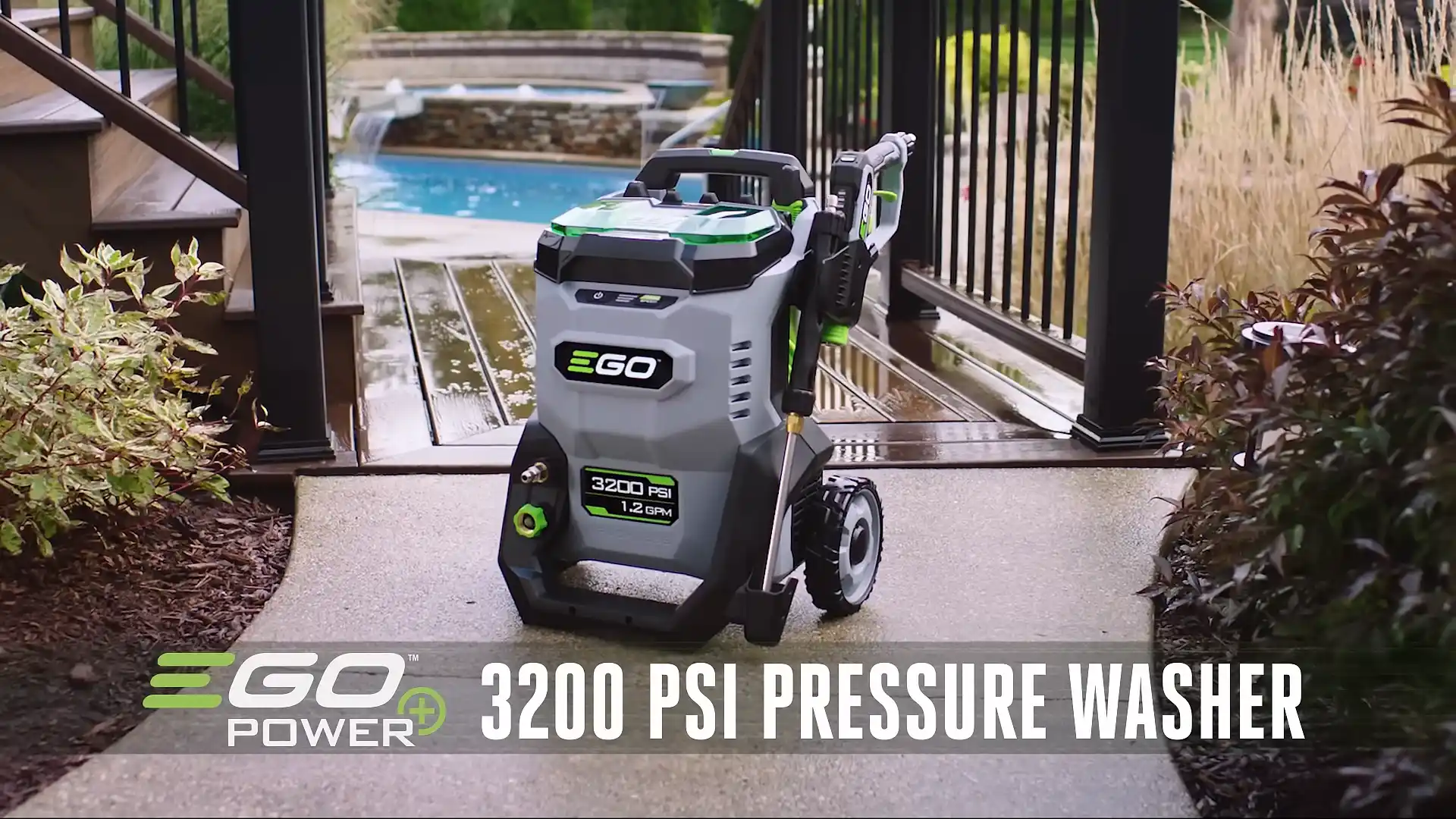
The HPW3200 is the most powerful cordless pressure washer available. No outlet needed. 3200 PSI from two 56V batteries, up to 60 minutes of runtime. If your garage doesn’t have a convenient outlet or you want to move freely, this is the only cordless that competes with corded models on raw power.

- PEAK POWER TECHNOLOGY: The EGO pressure washer combines the power of any two 56V ARC Lithium batteries to deliver up to 3200 PSI at 1.2 GPM—and up to 2.0 GPM max—for powerful cleaning.
- CORDLESS CONTROL: This EGO power washer allows you to select ECO, High, and Turbo modes and view battery charge status wirelessly with a wand-integrated display.
Pros and Cons
| Pros | Cons |
|---|---|
| 3200 PSI (most powerful cordless available) | Expensive at $500-779 depending on kit |
| Up to 60-minute runtime (two 6.0Ah batteries) | 53 lbs with batteries |
| ECO / High / Turbo modes on wand | |
| No cord, full freedom of movement | |
| Compatible with all EGO 56V batteries | |
| Battery life indicator on wand |
Testing Results
3200 PSI is real performance on concrete. The EGO HPW3200 handles heavy garage floor stains comparably to mid-range gas models. Oil stains, tire marks, rust rings from cans and tools. The turbo mode on the wand gives an extra boost for stubborn spots without swapping nozzles.
Concrete performance: medium-heavy duty. Heavy stains: yes (medium). It’s not quite at the level of a 3400 PSI gas model on truly embedded stains, but it’s close enough that most homeowners won’t notice the difference.
The 60-minute runtime is enough for a 2-car garage floor with time left over. Runtime drops to around 40-45 minutes on Turbo mode. For most garage jobs, that’s enough.
Real-World Usage
The big advantage is freedom of movement. No cord to trip over, no outlet to locate, no extension cord snaking through the garage. In a cluttered garage, that matters. The siphon soap system is less convenient than an onboard tank. You fill a bucket with degreaser solution and drop the siphon hose in. It works, but it adds a step compared to the other machines here.
At 53 lbs with batteries, it’s the heaviest on this list. The telescoping handle and rugged wheels make it manageable. If you already own EGO 56V tools, you may already have batteries that work with this machine. That changes the value calculation significantly.
Best Use Case
Garages without nearby outlets, users who work outdoors after finishing the floor, and EGO battery ecosystem owners who want one machine that does everything. Also a strong pick for cleaning the car, patio, and driveway on the same charge. The best pressure washer for concrete guide has more options if raw concrete power is the priority.
Verdict
The HPW3200 is expensive. No way around it. But 3200 PSI without a cord is genuinely useful for garage floor work, especially when you want to move the machine around freely or continue outside after you’re done. If you’re an EGO battery user, this becomes much easier to justify. If you’re starting from scratch, the corded options above deliver similar cleaning power for a lot less money.
Rating: 4.3 / 5
View on Amazon: EGO HPW3200
What Makes the Best Pressure Washer for Garage Floors?
PSI: The Most Important Number for Concrete
Garage floors are concrete, and concrete is one of the hardest surfaces you’ll clean. You need at least 2000 PSI to make a real difference. Under that, you’re mostly pushing dirt around.
For regular maintenance and light stains, 2000-2500 PSI is enough. For old oil stains, grease buildup, or concrete that hasn’t been cleaned in years, look for 2600 PSI or above. The difference is visible. A 3000 PSI machine lifts stains that a 2000 PSI machine just can’t move. For more context on which PSI range to target, the best PSI for pressure washer guide breaks it down by surface type.
GPM: How Fast You Rinse
PSI breaks up the stain. GPM (gallons per minute) flushes it away. Most electric pressure washers land between 1.1 and 2.0 GPM. The higher the GPM, the faster your rinse pass. A 1.1 GPM machine cleans just as hard as a 1.76 GPM machine. It just takes longer to rinse a large floor.
For a single-car garage, low GPM is fine. For a 3-car garage or commercial floor, higher GPM saves significant time.
Nozzle Selection for Garage Floors
The turbo nozzle is your primary tool for concrete stains. It spins the water stream in a circular pattern, increasing effective cleaning power without bumping up PSI. Almost every machine on this list includes one.
The 15-degree nozzle handles direct stain blasting. The 25-degree nozzle works for general cleaning and rinse passes. The 0-degree nozzle is too aggressive for most home garage floors. It can etch concrete or damage grout lines. Leave that one for stripping rust or paint from metal.
A surface cleaner attachment is worth adding for large garage floors. It covers more area per pass and produces an even clean without visible streaks.
Electric vs Gas for Indoor Use
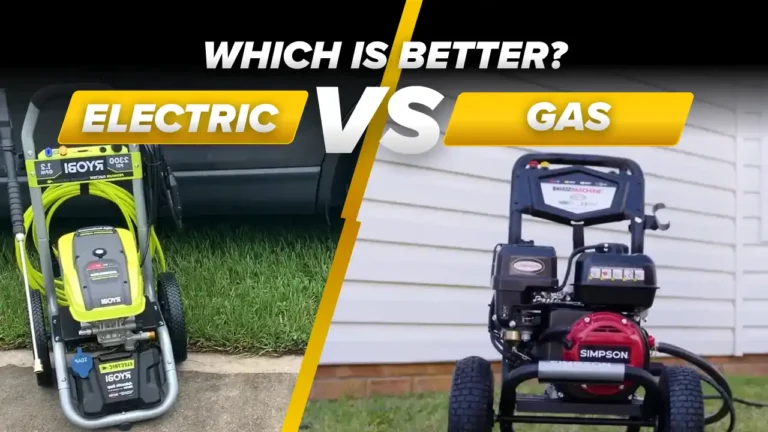
Gas pressure washers produce more raw power. A 3400 PSI gas model outcleans every electric on this list on raw concrete performance. But gas models cannot be used indoors. Carbon monoxide from the engine accumulates in a garage fast. This is not a minor safety concern.
Electric models are the right choice for garage floor cleaning. They run on an outlet, produce no fumes, and are quieter. If your stains are severe enough that you think you need gas power, do the job outside with the car moved, or pre-treat with a commercial degreaser first. The electric vs gas pressure washer breakdown covers when gas makes sense for outdoor use.
Motor Type: Universal vs Induction
Universal motors are standard in budget and mid-range electric washers. They run louder and generate more heat. In an enclosed garage, that heat and noise add up quickly.
Induction motors run cooler and quieter. The Westinghouse WPX3000e uses one. You can hear the difference from outside the garage. If you’re cleaning early in the morning or in a residential neighborhood, the induction motor is worth the extra cost.
How to Use a Pressure Washer on a Garage Floor Effectively
Clear the floor and prep the stains
Move vehicles, bikes, and anything stored on the floor. Sweep up loose dirt and debris first. Sprinkle commercial degreaser or dish soap concentrate directly on oil and grease stains and let it sit for 5-10 minutes before washing. Pre-treating makes a significant difference on set-in stains.
Start with the soap pass
Connect your concrete degreaser to the soap tank. Use the soap nozzle and work from the back of the garage toward the door. Let the solution dwell on the floor for 2-3 minutes before rinsing. Don’t let it dry completely.
Rinse with the turbo or 15-degree nozzle
Swap to the turbo nozzle for stained areas and the 25-degree for general concrete. Work systematically from back to front. Overlap your passes by about 6 inches to avoid streaking. The how to clean a garage floor guide has the full step-by-step process if you want more detail.
Let the floor dry before driving on it
Wet concrete is slippery. Give it 1-2 hours to dry before moving cars back in. A leaf blower speeds up the drying process significantly.
Frequently Asked Questions
What PSI do I need to clean a garage floor?
For regular maintenance and light stains, 2000-2500 PSI is enough. For older oil stains, grease, or concrete that hasn’t been cleaned in years, look for 2600 PSI or above. Pairing any machine with a concrete degreaser first makes the PSI work harder.
Can I use a gas pressure washer in my garage?
No. Gas engines produce carbon monoxide, which builds up quickly in enclosed spaces. Always use an electric or battery-powered pressure washer for indoor garage floor cleaning. If you need gas-level power, move the work outside.
Do I need a surface cleaner attachment for a garage floor?
Not required, but useful for large areas. A surface cleaner covers a wider strip per pass and eliminates the streaking that a wand can leave on open concrete. Worth the add-on if you have a 2-car or 3-car garage. Check the best pressure washer surface cleaner options.
How do I remove oil stains before pressure washing?
Apply a commercial degreaser or a heavy paste of baking soda and dish soap directly to the stain. Let it sit for at least 10 minutes, then scrub with a stiff brush before rinsing. The pressure washer finishes the job. Skipping the pre-treatment leaves oil residue behind even after washing.
How often should I pressure wash my garage floor?
Once or twice a year is enough for most homeowners. Heavy users, oil leakers, or people using the garage as a workshop may want to clean quarterly. Between washes, a shop vac for garage cleanup handles dry debris and keeps the floor manageable.