Why Your Pressure Washer Loses Pressure And How to Fix It
Your pressure washer starts strong, then the pressure drops. Or it never builds up properly in the first place. Either way, there are a handful of common causes, and most of them are easy to fix yourself.
Air Trapped in the Pump
This is the number one reason a pressure washer loses pressure, especially right after hookup. Most people don’t know it’s happening until the machine starts acting erratic.
Here’s what’s going on. When you connect your garden hose, disconnect it to attach the pressure washer, and then reconnect everything, water drains back out of the hose in the process. That leaves an air pocket in the line. When the pump tries to run on air instead of water, you get that weird surge-and-drop pressure behavior that makes you think the machine is broken.
It’s not broken. There’s just air in there.
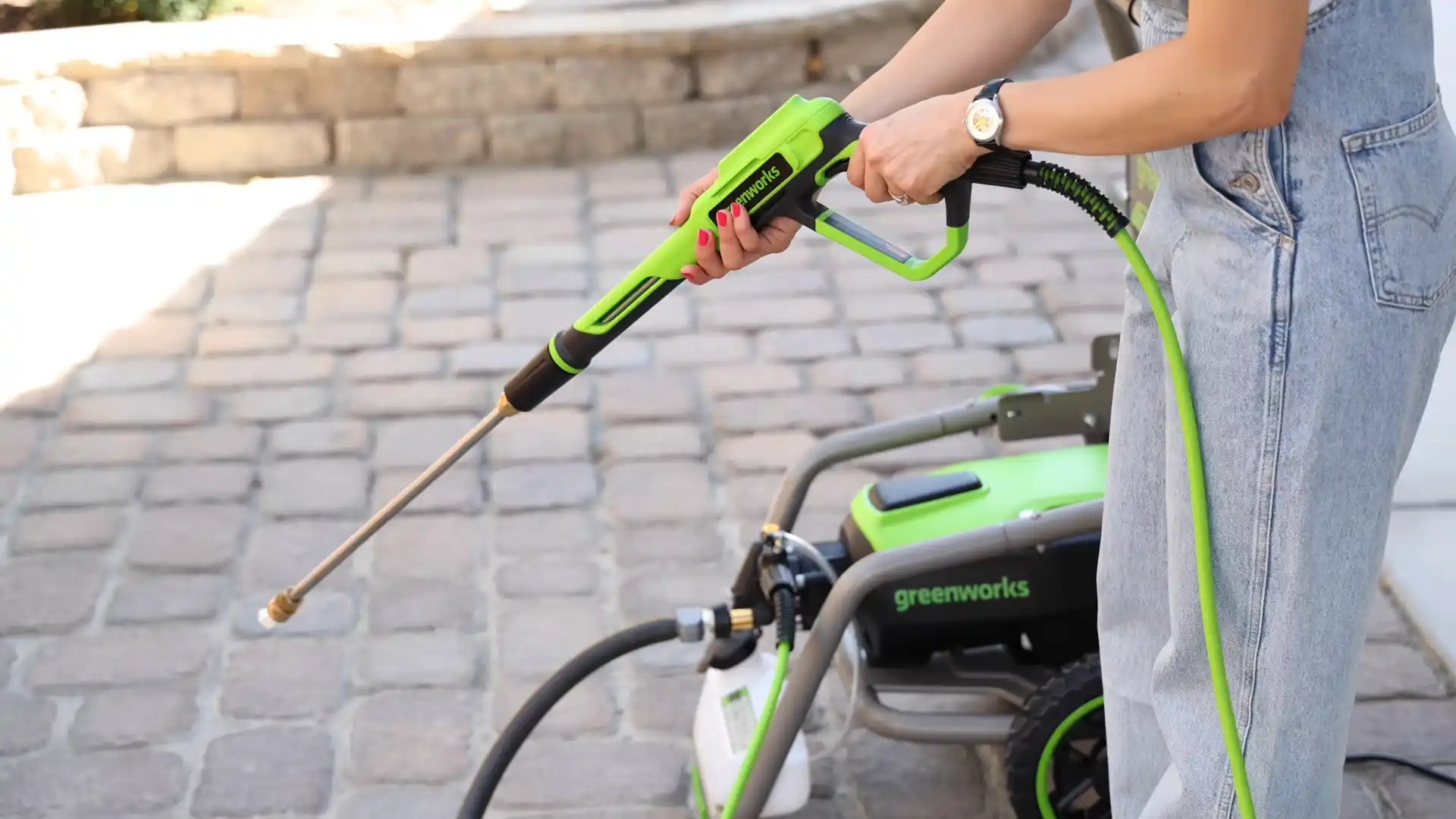
The fix is simple but it takes a little patience. Hook up the garden hose to the pressure washer inlet. Turn the water on fully. Do not attach a spray nozzle yet. Just point the wand at the ground or at your lawn and pull the trigger. You’ll hear a gurgling, inconsistent flow at first. That’s the air pushing out. Keep going until the water runs in a steady, consistent stream with no bubbles or surging.
Sometimes this takes 30 seconds. With a long hose reel or a 70-foot supply hose, it can take up to 5 minutes. Just keep the water running until it sounds smooth and even.
Once the air is cleared, attach your nozzle and start the machine. The pressure should build normally. If you skip this step and fire up the pump while there’s still air in the line, you risk running the pump dry. That can damage internal seals over time.
Clogged or Dirty Nozzle
A blocked nozzle is one of the most overlooked causes of pressure loss. Debris, mineral deposits, and hard water buildup can partially block the nozzle opening, which reduces the effective spray pressure even if the pump is working fine.
Remove the nozzle and hold it up to the light. If you see buildup or the opening looks partially blocked, clean it out. Most pressure washers come with a small wire tool specifically for this. If yours didn’t, a straightened paper clip or thin wire works fine.
Run the wire through the nozzle opening a few times, then flush the nozzle under warm water. Reinstall it and test. You’d be surprised how often this is the whole problem.
If your nozzle is warped, cracked, or heavily worn, replace it. Nozzles are inexpensive and a damaged one will never give you consistent pressure no matter what else you fix.
Low Water Supply from the Source
The pressure washer pump needs a steady, adequate water supply to work properly. If the incoming flow is too weak, the pump can’t build the pressure it’s rated for.
Most residential pressure washers need at least 1 to 2 gallons per minute at the inlet to function correctly. A few things can choke the supply: a kinked garden hose, a partially closed shutoff valve, a clogged hose screen filter, or just a weak water line at that faucet.
Start by checking the hose for kinks or bends. Open the supply valve completely. Then disconnect the garden hose from the pressure washer inlet and check the small mesh screen filter inside. That filter catches debris from the water supply and it clogs up over time. Rinse it clean or replace it if it’s damaged.
If the water pressure at your outdoor faucet is genuinely low, try a different spigot on the property. Some outdoor faucets are on longer pipe runs with more resistance.
Worn or Damaged Pump Seals and O-Rings
The pump inside your pressure washer uses rubber seals and O-rings to hold pressure as water moves through the system. Over time, these seals wear out, crack, or get damaged from running the pump dry.
When the seals fail, water bypasses them internally. The pump spins, the motor runs, but pressure bleeds off before it reaches the wand. The machine sounds like it’s working but the output is weak.
This is a harder fix than the others, but it’s still DIY territory. Most pump manufacturers sell rebuild kits that include replacement O-rings and seals for around $10 to $30. You’ll need to disassemble the pump head, swap out the seals, and reassemble. YouTube videos specific to your model are your best resource here.
If the pump is old or you’ve run it dry multiple times, the damage may be more extensive. In that case, a full pump replacement is often cheaper than professional repair.
Detergent Injector Causing Pressure Drop
If you notice pressure loss specifically when using the soap setting or a low-pressure nozzle, the detergent injector may be the culprit. Some pressure washers use a chemical injector valve that pulls soap into the water stream. When this valve is stuck open or partially clogged, it can reduce pressure even when you switch back to a high-pressure nozzle.
Remove and inspect the injector. Flush it with clean water. If it’s clogged with soap residue or mineral deposits, soak it in white vinegar for 30 minutes, then flush again. Check that the small ball or spring inside moves freely. Replace the injector if it doesn’t.
Also make sure you’re using the correct nozzle for high-pressure tasks. The soap nozzle (usually black, wide-angle) is intentionally low pressure. If you switched nozzles and you’re still getting low pressure, the injector is worth checking.
Hose Length and Diameter Reducing Output
Adding a longer hose or using a smaller-diameter hose can reduce the pressure at the spray tip. It’s basic physics. The longer the hose and the narrower the inner diameter, the more friction loss you get over the run.
This matters most for homeowners who add a 50-foot extension hose to reach the far end of a driveway or second story. The pressure at the tip can drop noticeably compared to running the stock hose.
Stick with the hose length that came with your machine if possible. If you need more reach, look for a quality pressure washer extension hose with the same inner diameter as the stock hose. Avoid cheap garden hose adapters that constrict the flow. They’ll kill your pressure every time.
Unloader Valve Stuck or Faulty
The unloader valve (sometimes called the bypass valve) is a safety component that redirects water back to the inlet when the trigger is released. This is what prevents the pump from building dangerous pressure when you let go of the wand.
When the unloader valve gets stuck or wears out, it can stay partially open even when you’re pulling the trigger. Water keeps bypassing instead of flowing forward, and you get weak or inconsistent pressure.
Signs of a bad unloader valve include pressure that fluctuates while you’re actively spraying, or a machine that won’t hold pressure even with a fresh pump and clean nozzles. You’ll also sometimes hear a rattling or chattering from the pump area.
Unloader valves are adjustable on some machines. If yours has an adjustment knob or screw, try increasing the tension slightly. If the valve is beyond adjustment, they’re inexpensive to replace and widely available by model number.
Gas Pressure Washer: Engine Running Rough or at Low RPM
For gas-powered units, the engine RPM directly affects pump output. If the engine is running rough, bogging under load, or not hitting full speed, the pump never reaches rated pressure.
Common engine issues include a dirty air filter, old or stale fuel, a clogged carburetor, or a fouled spark plug. Each one is a straightforward fix.
Replace the air filter first since it takes two minutes and a fresh one costs a few dollars. Drain old fuel and refill with fresh gas, especially if the machine sat unused for more than a month. If the carburetor is gummed up from old fuel, a carburetor cleaner spray and a basic cleaning kit will usually solve it without a full replacement. Replace the spark plug if it’s been more than a season.
Gas machines that sit over the winter need this kind of attention before the first spring use. A pressure washer stored with fuel in the carb is almost guaranteed to have hard-starting or low-power issues the following year. Running the machine dry before storage helps a lot. See our full guide on how to winterize a pressure washer if you want to avoid these issues next season. If you’re also shopping for a new unit, our picks for the best gas pressure washers cover options with easy-access carburetors and replaceable filters.
Quick Diagnostic Checklist
If your pressure washer is losing pressure, work through these in order before assuming something major is wrong.
First, purge the air from the line by running water through the wand without the nozzle attached. Second, check and clean the spray nozzle. Third, confirm your water supply is fully open and the inlet filter screen is clean. Fourth, check your hose for kinks and verify you’re using the correct hose diameter. Fifth, inspect the detergent injector if you’ve been using soap. Sixth, check the unloader valve for signs of sticking or wear. Seventh, for gas models, check the engine air filter, fuel, and spark plug before assuming the pump is the problem.
Most pressure washer pressure problems trace back to one of these causes. Work through the list and you’ll usually find the fix without spending a dime on parts.
Frequently Asked Questions
Why does my pressure washer start strong and then lose pressure after a minute?
This is almost always air in the line or an overheating bypass valve. Try purging the air before startup by running water through the open wand for a few minutes. If the pressure drops after the machine warms up, the unloader valve may be sticking as it heats. Let the machine cool down and check if pressure returns.
Can a kinked hose really cause that much pressure loss?
Yes. A kinked hose restricts flow enough that the pump starves for water. Even a partial kink can cause surging, inconsistent pressure, and early pump wear. Always lay the hose out flat before starting the machine.
How do I know if my pump is actually damaged versus just having an air bubble?
Purge the air completely first. If the pressure is still low after running water through the open wand for several minutes, then there’s likely a pump issue. Damaged seals usually produce a pump that sounds normal but delivers noticeably weak pressure even with a short hose and clean nozzles. If you’re at the point of replacing the unit, our guide to the best pressure washers covers options across every budget.
Does water temperature affect pressure washer performance?
Most residential electric pressure washers are rated for cold water only. Running hot water through a cold-water machine can damage the seals quickly and cause exactly the kind of pressure loss described in this article. Stick to the temperature rating on your unit.
How often should I replace the spray nozzle?
There’s no fixed interval, but worn nozzles gradually lose their precise orifice shape, which spreads the spray pattern and reduces effective pressure. If you’re cleaning regularly, inspect the nozzles every season. A set of replacement nozzles costs very little and makes a noticeable difference.