
4 Best Gas Pressure Washers for Driveways, Siding, and Cars
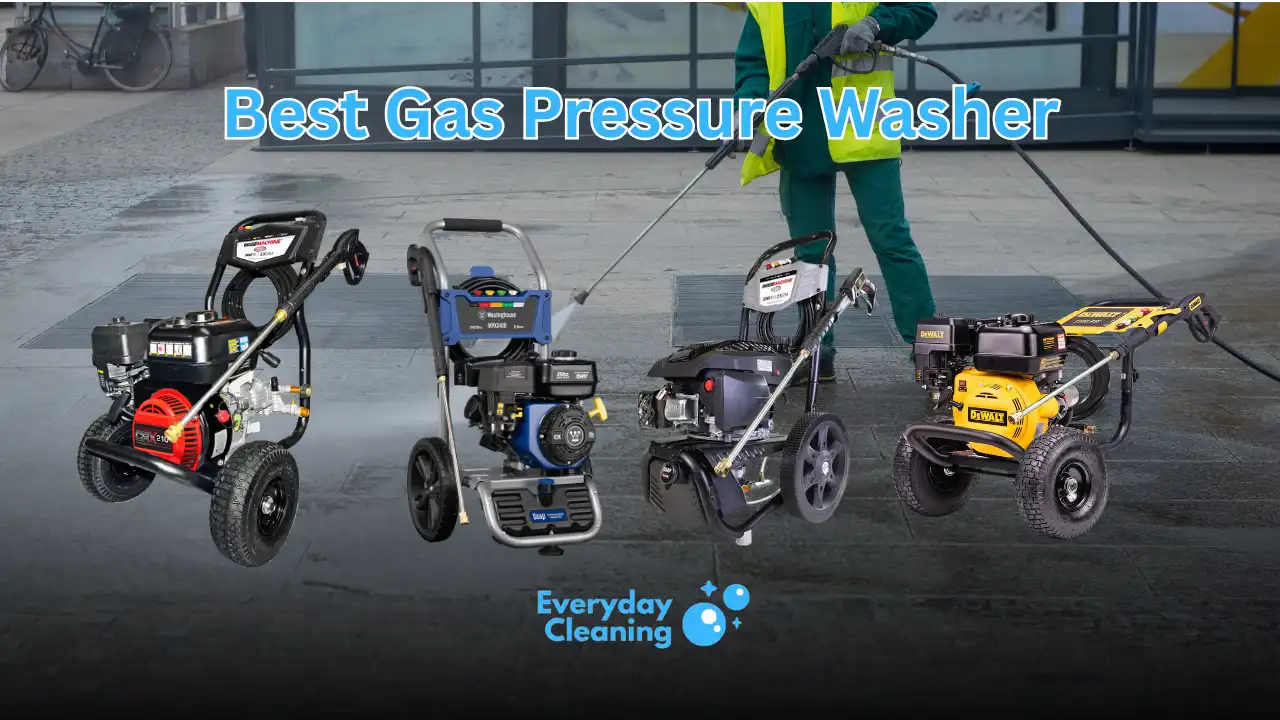
Gas pressure washers do things electric models simply can’t: more PSI, more GPM, and no cord to fight with on a 60-foot driveway. We tested and compared the top residential gas models so you can find the right one for your property.
Our Top Picks
| Recommendation | Product | Reason |
|---|---|---|
| Best Overall | Westinghouse WPX3400 | 3400 PSI, 24,000+ reviews, easy start every time — Reviews ↓ |
| Best for Heavy-Duty Cleaning | Simpson CM61083 | Highest cleaning units on the list with thermal relief pump — Reviews ↓ |
| Best Budget | Simpson CM61456-S | 3200 PSI with turbo nozzle included at the lowest price — Reviews ↓ |
| Best Brand Reliability | DeWalt DXPW3300-S | DeWalt build quality, low-oil shutdown, 3-year warranty — Reviews ↓ |
Best Overall: Westinghouse WPX3400
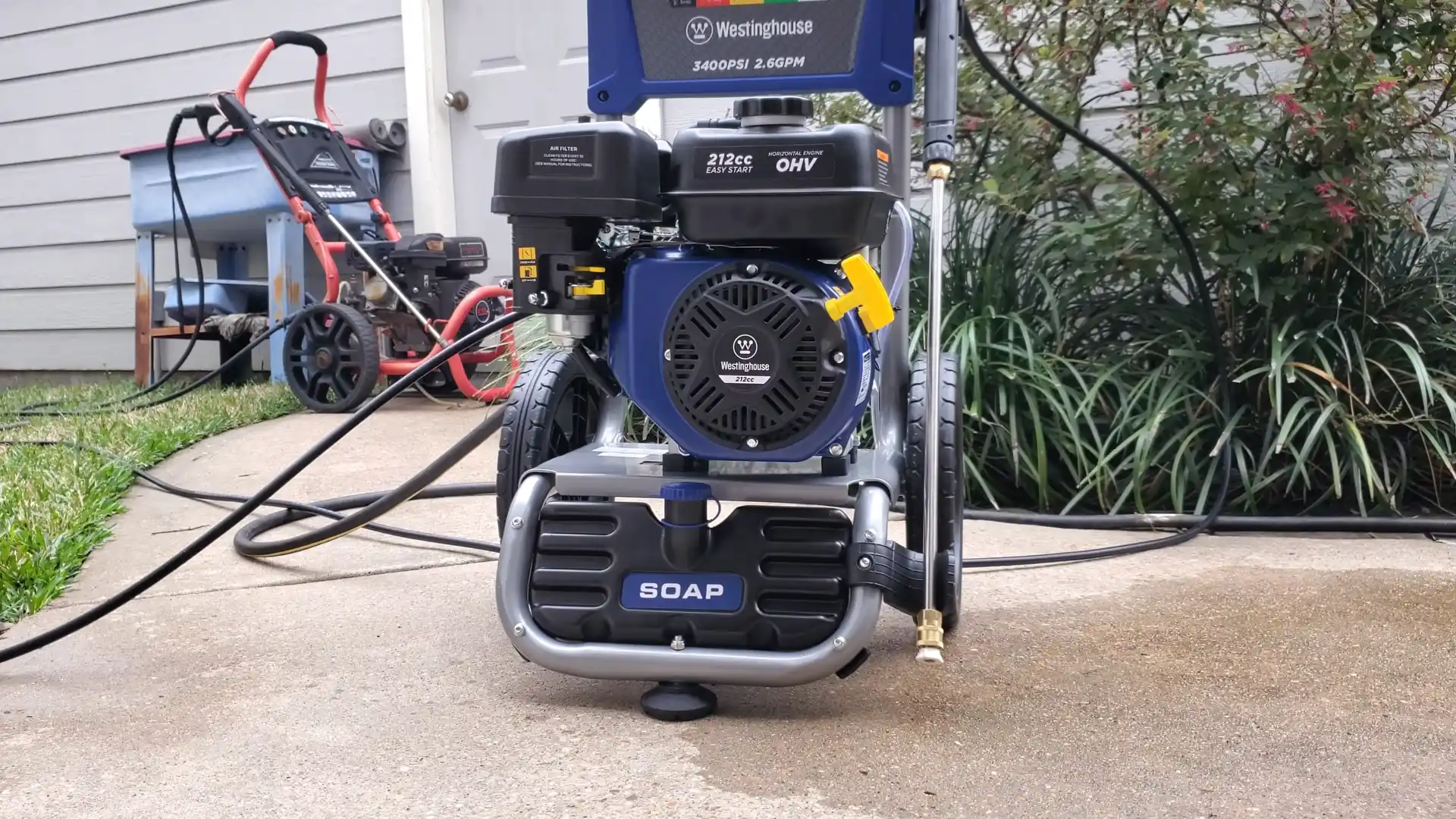
The Westinghouse WPX3400 is the most popular gas pressure washer on Amazon for good reason. It hits 3400 PSI and 2.6 GPM, starts easily, and comes in under $400. This is the pick for most homeowners.

- 3400 PSI and 2.6 GPM of Powerful, Deep-Cleaning Water Pressure Perfect for Decks, Sidewalks, Siding, Fences, Railings, Garage Floors, Exterior Walls, Cars and Patio Furniture – Easy to Fill 1 Gallon Gas Tank and Half Gallon Onboard Soap Tank
- 25′ Foot Abrasion Resistant Super-Flex Hose With Lightweight High Pressure Spray Gun and 5 Quick Connect Nozzles (0°, 15°, 25°, 40° & Soap) - Compatible with Pressure Washer Accessories such as Surface Cleaners, Undercarriage Cleaners, and Foam Cannons with M22 fittings

Pros and Cons
| Pros | Cons |
|---|---|
| 3400 PSI and 2.6 GPM (most cleaning power per dollar) | Heaviest on the list at 67 lbs |
| 24,000+ verified Amazon reviews at 4.6 stars | |
| 12-inch never-flat wheels handle uneven terrain | |
| Onboard 1.6L soap tank | |
| Steel frame construction and 3-year warranty | |
| Consistent easy-start engine, first or second pull |
Testing Results
PSI and GPM: 3400 PSI at 2.6 GPM gives you 8,840 cleaning units. That’s more raw cleaning power than any model here. Concrete stains, driveway oil spots, and mildew on siding come off fast.
Concrete and Driveways: Excellent. The 0-degree and 15-degree nozzles tear through embedded grime. One pass with the 15-degree nozzle is usually enough on standard residential concrete.
Siding: Works well with the 25 or 40-degree nozzle. Keep your distance on vinyl siding. At full power and close range, it can force water behind panels.
Deck and Fence: Yes, but use the 40-degree nozzle. The 15-degree tip at close range will strip soft wood. Set your pressure carefully.
Car Wash: Possible with the 40-degree nozzle at a safe distance. Most people buying 3400 PSI gas washers are not using them on cars. If car washing is your primary use, look at an electric model instead.
Heavy Stains: This is where the WPX3400 earns its reputation. Oil stains on concrete, years of algae on a retaining wall, rust staining around downspouts. It handles all of it.
Startup Reliability: Fires on the first or second pull in most conditions. The engine has been consistent across thousands of user reports. Cold-weather starting takes a little more effort, as with any gas engine.
Noise Level: Loud. This is not a quiet machine. Expect complaints from neighbors if you run it at 7 AM.
Real-world Usage
Most homeowners pull the WPX3400 out two or three times a year for the big jobs: spring driveway cleaning, fall deck prep, and the occasional siding wash. It’s not a daily-use machine. But when you need it, it delivers.
The 12-inch never-flat wheels and steel frame mean you can drag it across gravel, wet grass, and rough terrain without babying it. Assembly is straightforward and it arrives mostly assembled.
Best Use Case
The WPX3400 is the right pick if you have a long driveway, a large deck, or two-story home siding to clean. It’s also the call for rural properties without reliable outlet access within reach of a cord. Not ideal for anyone in a noise-sensitive neighborhood or anyone who wants a low-maintenance machine.
Verdict
This is the best gas pressure washer for most homeowners. The combination of cleaning power, price, build quality, and track record is hard to beat at this price point. Over 24,000 Amazon reviews don’t lie. If you want one machine that handles every outdoor cleaning job, this is it.
For tips on getting the most out of it on concrete surfaces, see our guide on how to clean a concrete driveway.
Rating: 4.7 / 5
View on Amazon: Westinghouse WPX3400
Best for Heavy-Duty Cleaning: Simpson Clean Machine CM61083
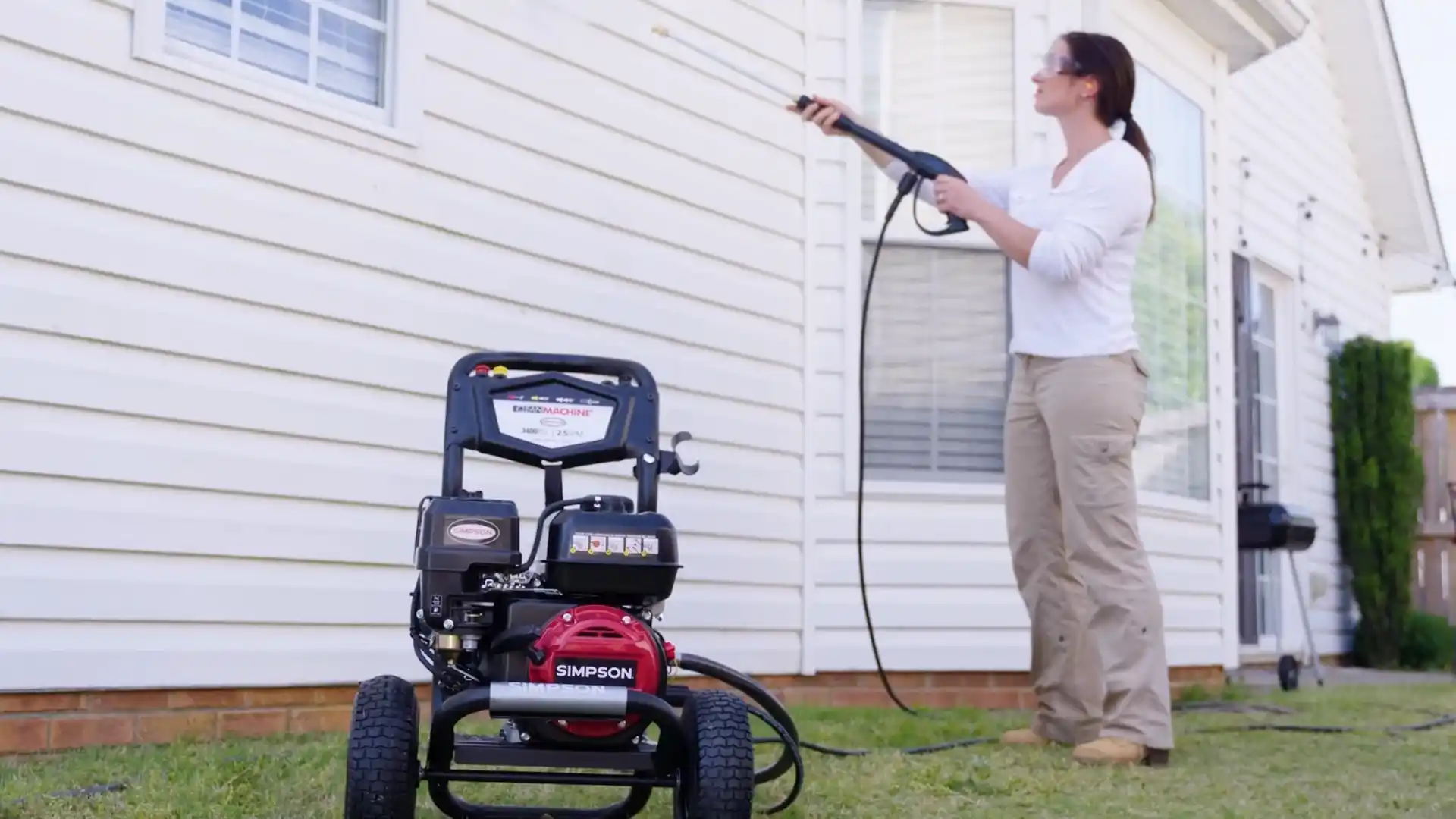
The Simpson CM61083 delivers 3400 PSI and 2.5 GPM through a proven CRX engine and AAA-quality OEM Technologies axial cam pump with a thermal relief valve. It’s the step-up pick for homeowners with serious cleaning jobs.

- SIMPSON PRESSURE WASHER FOR HOMEOWNERS: The Simpson Clean Machine gas power washer cleans decks, driveways, siding, fencing, patio furniture, and cars; The cold water machine is great for homeowners; 49-State Compliant (Not for sale in California)
- ENGINE & PUMP: 208 cc CRX engine starts easily and includes low-oil shutdown; 3400 PSI 2.5 GPM OEM Technologies axial cam pump is maintenance-free with a thermal relief valve to help prevent overheating
Pros and Cons
| Pros | Cons |
|---|---|
| 3400 PSI and 2.5 GPM for maximum cleaning units | Only 4 nozzles included (no 25-degree tip) |
| Thermal relief valve protects pump from overheating | 2-year warranty shorter than Westinghouse and DeWalt |
| AAA-quality axial cam pump (industry trusted) | |
| Compact low-profile frame fits in tight garage spaces | |
| Fully assembled out of the box | |
| 49-state compliant |
Testing Results
PSI and GPM: 3400 PSI at 2.5 GPM equals 8,500 cleaning units. Nearly identical output to the Westinghouse WPX3400. The CRX engine and OEM Technologies pump combination is a known reliable pairing.
Concrete and Driveways: Excellent. The CM61083 was built for this. Thick residential concrete, grease stains, and compacted dirt all respond well. Pair it with a surface cleaner attachment for large driveways.
Siding: Yes. Use the 40-degree nozzle and keep your distance from seams and windows.
Deck and Fence: Yes, with the right nozzle. The 40-degree tip for soft wood. The 15-degree for teak or composite.
Car Wash: Possible with care. The lack of a 25-degree nozzle means you’re jumping from 15 to 40 degrees. Most users skip the car with this machine and use a separate method.
Heavy Stains: Top-tier on this list. The thermal relief valve keeps the pump from overheating during extended sessions, which matters when you’re doing a full driveway restoration.
Startup Reliability: Consistent first or second pull start. The CRX engine is straightforward to maintain.
Noise Level: Loud, as expected from any residential gas pressure washer. Comparable to the Westinghouse.
Real-world Usage
The CM61083 shines on large concrete projects. A long driveway, a pool deck, a large patio. The thermal relief pump means you can run it for longer sessions without risking damage if the trigger is held down or released repeatedly. That matters if you’re cleaning more than an hour at a stretch.
The fully assembled delivery is a genuine convenience. Unbox it, add oil, add gas, and you’re running within 15 minutes.
Best Use Case
Best for homeowners with large outdoor concrete areas who want a pump that won’t overheat under extended use. Also a strong pick for anyone who preps surfaces for painting or sealing. Not the right call for anyone who needs an onboard soap tank or wants more than 4 nozzles.
Verdict
The CM61083 is a serious residential machine. The pump quality and thermal relief protection give it a durability edge over budget-oriented gas washers. The 2-year warranty is the one thing that holds it back compared to competitors at this price point. If you’re cleaning a large property with long sessions, this is worth the extra few dollars over the CM61456-S.
For tough surface stains, pair this with the right product. Our guide to the best concrete cleaner for pressure washers covers the top chemical options.
Rating: 4.5 / 5
View on Amazon: Simpson CM61083
Best Budget Gas Pick: Simpson Clean Machine CM61456-S
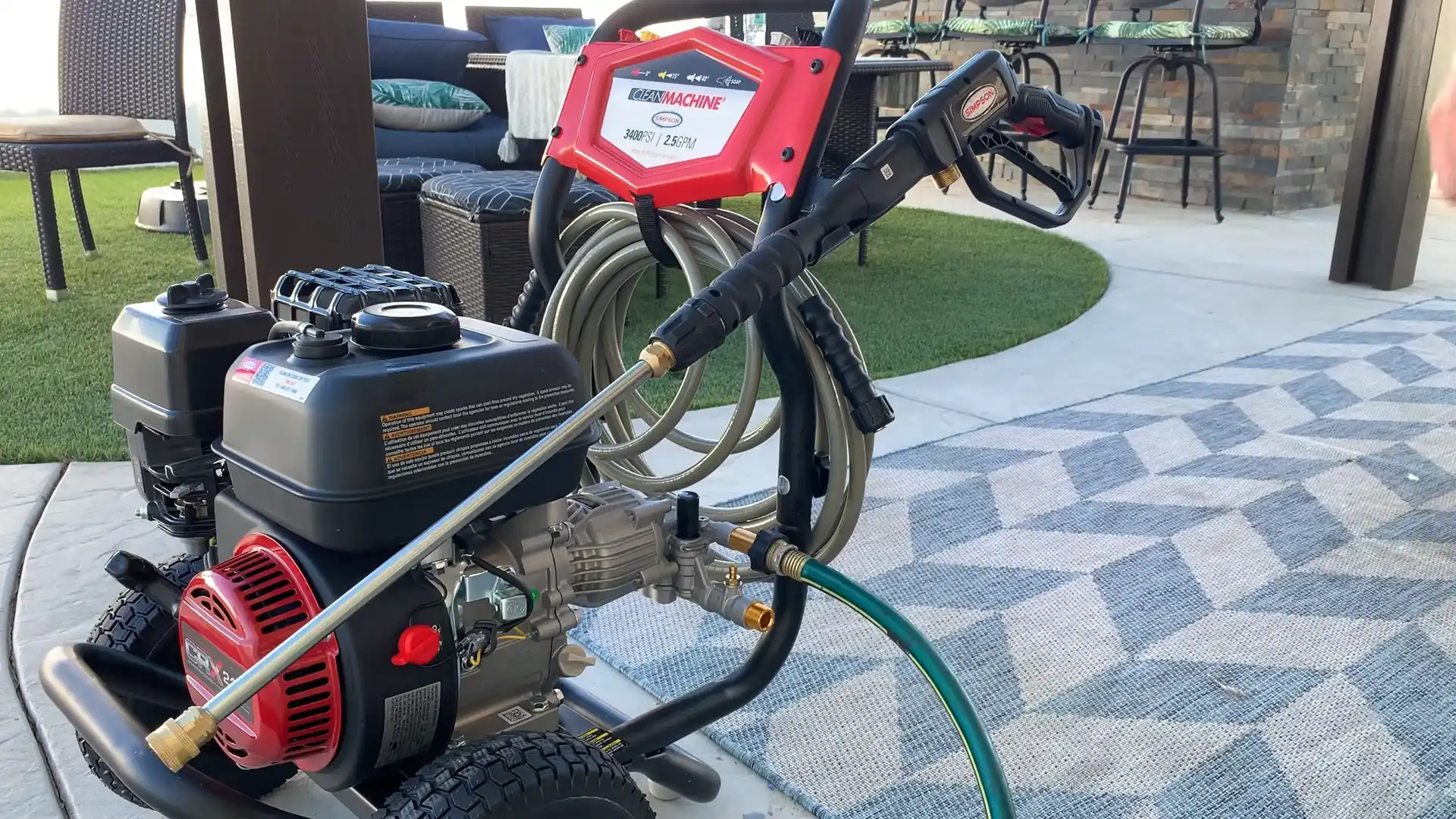
The CM61456-S is the entry point into the Simpson Clean Machine lineup. At 3200 PSI and 2.5 GPM, it delivers real residential cleaning power at the lowest price of any gas model here. And it comes with a turbo nozzle.

- SIMPSON PRESSURE WASHER FOR HOMEOWNERS: The Simpson Clean Machine gas power washer cleans decks, driveways, siding, fencing, patio furniture, and cars; The cold water machine is great for homeowners; 49-State Compliant (Not for sale in California)
- ENGINE & PUMP: 174 cc engine starts easily and includes low-oil shutdown; 3200 PSI 2.5 GPM OEM Technologies axial cam pump is maintenance-free with a thermal relief valve to help prevent overheating; 25' high-pressure hose resists kinks and abrasion
Pros and Cons
| Pros | Cons |
|---|---|
| 3200 PSI and 2.5 GPM at the lowest price point | Smaller soap tank than the Westinghouse WPX3400 |
| Turbo nozzle included for faster surface cleaning | |
| Thermal relief valve protects pump | |
| Compact low-profile steel frame | |
| 12-inch never-flat wheels | |
| 49-state compliant |
Testing Results
PSI and GPM: 3200 PSI at 2.5 GPM gives you 8,000 cleaning units. Enough for the vast majority of residential jobs.
Concrete and Driveways: Handles standard residential driveways well. The included turbo nozzle speeds up large flat surface cleaning noticeably compared to standard nozzles.
Siding: Yes. The 40-degree nozzle on siding. Standard approach, same as any gas washer.
Deck and Fence: Yes. Use the appropriate nozzle for your wood type. Soft pine needs the 40-degree. Composite and hardwood can take the 15-degree.
Car Wash: Yes with care. Use the 40-degree nozzle, stand back, and test on a small area first.
Heavy Stains: Handles most residential stains. Oil on concrete, mildew, algae on a fence. If you’re dealing with years of built-up grime on porous concrete, the CM61083 with its extra cleaning units will do better.
Startup Reliability: Consistent and reliable. The OEM Technologies axial cam pump with thermal relief is a proven setup.
Noise Level: Loud, same as every gas pressure washer here.
Real-world Usage
For a homeowner who cleans their driveway once or twice a year, the CM61456-S does everything they need. The turbo nozzle is actually a nice bonus at this price. It cuts your surface cleaning time in half on large flat areas by rotating the stream at high speed.
The compact frame stores easily in a small garage or shed. No specialty tools needed for basic setup.
Best Use Case
The CM61456-S is the right choice for homeowners who want gas-powered performance on a budget and aren’t running the machine for hours at a time. Great for seasonal driveway, patio, and siding cleaning. Skip it if you need an onboard soap tank or a longer warranty.
Verdict
For the price, you get a real gas pressure washer with a thermal relief pump and a turbo nozzle included. The 2-year warranty is the trade-off. If warranty length matters to you, step up to the Westinghouse or DeWalt. If you want the lowest cost of entry into gas washing power, this is the pick.
Rating: 4.3 / 5
View on Amazon: Simpson CM61456-S
Best Brand Reliability: DeWalt DXPW3300-S
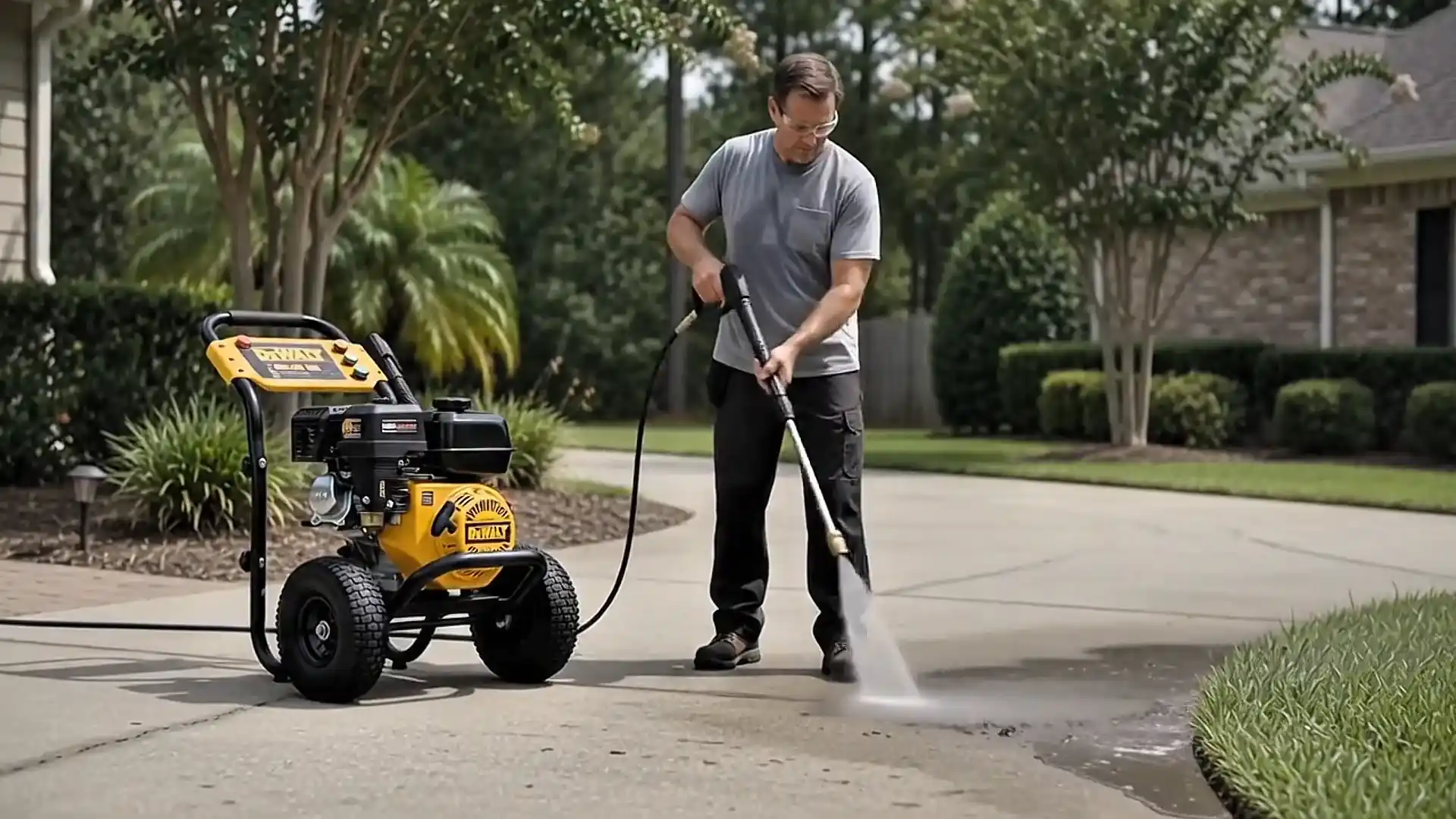
The DeWalt DXPW3300-S is the brand-trust pick on this list. If you already own DeWalt tools and trust the warranty and build quality, this is the gas pressure washer to add to your lineup.

- PREMIUM RESIDENTIAL PERFORMANCE: Easy-to-start with a DeWalt 208cc engine, perfect for cleaning decks, patios, siding, and prepping exteriors for painting. Simple assembly makes it ideal for residential use.
- POWER AND DURABILITY: OEM Technologies axial cam pump delivers 3300 PSI at 2.4 GPM. Welded steel frame with powder-coated finish adds durability. Thermal relief valve prevents overheating for long-lasting performance.
Pros and Cons
| Pros | Cons |
|---|---|
| DeWalt 3-year limited warranty (strong for a gas model) | No onboard soap tank |
| Low-oil shutdown protects the engine | 10-inch tires less capable on rough terrain than 12-inch |
| AAA axial cam pump (maintenance-free) | |
| Welded powder-coated steel frame | |
| 5 nozzles included | |
| 25 ft MorFlex non-marring hose | |
| 49-state compliant, factory tested |
Testing Results
PSI and GPM: 3300 PSI at 2.4 GPM gives 7,920 cleaning units. Slightly below the Westinghouse in raw numbers but more than enough for any residential job.
Concrete and Driveways: Yes, heavy duty. The AAA axial cam pump handles extended concrete cleaning sessions reliably.
Siding: Yes. The 25 and 40-degree nozzles make it easy to adjust the spray pattern for siding height and material.
Deck and Fence: Yes. Full nozzle set included covers all typical deck washing scenarios.
Car Wash: Yes with the 40-degree nozzle at distance. The same caution applies here as with any gas washer.
Heavy Stains: Handles everything a residential homeowner will encounter. Oil, mildew, algae, rust staining.
Startup Reliability: Consistent with the low-oil shutdown protection giving extra peace of mind. If you forget to check the oil level, the engine shuts off before damage occurs rather than seizing.
Noise Level: Loud. Same as every gas washer on this list.
Real-world Usage
The DeWalt DXPW3300-S appeals to the kind of buyer who owns a garage full of DeWalt tools and wants their outdoor equipment to match that level of build confidence. The welded powder-coated steel frame feels solid. The MorFlex hose is noticeably flexible and less likely to kink in cold weather.
The low-oil shutdown is a genuinely useful feature. Gas pressure washers are damaged more often by running low on oil than by any other single cause. Having that protection built in is worth something.
Best Use Case
Buy this if brand reliability and engine protection matter more than saving $30 to $50. Also the right call if you’re buying as a gift or for someone who won’t always remember to check oil before starting. The three-year warranty is above average for this category. Skip it if you want an onboard soap tank or better wheels for rough ground.
Verdict
The DeWalt DXPW3300-S gives you real gas pressure washer performance with above-average protection and warranty backing. It’s not the cheapest option here and doesn’t have the raw cleaning units of the Westinghouse. But the brand trust and low-oil protection make it worth the premium for the right buyer.
If you’re pairing this with a larger outdoor cleaning project, our guide on how to clean a concrete patio walks through the full process step by step.
Rating: 4.4 / 5
View on Amazon: DeWalt DXPW3300-S
What Makes the Best Gas Pressure Washer?
PSI and GPM: The Two Numbers That Actually Matter
PSI (pounds per square inch) is the pressure the water hits the surface with. GPM (gallons per minute) is how much water flows through. Neither number alone tells the full story.
The real measure is cleaning units: PSI multiplied by GPM. A 3400 PSI machine at 2.6 GPM gives you 8,840 cleaning units. A 3200 PSI machine at 2.5 GPM gives 8,000. For residential use, anything above 7,000 cleaning units handles virtually every job you’ll have.
The reason gas washers dominate here is simple. Most electric models top out at 1,500 to 2,000 cleaning units. A gas washer at 3400 PSI and 2.5 GPM does four times that work in the same time. For large driveways or years of built-up grime, that difference is visible.
Engine and Pump Type
The engine brand matters less than most buyers think. A reliable 208cc to 212cc four-stroke engine from Westinghouse, DeWalt, Simpson, or Honda will all start reliably and last years with basic oil changes.
The pump is where you want to pay attention. Axial cam pumps are standard on residential gas washers. They’re maintenance-free and last several hundred hours under normal use. The upgrade is a triplex pump, which is found on commercial and semi-professional models at higher price points.
Thermal relief valves are worth looking for on the pump. They release built-up pressure and heat when the trigger is idle, protecting the pump from damage during long jobs. The Simpson models here both have them.
Wheels and Frame
Twelve-inch never-flat wheels move more easily over gravel, wet grass, and rough driveways than ten-inch pneumatic tires. If your property has uneven terrain, wheel size matters. The Westinghouse WPX3400 and Simpson CM61456-S both use 12-inch wheels. The DeWalt uses 10-inch pneumatic tires that work fine on flat surfaces but require more effort on rough ground.
Steel frame construction is standard on all the models here. The difference is in how the frame is built. A welded powder-coated frame like the DeWalt holds up better over years compared to bolt-together frames on cheaper machines.
Hose Length and Nozzle Set
All four models here come with 25-foot hoses. That’s the residential standard. For cleaning a two-car driveway from a single connection point, 25 feet is enough. For a long L-shaped driveway or a large deck, you may want a 50-foot extension hose.
Nozzle selection affects every surface you clean. The full five-nozzle set (0, 15, 25, 40 degrees, plus soap) gives you the range to handle concrete, siding, decks, and car washing safely. The DeWalt and Westinghouse both include the full set. The Simpson CM61083 comes with only four nozzles and skips the 25-degree tip.
A turbo nozzle, which rotates the stream at high speed over a circular path, significantly speeds up large flat surface cleaning. The Simpson CM61456-S includes one. It’s a meaningful practical advantage on a long driveway.
Onboard Soap Tank
Not all gas pressure washers include a soap tank. The Westinghouse WPX3400 has a 1.6L onboard tank. The Simpson models use a soap nozzle tip that applies detergent through the spray wand directly from an external bucket. The DeWalt uses the same soap nozzle approach with no onboard tank.
For most cleaning tasks, either method works fine. The onboard tank is more convenient. The soap nozzle method requires keeping a bucket nearby.
Warranty and Maintenance
A three-year limited warranty is the strongest coverage available at this price point. Both the Westinghouse WPX3400 and DeWalt DXPW3300-S carry three-year warranties. The Simpson models carry two-year warranties.
Gas pressure washers require seasonal maintenance that electric models don’t. You’ll need to change the oil at the start of each season, check spark plugs annually, and winterize the pump if storing in a cold climate. Budget 30 minutes per year for basic maintenance. Skip it and the pump will wear faster.
How to Use a Gas Pressure Washer Effectively
Set Up in a Clear Area
Gas washers produce exhaust fumes. Never run one in a garage or enclosed space. Set up outdoors with at least 10 feet of clearance from any wall or window.
Connect the garden hose to the inlet, run it fully before starting, and confirm water is flowing through the wand before pulling the starter cord. Running the pump dry, even briefly, can cause damage.
Start from the Right Distance
Always start 3 to 4 feet from the surface and move closer only if needed. The stream does more damage than most people expect. On concrete, 12 to 18 inches with a 15-degree nozzle is a typical working distance. On wood decking, start at 24 inches with the 40-degree nozzle.
Work in Sections
Move in consistent overlapping passes rather than attacking one spot. On driveways, work from the high point down toward the street so dirty water flows away from areas you’ve already cleaned. On siding, work top to bottom.
Apply Detergent Before Pressure Rinsing
The soap nozzle applies low-pressure detergent. Switch to a pressure nozzle only after letting the detergent dwell for a few minutes. Scrubbing with pressure alone on oil stains or heavy mildew often takes three times as long as applying soap first, then rinsing.
Cool Down Before Storage
After shutting off the engine, pull the trigger a few times to release any remaining pressure in the hose. Never store with pressurized water in the system. If you’re done for the season, run pump saver through the pump before storage to prevent seals from drying out.
Frequently Asked Questions
How much PSI do I need for a residential gas pressure washer?
For most homeowners, 3000 to 3400 PSI covers everything from concrete driveways to two-story siding. You don’t need more than 3500 PSI for residential use. Higher PSI increases the risk of surface damage, especially on wood decks and soft siding materials. If your main job is car washing, a gas washer may be too powerful. Most car detailers use electric models in the 1200 to 1800 PSI range.
Are gas pressure washers better than electric?
For large, heavy-duty jobs, yes. Gas washers typically deliver two to four times the cleaning units of residential electric models. They don’t require a power outlet, so you can use them anywhere on your property. The trade-off is noise, maintenance, and fuel cost. Electric models are quieter, lower maintenance, and cheaper to run. For small to medium jobs, a quality electric model handles things well. For a long driveway or large concrete area, gas is the practical choice. Our roundup of the best pressure washer for driveways covers both options side by side.
How do I winterize a gas pressure washer?
Drain the fuel tank or add a fuel stabilizer if storing for more than 30 days. Run pump saver fluid through the pump to protect the seals and internal components from drying out in cold temperatures. Store in a dry location above freezing if possible. Failing to winterize the pump is the most common reason gas pressure washer pumps fail early.
What nozzle should I use for a concrete driveway?
Start with the 15-degree nozzle for general concrete cleaning. For deeply stained or porous concrete, the turbo nozzle moves faster and covers more area. Use the 0-degree nozzle only for stubborn point stains on hard concrete. Never use the 0-degree nozzle on soft concrete, brick, or any painted surface. If you’re using a cleaning solution, apply it with the soap nozzle first, let it dwell for 3 to 5 minutes, then rinse with the 15 or 25-degree nozzle. Our guide to cleaning concrete patios walks through the full process.
Is a gas pressure washer safe for wood decks?
Yes, with the right approach. Use the 40-degree nozzle on standard wood decks. Keep your distance at 18 to 24 inches minimum. Move the wand in the direction of the wood grain. High-pressure nozzles at close range will raise the grain, cause splintering, or strip finishes. Test on an inconspicuous board first. If you’re doing a full deck restoration before staining, lower PSI electric washers are often safer for soft wood species.
Can I wash my car with a gas pressure washer?
You can, but most gas pressure washers are more powerful than ideal for car washing. Use the 40-degree nozzle, stand at least 3 feet from the paint, and avoid narrow nozzles near trim and seals. If car washing is one of your main uses, the Westinghouse WPX3400 is the safest gas option here. For regular car detailing, a purpose-built electric or battery pressure washer is a better tool. See our best portable pressure washer roundup for compact options better suited to car washing.
How often do gas pressure washers need oil changes?
Change the oil after the first 5 hours of use on a new machine to remove metal particles from the break-in period. After that, change the oil every 50 hours of use or once per season, whichever comes first. Check the oil level before every use. Running a gas pressure washer with low oil is the single most common cause of engine and pump failure.


4 Comments
Comments are closed.