
How to Winterize a Pressure Washer (Step-by-Step Guide)
Skipping winterization is one of the most common ways people destroy a pressure washer. A cracked pump or a gummed-up carburetor are both preventable, and this guide walks you through exactly what to do before you put it away for the season.
What You Need to Winterize a Pressure Washer
The whole process takes about five minutes and requires only two things.
- Fuel stabilizer (STA-BIL is a widely used option)
- Pump protector spray (STA-BIL also makes one)
- A piece of cardboard to keep your garage floor clean (optional but helpful)
That is it. You do not need special tools or professional help. Just these two products and about five minutes.
How to Winterize a Pressure Washer
Step 1: Add Fuel Stabilizer to the Tank
Fuel breaks down over time. Left untreated through winter, it can gum up your carburetor and leave you with a machine that will not start in spring.
Top off your gas tank before adding the stabilizer. A full tank reduces the amount of air inside, which helps prevent moisture buildup. For a tank around 1.4 gallons (about 5.3 liters), half an ounce of fuel stabilizer is the right amount. Check the label on your specific product since ratios vary by brand.
Pour the stabilizer into the tank, then run the engine. You need to let it run for a couple of minutes so the treated fuel circulates through the entire fuel system and into the carburetor. This step matters. If the stabilizer never reaches the carburetor, it cannot protect it.
One important rule: Never start the engine without water running through the pump first. Running a pressure washer pump dry even for a few seconds can cause serious damage. Hook up your garden hose and get water flowing before you start the engine.
Step 2: Protect the Pump
The pump is the most expensive component on your machine. Water left sitting inside it through winter can freeze, expand, and crack the housing. Pump protector spray prevents this.
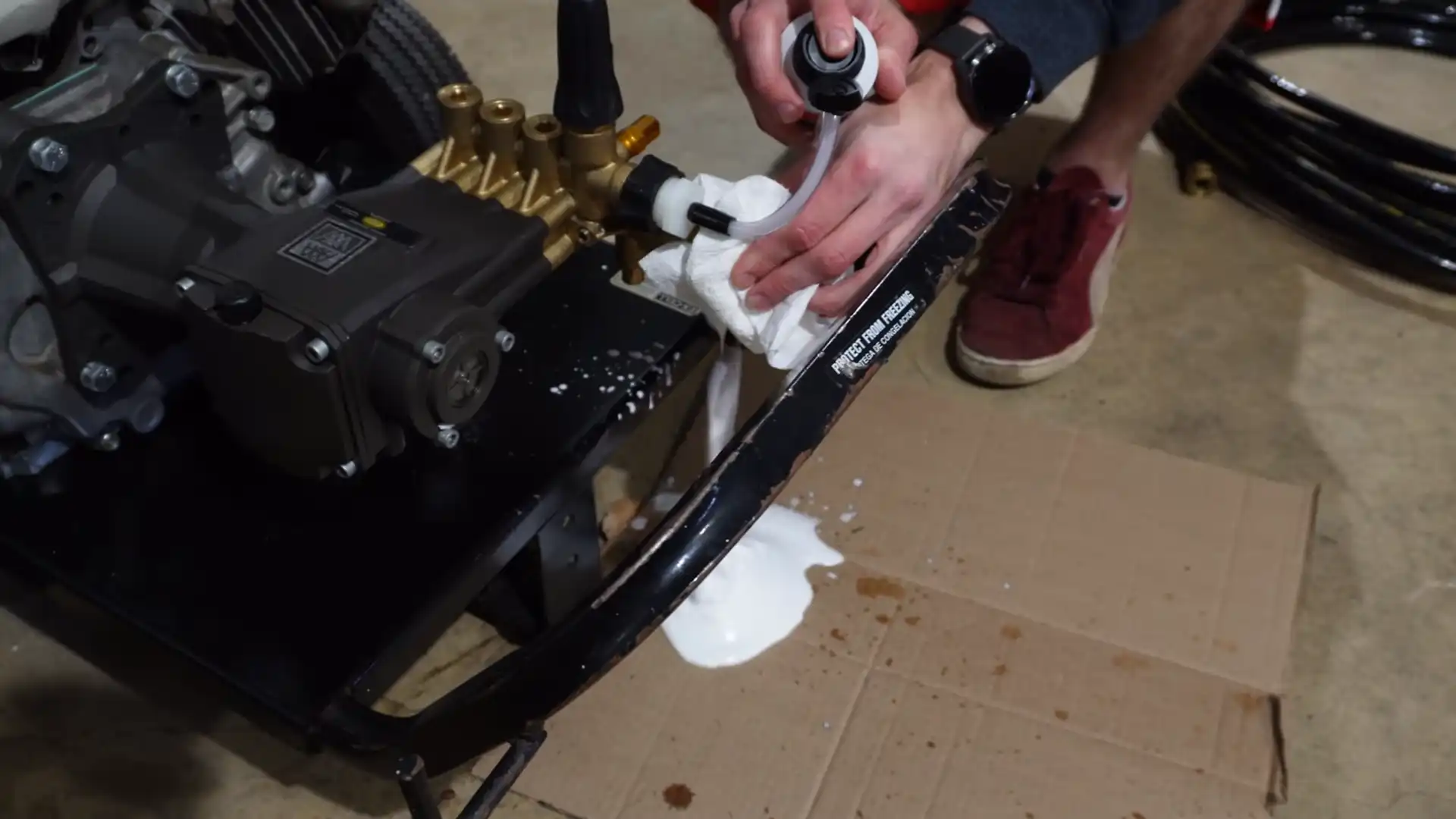
First, disconnect all hoses from the pump. Place a piece of cardboard under the pump outlet to catch any spray. Take the pump protector can, attach the adapter to the water inlet on the pump, and spray the product directly into the pump. Keep spraying until the lubricant starts coming out of the outlet port.
Once you see it coming out the other side, you know two things: the lubricant has coated the seals and pistons, and all the water has been pushed out. No water means no freezing. The pump is protected.
Go ahead and use the whole can. You will need a fresh one next season anyway, and being thorough here is worth it.
Step 3: Store It Properly
Once the fuel is treated and the pump is protected, the machine is ready for storage. Store it somewhere dry and out of direct weather. A garage or shed works well. If temperatures in your area regularly drop well below freezing, keep it away from exterior walls where cold can seep through.
Leave the hoses disconnected for storage. Moisture can sit in hose connections over time, and keeping them detached lets everything dry out fully.
Gas vs. Electric Pressure Washers: Does Winterization Differ?
The pump protection process is the same for both types. The main difference is the fuel stabilizer step, which only applies to gas-powered machines.
Electric pressure washers do not have a carburetor or fuel tank, so you can skip that entire step. For an electric model, your winterization checklist is simpler: flush out any remaining water, spray the pump with protector, disconnect the hose, and store it dry.
If you want help picking the right machine for your yard before next season, check out our guide to the best electric pressure washer options available right now.
Do You Always Need to Winterize a Pressure Washer?
If you live somewhere with mild winters and temperatures rarely drop below freezing, you can get away with just flushing the pump and storing it dry. But if you live in a climate where hard freezes are common, skipping the pump protector is a risk. A cracked pump is not a cheap fix.
The five-minute process described here is cheap insurance. A can of pump protector costs a few dollars. A replacement pump costs significantly more.
How Long Does Fuel Stabilizer Last?
Most fuel stabilizers protect gas for up to 12 months. That is more than enough to cover a standard winter storage period. If your machine sits for longer than that, drain the tank or add fresh stabilizer before trying to start it.
STA-BIL is the most commonly recommended brand, but other products work similarly. Check the label for specific treatment ratios before adding it to your tank.
Common Winterization Mistakes to Avoid
Running the engine without water. This one keeps coming up because it happens more often than it should. Always connect your garden hose and confirm water is flowing before starting the engine. Even a few seconds of dry running can damage the pump.
Forgetting the carburetor. Adding stabilizer to the tank is not enough on its own. You need to run the engine long enough for the treated fuel to circulate into the carburetor. Two minutes of running time is usually sufficient.
Skipping the pump protector. It takes 60 seconds to do. Do not skip it.
Storing with hoses still attached. Detach everything. It lets moisture escape and keeps fittings from sticking together over winter.
Storing outdoors in freezing weather. Even with pump protector applied, leaving the machine exposed to repeated hard freezes is a bad idea. Keep it inside a garage or shed.
Frequently Asked Questions
Do I need to drain the gas before winterizing a pressure washer?
No. The recommended approach is actually the opposite: top off the tank, add fuel stabilizer, then run the engine. A full tank with stabilizer is better than an empty or partially full tank left untreated. An empty tank can still accumulate moisture over winter, which creates its own problems.
Can I use any brand of fuel stabilizer or pump protector?
es. STA-BIL is widely used and well-reviewed, but other brands work similarly. The key is following the label’s treatment ratio. For a 1.4-gallon tank, you typically need about half an ounce of stabilizer. Check the product packaging to confirm.
How long does winterizing a pressure washer take
About five minutes if you have the products on hand. The longest part is letting the engine run for a couple of minutes after adding fuel stabilizer. The pump protection step itself is less than a minute.
What happens if I do not winterize my pressure washer?
Two likely outcomes: a cracked pump from frozen water or a clogged carburetor from degraded fuel. Either one can prevent the machine from starting in spring. The pump is especially expensive to replace. Winterizing is much cheaper.
Is winterization different for battery-powered pressure washers?
Battery-powered models do not have a fuel system, so you can skip the stabilizer step entirely. The pump still needs to be protected the same way. Remove the battery before storage and store it somewhere that stays above freezing. If you are still shopping for a cordless option, our guide to the best battery powered pressure washer covers the top picks worth considering.
Can I pressure wash in winter instead of storing the machine?
You can use it in mild winter conditions, but avoid using it when temperatures are at or near freezing. Water can freeze inside the pump, hose connections, and fittings quickly in cold weather. If you do use it during winter, run warm water through the system and store it somewhere above freezing immediately after.
What other surfaces can I pressure wash before putting it away for winter?
When should I winterize my pressure washer?
Do it before the first hard freeze in your area. Do not wait until temperatures have already dropped. Once you know you are done using it for the season, that is the right time to go through the process. The whole job takes five minutes, so there is no reason to delay.



2 Comments
Comments are closed.