How to Get Bleach Out of Carpet
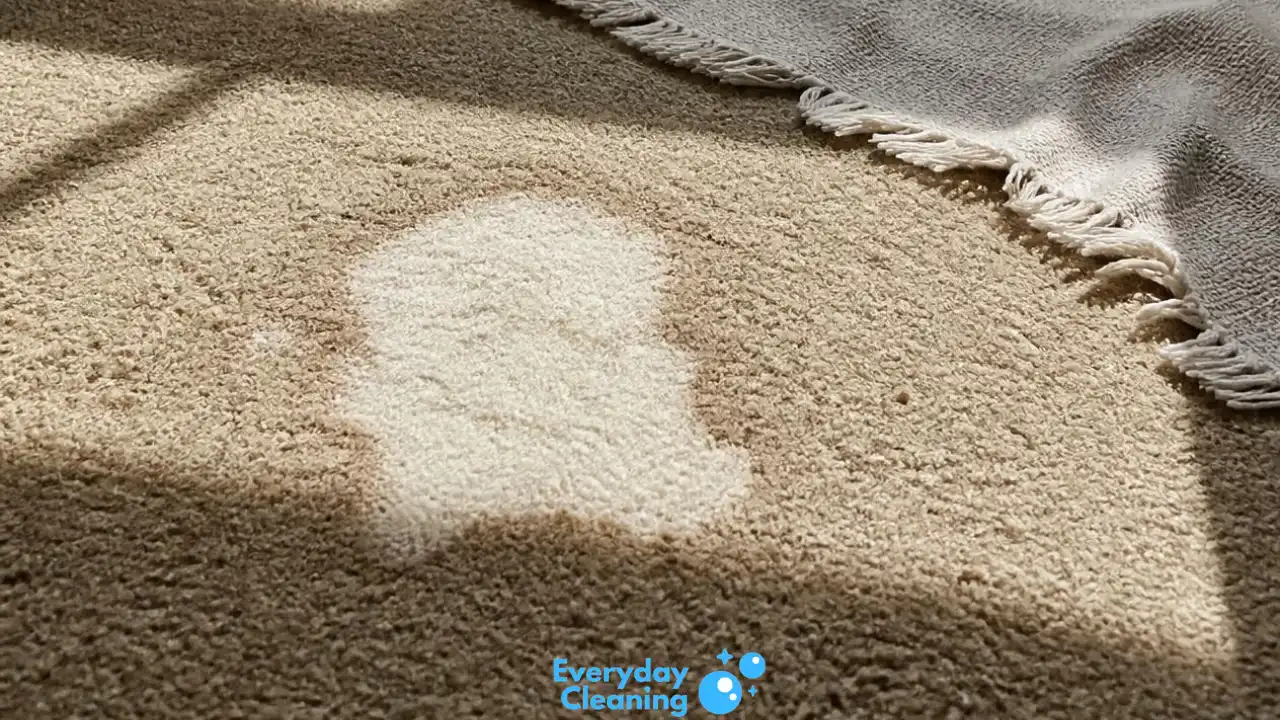
Bleach doesn’t stain carpet the way coffee or wine does. It removes the color entirely, and once that happens, no cleaner in the world is bringing it back. What you can do is minimize the damage fast and use a surprisingly simple trick to camouflage what’s left.
Here’s what to do, step by step.
What You’ll Need
- A clean white cloth or towel (damp)
- Cold water
- A crayon or soft pastel that matches your carpet color
- A second damp white cloth for blending
Step 1: Act Immediately
The second you notice bleach on the carpet, grab a damp white cloth and blot the area. Do not scrub. Press down firmly and lift straight up to absorb as much liquid as possible before it sets deeper into the fibers.
Use cold water only. Hot water won’t help here and can push the bleach further into the pile. Repeat the blotting with a fresh section of cloth until you’re not picking up any more liquid.
Step 2: Rinse the Area with Water
Once you’ve absorbed the excess bleach, pour a small amount of cold water directly onto the spot. This dilutes what’s left and helps flush it out of the fibers.
Blot again with a clean cloth until the area is just damp, not soaking wet. Don’t over-saturate the carpet. You want to neutralize and dilute the bleach, not spread it sideways. If you’re also dealing with over-wetting from this process, our guide on how to dry carpet quickly after cleaning covers the fastest ways to get moisture out before mold sets in.
Step 3: Let It Dry and Assess the Damage
After blotting and rinsing, let the spot dry completely. This is when you’ll see what you’re actually dealing with.
If you acted fast enough, the discoloration might be minor. If the bleach sat for more than a minute or two before you caught it, you’re likely looking at a light patch where the carpet color has been stripped. That’s the reality of bleach: it doesn’t stain, it erases. The fix from here is about concealment, not removal. Note that different carpet fiber types react differently to bleach, so the severity of the damage can vary based on what your carpet is made of.
Step 4: Use a Crayon to Color-Match the Spot
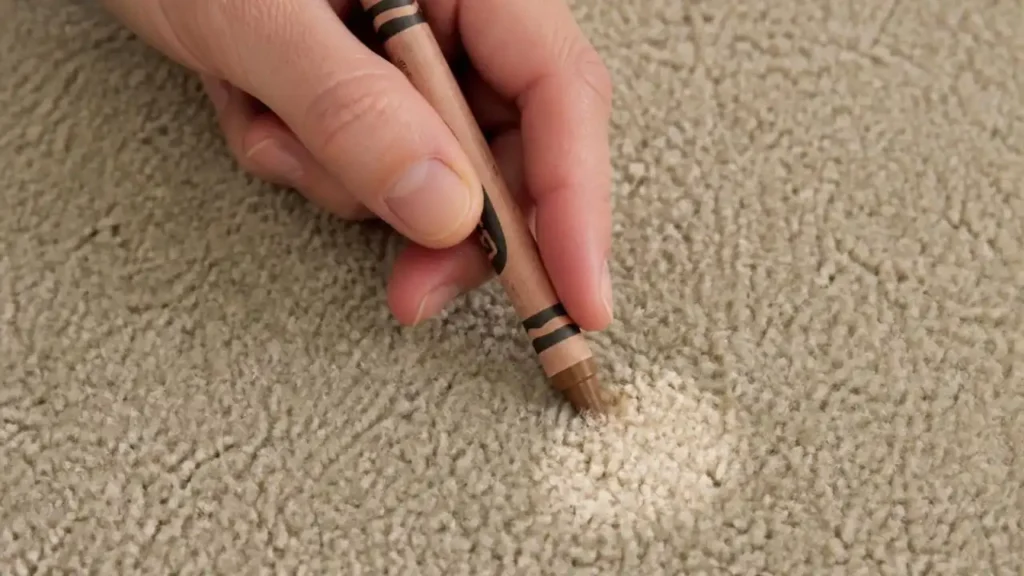
This is the part most people don’t know about. Grab a crayon or soft pastel from your kid’s art box and find the one that most closely matches your carpet color. It doesn’t need to be perfect, just close.
Gently work the crayon into the bleached fibers. Separate the fibers as you go and color them individually, the same way you’d color inside the lines as a kid. You want to get the pigment into the base of the fibers, not just the tips.
It’s going to look darker than the surrounding carpet at first. That’s expected. Keep going until the whole spot has good coverage.
Step 5: Blend with a Damp Cloth
Once you’ve applied the crayon color, take a damp white cloth and gently rub the spot in a circular motion. This does two things: it removes excess crayon pigment from the surface and blends the remaining color into the fibers so it looks more natural.
Work in small sections. Separate the fibers again after blending, then step back and check how it looks from standing height. Repeat the color and blend process until the area blends in reasonably well with the rest of the carpet.
Common Mistakes to Avoid
Using a colored cloth: Always use white when blotting or blending. Colored towels can transfer dye onto the damp carpet and make the problem worse.
Scrubbing the bleach in: Scrubbing spreads the bleach and damages the fiber structure. Always blot with an up-and-down motion.
Waiting too long to act: Bleach works fast. Every minute it sits is more color lost. Stop what you’re doing and deal with it immediately.
Picking the wrong crayon shade: A mismatch is worse than leaving the spot alone. Hold the crayon up to a dry section of carpet before you start. Go slightly lighter if you’re unsure. Darker reads more obviously wrong.
Expecting perfection: This method makes bleach spots much less noticeable, but it’s concealment, not restoration. The goal is to make it blend in at normal viewing distance. It will not look brand new. If the carpet has taken a lot of damage over time, our complete carpet cleaning guide covers what a full deep clean looks like before you consider any cosmetic fixes.
Frequently Asked Questions
Can bleach stains on carpet be fully removed?
No. Bleach chemically strips the dye from carpet fibers. Once the color is gone, it cannot be restored through cleaning. The options are concealment with a crayon or pastel, professional carpet dyeing, or patching the affected area with a piece of carpet from a closet or leftover roll.
Does baking soda or vinegar help with bleach stains?
They can help neutralize any remaining bleach in the fibers, which is worth doing early. Mix one part white vinegar with two parts water and apply it to the spot after blotting, then rinse with cold water. This won’t restore the color, but it stops the bleach from continuing to react. The color fix still requires the crayon method or a professional. For other common carpet stains beyond bleach, our picks for the best carpet stain remover cover what actually works on the toughest spots.
What if the bleach spot is large or in a highly visible area?
For large spots or damage in a central part of the room, the crayon trick has limits. At that point, your best options are professional carpet dyeing or cutting out the damaged section and patching it with a matching piece. A flooring professional can often pull a patch from inside a closet where the carpet matches perfectly.
Will the crayon color wash out if I clean the carpet later?
Yes, it can fade over time, especially if you steam clean or use carpet shampoo on that area. You may need to touch it up periodically. Some people use fabric dye markers or permanent markers for a longer-lasting result, but those require more precision to avoid making the repair obvious.
Is there a product made specifically for fixing bleach spots on carpet?
Yes. There are carpet dye touch-up kits available online and in home improvement stores. They come with multiple color swatches so you can mix a closer match. These work better than crayons for larger spots and give a more permanent result. They’re worth buying if the bleach damage covers more than a couple of square inches. And if you’re dealing with a wool or delicate carpet, check our guide on how to clean wool carpet before applying any product, since the fiber reacts differently to chemicals.